
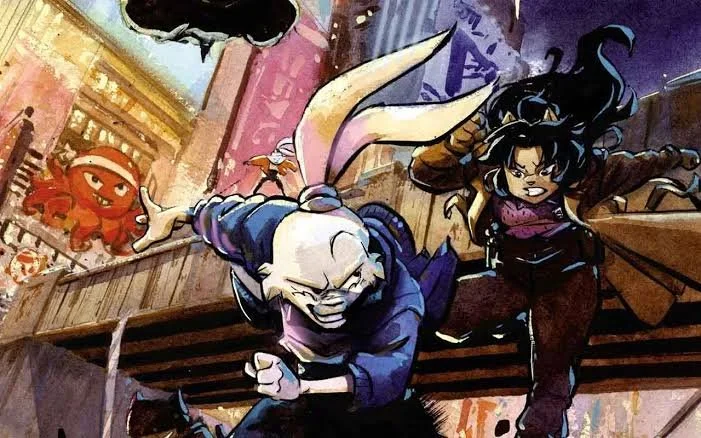
Usagi Yojimbo: Kaito ‘84 is published Dark Horse Comics and is written by Zack Rosenberg with art by Jared Cullum.
The Recap: A Legacy Reborn in the Neon Glow
The world of Stan Sakai’s Usagi Yojimbo has always felt timeless. For decades, we’ve followed Miyamoto Usagi across the snow-dusted trails and blood-soaked battlefields of Edo-period Japan. But with Usagi Yojimbo: Kaito ’84, the franchise has taken a daring leap forty years into our own past—to the neon-soaked, rain-slicked streets of 1984 Osaka. After a debut issue that set the stage with a moody, atmospheric introduction to Usagi’s descendant, Kaito ’84 #2 (released April 2026) officially kicks the narrative into high gear.
As someone who has followed the long-eared ronin for years, I went into this issue with a mix of excitement and a healthy dose of skepticism. Transitioning a legendary samurai epic into a gritty, 80s-inspired urban heist story is no small feat. However, writer Zack Rosenberg and artist Jared Cullum aren't just paying homage to the legacy; they are expanding it in ways that feel both revolutionary and deeply respectful.
To understand where we are in Issue #2, we have to look at what Issue #1 established. We were introduced to Kaito, a rabbit thief living in 1984 Osaka. Unlike his stoic, bushido-bound ancestor, Kaito is a product of his environment—cunning, rebellious, and operating in the shadows of a rapidly modernizing Japan. He’s more Robin Hood than Ronin, stealing to survive and occasionally to help those the system has forgotten.
Issue #1 ended with the setup for a high-stakes heist involving a legendary spear—one that supposedly holds a dark, supernatural history tied to the Miyamoto bloodline. As Issue #2 opens, the "Ghost of the Past" title isn't just a metaphor; it’s a thematic weight that hangs over every panel. Kaito has assembled his crew, and the "will-they-won't-they" tension of the reunion is where this issue truly begins to shine.
The Story: Heists, History, and Heart
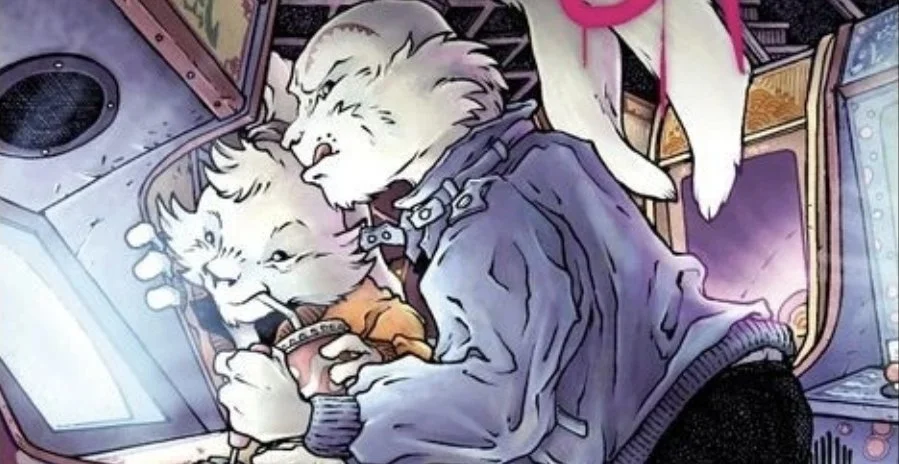
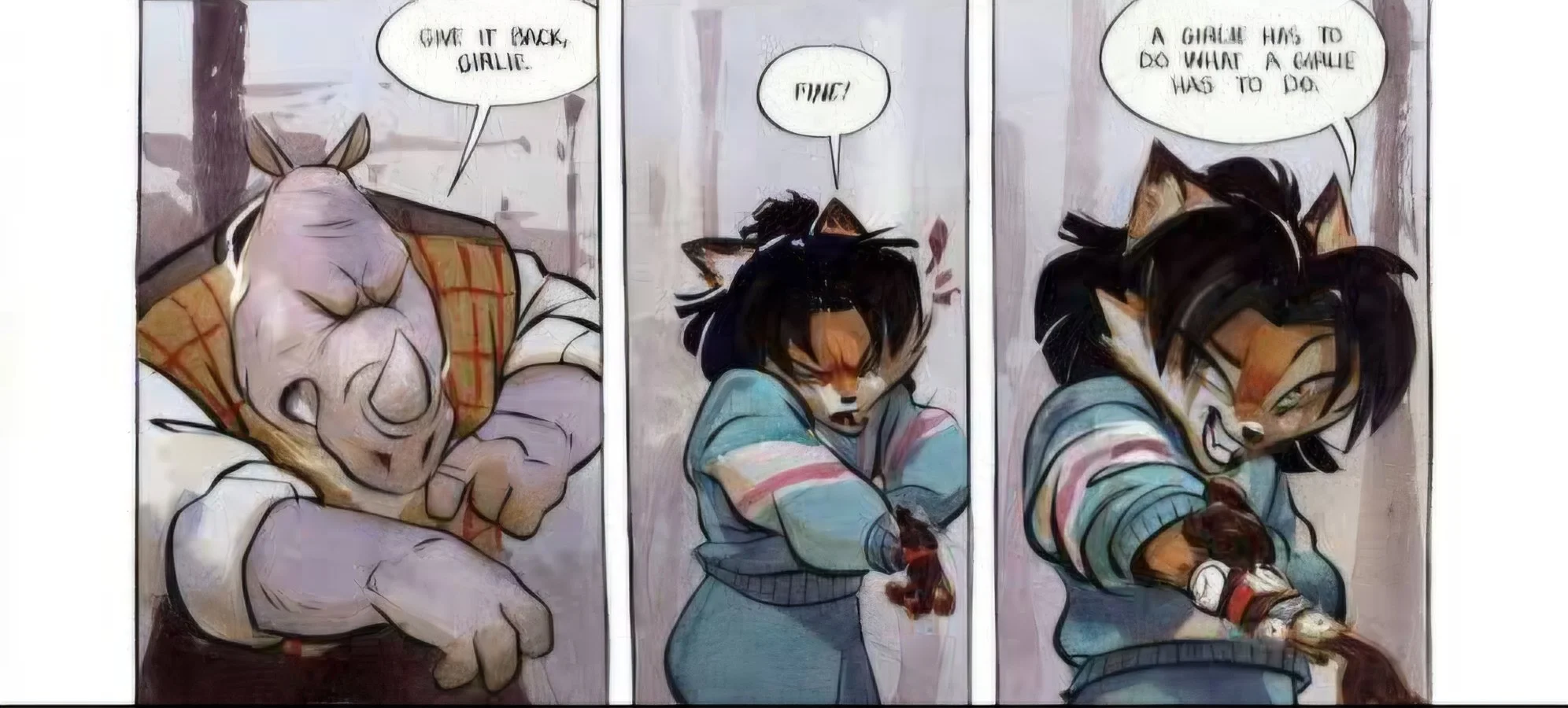
The narrative of Issue #2 is centered on the execution of the spear heist, but the "meat" of the story is found in the character dynamics. Rosenberg introduces us to Kaito’s old crew: Gen, a massive rhino whose presence immediately evokes the memory of Usagi’s old friend Genjuro, and a pair of foxes named Kitsune and Kiyoko.
The interaction between these characters is electric. There is a palpable history here—a sense of a "friend group" that broke up under painful circumstances that haven't been fully revealed yet. The tension between Kaito and Gen, in particular, provides a grounded emotional core to the high-concept heist. While Kaito is the quick-witted leader, Gen acts as the heavy, and their bickering feels less like standard comic book banter and more like the weary dialogue of two people who have seen too much together.
The plot thickens when the heist inevitably goes sideways. The spear they are after isn't just a museum piece; it’s a "cursed" artifact possessed by an ancient evil. When the job hits a snag, the story transitions from a stealthy caper into a desperate survival mission. The introduction of Inspector Ame—a character who feels like a wonderful nod to Lupin III’s Inspector Zenigata—adds a layer of "cat and mouse" tension that keeps the stakes high.
The narrative masterstroke of this issue, however, is the flashback climax. As Kaito finds himself cornered, he experiences a chilling vision of his ancestor, Miyamoto Usagi, at what appears to be the Battle of Adachi Plain. This connection between the 20th-century thief and the 17th-century samurai bridges the gap between the two eras perfectly. It reminds the reader that while the setting has changed, the "spirit" of the warrior remains the same.
Pacing: The Rhythm of the 80s
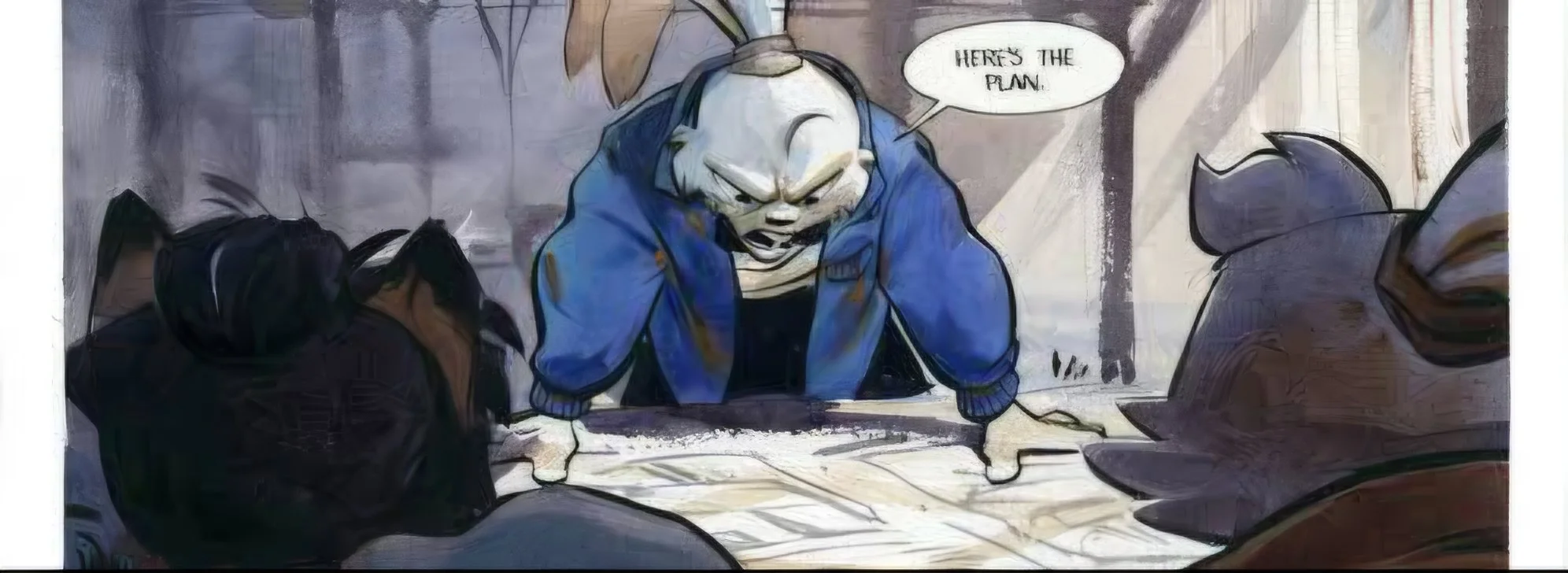
One of the most impressive aspects of Kaito ’84 #2 is its pacing. It manages to capture the frantic energy of an 80s action film without sacrificing the quiet, contemplative moments that have always been a staple of the Usagi franchise.
The first half of the issue is methodical. We see the planning, the quiet infiltration, and the building of tension through silence and shadows. This mimics the "waiting for the strike" feeling of a samurai duel. But once the alarm sounds, the pacing explodes. The car chase sequence through the streets of Osaka is a masterclass in visual momentum. The panels become tighter, the action more kinetic, and the sense of geography remains crystal clear even as the speed increases.
Rosenberg knows exactly when to pull back. After the high-octane chase, the issue ends on a haunting, lingering note that leaves you desperate for Issue #3. It’s a difficult balance to strike—providing enough resolution to make the individual issue feel satisfying while leaving enough breadcrumbs to sustain the five-issue limited series—but the creative team nails it here.
Art: Jared Cullum’s Watercolor Wizardry
We cannot talk about this book without discussing the art. Jared Cullum’s work on Kaito ’84 is, quite simply, breathtaking. Moving away from Stan Sakai’s iconic, clean line work was a massive risk, but Cullum’s watercolor style is the perfect choice for this specific story.
The use of watercolors gives 1984 Osaka a dreamlike, almost nostalgic quality. The city doesn't feel like a sterile modern environment; it feels lived-in, rainy, and slightly melancholic. The way Cullum uses light—the glow of neon signs reflecting off wet pavement, the harsh glare of police sirens—creates a "noir" atmosphere that elevates the writing.
The character designs are equally impressive. Cullum manages to retain the essential "look" of the anthropomorphic characters we know while updating their fashion and posture to fit the 1980s. Kaito’s design strikes the perfect balance between "cool" and "scrappy."
But the highlight of the art in this issue is undoubtedly the flashback scene. Cullum shifts his color palette to deeper, more brutal tones to depict the ancient battlefield. The contrast between the vibrant, electric blues of 1980s Osaka and the muddy, blood-red hues of the samurai era is visually stunning. Seeing Miyamoto Usagi rendered in this painterly style is a treat for long-time fans; he looks like a myth come to life, a legendary figure viewed through the fog of centuries.
The Final Verdict

Usagi Yojimbo: Kaito ’84 #2 is a triumph. It’s a rare example of a spin-off that manages to carve out its own identity while remaining completely faithful to the DNA of its predecessor. Zack Rosenberg’s writing is sharp, focusing on the emotional weight of legacy and the messy reality of old friendships. Jared Cullum’s art is a revelation, providing a visual identity that is uniquely beautiful and perfectly suited to the "Samurai in the City" vibe.
If Issue #1 was a promise, Issue #2 is the delivery. It expands the world, raises the stakes, and proves that the spirit of Miyamoto Usagi is versatile enough to survive and thrive in any era. Whether you are a die-hard Sakai fan or a newcomer looking for a gritty, anthropomorphic heist story, this is a must-read.
The creative team has successfully created a "hook" that is impossible to ignore. I found myself lingering on the final panels, dissecting the parallels between Kaito’s struggle and his ancestor’s history. For those of us who appreciate the art of visual storytelling, this issue is a goldmine of inspiration. It shows how you can take a classic character and reinvent them for a new generation without losing what made them special in the first place.