
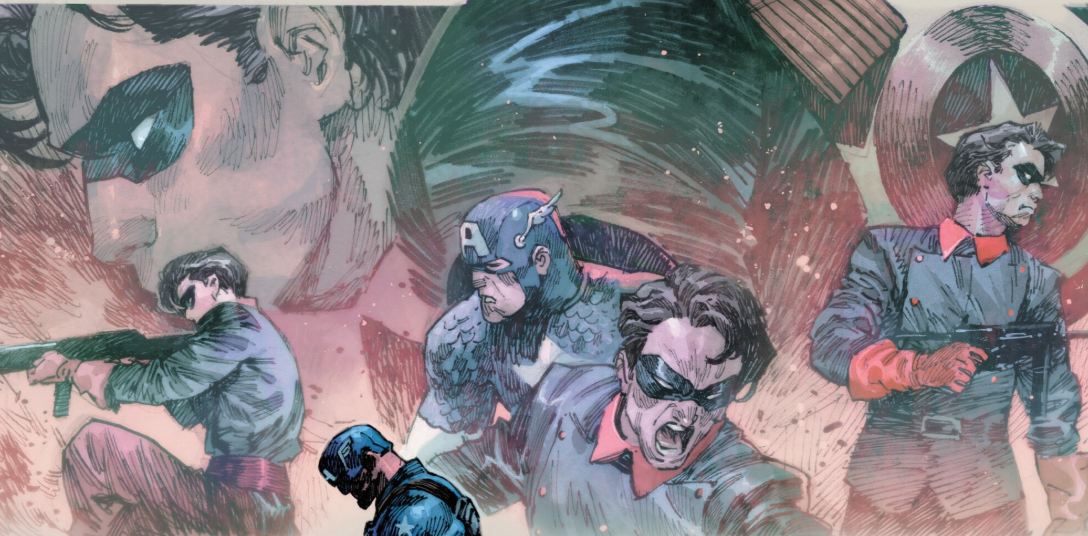
Well, it sure looks like Deniz Camp opted for pure emotional devastation, rather than the usual call to arms in The Ultimates #22. While a global uprising rages in the background, the true heart of the narrative beats inside a single room in Fatherlandville. Massive global stakes suddenly feel secondary when compared to the collapse of a lifelong bond. Every grand movement eventually comes down to the individuals caught in the crossfire. The chapter ignores the technical handbooks for rebellion to focus on the personal history of two men born on the same day in 1923.
Captain America finds himself locked in a battle that predates the Maker’s Council. It pulls from decades of shared trauma and wasted lives. The story asks what happens when heroes show up too late to save the people they love. Seeing the gap between a legend and a forgotten man makes the tragedy feel real. Every page carries the weight of survival. The narrative stands as a quiet and devastating chapter that hits with a visceral impact. The scale of the war serves as a backdrop for a much smaller and more painful confrontation between two brothers.
The Brooklyn Tenement
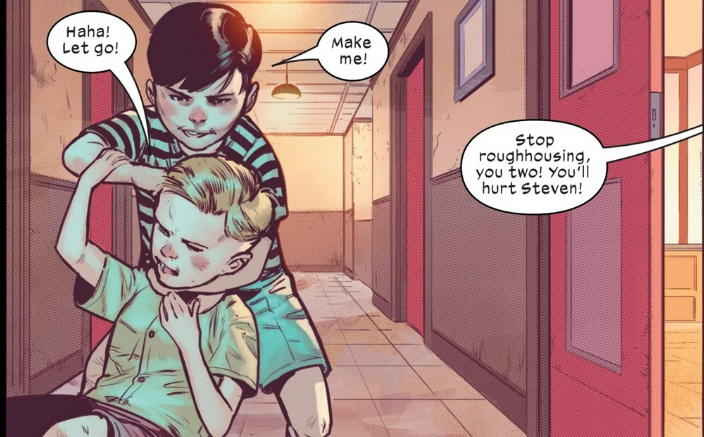
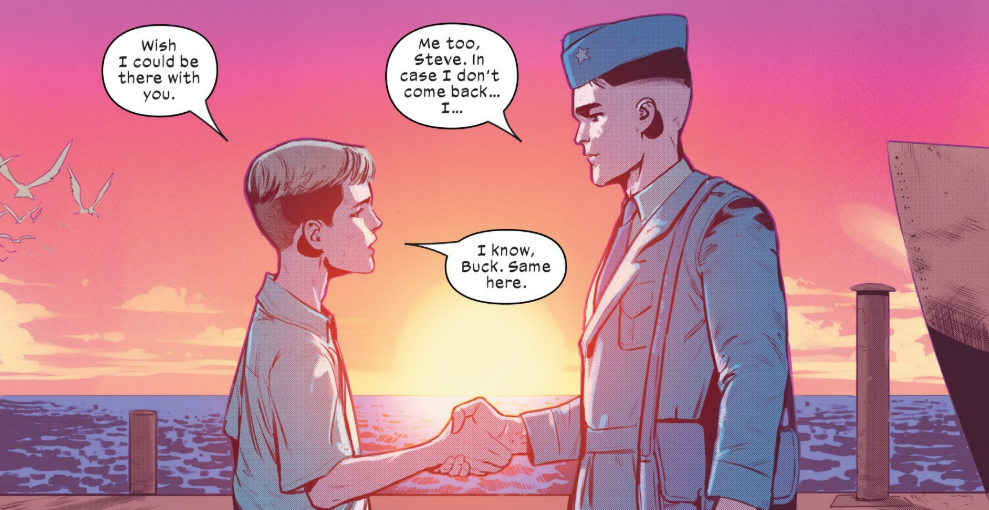
A series of 1920s Brooklyn flashbacks provides the emotional foundation necessary for the tragedy that follows. Steve Rogers and Bucky Barnes lived as more than mere partners in a war. They were brothers by choice who shared every neighborhood scrap and every bite of food. Juan Frigeri utilizes warm and sepia tones to make these memories feel like a lost paradise. Seeing them as babies and then as scrappy kids makes the current violence feel like a total violation of their shared history.
These scenes prove their bond existed long before any super soldier serum showed up to change their lives. The series hits home by showing exactly what Steve lost when he went into the ice. Mundane details of their friendship, from sharing a bed for warmth to defending each other from bullies, fill the pages. This deep connection makes the modern-day betrayal feel physical. The transition from that soft glow to the harsh reality of the present remains jarring and painful. We see the origin of a brotherhood that the Maker systematically dismantled over decades.
The Soldier the World Moved Past
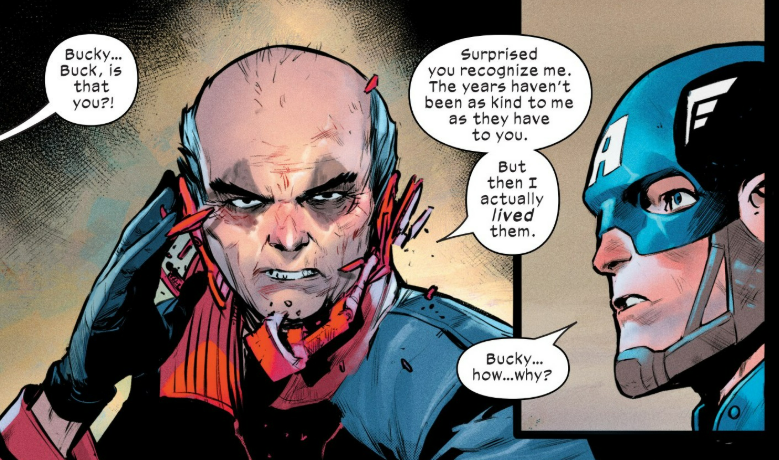
The heartbreak of Bucky Barnes lies in the slow and natural decay of his life after Steve disappeared. He never enjoyed the luxury of being frozen in ice or manipulated by a secret lab. Instead, he watched the world rot in real time while attempting to survive as an ordinary man. He ran for Congress and failed because the system was already rigged against him. He worked as a mechanic until self-repairing cars made his skills irrelevant. Finally, liver cancer and the weight of being abandoned by his country pushed him into the arms of the H.A.N.D.
He became the Grand Skull because he grew tired of being a ghost in a world that did not want him. This version of Bucky Barnes chose his path. His fall feels permanent and visceral. He represents a society that discards its veterans once they are no longer useful. Radicalization came through years of loneliness and systemic neglect. Seeing a hero turn to hateful ideology because he simply wanted to matter again is terrifyingly grounded. He is a man who was left behind by the very future he fought to secure.
The High Tech Horror of Fatherlandville
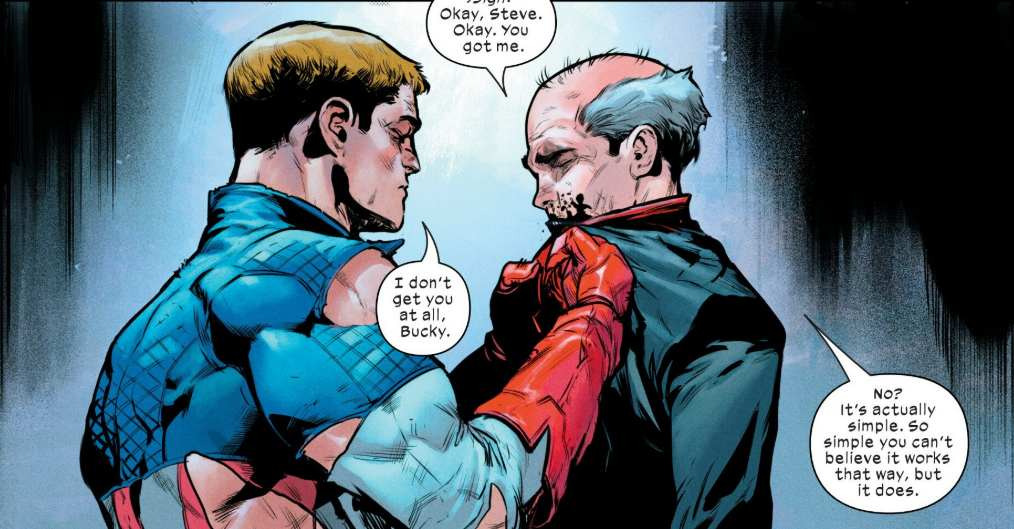
The modern confrontation in Fatherlandville acts as a visual nightmare of the corrupted American dream. Bucky leads an army of cultists behind human shields and high-tech weaponry provided by the Maker. Steve forced himself through the wreckage just to reach his brother. The action stays frantic and visceral throughout the sequence. Every shield toss feels like a desperate effort to reach a man who is already gone.
When the Grand Skull armor finally breaks, we see a dying old man instead of a formidable villain. The scene provides a moment of pure vulnerability that highlights the cruelty of the Maker’s system. Juan Frigeri does an incredible job showing the weight of every single blow. Captain America moves with a grace that feels almost tragic as he dismantles the armor of his best friend. The carnage in the background serves as a constant reminder that this battle belongs to a larger war. Focus stays on the two men at the center. Their struggle represents the ultimate failure of the old world’s ideals in a new and cold reality.
A Visual Masterclass in Contrast
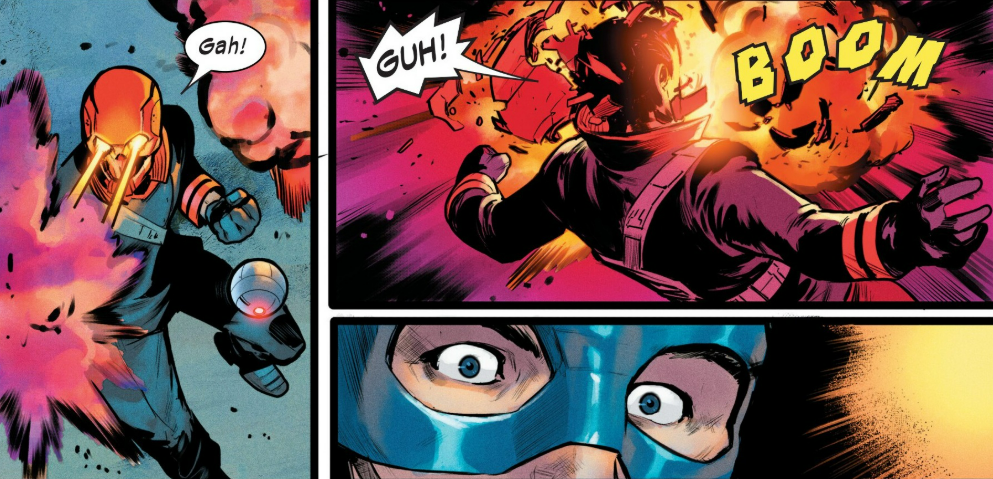
Juan Frigeri and Federico Blee deliver a visual masterclass that elevates the emotional weight of the script. The contrast between the sepia-toned past and the cold, clinical present tells a story of its own. Blee uses a muted palette for the modern-day sequences to reflect the hopelessness of Bucky’s environment. Frigeri excels at character acting, particularly in the way he renders the aging process of Bucky Barnes. The Grand Skull armor looks like a high-tech sarcophagus, making the reveal of the frail man inside even more devastating.
Action sequences feel heavy and consequential, with every impact leaving a mark on the surroundings. The layouts guide the reader through the chaos of Fatherlandville while keeping the focus on the intimate struggle between the two leads. Frigeri captures the grace of Captain America in motion, yet he never loses sight of the exhaustion behind the mask. The art remains the connective tissue of the issue, turning a political thriller into a deeply personal character study. Every panel feels intentional and loaded with meaning.
A Mercy Kill That Breaks the Shield
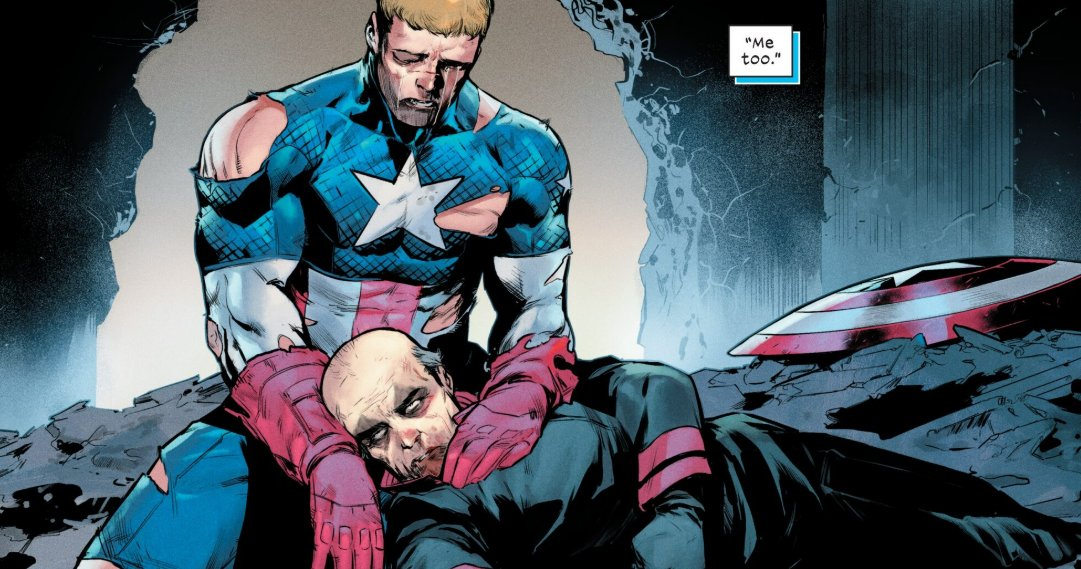
The conclusion of this issue delivers a moment that will likely be discussed for years. Bucky reveals himself as a suicide bomb with a dead man’s switch wired to his heart. Even after Quicksilver saves the civilians, Bucky remains a man beyond rescue. He is terrified of death but even more terrified of the life he has led. Steve Rogers finds himself forced to do the one thing he always refuses to do. He gives his brother peace by breaking his neck.
The moment serves as a mercy kill that avoids all the usual tropes of superhero resurrections. That haunting conclusion ends a relationship that once defined the best of humanity. The silence of the final page is deafening. Steve holds the body of the man he grew up with while the fires of the revolution burn in the distance. Pure and unfiltered grief transcends the usual boundaries of the genre. There is no triumph here. Only cold reality remains. Captain America has saved the hostages at last, but he has lost his soul in the process.
Conclusion and Verdict
The Ultimates #22 stands as a masterclass in handling character-driven stakes during a massive crossover event. It proves that the most effective way to show the horror of a fascist regime is through the personal lives it destroys. The art and colors work in perfect harmony to underscore the tragedy of the forgotten veteran. While the world continues to fight for its freedom, Steve Rogers has to walk away from the corpse of his only family. It is a bitter and powerful reminder that in the Ultimate Universe, victory often feels like a defeat.
The narrative represents the most important Captain America story in years because it dares to let the hero lose something he can never get back. The contrast between the global uprising and this personal tragedy creates a sense of profound sadness. Deniz Camp continues to push boundaries in every issue he writes. The final verdict lands at a solid 8 out of 10 for this absolute masterpiece of a modern comic book issue. It is a work of art that stays with you long after the final page is turned.