
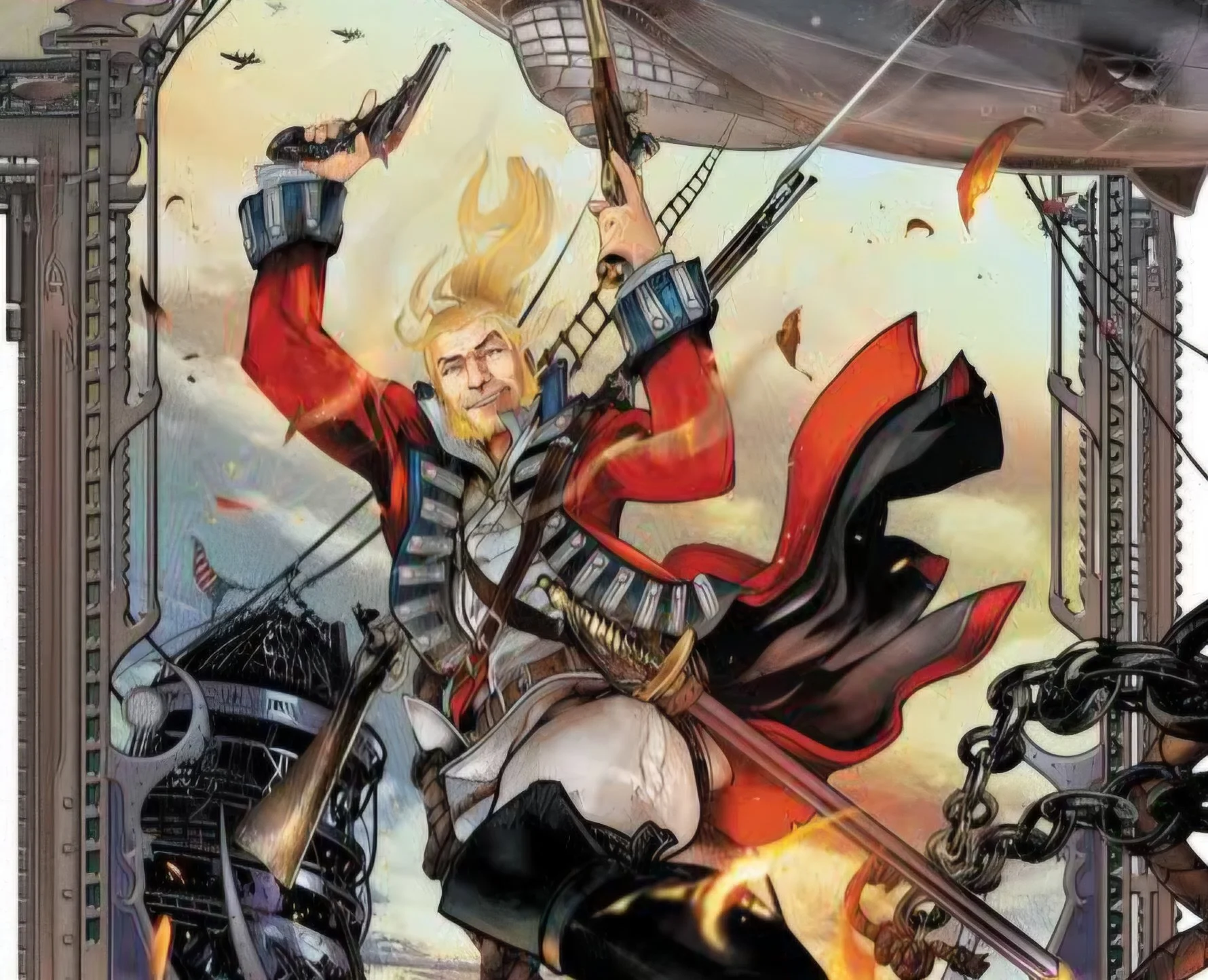
Redcoat is published by Image Comics under their Ghost Machine imprint and is written by Geoff Johns, with art by Bryan Hitch, ink by Andrew Currie, and colours by Brad Anderson
The Recap
Now that we are firmly into 2026, the series has settled into a very distinct rhythm—or, depending on which review circles you run in, a very distinct rut. Issue #18 hits the stands at a crucial transitional point for the series, dragging our un-killable British rogue into the dawn of the 20th century. Specifically, it is 1909, and the transition from muskets and gunpowder to factories and clock-punching jobs isn't going smoothly for Simon.
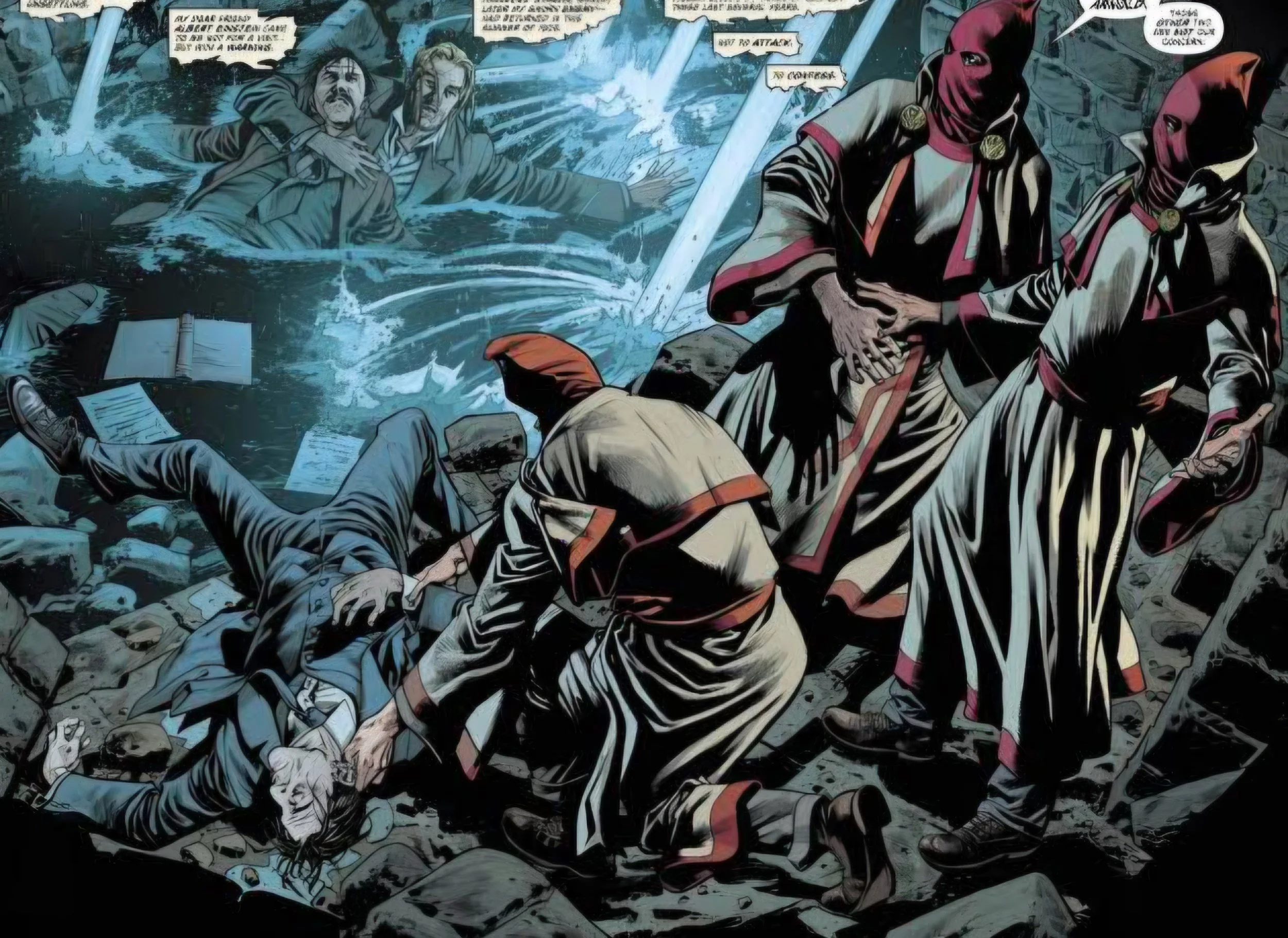
The issue opens immediately with high physical stakes, tossing us right into a tense, claustrophobic nightmare. We find Simon Pure trapped in a rapidly flooding basement, with water rushing into the immediate area and threatening to drown everyone inside. Adding to the immediate chaos is the fact that a completely incapacitated Albert Einstein is lying flat on his back, running a very real risk of drowning if Simon doesn't mobilize immediately to drag him to safety.
But the rising water isn't the only threat in the shadows. Simon finds himself surrounded by a large number of mysterious robed figures sporting blood-red hoods that completely obscure their faces. These creepy cultists reveal themselves to be the devoted followers of George Washington—the very same clandestine cabal whose bizarre 1776 ritual accidentally cursed Simon with eternal life in the first place.
The cultists aren't just here to watch Simon drown; they are hunting a specific target: Benedict Arnold. Simon had fondly hoped his immortal nemesis turned to ash and drifted out to sea after their brutal encounter back in 1892. Instead, Arnold chooses this exact, waterlogged moment to make his grand return. Armed with an eerie composure, Arnold claims he hasn't returned for petty revenge. Instead, he drops a massive bombshell: he wants to help Simon’s 20th-century family achieve the exact same immortality they share.
As Simon narrowly escapes the flooding cellar with an unconscious Einstein in tow, the physical conflict shifts entirely into a domestic battlefield. Forced into a corner by the sudden reappearance of his past, Simon has no choice but to return home and confess absolutely everything to his modern wife, laying bare the horrifying truth of his eternal existence and the enemies tracking his footsteps.
Story and Execution
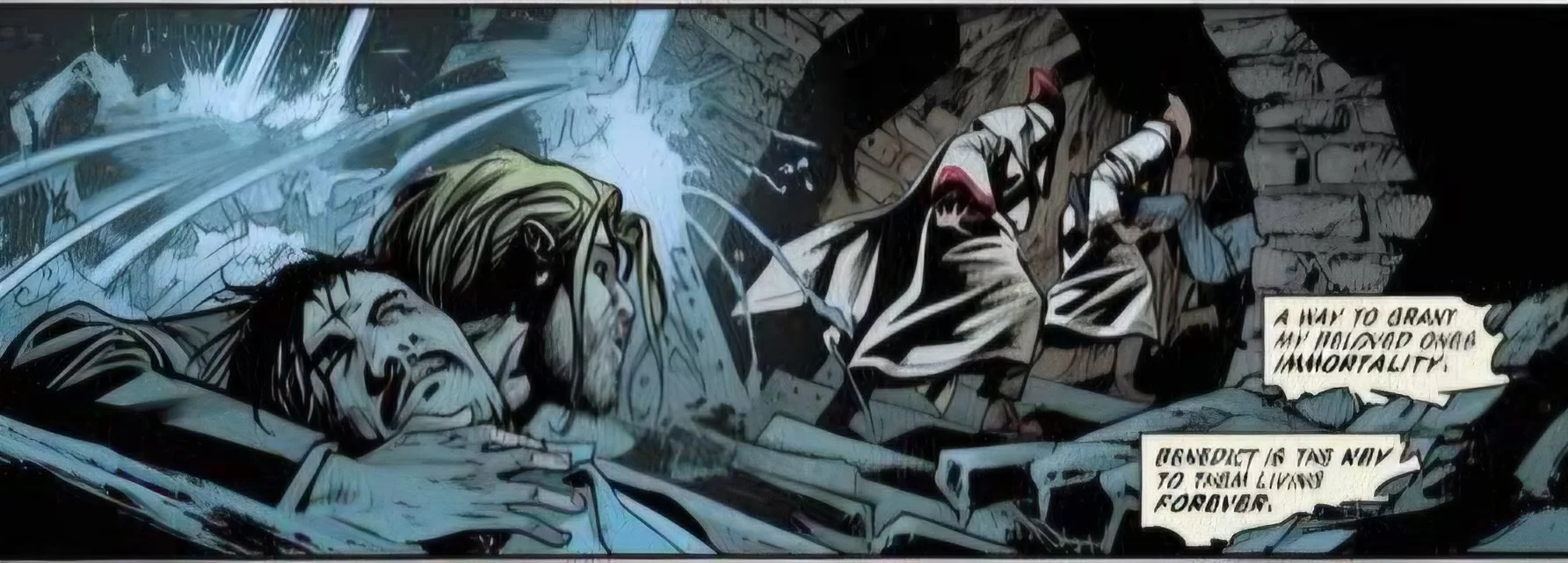
Geoff Johns’ narrative approach in Redcoat #18 is ambitious, attempting to balance high-concept historical sci-fi with intense, small-scale domestic drama. The central hook of the issue—Benedict Arnold returning not as a cackling villain, but essentially peddling immortality like a supernatural multi-level marketing scheme—is fantastic. It highlights the deeply cynical, transactional nature of the historical figures in Johns’ universe. Arnold isn’t just a traitor to a nation; he's a slick manipulator trying to compromise the one thing Simon has managed to keep pure: his quiet, mortal family life.
The meat of the issue relies on the emotional friction between Simon, his wife, and the terrifying weight of the life he has desperately tried to put behind him. Johns writes the marital confrontation with a surprising amount of emotional gravity. For a character who spent the early issues bumbling recklessly through American history and making an absolute mess of the space-time continuum, seeing Simon genuinely terrified of losing his wife's trust gives the character some much-needed growth.
However, your mileage may vary depending on how much you enjoy Johns' specific brand of historical myth-making. There is a palpable divide in the comic community right now regarding this run. Some prominent review outlets, like Comicon, have pointed out that the book risks getting bogged down by its own reliance on euro-centric colonial history, often ignoring the perspectives of marginalized voices from the eras Simon travels through to focus on a Hollywood-style "wild frontier" ideology. While that macro-critique hangs over the broader series, this specific issue keeps its focus tight on the immediate drama of Simon's domestic life, showing the literal horror of earthbound immortality and how it inherently corrupts any chance at a normal relationship.
Pacing
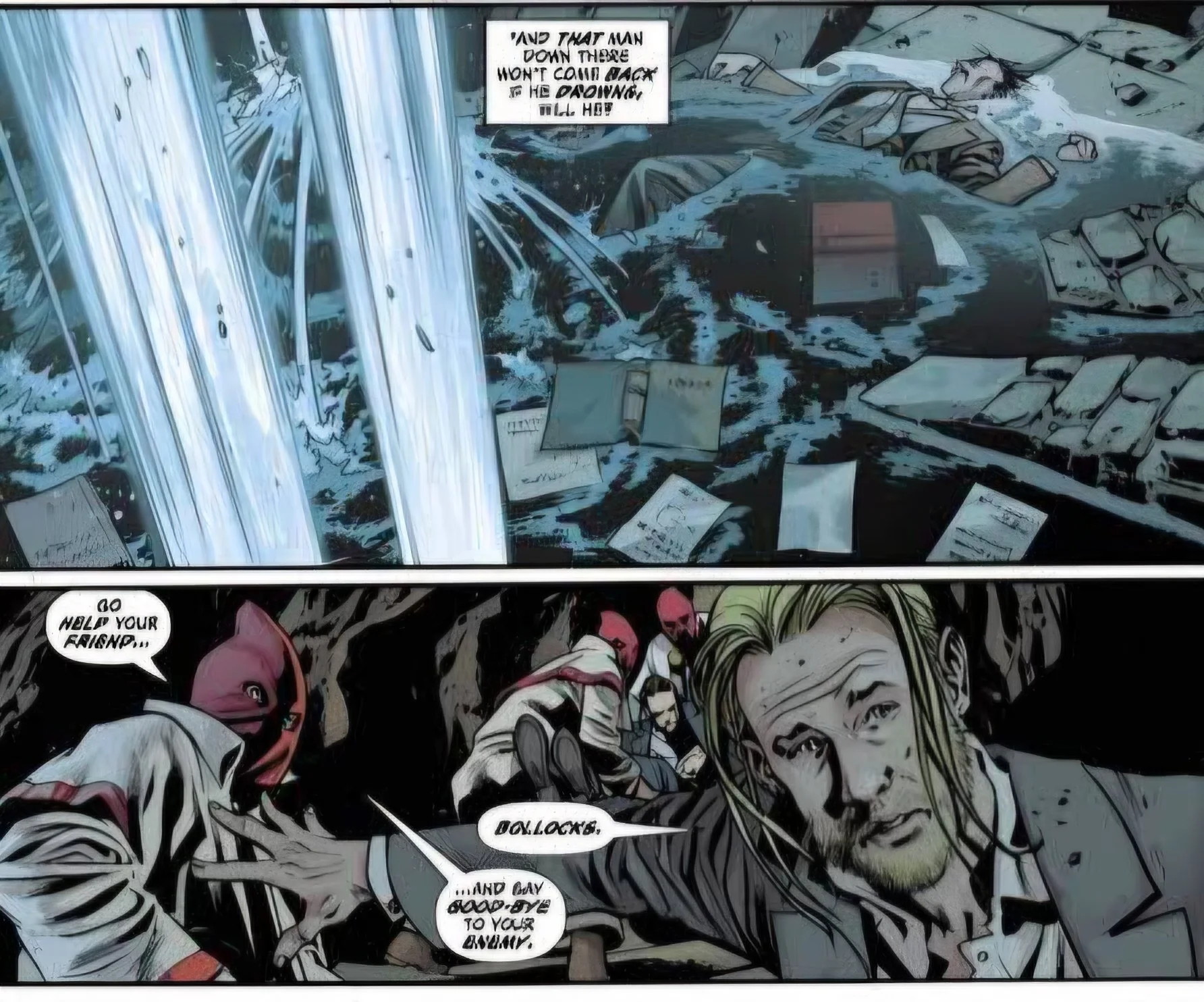
The pacing of Redcoat #18 is bound to be a bit polarizing. The comic attempts to sprint out of the gate with the flooded cellar sequence, using the ticking clock of the rising water and an endangered Einstein to create instant momentum. It’s an effective visual sequence that grabs your attention, but the script hits the brakes hard the moment Simon gets clear of the basement.
From that point on, the issue shifts entirely into a dialogue-heavy, "talking heads" comic. Pages are stuffed with dense exposition as characters debate the nature of Arnold's return and Simon undergoes his agonizing domestic confession. On one hand, outlets like You Don't Read Comics have praised this structural shift, noting that Johns manages to cram an incredible amount of emotional substance and dramatic weight into the script without making it feel totally unreadable.
On the other hand, the sheer volume of dialogue panels slows the visual momentum to a crawl. If you’re opening a Bryan Hitch book expecting the kinetic, explosive action of The Ultimates, you might find yourself checking your watch during the extended kitchen-table arguments. The transition from action-heavy sci-fi to intense emotional drama is jarring, and while the character work is solid, the narrative decompression that has occasionally plagued the Ghost Machine lineup is definitely present here.
Art
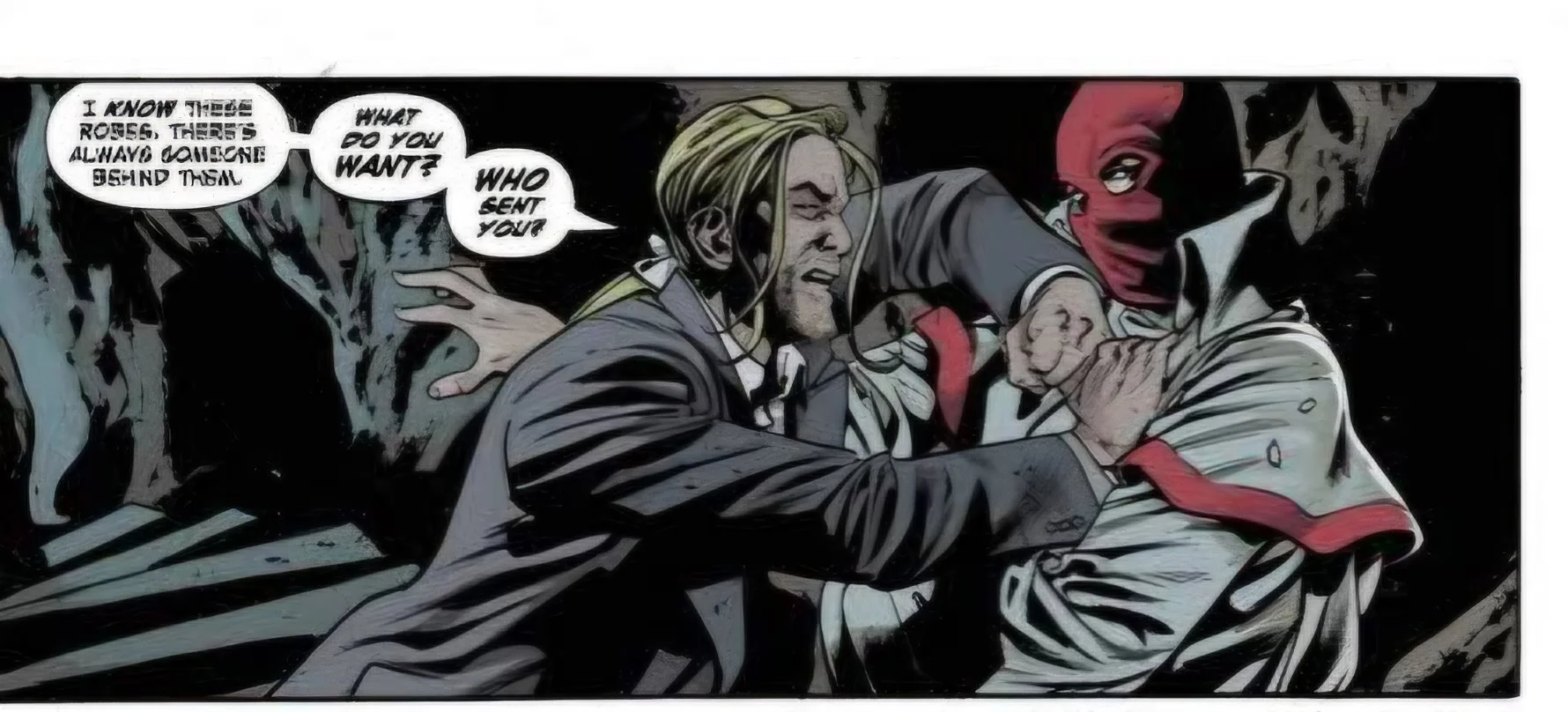
If there is one aspect of Redcoat #18 that stands completely uncontested, it is the phenomenal visual work delivered by the art team. Pencil legend Bryan Hitch, alongside long-time inker Andrew Currie, proves exactly why they are considered masters of the medium. Hitch brought the concept of "widescreen comics" to the mainstream decades ago, and he brings that same cinematic scale to even the most mundane settings in this issue.
The opening sequence is a masterclass in environmental tension. Hitch and Currie render the liquid physics of the flooding cellar beautifully, using heavy blacks and sharp, jagged inks to make the water feel like a genuine, suffocating threat. The design of the red-hooded Washington cultists is strikingly eerie, their obscured faces casting deep shadows that contrast brilliantly against the chaotic background elements.
When the story moves into the dialogue-heavy second half, the art team prevents the pages from becoming visually stagnant. Hitch drives the domestic drama forward with incredibly vivid, nuanced facial expressions. You can read the absolute exhaustion, terror, and vulnerability on Simon’s face during his confession, matched perfectly by the subtle shifts from shock to heartbreak in his wife's expressions.
The visuals are elevated to another level entirely by lead colorist Brad Anderson. Anderson’s color palette anchors the book’s shifting tones flawlessly. The basement scenes are dominated by cold, murky blues and sickly greens, punctuated by the piercing, violent crimson of the cultists' hoods. When the scene transitions to Simon's home, the palette shifts into warmer, earthier tones that emphasize the fragile comfort of the domestic life Simon is desperately trying to protect. It’s an immaculate-looking book from cover to cover.
Final Verdict
Ultimately, Redcoat #18 is a deeply respectable, highly polished entry in the Ghost Machine catalog, even if it doesn't entirely break out of the decompression traps that hold it back from being a masterpiece. Geoff Johns succeeds in giving Simon Pure some genuine emotional stakes, forcing him to confront the domestic consequences of his centuries-long lifespan while Benedict Arnold looms like a charismatic shadow over his family's future.
The book struggles slightly under the weight of its own dialogue, sacrificing its early physical momentum for a back-half dominated by exposition and marital strife. Yet, even when the script slows down, the legendary artistic trifecta of Bryan Hitch, Andrew Currie, and Brad Anderson ensures that every single panel remains a visual feast for the eyes.
If you are looking for a breakneck action comic, the heavy dialogue blocks might try your patience. But if you have been invested in Simon’s journey across the centuries and want to see the cracks finally begin to show in his cynical armor, this issue delivers the emotional goods. It is a well-crafted, gorgeous chapter that sets up an incredibly messy future for our favorite immortal rogue.