
Primos Premier Pro Wrestling has spent decades building an expansive wrestling community with Juggalo roots, international talent, long-form storytelling, and very little interest in becoming WWE Lite.
The promotion's signature annual event, Slave to the Deathmatch, has well over a decade of success, and the bloody, gritty deathmatch style is the company’s trademark, but on any given night, a Primos card is likely to get eclectic well before anybody reaches for a fluorescent light tube.
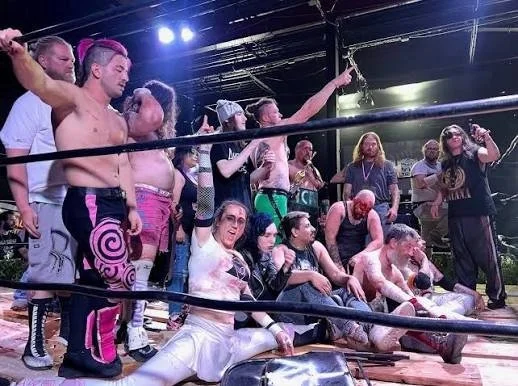
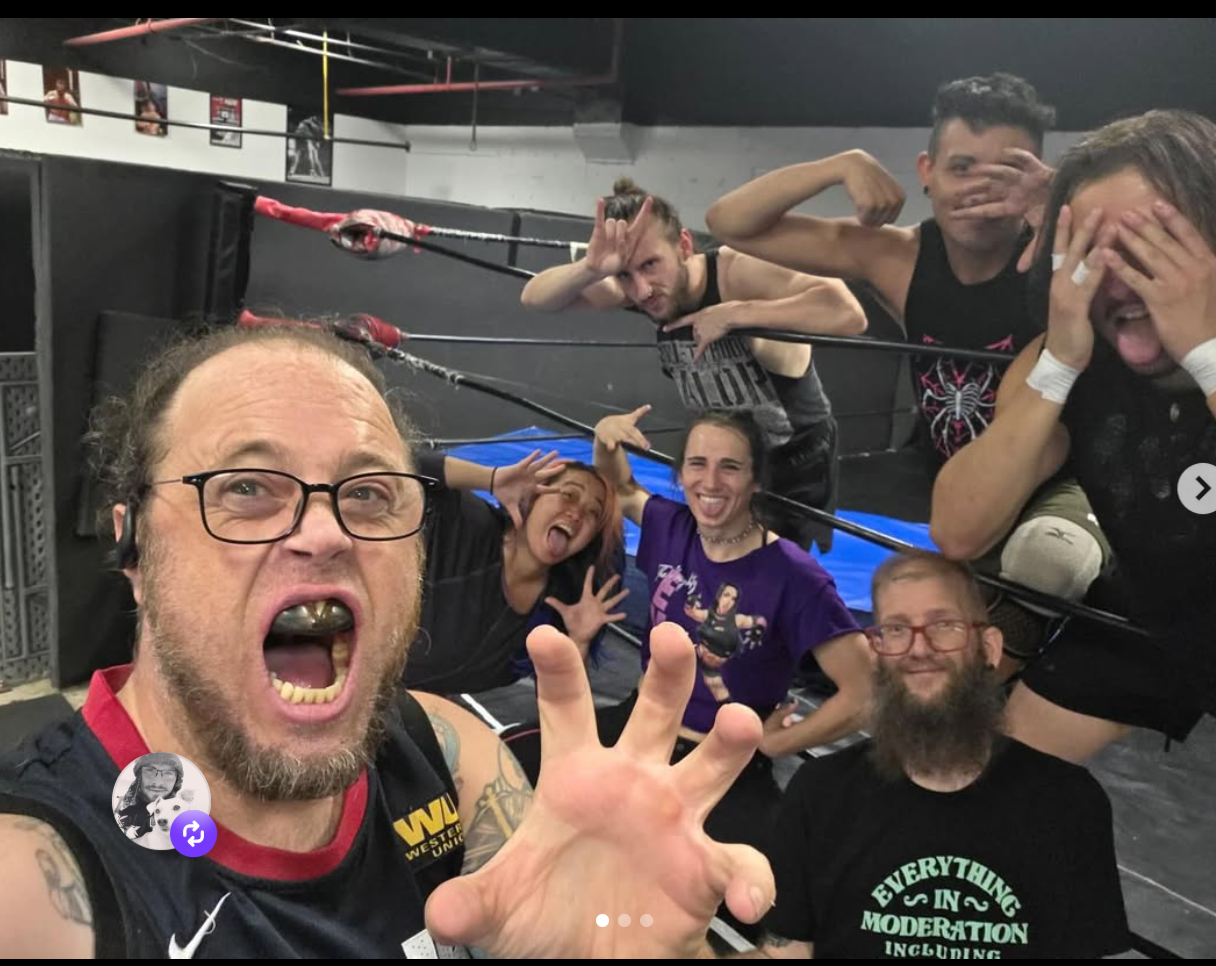
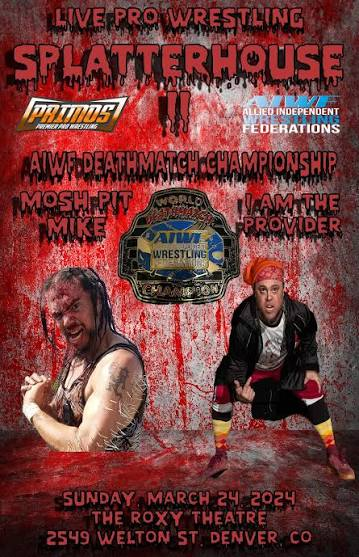
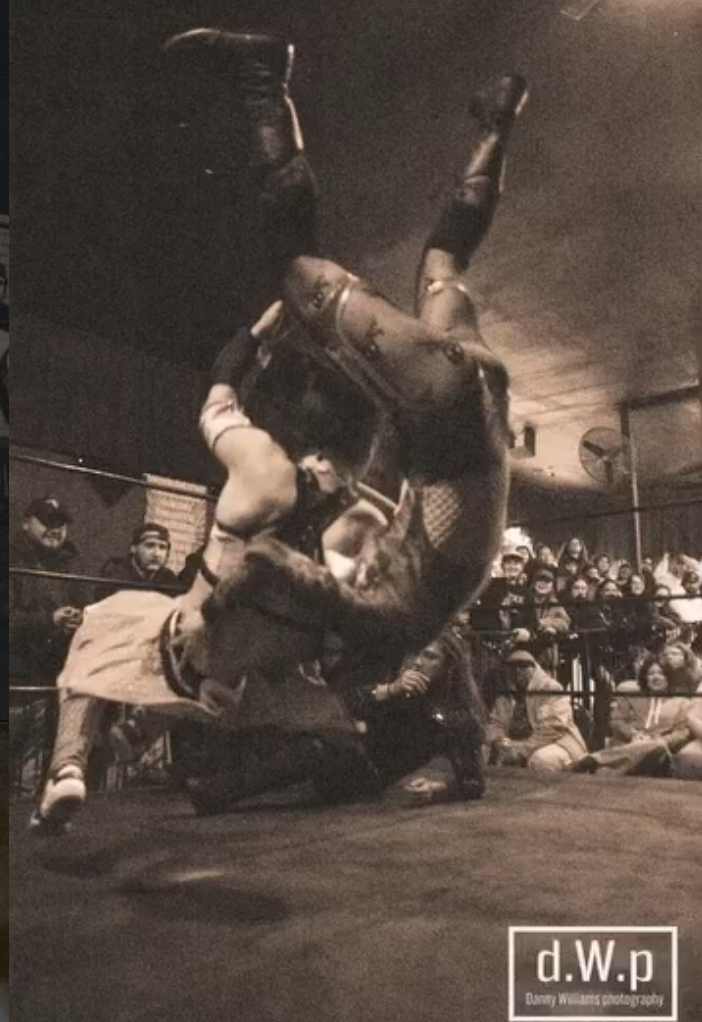
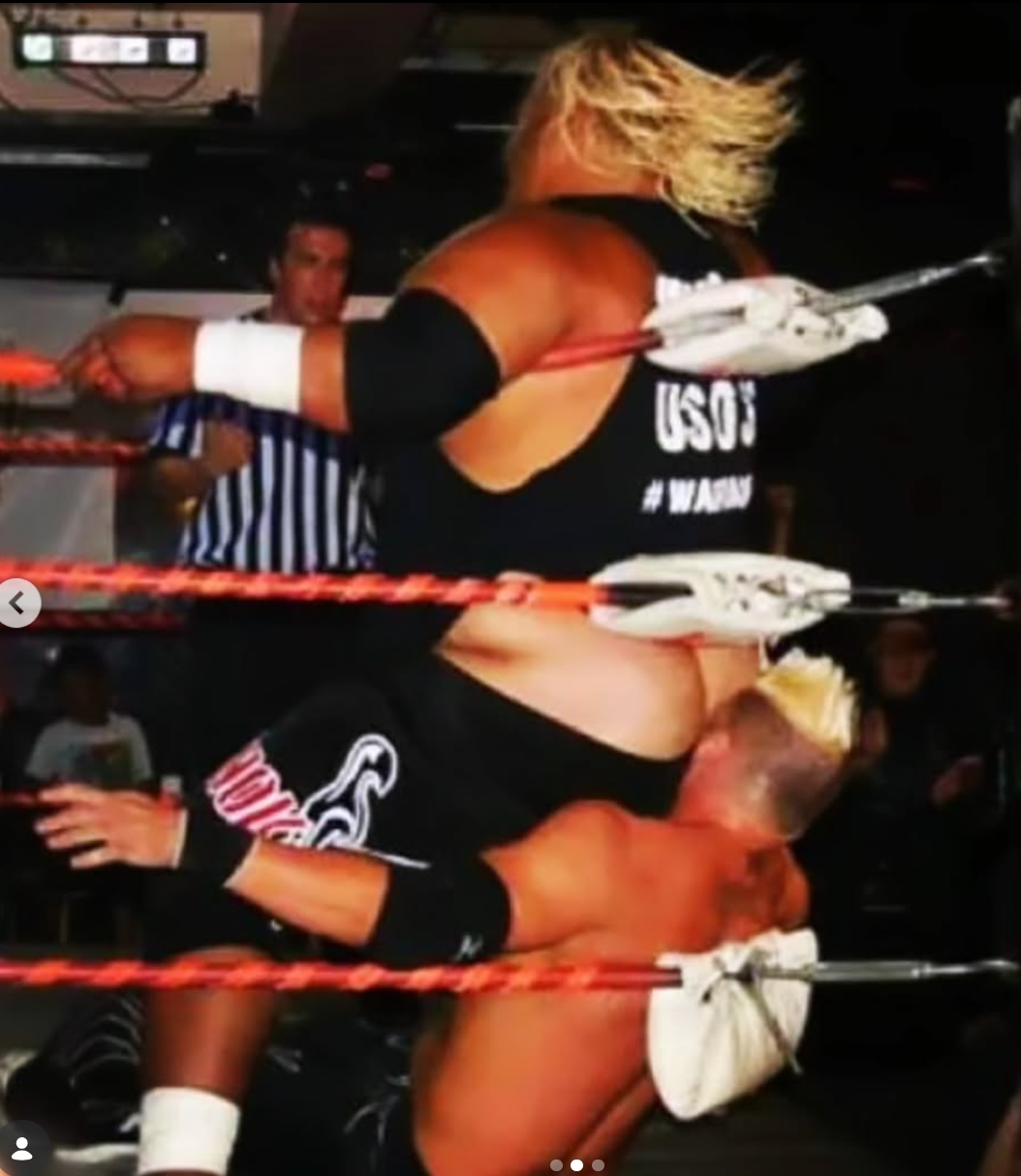
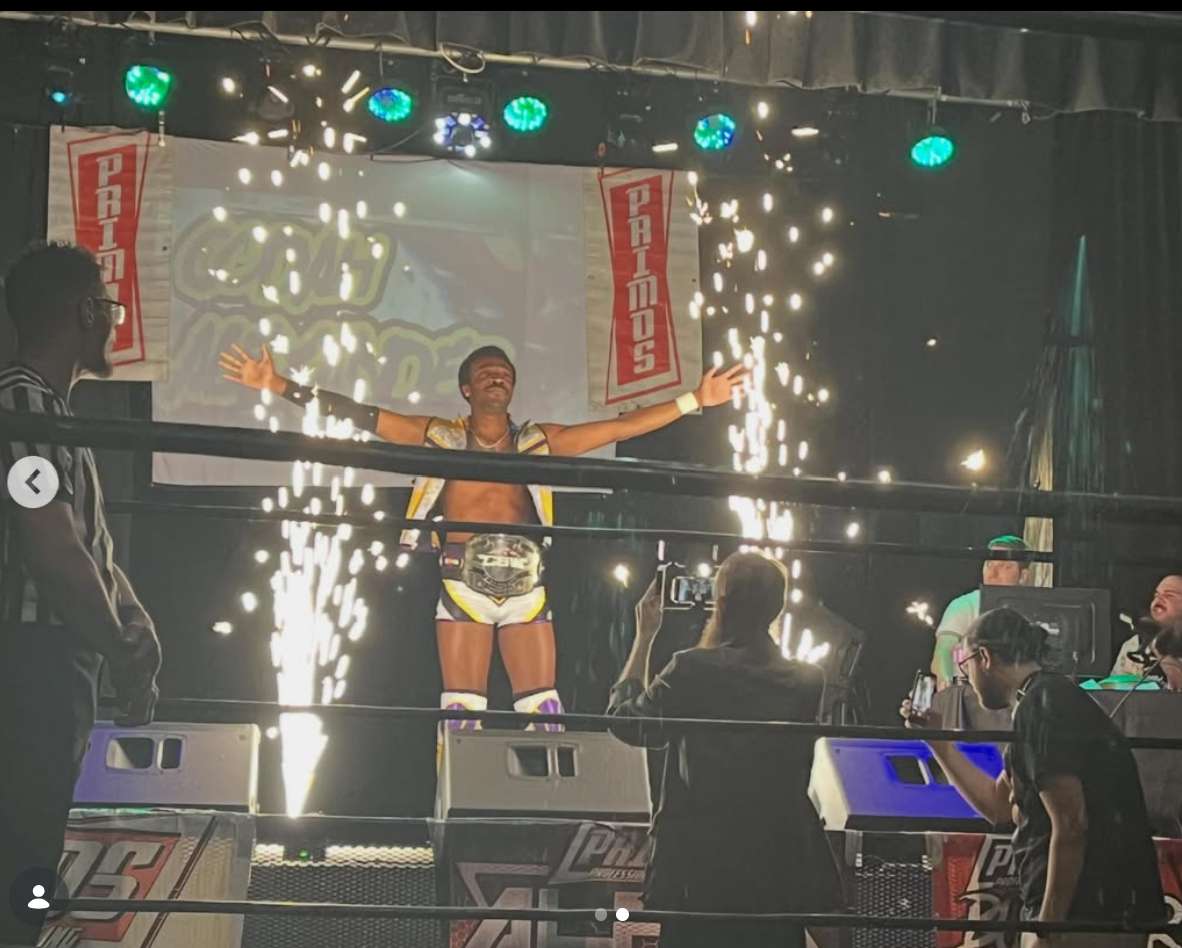
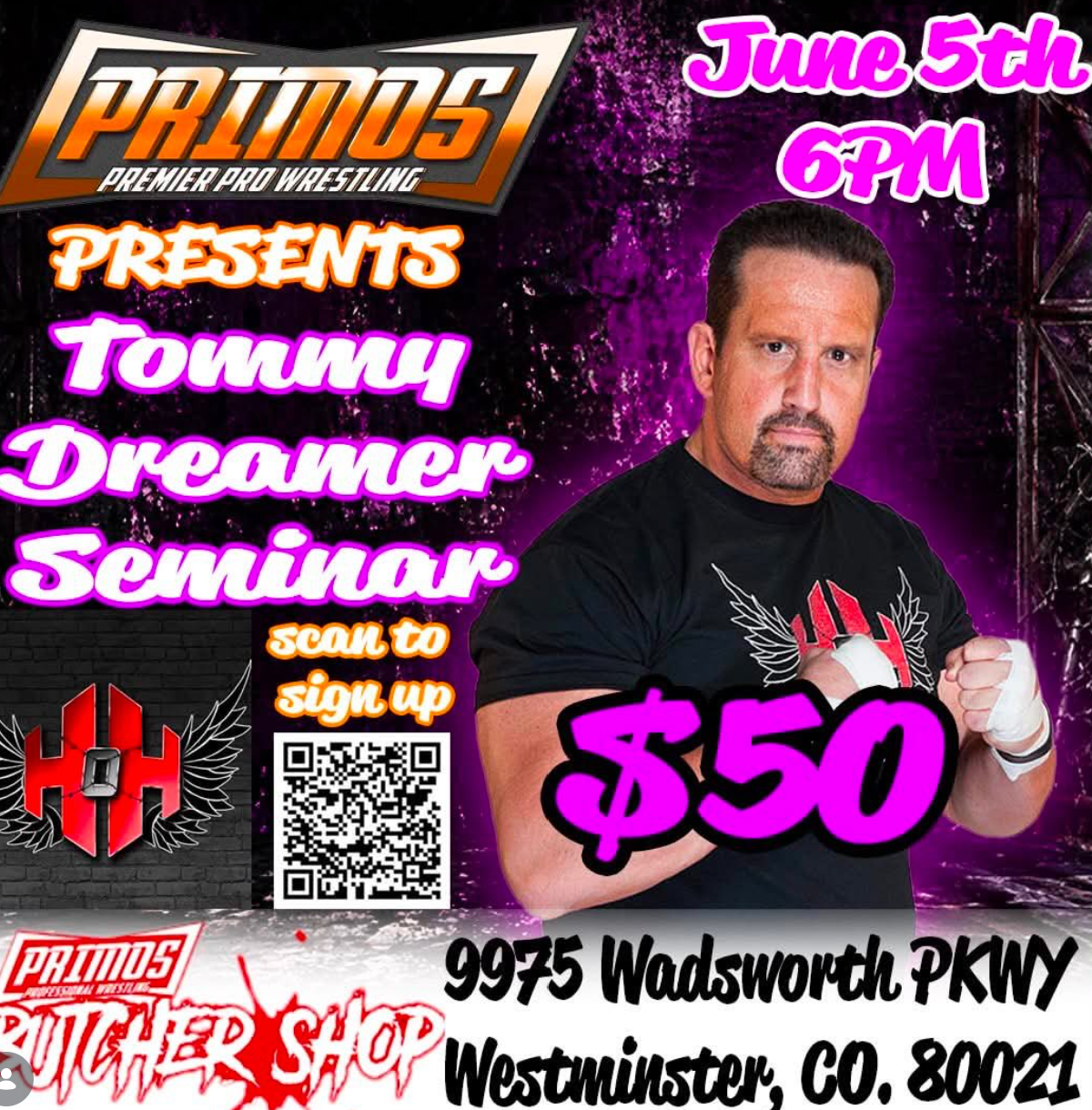
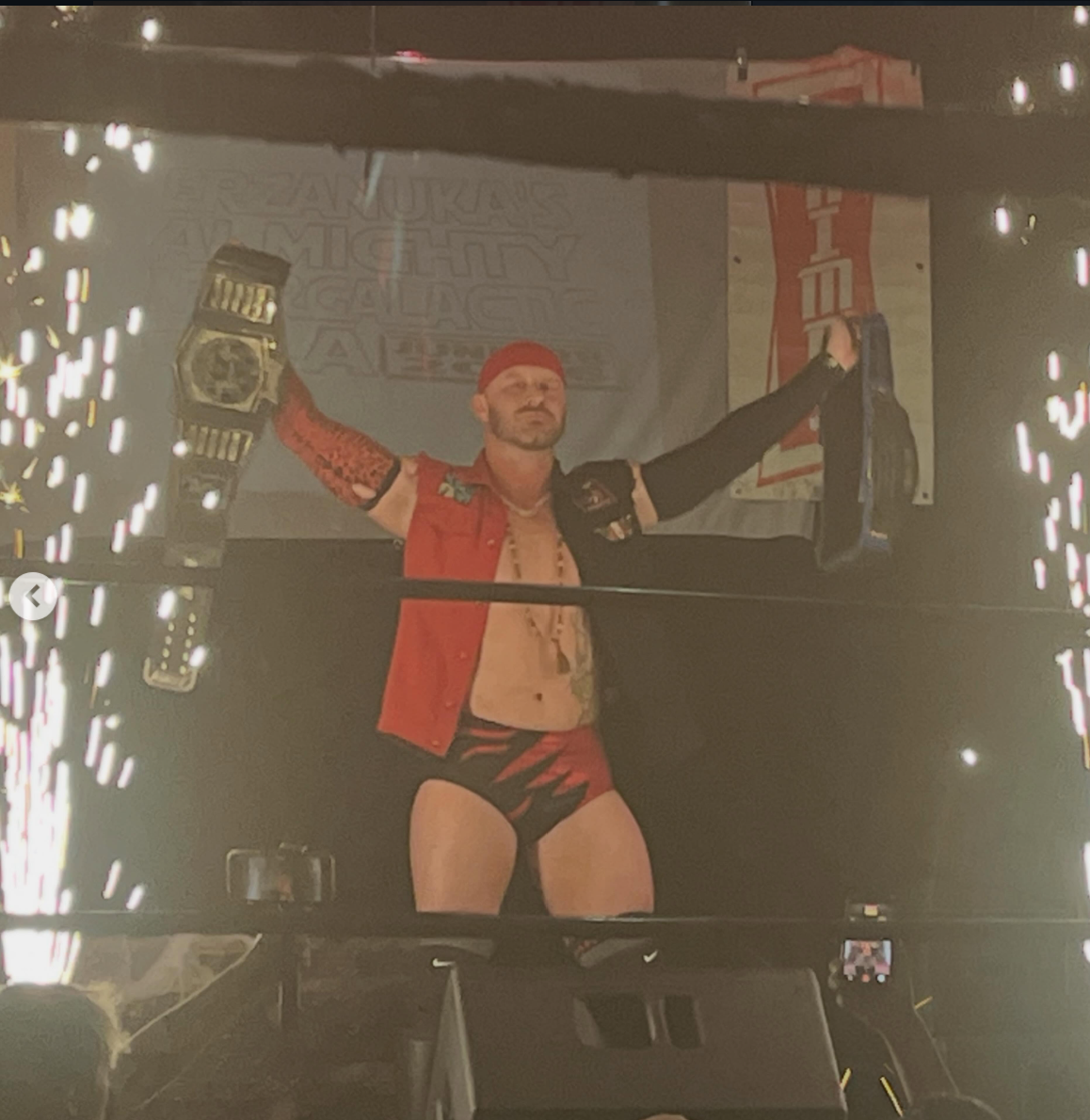
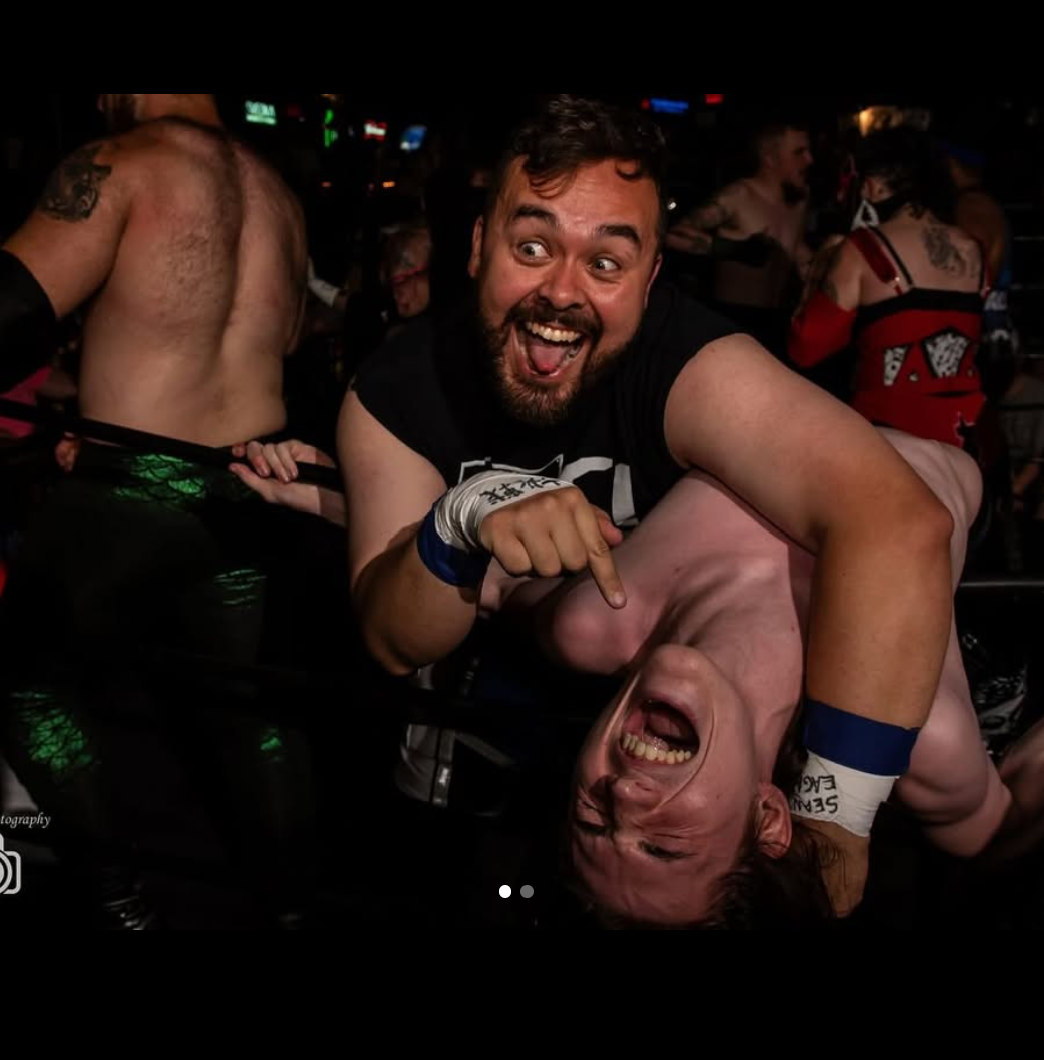
Joan Jetson’s 2022 Big Queer Launch included a “Don’t Say Gay” match and a Pride Flag on a Pole match. Three years later, the opening night of Slave to the Deathmatch XVI put a one-on-one match, an Evo Lucha title bout, a women’s deathmatch, and a main event 5-Way No Canvas Lights Out Denver Deathmatch.
Primos Premier Pro streams beyond its home crowd through TrillerTV, and this is one for fans to add to their watchlist because, for wrestling fans scrolling through an absurd, although delightful, number of independent shows every week, Primos has a notable distinction: it actually feels like its own company.
Of course, no wrestler is an island (that’s part of why we love it, right?), and Primos is no exception. It’s the longest continuous-running promotion in Colorado, and it shares talent and history with the wider American deathmatch circuit. New Jack, Mickie Knuckles, Mad Man Pondo, John Wayne Murdoch and Neil Diamond Cutter have all passed through its orbit. Wrestlers developed at its Butcher Shop have gone on to AEW, New Japan and promotions around the world.
But make no mistake, this isn’t just another stop on the indie circuit.
These shows come with their own mythology, hometown characters and fans who have watched relationships develop for years. A wrestler can get a “you sick fuck” chant for eating a durian. A heel can spend three years building a cult that culminates in stealing a baby.[1]
“We’re not WWE light,” owner, trainer and wrestler Joe McDougal said. “We are our own thing.”
Before Primos Was a Wrestling Company
McDougal’s history in deathmatch and Midwest wrestling is long and storied. He began wrestling in the late 90’s and came up through the IWF[2], a Denver-area promotion whose branches eventually included traditional American wrestling, lucha libre and Primos Hardcore & Wrestling, all connected to the original Butcher Shop training school.
One of McDougal’s trainers was Alan “Beetlejuice” Carnill, an old-school lifer: a Navy veteran who had worked in the Pacific Northwest, refereed WWF dark matches and became a trainer and promoter. Carnill died in a 2004 vehicle accident coming home from a Kansas booking. McDougal and Larry “Bubba” Shelton were both in the vehicle. Afterward, he gradually assumed more of the work Carnill had carried. Shelton said McDougal “took over his spot without really trying.”
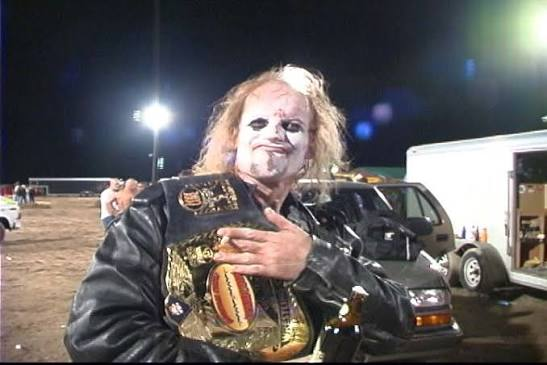
Alan “Beetlejuice” Carnill
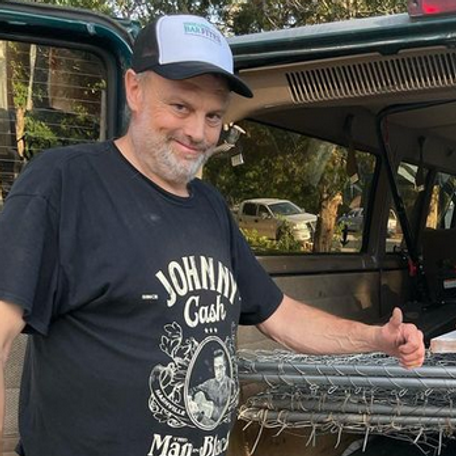
Bubba aka “Boss Man Jr” Shelton, Technical Director
Shelton brought his own wonderfully strange wrestling résumé. In the 1990s, he worked as Big Boss Man Jr., an independent riff on the WWF star he naturally resembled, complete with the flat-top Shelton says he was “born with.” At one Kansas television taping, he was introduced as “the son of a legend,” despite having no connection to “real” Big Boss Man. Shelton called his actual father afterward to congratulate him on apparently becoming a wrestling legend.
Shelton later developed a Redneck character who became part of Primos’ early mythology. Shelton originally favored a more conventional style, while McDougal wanted to push harder toward hardcore wrestling. Instead of keeping that disagreement backstage, they turned it into heat: McDougal’s Violent Juggalos and Shelton’s Rednecks became opposing factions.
The Juggalo side was more than a gimmick, too. The Primos name came from a Denver tire shop that had already become a gathering place for Insane Clown Posse fans, selling Faygo and Hatchet Gear, promoting horrorcore acts and building a community around people who often felt unwelcome elsewhere. The wrestling promotion inherited that outsider culture along with the name.
Primos also remains aggressively and stubbornly DIY. McDougal owns and repairs rings (with Shelton acting as tech and ring manager), trains wrestlers, books shows, wrestles and works production. His fiancée and business partner, wrestler Tyra Russamee, shares much of the same workload. People around Primos still see both carrying equipment, setting up, tearing down and filling whatever job suddenly needs doing.
A Different Animal
Schyler Ashwood came to Colorado after spending years around New Jersey’s now defunct Monster Factory, where he worked primarily as a ring announcer.
When he landed at Primos, his assessment was simple. It was “a different animal.”
From an announcer’s point of view, Ashwood said, it kept him constantly alert. Cards could change at the last minute. Workers had to improvise.
Instead of alienating him, it made him better.
He’s since returned to the East Coast but stays in regular contact with McDougal and Russamee and comes back out west whenever he can for shows. He credits them as unique in the field for their willingness to get gritty and find space for everyone.
The same description surfaced repeatedly in interviews. More than one person described McDougal and Russamee as stepping up over and over to keep the scene safe for everyone. More than one person I spoke with credited McDougal, specifically, for his willingness to call out predatory or bigoted behavior in the wider Colorado wrestling community. Many spoke about McDougal’s willingness to work again with wrestlers who had left the company badly or damaged relationships on their way out.
I explicitly invited people to criticize him. There were no takers, although everyone was quick to assure me, "Oh, he has enemies out there.”
When I told the deathmatch champion how much his students and wrestlers seemed to admire him, he said, “Good. Then they’re appropriately afraid. My cult works.”
Everyone kept returning to the same idea, though, and having spent a week with them, I’m inclined to agree.
Primos survives because its owners keep finding room for people.
Russamee calls it an “Island of Misfit Toys.” As a card-carrying misfit myself, maybe that’s why I felt at home as soon as I walked into the gym they share with a few other combat sports organizations.
Grit Can Grow
I should note, this isn’t some quaint plucky Rocky Mountain promotion without goals. The Butcher Shop has also produced talent who eventually outgrow the boundaries of one promotion.
Royce Isaacs, for example, trained there under Lonnie Valdez before becoming a Primos champion in 2014. He’s gone on to become an NJPW Strong Openweight Tag Team Champion, tour Japan, and appear for AEW.
That matters because Primos doesn’t train wrestlers exclusively for Primos, nor do they try to limit how and where they appear while training.
Russamee and McDougal expect folks to communicate, know their current professional limits, and be safe, but overall, the system assumes they may end up somewhere else.
Murdoc Graves, the Box State Brawler, told me he trains in both American professional wrestling and lucha. He’s the current Primos Chopping Block Champion
David Vega Jr. lives four hours from the Butcher School but happily makes the drive to train with the company. Still early in his career, he trains as a wrestler under the moniker David Vega Jr, while using his Christopher Garcia identity for wrestling content. He recently broke his toe fighting off a ferocious bear (or maybe dropping a dumbbell on it); the promotion was quick to help try to raise funds to support his recovery.
Erza Menagerie Tinker works as a wrestler, referee, and a one-of-a-kind creative performer whose character draws on science fiction, theater, gender identity, and mental-health themes. She has wrestled in Canada and multiple U.S. states, worked for JCW and performed lucha libre.
These different styles, both as wrestlers and as people, aren’t cordoned off into novelty divisions. They’re part of what makes the company.
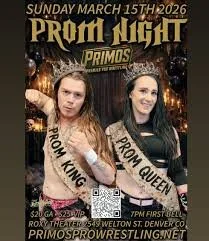
Primos runs Pride events and openly supports the queer community, but queer and trans talent appear on its regular roster without the company treating their existence as a special attraction.
“They always were,” McDougal said of the queer community and beyond. No one involved seems to want a pat on the back for inclusivity; it’s just what they’ve always been.
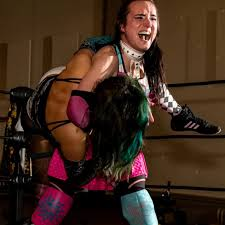
Erza Menagerie Tinker in the Ring
Tinker told me that was one of the things that drew her to Primos. She described the company as genuinely “pro-mentor” and “pro-community,” rather than one using inclusion as promotional language.
At Primos, she is a wrestler.
So is her partner (in tag-team and life), Azuka.
That sounds like a modest distinction until a company starts trying very hard to congratulate itself for allowing somebody into the room.
Deathmatch Is Wrestling
The deathmatch side of Primos can overwhelm everything else about the promotion, especially for viewers who see light tubes and assume they already understand what they’re watching. If you talk to anyone involved in deathmatch wrestling, you’re likely to hear, “it’s not for everyone.” But I think it’s for a broader audience than people assume.
Deathmatch wrestling has a lineage and a grammar, much of which is misunderstood.
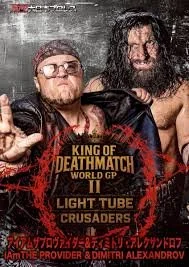
Japan’s Frontier Martial-Arts Wrestling made exploding-ring and barbed-wire deathmatches into major attractions under founder Atsushi Onita, who repeatedly headlined the company’s biggest shows in those stipulations. ECW helped popularize hardcore wrestling in the United States through its syndicated television program before reaching a national cable audience on TNN in 1999. IWA Mid-South launched its King of the Deathmatch tournament in 1997, and Combat Zone Wrestling followed with its Tournament of Death in 2002, helping establish the single-elimination deathmatch tournament as a durable American indie format. GCW eventually carried that tradition deep into the streaming era.
Primos’ Slave to the Deathmatch belongs to the same lineage.
The 2025 event was the tournament’s 16th edition, spread across three nights at the Roxy Theatre and Rickhouse in Denver and streamed on TrillerTV+. The shows included fans-bring-the-weapons, flaming-table, cinderblock, light-tube and no-canvas matches alongside lucha libre, championships and conventional wrestling.
Over the years, the tournament and promotion have brought Primos into contact with some of the most recognizable names in American hardcore wrestling. Primos wrestlers, meanwhile, have gone the other direction, working for JCW, AEW, New Japan, and other promotions around the world.
McDougal has traveled even farther. He’s wrestled in roughly 28 states, worked in Japan as recently as January, and made more than a dozen appearances connected to JCW and Bloodymania at the Gathering of the Juggalos. He also spent time living in Mexico while developing his lucha skills.
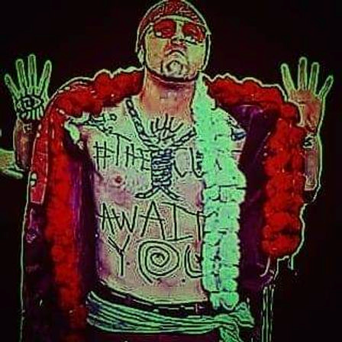
That résumé supports one of the central rules he teaches at the Butcher Shop: somebody who specializes in deathmatches still needs to know how to wrestle and do it right.
Deathmatch wrestling, in McDougal’s system, is an extension of the fundamentals rather than a replacement for them.
He describes one of his calculations as the “pain-to-pop ratio.”
If somebody is going to hit a dangerous-looking object, the moment should generate enough anticipation and reaction to justify the physical cost. He argues that a well-built deathmatch will involve fewer repeated bumps than a conventional match because so much of the match is constructed around anticipation of one major collision.
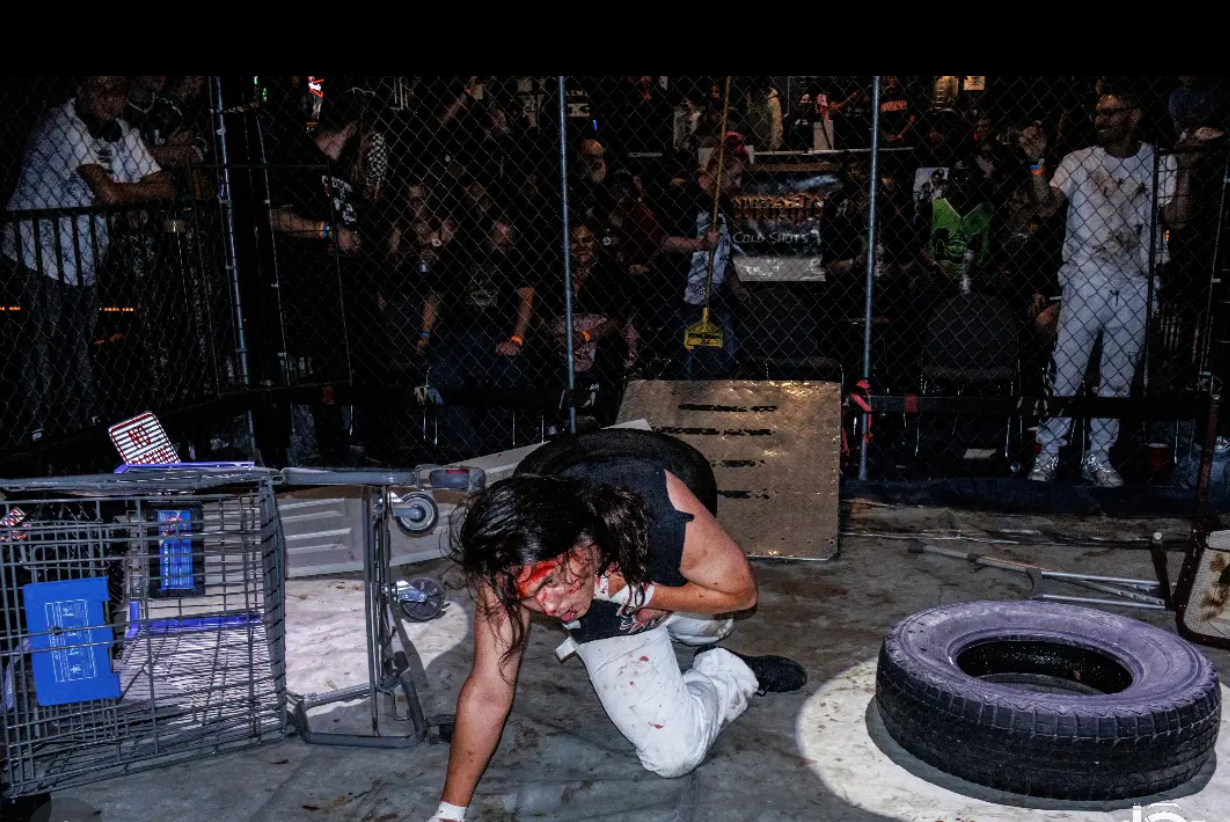
Nothing involving people throwing themselves backward onto wood and steel can be made safe in the ordinary meaning of the word, but the objective is to make the danger deliberate.
Russamee told me that across the company’s decades of operation, only one wrestler on its roster has suffered what she characterized as a serious permanent injury. It’s the kind of statistic that sounds almost impossible beside a highlight reel full of broken glass and barbed wire, but it also explains why people inside the form get irritated when deathmatch wrestling is dismissed as people hitting each other with garbage.
The best performers understand pacing, anticipation, illusion, and psychology. The words illusion and Houdini were mentioned more than once.
Primos champion Logan Ray Maes describes it as wrestling at its most “gritty” and “visceral.”
And Primos can get very strange with that principle.
Enter the Durian
Russamee is, well, a bad-ass, and she brings an entirely different wrestling lineage into the company.
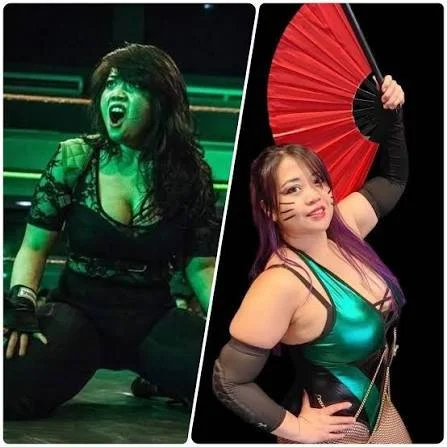
Tyra Russamee
The Thai and Chinese American wrestler began her career in Singapore in 2015, years before she joined Primos.
While visiting family in Colorado, a friend suggested that she train with McDougal. She eventually moved to the state, joined Primos in 2019 and became one of its central wrestlers, a coach and eventually a co-owner.
Somewhere in there, she and McDougal also became a couple.
A true squared-circle love story.
Russamee jokes that professional wrestling saved her from spinsterhood and alcohol problems, which is probably not the standard wellness claim made on wrestling-school brochures.
Russamee wrestled former AEW Women’s World Champion Hikaru Shida on AEW Dark: Elevation following a December 2022 taping in Broomfield. In February 2026, she teamed with Gypsy Mac against Jamie Hayter and Alex Windsor on AEW Collision in Denver.
She has simultaneously become one of Primos’ principal deathmatch wrestlers, working with barbed wire, light tubes, thumbtacks and fans-bring-the-weapons stipulations.
Which brings us to the durian.
During one match against Joan Jetson, Russamee used the notoriously pungent Southeast Asian fruit as a weapon.
Then she cracked it open and ate some.
Ashwood, who supplied the durian, remembers the crowd responding with a chant generally reserved for particularly deranged acts of professional wrestling:
“You sick fuck.”
It is difficult to imagine a cleaner encapsulation of Primos.
The spot is violent, weird, funny, culturally specific and completely dependent on a wrestler knowing exactly who she is and what part of that to exploit. I love it. The fans love it. You just might love it too.
Why Watch
There is little illusion that a massive corporate machine is hiding somewhere behind the curtain. Somebody had to transport the ring. Somebody is selling shirts. Somebody probably fixed something twenty minutes before bell time. Somebody wrestling later may have been setting up chairs.
That remains one of professional wrestling’s oldest pleasures: watching people build the thing they are about to perform inside.
Primos doesn’t try very hard to conceal that process.
None of that automatically makes a wrestling promotion good.
What makes Primos interesting is what it has built with it. FMW’s spectacle is in there. ECW’s defiance is in there. JCW’s Juggalo culture is certainly in there. So are lucha libre, the American wrestling school, the hardcore tournament, queer indie wrestling and the ancient local-wrestling tradition of one guy apparently being responsible for half the building.
Children learn promos in the same building where adults learn how to fall through weapons.
International veterans work beside beginners.
People who don’t fit neatly anywhere else find jobs as wrestlers, referees, announcers, camera operators, creatives or whatever somebody suddenly discovers needs doing.
And then the bell rings.
Primos isn’t gritty because it failed to become something slicker.
The grit is the product.
It’s why, after more than two decades of people carrying rings, losing buildings, surviving deaths, changing names, breaking glass and figuring out what comes next, Primos Premier Pro Wrestling still feels like Primos.
[1] Both parents are wrestlers with the company and were in on the gimmick.
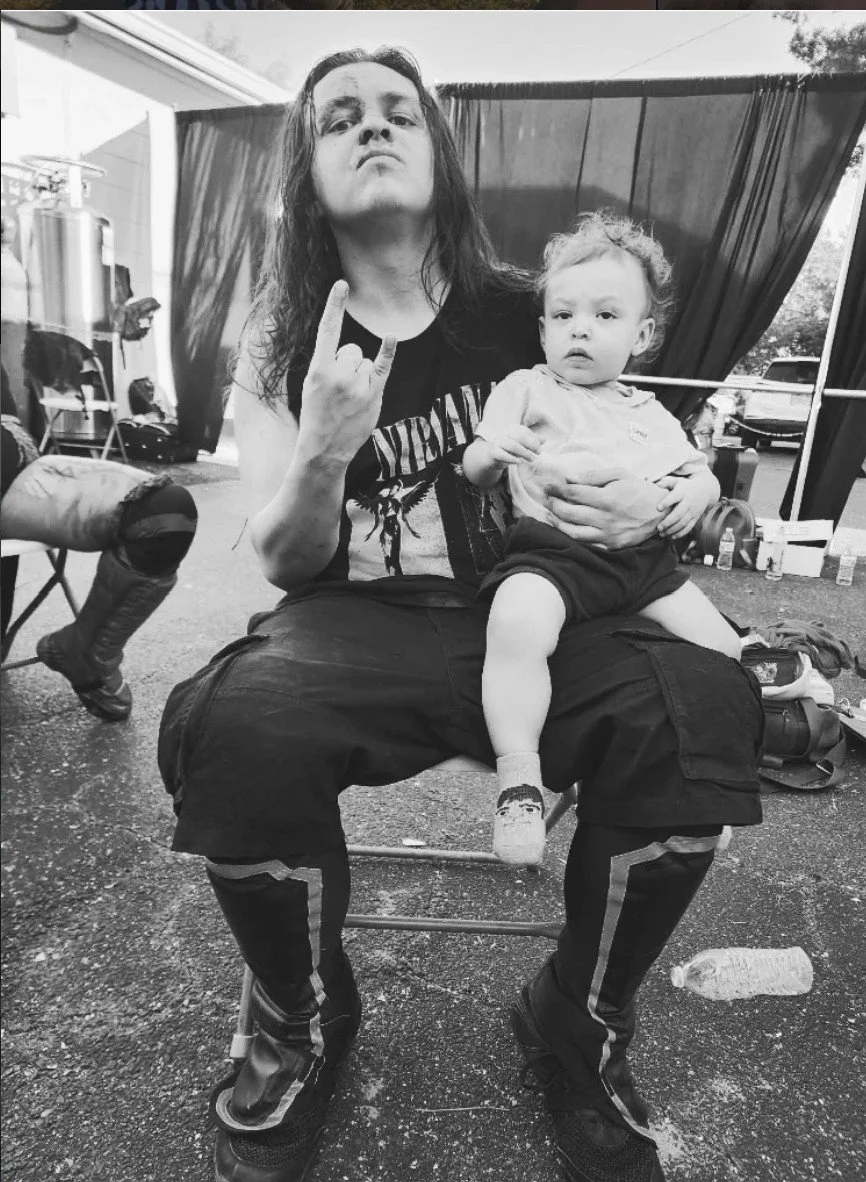
Logan Ray Maes is holding the youngest (known) deathmatch baby of all time. Probably.
HOW TO WATCH PRIMOS IN AUGUST
SummerSlam Watch Party
When: Sunday, Aug. 2; Primos meet-and-greet at 3 p.m. MT / 5 p.m. ET, watch party at 4 p.m. MT / 6 p.m. ET
Where: Tom’s Watch Bar – Coors Field, 1601 19th St., Denver
Where to watch: In person; this is a Primos-hosted WWE SummerSlam watch party, not a Primos wrestling card
Cost: No admission charge is currently listed; RSVP through Primos
RSVP: Primos event page
Scorched Summer 2
When: Sunday, Aug. 16; doors at 6 p.m. MT / 8 p.m. ET, bell time at 7 p.m. MT / 9 p.m. ET
Where: The Roxy Theatre, 2549 Welton St., Denver
Where to watch: The Roxy Theatre or live on TrillerTV+
Cost: $20 general admission or $25 VIP in person; TrillerTV+ is $7.99 per month or $69.99 per year
Tickets: Afton Tickets
Stream: TrillerTV+
Jenny Catlin is an award-winning writer and pop culture enthusiast based in the square states. She’s a contributing writer to The Athletic, a Lighthouse Writers Book Project Fellow, and the co-editor of the upcoming anthology Wrestling with Writing. She’s obsessed with obsession. You can find her on Instagram or Substack.