
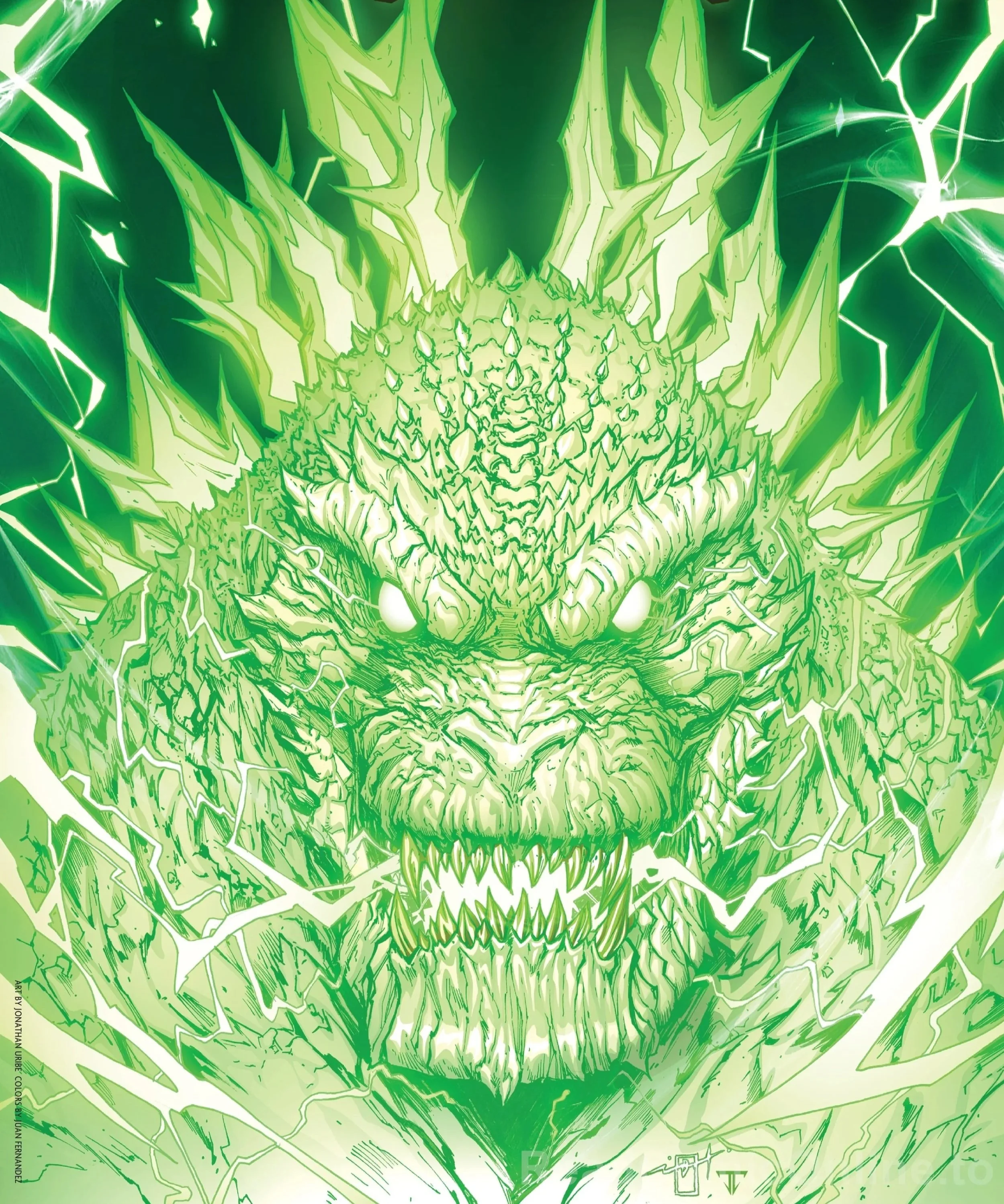
Writer: Tim Seeley
Artist: Hendry Prasetya
Colorists: Francesco Segala & Gloria Martinelli
Cover Artists: Jonathan Uribe & Juan Fernandez
Godzilla #7 continues a pattern that has defined this series from the start: introducing genuinely compelling ideas, only to pull back before fully committing to what makes a Godzilla story resonate. There are strong individual elements here, including an eerie new subplot, a rare moment of character growth for Captain Stine, a solid Anguirus encounter, and an exciting kaiju namedrop that hints at a more confident direction. Unfortunately, those elements are once again spread thin across a narrative that remains overly invested in human subplots and hesitant to let its monsters truly dominate the page.
At this point in the run, the problem is not a lack of imagination. If anything, the series has too many ideas competing for space. Godzilla #7 wants to explore emotionally complex ideas and the legacy of kaiju destruction, but it consistently does so at the expense of Godzilla’s presence. The result is an issue that flirts with becoming the kind of Godzilla comic longtime fans want, then retreats just before crossing that line.
A Quiet, Uneasy Opening
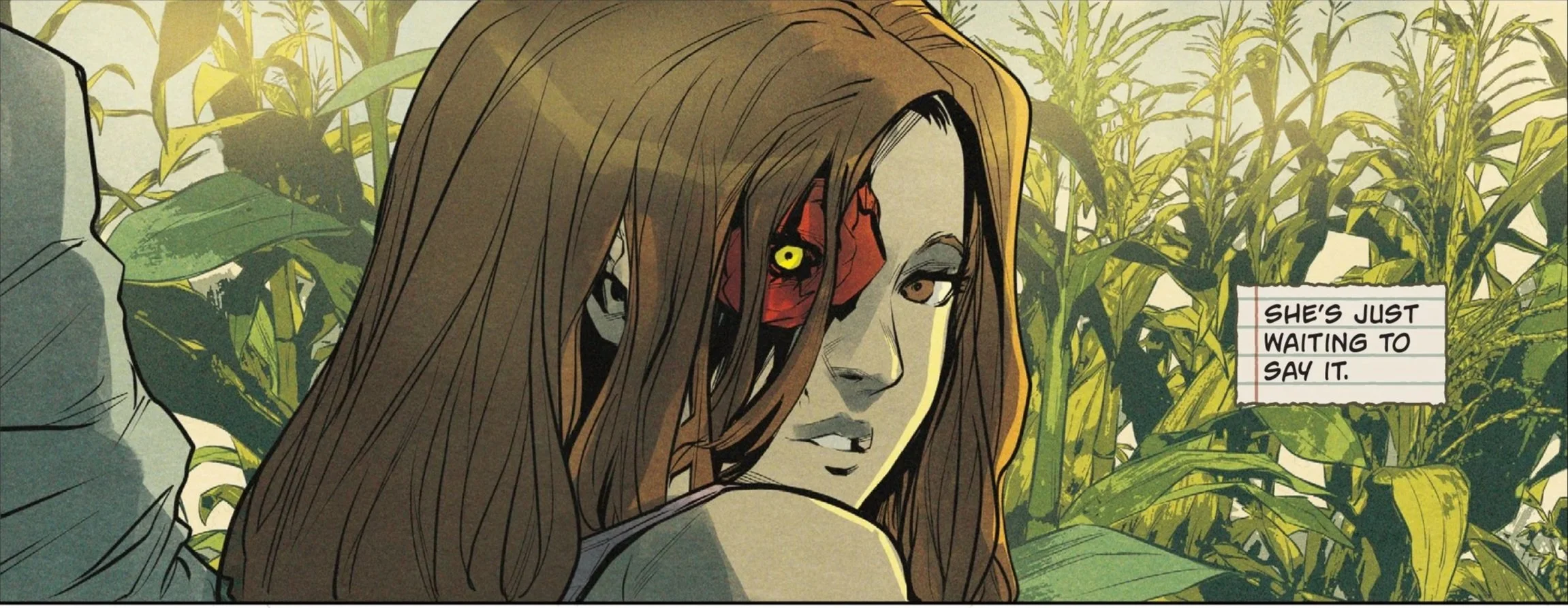
We see the mysterious Maya for the first time.
The issue opens on a remote farm, far removed from the usual military installations and big cities that dominate the series. A family has taken in a mysterious young girl with a Zuko-esque facial scar who does not speak. From the first page, the tone is subdued and unsettling in a way that feels deliberate. The silence surrounding the girl, paired with her visible trauma, creates a sense of unease that works precisely because the book resists the urge to overexplain it.
Midway through the issue, we briefly return to this setting as the girl wakes in the middle of the night, panicked by the sound of something outside the farmhouse. This sequence is one of the strongest in the entire issue; it relies on atmosphere and visual storytelling rather than exposition, allowing the tension to build naturally. These scenes demonstrate that the creative team is capable of subtle, effective horror when it chooses to be.
What makes this opening so effective is how sharply it contrasts with the rest of the book’s tendency to overstate its themes. Here, restraint works in the story’s favor, making the eventual payoff feel more exciting.
Godzilla Is “Dead,” and the World Reacts
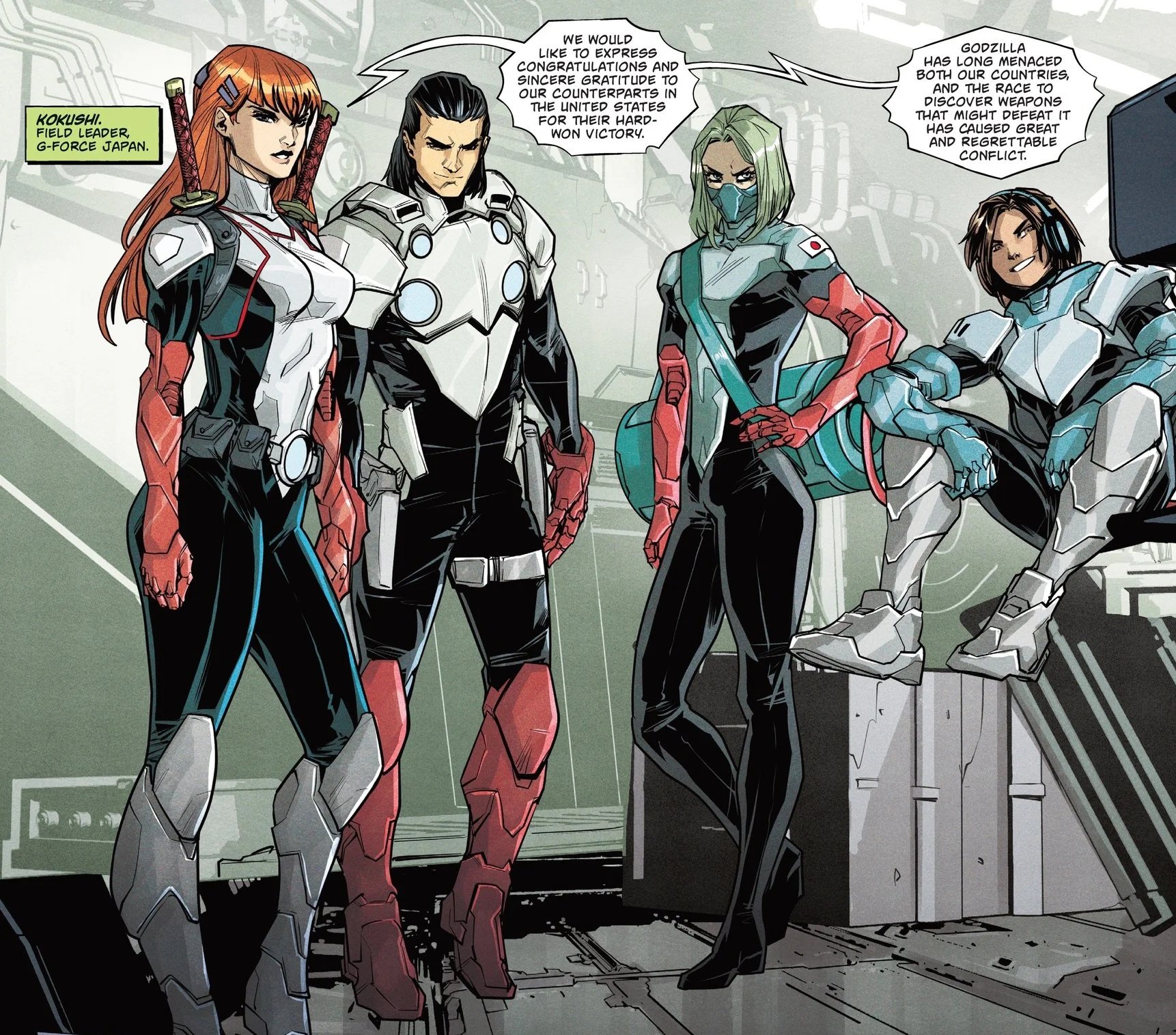
G-Force Japan address Godzilla’s death.
A news report announces that Godzilla has been killed, featuring an appearance by G-Force Japan. On paper, this should be a big moment for the series. In execution, it feels oddly rushed—which shouldn’t surprise me. The announcement glosses over enormous implications, though it does quietly reinforce Dr. Chiba’s isolation and separation from her homeland when her former teammates fail to mention her at all.
Captain Stine’s reaction to the news leads to one of the issue’s more effective character moments. Initially pleased by Godzilla’s supposed death, he shares a rare, reflective conversation with Dr. Chiba. Both characters acknowledge that their ideals may have been flawed, with Chiba even admitting that the world might be better off without Godzilla, despite her long-held belief that kaiju should not simply be destroyed.
Stine remains a blunt and frequently heavy-handed presence, but this scene allows him a moment of genuine introspection. For once, he reflects rather than postures. It does not erase his past characterization, but it does suggest growth. That growth, however, is fleeting, and the book does not linger on it long enough to give it real weight.
Jacen’s Storyline Continues to Crowd the Page
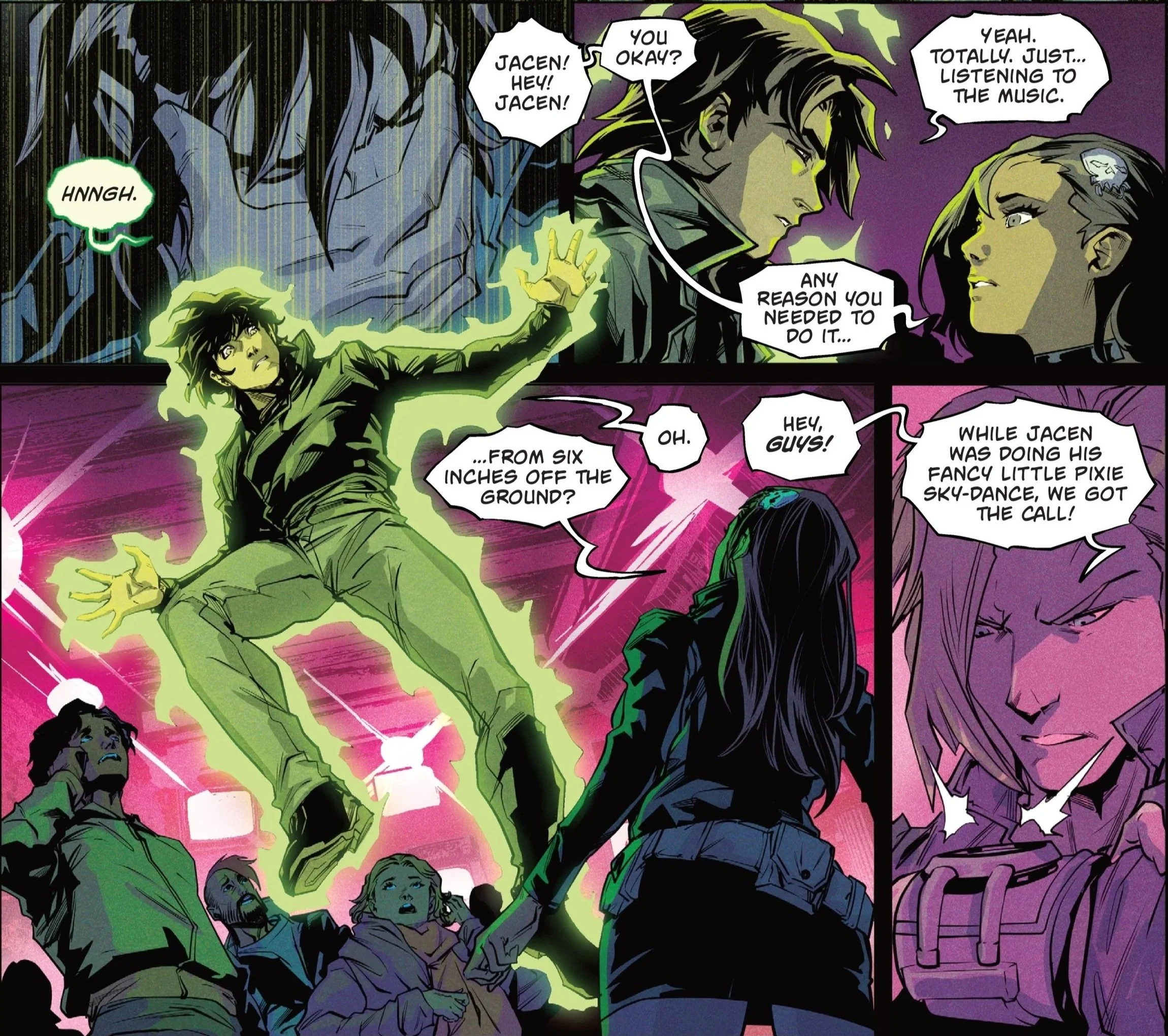
Jacen floats in the club for…some reason.
Jacen’s subplot resumes with a conversation between him and his roommate, Little Man, who continues to quietly report Jacen’s activities to unseen superiors. The scene exists largely to maintain that subplot rather than advance it in a meaningful way. It reinforces information the reader already knows without adding new emotional or narrative texture—other than the developing relationship with Nuki, which is wholly uninteresting to me.
The story then shifts to a concert where Jacen meets up with Nadine (Nuki), only to realize she has also invited Stefan (Incense). The resulting jealousy pushes Jacen into another emotional spiral, culminating in him glowing with Godzilla’s energy and briefly floating above the crowd. Visually, the moment is striking; narratively, it feels engineered rather than organic, designed to manufacture conflict instead of deepen character.
Jacen’s volatility continues to dominate the book, often at the expense of the kaiju. This is my main issue with the series: Jacen fails to be an interesting character, partly because I would rather be watching kaiju, but also because most of his emotional beats feel manufactured and unearned.
Anguirus Brings a Welcome Jolt of Energy
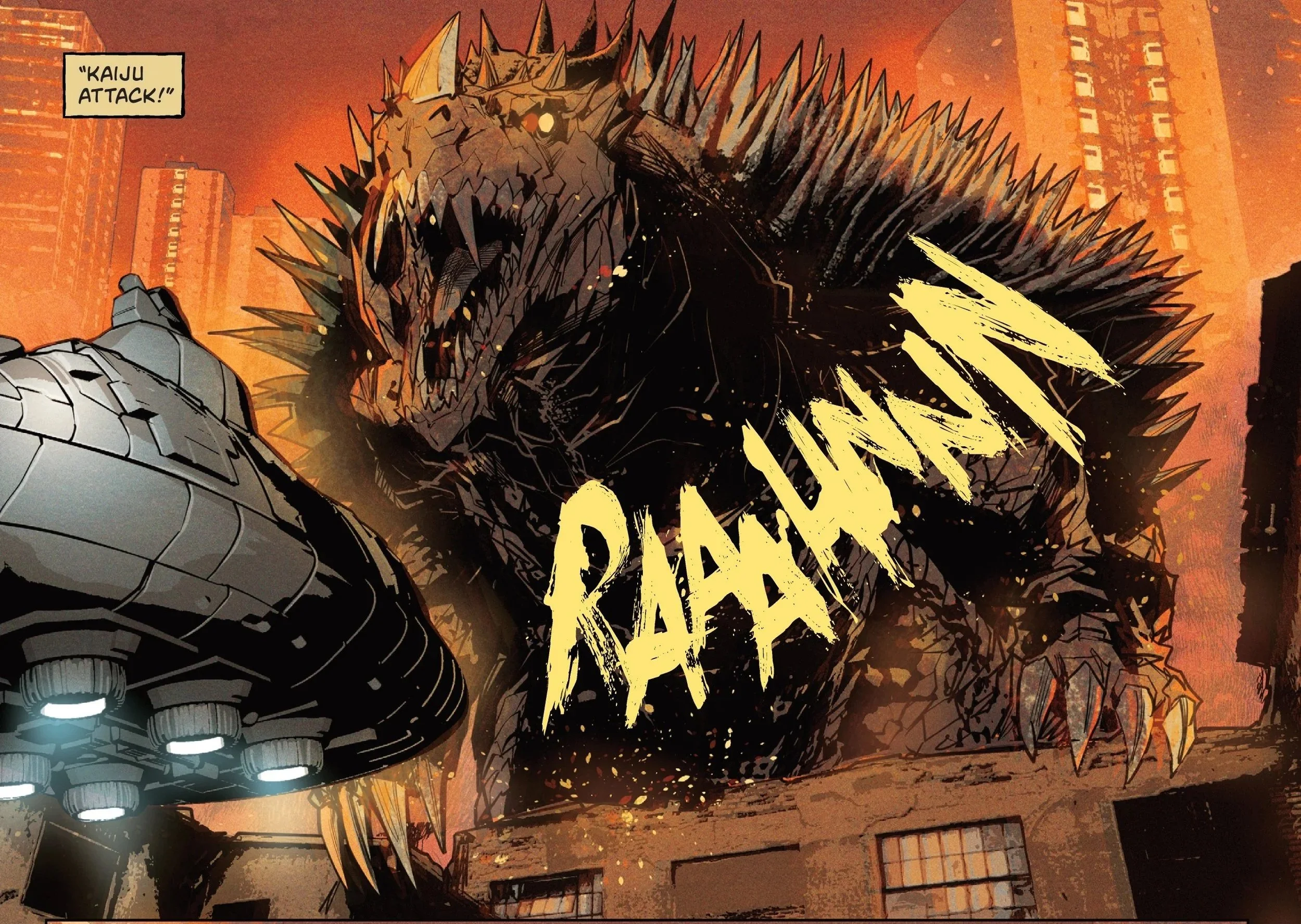
Anguirus appears, disoriented by the destruction of his tunnels in Nevada.
The issue noticeably, but only briefly, improves once Anguirus enters the story. An emergency call sends G-Force into action, and Captain Stine again surprises Dr. Chiba by suggesting that the team drive Anguirus back into the Pacific rather than kill it. This choice reflects real character growth, even if Stine’s dialogue regularly slips back into caricature.
The fight itself is solid but frustratingly short. The choreography is clear, the sense of scale is strong, and the action carries real momentum. Jacen ultimately releases a surge of Godzilla energy that manifests as a green, spectral version of Godzilla overpowering Anguirus. It is an impressive visual beat, but it also highlights a persistent frustration with the series.
For a comic titled Godzilla, the King of the Monsters is largely absent. Even here, his presence is abstracted rather than literal. The moment works, but it also reinforces how reluctant the book is to let Godzilla himself take center stage.
The Biollante Reveal Is Compelling, But Restrained
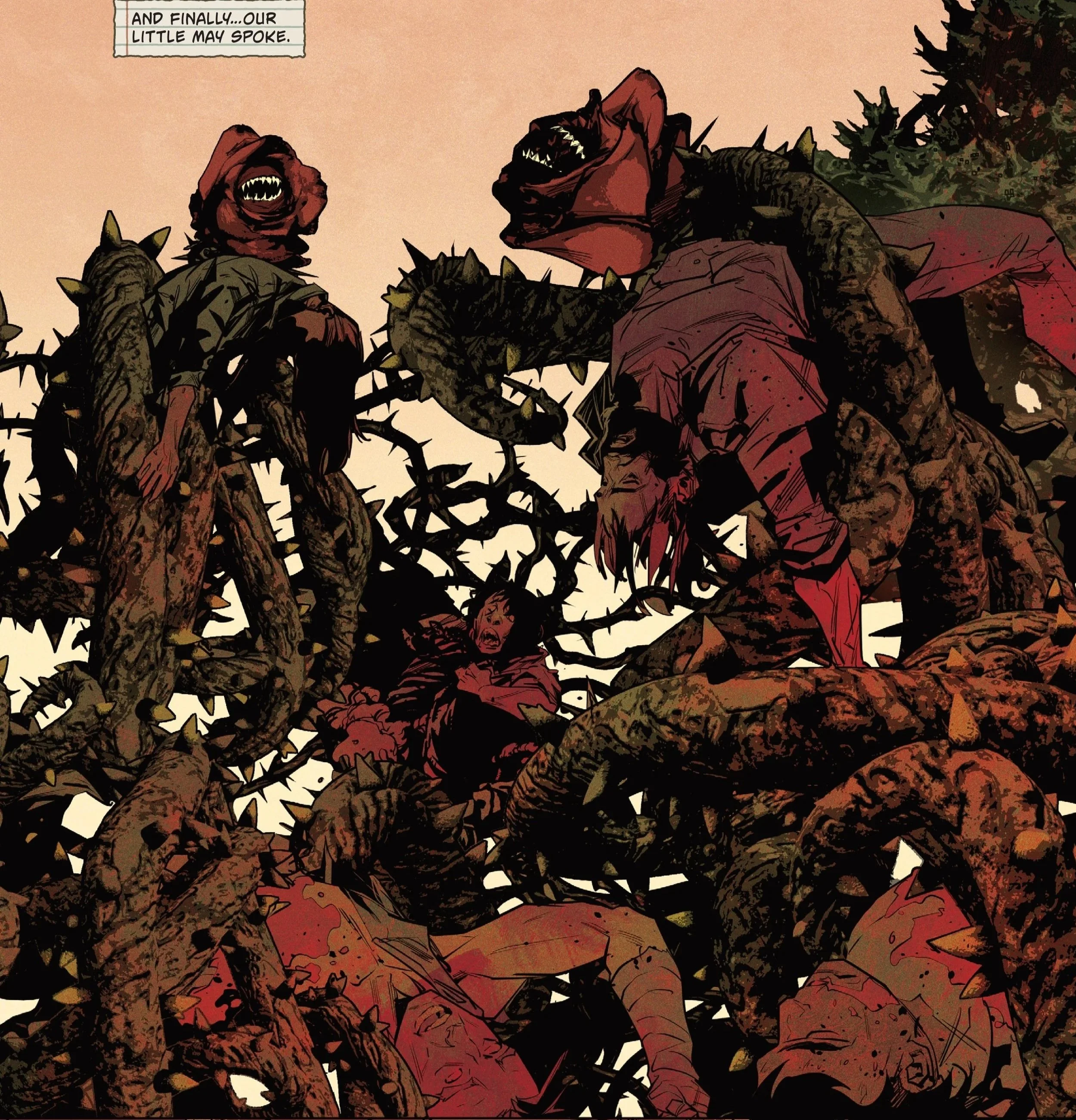
May reveals her powers to her adoptive parents, and they’re quite shocking.
The issue closes by returning to the farmhouse, where the frightened girl finally finds peace. It is revealed that the figures she feared earlier were bandits, and that she killed them by summoning massive, spiked vines from the earth. She speaks her first word since arriving:
“Biollante.”
This is the most compelling development in the issue. Biollante is one of Godzilla’s most iconic adversaries, and her introduction immediately injects the story with a sense of danger and possibility that has often been missing. The thematic connection between her emergence and Jacen’s Godzilla-linked powers makes sense within the series’ framework.
That said, the reveal also underscores the book’s ongoing hesitation. Rather than introducing Biollante as a kaiju force in her own right, the series once again filters her through a human lens. While this approach fits the series’ themes, it feels like another instance of the book stopping short of fully embracing its monsters. The promise is there, but the commitment remains tentative. Even so, this human character is more intriguing than Jacen has managed to be.
Art That Carries the Weight
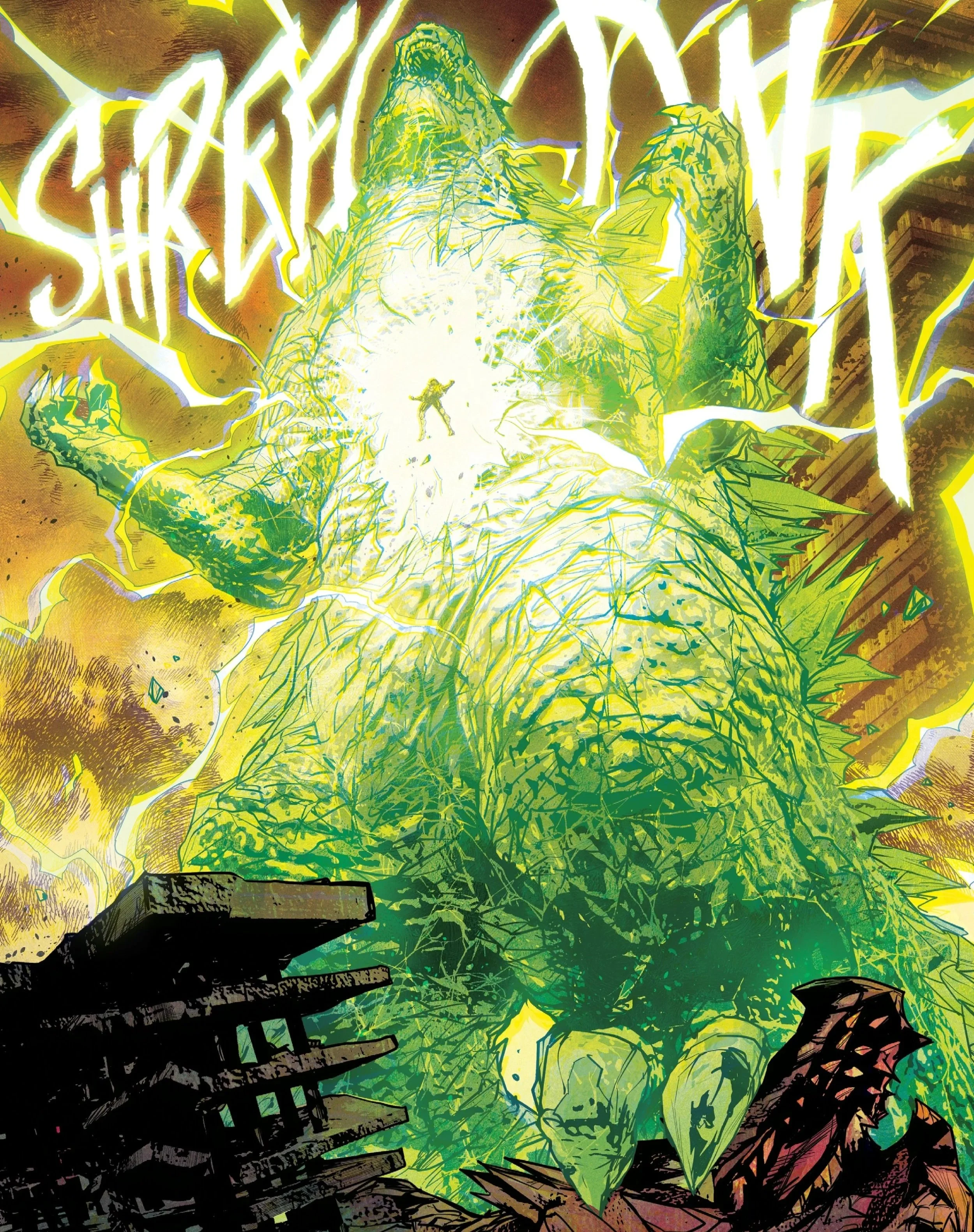
Jacen uses energy-Godzilla to defeat Anguirus.
The artwork by Hendry Prasetya, with colors by Francesco Segala and Gloria Martinelli, is good and arguably the strongest the series has delivered so far. The farmhouse scenes are moody and textured, the Anguirus fight is dynamic and easy to follow, and the Biollante reveal is striking without feeling excessive.
Even when the writing falters, the visuals maintain a sense of scale, atmosphere, and weight that feels appropriate for Godzilla. In many cases, the art does more storytelling than the dialogue, highlighting where the book’s true—and really only—strengths currently lie.
Final Thoughts and Rating
Godzilla #7 is disappointing precisely because it keeps brushing up against greatness without ever fully committing to it. There are strong character moments, a solid Anguirus fight, and an exciting Biollante reveal that suggests a more confident direction ahead. At the same time, the issue remains weighed down by excessive human drama and a continued reluctance to let kaiju drive the story.
That tension defines my experience with the series. I don’t walk away liking this issue, but I don’t walk away disengaged either. The ideas are strong, the art is excellent, and the potential is obvious. Whether the book is willing to finally trust its monsters remains the unanswered question.
Rating: 5.5/10
A visually impressive issue with a compelling kaiju reveal, held back by familiar structural problems and an ongoing lack of confidence in letting Godzilla truly dominate his own story.
Promo Line: “Godzilla #7 keeps brushing up against greatness without ever fully committing to what makes a Godzilla story truly work.” OR “The ideas are strong and the art is excellent, but the series still feels hesitant to let its monsters dominate the page.”