
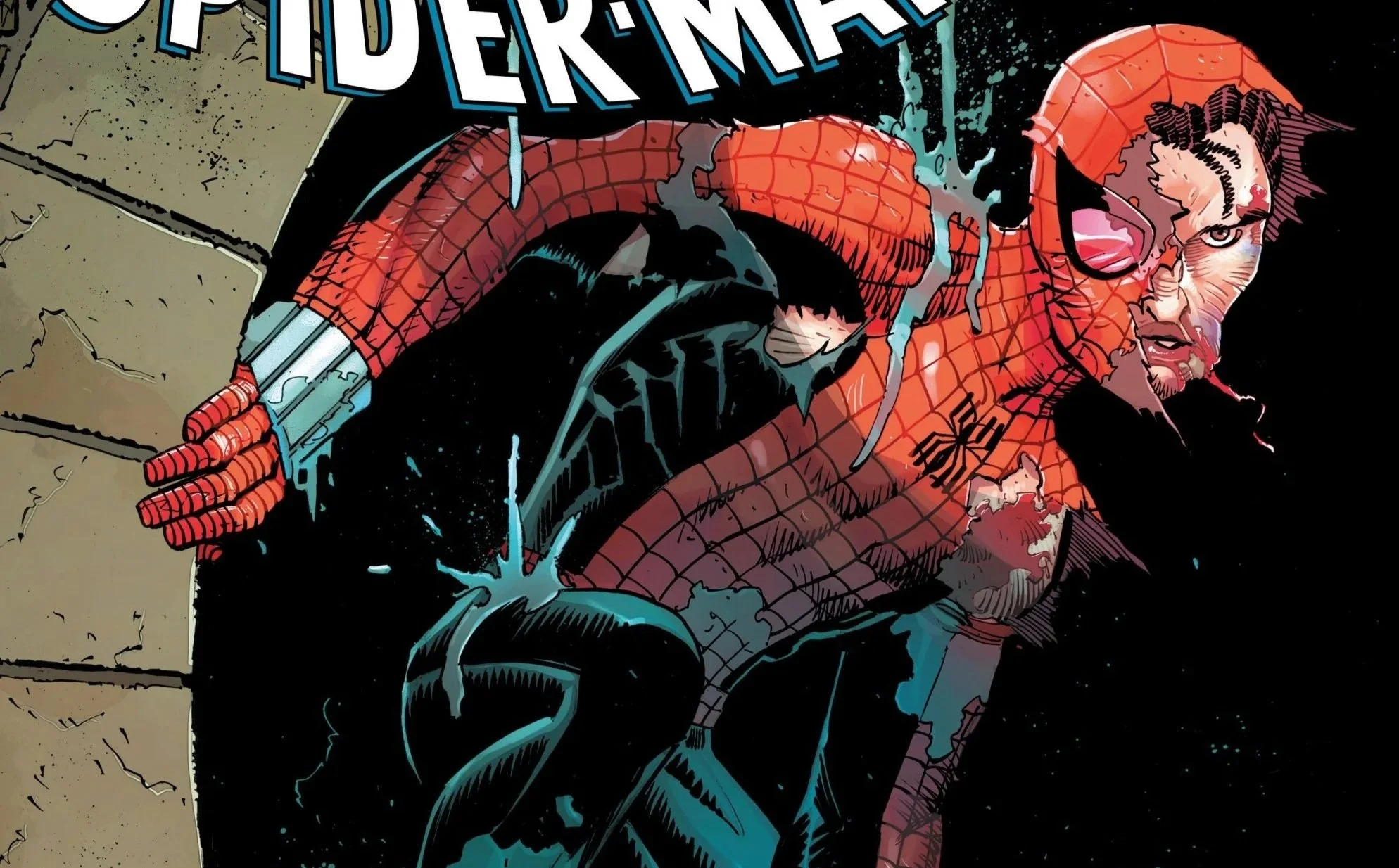
The Osborn experiment has been a wild ride—the kind of story most would have considered a fever dream if it had been pitched a decade ago. But somehow, Joe Kelly has turned an almost offensive concept into something genuinely compelling: Norman Osborn as Spider-Man.
For the better part of a year, we’ve watched Norman take on the mantle, agonize over its weight, and earn it despite misgivings from both the public and his own conscience. It hasn't been smooth sailing; Norman has had to hammer into the readers’ heads—and his own—that this is a path he must earn, not just take. Now, with the conclusion of the "Spider-Goblin" arc in Amazing Spider-Man #21, we get an imperfect yet entertaining finality to this chapter... for now, at least.
With Hobgoblin moving into the grisly final act of his plan to erase the Osborn legacy, and Norman fighting tooth and nail to protect his family using the certainty he’s earned, there is a lot to be hopeful about. In terms of pacing and action, this issue is leaps ahead of the recent NYC stories and a massive improvement over the abysmal issue #20. However, some plot points fall by the wayside to speed things along—at times to a nonsensical degree. Coupled with baffling twists that carry little weight (even for those of us who have followed these characters for decades), it isn't all sunshine and rainbows, even if the weather in "Goblin Country" remains pleasant enough.
Closure Cometh
*Spoilers Ahead*
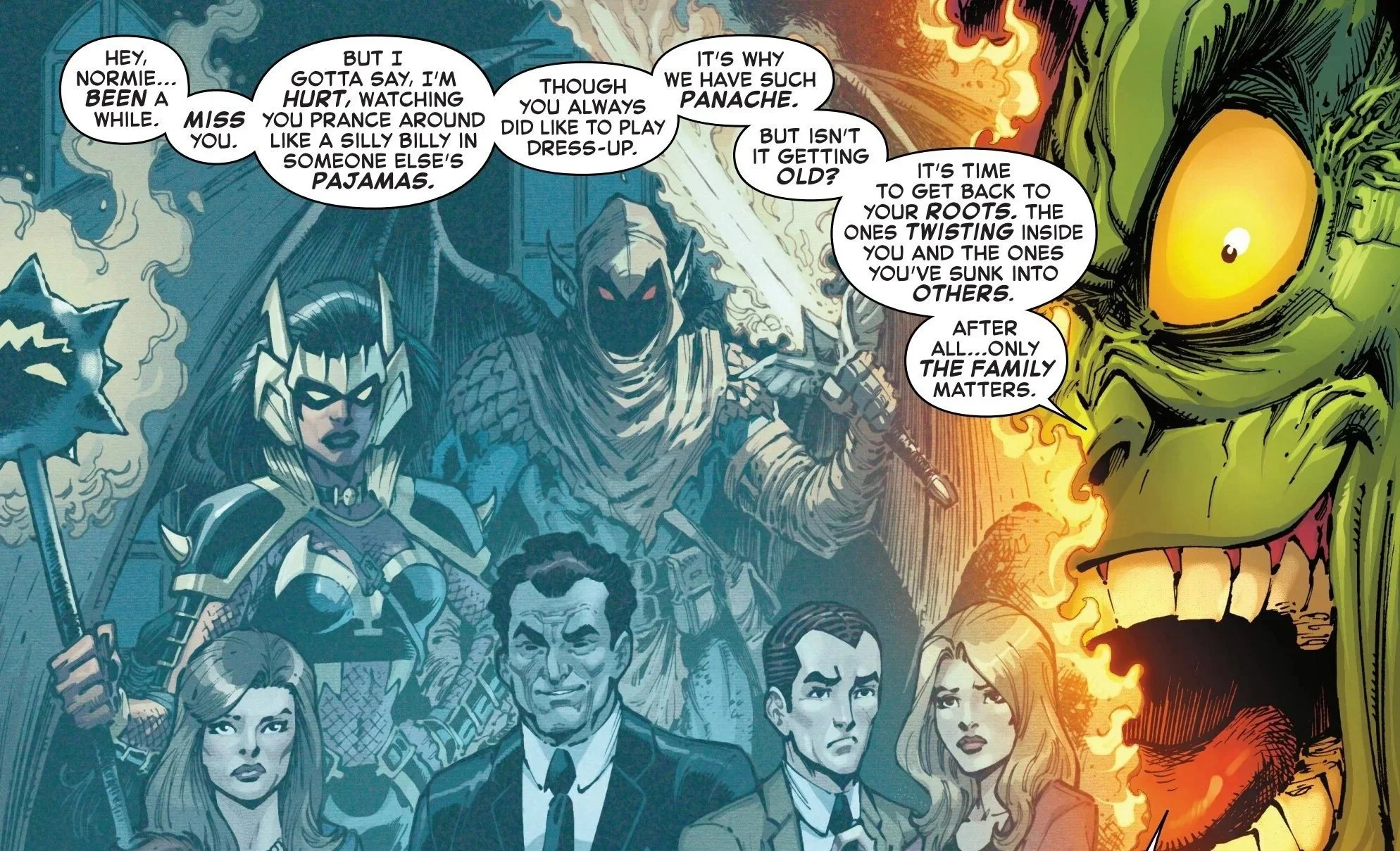
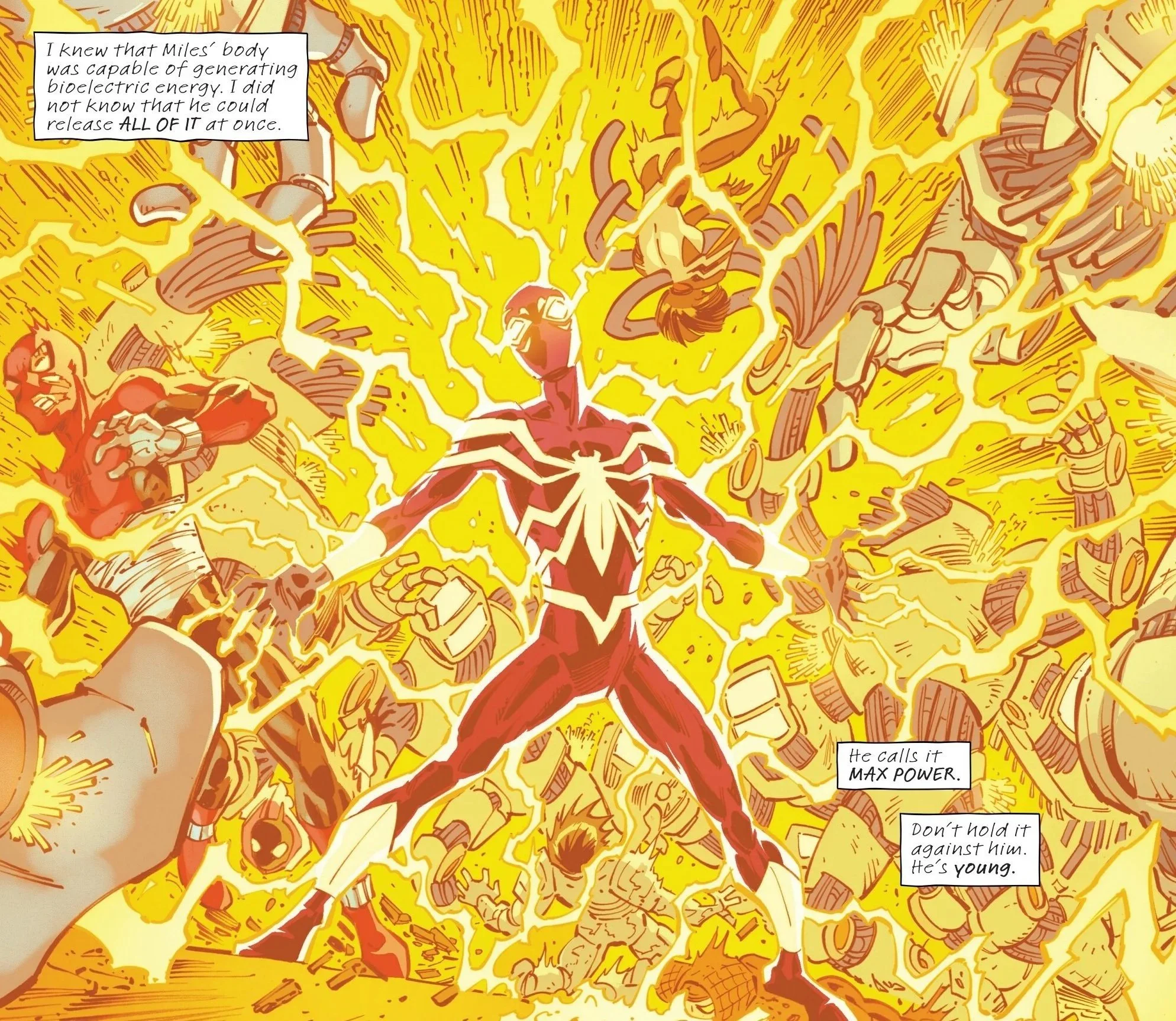
This issue drops readers right in the thick of things, with Norman and his Spider-friends still at the mercy of the Goblin Slayers. While Norman was left in a rough spot last time, everyone and their grandma knew he wasn’t in any serious danger. Vindication comes early when Norman digs deep—into his pockets—and pulls out the mother of all deus ex machina tech jobs: a series of ultra-powerful security systems that activate just in time. Oh, and I suppose Miles Morales helped by turning into a living EMP, so thanks for that too. With the Slayer pack decisively defeated, Norman has one major battle left: the ringleader of this circus of horrors, Roderick Kingsley.
Speaking of the Hobgoblin, Roderick is already moving into his final gambit, aiming to take out Liz Allan and Norman’s grandkids at their home. He’s also seen conversing with the mysterious and utterly superfluous Mr. Gryffin (introduced in last week’s Amazing Spider-Man Annual #1 to zero applause), who has shifted from a Goblin Slayer investor to someone Kingsley is trying to "woo" for an entirely different venture.
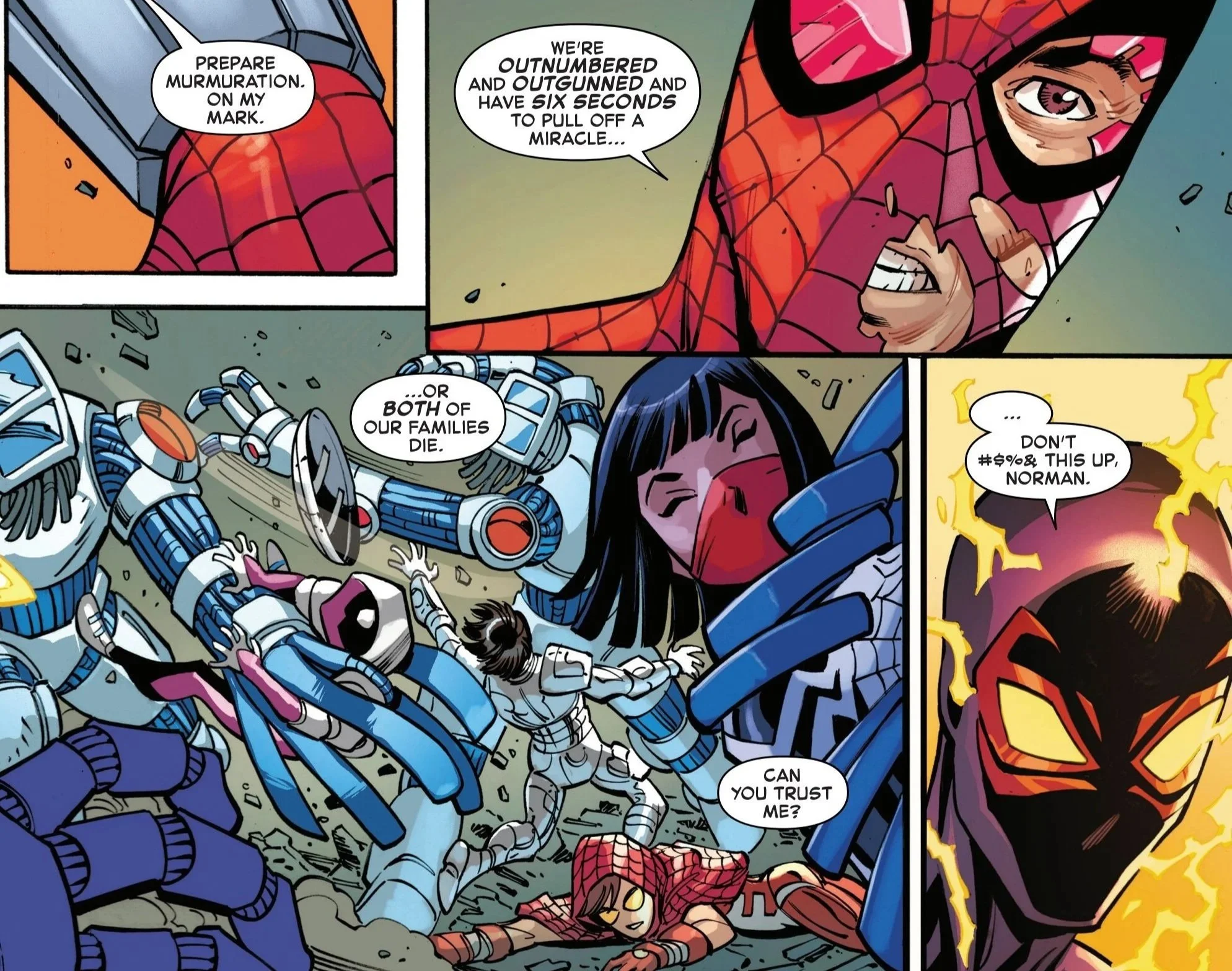
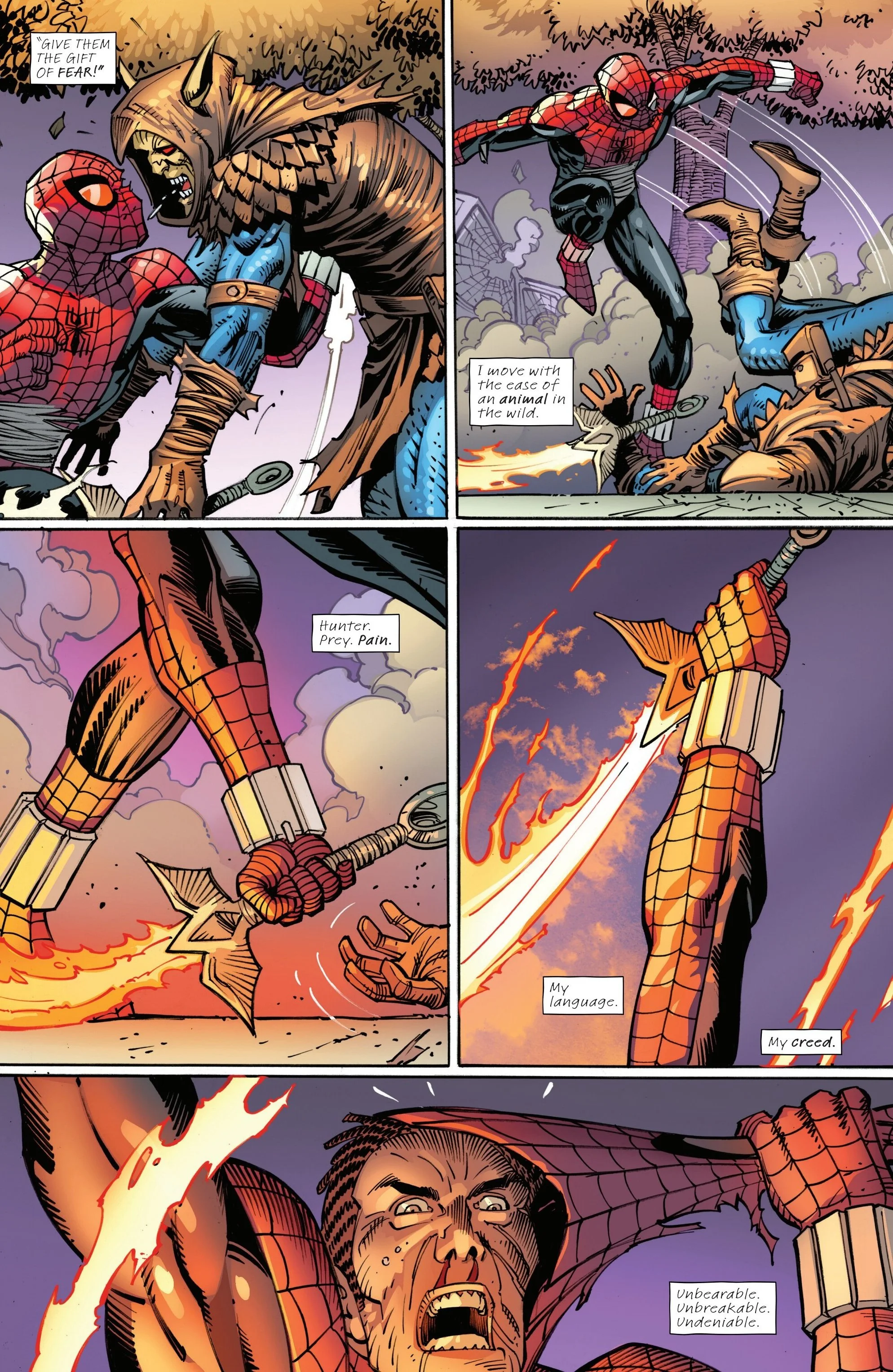
This plotline goes nowhere, however, because Norman himself rides into the fray. And what a sight it is: Norman in full Spider-Man gear, riding a Goblin Glider with a bag of pumpkin bombs to boot. Sacrilegious? For sure. Awesome? Definitely. It leads to an all-out Goblin fight (insert air horn noises here) where Roderick has the absolute pointy-eared bejeezus beaten out of him. Norman chooses the noble path, refusing to turn him into sashimi with a flaming sword. All's well that ends well—except for Norman discovering his ex-wife, Emily, is alive and was behind the Slayers the whole time. Fun!
But none of that matters in the end because Peter Parker is finally back in town. He delivers the magic words both Norman and the audience have been waiting for: "You did great."
An Osborn by Any Other Name
*EVEN MORE SPOILERS AHEAD. YOU’VE BEEN WARNED, NERDS*
Real talk here: I’ve genuinely enjoyed the entire "Spider-Norman" trajectory since Joe Kelly’s run began. Compared to the bombastic space adventures of Peter Parker, there was a pathos here that felt very "Spider-Man-ish," yet it still acknowledged that Norman is historically the anathema to everything Peter stands for. For over 60 years, the Green Goblin has been the most loathsome entity in Peter’s life; the idea of him taking up the mantle in a sincere attempt at redemption feels like everyone is taking crazy pills. Yet, Kelly somehow made it work. There was no cheap, full absolution here—redemption has been a grueling process for Norman over the last few years, and this finale in issue #21 respects that struggle.
Norman’s new ethos—the acceptance that he is a "bad man trying to be better every day"—is exactly the homecoming moment the character needed. He isn’t Peter Parker, and he doesn’t need to be. The second he understood that was when he finally became Spider-Man: great power, great responsibility, the whole shebang. Norman’s acceptance of his identity feels earned, especially in how he balances his newfound heroism with the ruthless Osborn streak necessary to protect his family from the Hobgoblin.
While some readers might feel Peter’s "blessing" comes a little too soon, I think it’s the best way to cap off this experiment before it overstays its welcome. For all the good Kelly did, this issue pulled out more than its fair share of incoherent plot contrivances just to get us across the finish line.
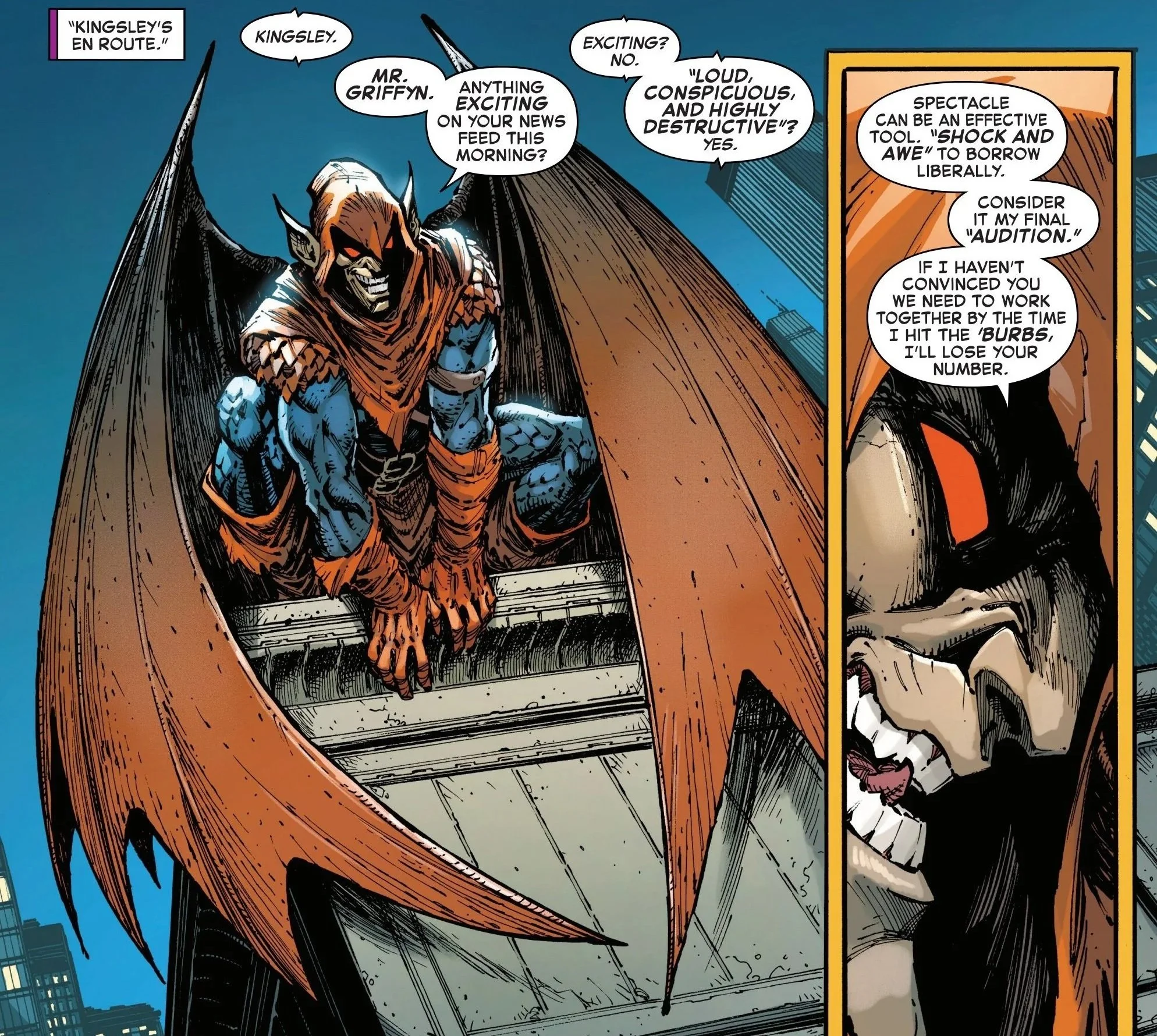
Issue #21 was undeniably brisk, ensuring the narrative never dragged or overstayed its welcome. However, that speed comes at a cost: Joe Kelly tosses aside several established setups just to move Norman from point A to point B. The Goblin Slayers, previously touted as an existential threat, are dispatched with the ease of a minor inconvenience. Between Miles Morales going "Max Power" and Norman deploying a deus ex machina tech solution called "Murmuration," the board is wiped clean in minutes.
Considering how much the team struggled in the previous issue, having the Slayers taken apart like children—by a tech solution we don't even get to see in action—feels incredibly cheap. By extension, it makes the seasoned Spider-heroes look like total chumps; if a whole team of veterans couldn't handle a bunch of dweebs in attack drones until Norman pushed a "win" button, it’s not a good look for the web-slingers.
Similarly, the run's primary antagonist, Roderick Kingsley, is written as a complete moron. You’d think the master-tactician Hobgoblin would have planned the dismantling of the Osborn legacy with surgical precision. Instead, his actions here feel impulsive and irrational. Launching a frontal assault on Norman’s grandsons in the suburbs is out of character, and the only reason Norman shows up to stop him is that the plot demands it—at no point did Norman actually have a clue his family was the target.
Furthermore, seeing Kingsley act like a sniveling lackey to secure funding from the superfluous Mr. Gryffin is a massive letdown. Kingsley has historically been the kingpin of "supervillain startups," so watching him play a pathetic version of Shark Tank for his idiotic schemes ruins what should have been a triumphant final showdown between him and Norman.
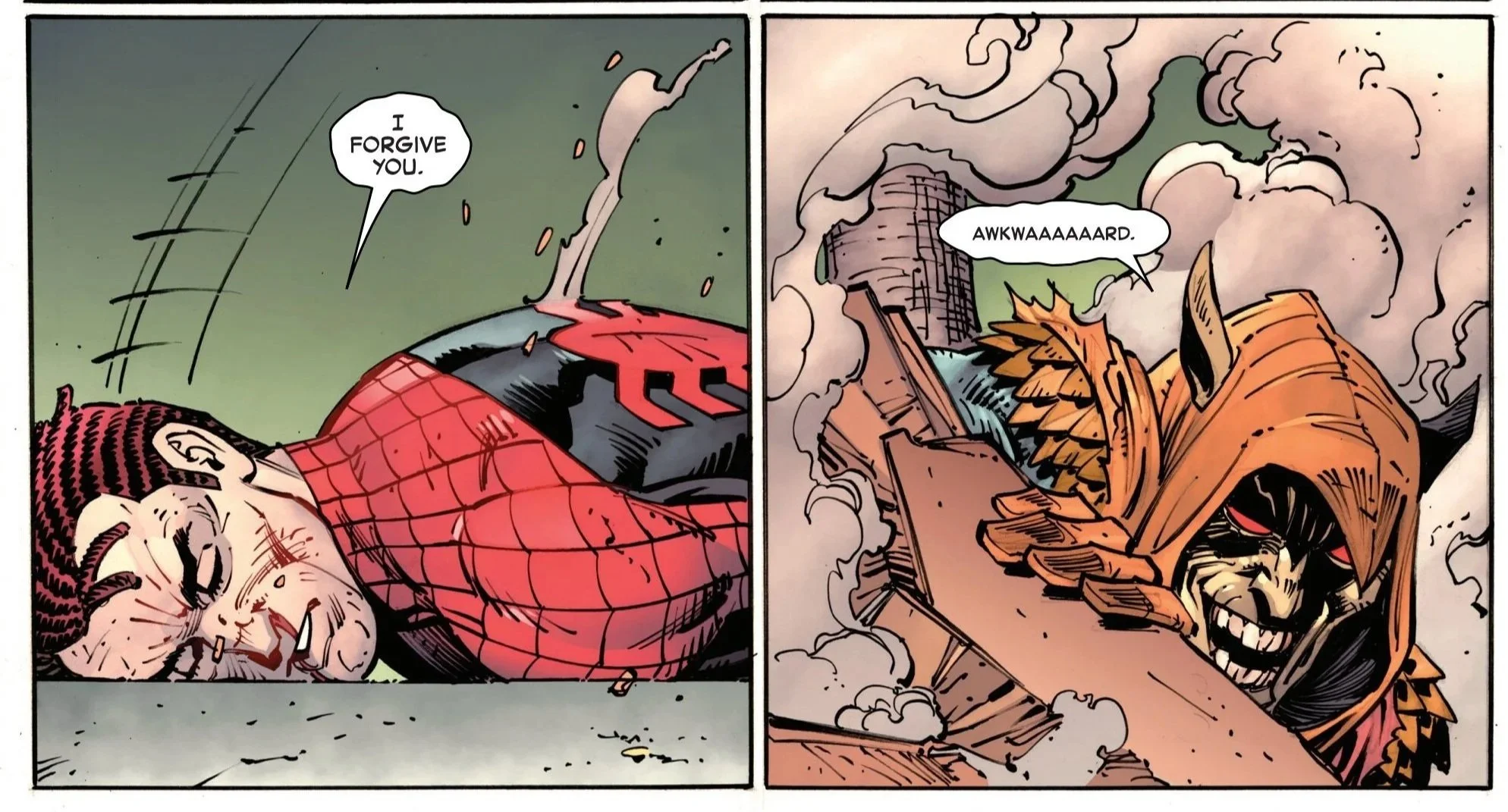
Finally, we get the real "big twist": Alecto, the head of the Goblin-Slayer cult, is revealed in a glorified cameo to be Emily Osborn, Norman’s long-lost ex-wife. Of all the random turns this story takes, this feels the most egregious. It exemplifies the primary issue with this arc: a "simply accept this happened" mentality that Joe Kelly relies on just to reach the finish line. It’s insulting, lazy, and—frankly—stupid.
Readers have known for a while that Emily Osborn has been retconned back to life in recent years—first in Spider-Man: Shadow of the Green Goblin and then through various covert appearances as a random babysitter to Norman's grandkids. But for her to randomly emerge as the "real" mastermind here makes Kingsley look like an even bigger moron. The Hobgoblin flat-out acknowledges she’s been in charge, yet he’s the one who overrides her orders to attack the kids.
It’s a fever dream of conflicting, ludicrous plot points. This isn't helped by the fact that Norman—of all possible reactions to discovering his dead wife is alive and orchestrating attacks on their grandchildren—chooses to "forgive her" before passing out. It effectively shoves the entire mess under the rug along with the rest of the narrative "ass-pulls" littered throughout this arc.
Separating the Action from the Artist
One of the biggest problems with the previous issue was the baffling choice to switch between three different art teams at random points in the final six pages. That chaos created a confusing mess of styles that ultimately caused the battle to suffer. Fortunately, issue #21 sticks to two teams with very defined styles spread across the first and last acts. The transition this time feels smoother, more natural, and thoroughly fitting for the narrative of each section.
The first half of the book (along with the concluding pages of Act 2) is handled by Todd Nauck, with colors by Erick Arciniega and Marte Gracia. Nauck’s linework favors fluid, heroic action shots amidst the chaos of the Oscorp melee, showcasing each hero fighting their best fight against the Slayers. It’s punchy, clear work that focuses on the bombastic action, especially during high-energy moments. He also manages to dial things back for more measured, quiet beats through clearly defined character expressions and some gloriously menacing Hobgoblin artwork.
Punching up these visuals are Arciniega and Gracia’s poppy colors, providing a selection of heroic hues that truly stand out. Osborn’s shredded red-and-black ensemble still looks suitably heroic—emphasizing the "Spider-Man" of it all—while Miles Morales getting to cut loose and discharge his energy provides some major, eye-catching highlights.
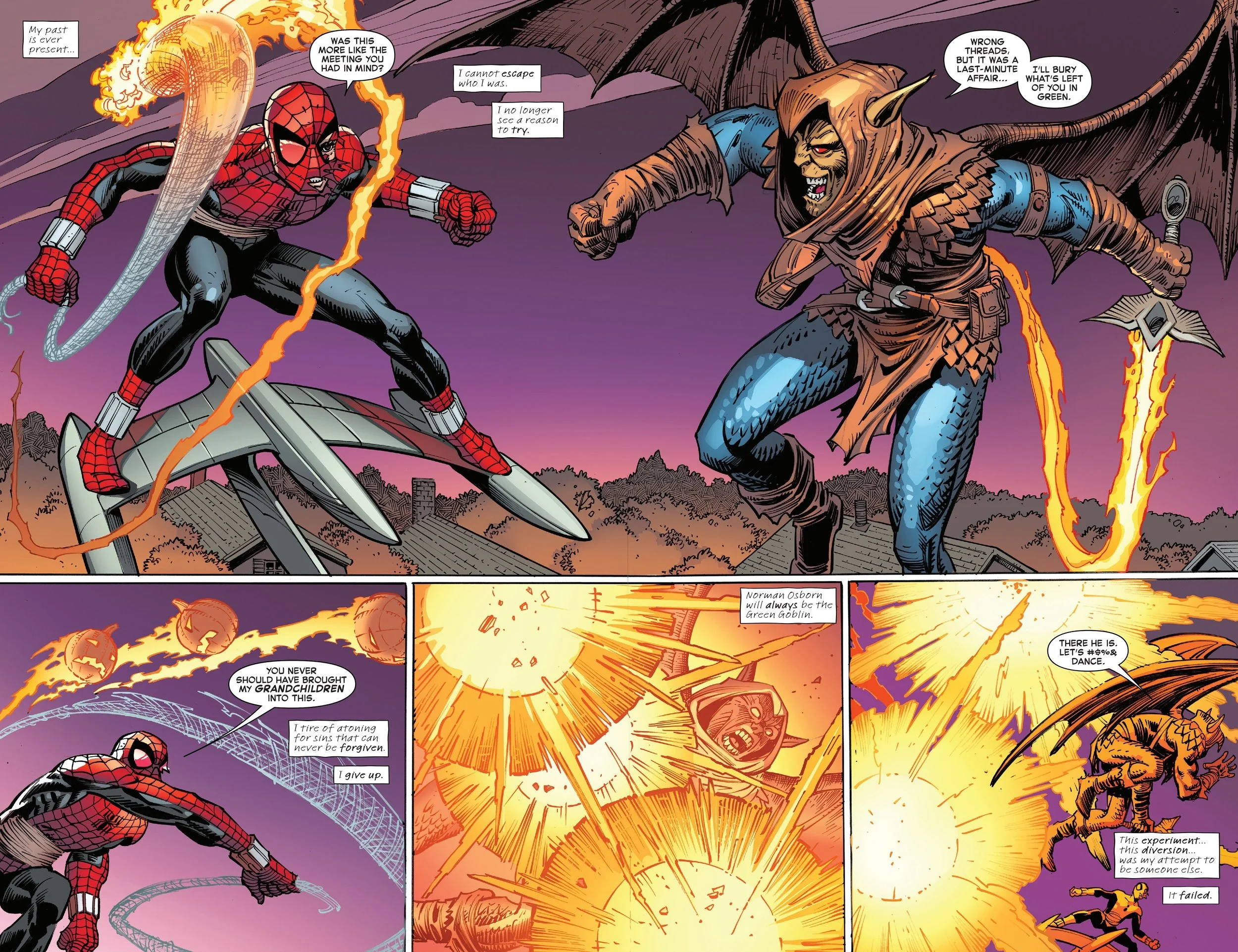
But for the final act—the high-stakes battle between Norman and Kingsley over the suburbs of Westchester—the book brings back the stalwart team of John Romita Jr. and Marcio Menyz to take the story home.
Romita Jr.’s art is exactly what you expect: stiff, hard-hitting, and in your face like a sack of bricks. That is likely exactly what Hobgoblin felt when he got smacked by Osborn coming at him like a bat out of hell. It’s a genuinely memorable visual and a bit of a full-circle moment for JRJR, whose father, John Romita Sr., co-created the Hobgoblin back in the '80s. The fight that follows is appropriately brutal and decisive; it’s drawn so vividly that you can practically feel every bone-shaking punch.
Marcio Menyz’s color work is the icing on the cake, using a slightly more muted palette to convey the grittiness of this "last dance" between Goblins without ever feeling washed out. Ultimately, the transition from bombastic, team-based action in the first half to a grimmer, personal duel in the second leverages the unique strengths of both art teams to their fullest potential.
One Big Happy Goblin Family
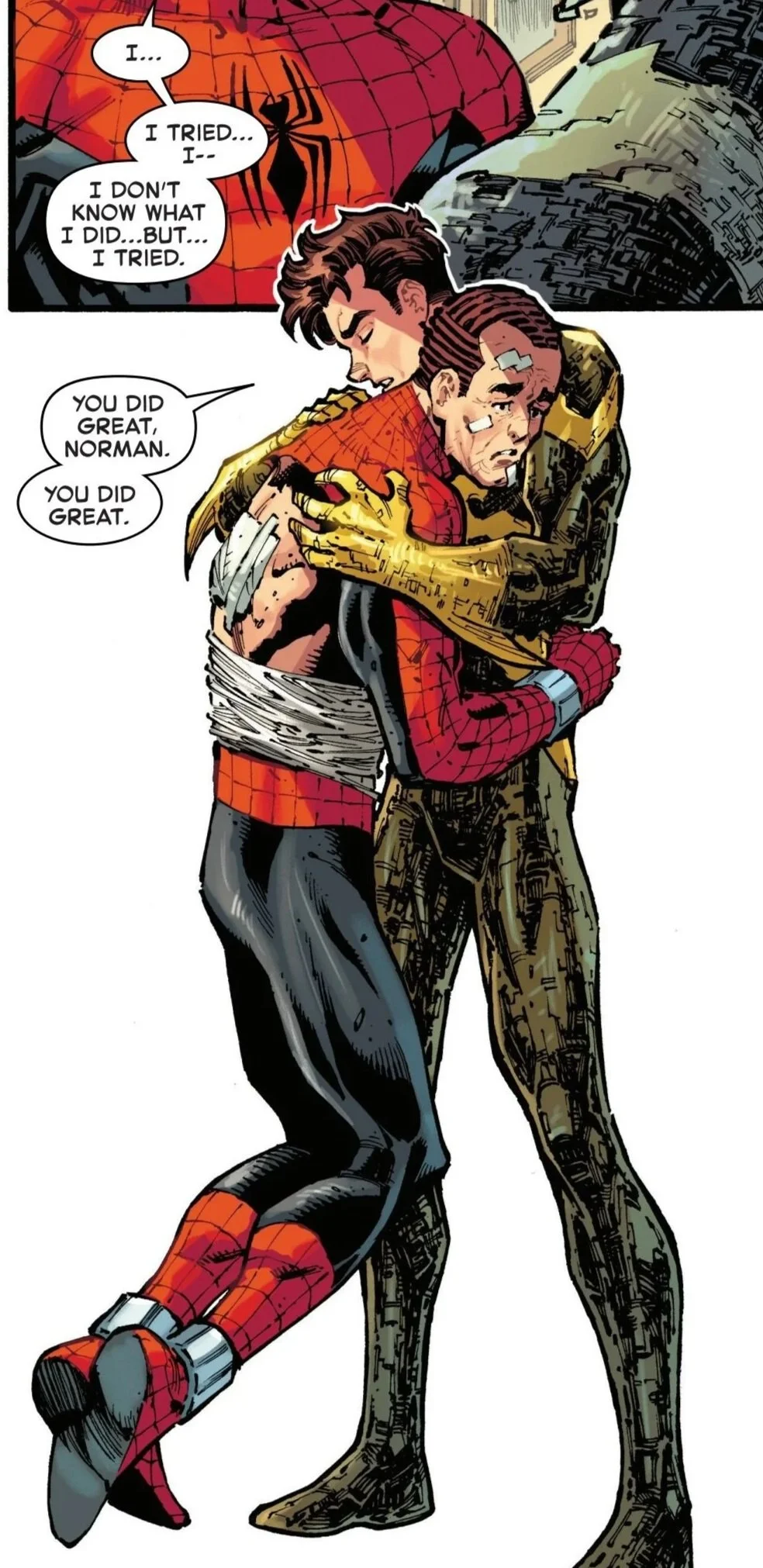
Despite the endless "Goblin-ex-machinas," Amazing Spider-Man #21 offers a definitive—if temporary—capstone to Norman’s character journey. Were there hiccups along the way? Surely. And if we’re being honest, those narrative shortcuts are definitely going to come back to bite him later. In the here and now, however, issue #21 is a brisk, fun entry that delivers the art and character work necessary to bring finality to the story of the Goblin who dreamed of being a Spider-Man.
All in all, I’ve thoroughly enjoyed watching Osborn grow, falter, and pick himself up again. It’s an inspiring reminder that even on a redemptive journey, there are setbacks, and the best any of us can do is be a little bit better than we were yesterday. With Peter back to the shambles of his own life and having finally given Norman the acknowledgement he so richly craved, the future is unwritten.
While this was a fun experiment, the reliance on plot contrivances to achieve ultra-quick resolutions is a worrying pattern. With Joe Kelly clearly locking in for the "Death Spiral" event in a few weeks, all signs pointed toward a "quick out" here. It’s just a shame that these convenient solutions turned a potentially great story into a merely "okay" conclusion for Norman’s adventures in spandex.
Final Verdict: Amazing Spider-Man #21 finally lets Norman earn his keep as Spider-Man with a stellar character arc, but stops a decent finale from being something truly great by throwing far too many plot contrivances that just feel insulting after a certain point.