
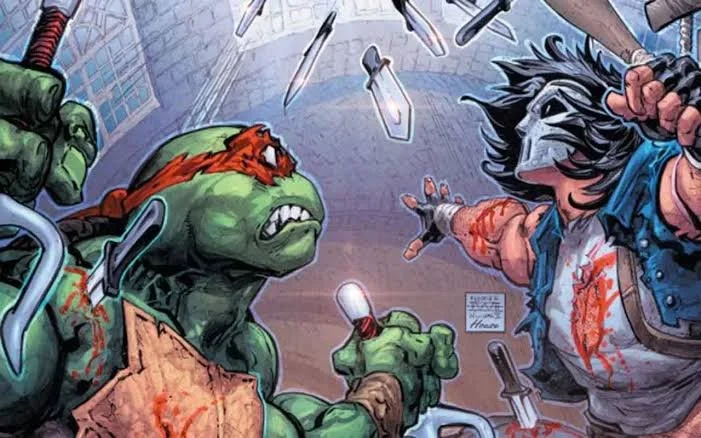
Teenage Mutant Ninja Turtles Issue 16 is published by IDW Comics and is written by Gene Luen Yang, with art by Freddie E. Williams II and Fero Peniche, colors by Andrew Dalhouse and Luis Antonio Delgado, and lettering by Shawn Lee.
A Recap of The Run So Far
Teenage Mutant Ninja Turtles issue 16 kicks off directly following the events of the last issue, with Raphael desperately trying to stop Master Splinter, in his Usagi alter ego, from killing Casey Jones. We learned last issue that after dying and being reborn, Master Splinter has gained the ability to see the future and has now set it upon himself to kill all those who would kill the turtles in the future. I found this plotline a little bit confusing because Splinter stated to his wife in the afterlife that his goal is to see himself, his wife, and all their children together in Heaven, so why is he now changing fate to keep them all alive, which would prevent this long-term plan? We also got introduced to the villainous new character Shinigami, who hopes to bring down the turtles by forming an uneasy alliance with Karai.
All things considered, I think this run of the Turtles has grown on me, and I have started to enjoy it more than I did when it initially started on issue twelve. However, I still find some of the writing and character motivations to be lacking. So far, it often feels like events just happen with little thought or unclear explanation, and Gene Luen Yang's juggling of many plot lines together throws off the pace a lot for me, as I cannot really get fully invested in a single plot line.
I think now that Gene Luen Yang has started to expand on why Master Splinter has become Usagi, the story has begun to get more interesting for me, as initially, I was really cold to that reveal, as it felt so out of character. However, I wish the same could be said for other plot lines, which I have felt quite indifferent to due to not enough fleshing out or simply finding them uninteresting.
Mind Control and Visions of The Future: A Review of Issue #2
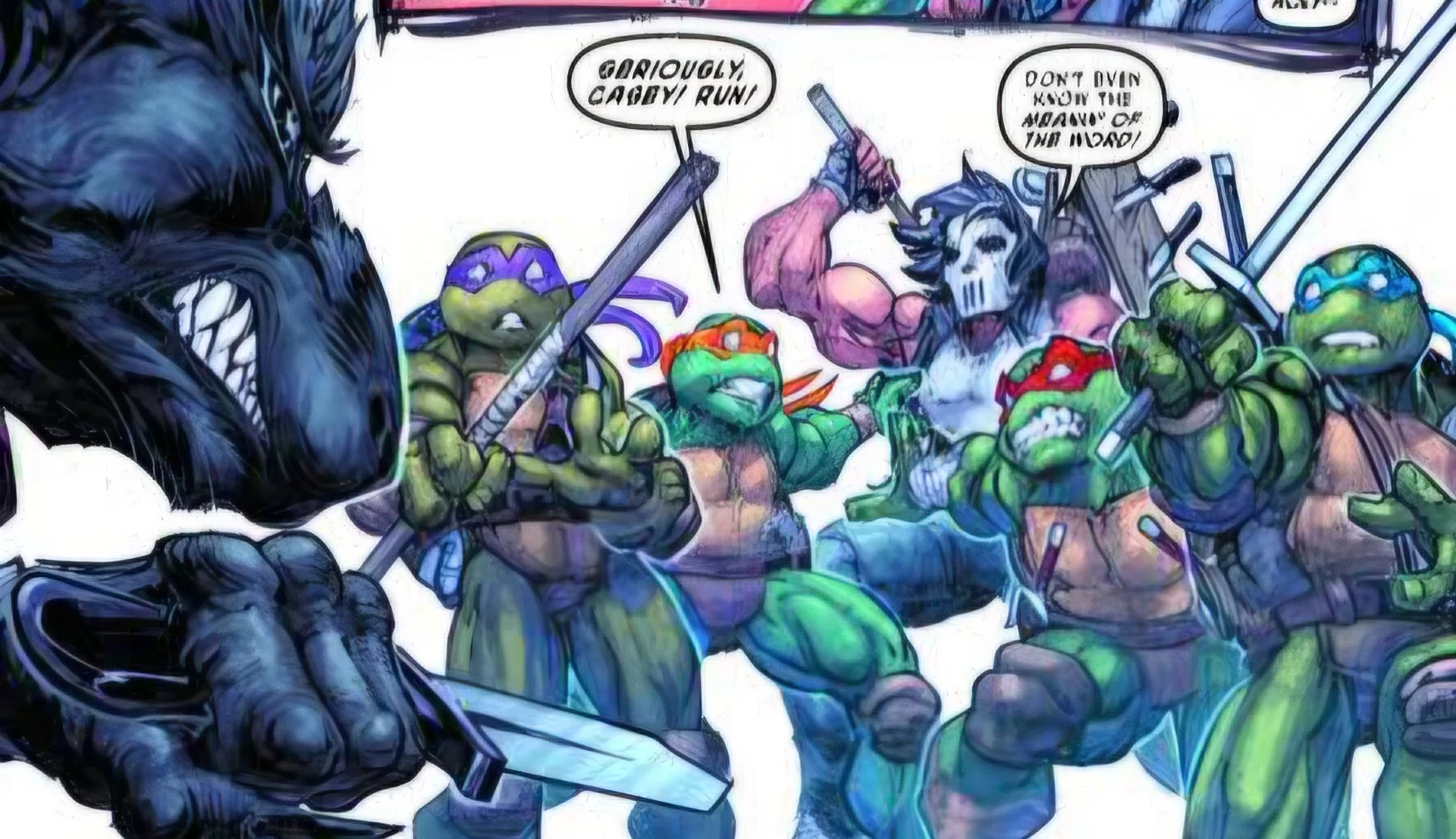
Issue sixteen kicks off directly after the last issue, in which Usagi (Master Splinter) attempts to kill Casey Jones, with Raphael in tow, trying to stop him. Thankfully, Casey Jones escapes, which, if you know anything about comic books, you probably predicted. But then Master Splinter gets captured by the mysterious new villain Shinigami, who doesn’t really get a lot of pages dedicated to her, unfortunately, so we don’t learn as much about her motivation as we did in the last issue.
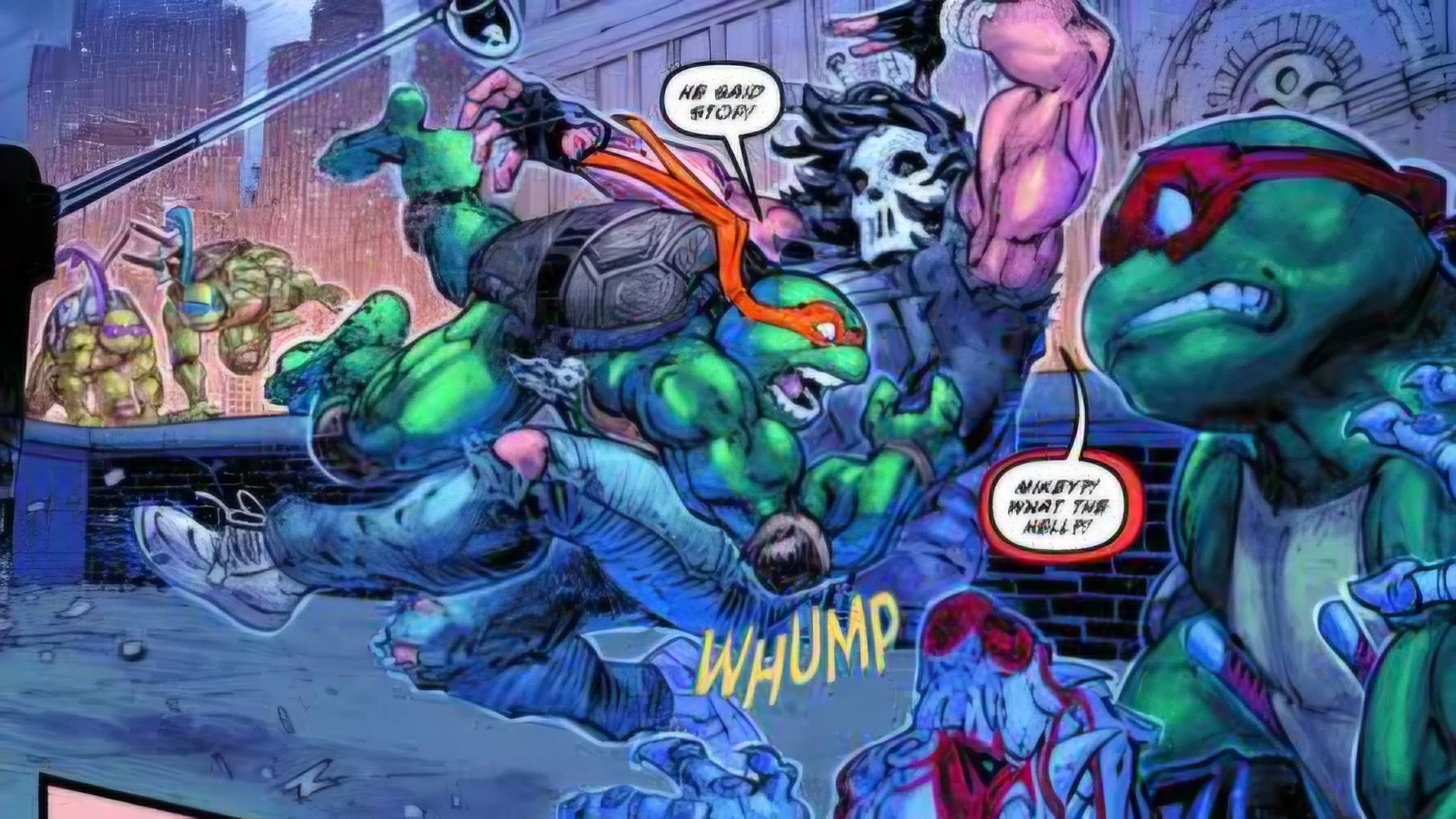
The turtles also fall under her hypnosis, each getting their own vision of their ideal world, which reminded me a little bit of the Superman story "For The Man Who Has Everything," in which Superman has his mind stuck in an idealized Krypton that never blew up. We follow Mikey's ideal world, in which the events of Teenage Mutant Ninja Turtles never happened, and each of the four brothers is still a young boy living in Edo Japan, having fun together. This is quickly broken when Mikey realizes it's all an illusion, and he then proceeds to wake up his brothers from the same illusion.
I think this is the most we get to see of Shinigami in this issue, which is a shame, as I think after four issues of this run, I’d really like to see more of this new threat to the turtles and what their deal is exactly. But, I think this falls into more of my issues with this run-in, that it feels like Gene Luen Yang is juggling way too many ongoing stories and not devoting enough time to any of them.
Improvements To The Pacing
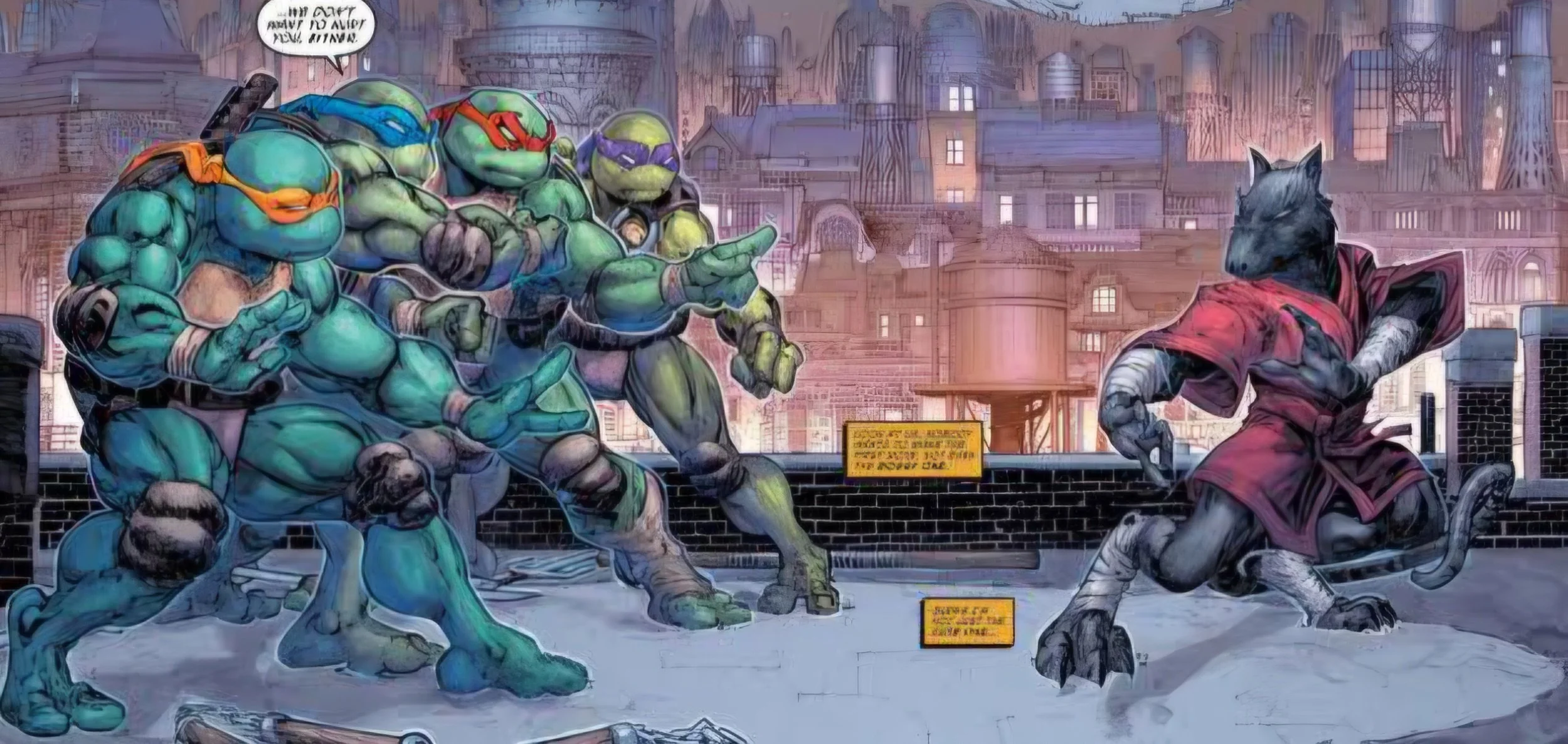
Looking forward to the future of this run, I would love to see faster pacing and more development of the Shinigami character. Aside from the last issue, the reader has not had much time or reason to care about her. This feels very weird, as she is supposed to be the main antagonist, or at least that is how the story has been set up. The pacing was also a little confusing. It felt quite jarring with the issue starting with Casey Jones, going to the Turtles being hypnotized, Karai for a page, and then going back to Casey. Honestly, the whole comic just felt kind of perplexing and hard to pin down, which made this comic a bit of a slog to get through.
There are not too many things to discuss regarding updates to the plot, as there are not many new things happening since the last issue. This run so far seems to be carrying too many ongoing plots and does not know how to devote time to just one thing. A lot of ongoing storylines are not necessarily a problem if done well. For example, some comic series that come to mind, such as Invincible, with many ongoing storylines, choose to devote a single issue to one or two particular stories and leave the others on the sidelines. If TMNT did that, the audience would probably enjoy it much more.
The Art of The Turtles: Discussing The Art
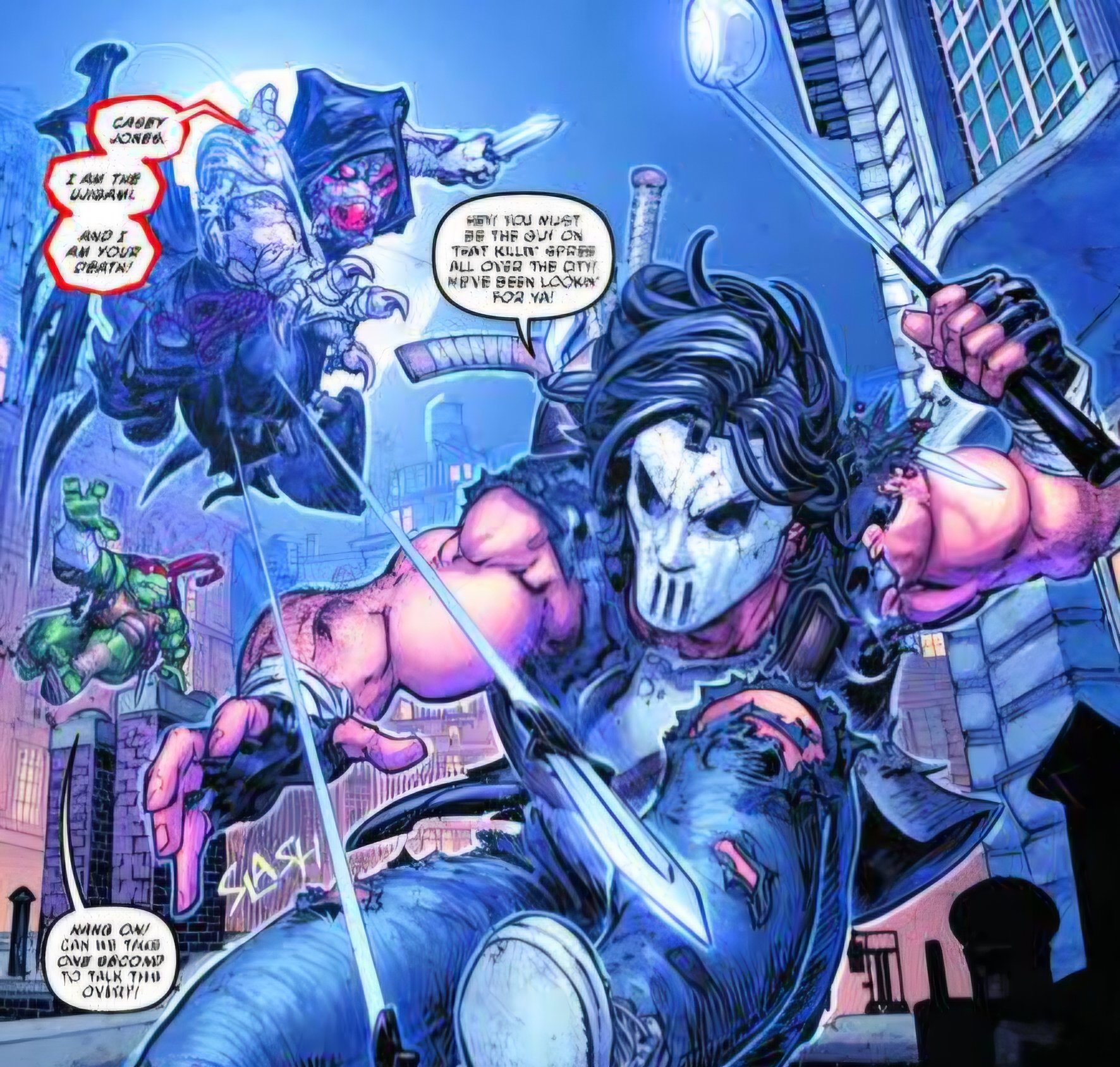
The artwork of the run is definitely the highlight in the opinion of the reader. While there was initial skepticism regarding some of the inking, that sentiment is certainly changing. If the visuals were not as high in quality as they are, the run might be disliked completely. Freddie Williams truly understands how to draw the Turtles and the action around them. The art flows seamlessly, which makes it very easy to get absorbed into the story. There was also appreciation for how the artist drew the new villain, Shinigami, in the previous issue. However, she is barely visible in this issue, which feels like another missed opportunity.
The faces and expressions of the characters have also started to improve. They look less goofy and funny than they did initially. It is a positive development that the art is improving, even if the writing does not seem to follow the same trajectory.
In Conclusion
In conclusion, Teenage Mutant Ninja Turtles #16 is largely another slog of an issue in the ongoing run of Gene Luen Yang. Parts of the story work, but most of the narrative does not. A lot of the pacing feels very off and the issue is too cluttered to really allow the reader to enjoy the experience.
Teenage Mutant Ninja Turtles #16 has some elements to enjoy, and the run from Gene Luen Yang is certainly growing on the audience. However, it still bears many of the same issues that the past four issues did. The series has not really corrected any of these problems. The art is very good, as is to be expected from Freddie Williams III, but that quality only goes so far when the structural foundation of the plot is lacking.