
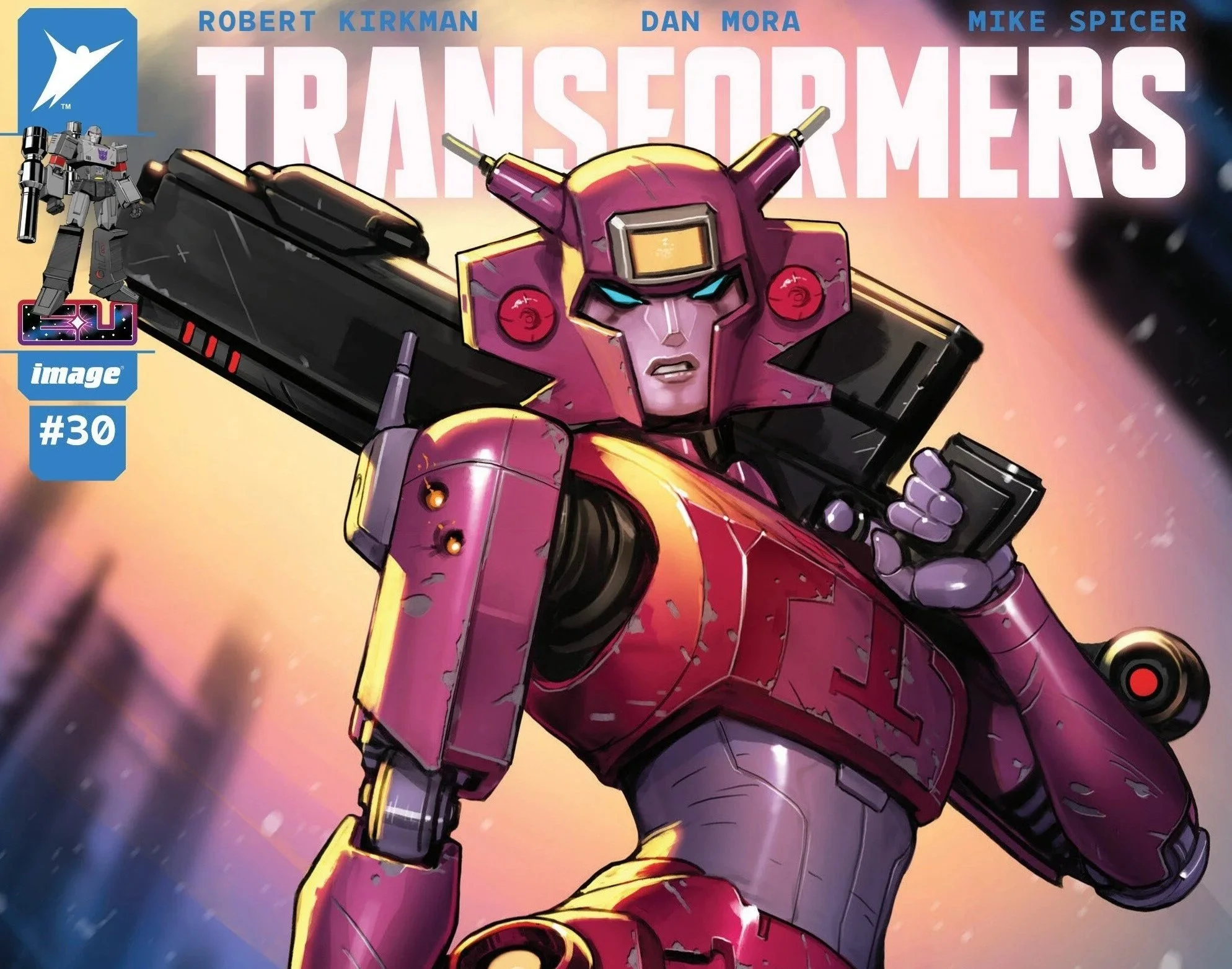
Writer: Robert Kirkman
Artist: Dan Mora
Colorist: Mike Spicer
Cover Artist: David Nakayama
Transformers #30 pulls the series in a completely different direction from the all-out chaos of last issue. After the explosive battlefield spectacle of #29, Robert Kirkman slows things down and focuses on something far more dangerous than open war: ideology, identity, and leadership.
This is not an issue about Autobots versus Decepticons. It is about what it actually means to lead the Autobots, and whether that role is something that can be chosen, taken, or given away. The result is one of the most thematically dense chapters of the run so far, even if some of its biggest swings may leave readers divided.
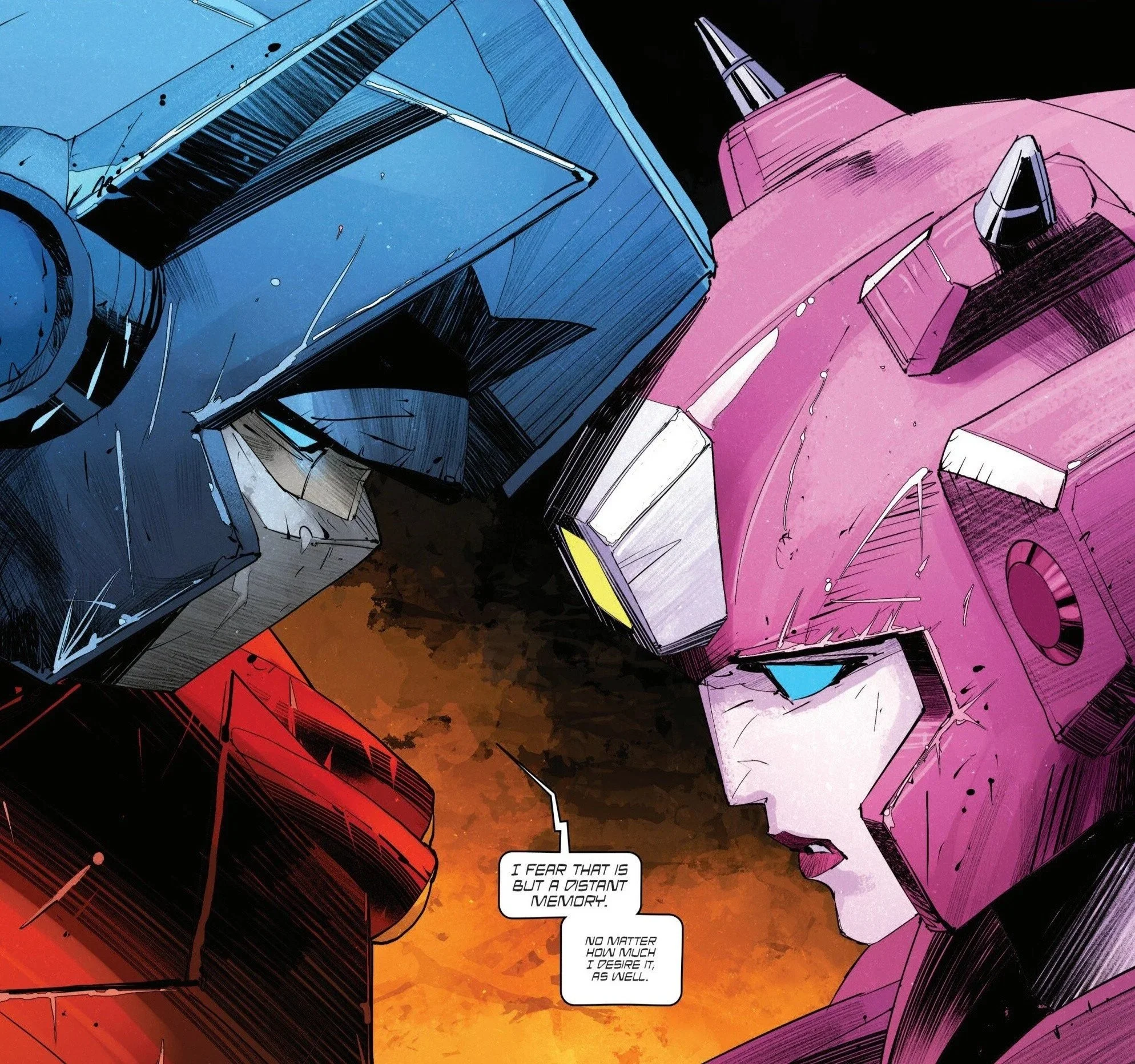
Optimus and Elita share a moment before violence breaks out.
The War Comes Home
The issue opens in the aftermath of the forest battle, but there is no time to recover. The damage from the previous issue still lingers, both physically and emotionally, yet the story refuses to let the Autobots sit in that moment. Instead, the arrival of Elita-1 immediately reframes everything.
She does not come as a visitor or even as a traditional ally. She arrives with purpose, urgency, and a clear expectation of what needs to happen next. Cybertron is still at war, and in her eyes, the Autobots on Earth are not just misplaced, they are needed somewhere else entirely.
What follows is a quiet but loaded exchange between Elita-1 and Optimus Prime. There is history here, and Kirkman trusts the reader to feel that history without overexplaining it. The pauses in their conversation matter just as much as the dialogue itself.
Optimus’ refusal to abandon Earth is not framed as stubbornness. It feels like conviction that has been built over time. He has chosen this battlefield, and more importantly, he has chosen the people on it. He is not willing to leave them behind.
Elita-1, however, interprets that decision very differently. To her, this is not loyalty. It is a failure to prioritize the larger war. That disconnect between their perspectives is what drives the entire issue forward.
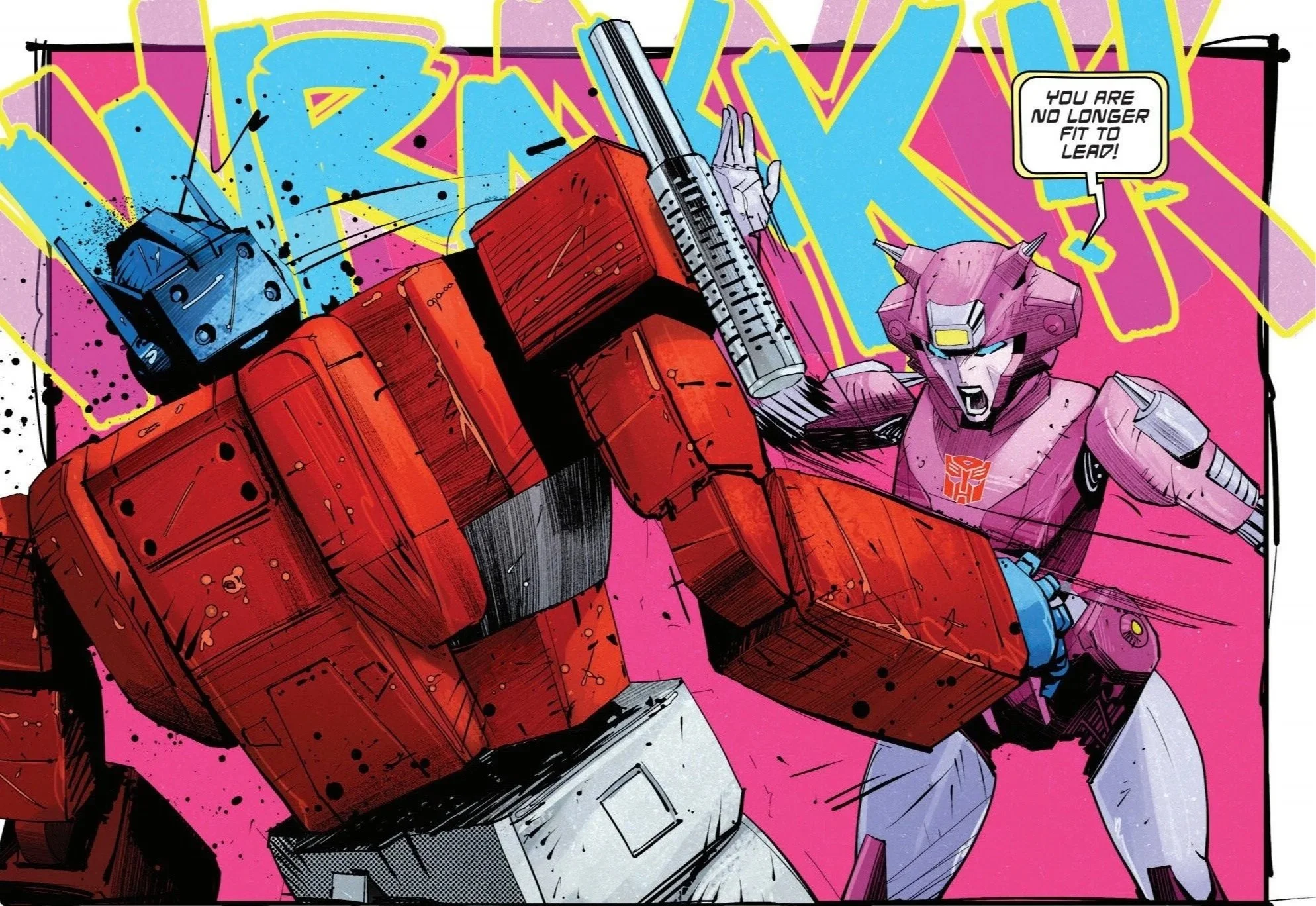
Elita challenges Optimus’ leadership with a strike.
A Fight That Should Not Happen
The turning point of the issue lands quickly and without ceremony. Elita-1 attacks.
It is not framed as a test or a symbolic clash. It is immediate, aggressive, and deeply uncomfortable to watch unfold. The lack of hesitation makes it clear that this is not a misunderstanding. It is a fundamental disagreement that has reached a breaking point.
Optimus refuses to fight back, and that choice defines the tone of the entire sequence. This is not two warriors clashing on equal footing. It is one leader trying to force another into action while the other refuses to engage on those terms.
That refusal adds tension to every panel. Each hit from Elita-1 feels heavier because Optimus is choosing not to respond in kind. It creates a sense of imbalance that makes the scene more emotional than physical.
When Cliffjumper steps in, the situation escalates in a way that feels both inevitable and tragic. His intervention forces Optimus to act, but even then, his actions are defensive. He is not fighting to win. He is fighting to protect.
That distinction is critical. Even when pushed, even when struck, Optimus remains consistent in who he is.
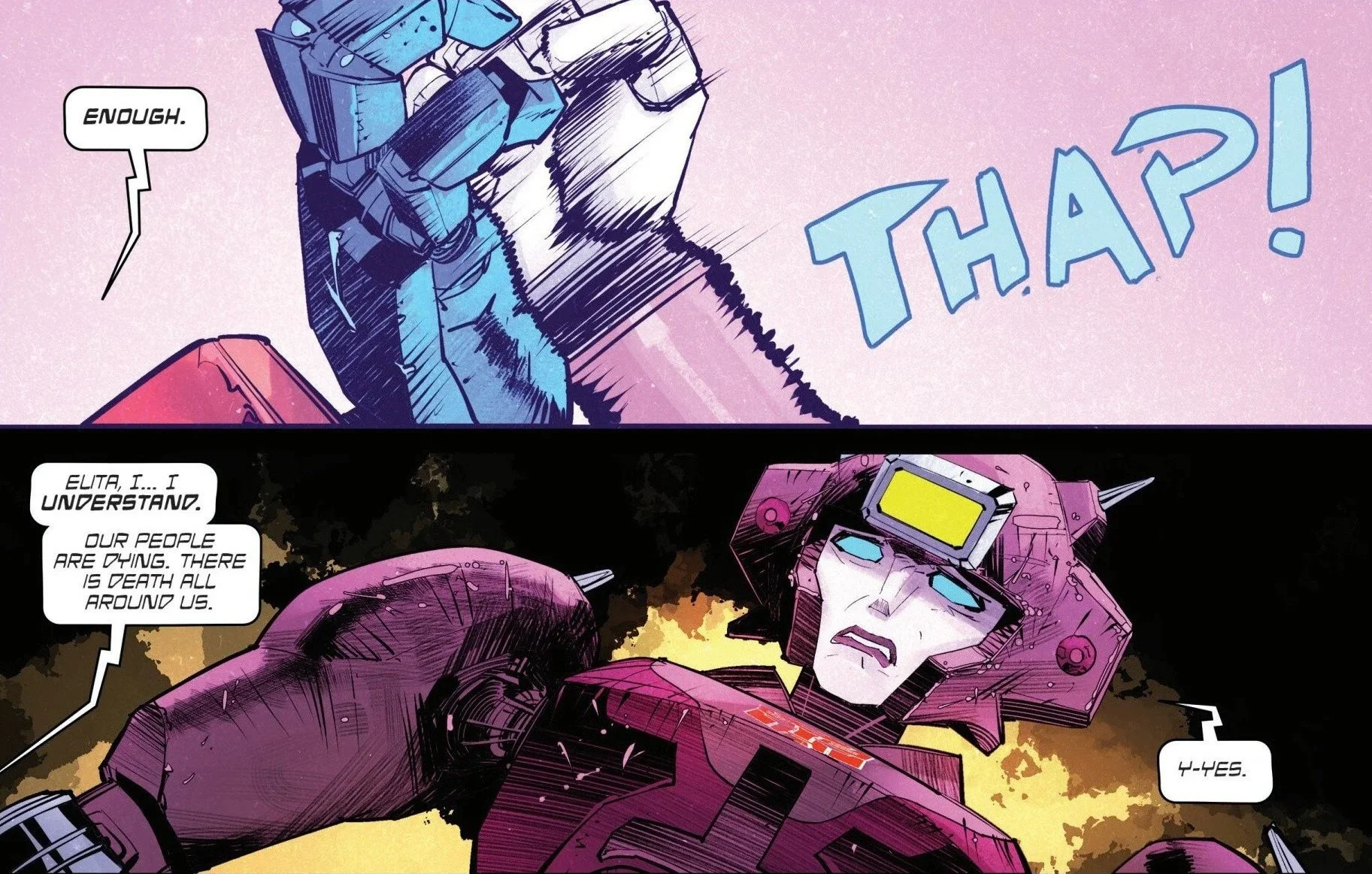
Optimus finally puts a stop to the fight.
Crossing the Line
Elita-1’s assault builds toward one of the most shocking moments in the issue. She attempts to physically tear the Matrix of Leadership from Optimus’ chest.
It is a striking visual, but it also carries enormous thematic weight. This is the moment where the idea of leadership itself is challenged most directly. In Elita-1’s view, leadership has become something that can be taken if necessary. The ends justify the means.
There is something unsettling about how far she is willing to go. This is not just about winning an argument or proving a point. It is about forcibly taking what she believes is required to continue the war.
Optimus’ response stands in complete opposition to that mindset. When he finally stops her, it is not just a physical act. It is a philosophical one. He rejects the idea that leadership can be seized through violence.
That clash of beliefs is what gives the scene its power. It is not just a fight. It is a collision of two completely different understandings of what it means to lead.
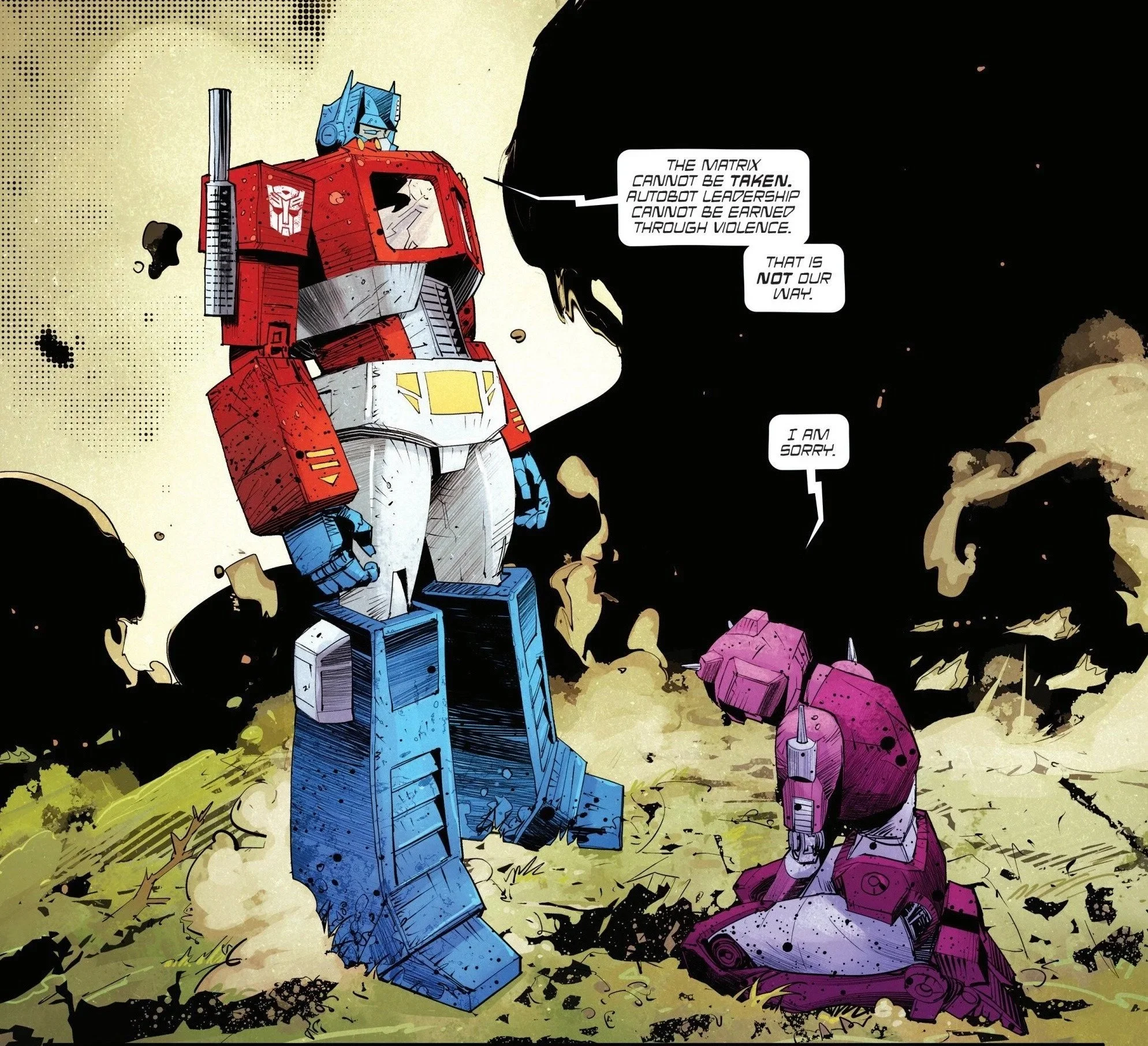
Optimus reminds Elita of the way of the Autobots.
The Matrix Chooses
When Optimus finally brings the conflict to a halt, he does so with clarity and purpose. Autobots do not fight for leadership. The Matrix chooses.
What follows is easily the most surprising and defining moment of the issue. Instead of guarding the Matrix or retreating with it, Optimus willingly gives it up. He opens his chest and offers it freely.
That choice is what makes the moment land. Optimus does not lose the Matrix. It is not taken from him. He relinquishes it.
It feels completely in character and almost impossible to accept at the same time. For so long, Optimus Prime has been synonymous with leadership in Transformers stories. Seeing him step away from that role by choice challenges that expectation in a meaningful way.
The transformation of Elita-1 into Elita Prime is handled with a sense of scale and reverence. The moment feels earned, not just because of the spectacle, but because of everything that led up to it. The light, the energy, and the shift in presence all signal that something fundamental has changed.
For the first time in this series, Optimus is no longer Prime. And more importantly, he is the one who made that decision.
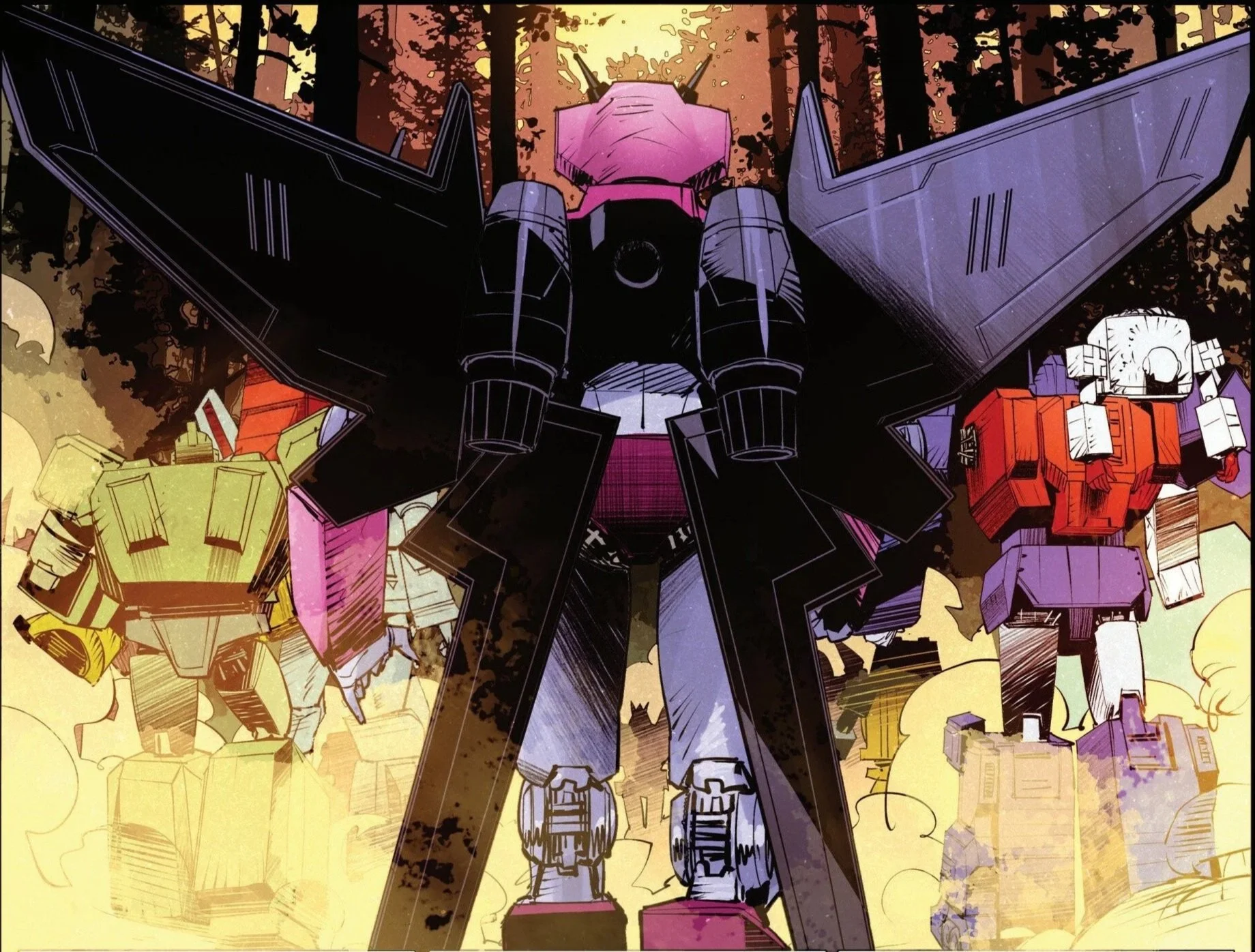
Elita, now Elita Prime, returns to Cybertron with some new allies.
Fractured Allegiances
The consequences of that decision are immediate and far-reaching. Elita Prime wastes no time establishing her authority, and her first major act is to draw a clear and uncompromising line.
The Autobots will return to Cybertron and continue the war. Those who remain on Earth will no longer be considered Autobots.
It is a bold declaration, and there is something undeniably cold about it. Leadership under Elita Prime is defined by focus and urgency. There is no room for divided priorities.
Characters like Ultra Magnus and Brawn fall in line, reinforcing the idea that loyalty to the mission can outweigh personal connections. Others choose to stay behind, creating a split that feels just as significant as any physical battle. Those who stay behind include Beachcomber, Arcee, Magnus, Thundercracker, Silverbolt, Skydive, Fireflight, Air Raid, Shredhead, Cliffjumper, Wheeljack, and Optimus himself. In a striking visual detail, they even scratch away part of their Autobot insignias, reflecting Elita Prime’s declaration that they are no longer Autobots.
Once again, the Autobots are not united, but this time it feels more final than ever before. They are divided by ideology, by loyalty, and by their understanding of what matters most.
At the center of that divide is Optimus, now stripped of the Matrix and even his faceplate. He is no longer a symbol in the same way. He is simply Optimus.
That shift carries weight. Without the title, without the authority, the question becomes what remains of him as a leader.
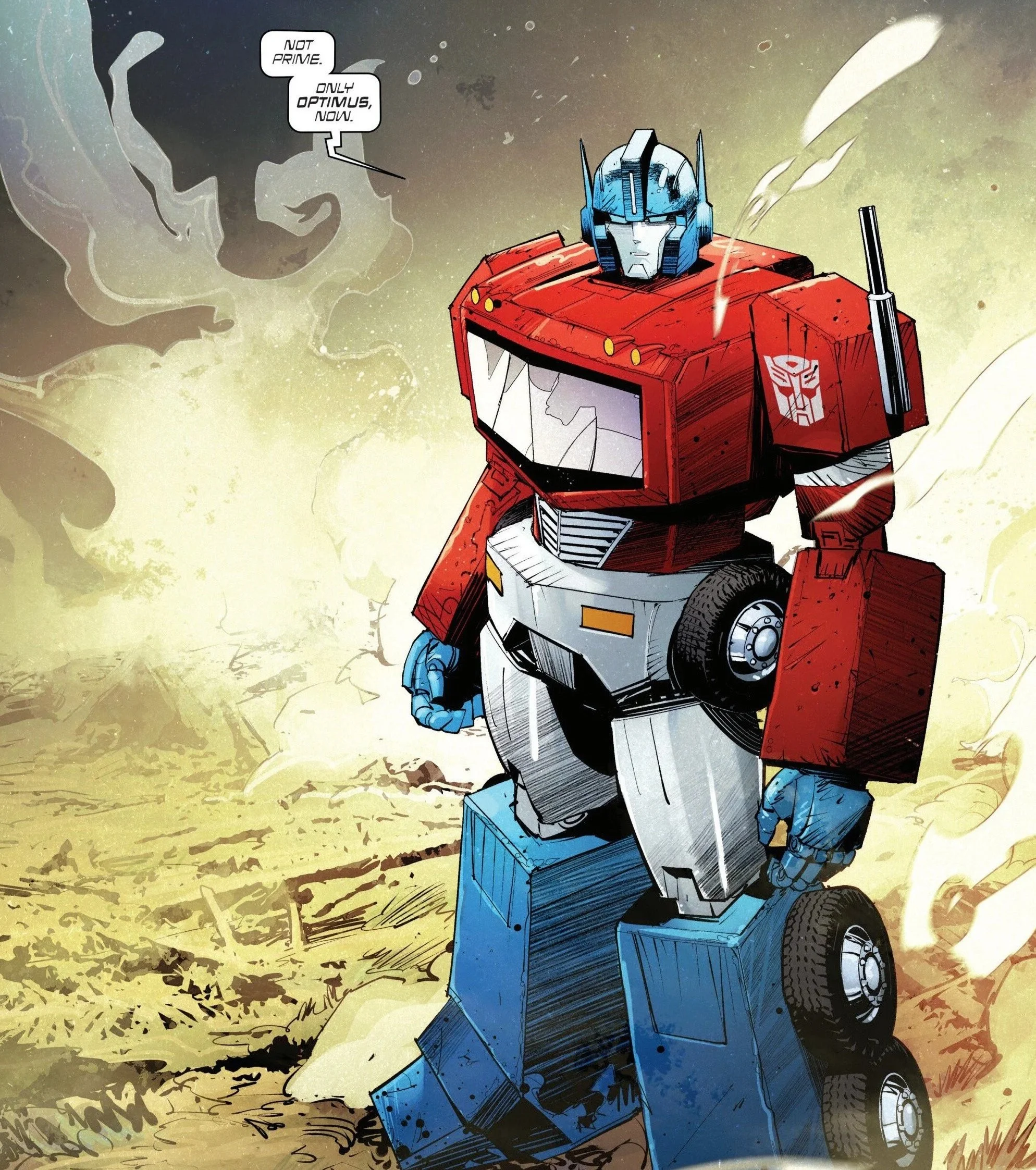
Optimus, no longer a Prime, stands tall, still a leader at heart.
Leadership Without Power
What makes this issue stand out is how thoroughly it reframes leadership. In many Transformers stories, the Matrix is treated as the defining symbol of authority. Whoever holds it leads. That idea is challenged directly here.
Optimus’ decision suggests that leadership is not tied to possession of power. It is tied to understanding responsibility and knowing when to step aside. His actions show a level of confidence and self-awareness that goes beyond the traditional idea of strength.
At the same time, Elita Prime represents a very different approach. Her leadership is shaped entirely by war. Her admission that she does not know anything else after millions of years of conflict is one of the most revealing moments in the issue.
It explains her aggression, her urgency, and her willingness to cross lines that Optimus refuses to cross. She is not presented as a villain, but she is not entirely comfortable either. There is a tension in her leadership that makes it compelling.
Neither perspective is framed as completely right or completely wrong. That ambiguity is what gives the story its depth. It leaves room for future conflict without forcing a clear answer.
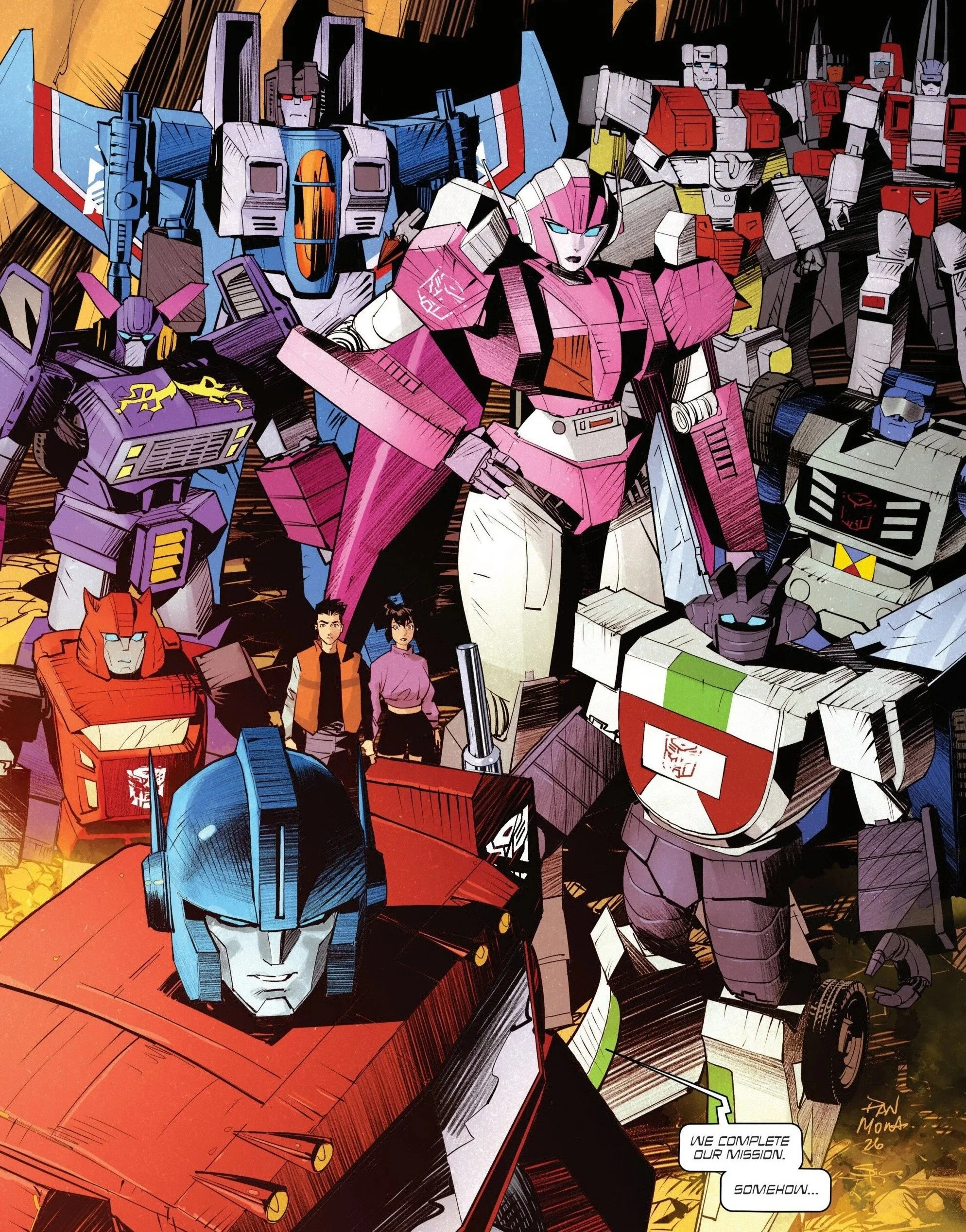
The Transformers that remained on Earth, no longer deemed Autobots.
Dan Mora Shifts the Focus
After the wide and explosive compositions of the previous issue, Dan Mora adjusts his approach to match the tone of the story. The action here is more contained and more intimate. The focus is on impact rather than scale.
The fight between Optimus and Elita-1 is driven by emotion, and Mora reflects that in the choreography. Each movement feels deliberate, and each hit carries weight beyond the physical.
One of Mora’s greatest strengths is his ability to convey expression through mechanical designs. That strength is on full display here. The exhaustion in Elita-1, the restraint in Optimus, and the concern from the surrounding Autobots all come through clearly.
When the Matrix activates, the shift back toward spectacle feels earned. The burst of light and the transformation into Elita Prime create a moment that stands out visually without feeling disconnected from the rest of the issue.
Mike Spicer’s colors elevate that transition even further. The contrast between the muted aftermath of battle and the brilliance of the Matrix creates a striking visual shift that reinforces the importance of the moment.
Final Thoughts and Rating
Transformers #30 is a bold, character-driven follow-up that trades spectacle for consequence. By removing Optimus Prime from his traditional role and elevating Elita-1 to Elita Prime, the series takes a risk that will likely define everything that comes next.
It is a decision that may not sit comfortably at first. Optimus relinquishing the Matrix feels almost unthinkable, even if the story builds to it in a way that makes emotional sense. That tension between expectation and execution is what makes the issue so compelling.
Rather than resolving the conflict, this chapter fractures it in a new way. The Autobots are split, their leadership has changed, and the war is no longer confined to a single battlefield.
There is also an added layer of uncertainty that lingers after the final page. With Optimus remaining on Earth and Elita Prime leading the charge back to Cybertron, the series now has two distinct fronts to explore. That opens the door for deeper character work and more complex conflicts moving forward.
Whether this new direction fully lands will depend on what comes next, but as a turning point, it is undeniably effective. It challenges long-standing ideas about these characters while staying true to their core identities.
Rating: 9/10
Transformers #30 is a major swing that reshapes the status quo in a meaningful way. It leaves behind a battlefield and replaces it with something far more uncertain. And for the first time in this run, the biggest question is not how the disgraced Autobots will win, but who they are without Optimus Prime leading them, and whether they can still call themselves Autobots at all.