
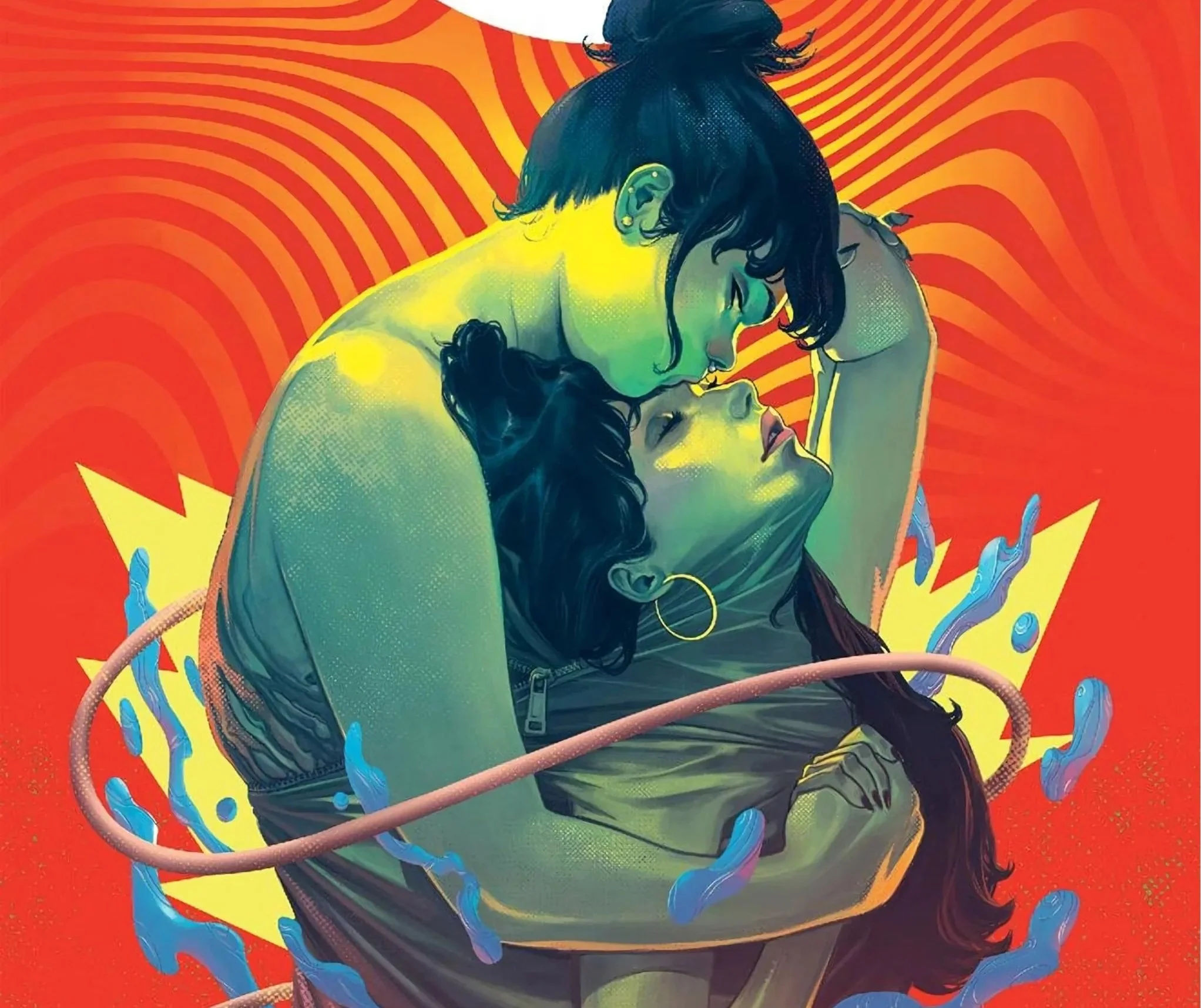
Celebrity worship is already a volatile enough horror show on its own before literal supernatural horror themes even enter the picture. People build shrines out of interviews, dance numbers, posters, gossip, old roles, new rumours, and the version of a star they invented in their own heads. Most fans keep that obsession inside the safe zone. And then there are the kinds that take one long look at the safe zone and walk straight past it—by any means necessary. In Your Skin #1 takes that premise, throws in a little bit of The Substance, some Bollywood body-horror masala, and a side of erotic fiction and obsession.
That’s definitely a lot to carry for one debut issue, but the book mostly handles it with style and a hauntingly unnerving amount of chills. The overall premise could have gone cheap very quickly. Creepy fan. Famous woman. Screams. Roll credits. Thankfully, In Your Skin #1 has more than enough going on to keep readers hooked. It shows a surprisingly deep understanding of how fandom can look like love from a distance and ownership up close. And yes, it is as unhealthy as it sounds, especially through the unique lens of the Bollywood media machine.
Deified in Dread & Desire
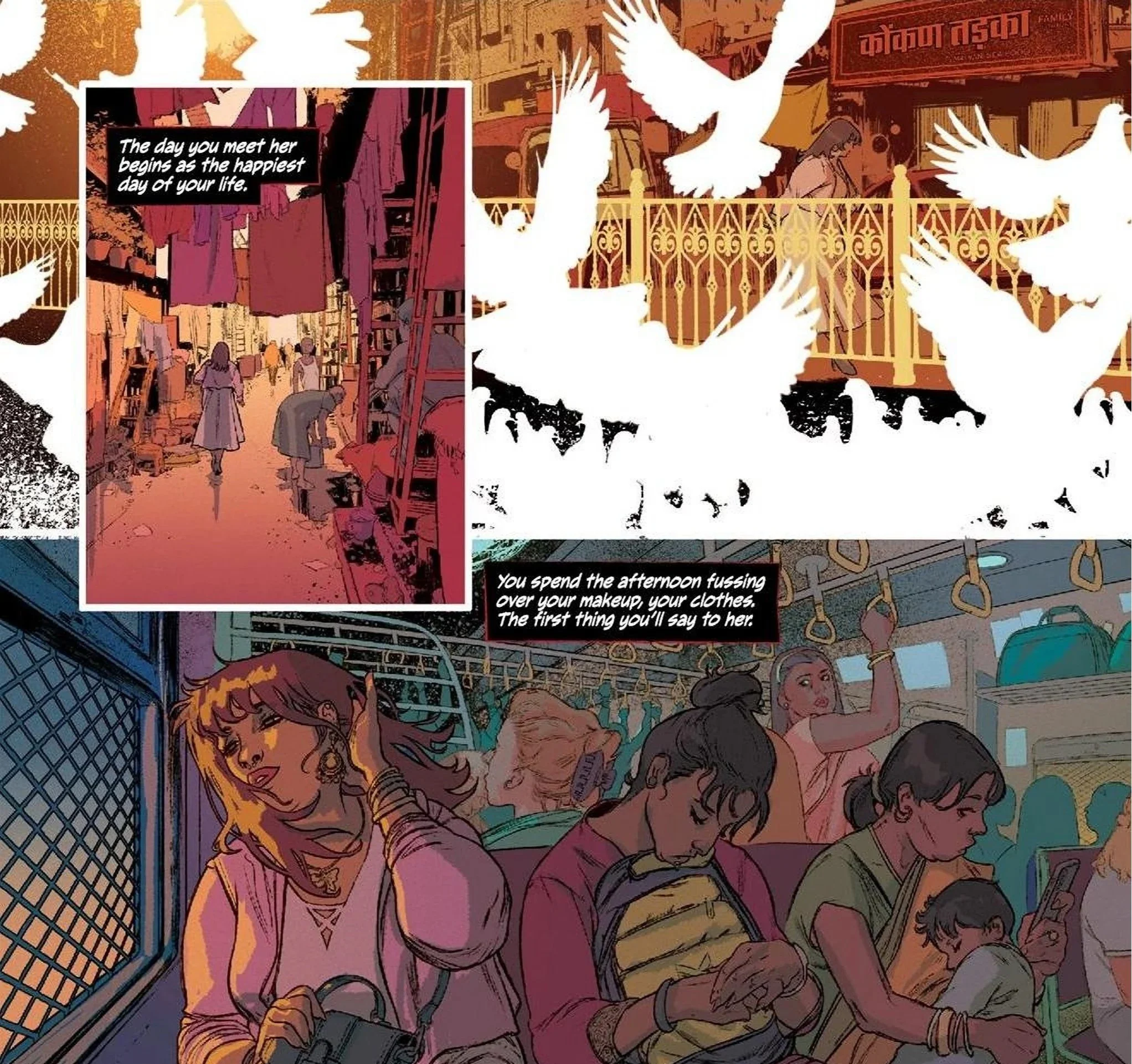
It’s a simple enough plot to start things off: Priyanka has loved actress Ayesha Sen since childhood. She knows the films. She knows the dances. She knows the public myth. And she’s deified this actress to the point of godhood. The issue opens with Priyanka dancing, but the sequence quickly slips away from a normal performance and into something more sinister. Ayesha appears almost like a vision. The bodies blur and eventually merge, right before Priyanka is snapped back to her dreary reality.
From there, the issue moves through Priyanka’s life and makes one thing clear: this obsession has eaten everything else. Her work suffers because she refuses to stop emulating Ayesha’s dancing. Her personal life feels thin, with only her “friend” Nachiket by her side (with his own abusive motives at play). And her relationship with her mother carries strain from being judged for her appearance and lack of success in life. All in all, it’s a dark place for Priyanka to be in, but she’s too far gone to really see it for what it is—or see anything beyond her obsession with Ayesha.
When her “friend” Nachiket gives Priyanka access to Ayesha, it comes with strings attached and the expectation of a favor in return, which we sadly get to watch Priyanka provide. But even after this traumatizing situation, Priyanka gets to her meet-and-greet, which quickly goes from a dream event to a harsh reality: Ayesha announces her retirement. For most people, that would hurt for a day, maybe a week if they’re dramatic. For Priyanka, it feels like betrayal. If Ayesha will not live as Ayesha Sen anymore, Priyanka starts thinking someone else should. That someone, of course, is Priyanka.
And she quickly finds herself at Ayesha’s trailer one dreary night, followed by a host of circumstances that show Priyanka has some sinister intentions of her own to achieve her dreams of living in her idol’s skin. Maybe a little too literally.
A Debut that Devours
It’s a novel choice for Aditya Bidikar – who is already a well respected letterer, but this series marks his comic writing debut as a whole - to setting this story around Bollywood instead of using the usual Hollywood fame machine. The Bollywood context, which is particularly well outlined by Bidikar himself in an epilogue of sorts to the first issue, gives the obsession a more charged texture. Stardom through the Indian lens here feels devotional, public, theatrical, and deeply tied to performance. That helps the book avoid the usually cliched creepy-fan template and gives Priyanka’s fixation a cultural weight that feels shockingly specific to both India and Bidikar’s lived experiences.
To start things off Priyanka is the reason the issue works as well as it does. She comes across as shallow at first, almost painfully so, but the book uses that as the driving narrative without demonising her. Her personality seems built around Ayesha – the star she’s deified to the point of insanity. Her dancing career has failed, her personal life feels practically non-existent, and she keeps emotionally pulling support from the boy next door and her mother while both parties judge, exploit and abuse her emotionally and physically. It’s a harrowing state of affairs, and definitely disturbing for far too many people in the industry who resonate with that specific trauma tied to Indian show business in particular. So it’s no surprise then that Priyanka ends up clinging to Ayesha’s life like a life jacket, simply because her own has stopped giving her a shape. That makes her scary in an all too relatable and more human way. She is lonely, needy, resentful, and desperate to be seen by someone who has never really known her – and offer her ascension from her dreary life. Bidikar manages to make the horror land long before we get to anything even remotely supernatural, because Priyanka’s feelings begin somewhere recognizable before turning grotesque. Most people have wanted to swap lives with someone they admire. Priyanka just takes that wish into a far darker place where the phrase “I’m your biggest fan” feels like an understatement.
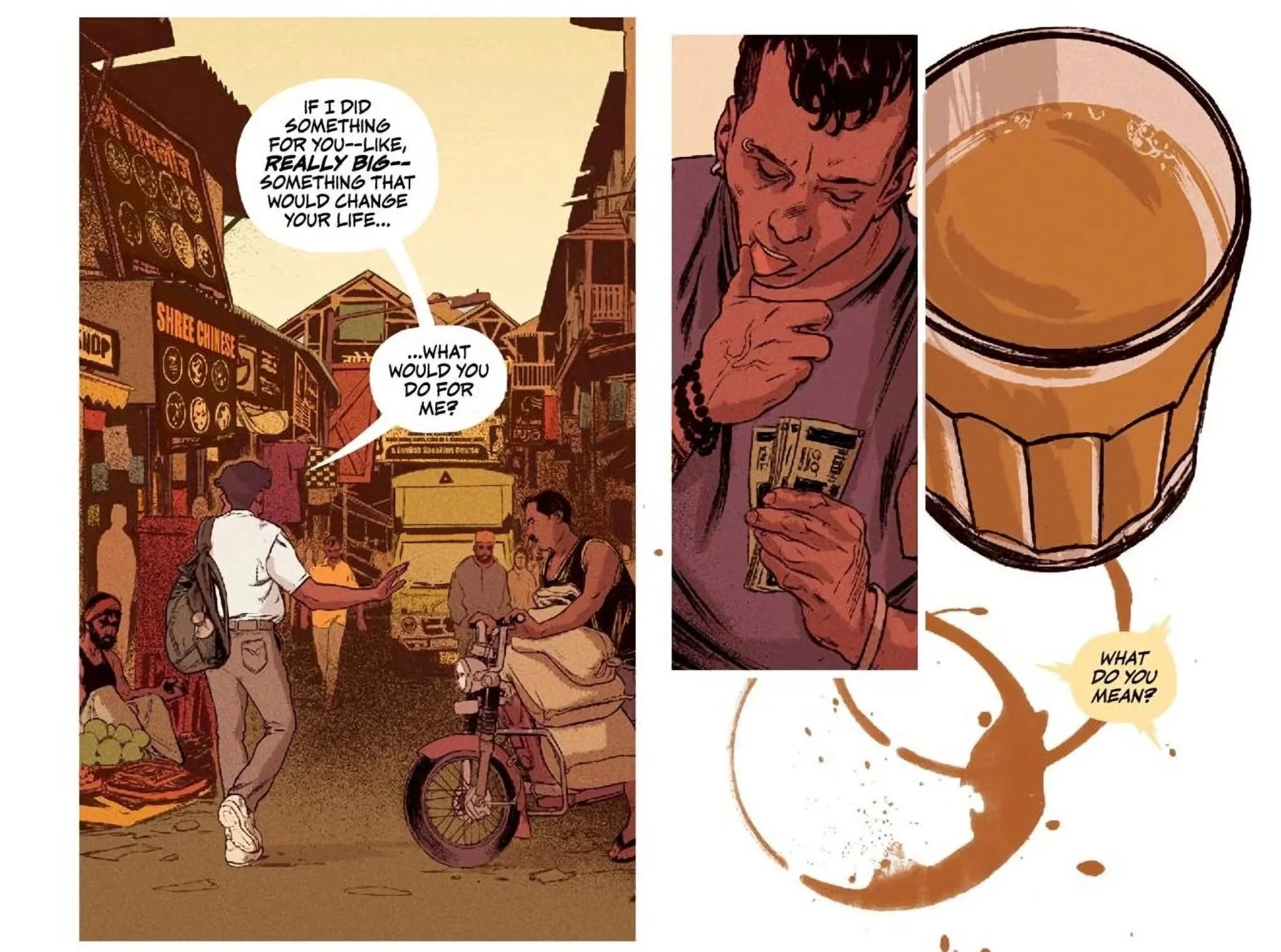
The issue in particular also handles character dialogue very well. There’s such a natural authenticity to the coloqialisms that makes the world feel more lived in and not just crafted. From the Bollywood talking heads, to the tea-seller; everything oozes a very lived sense of sincerity. We understand who Priyanka is through the scenes she is given, but also through the way she speaks and reacts. Her obsession does not sit in exposition alone. It leaks into every fibre of her everyday life; her choices, her conversations, and the way she treats people around her and the misery she subjects herself to. That is where Bidikar’s writing feels strongest, and I’m particularly impressed with just how little sugarcoating there is of a particularly dark parasocial POV, where we can see interpersonal conversation play out in ways that feel far too close to home. It feels like Bollywood masala, for sure, but that’s usually how interpersonal issues in most people’s lives feel like at the time. And seeing the world through Priyanka’s warped perspective only drives that home further.
If there’s honestly any particular problem I could point out, it would be with the scene transitions. The book has abrupt jumps between moments, and a few transitions feel too sudden. I like stories that use scene shifts to reveal character, and this issue does that in places, but some cuts feel rough rather than intentional. A little more connective tissue would have helped the emotional build-up.
The ending also needed slightly more clarity. The horror image works, and the idea is disturbing, but the exact reaction to what happens could have been clearer. Did they switch bodies? Did Priyanka become Ayesha in a physical sense? Did something more symbolic happen first? Confusion can help horror, but here the ambiguity slightly muddies the impact. Though I suppose this is a nitpick, considering there are four more issues for Aditya and company to really dive into the meat of the story.
All in all, Bidikar’s debut issue has bite. The writing kept me utterly invested the whole way through, even when the pacing stumbled. In Your Skin #1 understands how fandom can become ugly when admiration turns into entitlement in such a unique way. Priyanka loves Ayesha so much that Ayesha’s decision to retire feels like theft to her. That is the nasty little catalyst that really kicks things up a notch, and it’s a hell of a hook for a first issue to pull readers in even deeper and make the next chapter feel like must-read material.
Grotesquely Gorgeous
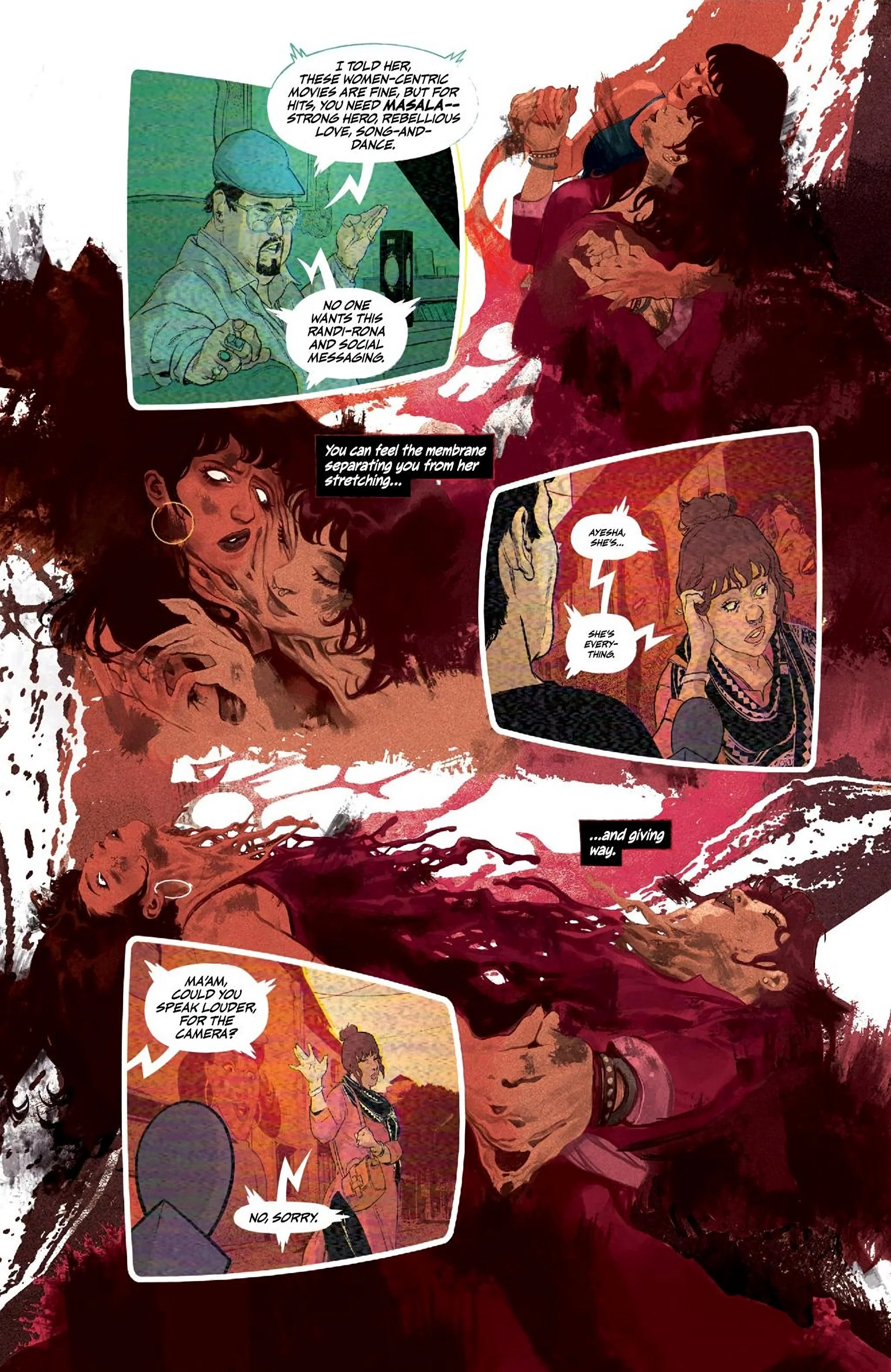
Another spectacular, tone-setting standout for issue #1 is Som’s line work and Francesco Segala’s colors, which quite literally crawl under your skin in every sense of the phrase. The opening dance sequence is gorgeous in a darkly unnerving way. Movement becomes desire, and that’s showcased so fluidly and dreamlike that it conveys the tone of Priyanka’s aspirations admirably. It’s a gorgeous mix of the mysterious and the macabre, especially as Priyanka and Ayesha’s flesh begins to visually melt together—foreshadowing things to come. Similarly, some of the darkest moments of the book are tied to sexual exploitation and the seedy nature of the Bollywood machine. None of these sequences are drawn to titillate or exploit trauma, but instead frame these horrific acts that we know happen behind the scenes as the ugly truths they are. Also, before I forget, I got a good chuckle out of seeing that sneaky little Ram V cameo in the book, which was a cute touch to include.
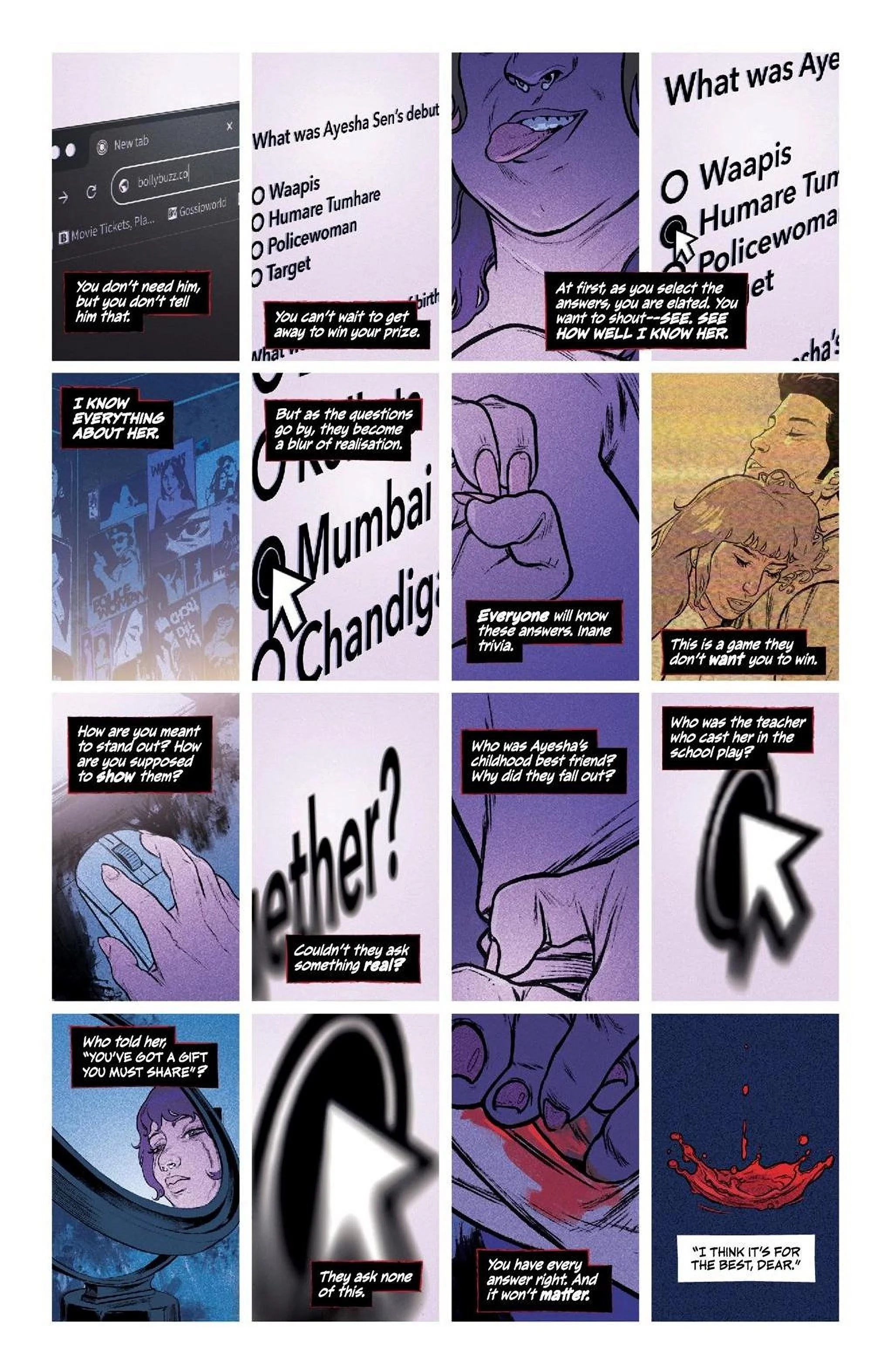
Before you even get to the body horror people are expecting in the last few pages, Som’s line work throughout the book opens up a different kind of body horror to the audience: the feeling of being trapped in your own flawed flesh and yearning to be in the skin of someone else. Someone superior. This ethos, translated through all of Priyanka’s daily life choices, works because it feels tied directly to the book’s ideas, with another particularly stunning sequence being a full page of panels showing Priyanka trying to win a superfan quiz online. It presents the depths of her spiraling obsession far more effectively than words alone could. There’s no random gore or anything of that nature until the very end of the book, because living her life is the real suffering for Priyanka. Her fantasy of becoming closer to Ayesha takes on a physical form by the end, as opposed to the dreams she starts with. And Som manages to convey that beautifully through his paneling. I also appreciate that Som handles a sequence portraying sexual abuse as something exploitative for the people taking advantage of Priyanka, while never letting the audience forget that something deeply perverse is happening to her.
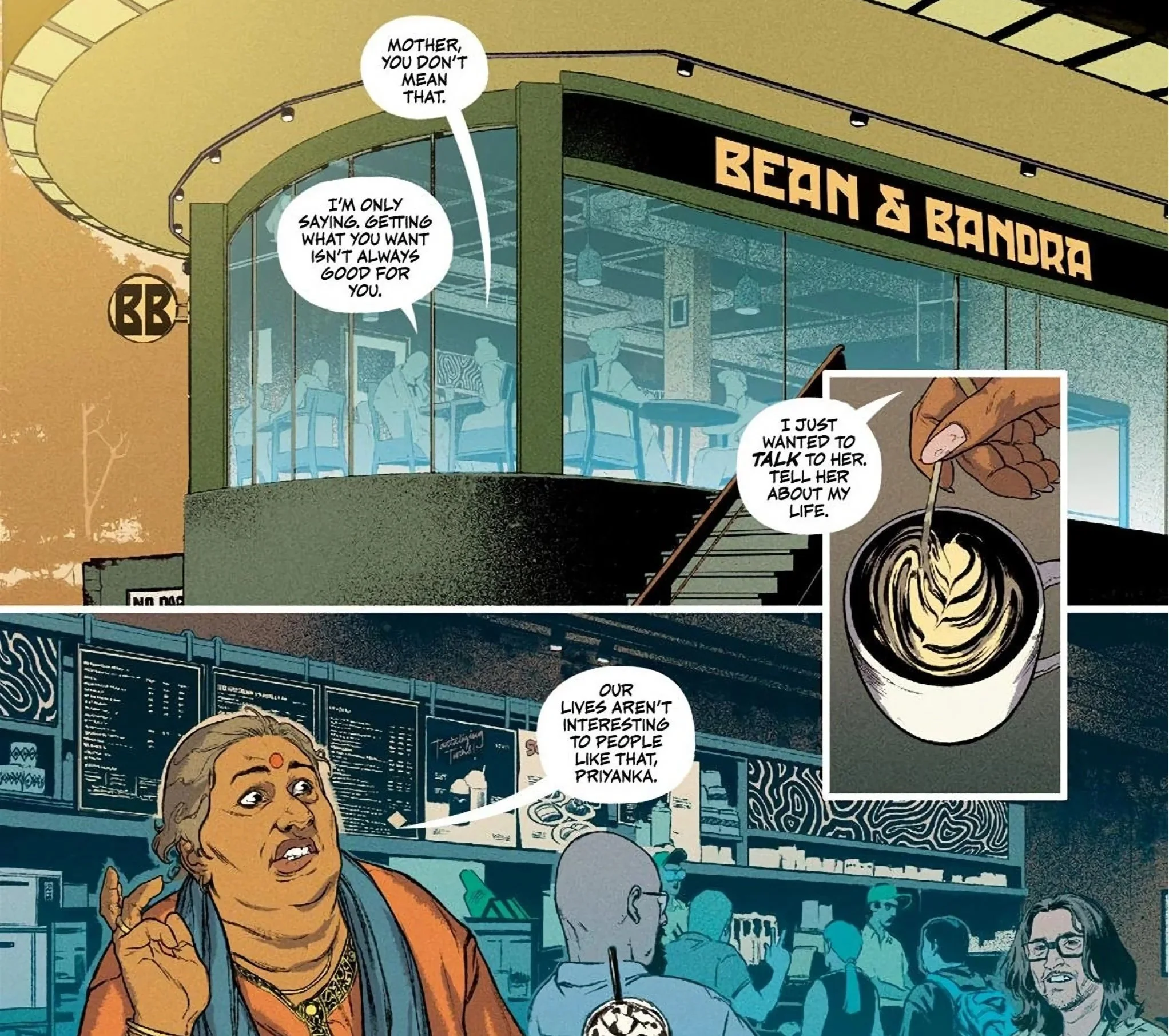
Segala’s colors also contribute significantly to the feel of the book. The reds and pinks feel like lipstick, stage light, blood, and fever. These bloody, more meatier shades pull readers deeper into the glitz and glamour of Bollywood, but the glamour feels unsafe. A cleaner or colder horror style would have made the issue less interesting, and this almost dreamlike style goes a long way in seducing the reader a little because that is what Ayesha’s image has done to Priyanka. And finally, Aditya Bidikar himself pulls double duty as not just a writer, but as one of the industry’s most exemplary letterers for this series; providing some of the truly crisp and clear work that has made him such a darling in the field.
The Substance in the Spotlight
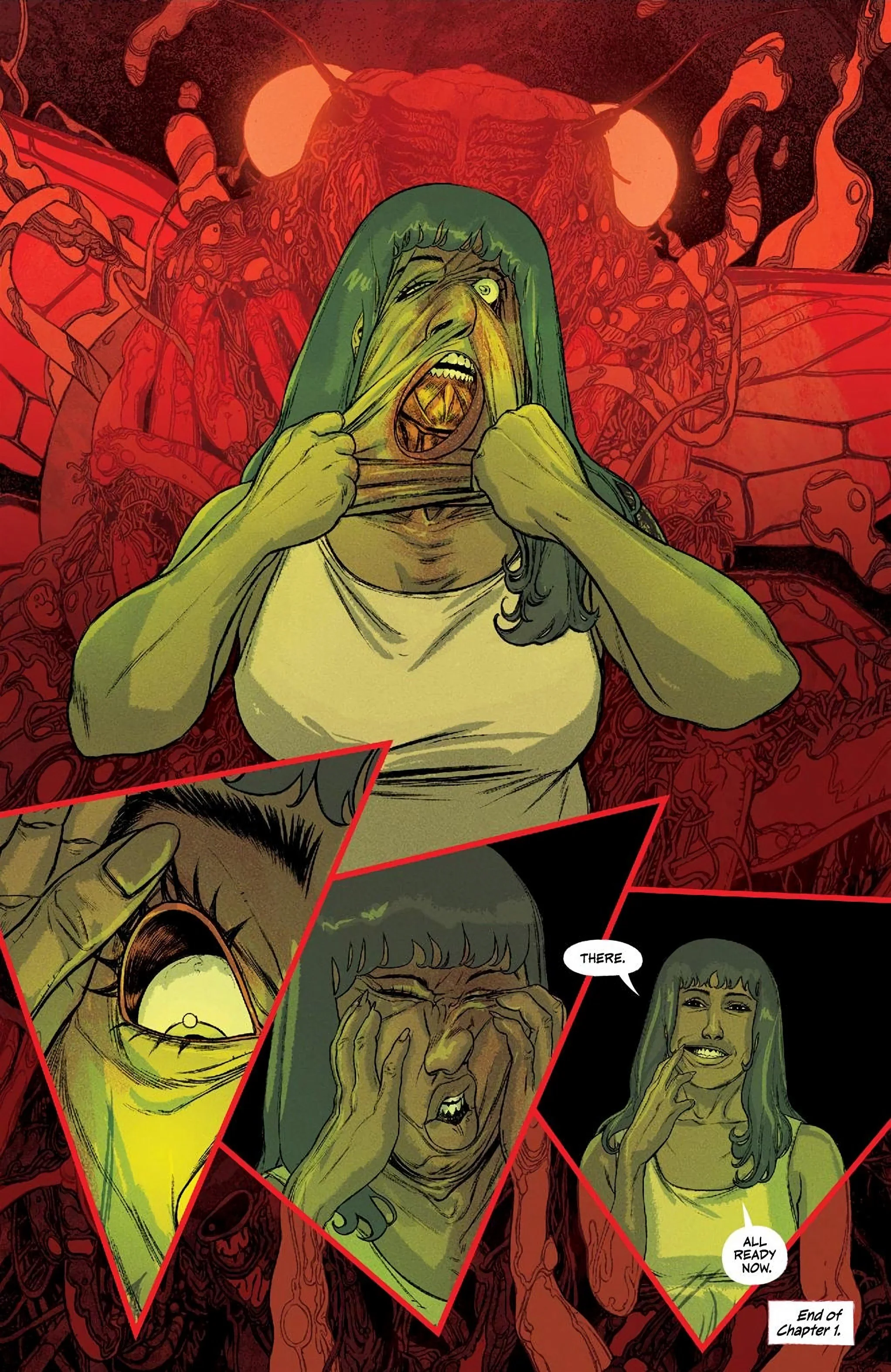
In Your Skin #1 is a genuinely strong first issue with a clear identity. It has Bollywood spice, body horror, erotic unease, and one of the most interesting portrayals of parasocial fan-idol dynamics in recent memory. More importantly, it manages to weave all of those qualities into a genuinely engaging narrative that pulls readers in ever deeper. The issue has its rough edges, sure. But the central idea is strong enough to hold attention, and the visual work gives the issue a nasty elegance. Priyanka, as a lead character, is genuinely captivating in a wholly tragic way that makes me love her portrayal, warts and all. She loves Ayesha so much that Ayesha’s own life becomes an inconvenience. That is a sharp horror premise because it does not need a supernatural aspect, even though there certainly is one.
No, what In Your Skin #1 does best is present the real monster early on: a superfan deciding that devotion matters more than anything else—even more than the object of desire’s own wishes. And that conceit is more than enough to keep me hooked for the issues to come.
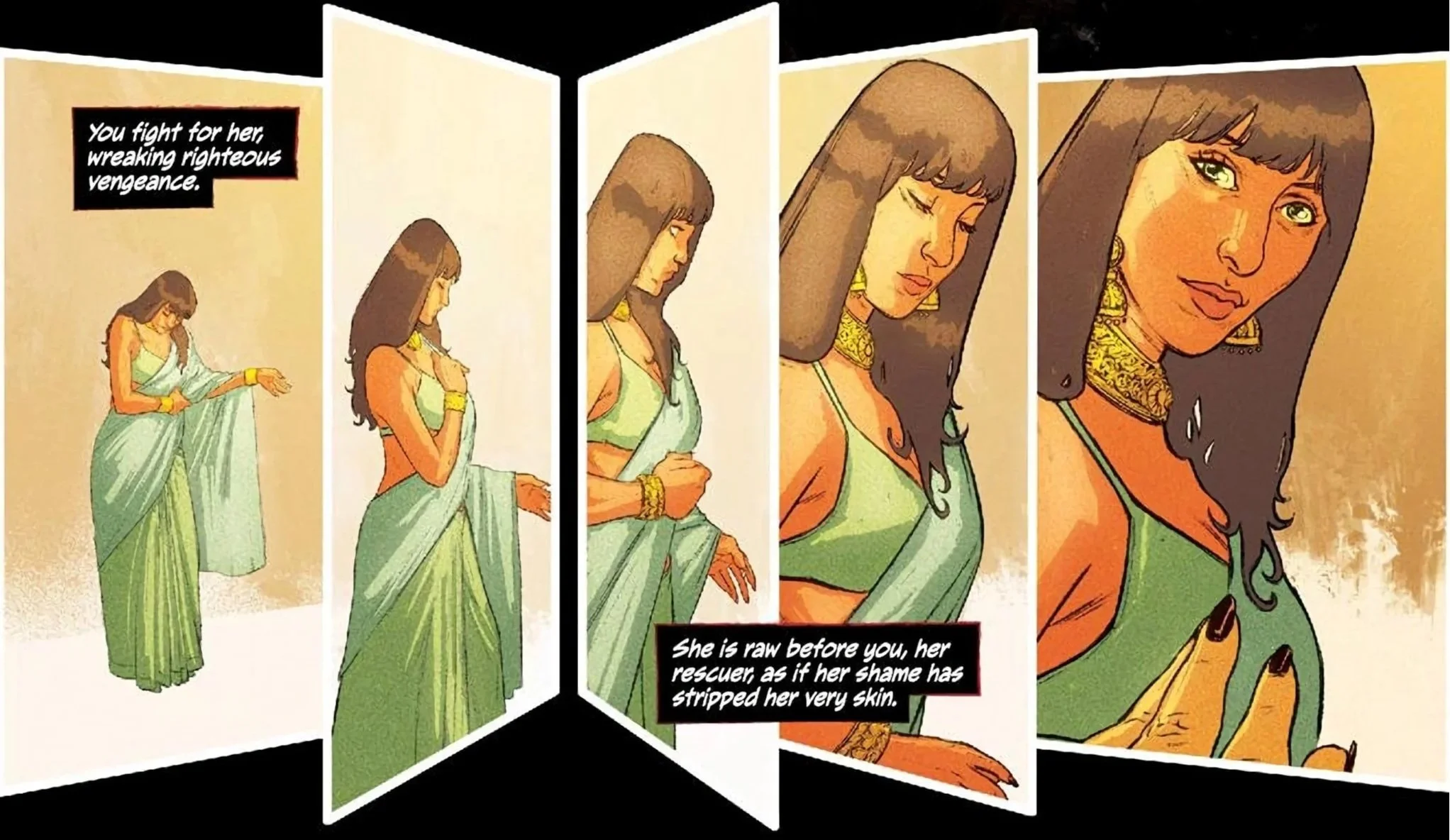
Final Verdict: In Your Skin #1 is a strong debut issue that offers an unnerving horror experience that blends the all-too-real exploitation and parasocial stigmas of the Indian film industry and the tantalising hook of a much more sinister tale just under the surface.