
Writer: Mark Russell
Artist: Nuno Plati
Colorist: Giada Marchisio
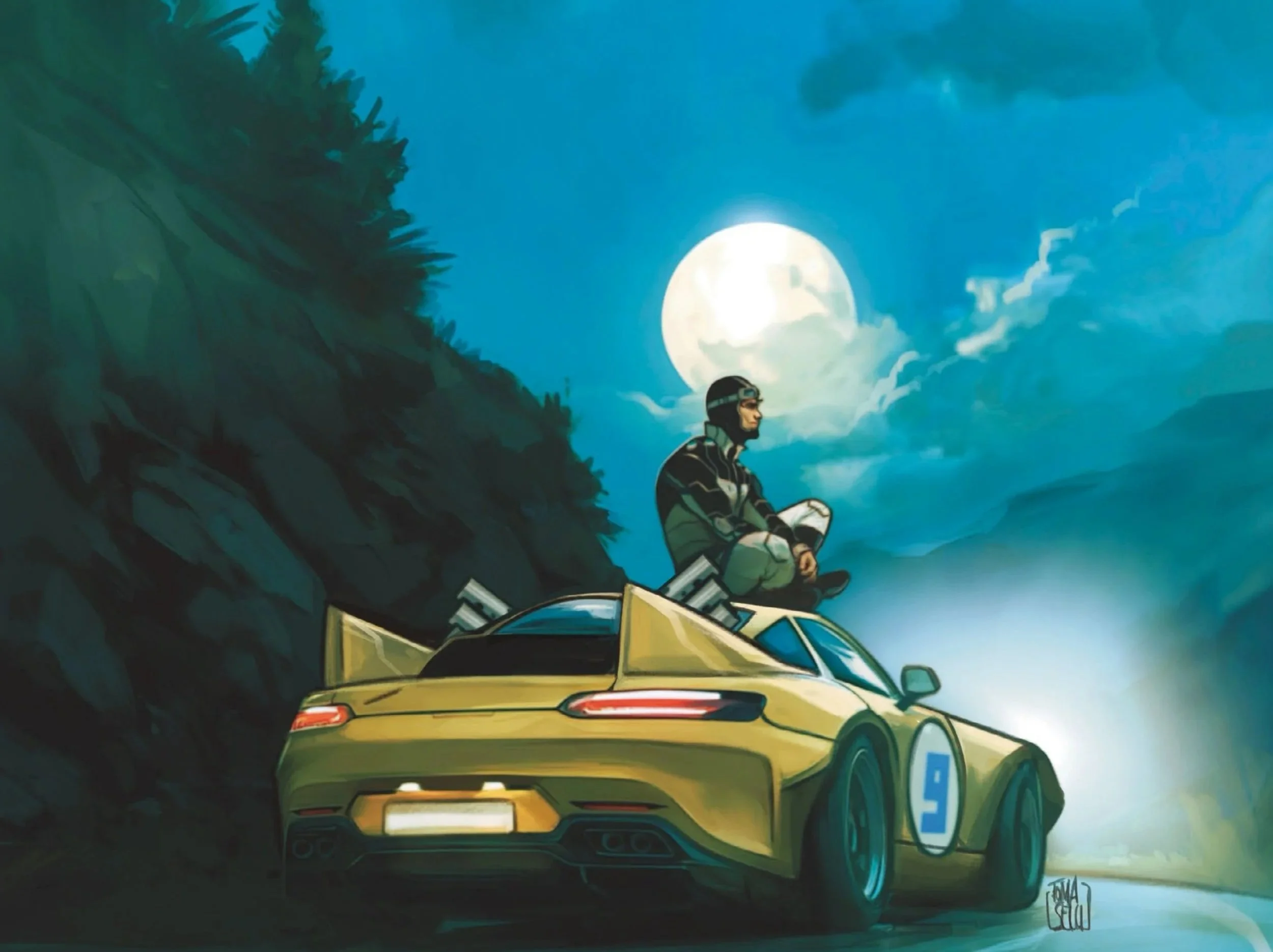
Cover Artist: Francesco Tomaselli
After an issue that tightened its focus around survival and control, Racer X #6 takes that same idea and throws it into a much louder, more chaotic setting. The system is still there, still dangerous, still adapting, but now it’s being pushed into the open. Instead of quiet maneuvering and calculated disruption, this issue turns survival into something performative. It becomes something to watch, manipulate, and ultimately weaponize.
That shift gives the issue a very different energy from what came before. Where Racer X #5 felt controlled and deliberate, this one feels bigger, more explosive, and more openly influenced by spectacle. It leans harder into the racing side of the series while still maintaining the underlying tension that’s defined the book so far. The result is an issue that feels less restrained, but not unfocused.
Pulling the Past Into the Present
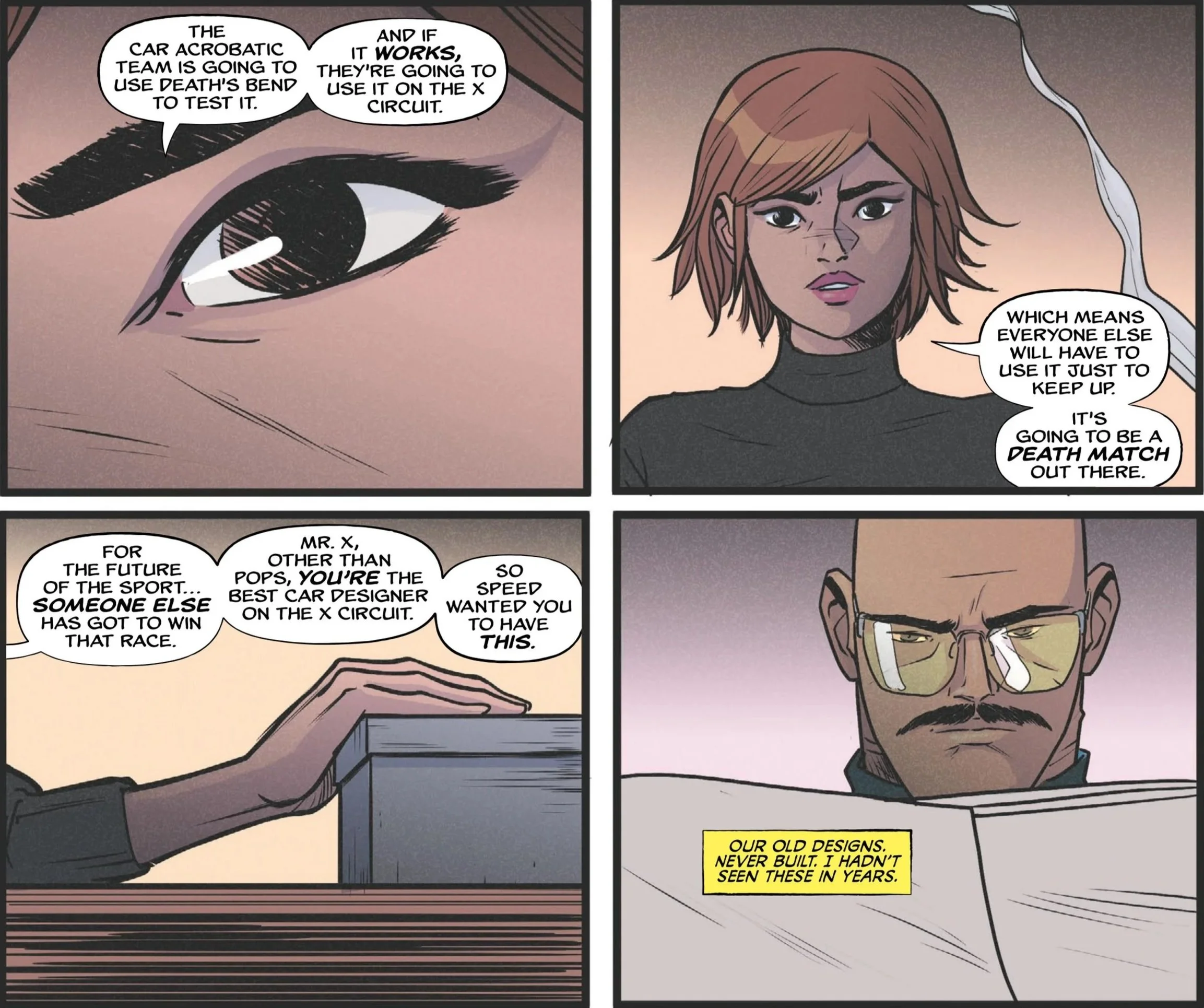
The opening scene between Racer X and Trixie immediately grounds the issue in something more personal. Up to this point, Racer X has largely operated in isolation, defined by his mission and his ability to stay ahead of the system. Bringing Trixie into the conversation changes that dynamic in a meaningful way.
Their discussion about the GRX Engine and the events of the main Speed Racer title connects the two books more directly, but it also reinforces what’s at stake beyond the immediate conflict. This isn’t just about dismantling the Tiger Syndicate or staying alive from one race to the next. There’s history here, and there are relationships that still matter, even if they exist at a distance.
The introduction of the Gyro Car design is where that connection becomes most tangible. This isn’t just another tool for Racer X to use. It’s something tied to his past, something that represents a path that never fully came together. Bringing it into the present gives the issue an added layer of emotional weight, even as the story quickly shifts back into action.
Dante Ferno Makes His Move
If Racer X is pulling from the past, Dante Ferno is looking strictly at the present and how to control it. His scenes continue to be some of the most unsettling in the book, not because of overt violence, but because of how calculated everything feels.
The reveal of the mole within the CAT Team adds another layer to the larger conflict, but what stands out more is how Ferno handles it. There’s no hesitation, no uncertainty. He identifies the problem and immediately looks for a way to turn it into an advantage.
Kim Jugger’s involvement complicates that approach in an interesting way. Where Ferno’s instinct is to eliminate the threat outright, Jugger sees an opportunity to use it. That difference in perspective reinforces the idea that even within this system, there are competing philosophies about how to survive and maintain control.
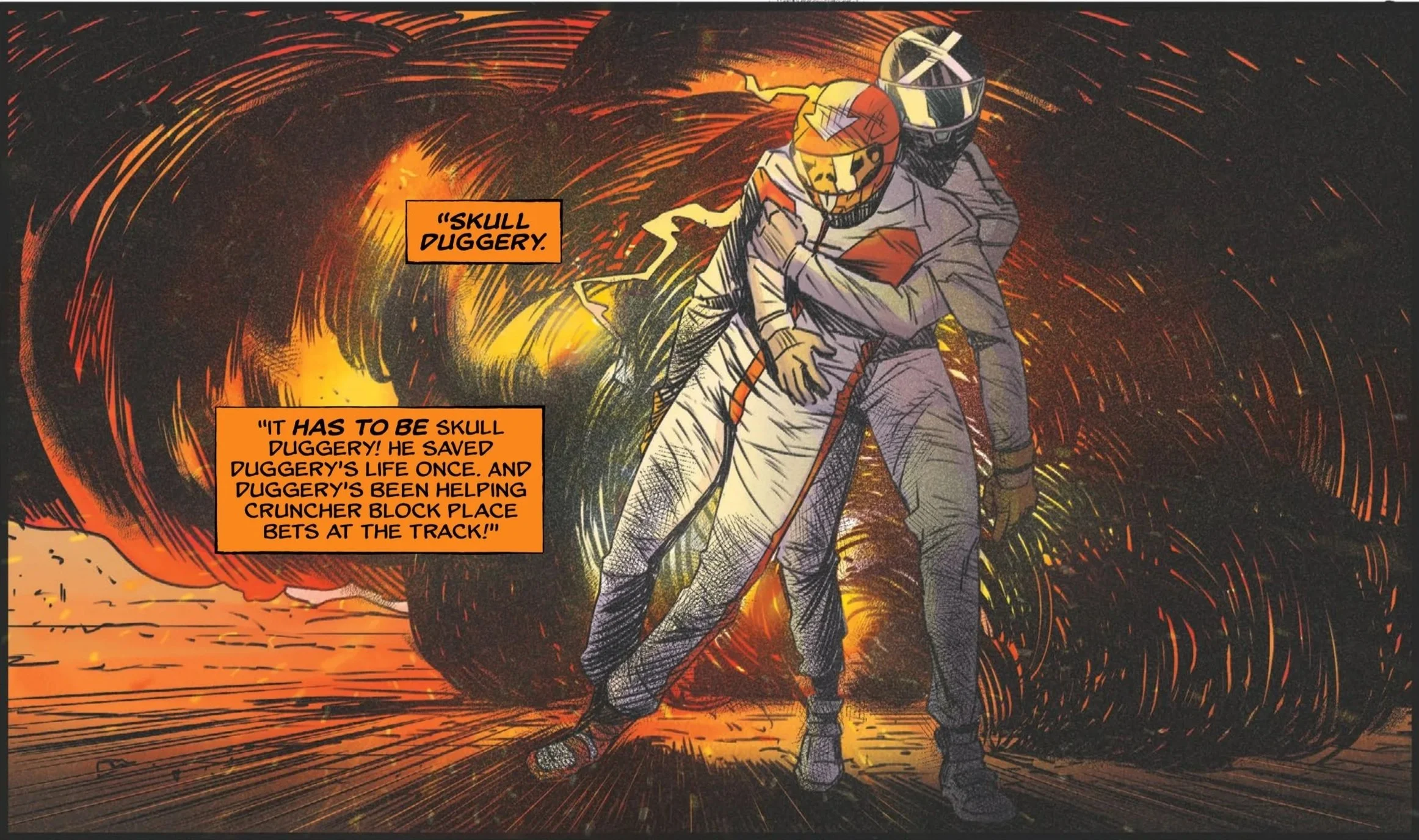
Skull Duggery becomes the focal point of that conflict. His connection to Racer X adds a personal dimension that the issue uses effectively, especially through the flashback sequence. Seeing the moment where Rex saved his life not only builds sympathy for the character, but also mirrors the kind of situation Racer X now finds himself in.
That parallel isn’t subtle, but it doesn’t need to be. It reinforces the idea that survival in this world is often temporary, and that even the people you save may not be able to escape what comes next.
Turning Survival Into a Show
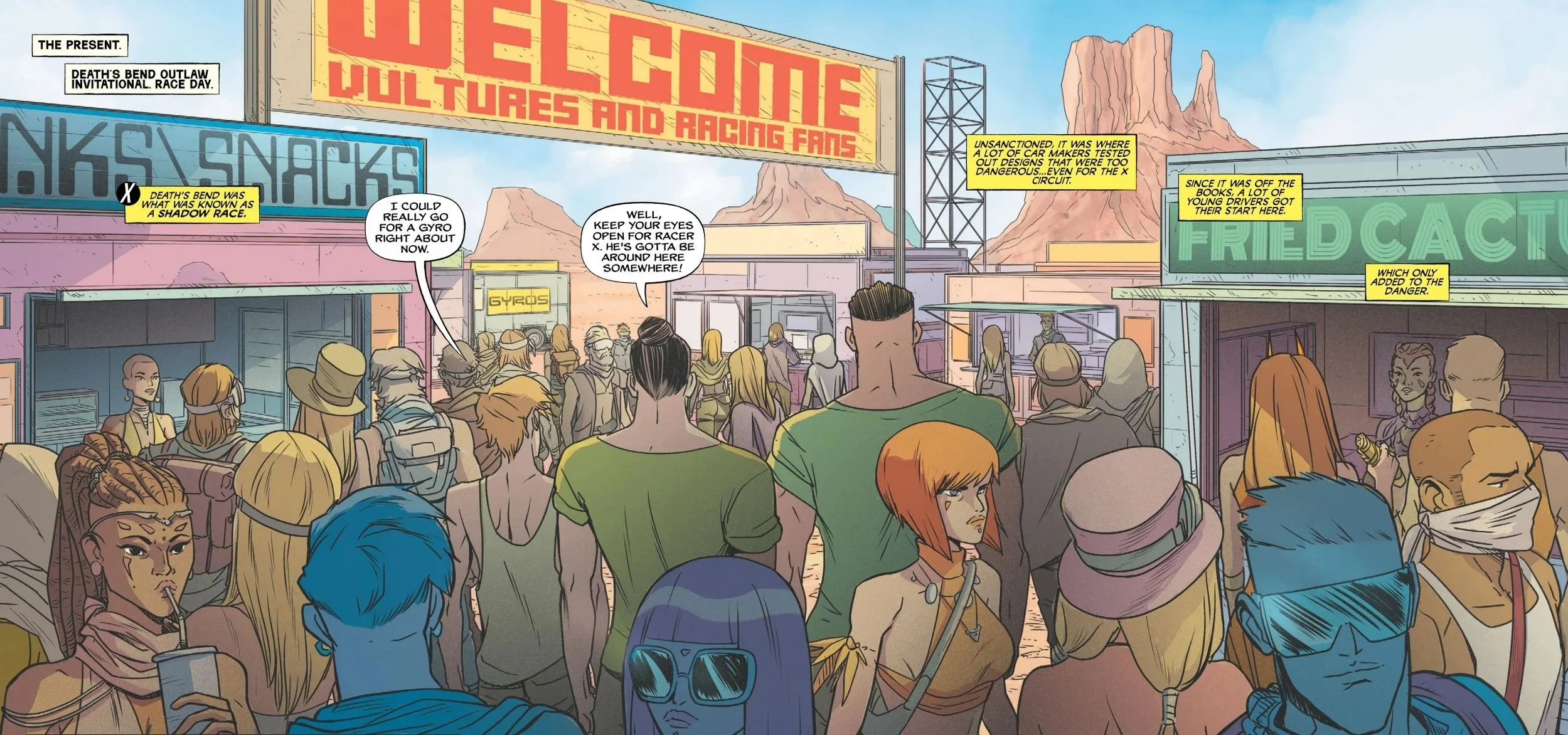
The Death’s Bend Outlaw Invitational is where the issue fully embraces its more explosive tone. This goes beyond a standard race. It’s a proving ground, a place where the most dangerous ideas are put on display without restriction.
That setting allows the book to lean into a different kind of tension. Instead of a quiet strategy, the danger is immediate and visible. Every turn, every maneuver, every piece of technology is designed to push the limits of what the drivers can handle.
The introduction of the GRX Engine into this environment is particularly effective. It’s positioned as something powerful but unstable, a tool that can just as easily destroy its user as it can secure victory. That uncertainty becomes a central part of the race, shaping how both Duggery and Racer X approach it.
Racer X’s use of the Gyro Car provides a direct contrast. Where the GRX Engine represents raw power and risk, the Gyro Car emphasizes control and adaptability. Its superior handling and versatility allow Racer X to keep pace in a way that feels consistent with his character.
The race itself is one of the most engaging sequences in the series so far. It balances speed, danger, and strategy in a way that feels both exciting and purposeful. Every moment builds on the last, creating a sense of momentum that carries through the entire sequence.
When Control Turns Into Elimination
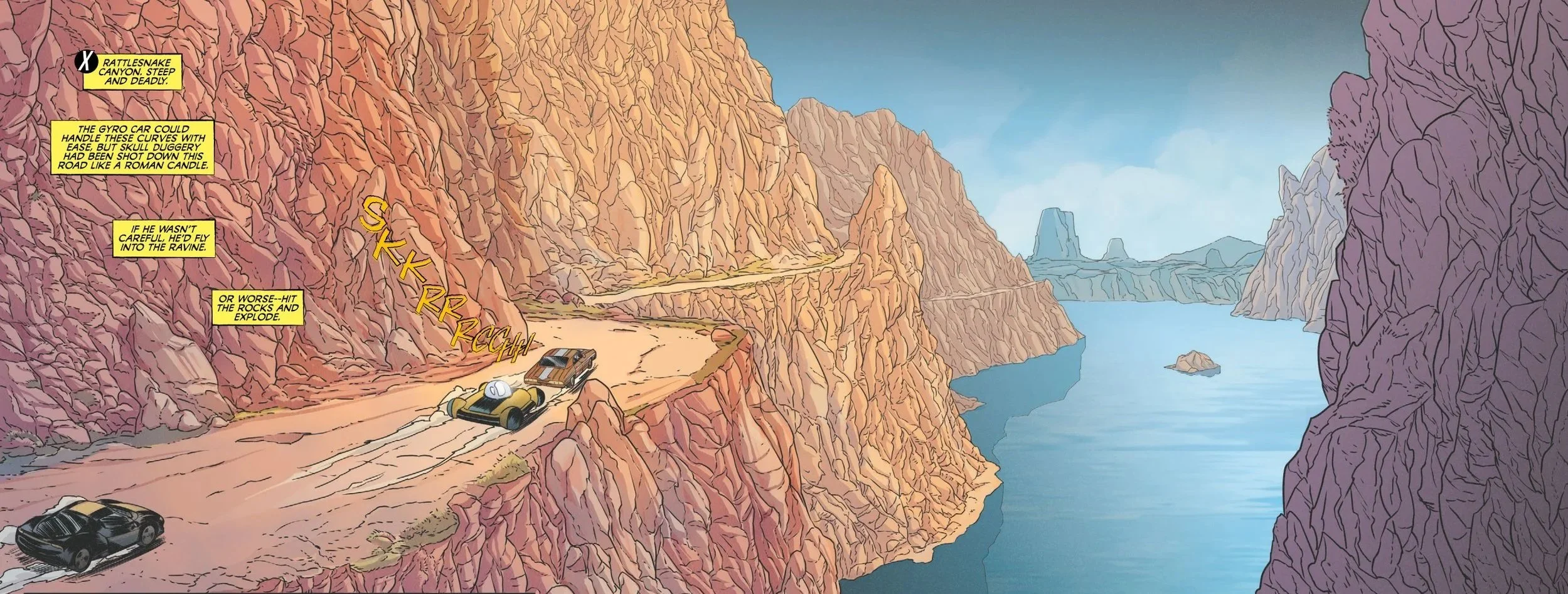
The turning point of the issue comes when Kim Jugger detonates Duggery’s car. It’s a sudden, brutal moment that shifts the tone of the race entirely.
Up to that point, the danger felt competitive. Drivers were pushing each other, testing limits, and trying to gain an advantage. The explosion removes any illusion of fairness. This isn’t a race in the traditional sense. It’s a controlled environment where outcomes can be decided at any moment.
Duggery’s death reinforces the core idea that’s been building throughout the series. Survival isn’t guaranteed, and it isn’t always tied to skill or effort. Sometimes it’s simply a matter of being in the wrong place at the wrong time.
For Racer X, the consequences are immediate. The explosion sends him off the cliffside, turning the race into a fight for survival in the most literal sense. The transition from high-speed competition to a desperate escape is handled smoothly, maintaining the intensity while shifting the focus.
Survival, Adaptation, Escape
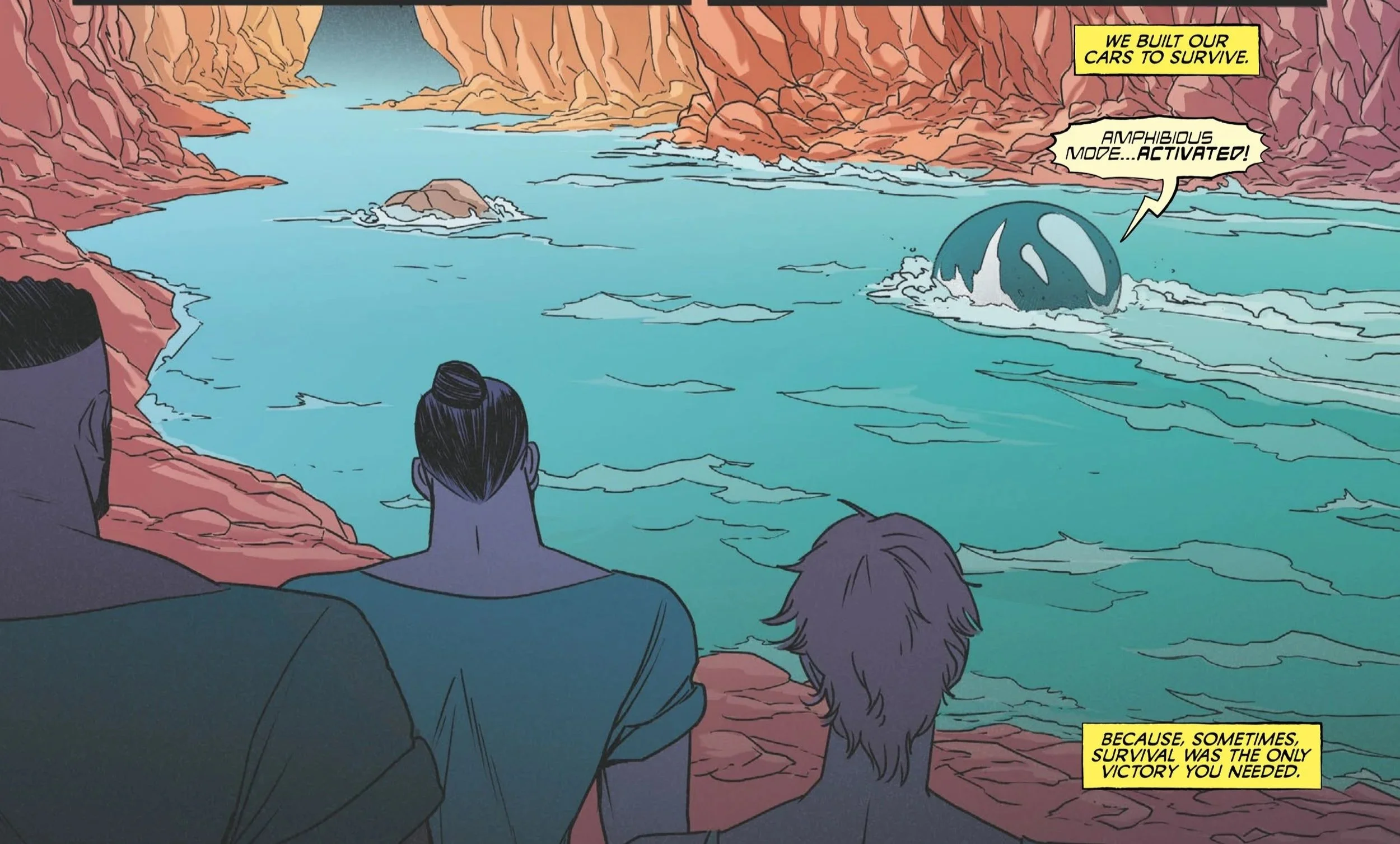
Racer X’s escape sequence is where the issue brings everything together. The Gyro Car’s amphibious capabilities allow him to adapt to a situation that would otherwise be fatal.
This moment works because it feels earned. The earlier introduction of the car and its design isn’t just setup. It becomes a necessary tool for survival, reinforcing the idea that preparation and adaptability are what keep Racer X alive.
The presence of the Tiger Syndicate goons at the bottom of the canyon adds another layer of tension, but it also highlights how expected this outcome was. Racer X isn’t just reacting to the situation. He anticipated it.
His escape isn’t framed as a victory in the traditional sense. It’s simply survival. That distinction matters, especially given how the issue concludes.
Victory Looks Different Depending on Who You Are
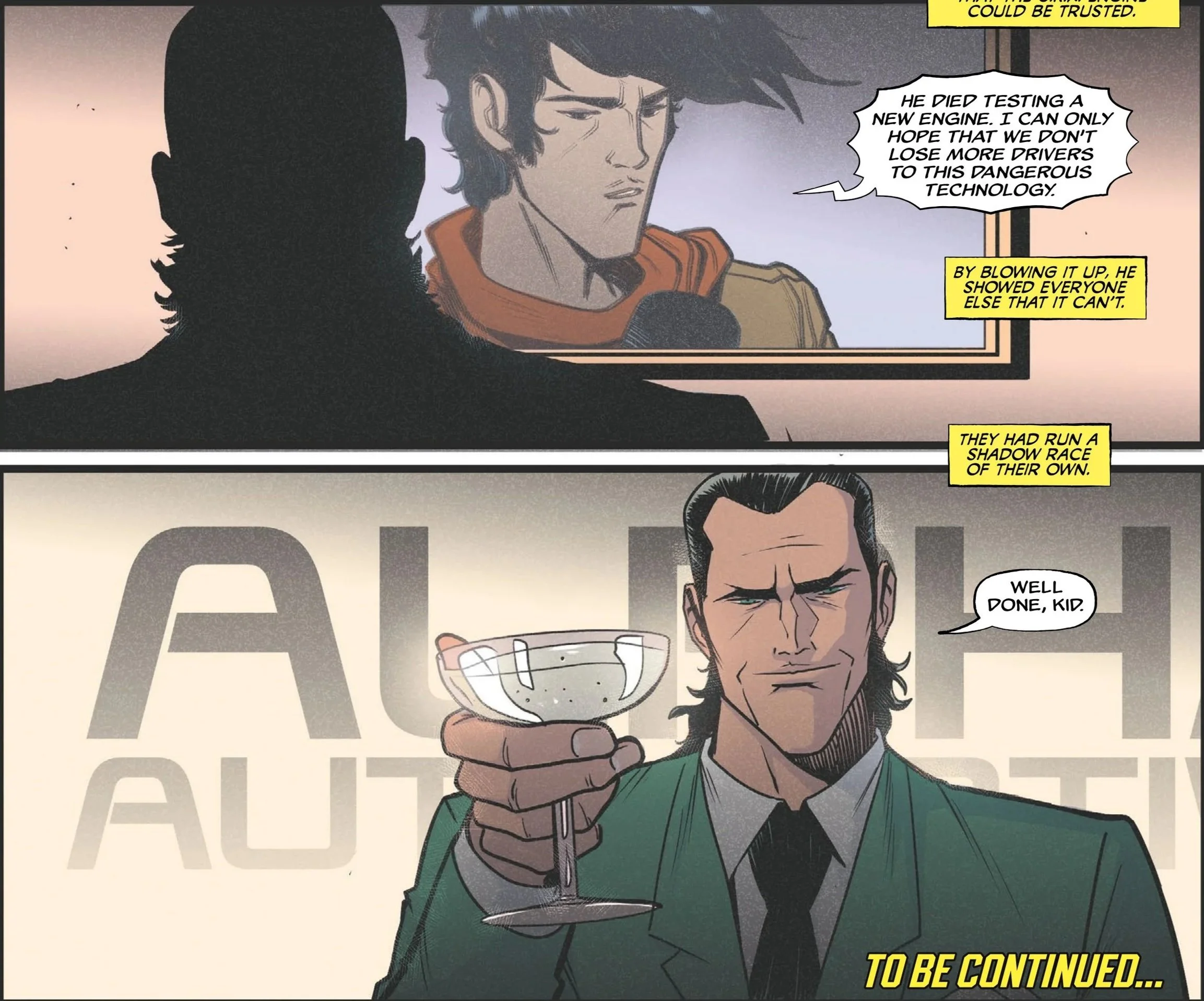
The final scenes with Jugger and Ferno provide a stark contrast to Racer X’s escape. From their perspective, the race is a success. The mole has been eliminated, the GRX Engine has been demonstrated, and the competition has been sent a clear message.
This is where the thematic core of the issue comes into focus. Survival means something different depending on where you stand within the system.
For Racer X, survival is about staying alive and continuing the fight. For Ferno and Jugger, it’s about control, dominance, and shaping the environment to ensure their continued power.
The idea that the GRX Engine is too dangerous to challenge becomes part of that control. It’s not just a piece of technology. It’s a statement designed to discourage opposition through fear.
A More Explosive Identity
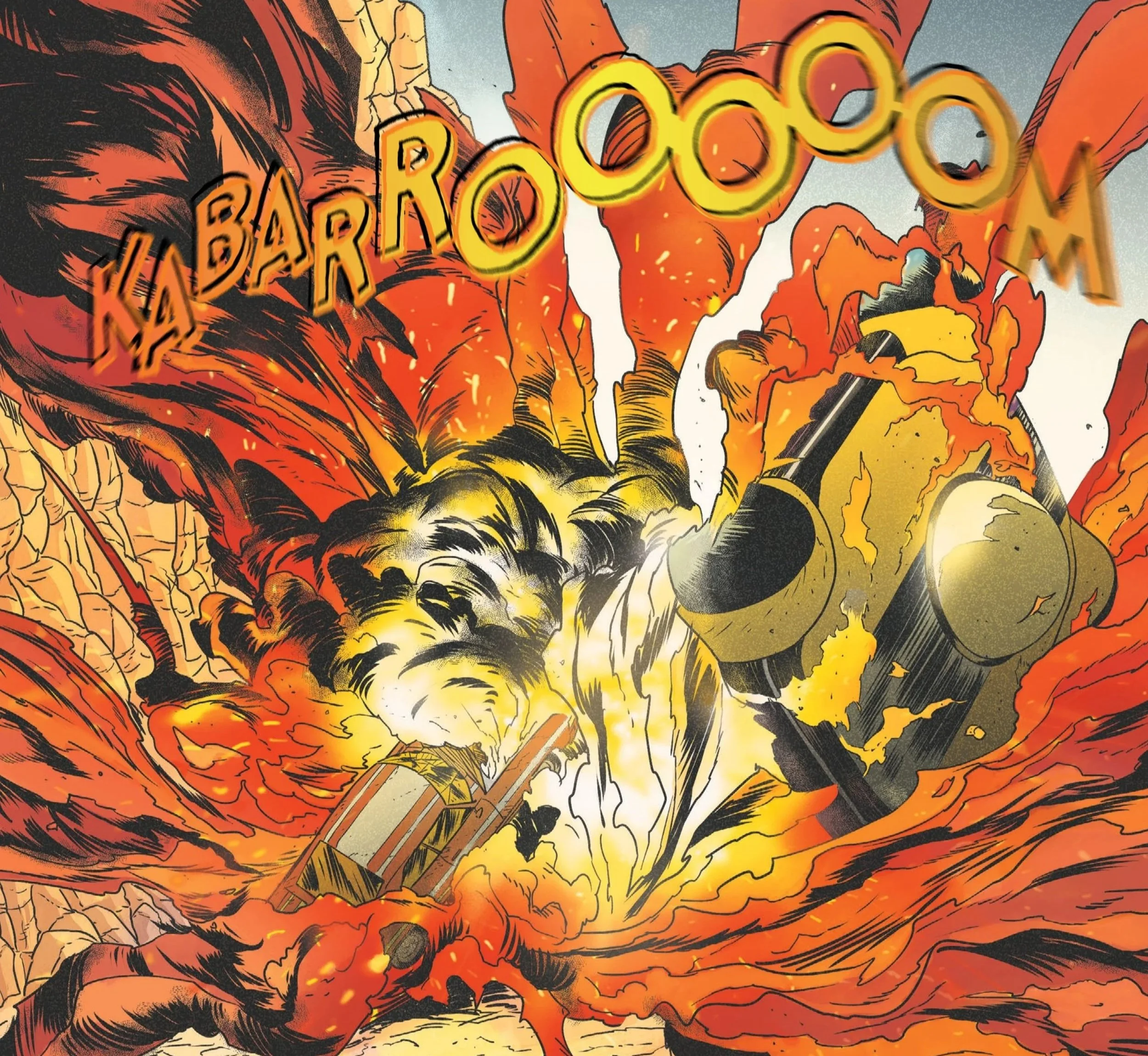
What makes this issue stand out is how confidently it embraces a more action-heavy identity without losing sight of its themes. The influence of high-energy, spectacle-driven storytelling is clear, but it doesn’t overwhelm the core of the book.
The emotional elements are still present, particularly in the connections between characters and the echoes of Racer X’s past. They’re simply woven into a more dynamic and visually intense framework.
The artwork plays a significant role in making this balance work. The explosion sequence, the race through Rattlesnake Canyon, and the flashback to Duggery’s original crash all stand out as highlights. Each moment is clear, impactful, and easy to follow, even at the highest points of intensity.
Final Thoughts and Rating
Racer X #6 builds on the foundation of the previous issue while expanding the scale and energy of the series. It takes the idea of survival and places it in a more visible, more chaotic environment, showing how that concept operates when everything’s pushed to its limits.
The race itself is one of the strongest sequences in the series so far, combining action, strategy, and consequence in a way that feels both exciting and meaningful. The parallel between Racer X and Dante Ferno continues to provide a strong thematic backbone, even as the story becomes more spectacle-driven.
At times, the shift toward larger action slightly overshadows some of the tighter control that defined the previous issue, but the core of the story remains intact. The tension is still there, the stakes are still clear, and the characters continue to evolve within a system that refuses to let them rest.
Rating: 8.5/10
A high-energy continuation that leans into spectacle without losing its thematic focus, proving that in this world, survival isn’t just about endurance, but about adapting when the rules are rewritten in real time.