
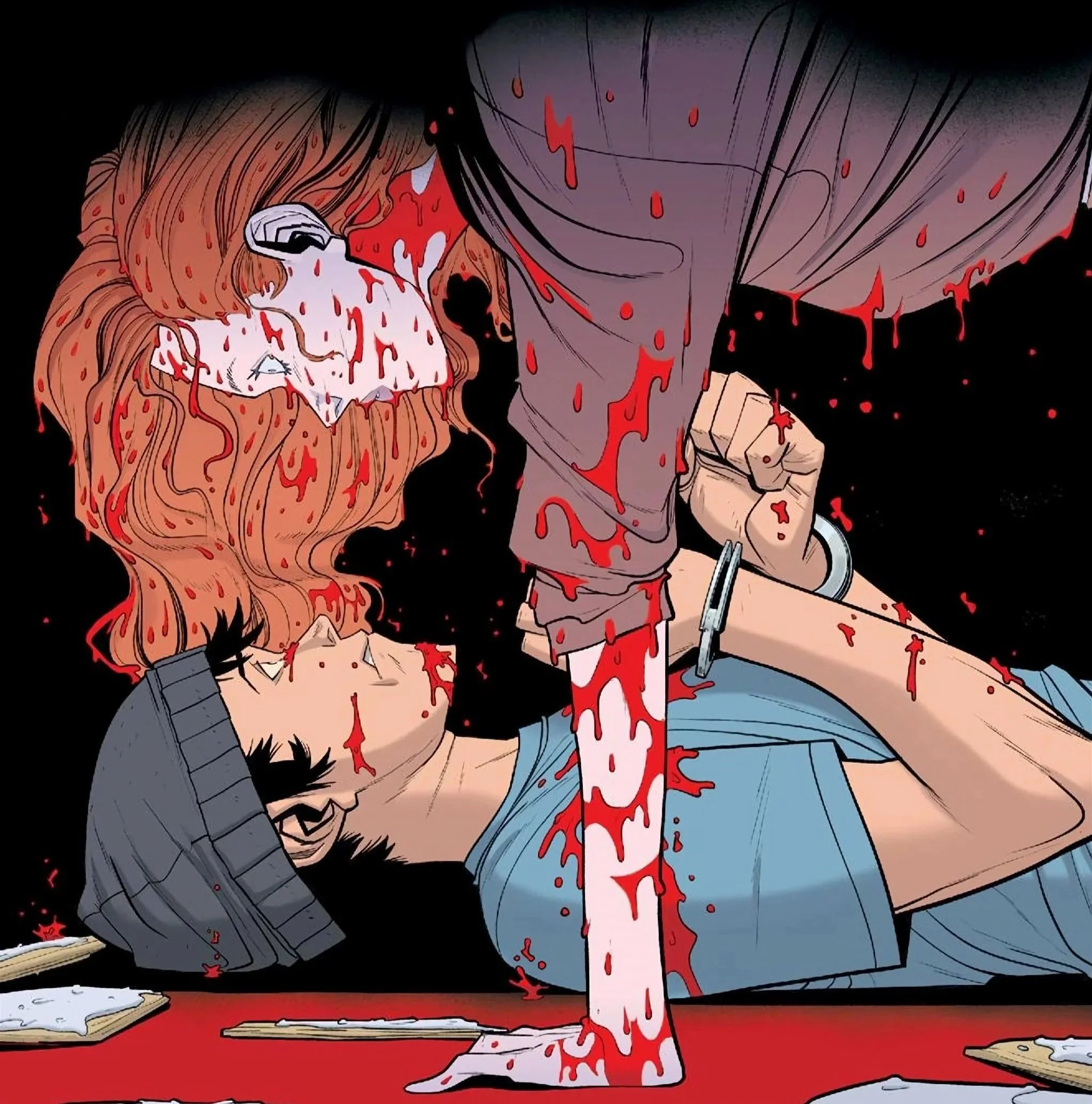
Writer: Doug Wagner
Artist: Daniel Hillyard
Colorist: Dave Stewart
Cover Artists: Daniel Hillyard & Dave Stewart
After a debut that focused on setup, tone, and character, Narco #2 shifts into something more immediate. The mystery is no longer theoretical or distant. Marcus is now directly inside it, forced to deal with the consequences of a situation he barely understands and may not even be able to process.
That shift works in the book’s favor because it changes the nature of the tension. The first issue asked the reader to invest in Marcus as a character and to understand the world he lives in. This issue begins to test that investment by putting him in a position where he cannot rely on comfort, routine, or even his own awareness to navigate what is happening around him. It raises the stakes without dramatically altering the tone, which is one of the more interesting choices the book continues to make.
At the same time, the issue continues to resist the kind of escalation that might be expected from a crime story built around a murder accusation. It moves forward, but it does so carefully, sometimes almost cautiously. That restraint is part of what makes Narco feel distinct, but it also leads to moments where the story feels like it is deliberately holding itself back from something more immediate or explosive.
Picking Up in the Worst Possible Place
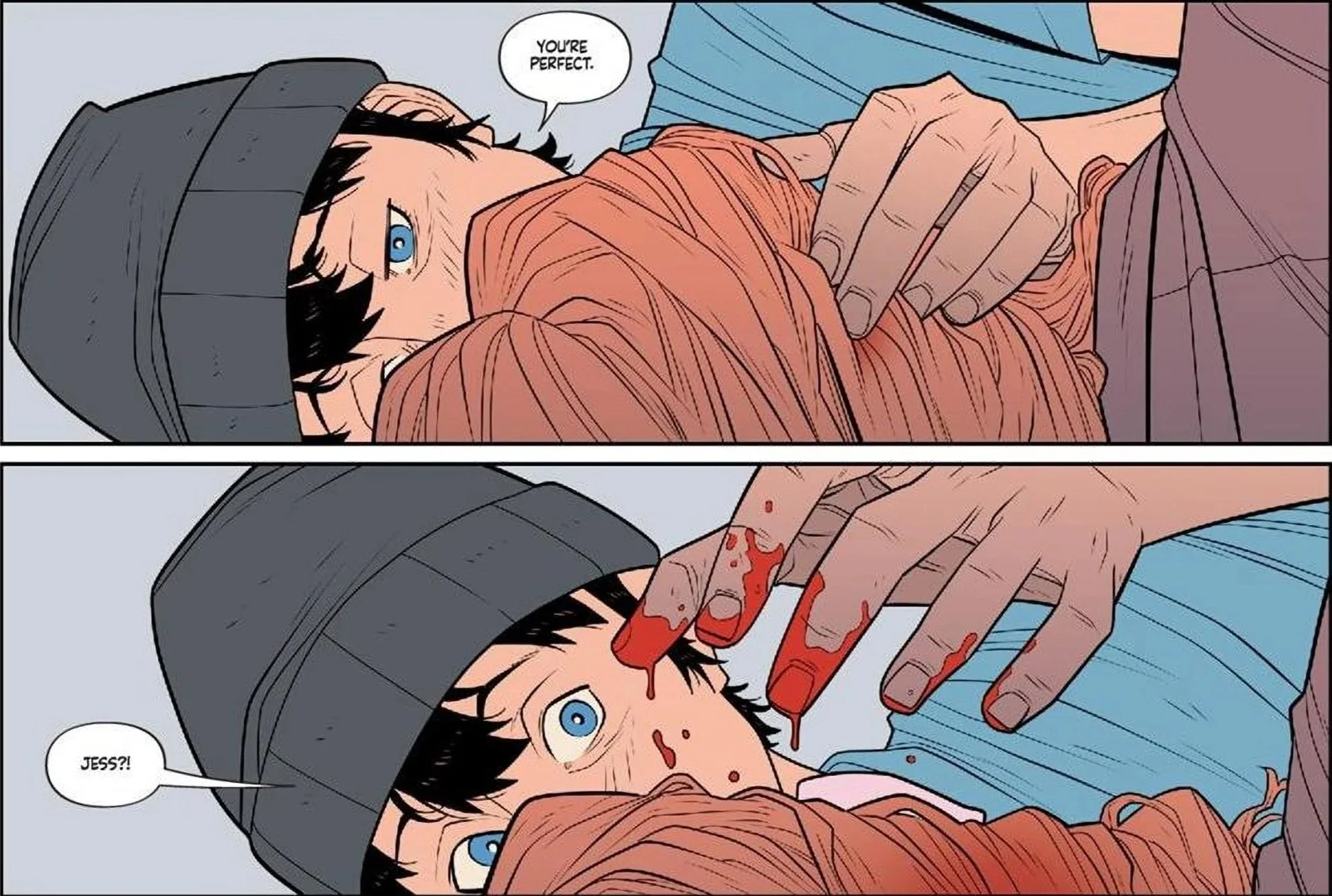
The issue opens exactly where it needs to, with Marcus waking up next to Jess’s body. This is the moment that the first issue was building toward, and it would have been easy for it to be framed as a shocking, high-intensity reveal. Instead, the scene is handled in a much quieter and more unsettling way that fits the tone of the series far better.
The focus is not on the violence itself or even the mechanics of what happened. It is on Marcus trying to understand the situation as it unfolds around him. There is confusion, fear, and a sense that he is already too late to change anything about what has happened. The presence of the police almost immediately reinforces that lack of control, making it clear that whatever the truth is, Marcus is now trapped inside a narrative that is being built without him.
This approach continues to define the book’s identity. It is not interested in presenting violence as spectacle or even as a central draw. Instead, it is concerned with the aftermath and with the emotional and psychological impact of being placed in a situation where the truth is uncertain and the consequences are immediate.
Marcus’s condition adds another layer to that dynamic. The blackouts are not treated as a gimmick or a convenient plot device. They actively shape the story by creating gaps in both his memory and the reader’s understanding. Every time Marcus loses consciousness, the narrative becomes less reliable, and that uncertainty becomes the primary source of tension. It is not just about what happened, but about what cannot be known.
A Slower Kind of Pressure
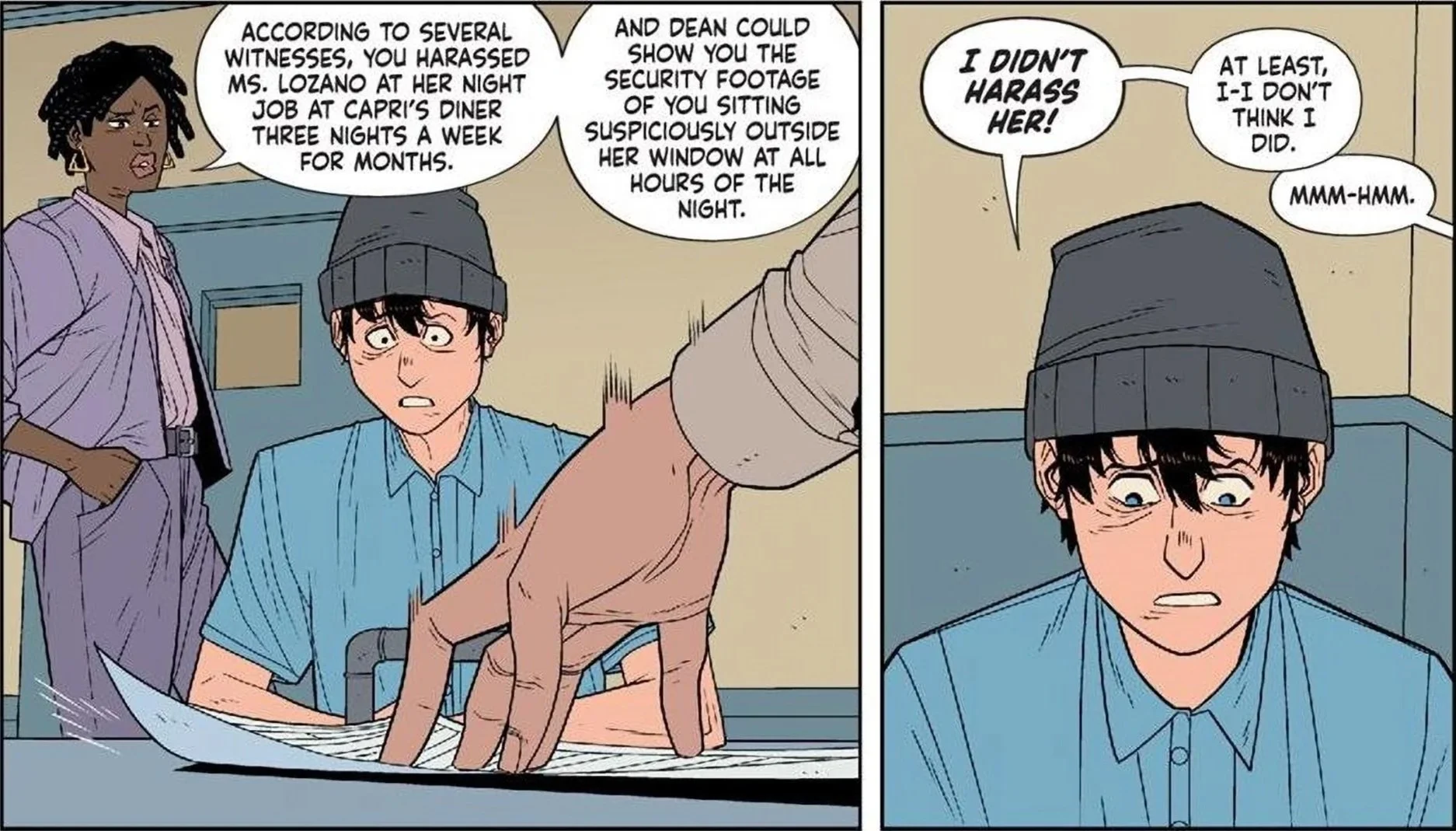
A large portion of the issue is dedicated to Marcus’s interrogation and the immediate fallout from his arrest. On the surface, this could be seen as a standard progression for a story like this, but the execution avoids most of the expected beats.
The interrogation scenes are straightforward and almost deliberately understated. There is no dramatic confrontation or sudden breakthrough that shifts the direction of the case. Instead, the focus is on how Marcus responds under pressure and how limited his options actually are. He cannot rely on physical strength, authority, or a full understanding of the situation. He is forced to navigate the moment with incomplete information and an inability to fully control his own body.
This approach helps ground the story in a way that feels consistent with the first issue, but it also contributes to the slower pacing. The scenes are effective in terms of character work, but they do not always carry the same sense of urgency that the situation itself might suggest. That creates a tension between what is happening and how it is being presented, which can either feel immersive or slightly frustrating, depending on how the reader engages with it.
At the same time, the slower pace allows the story to explore details that might otherwise be overlooked. Marcus’s reactions, the way the detectives interact with him, and the general tone of the investigation all contribute to a sense that this is a world that operates independently of the protagonist’s expectations. It is not bending to accommodate him, which reinforces the idea that he is out of his depth.
Marcus as the Center of the Story
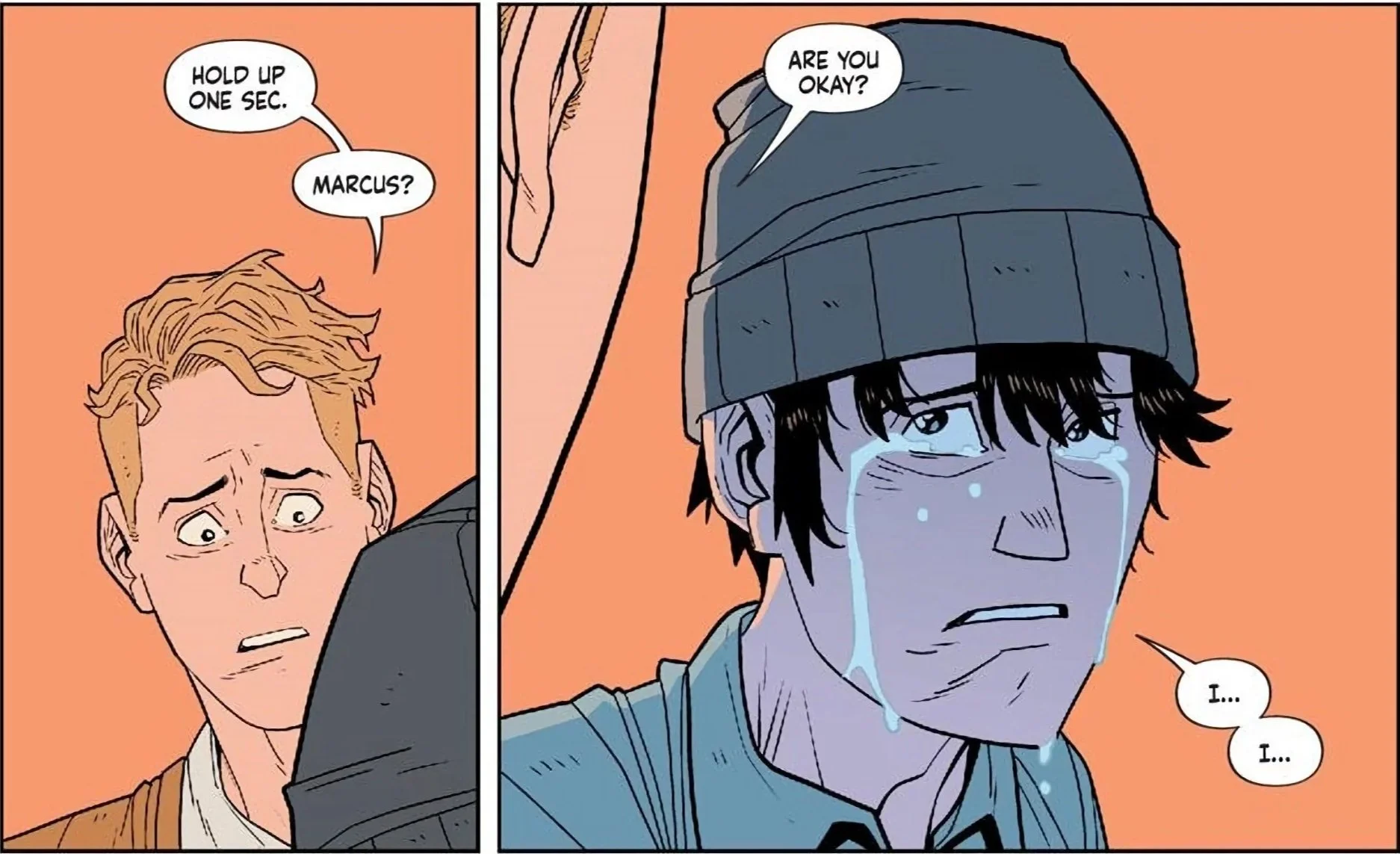
What continues to make Narco work is Marcus himself. He is not built like a traditional protagonist for a crime story, and the book leans into that difference rather than trying to reshape him into something more conventional.
He is not confident, not physically capable of handling confrontation, and not someone who can impose his will on the situation. Instead, his strength comes from his ability to observe, analyze, and connect pieces of information that others might overlook. His interest in true crime and his technical skills give him a unique perspective, and the story uses that perspective as a way to move forward.
The scenes where Marcus begins to gather information and contribute to the investigation are some of the strongest in the issue. They highlight that he is not passive, even if he appears that way on the surface. He is actively trying to understand what is happening, and that effort gives him a sense of agency that does not rely on traditional action.
At the same time, there are subtle hints that things may not be as straightforward as they seem. The way the interrogation plays out, combined with certain choices Marcus makes later in the issue, suggests that there may be more to his character than what has been presented so far. These moments are not emphasized heavily, but they are present enough to create a sense of unease that adds depth to the story.
When the Structure Feels Uneven
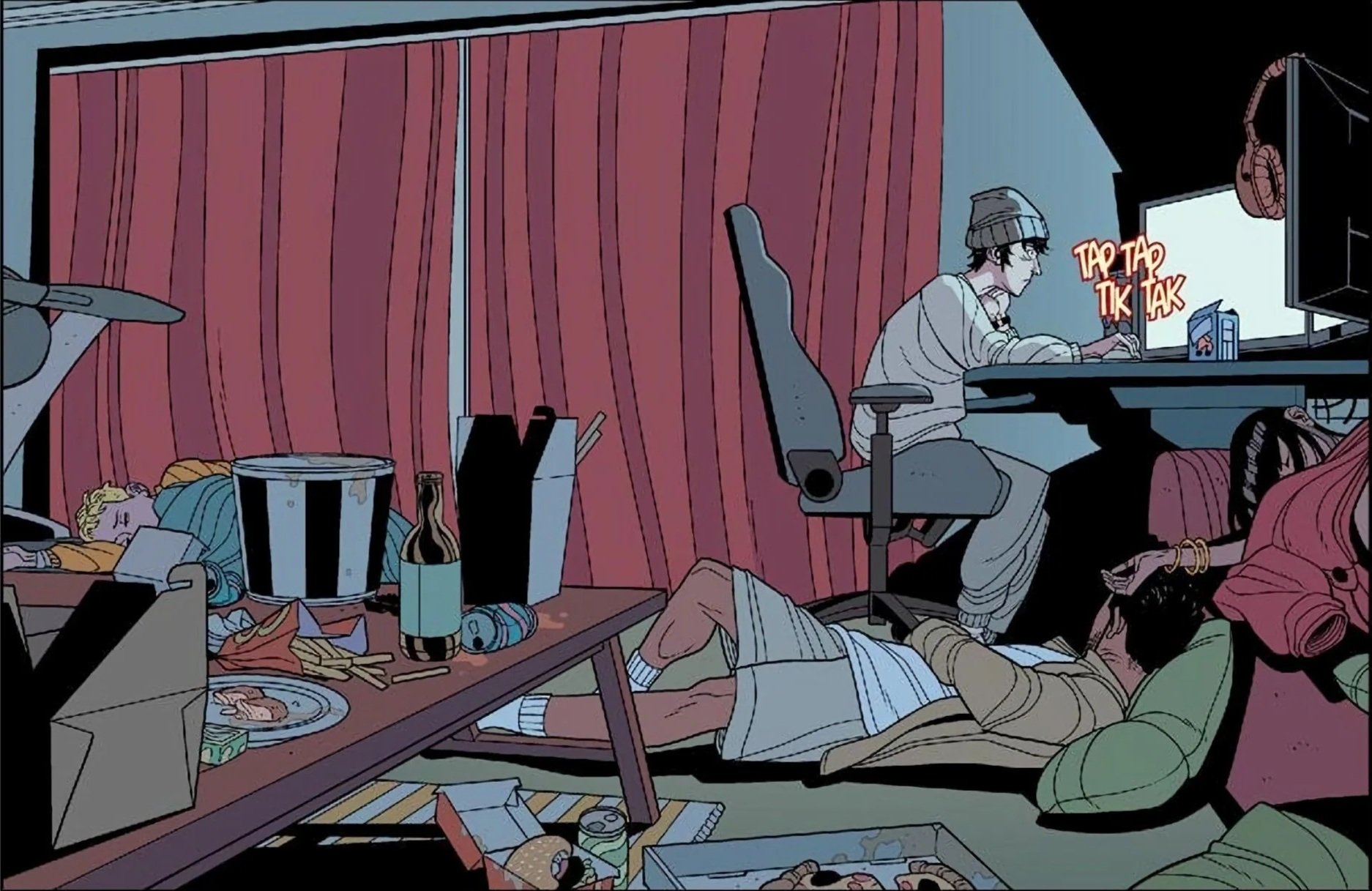
Despite its strengths, the issue does have moments where the structure feels slightly uneven. The most noticeable example is the sequence where Marcus spends time with his friends after being arrested.
The intention behind the scene is clear. It reinforces the idea that Marcus has a support system and that his connections to other people are an important part of who he is. This is a key difference between him and other protagonists in similar stories, and it adds a layer of humanity that the book relies on.
However, the timing of the scene feels slightly off. Coming directly after the intensity of the opening and the interrogation, the shift in tone can feel abrupt. It interrupts the momentum that has been building and requires the reader to adjust to a different emotional space without much transition.
The ending of the issue presents a similar challenge. There is progression in the story, and the mystery continues to develop, but the final moments do not carry the kind of impact that might be expected. The resolution feels consistent with the tone of the book, but it does not provide a strong sense of escalation or anticipation for what comes next.
Expanding the Mystery
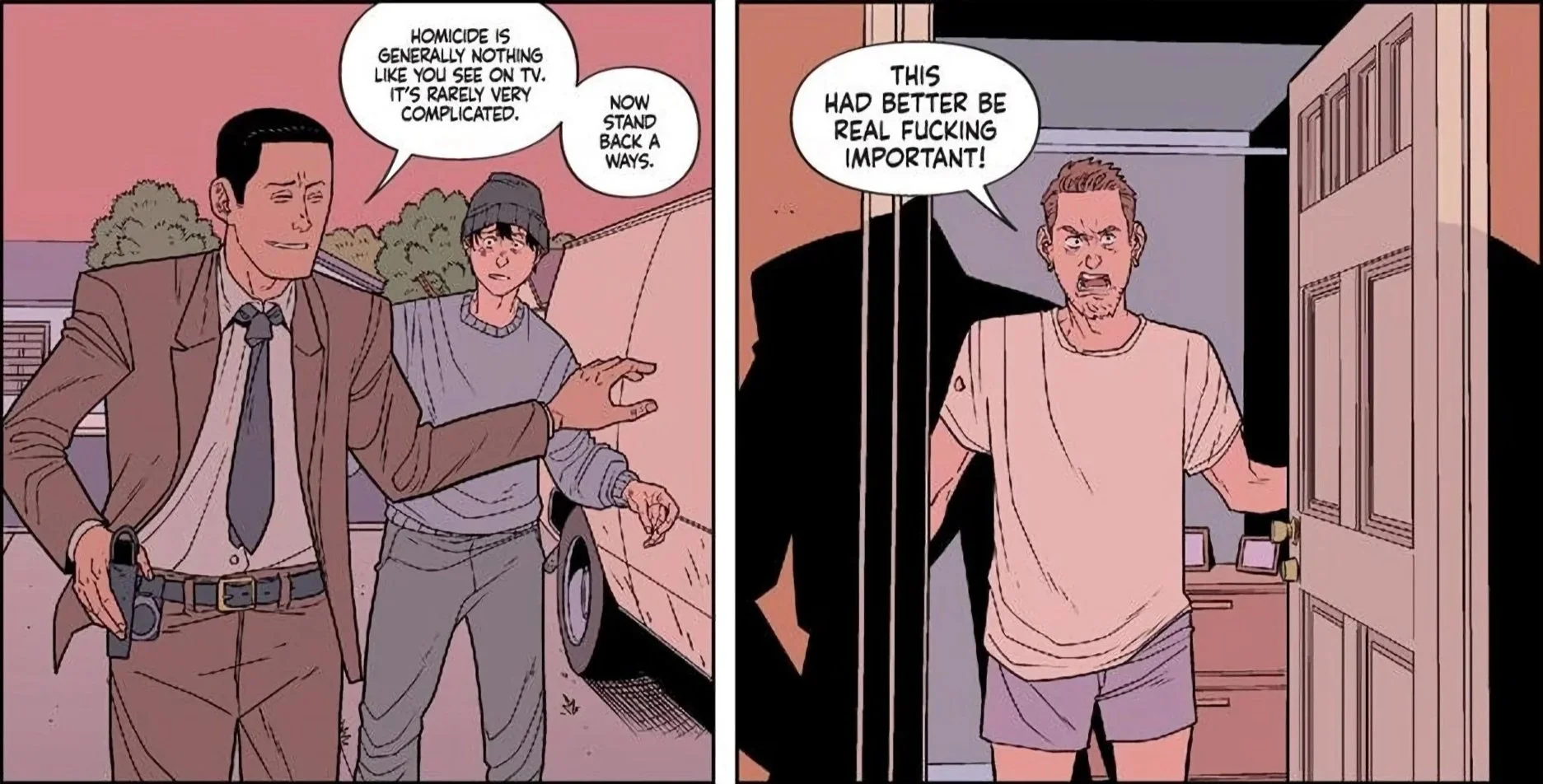
Even with its measured pacing, the issue does move the central mystery forward in meaningful ways. The introduction of Jess’s ex, Ben, adds a new dimension to the investigation and provides a more immediate suspect for both Marcus and the reader to consider.
Ben is volatile, aggressive, and positioned in a way that makes him an obvious candidate for the crime. That obviousness is what makes him interesting. In a more straightforward story, he would likely be the clear answer. Here, his presence feels more like a complication than a solution.
The narrative suggests that there is more going on beneath the surface, and Ben’s role in the story may not be as simple as it appears. This aligns with the overall structure of the book, which consistently avoids easy answers and instead focuses on building uncertainty.
There is also a growing sense that Marcus himself may not be entirely reliable as a narrator or participant in the story. Whether that is due to his condition or something else remains unclear, but it adds another layer of tension that keeps the mystery engaging.
Visual Storytelling That Enhances the Experience
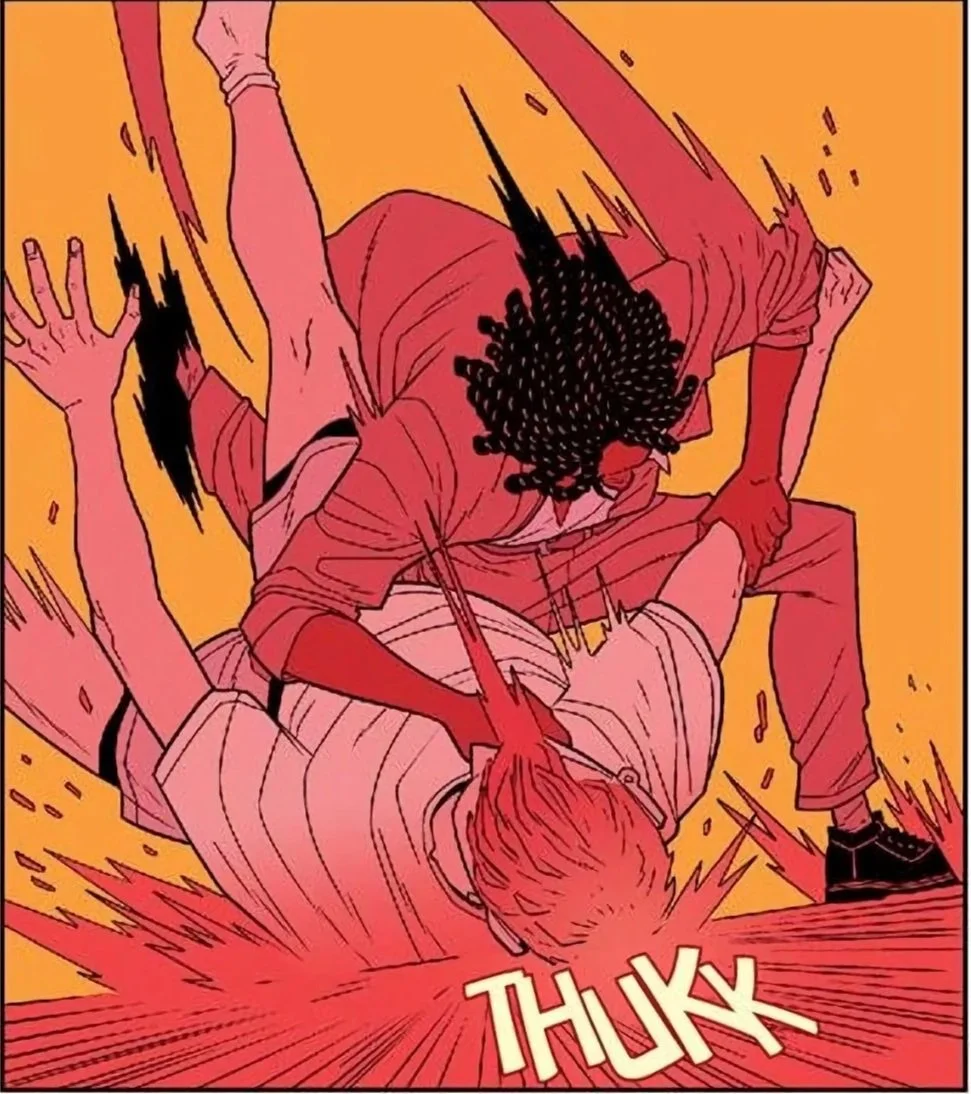
The artwork continues to be a major strength of the series. Daniel Hillyard, along with Dave Stewart on colors, creates a visual style that supports the tone of the story without overwhelming it.
The blackout sequences remain the most distinctive element. Instead of using a simple visual cue to indicate when Marcus loses consciousness, the art creates a sense of disorientation that mirrors his experience. The transitions are fluid and chaotic, making it difficult to distinguish between what is real and what is not.
Outside of those moments, the character work is consistently strong. Facial expressions, body language, and small visual details help convey emotion in scenes that rely heavily on dialogue and subtle interaction. This is particularly important in an issue where much of the tension comes from internal conflict rather than external action.
The overall aesthetic of the book remains grounded, but there is just enough stylization to give it a unique identity. The world feels familiar, but slightly off, which reinforces the themes of uncertainty and instability that run throughout the story.
Final Thoughts and Rating
Narco #2 builds on the foundation of the first issue by placing Marcus directly into the center of the mystery and forcing him to confront the consequences of events he cannot fully understand. It deepens the character work, expands the investigation, and continues to define what kind of story this series wants to tell.
The pacing remains deliberate, and while that approach allows for strong character moments and thematic consistency, it also leads to sections that feel slightly uneven. Certain scenes disrupt the flow more than they justify their inclusion, and the ending does not land with the same impact as the opening.
Even so, the core of the book remains compelling. Marcus continues to stand out as a protagonist, the mystery is evolving in interesting ways, and the series maintains a clear sense of identity that separates it from more traditional crime stories. This is a story that isn’t interested in shocking you, but in making you sit with what comes after.
Rating: 8/10
A thoughtful and more immediate follow-up that strengthens the central mystery and character work, even if its pacing and structure occasionally prevent it from fully capitalizing on its strongest moments.