
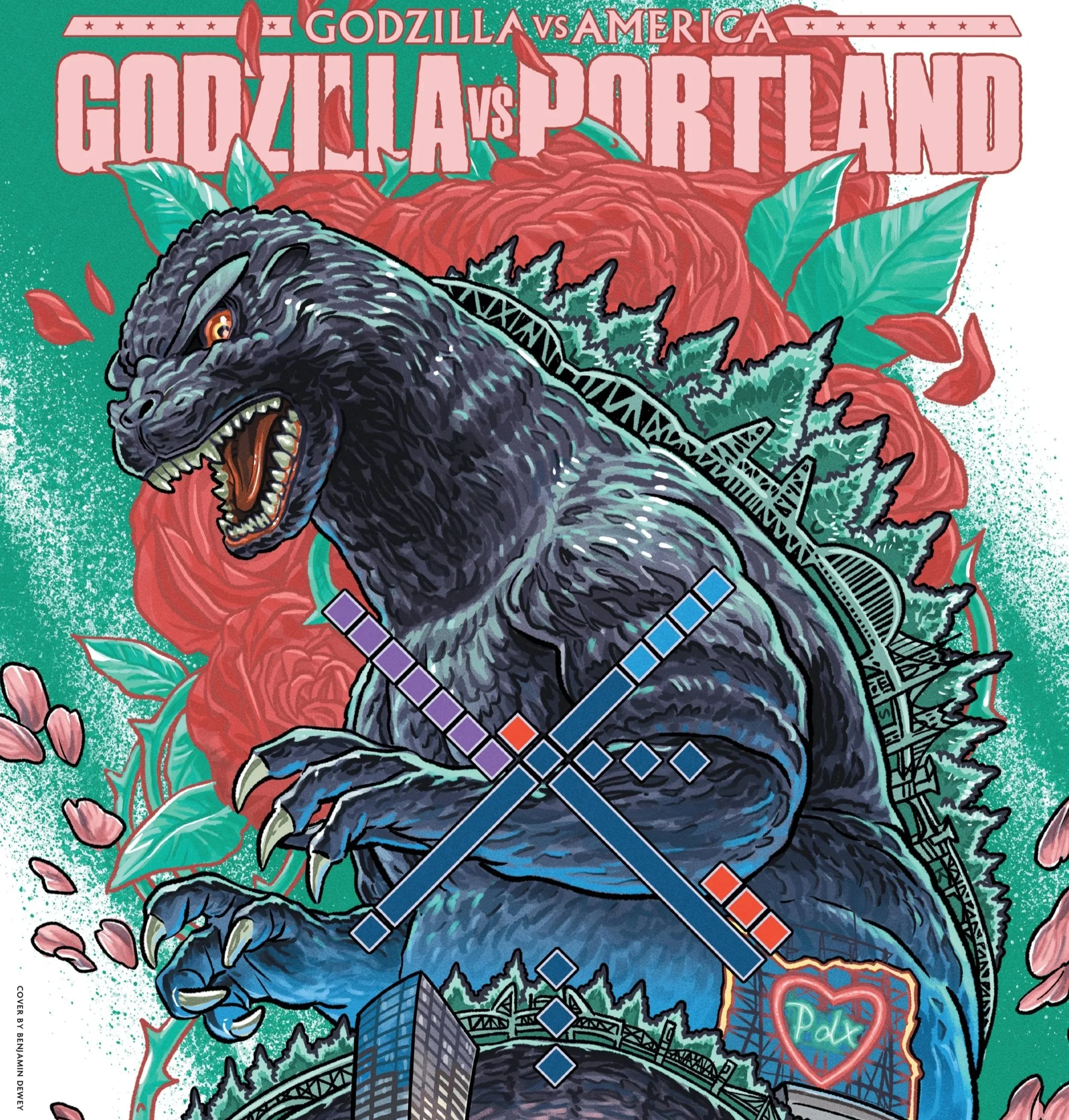
Cover Artist: Benjamin Dewey
Godzilla vs. America: Godzilla vs. Portland #1 is a return to a concept that thrives on specificity. The original wave of one-shots worked because they let creators turn their cities into playgrounds for destruction, each one filtered through a distinct local voice. Portland continues that trend, but with a slightly different emphasis, focusing less on spectacle and more on tone. This is a book that is far more interested in capturing a feeling than it is in simply showing Godzilla tear through recognizable landmarks.
That approach leads to a collection of stories that vary quite a bit in how they use Godzilla himself. In some, he is the driving force of the narrative, while in others he fades into the background, almost becoming part of the scenery. Even when that balance shifts, the issue never really loses sight of what it is trying to do. Portland comes through clearly as a setting with personality, even if that same specificity occasionally creates some distance for readers who are not familiar with the city.
Godzilla vs. Sasquatch
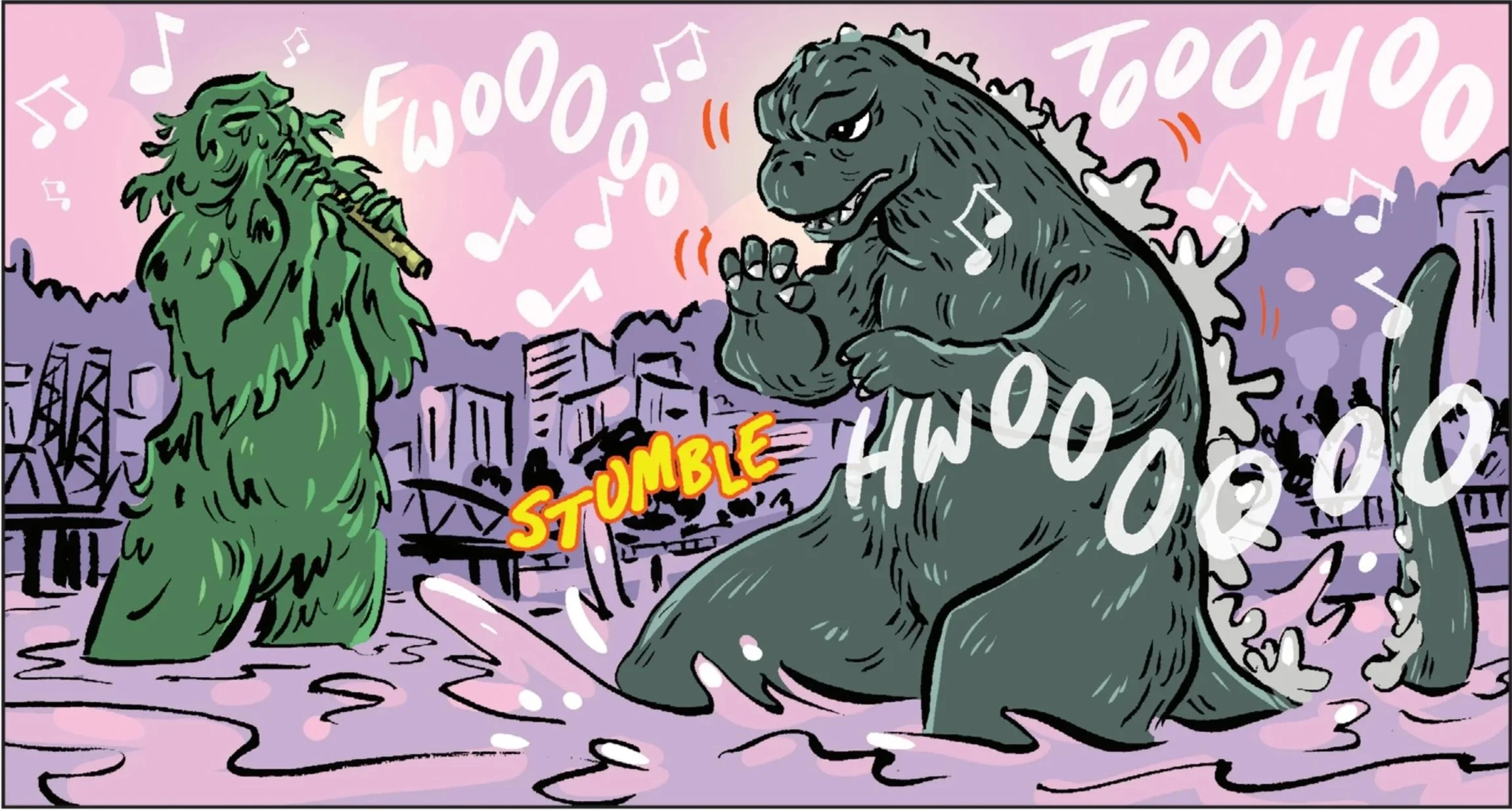
Writer & Artist: Colleen Coover
The standout story in the issue is easily “Godzilla vs. Sasquatch,” and it is the one that most fully delivers on both concept and execution. As someone who is a sucker for anything involving cryptids, especially Sasquatch, this story immediately clicks. It leans fully into Pacific Northwest mythology and uses Sasquatch as more than just a novelty opponent, positioning him as a natural counter to Godzilla in both tone and theme.
What makes the story work so well is that it captures the feeling of Portland without relying too heavily on specific landmarks. There is a strong emphasis on nature, a slightly offbeat sense of humor, and an overall tone that feels relaxed even as the scale of the conflict grows. The art plays a major role in that, with a simple and slightly nostalgic style that is elevated by vibrant color work. The contrast between the greenery and the urban environment is especially effective, giving the story a strong visual identity.
There is also a consistent comedic thread running throughout, including a perfectly timed cameo that lands as one of the funniest moments in the book. Even with that humor, the story never loses its sense of scale, and the eventual clash between Godzilla and Sasquatch still feels appropriately large. The only real drawback is that it feels like it ends a little too quickly given how strong the core idea is, but even with that, it stands out as the highlight of the issue.
Dog Day Afternoon
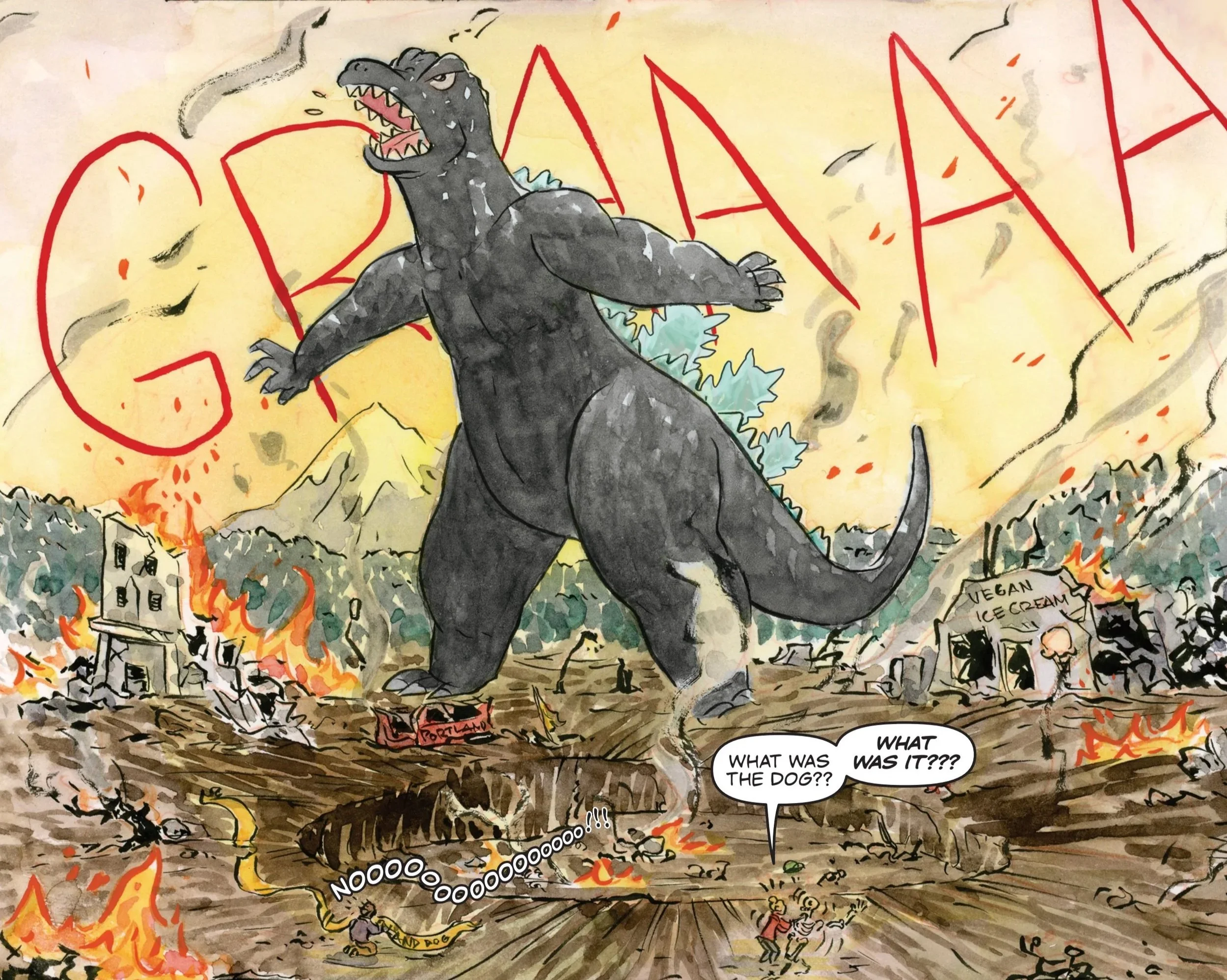
Writer & Artist: Cat Farris
“Dog Day Afternoon” takes a much smaller and more personal approach, focusing on a slice-of-life story that places Godzilla firmly in the background. The narrative follows two friends on a very specific outing, and while there is a charm to that approach, it is also the story that feels the most dependent on local knowledge.
As someone coming at this from the outside, there were quite a few references that did not fully land, which makes it harder to connect with everything the story is doing. Even so, there is still an easygoing quality to it that makes it enjoyable. The pacing is relaxed, the interactions feel natural, and there is a clear affection for the setting in every panel.
What ultimately elevates it is the humor, especially the ending, which is one of the stronger comedic beats in the entire issue. It may not have a traditional climax or the same narrative weight as the other stories, but it still works as a light and entertaining detour.
High Score
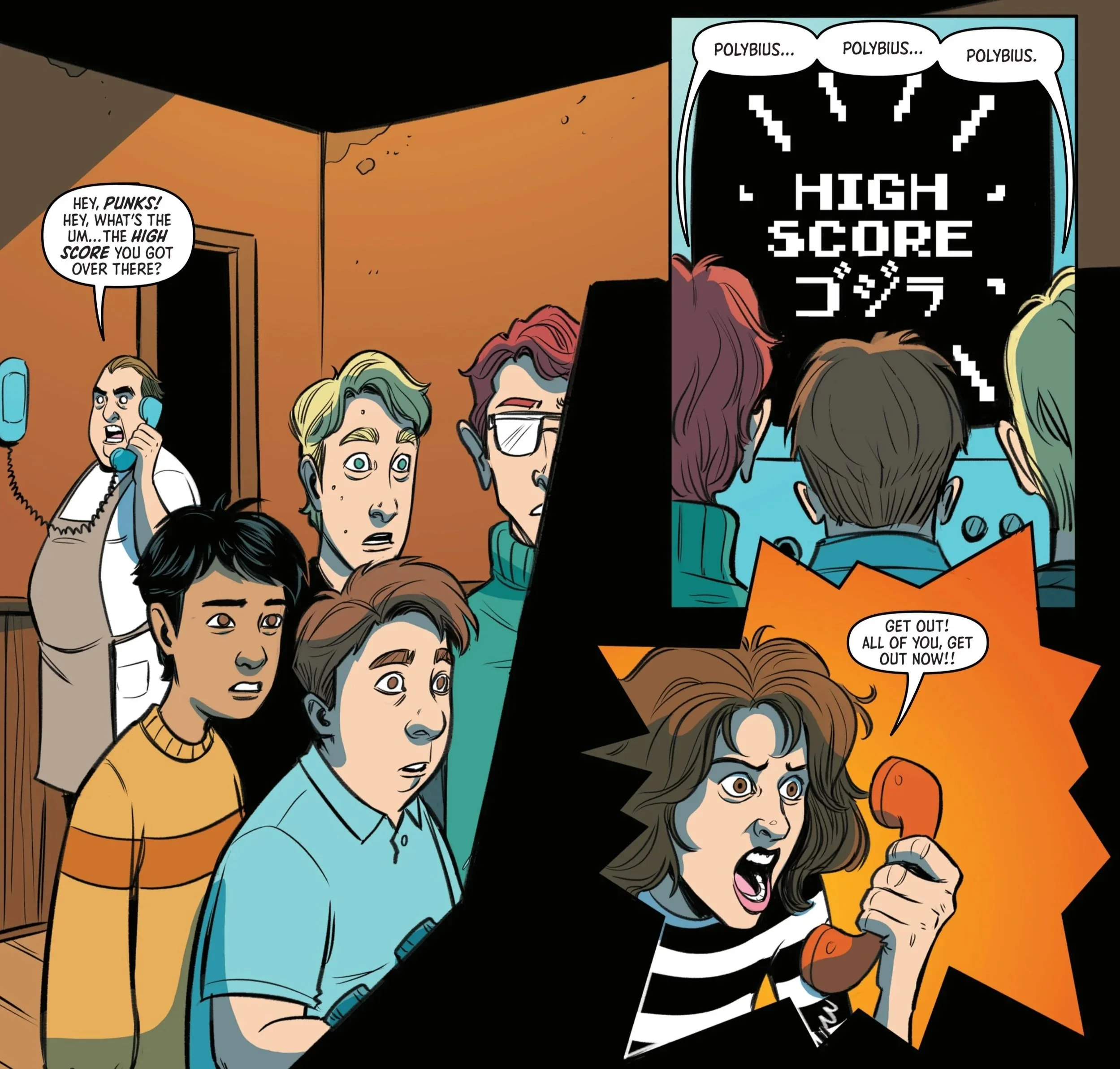
Writer & Artist: Caitlin Yarsky
Colorist: Heather Breckel
“High Score” stands out immediately because of its concept, which is one of the most creative in the issue. The idea of an arcade cabinet being placed in the city, hypnotizing players and eventually summoning Godzilla once a certain high score is reached, is a strong hook that pulls you in right away.
The story builds on that idea by tying it to a megacorporation using Godzilla as a tool for real estate development, which is a clever and fitting layer to add. It gives the narrative a bit more substance and makes the premise feel purposeful rather than just a fun gimmick. There is also a steady sense of progression as more people are drawn into the machine, leading to a payoff that feels earned.
One of the strengths of this story is that it works even without much knowledge of Portland. The concept is clear, the stakes are easy to understand, and the execution is clean. It may not be as visually striking, but it is one of the most thematically rich and complete stories in the issue.
Under Siege in the 503
Writer: Mark Russell
Artist: Eryk Donovan
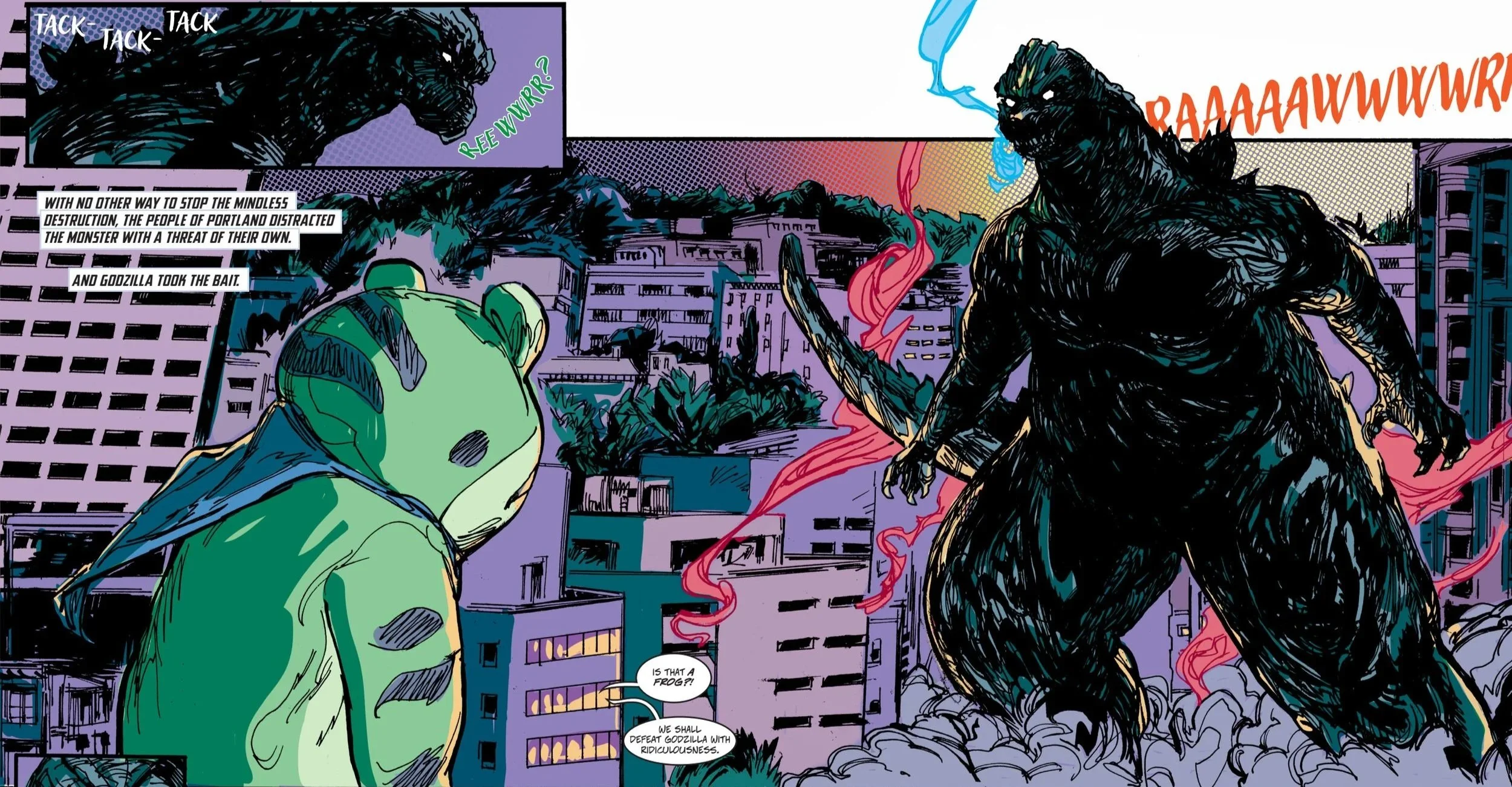
“Under Siege in the 503” is the story that stands out most visually, largely due to Eryk Donovan’s art. The style is hyper-stylized in a way that immediately catches your attention, and it feels like the kind of work you might come across at a local comic arts festival and instantly connect with. That aesthetic fits the tone of the book perfectly and adds a strong sense of identity to the story.
The narrative itself is solid, focusing on Portland being left to deal with a Godzilla attack on its own and responding in ways that feel specific to the city. There is a strong sense of local culture throughout, which adds authenticity even if not every reference fully lands for an outside reader.
While it may not reach the same highs as “Godzilla vs. Sasquatch,” the combination of its concept and especially its visual style makes it one of the more memorable entries in the collection.
A City with a Personality
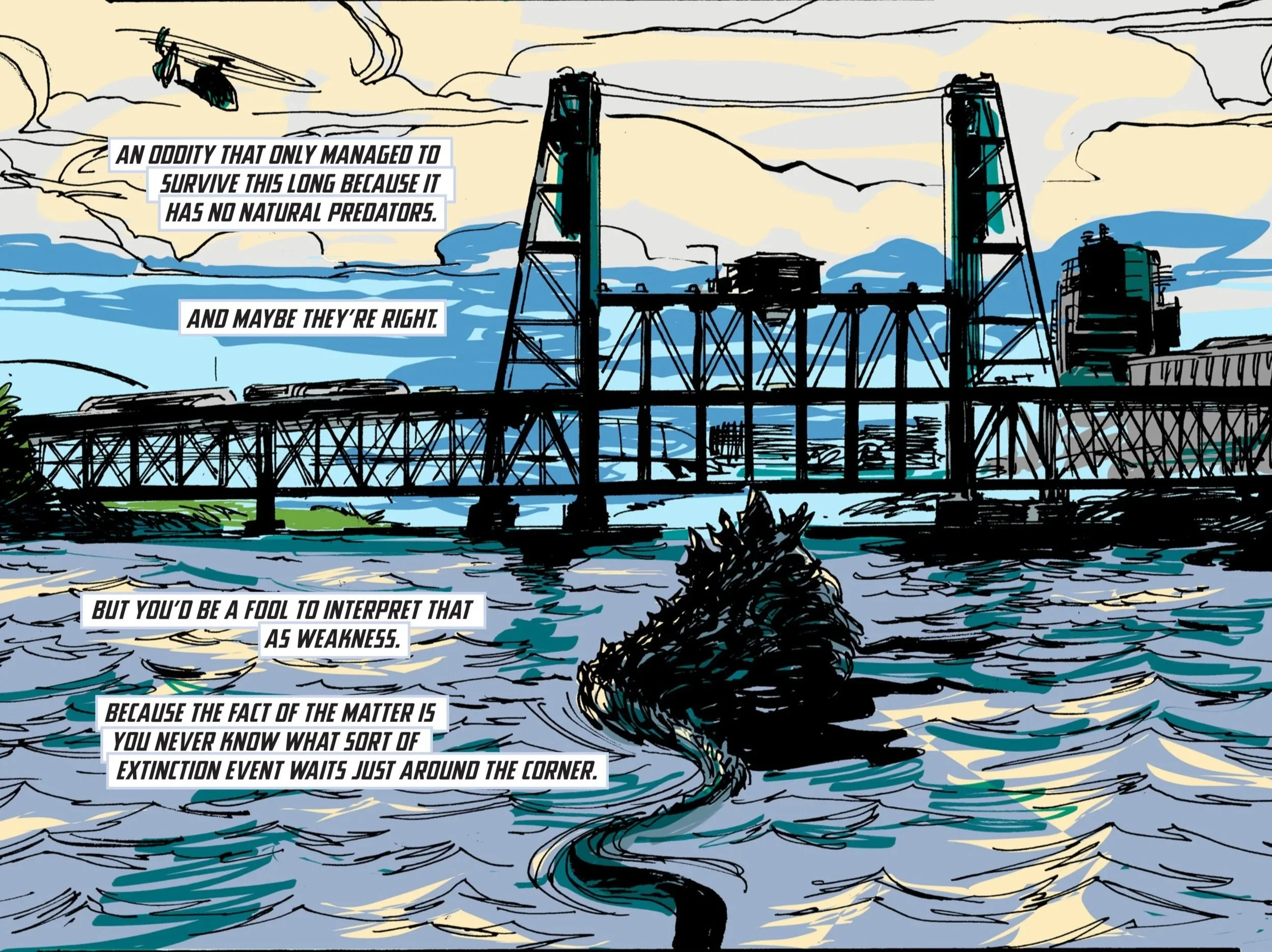
Godzilla exits Portland, having been defeated by its people.
What ties the issue together is how consistently Portland comes through as more than just a backdrop. Each story approaches the city differently, but there is a shared sense of identity that runs throughout the entire book. Even when certain references are missed, the tone and atmosphere remain clear, which helps maintain cohesion across the anthology.
That same specificity can create some distance for readers who are not familiar with the city, but it also gives the book a sense of authenticity that makes it stand out. It feels like a genuine reflection of a place rather than a generic setting.
Final Thoughts and Rating
Godzilla vs. America: Godzilla vs. Portland #1 is an anthology that leans heavily on personality, and that comes with both strengths and weaknesses. There are clear highs, especially in “Godzilla vs. Sasquatch,” which stands out as the most complete and engaging story in the issue. “High Score” offers a creative and well-executed concept, while “Under Siege in the 503” leaves a strong impression thanks to its unique visual style.
“Dog Day Afternoon,” while enjoyable, is the most dependent on local familiarity, which makes it a bit harder to fully connect with as an outsider, even though its comedic ending is one of the highlights of the book.
Overall, it does feel like this is a collection that would resonate more strongly with someone who knows Portland well. Even so, as a Godzilla fan, there is still plenty here to appreciate, and the creativity on display across the issue makes it worth reading.
Rating: 7.5/10
Godzilla vs. Portland does not always hit evenly, but it remains consistently creative and full of personality, even for readers who are just passing through.