
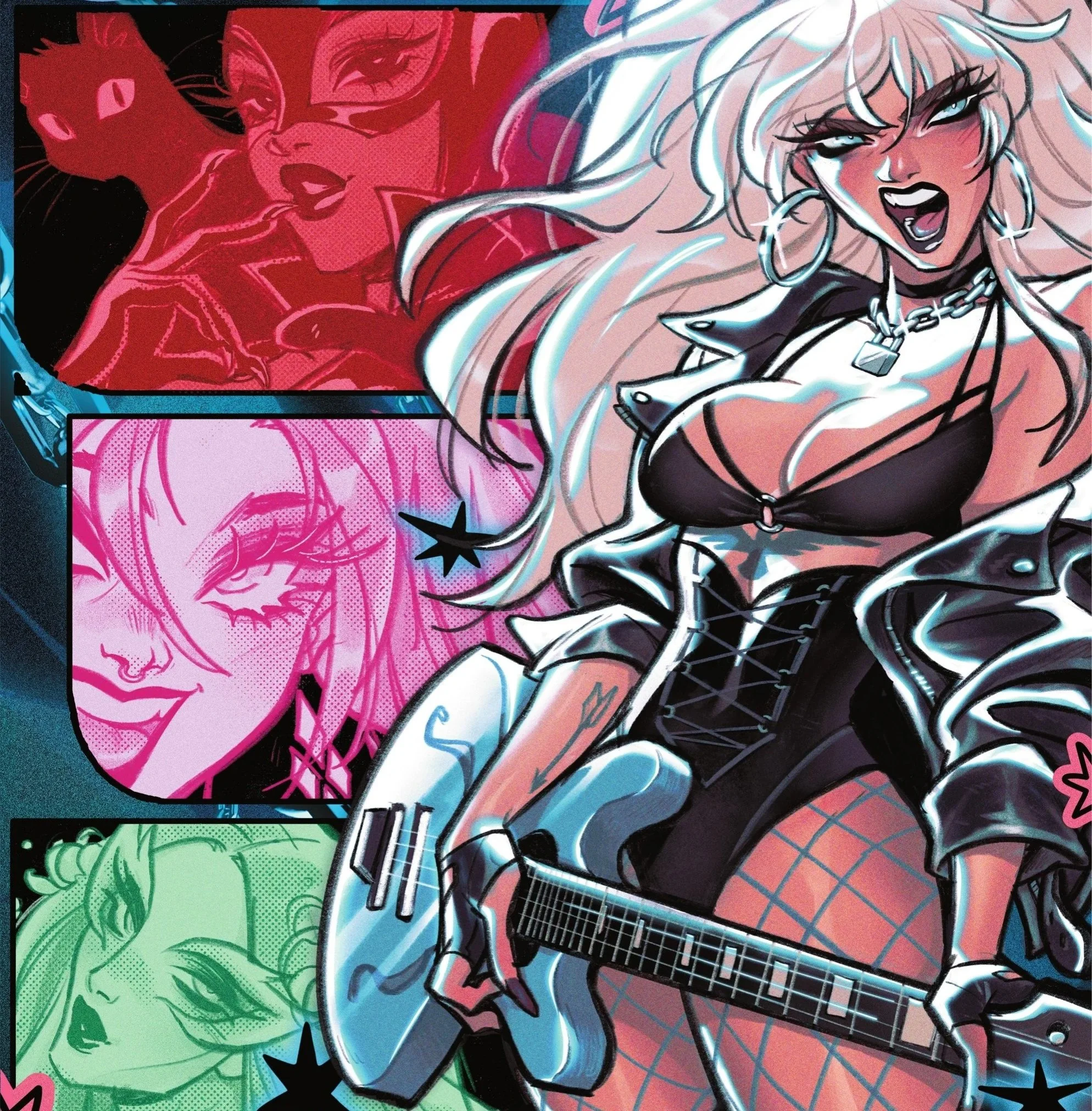
Writer: Tini Howard
Artist: Babs Tarr
Colorist: Miquel Muerto
Cover Artist: Babs Tarr
After spending much of its run focusing on character dynamics, relationship drama, and a slow-building murder mystery, Sirens: Love Hurts finally reaches its conclusion with an issue that attempts to pay off nearly every major thread at once. The result is a finale that is entertaining, emotional, and often satisfying, even if it occasionally struggles under the weight of everything it wants to accomplish.
Where the previous issue felt content to spend time with the characters and explore their relationships, this chapter shifts firmly into payoff mode. The mystery surrounding Horoscope reaches its conclusion, Dinah and Oliver’s wedding finally arrives, and several major relationships receive resolutions of their own. There is a lot happening within these pages, and while not every development receives the space it deserves, the issue largely succeeds because of how invested it has made readers in its characters.
Bringing Everything Together
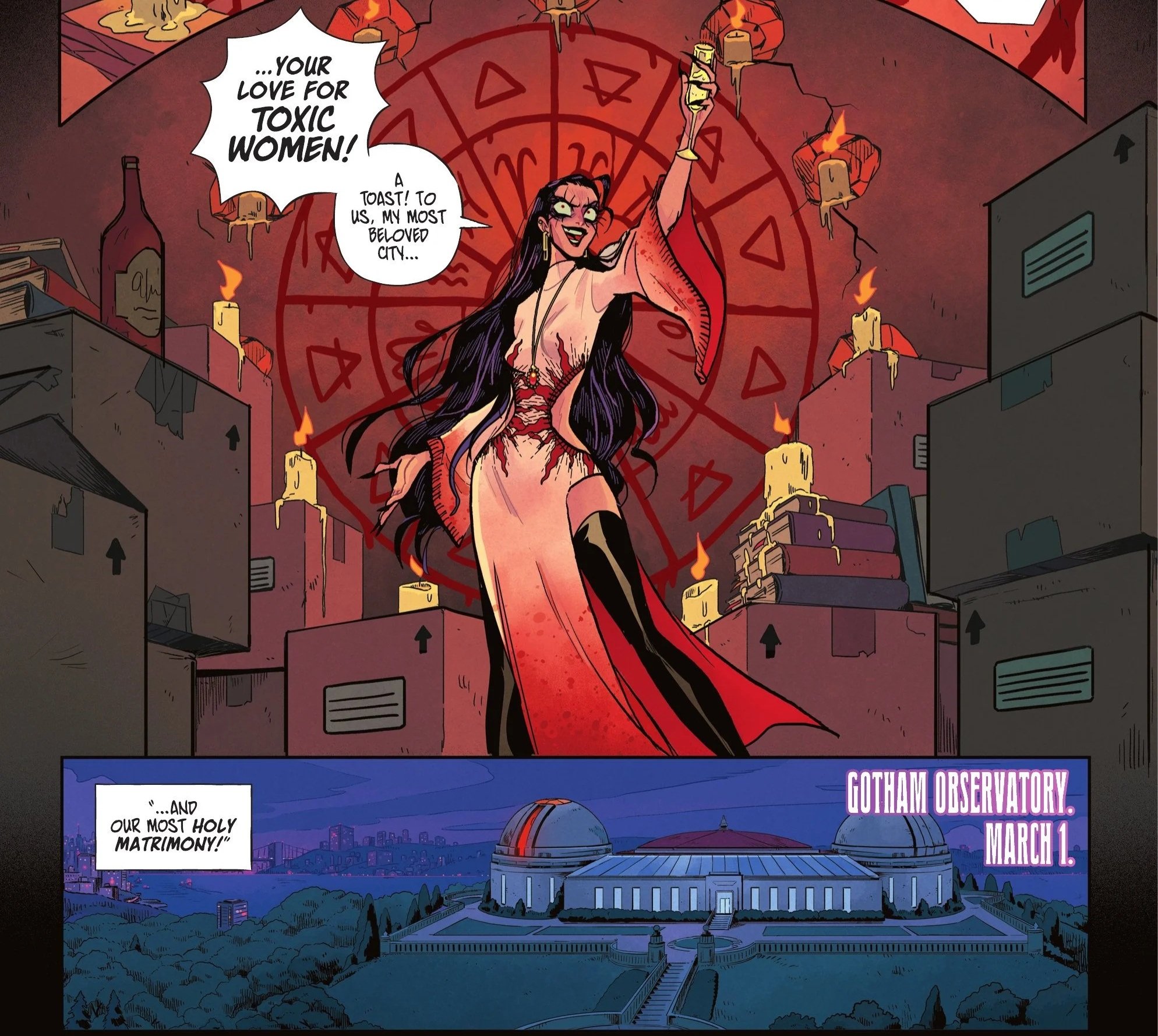
One of the biggest challenges facing the finale is finding a way to merge the wedding storyline with the murder investigation. Fortunately, the book does a solid job of making those elements feel connected rather than separate.
From the opening pages, there is a sense that everything is converging toward a single moment. The wedding preparations create excitement and anticipation, while the continuing threat of Horoscope ensures that tension remains present in the background. The contrast between celebration and danger gives the issue an energy that some of the earlier chapters occasionally lacked.
What works particularly well is seeing how much Dinah’s relationship with the Sirens has evolved over the course of the series. Early on, these women often felt like reluctant allies who happened to share a common goal. By the time this issue begins, that dynamic has changed considerably. There is genuine affection between them, and the wedding preparations provide several opportunities to showcase how comfortable they have become around one another.
The emotional core of the issue is not actually the mystery. It is the friendship that has developed between Dinah, Harley, Ivy, and Selina. The murder investigation gives the plot direction, but those relationships are what give the story its heart.
Black Canary Remains the Heart of the Story
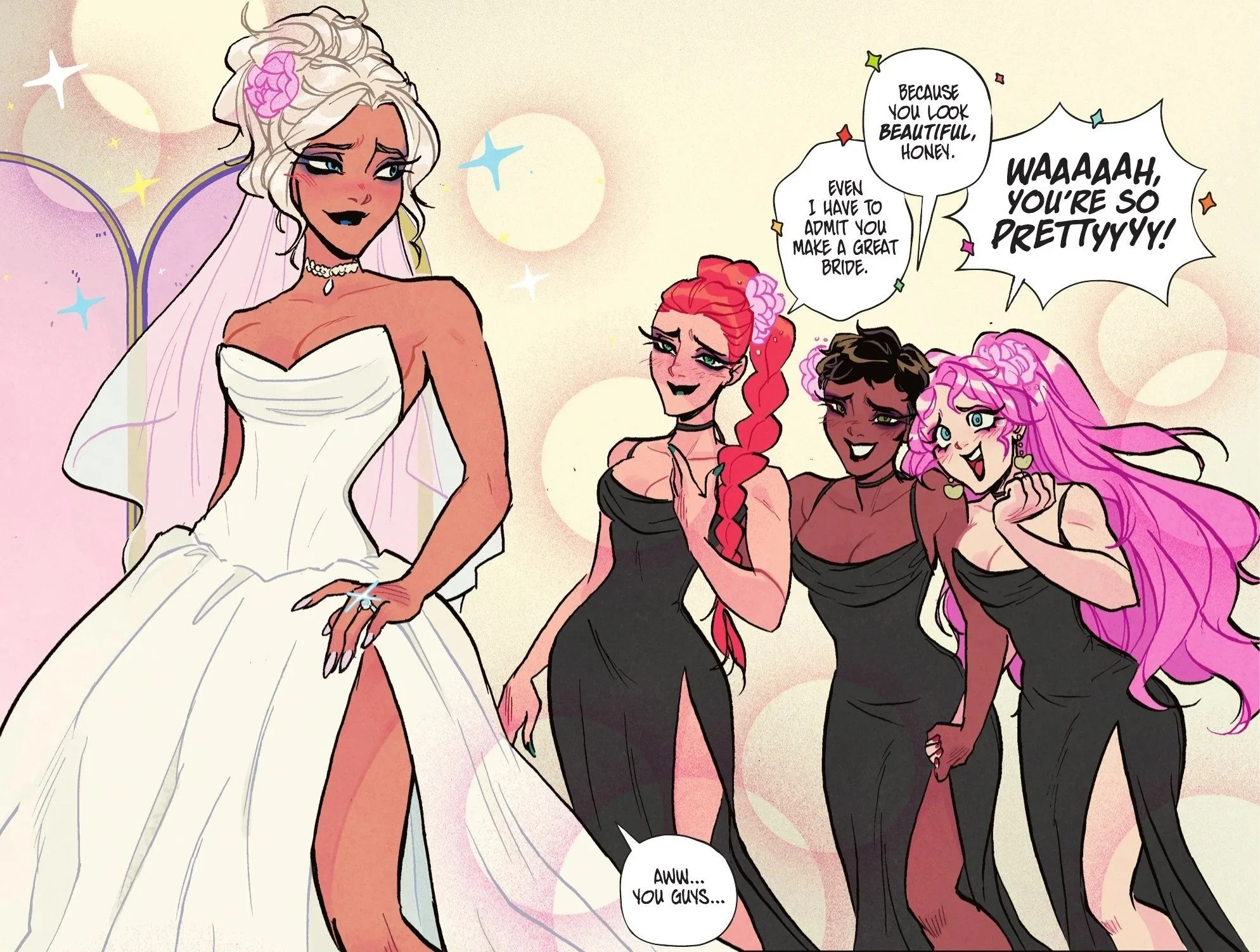
While the series is built around the Sirens, Black Canary continues to serve as the emotional anchor that holds everything together.
This issue highlights how much she has changed since the beginning of the series. Earlier chapters often emphasized her discomfort and uncertainty as she tried to navigate the morally flexible world of Gotham and its most notorious antiheroes. Now she feels far more comfortable operating alongside them, even if she still maintains her own sense of right and wrong.
The wedding itself becomes an effective way to showcase that growth. Dinah is simultaneously trying to enjoy one of the happiest moments of her life while also preparing for the possibility that a serial killer might target the event. That balancing act feels perfectly suited to the version of the character that this series has developed.
Some of the strongest moments in the issue are the quieter ones leading up to the ceremony. The interactions between Dinah and the Sirens emphasize just how much trust has been built between them. Those scenes make the eventual payoff feel earned because the series has spent four issues developing those bonds rather than simply expecting readers to accept them.
Her role in the final confrontation also reinforces why she has worked so well as the audience's entry point into this world. She remains compassionate without being naive, capable without being invincible, and idealistic without becoming unrealistic.
The Sirens Finally Feel Like a Team
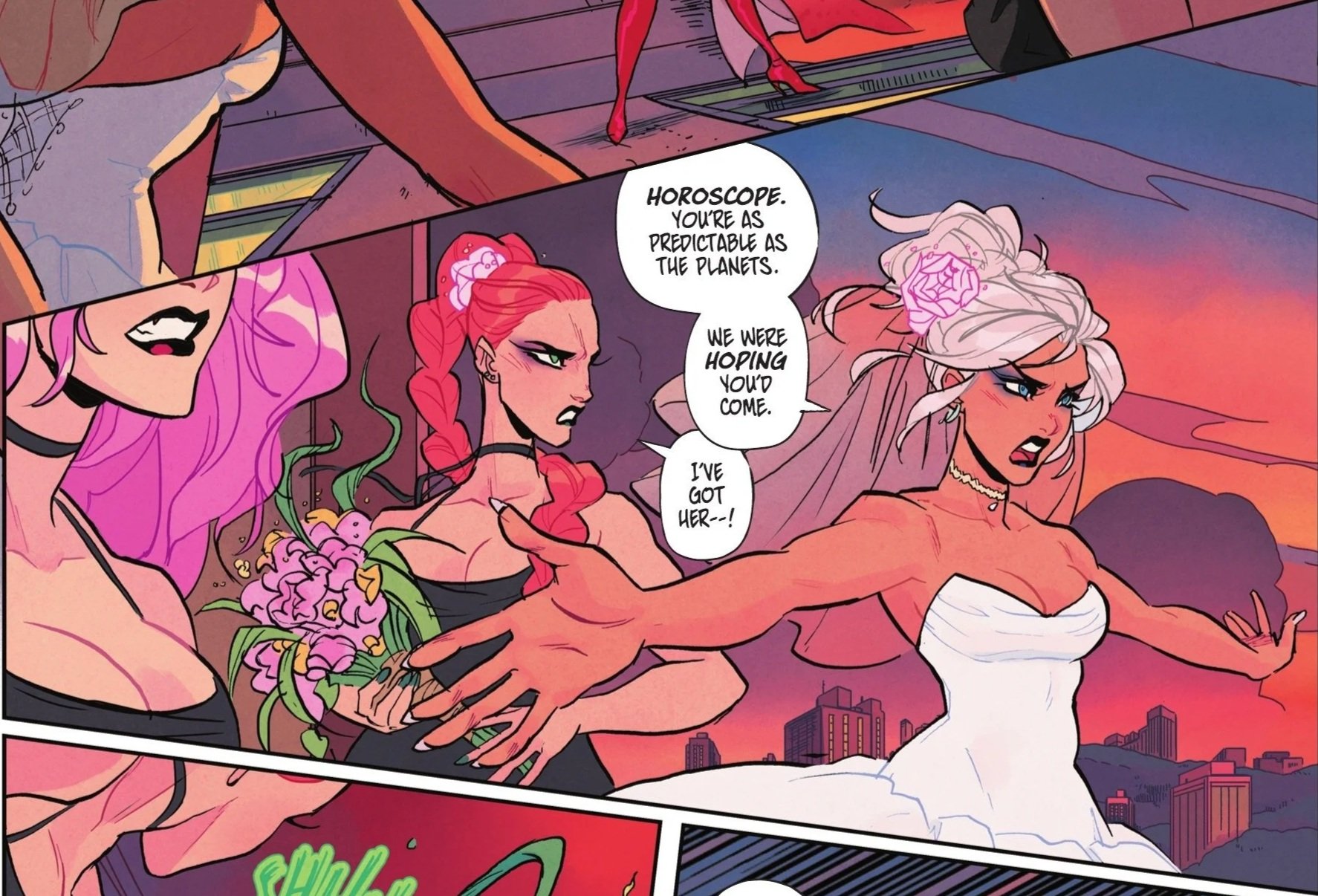
One of the biggest accomplishments of the series as a whole is how effectively it develops the relationship between its central cast.
Harley, Ivy, and Selina have always had strong chemistry, but adding Dinah to that dynamic could easily have felt forced. Instead, the series gradually built those connections over time, and this issue finally reaps the rewards of that work.
Harley continues to provide much of the comic’s energy. Her personality helps prevent the issue from becoming overly serious, particularly during moments when the plot threatens to become weighed down by exposition or tension. At the same time, the book does not reduce her to comic relief. There is genuine emotional depth beneath her humor, particularly when it comes to her relationship with Ivy.
Selina remains the most understated member of the group, but that role suits her perfectly. She often serves as the observer who understands more than she initially reveals, and that perspective continues to add texture to the group dynamic.
Together, the four women finally feel less like a temporary alliance and more like an actual team. That development may ultimately be the most satisfying aspect of the entire series.
When the Story Moves Too Fast
For all of its strengths, the issue occasionally suffers from trying to accomplish too much within a limited page count.
The most noticeable problem is that several major story developments arrive in quick succession without receiving much room to breathe. Earlier issues often moved at a deliberately measured pace, spending considerable time exploring conversations and relationships. This finale takes the opposite approach, racing from one payoff to the next.
The conflict involving Harley and Ivy is perhaps the clearest example. Their relationship has been one of the emotional pillars of the book, but the resolution feels somewhat rushed. The issue reaches the desired destination, but it does not always provide enough detail regarding how the characters arrived there.
A similar problem affects parts of the Batman and Catwoman subplot. Their interactions contain enjoyable moments and fit the overall themes of the story, but the progression happens so quickly that it can feel slightly abrupt.
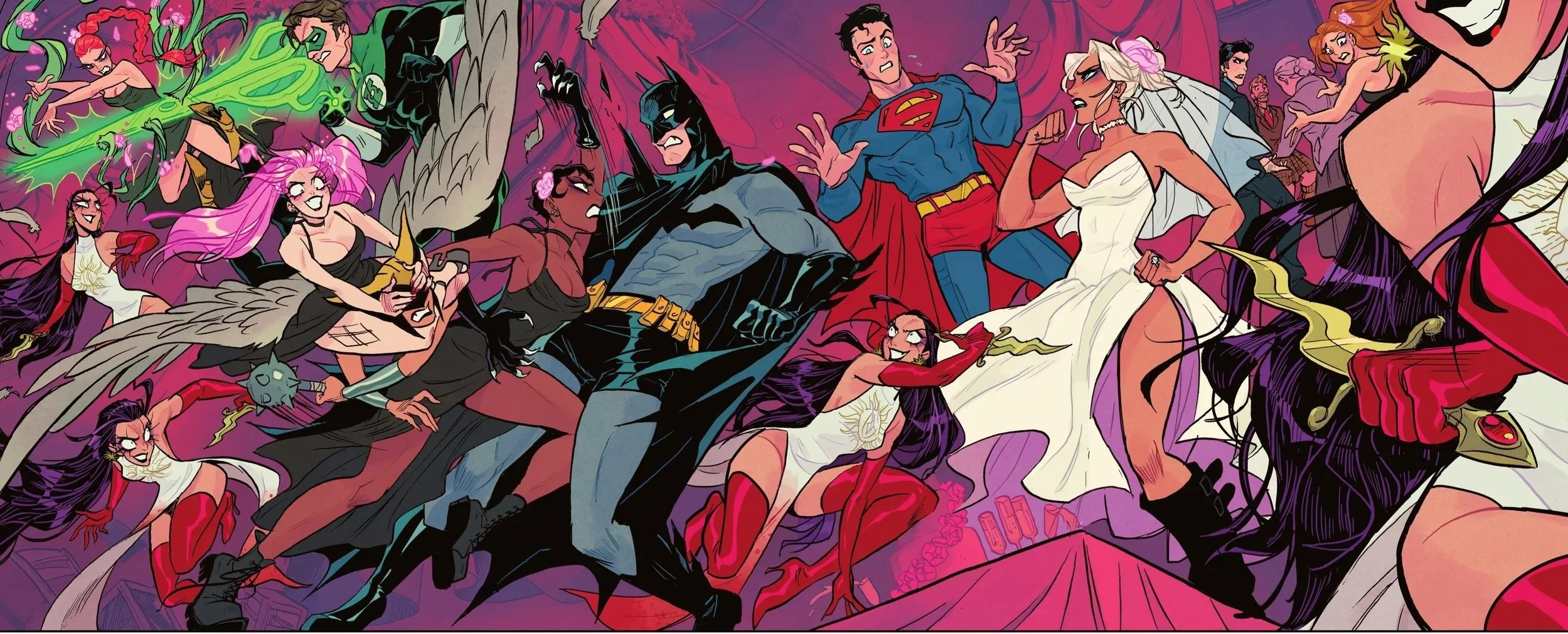
Even the confrontation between the Sirens and the heroes at the wedding feels like it could have benefited from additional space. Watching the Sirens suddenly find themselves at odds with Gotham's heroes should be one of the biggest moments in the series, but the conflict begins and ends so quickly that it never fully develops. The concept is fun, the visuals are strong, and the emotional stakes are present, but the sequence feels more like a collection of memorable moments than a fully realized set piece.
Resolving the Horoscope Mystery
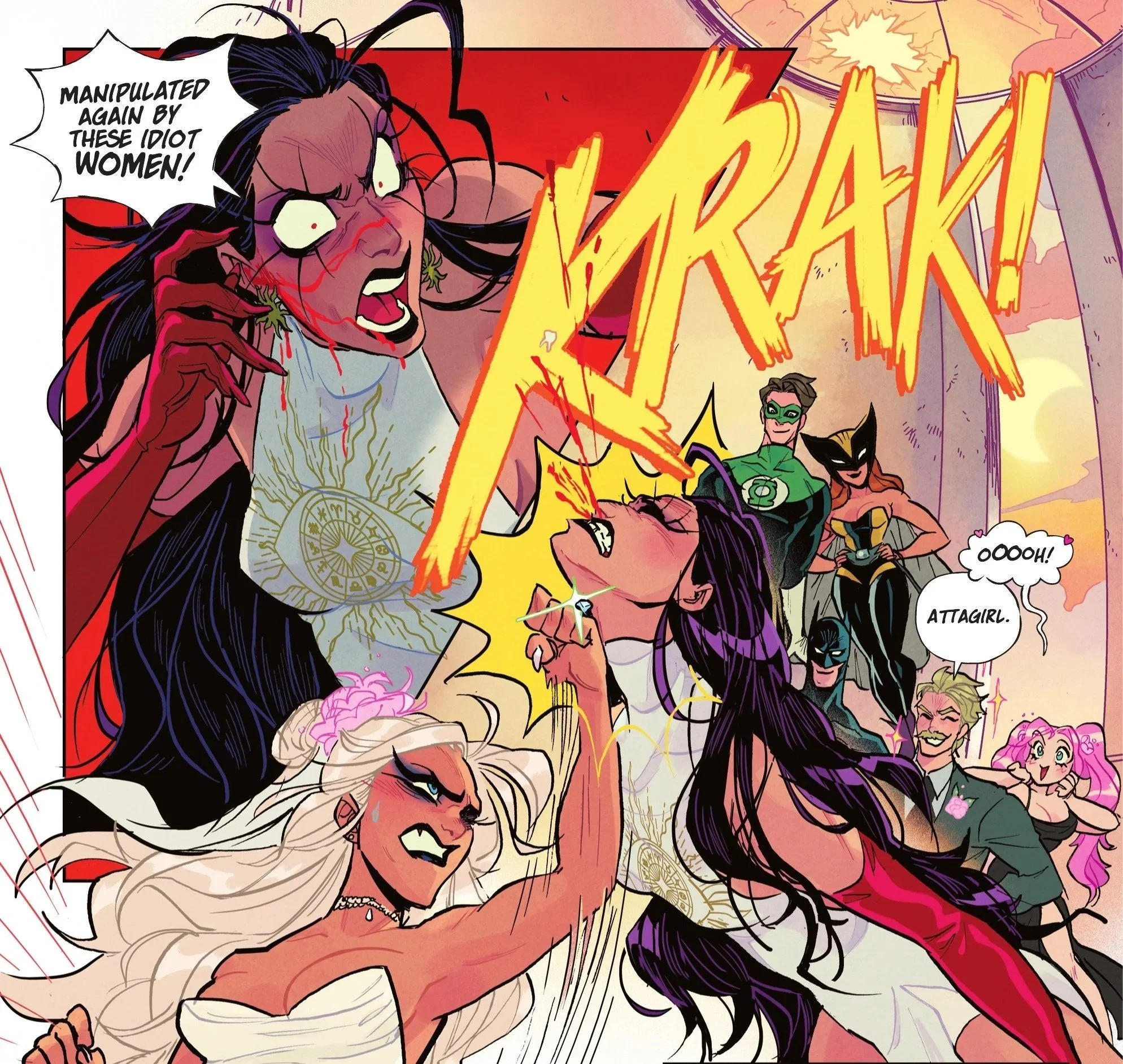
The resolution of the Horoscope storyline is effective, even if it is not necessarily the strongest aspect of the issue.
Throughout the series, the mystery has served primarily as a framework for exploring relationships, trust, and personal growth. Because of that, the reveal itself carries less weight than the emotional fallout surrounding it.
That is not necessarily a criticism. The book has always been more interested in its characters than in constructing an elaborate detective story. The mystery matters because of how it affects the protagonists, not because of its complexity.
Still, the final confrontation feels somewhat compressed compared to the amount of buildup it received. Horoscope remains an interesting antagonist, but the issue is so focused on resolving multiple storylines that the villain never fully commands the spotlight.
Fortunately, the emotional stakes surrounding the confrontation help compensate for that limitation. The climax succeeds less because of the mystery itself and more because of what it means for Dinah and the Sirens.
Artwork That Elevates Every Scene
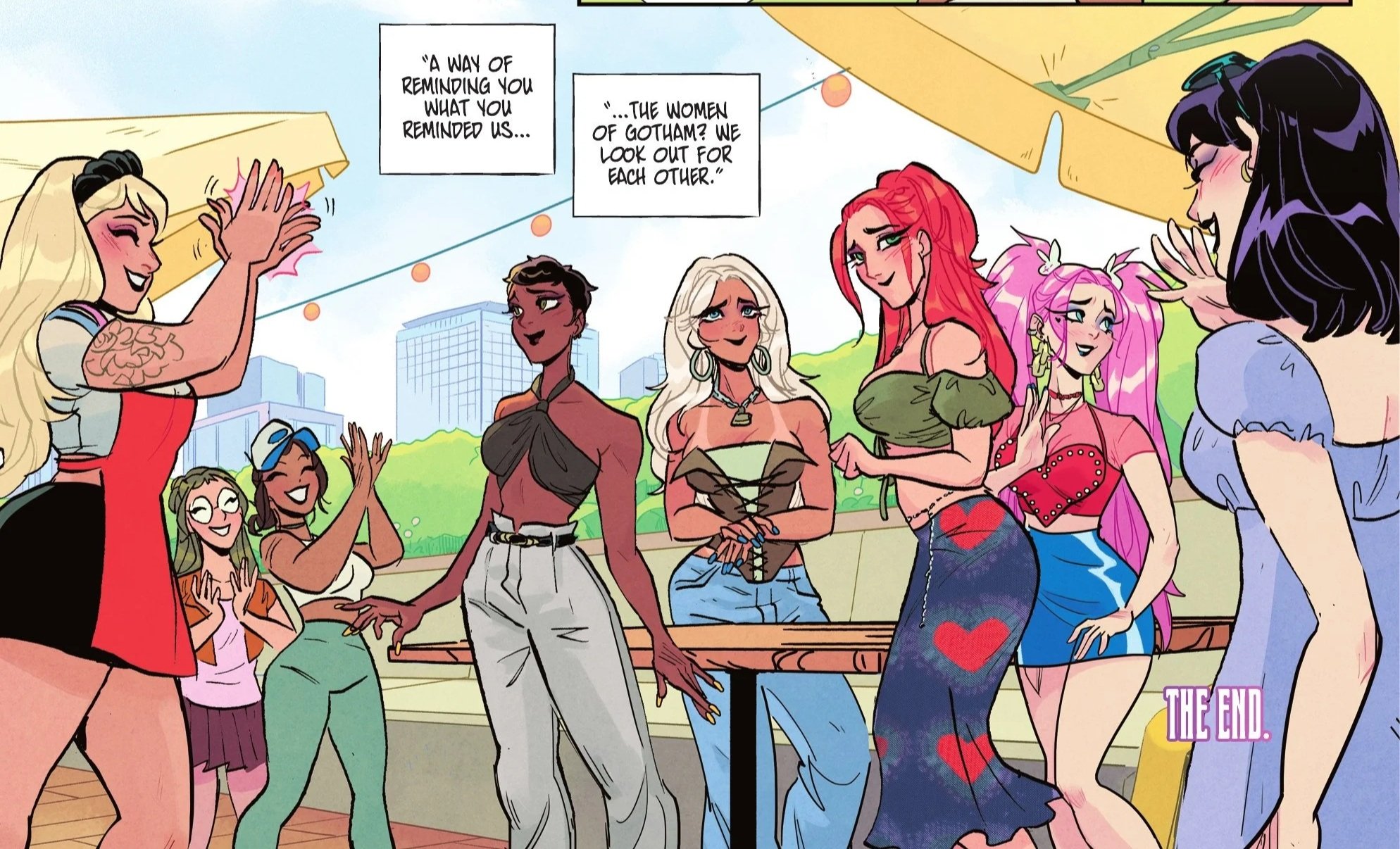
As strong as the writing is, Babs Tarr’s artwork remains one of the defining strengths of the series.
Few artists are better suited for a book built around personality and relationships. Every character feels expressive, distinct, and alive. Small details in posture and facial expression often communicate more than entire pages of dialogue could.
The wedding sequences are particularly impressive. Tarr captures both the excitement and anxiety surrounding the event while making the entire celebration feel visually vibrant and memorable. Dinah’s wedding dress reveal stands out as one of the strongest visual moments of the issue and serves as a reminder of how effectively the creative team balances emotion with style.
The action sequences are equally successful. Even when the story becomes chaotic, the layouts remain easy to follow and visually engaging. Characters move naturally across the page, and the transitions between emotional scenes and action-heavy moments rarely feel jarring.
The color work complements all of this beautifully, helping maintain the book’s energetic atmosphere while still allowing emotional moments to breathe.
Final Thoughts and Rating
Sirens: Love Hurts #4 is a finale that occasionally feels overstuffed but rarely stops being entertaining. It successfully pays off the relationships that have driven the series from the beginning, provides a satisfying conclusion to Dinah’s journey, and delivers enough emotional resolution to make the entire story feel worthwhile.
Some storylines are wrapped up more quickly than they probably should have been, and several major developments could have benefited from additional space. In many ways, the series feels like it might have been even stronger as six shorter issues rather than four oversized ones. The pacing problems here are largely the result of a book trying to fit a lot of story into a limited amount of space.
Still, those shortcomings never undermine the strengths that made the series enjoyable in the first place. The character work remains strong, the friendships feel genuine, and the artwork consistently elevates the material.
By the end, the mystery may be solved, but the real success of the series is the bond that develops between Dinah and the Sirens. That relationship gives the finale its emotional weight and leaves the door open for future stories in this version of Gotham.
Rating: 8/10
A satisfying and heartfelt finale that successfully pays off its character work, even if several major story beats arrive a little too quickly on the way to the finish line.