
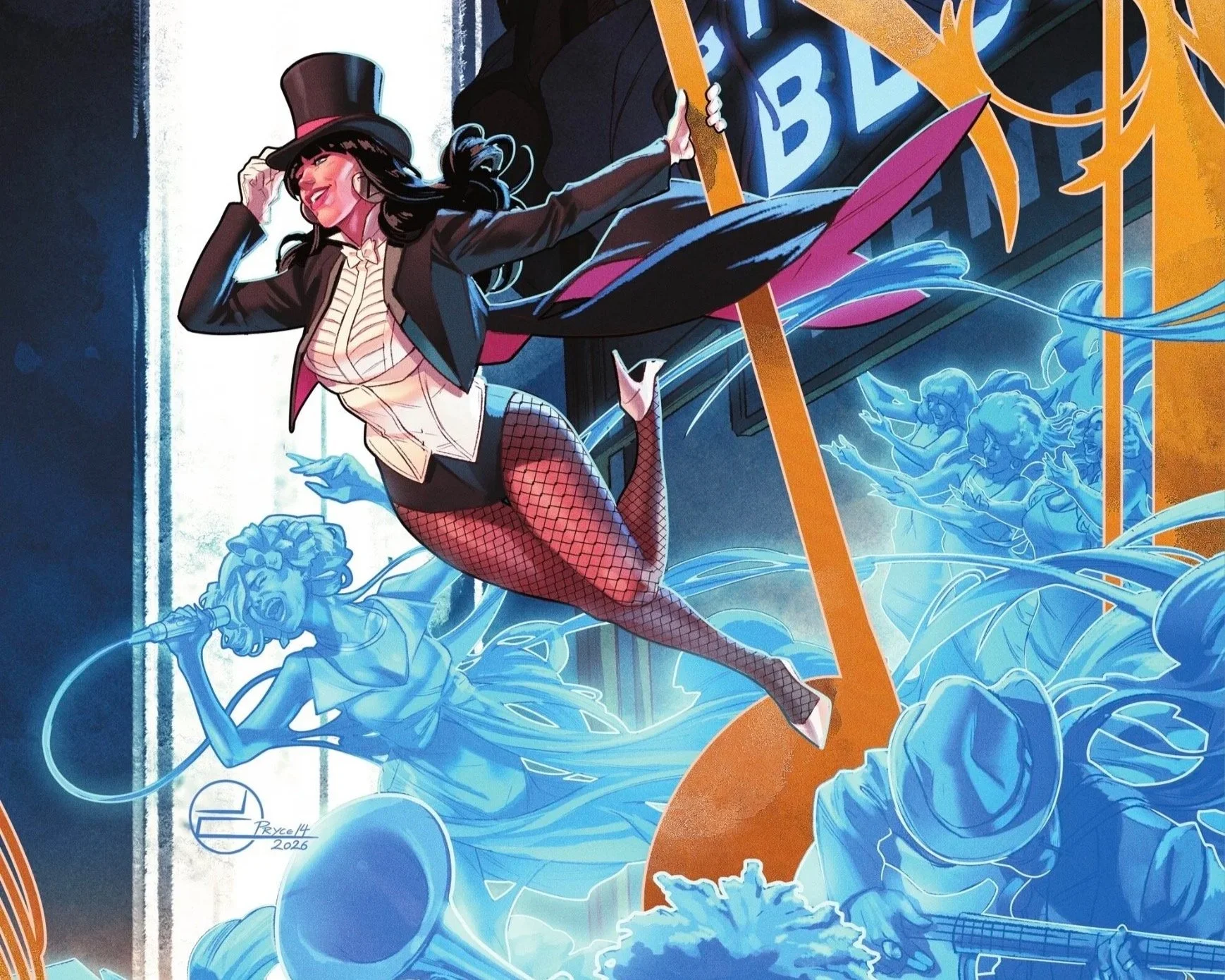
Zatanna #2
"Arias & Blues"
Writer/Artist/Cover Artist: Jamal Campbell
Magic is tricky. If you don't give enough explanation, your audience might not get it. If you explain too much, it might ruin the mystique. It's a delicate tightrope to walk.
Zatanna #2 walks that rope with dexterity and care.
The Music Can Free Her Whenever It Starts
This is a fun comic book. Zatanna is a great character who is tricky to keep interesting without putting her into "fanservice" situations. Admittedly, there's one of those in this issue too, but it's done in a way that services the plot. This issue delivers on both the big spectacle moments and the small character bits, both in equal measure.
Zatanna Zatara, the Prime Magus, is hard at work cleansing another realm from the rot of dark magic. In the aftermath, as Zatanna prepares a magical bath to purify herself, we break the Fourth Wall momentarily for a lecture on the rules of magic. Once she has purged her own darkness, she's off to Memphis, Tennessee.
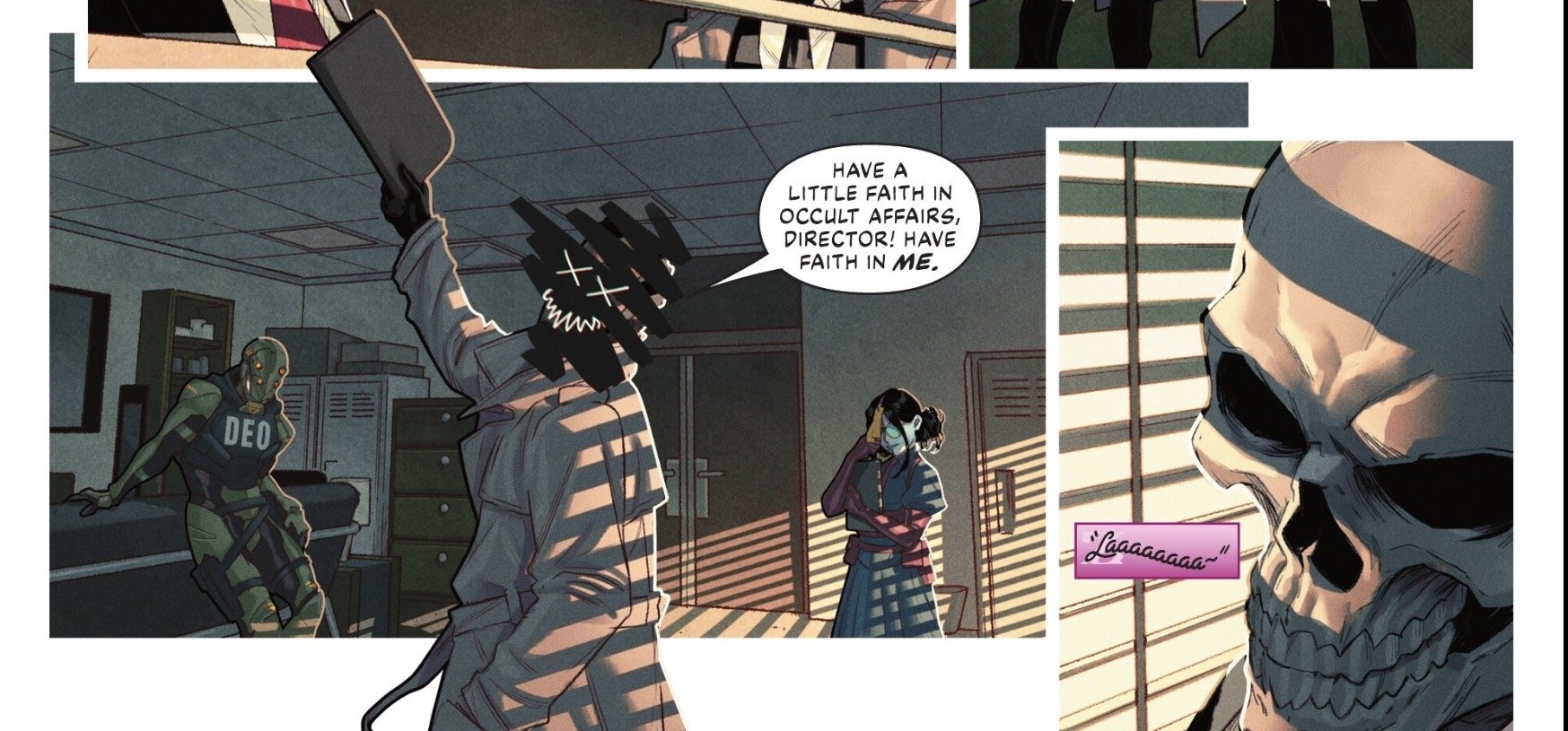
While Zatanna meets with some old friends to learn the origins of the Plague Spirit from issue #1, we shift our focus to the Department of Extranormal Operations (DEO for short) to learn a bit more about the enigmatic Agent Di Manes. He has plans of his own for the Plague Spirit, and Zatanna doesn't fit into them.
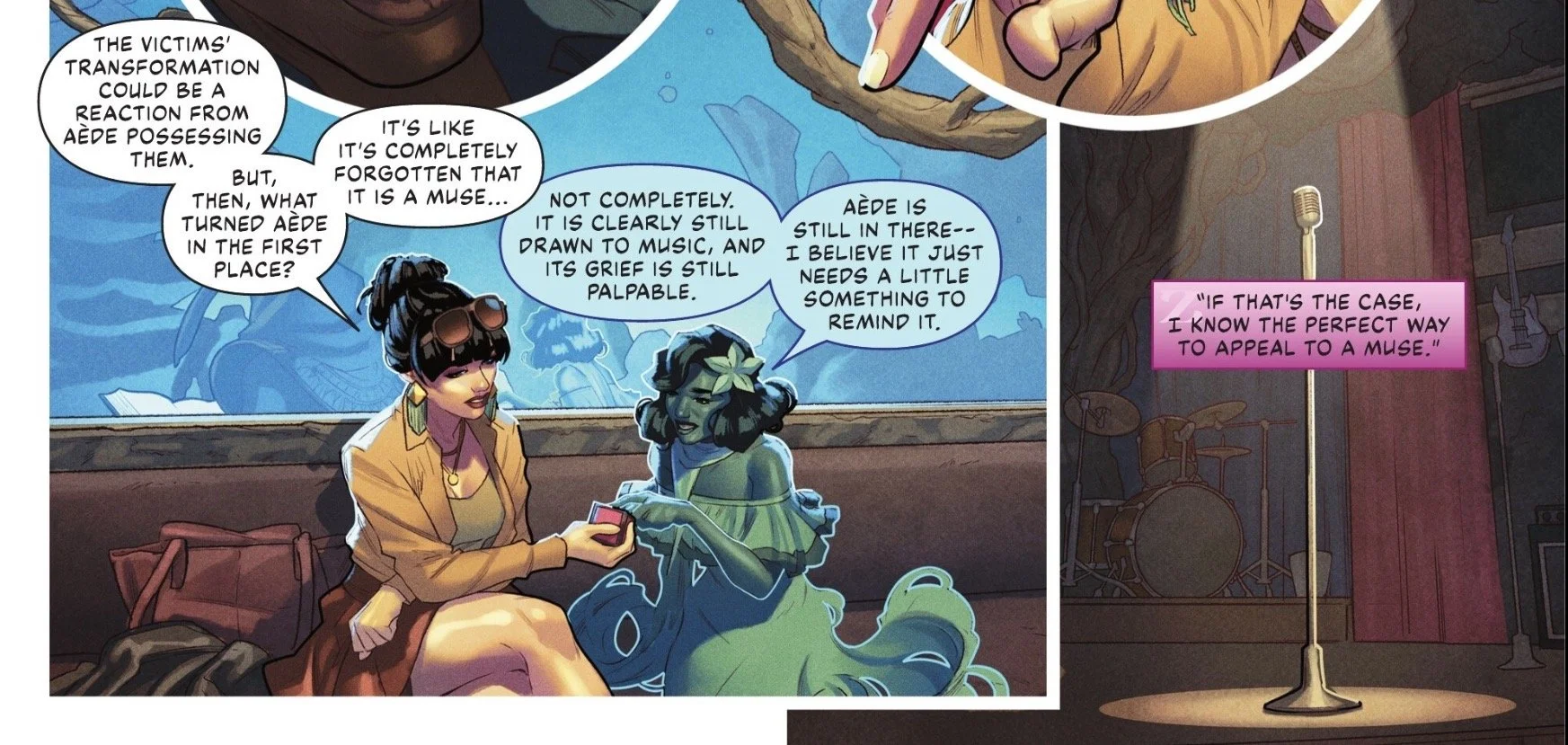
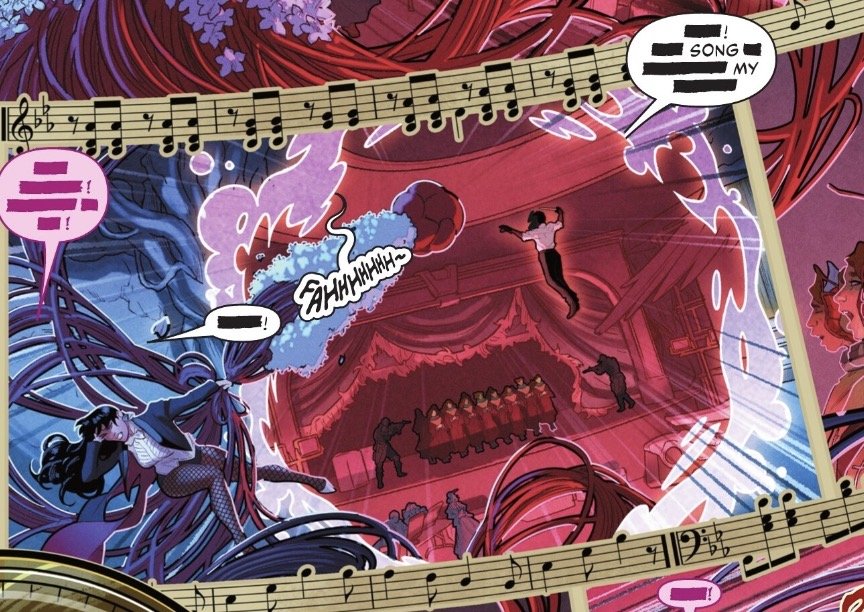
Our players converge as Zatanna and her allies attempt to cleanse the spirit through a musical spell, while the DEO initiates their own ritual to bring the spirit under their control...
Every Little Thing She Does is Magic
Two issues in, I'm really enjoying this series.
The concept of Zatanna as the Prime Magus, and therefore responsible for all things magic in all the realms, is a strong one. It gives her a much stronger hook than "traveling magician gets into trouble with real magic threats." It also broadens the scope of where she can go to be nigh-infinite, given the number of realms and things they can contain.
The idea of a recurring foil like Agent Di Manes is another great move. It gives Zatanna someone that isn't impressed with her title and won't put up with her interference, while leaving him ambigious enough that he's not an outright villain. Although his action at the end of this issue aren't the most heroic...
I'm usually wary of when comics break the Fourth Wall—too much Deadpool and Harley Quinn over the years, I think—but it's handled well here. Zatanna's magic is based a bit more in the style of "real" magic like we'd experience at a David Copperfield show, rather than the "anything goes" style of magic that someone like Dr. Strange utilizes. So a couple of pages plainly stating how magic works in this setting is very welcome. Without it, many of the later events in this issue lose a bit of their weight.
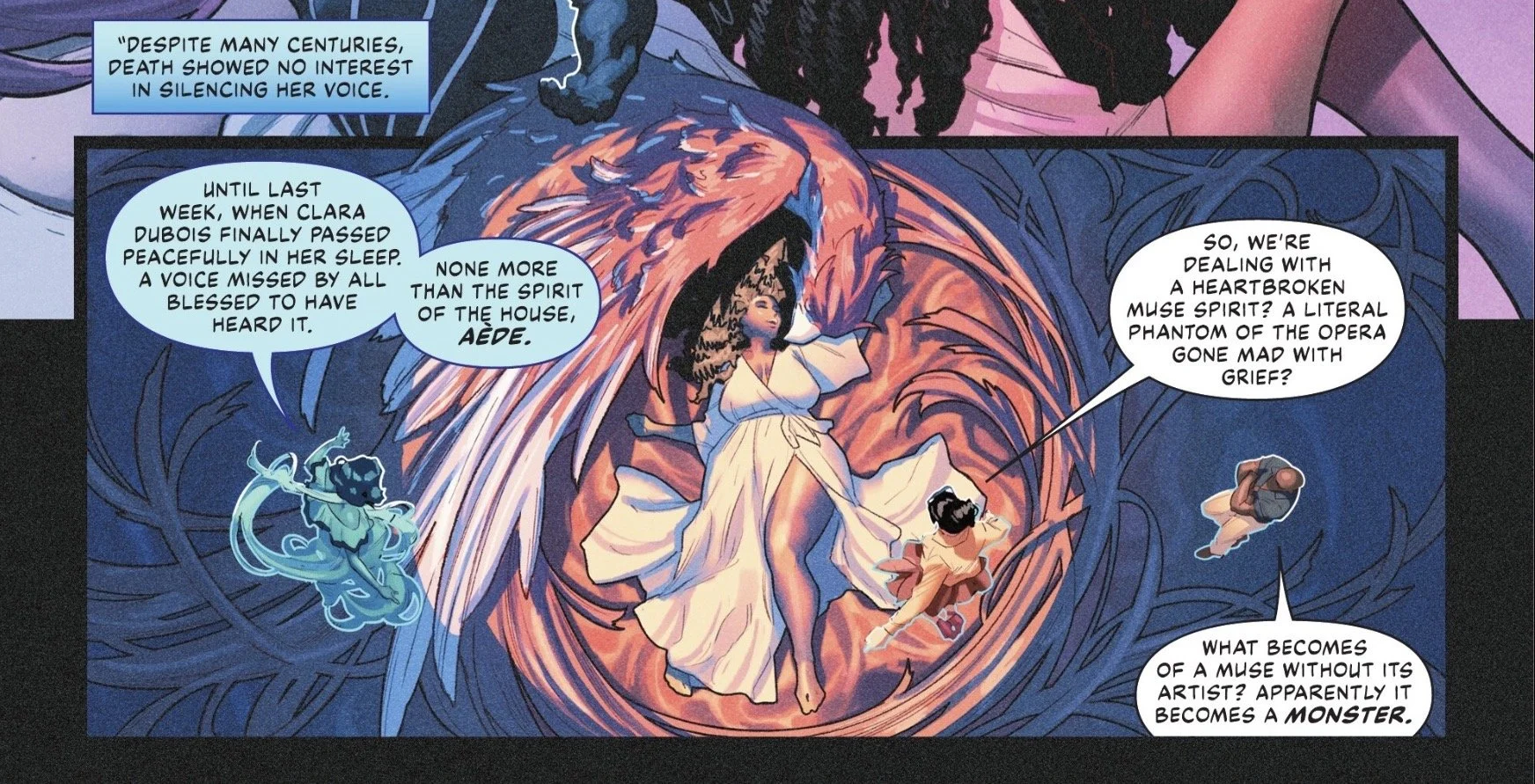
The idea of the Plague Spirit being a muse spirit that mourns its performer is great, and gives the story a unique feel. We've all loved something or someone so much that we felt utterly lost when it was gone. The difference is that, as living beings, we can eventually move past those feelings of loss. A spirit is not so fortunate, and often finds itself trapped or changed by its grief.
Pretty strong, emotional stuff. Not bad for a character who is often reduced to "I cast magic by talking backwards."
You Have to Believe We Are Magic
Jamal Campbell is a magician without need of an assistant—he is the writer, the artist, and the colorist here. This means that there is absolutely no disconnect between the words and the pictures, with everything coming through as one consistent vision.
And a strong vision it is. He's able to capture the playful nature of Zatanna, while also giving her a more serious demeanor that fits her new standing. By having Zatanna directly address the reader about the rules of magic, Campbell taps into the character's classic playful side without undermining the seriousness of the purification scene that follows.
The artwork and panel layouts are a sight to behold. Even if the story wasn't good, the art alone would be worth the price of admission. There is a double-page spread towards the end of the issue, where the dueling rituals have begun, that has a string of musical notes running through the gutter between the panels. The closest comparison I can give for the creativity on display here is the Oni Press title Spirit of the Shadows, which is a personal favorite.
The coloring adds to the appeal of the artwork—the variety of shades and tones in the different realms make each stand out, especially against the mundane world. The magical effects all stand out in their own ways, giving no question of their power. Ghostly characters have an ethereal glow that leaves no doubt what they are. Everything has a power and a weight to it, leaving no doubt that you are looking at something special.
Call it Magic, Call it True
Zatanna #2 is another fantastic issue that delivers in not just magical spectacle, but also in character work and world-building. The Plague Spirit from last issue turns out to be more important than originally thought, and Zatanna soon finds herself in over her head. Agent Di Manes is an intriguing foil for the Prime Magus, and the cliffhanger at the end of this issue promises one doozy of a finale to the story arc.