
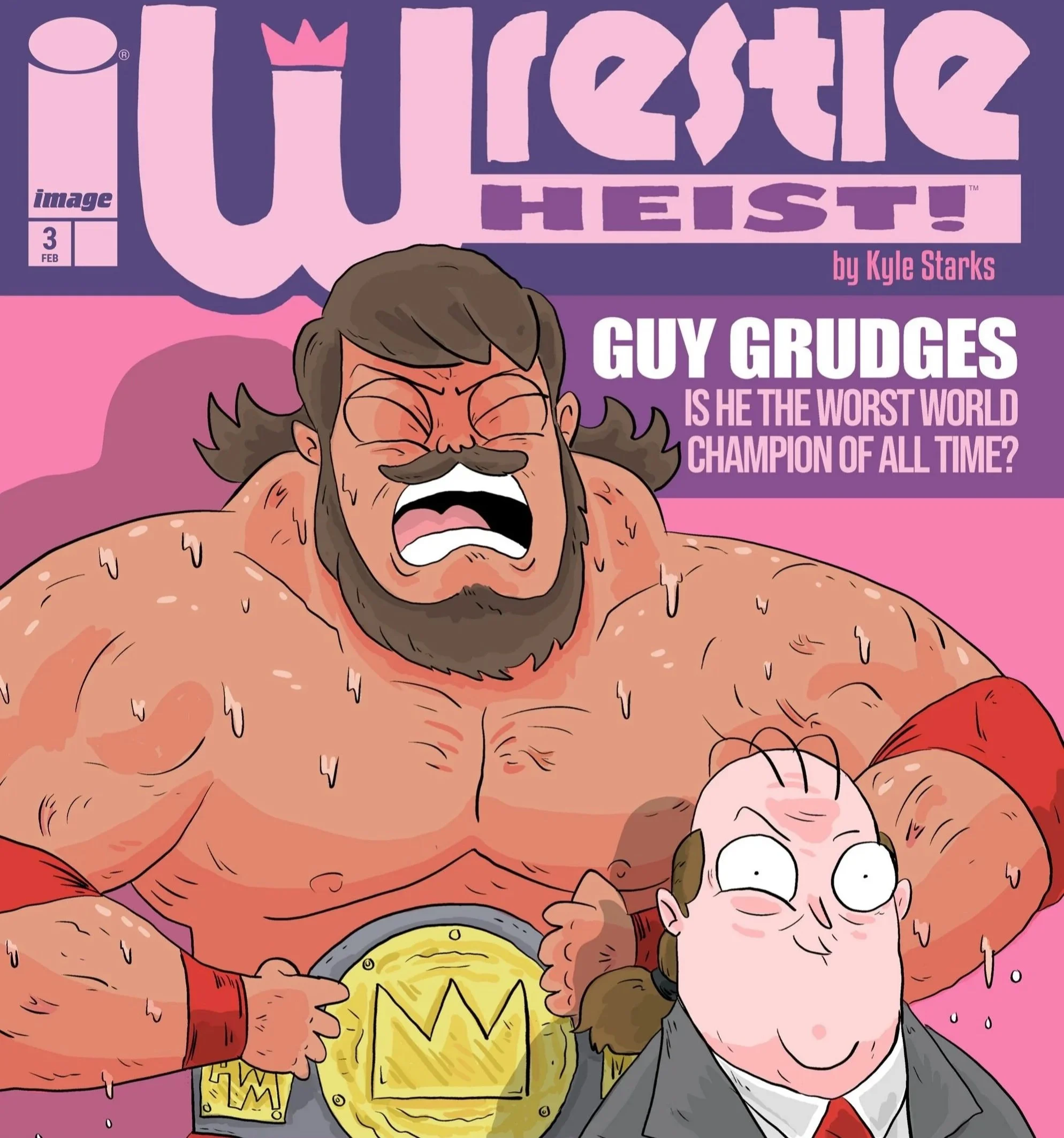
Wrestle Heist #3 feels like the moment the series fully locks in. What starts as a blood-soaked deathmatch spirals into something far more personal. It turns a chaotic wrestling caper into a story about broken fathers, buried secrets, and the cost of surviving in a corrupt industry. This issue balances violence, absurd humor, and emotional honesty better than any installment so far.
The narrative is messy in a way that feels intentional. It is heartfelt without being sentimental and bold enough to let the characters sit in uncomfortable truths. This is the strongest the series has been yet.
Previously in Wrestle Heist
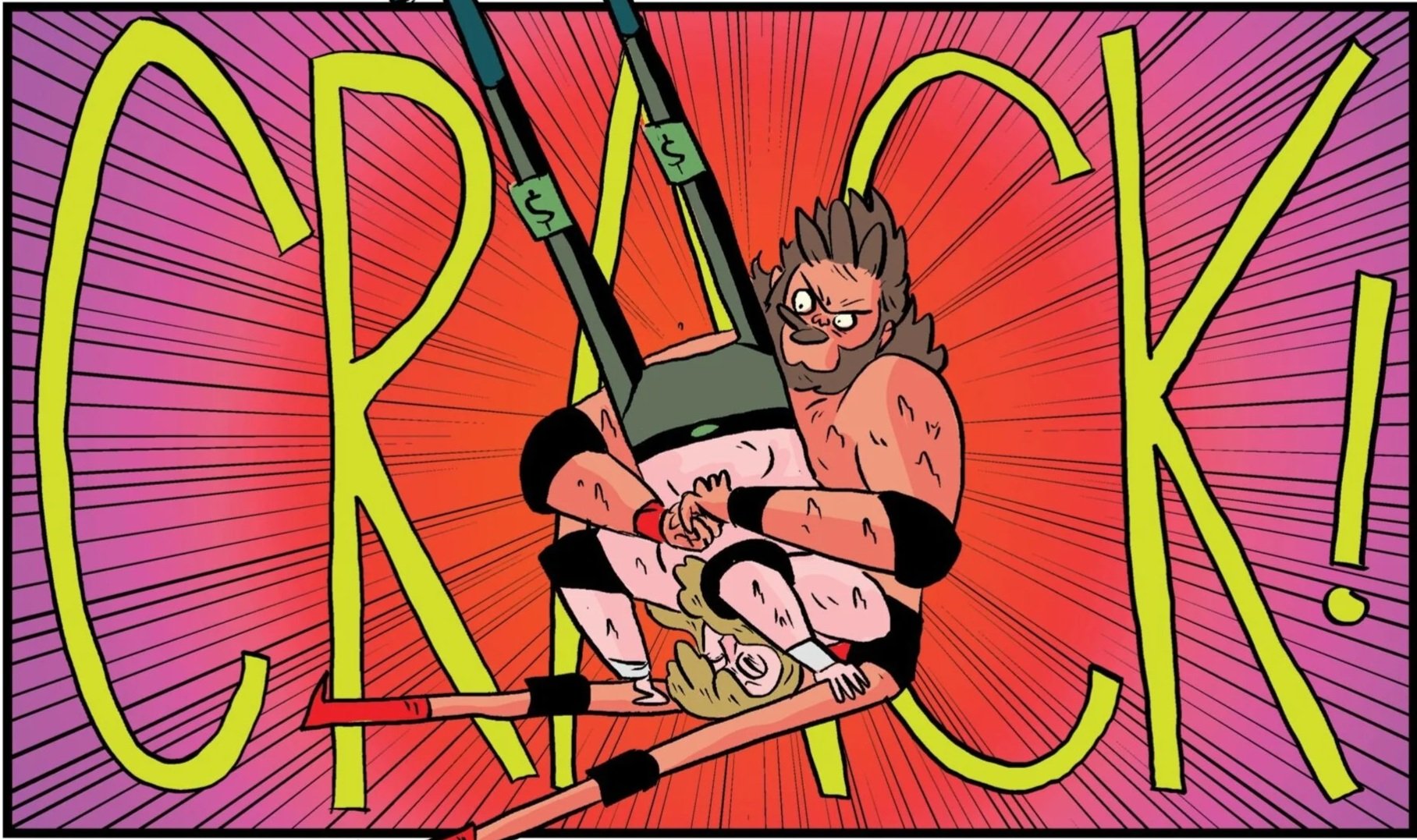
For readers just jumping in, the first two issues establish both the mission and the motivation. Wrestle Heist follows a group of veteran wrestlers who have all been chewed up and discarded by corrupt promoter Buddy Hansen. Sterling Steele, once positioned as a golden boy, finds himself disillusioned and financially strained. Grave Digger carries the physical and neurological toll of years of violence in the ring. Ocho Bola lives with the humiliation of being stereotyped and held back despite getting the gimmick over. Bearwolf, eccentric and unpredictable, brings both technical skill and unresolved history into the mix.
Together, they hatch a plan to rob Hansen during the Thanksgiving supercard, Fightsgiving. Issue #1 lays the emotional groundwork and begins assembling the crew. Issue #2 expands the logistics of the heist while deepening the personal grievances that justify it. By the time Issue #3 opens, this is no longer just about stealing money. It is about reclaiming dignity from a man who built the empire on exploitation.
Deathmatch Baptism by Fire
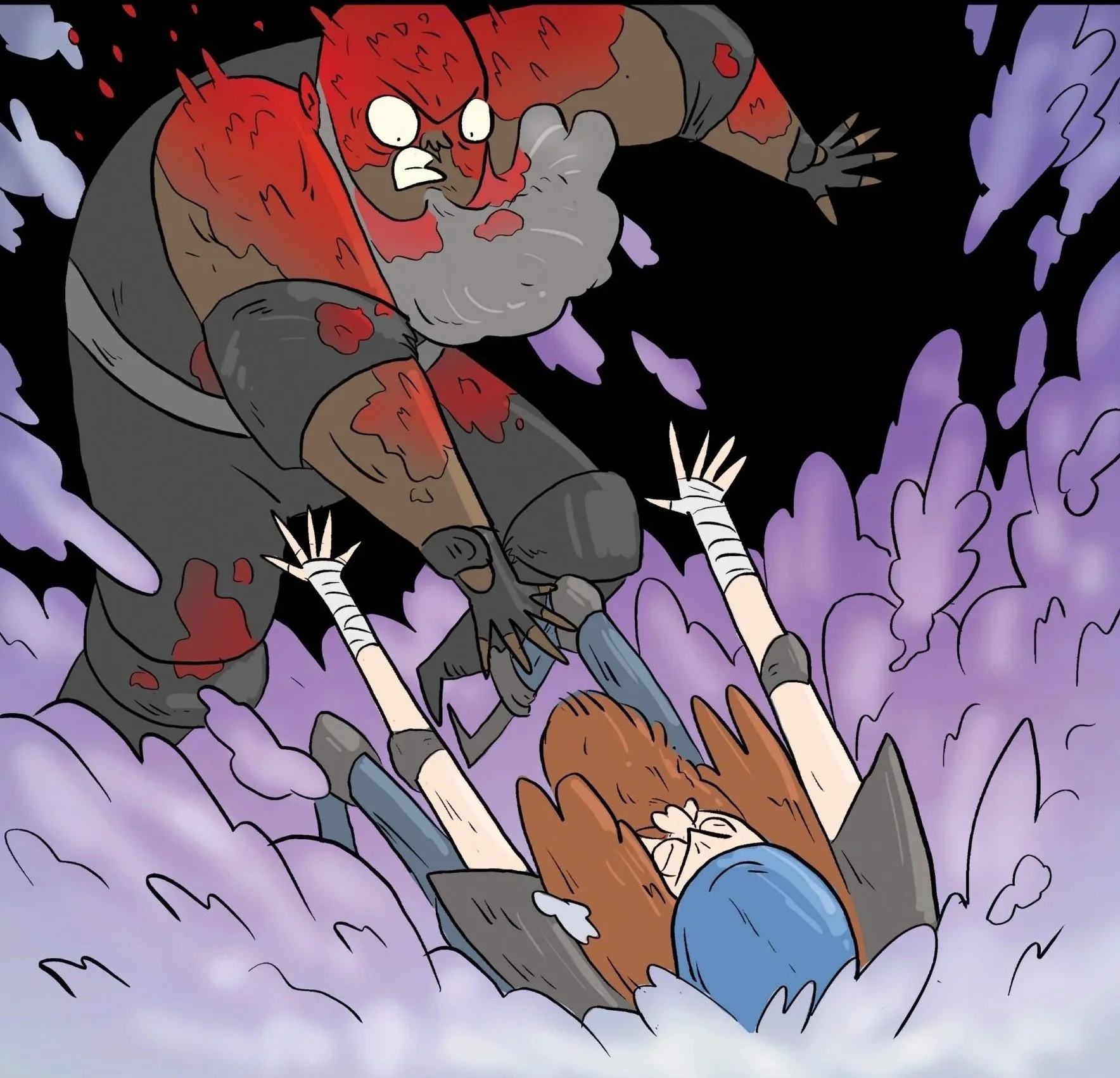
The issue wastes no time throwing the reader back into the carnage. Grave Digger is in the middle of a deathmatch orchestrated by Buddy Hansen. It is the kind of controlled chaos that defines the exaggerated wrestling universe of the book. A chair cracks against the skull of Grave Digger. A weedwacker is introduced into the fray. It is violent, chaotic, and exactly the kind of spectacle that wrestling fans expect when a promoter wants to make a point.
Ulysses Spencer Wagner-Arms, the wrestling historian, chimes in to remind the audience who they are dealing with. Grave Digger is one of the toughest men in the business. Sterling Steele is a three-time national champion collegiate wrestler. These are seasoned professionals who have survived worse than the latest attempt from Buddy to humiliate them.
Sterling chokes out a man charging him with a taser, which sends Suplex Brian screaming in retreat. Grave Digger goozles the opponent and chokeslams him straight to hell. The opening is loud and satisfying. While I would not have minded another page or two of in-ring brutality, the sequence accomplishes the goal. It reminds the reader that these men are capable of handling themselves when fists start flying. However, the real strength of this issue is not found in the ring.
Broken Fathers, Broken Homes
Backstage, the tone shifts.
Ocho Bola checks in on the son, El Hijo de Ocho Bola, and the reader begins to see the fragile rebuilding of the relationship. Wrestling has not been kind to the family. The lifestyle, the travel, the ego, and the grind all eroded something foundational between them. El Hijo still struggles with addiction, and that shadow hangs over every attempt at reconciliation.
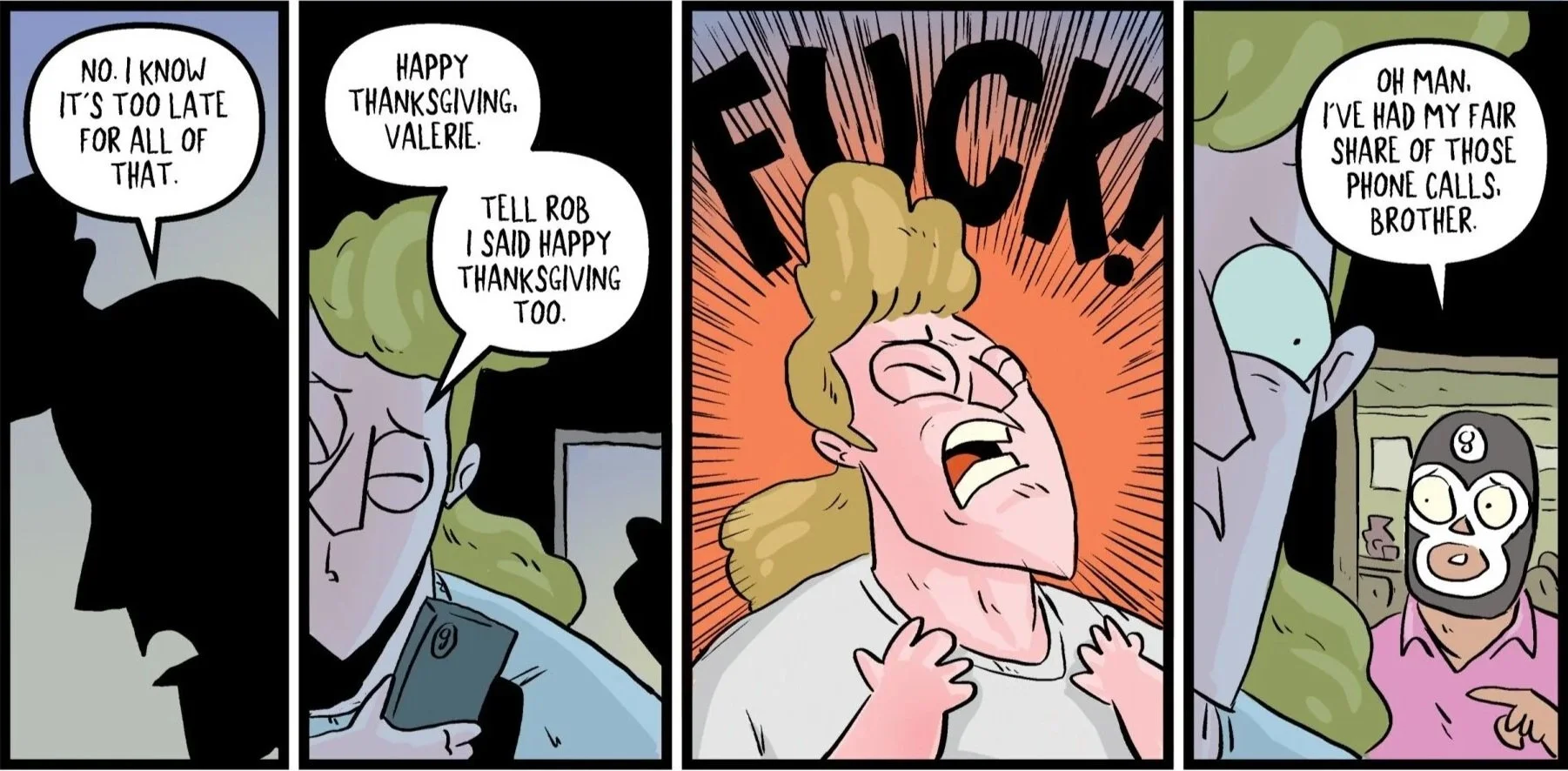
The scene involving Sterling Steele hits even harder. He calls the ex-wife, hoping to spend Thanksgiving with her and the daughter, only to learn they are in Barbados with the new husband. She tells him plainly that he missed the chance to be a good father. It is a brutal reminder that no matter how righteous this heist might feel, Sterling cannot undo the time he already lost.
Wrestle Heist continues to explore the cost of choosing the business over everything else. These are men who gave the bodies to the ring, who lived for the pop of the crowd, and who now sit in the wreckage of fractured marriages and strained parenthood. The shared understanding between Sterling and Ocho Bola gives the book an emotional grounding that keeps it from ever feeling like a gimmick.
Bearwolf and the Weight of the Past
When the crew realizes the group needs a locksmith, there is a knock at the door. It is Bearwolf.
The established hatred from Grave Digger for him adds immediate tension, but the issue wisely tempers that hostility with humor. Bearwolf referring to lemonade as canary gold sour juice that will restore the vigor is absurd in exactly the right way. Grave Digger snapping, Just call it lemonade, goddammit! is one of the funniest beats in the issue.
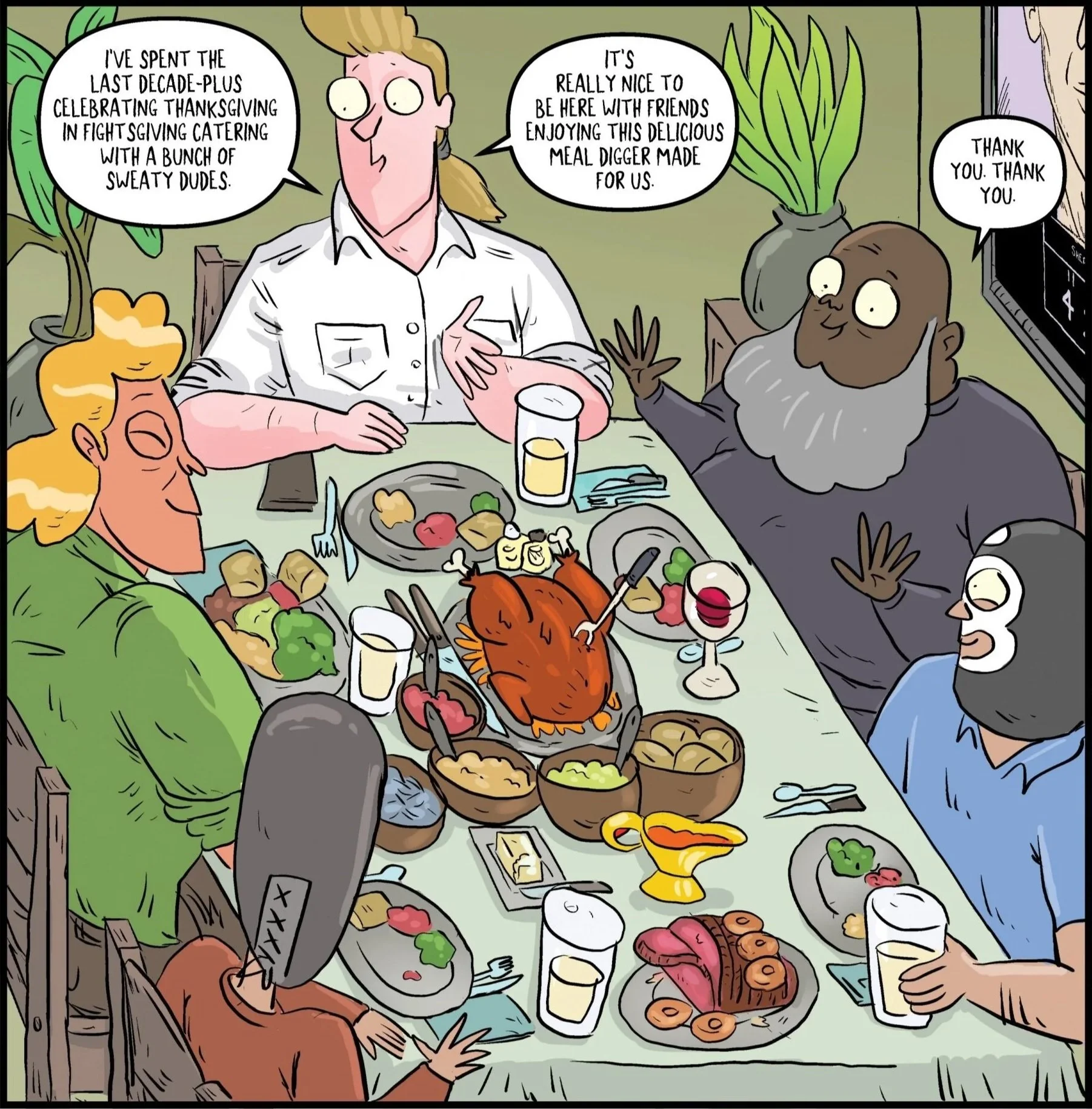
The planning montage that follows, complete with whiteboard diagrams, scaling out logistics, and Bearwolf readying the drill, gives the book the proper heist momentum. However, it is the Thanksgiving dinner that becomes the true centerpiece. Around the table, the reader sees who these men really are.
Sterling Steele wants to pay for the college education of the daughter and maybe open a wrestling school. Ocho Bola plans to put the son in rehab and buy the home promotion so he can book El Hijo properly. Bearwolf intends to launder the money, diversify the assets, and disappear to Amsterdam. Grave Digger is simply thrilled at the idea of making Buddy Hansen suffer.
Then the stories start coming out. They recount the ways Buddy damaged them. This includes the near career-ending neck injury of Sterling, the repeated head trauma and partial blindness of Grave Digger, and Ocho Bola being boxed into demeaning stereotypes and denied a world title despite getting the gimmick over. The racism is discussed openly. The uglier side of the industry is not sugarcoated.
The revelation from Bearwolf cuts deepest. He was not fired because of a motorcycle accident that cost him the foot. He was fired because he is gay. Buddy Hansen is a homophobe. Bearwolf reveals a tattoo of the deceased husband on the chest and admits the grief he carries. It is strange, raw, and heartbreakingly sincere. The reactions of the table range from concern to awkward humor, underscoring how ill-equipped they are to process grief in healthy ways.
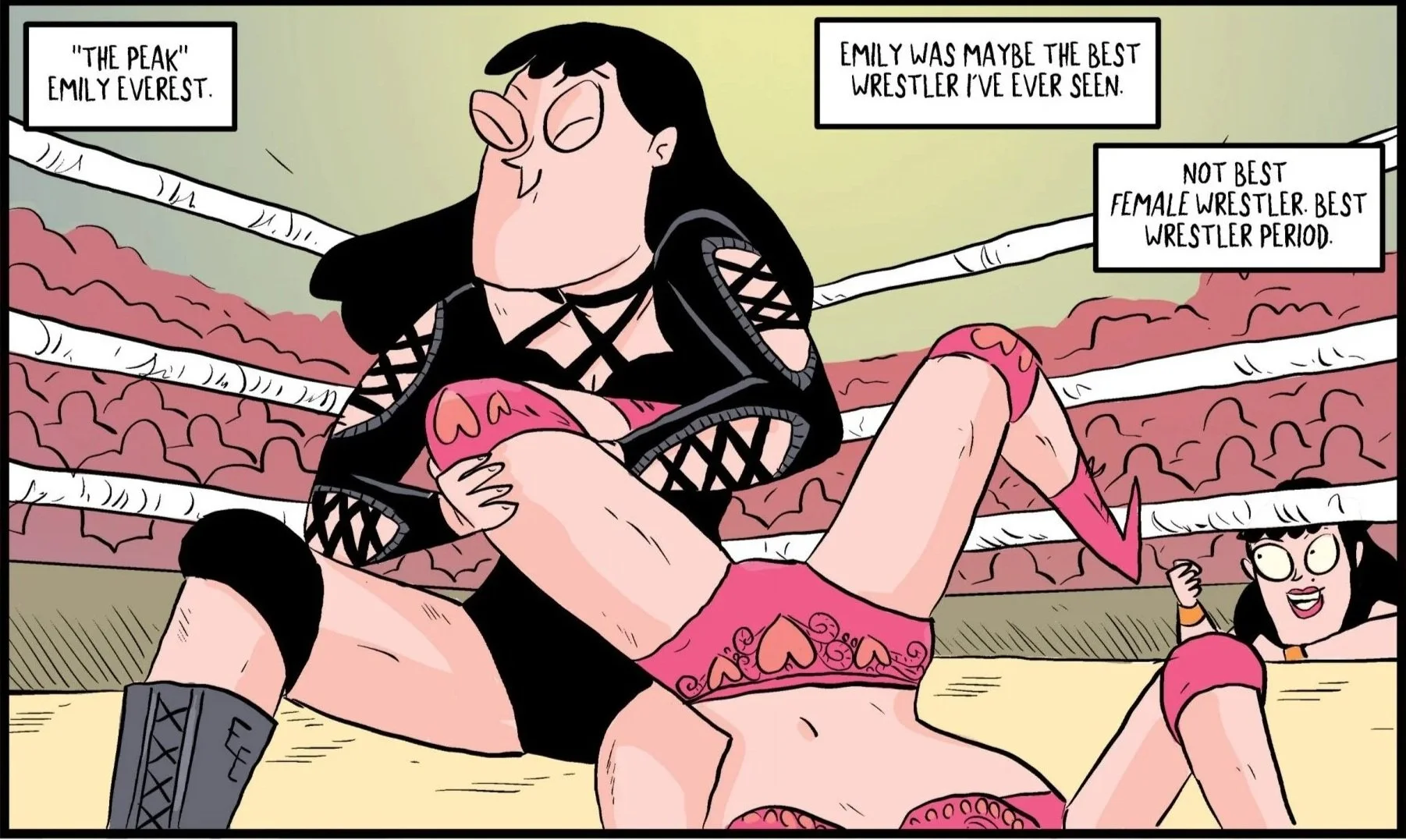
Sterling then tells the story of Emily “The Peak” Everest, the wrestler he believes Buddy wronged most of all. She may have been the best wrestler he had ever seen. Buddy coveted her, coerced her into a relationship, pressured her into altering the body, and trapped her in exploitative roles. Eventually, the story ended in tragedy. The twin sister still works in production for Buddy. It reframes the heist. This is no longer just about revenge or money. It is about accountability.
Before the night ends, they go around the table and say what they are thankful for. Ocho Bola is thankful for the son. Bearwolf is grateful not to be alone. Grave Digger is thankful for the opportunity to give evil the comeuppance. El Hijo is thankful for the money. Sterling is thankful for wrestling and the relationships it has brought into the life. They toast to Buddy Hansen spending eternity in Hell remembering the night he was robbed blind.
A Question of Style
The art in Wrestle Heist continues to be the element that feels most divisive. I do not dislike the work. In fact, the stylized and almost cartoonish approach works extremely well during the heightened action sequences. The exaggerated expressions and elastic physicality complement the chaos of the deathmatch and the absurd humor surrounding characters like Bearwolf. When a weedwacker enters the ring or a wrestler is chokeslammed into oblivion, the visual tone matches the operatic nature of professional wrestling.
At the same time, I sometimes wish the art leaned toward a more grounded style during the heavier emotional moments. Conversations about racism, homophobia, addiction, and exploitation carry significant weight. A more restrained visual style might have deepened the impact of those scenes.
However, a hyper-realistic aesthetic might clash with the heightened tone the book consistently embraces. The stylization keeps the world cohesive. It allows the violence, comedy, and tragedy to exist side by side without feeling disjointed. Ultimately, I am split on the decision. The art is not the favorite part of the book for the reviewer, but it undeniably serves the energy and identity of the story. There are panels that shine, especially in motion and humor. I just occasionally wonder what these emotionally raw moments would feel like through a slightly less exaggerated lens.
Temptation at the Door
The issue does not end with the toast.
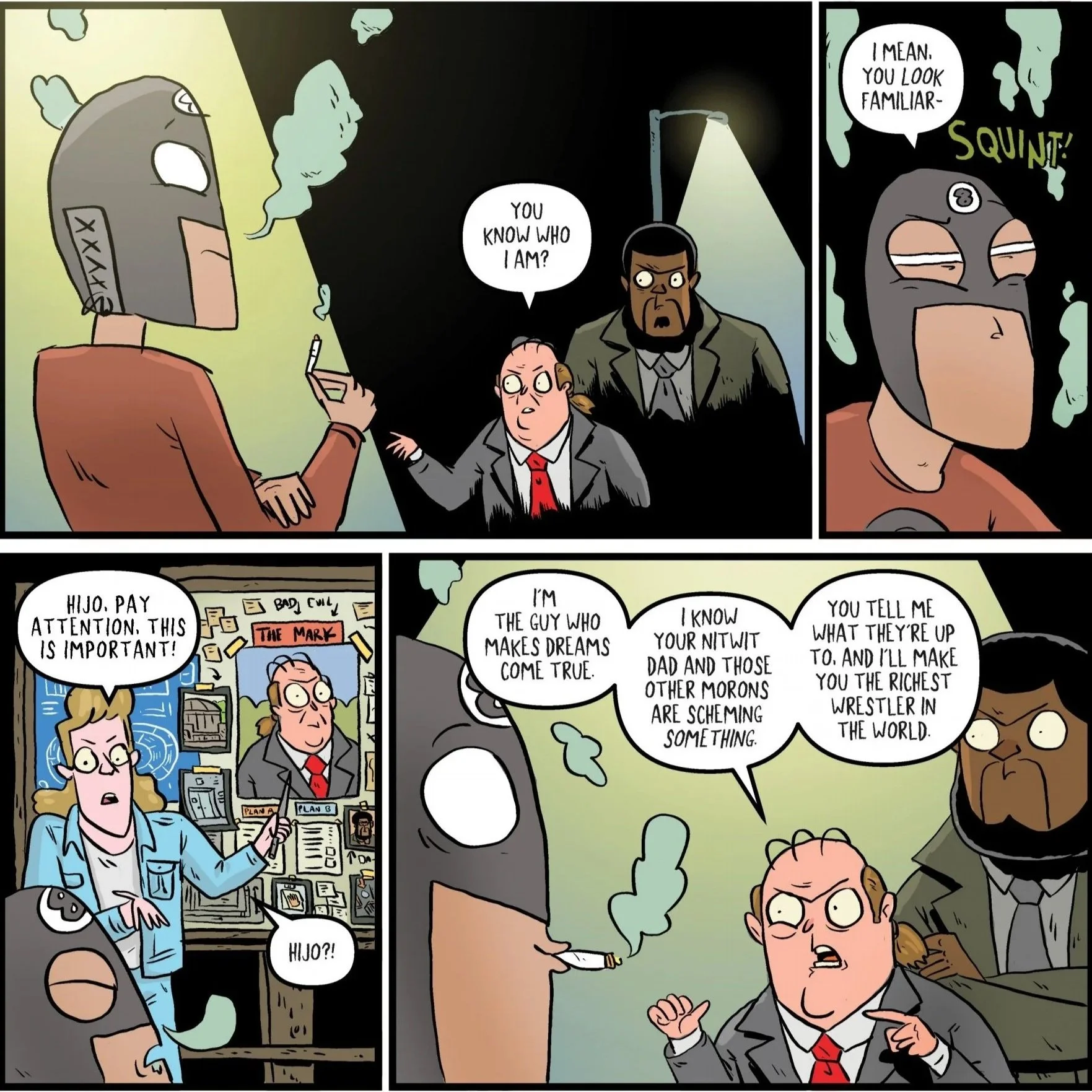
El Hijo steps outside for a smoke and is approached by Buddy Hansen and the bodyguard, Fetu. Because he was not paying attention during the planning montage, he does not fully grasp the danger of what he might reveal. Buddy offers to make him the richest wrestler in the world in exchange for information.
It is a perfect cliffhanger. After an issue centered on loyalty, brotherhood, and shared pain, temptation arrives quietly and directly.
The back matter continues the retro wrestling magazine aesthetic. It poses a new question to the creators about the best wrestler to never hold a world title in WWE or WCW. The humorous ads and the evolving top five list remain a charming touch that reinforces the love of wrestling culture found in the book.
Final Thoughts and Rating
Wrestle Heist #3 is my favorite issue so far. The character moments are heartwarming, funny, and deeply intriguing. I am fully invested in seeing these men rob Buddy Hansen blind and force him to reckon with the harm he has caused.
My only critique remains the same. I would like to see more wrestling in the pages, not at the expense of the character work, but alongside it. When the action hits, it hits hard.
Rating: 8.5/10
The heist is heating up, the emotional stakes are rising, and the family these wrestlers are building feels fragile enough that the next move could shatter everything.