
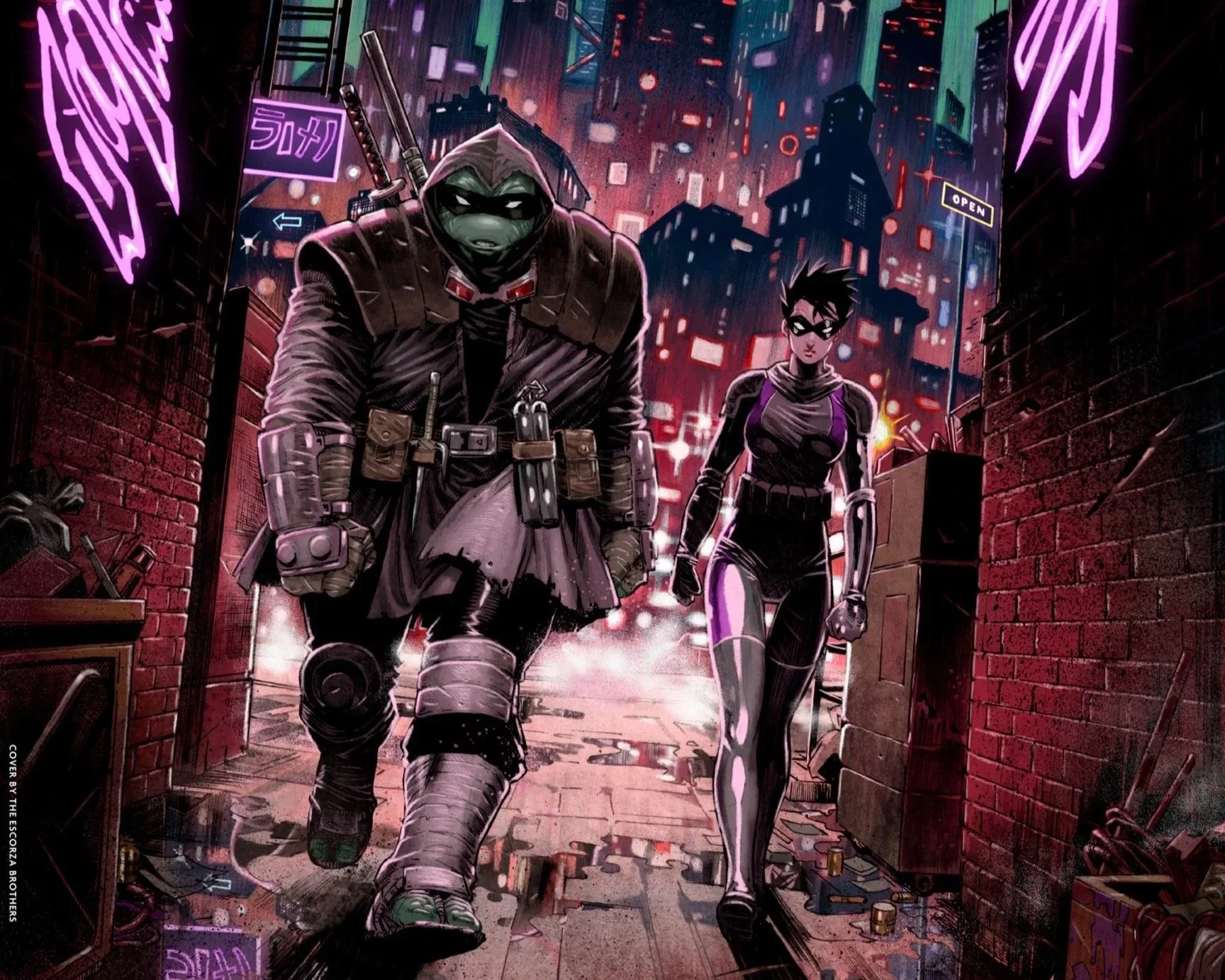
Teenage Mutant Ninja Turtles: The Last Ronin—Training Day #1
Writer: Kevin Eastman and Tom Waltz
Artist: Ben Bishop, Escorza Brothers, Freddie E. Williams II
Colorist: Luis Antonio Delgago
If you haven’t read Teenage Mutant Ninja Turtles: The Last Ronin, stop reading this review. Go pick up a copy—you can find the trade at any bookstore. Read it. Then come back here.
I’ll wait.
All done? Good. That was amazing, wasn’t it?
Now we’re ready to continue.
The Way of the Ninja
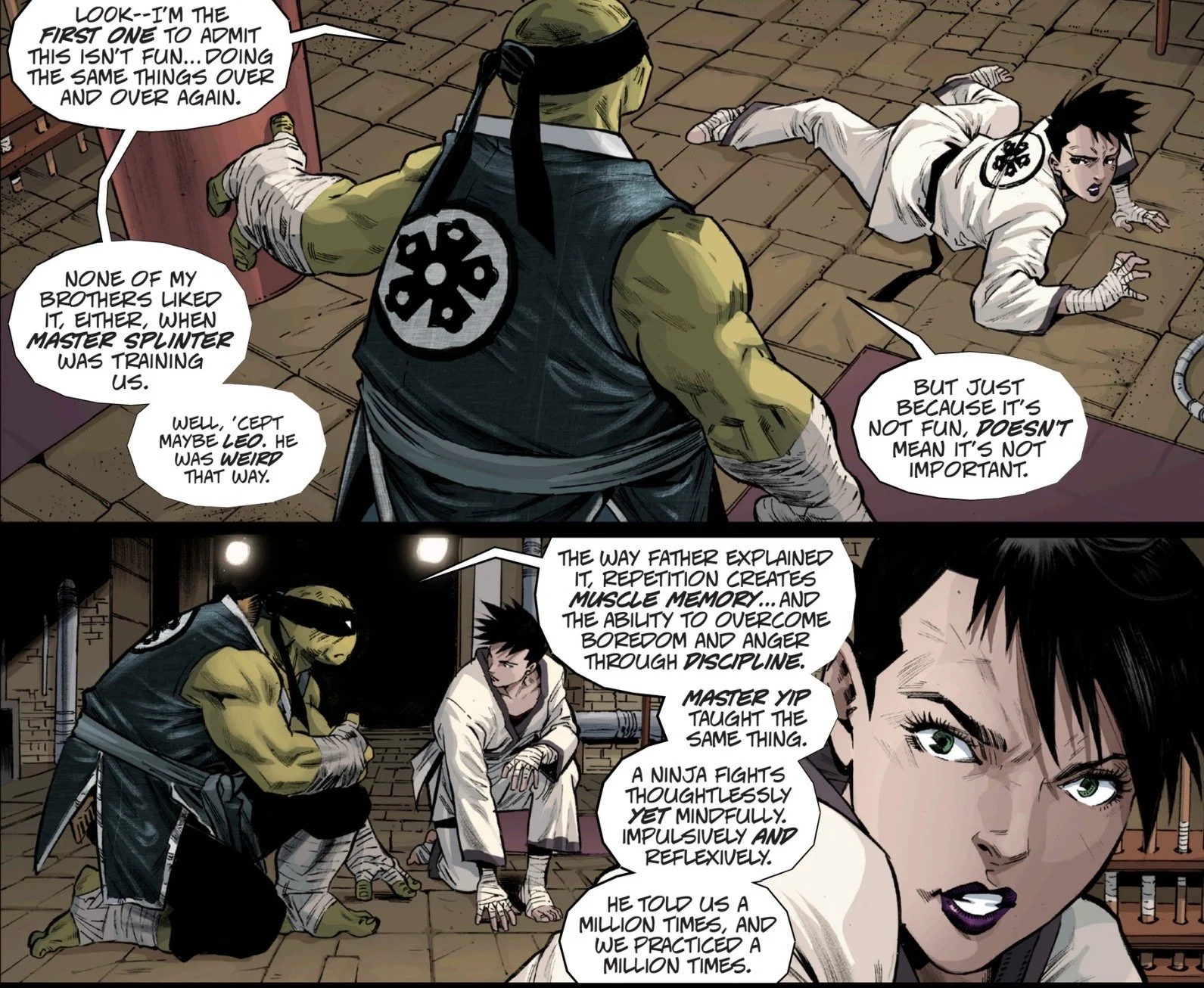
Teenage Mutant Ninja Turtles: The Last Ronin—Training Day is a lost chapter of the original series (not to be confused with Teenage Mutant Ninja Turtles: The Last Ronin—The Lost Years, which was a prequel). It takes place between issue #3 and issue #4, and gives a larger look at how Michelangelo went about training Casey Marie, who definitely inherited her father/namesake's hotheaded stubborn streak.
We open with a page from the journal of Dr. April O'Neil-Jones. As she observes her daughter Casey Marie train the next generation of mutant turtles, she finds her mind wandering back to when her daughter was the trainee rather than the trainer...
Michelangelo is trying his hardest to train his headstrong young pupil. She's too much like her father, and he's not enough like his. Add to the mix the ghosts of his brothers, who are second-guessing his every move, and you have a teacher-student relationship that's almost over before it's really even started.
After a sleepless night, Michelangelo is visited by the spirit of his father, Master Splinter. The wise old rat's words prove to be just what his son needed to hear, and the next morning, training begins again—but this time, no dojo. It's time to use the real world as their training ground.
During the course of the day, both master and student learn more about each other, and they manage to find common ground. Will it be enough to help them overcome their foes? Only time will tell...
Honor the Fallen
Let's get this out of the way first. Does this issue need to exist? No, not really. It's a lost chapter in a story that was completed several years ago and followed by a prequel and a sequel.
Is this a great extra-length issue that works both as a stand-alone story and as additional material for the original The Last Ronin series?
Yes. Yes, it is.
The Last Ronin was a dark story, full of mystery and emotion. Training Day maintains the emotional feeling of Michelangelo being the last of his family, but adds a spark of hope for the future in the form of Casey Marie. It allows the story to have a bit of a lighter tone, while still fitting in with the original series.
Having this issue created by the original The Last Ronin creative team means that this issue could be seamlessly inserted into its designated spot between issue #3 and issue #4 in an eventual "Expanded Edition" collection.
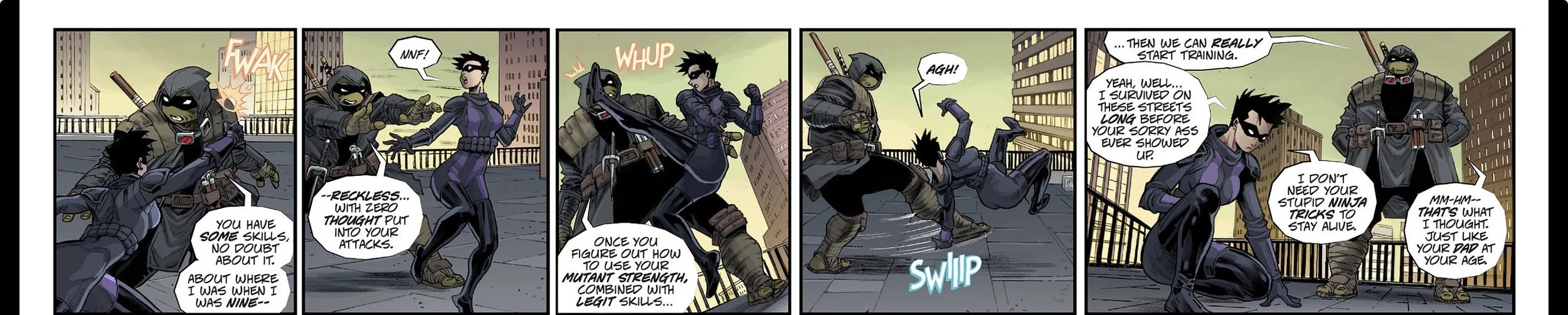
By keeping the cast of this issue small—mainly Michelangelo and Casey Marie, plus the family ghosts and a handful of side characters—the creative team is able to really focus on the characters and their relationship. For Michelangelo, his would-be pupil is a stark reminder of all that he has lost. For Casey Marie, he's an unwanted distraction keeping her from what needs to be done. Much of the tension here comes from the question of if they can find common ground or not. It's very different from your normal TMNT master and student relationship, that's for sure.
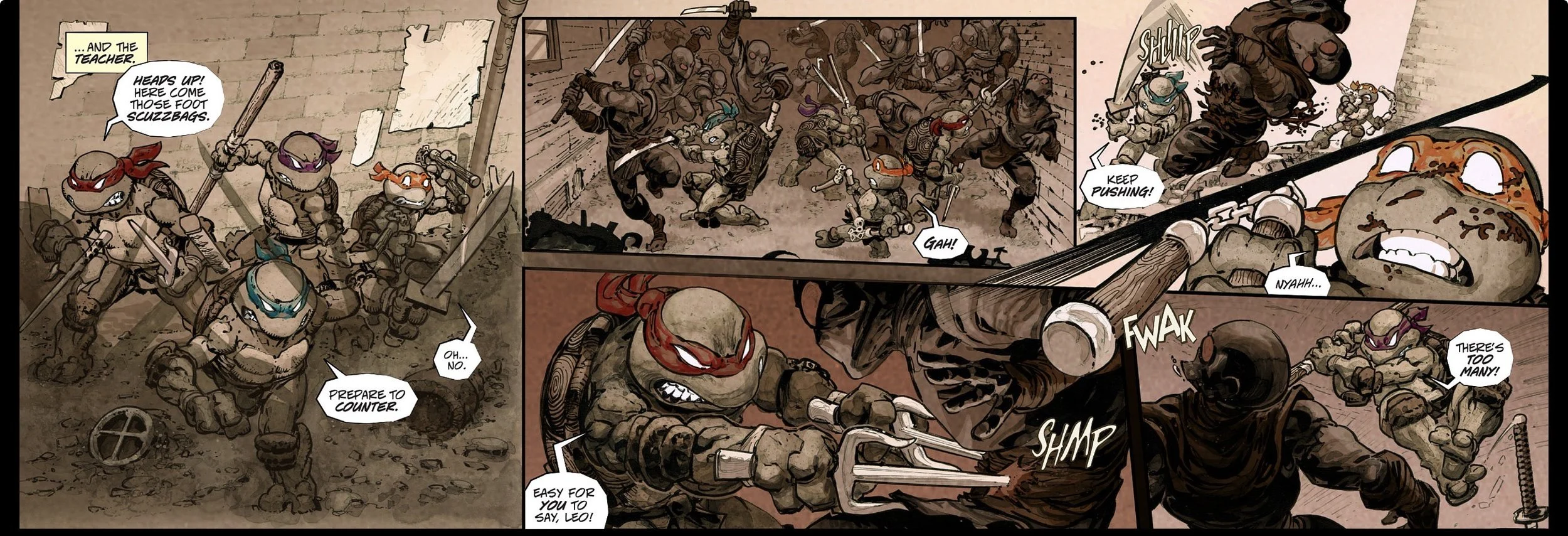
Not only is Michelangelo trying to train his reluctant apprentice, but he's also literally trying to escape the ghosts of his past. Not only do his brothers' ghosts appear whenever he feels fear or doubt, but they're not very supportive. It's obvious they're not really ghosts, but rather his own insecurities and regrets, but you still feel for him when they keep kicking him while he's down. Add to that several dream sequences—illustrated by regular Teenage Mutant Ninja Turtles artist Freddie E. Williams II—that are part memory and part survivor's guilt, and the emotional hits just keep on coming for the last turtle.
Since we already know how The Last Ronin ends (you did go and read it before coming back here, right?), there aren't any real physical stakes for the characters here. We know that they both make it to the final confrontation, so the creative team wisely doesn't put them in much physical peril here. Instead, it's all about emotional damage, response to trauma, and the need for healing. Things that we saw progress on in the original series, yes. But the extra time given to them here just allows us to understand the characters and what they've been through all the better.
Forged in the Sewer
If you're going to go back years later and do a lost chapter of a beloved story, you better be sure you can do it justice. In this case, no one could do The Last Ronin more justice than the original creative team of writers Kevin Eastman and Tom Waltz and artists Ben Bishop and the Escorza Brothers. Add to the mix Freddie E. Williams II and colorist Luis Antonio Delgado, and you've got a powerhouse team.
Eastman and Waltz are about the strongest writing team you could ask for on a TMNT story. Eastman, of course, co-created the characters with Peter Laird, and Waltz has written them for many years at this point. Here they step right back into the world of The Last Ronin as if they'd never left, giving us a well-paced story with plenty of character development and even a bit of action. It helps that they aren't trying to top themselves—rather, they're trying to make this issue feel like it was always a part of the original story. I think they succeeded.
Helping with the original series feel is the art team of Ben Bishop and the Escorza Brothers. Michelangelo is a hulking figure, looming over everyone else. Yet in the moments where he's alone, surrounded by the ghosts of his family, he appears small and alone—exactly how he feels. Their action is kinetic, and the futuristic setting feels lived-in and not so "out there" that it's not relatable.
Special mention has to go to Williams II, who only contributes a few pages here. By using the artist of the current-day ongoing series, it gives these dream flashbacks a feeling of legitimacy—showing both the happier times and how Michelangelo's guilt-stricken brain warps them into something darker. It's a very effective addition.
The colors by Delgado are the cherry on top of the creative team sundae. The standard sequences keep the dark, shadowy tone that this kind of story demands, but never so much that it drowns out the art. The ghostly apparitions of family lost stand out as different and almost wrong, which fits the "are they really ghosts or just Michelangelo's guilt" question. The Williams II flashback sequences have a washed-out sepia tone that makes them stand out, but I actually wasn't a fan of those—it went too far, and I think the art lost some of its detail there.
Turtle Power
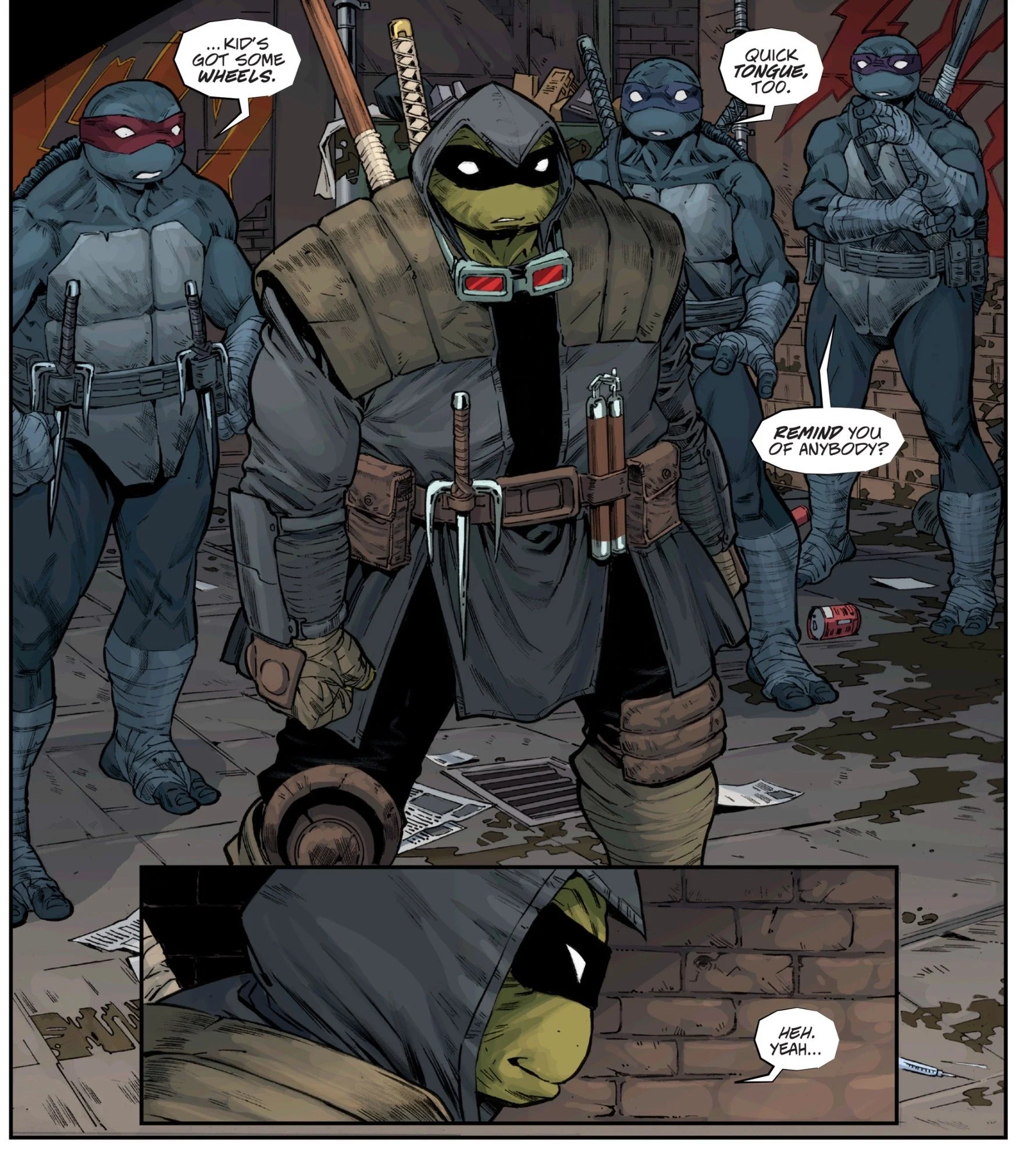
Teenage Mutant Ninja Turtles: The Last Ronin—Training Day is a fantastic issue that tells a lost chapter of the original series while still functioning as a strong stand-alone tale of its own. The original creative team returned and crafted a story that, if you read it between issues #3 and #4 of the original series, it would fit in perfectly. If you were a fan of the original The Last Roninseries, there is no reason why you shouldn't check this out—it's full of heart, emotion, and the Turtle Power that we all love so much.