
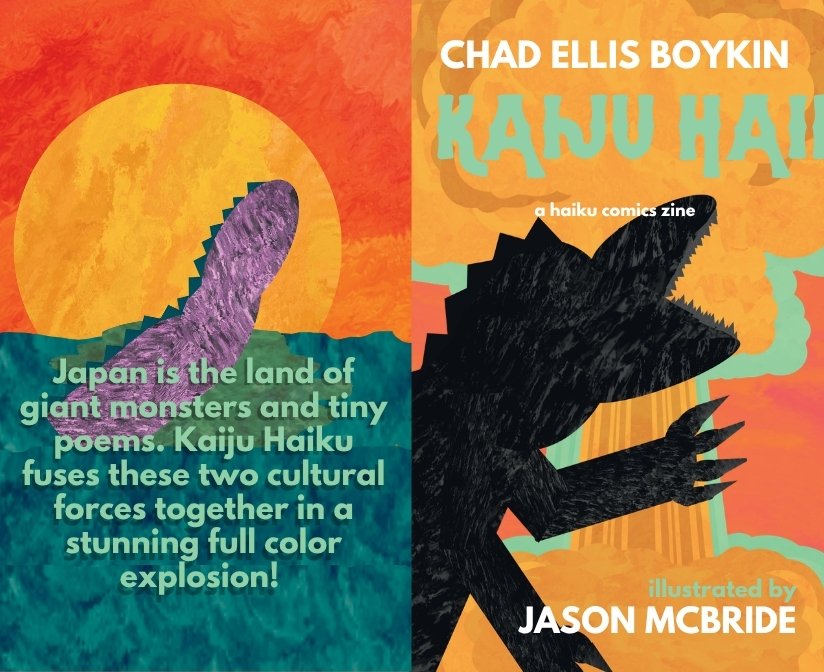
Godzilla has flattened the city dozens of times, but I’ve never seen him distilled into seventeen thoughtfully composed syllables. Jobber House Press breaks nearly every formal boundary with its latest release, Kaiju Haiku: A Haiku Comics Zine. Writer Chad Ellis Boykin and artist Jason McBride deliver an illustrated collection of traditional seventeen-syllable poems inspired by decades of Japanese monster cinema. Though not quite a poetry collection, not quite a comic, and not quite a zine, this is a fourth very cool thing all its own.
Kaiju comics are known for their Tokyo-annihilating giant-monster action. And don’t worry, Kaiju Haiku has some destruction, but that’s not what makes it noteworthy. The book trades the standard narrative form for a simplicity and wonder that I found refreshing.
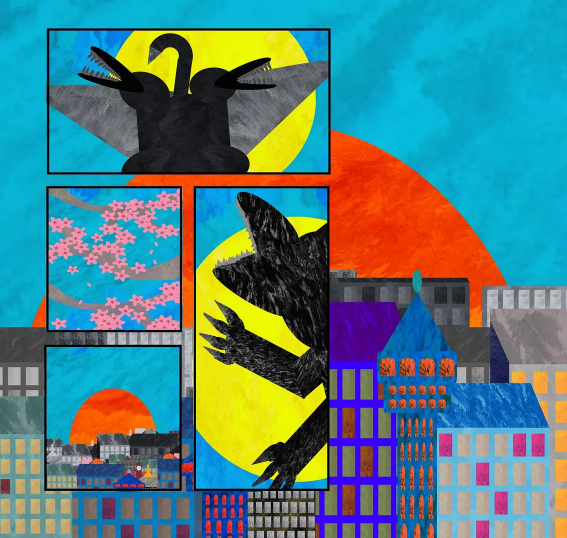
The lack of a traditional beginning-middle-end plot structure isn’t a pitfall here, either; it’s a feature. This delightful little comic-zine reads like a series of vignettes navigating everything from behemoth devastation to intimate self-reflection. If you want monster fights and mass destruction in every frame, this one might not be for you. But if you're a reader who’s open to a little experimentation with form and to exploring what happens when poetry and monsters join forces, there's a ton to enjoy here.
Lacking a narrative arc, the conflict here is more existential than literal. Kaiju Haiku confronts humanity's relationship with monsters in general. That’s the book's real throughline. Boykin asks whether kaiju are disasters, victims, protectors, or just mirrors of our own fears and flaws. Every tiny poem approaches the kaiju’s role from a slightly different angle, making this little powerhouse feel like both a story and a collection.
Stunningly illustrated, the images alternate between surreal full-color pages and stark black-and-white panels. You don’t have to be a poet to appreciate the seventeen different syllables that rampage across the illustrations for forty pages. If the word “haiku” makes you bristle, expecting something precious or academic, Kaiju Haiku should put that to rest right away by showing how playful and vivid the form can be.
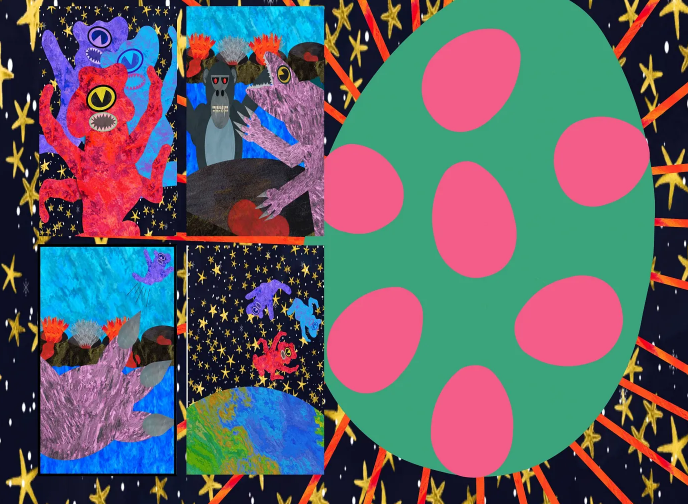
Boykin and McBride seem to understand that comic readers are already primed for this kind of storytelling. As comic readers, we always carry the last panel into the next, letting the images do as much work as the words and knowing they are interdependent. One of my favorite spreads opens with a haunting black-and-white sea scene, clearly post-destruction. Then we have Boykin’s poem: “Lush, verdant island / In the monsoon wind, a life / Radioactive.” That last word, “radioactive,” does the kind of page-turn reveal comics do better than any other medium, upending the world we thought we were comfortable with.
For readers committed to monster-destruction comics, this may miss the mark. This is an intimate, haunting look at the tenderness of kaiju, and that intimacy is the point. The best kaiju stories know when to pan away from the destruction and look at the vulnerability.
In the classic 1954 Godzilla movie, one of the most evocative scenes happens near the end of the monster’s rampage, and it’s so brief that it’s easy to miss its impact. The camera pans to an unnamed mother trying to comfort her two children, who are crouched against the ruins. “We’re going to join Daddy,” she tells them. “We’ll be where Daddy is soon.” We’re only on her for a few seconds, but the whole film contracts around her. We aren’t told that “daddy” died in World War II, but the implication is underlying. That’s the moment when Godzilla becomes bigger than a monster, shifting into something more akin to a parable than a bad guy.
Conclusion & Verdict
Kaiju Haiku: A Haiku Comics Zine appreciates that same shift in scale and freezes the moment between micro and macro. That’s where the real meat of a human story is usually found, and that’s where this book’s strength lies. The monsters fill the page, while the small poems bring us close enough to sense their vulnerability. A quick read that almost demands rereading, each return adds depth to Boykin’s deceptively simple poems and to the details in McBride's surreal artwork. One of the year’s most surprising indie releases.
Verdict: 9/10
Jenny Catlin is a writer and pop culture enthusiast based in the square states. She’s a contributing writer to The Athletic, a Lighthouse Writers Book Project Fellow, and an award-winning essayist obsessed with obsession. You can find her on Instagram or Substack.