
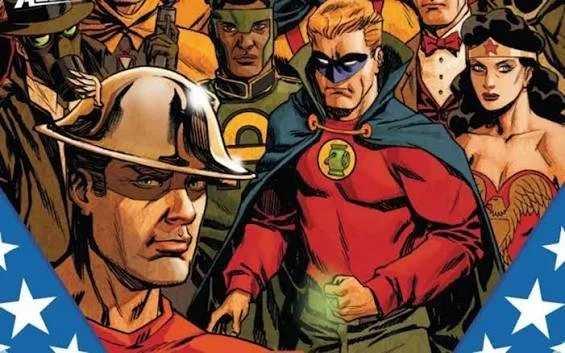
JSA #18 is published by DC Comics, and is written by Jeff Lemire, with art by Gavin Guidry, colors by Luis Guerrero, and lettering by Steve Wands.
The Recap: Explosions vs Ego
I’ve been following this run closely, and it’s impressive how Lemire balances “New Golden Age” sensibilities with a modern narrative structure. There’s always a risk when revisiting the 1940s that it’ll feel like a museum piece—pretty to look at but dusty. Fortunately, issue #18 avoids that trap, delivering a high-octane finale that feels both classic and vital.
The story picks up exactly where issue #17 left off: the 1940s storyline reaches a literal boiling point. The Ultra-Humanite’s master plan is in full swing, with explosives set to tear through Gotham’s infrastructure. The JSA is split, forced to tackle multiple threats simultaneously as the clock ticks down.
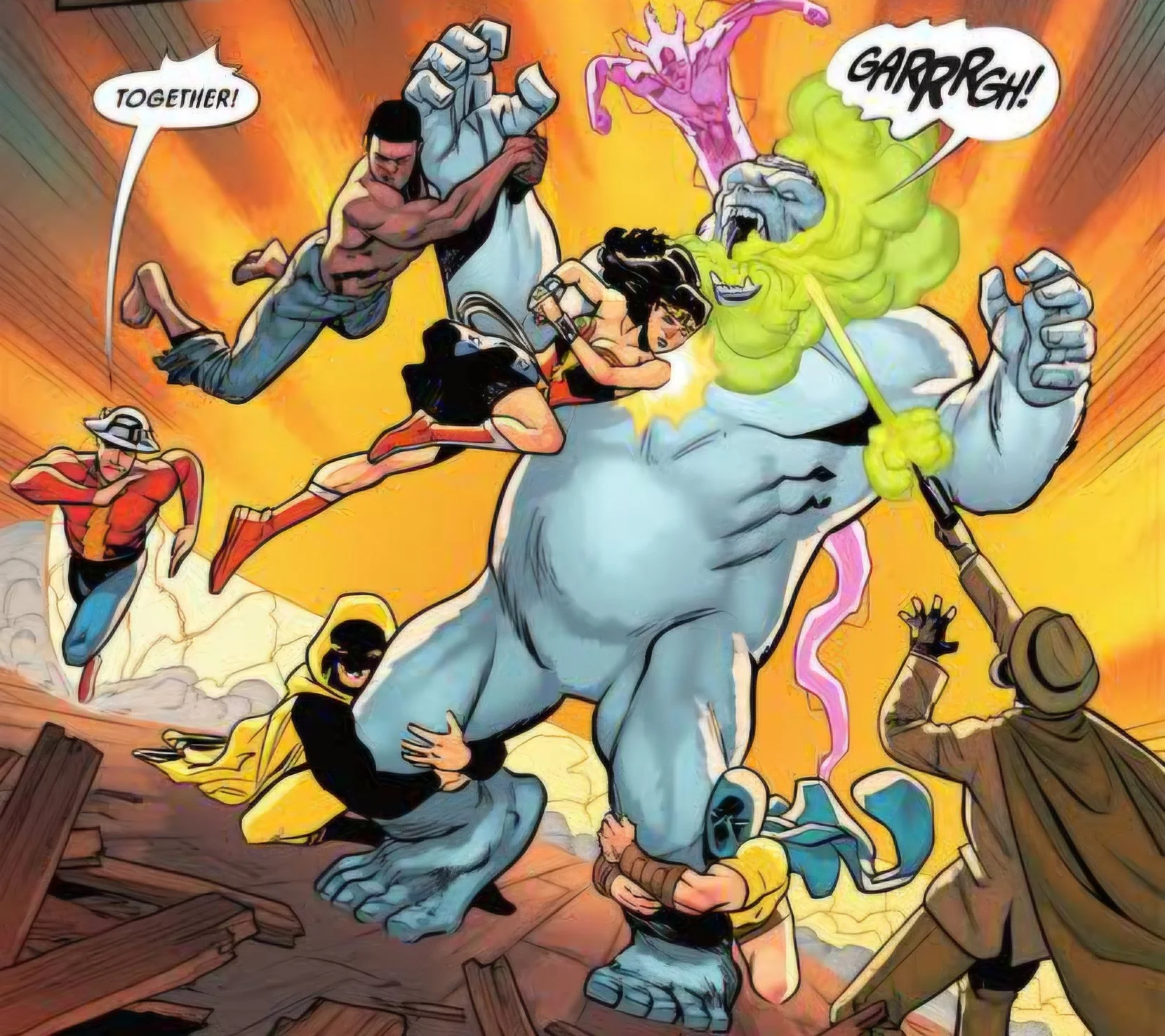
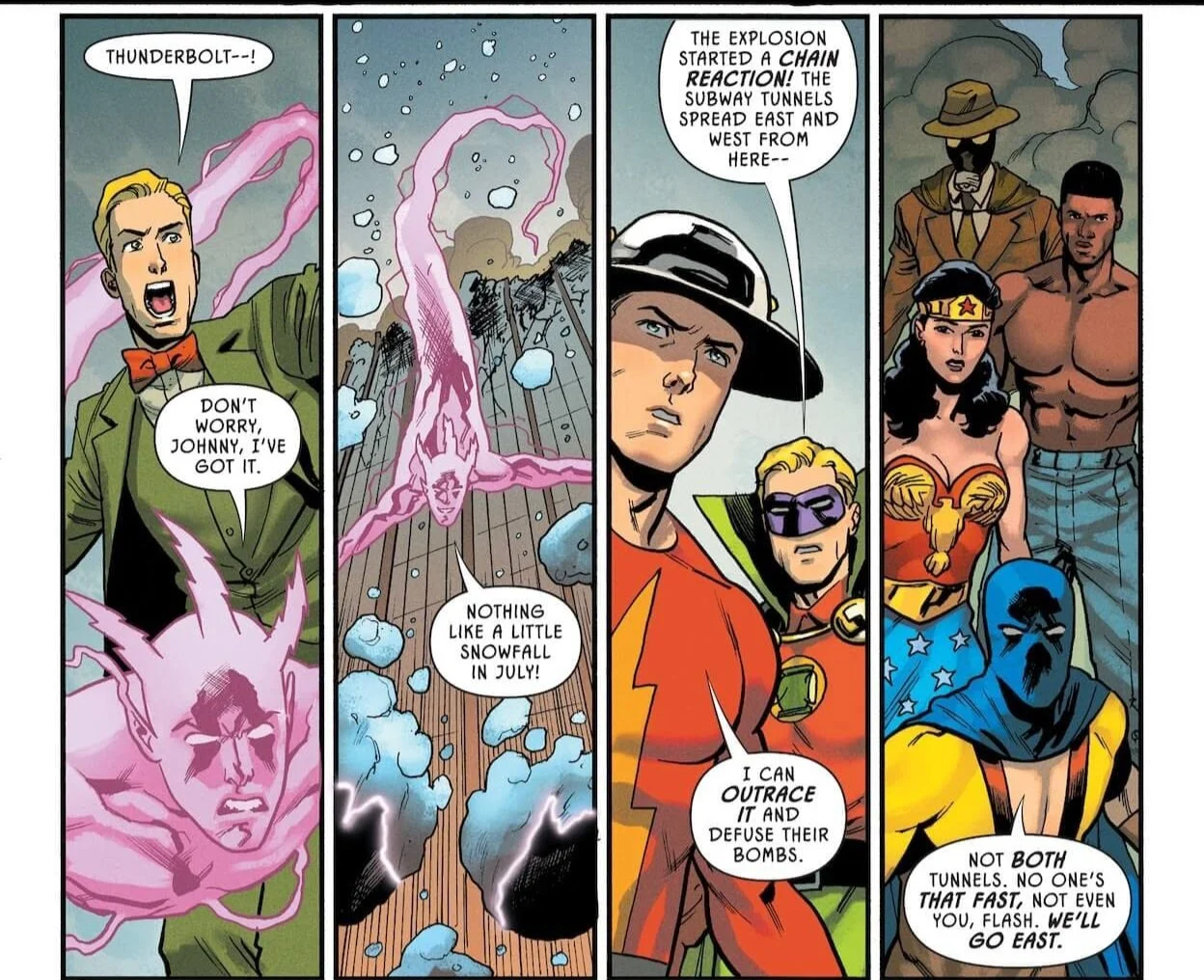
The team divides across three fronts. Green Lantern (Alan Scott) immediately goes on the defensive, using his ring to shield teammates from collapsing debris while coordinating a rescue plan. Flash (Jay Garrick) is pushed to his absolute limits, realizing he can’t cover both the east and west tunnels alone—a rare moment of tactical vulnerability for the Scarlet Speedster.
Meanwhile, the Ultra-Humanite’s muscle—Satanna, Sportsmaster, and Cyclotron—pose a direct physical threat, but the issue isn’t all explosions and fists. Spectre and Doctor Fate get significant focus: Fate acts as narrator and spiritual guide, while the Spectre employs brutal psychological tactics against the villains before reverting to Jim Corrigan. Remarkably, this dense issue manages to give every founding member a memorable moment before the dust settles.
Story: Legacy vs. Selfishness
What Lemire does best in JSA #18 is highlight the contrast between heroes and villains through the lens of ego. At its core, this issue is about selflessness. For the past several installments, we’ve watched these characters bicker and wrestle with their own identities, but when the explosives go off, all that fades away.
A standout moment is the interaction between Hippolyta and Sandman. Hippolyta deflects a hail of bullets—rendered beautifully with motion-blur effects—while Sandman worries they might be too late. Her response—that it’s only too late when they’re dead—perfectly captures the Amazonian mindset and sets the tone for the team’s perseverance. It’s this kind of character-driven dialogue that makes the JSA feel like a family, not just a tactical unit.
The villains, by contrast, are ultimate egoists. Cyclotron is particularly tragic, clinging to the delusion that his “work” justifies his cruelty. It’s a sharp foil to the JSA, who are willing to sacrifice personal safety and comfort for a world that often doesn’t fully appreciate them. Lemire underscores that the JSA didn’t simply form in response to a threat—they exist because they are the ones willing to put their egos aside for the greater good.
Pacing: A Masterclass in Tension
For an issue tasked with wrapping up a Year One origin, the pacing in JSA #18 is impressively brisk without ever feeling rushed. Splitting the team into three groups is a smart structural choice: it gives the action a city-wide scale while keeping the focus on specific character beats.
The transitions between the tunnel sequences and the ground-level confrontation with Ultra-Humanite are seamless. Lemire uses Doctor Fate’s narrative boxes to bridge the gaps, adding philosophical weight to the frantic action. The issue has a “ticking clock” feel—you can almost sense the heat of the explosions and the physical strain on Jay Garrick as he races through collapsing obstacles.
My only minor quibble is that the ending feels somewhat “safe.” After the massive buildup of Ultra-Humanite’s threat, the resolution occurs quickly. That said, the issue redeems itself with a tantalizing teaser hinting at the Spectre’s journey between the 1940s and the present day. It leaves readers eager for the next installment—a hallmark of an effective finale.

Art: Guidry’s Golden Age
Gavin Guidry is the MVP of this issue. His art is stylish and “poppy,” striking the perfect balance between the 1940s aesthetic and modern comic-book crispness. He often relies on rectangular panels with clean white borders, giving the book a grounded, cinematic rhythm.
When the action intensifies, Guidry breaks the rules, tilting panels into diagonals to create disorientation that mirrors the chaos of the subway tunnels. His use of color is equally impressive: the younger heroes pop in vibrant, saturated tones against the dingy browns and grays of the underground, making each character immediately distinct.
The lettering and balloon work further enhance the storytelling.
Doctor Fate: Gold-outlined dialogue balloons and clean white narrative boxes give him a sense of divine authority.
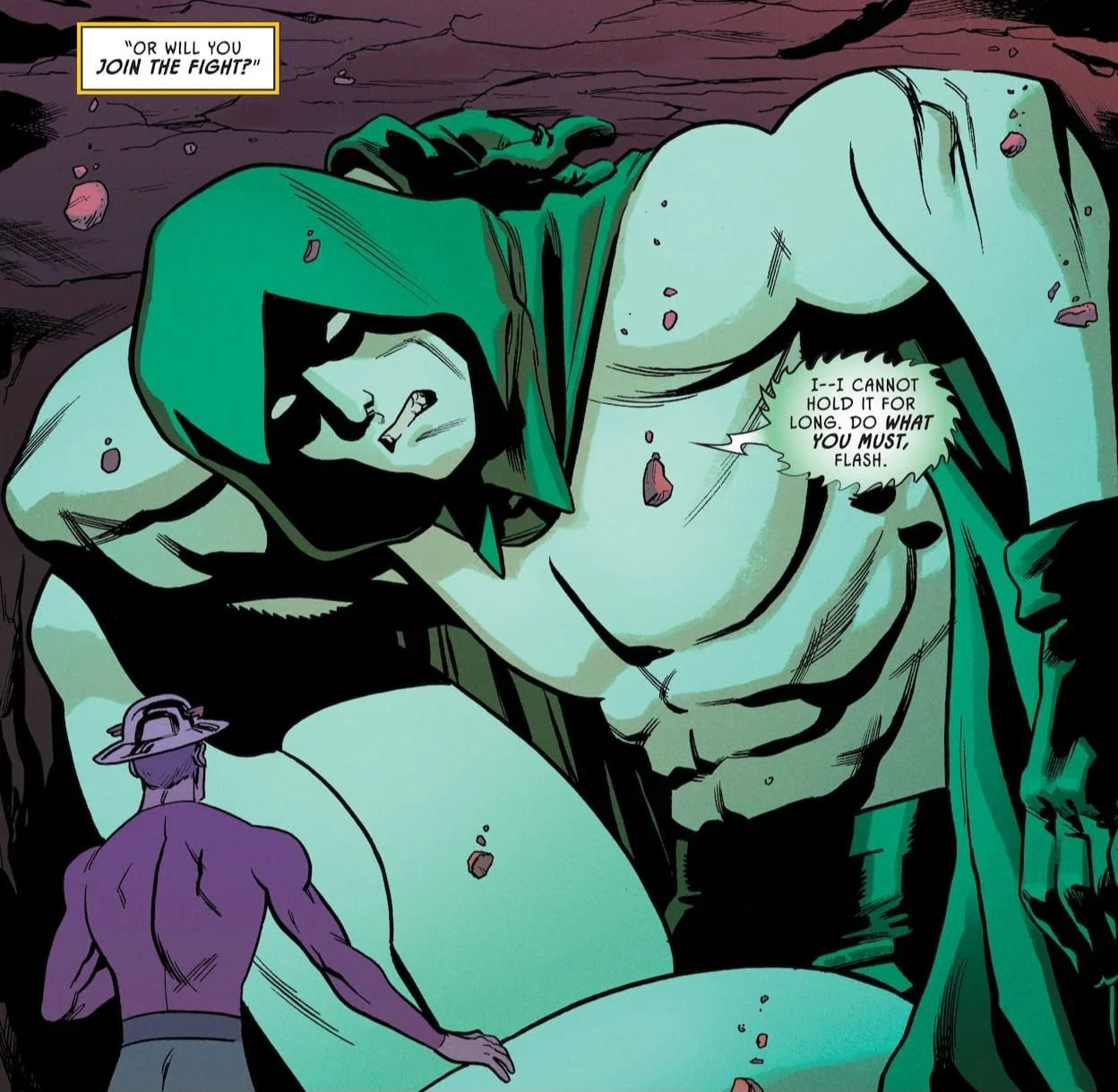
The Spectre: Green, serrated balloons convey his pain and otherworldly presence.
Action Sequences: Pink outlines tracing Thunderbolt across the Spectre’s face add a supernatural flair that enhances the grit and tension of the fight.
Guidry’s visual storytelling not only amplifies the drama but also ensures the issue feels dynamic, readable, and emotionally resonant.
The Final Verdict
JSA #18 is a satisfying, explosive conclusion to the "Year One" saga. While it might not reinvent the wheel in the same way Batman: Year One did decades ago, it stands as a perfect example of how to modernize a classic team without losing their soul.
Lemire and Guidry have crafted a story that honors the legacy of the Justice Society while making them feel relevant for 2026. It’s smart, it’s beautiful to look at, and it ends on a note that makes the future of the series look incredibly bright.
Overall, JSA 18#, this is a must-read for any JSA fan. It hits the high notes, avoids the lows, and proves that the world's first superhero team is still one of its best.