
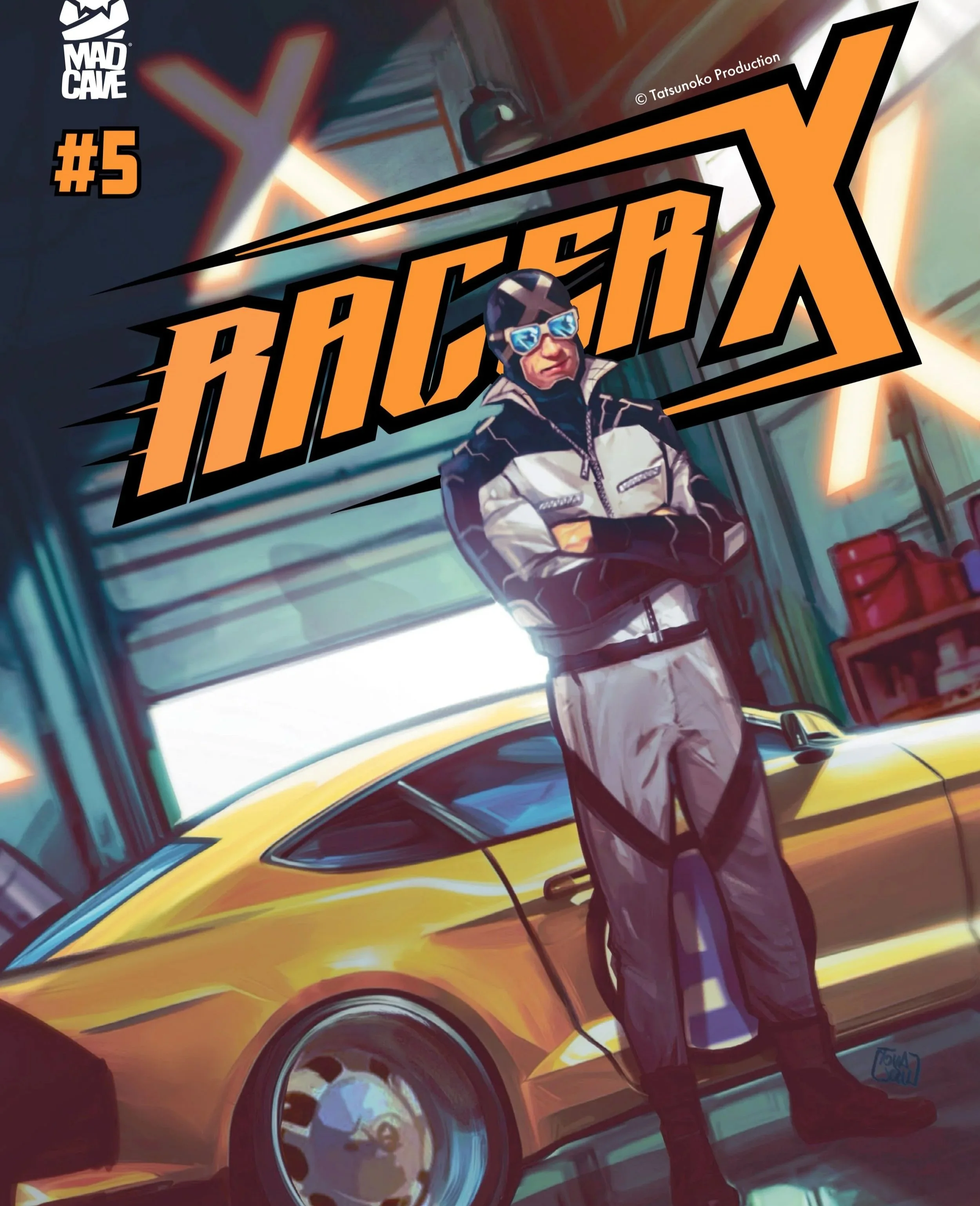
Writer: Mark Russell
Artist: Nuno Plati
Colorist: Giada Marchisio
Cover Artist: Francesco Tomaselli
Racer X #5 pulls away from the immediate orbit of Speed Racer and, in doing so, sharpens its own identity. Where previous issues often felt like they were moving in tandem with the larger story, this chapter isolates Racer X within the machinery he has been trying to dismantle. The result is a tighter, more focused issue that leans heavily into one core idea: survival.
This is not just about staying ahead in a race. It is about navigating a system designed to consume anyone who falls behind. The world of Racer X has always been hostile, but here it feels more deliberate, more targeted. Every move against Racer X feels coordinated, like the system itself is adapting to him.
By splitting its attention between Racer X in the field and Dante Ferno behind the scenes, the issue draws a clear parallel between two very different approaches to that same brutal reality. It is not just a structural choice. It is a thematic one, and it gives the issue a cohesion that makes it stand out from earlier chapters.
Two Stories, One Philosophy
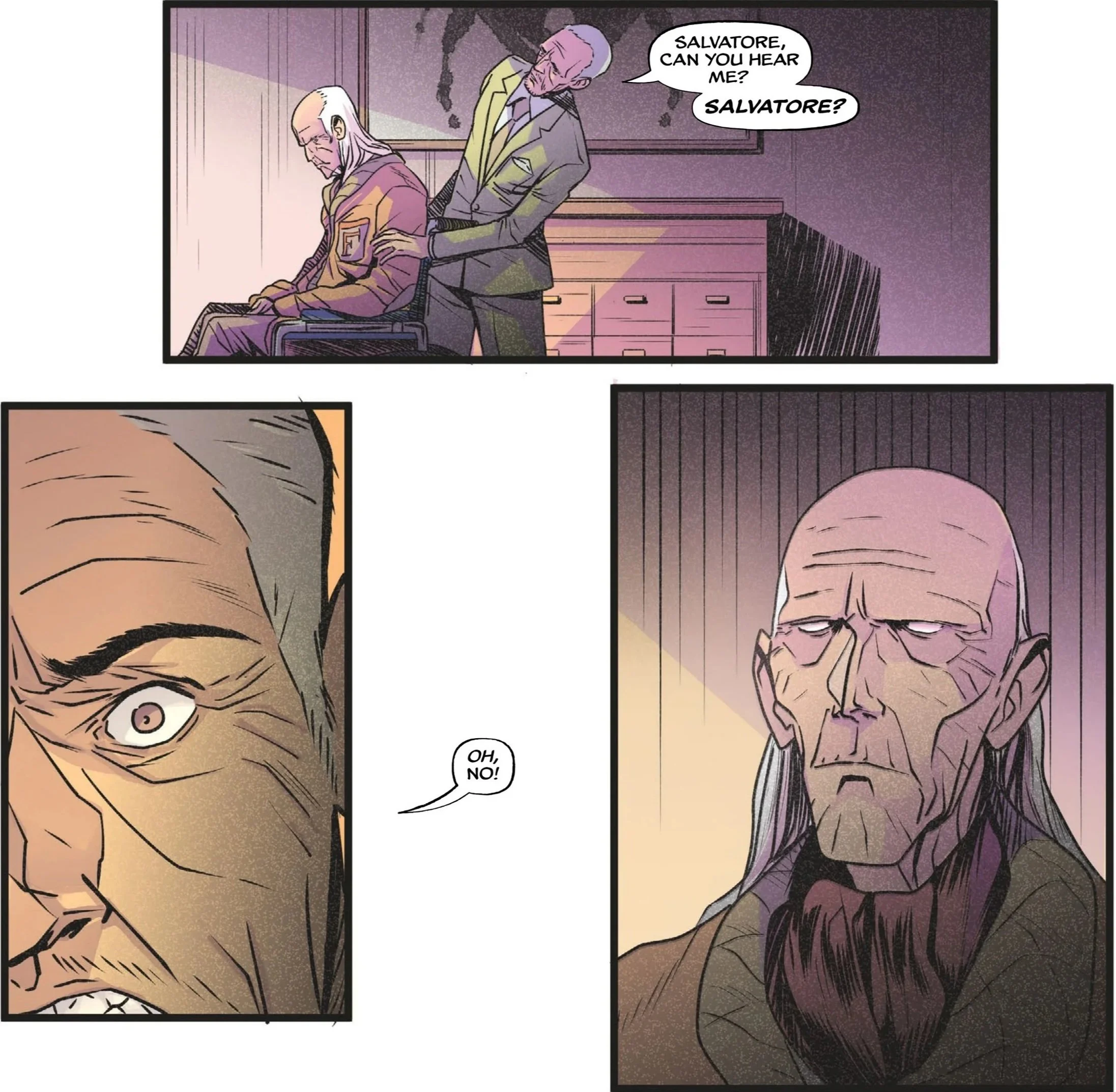
The chilling reveal that Dante Ferno has stuffed his father’s corpse.
The structure of the issue is one of its biggest strengths. On one side, Racer X executes a precise operation against the Tiger Syndicate, using a proxy to retrieve his winnings while avoiding a direct confrontation. On the other, Dante Ferno deals with pressure from the Tiger Syndicate and asserts control in a way that is equal parts calculated and deeply unhinged.
These threads are not just running alongside each other. They are in conversation, constantly reinforcing and contrasting one another.
Racer X frames his actions as part of a larger plan to disrupt the Syndicate’s money flow. Every move is strategic, every risk measured. Even when he is being chased, there is a sense that he is thinking several steps ahead, anticipating reactions and adjusting on the fly. Survival, for him, is about control, preparation, and understanding the system well enough to exploit its weaknesses.
Dante, by contrast, represents a far more chaotic version of that same instinct. His response to pressure is not to stabilize the system but to dominate it through fear and unpredictability. Where Racer X works within the cracks of the system, Dante reshapes it through force.
The reveal of his father’s preserved body is one of the most unsettling moments in the series so far. It is shocking on the surface, but it also works on a deeper level. To Dante, the past is not something to honor or learn from. It is something to control, display, and ultimately discard once it no longer serves a purpose.
When he poisons Mr. Tate and casually reframes it as progress, the message is clear. The old rules are gone. Only power remains, and those who cannot adapt are simply removed from the equation.
Racer X on the Run
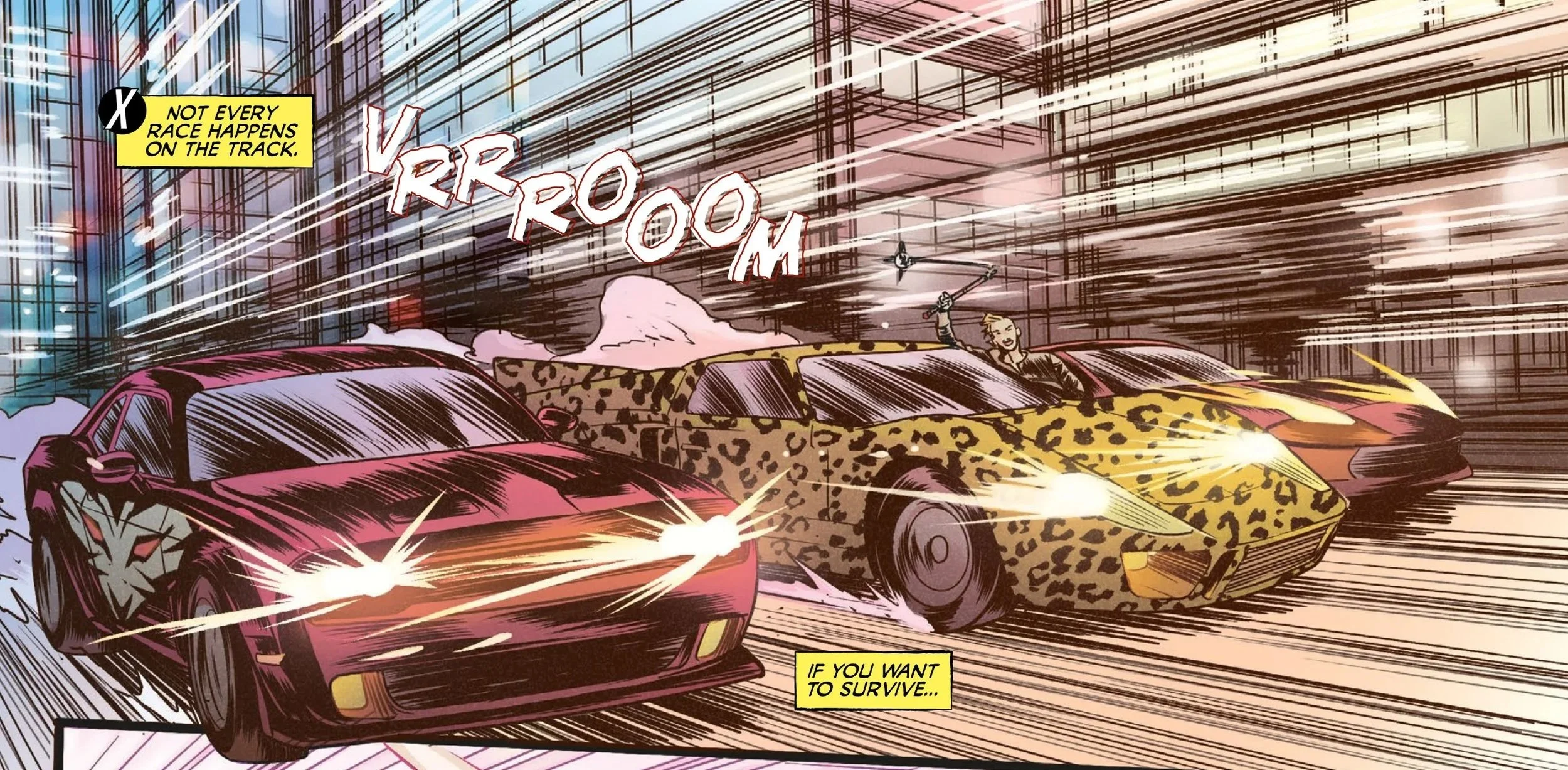
Racer X outruns some Tiger Syndicate toadies.
The central action sequence follows Racer X as the Syndicate attempts to box him in and force a confrontation. This is where the issue feels most in line with the series’ strengths. The tension does not come from whether Racer X can win a race, but whether he can outthink a system that is actively closing in on him.
The Alpha Town setup is particularly effective. Instead of simply chasing him, the Syndicate tries to herd him into a controlled environment filled with hired muscle. It is a smart escalation that reinforces how organized and dangerous this network really is. This is not random violence. It is strategic containment.
Racer X recognizing the trap before it fully closes is key. It reinforces his intelligence and experience, but it also highlights just how thin the margin for error is. If he misreads even one move, he is finished.
His escape is equally satisfying because it relies on instinct and adaptability rather than brute force. The wrecking ball sequence, followed by the tunnel maneuver, is a great example of how the book handles action. Each moment builds logically from the last, and every decision feels like it matters.
There is no excess here. No wasted motion. Everything Racer X does is tied directly to survival.
The final image of him disappearing into a field of flowers that mirror his car’s design is a strong visual and thematic beat. It is not just an escape. It is a statement about how he survives. He blends in. He adapts. He refuses to be caught in a system that relies on predictability.
Dante Ferno’s World
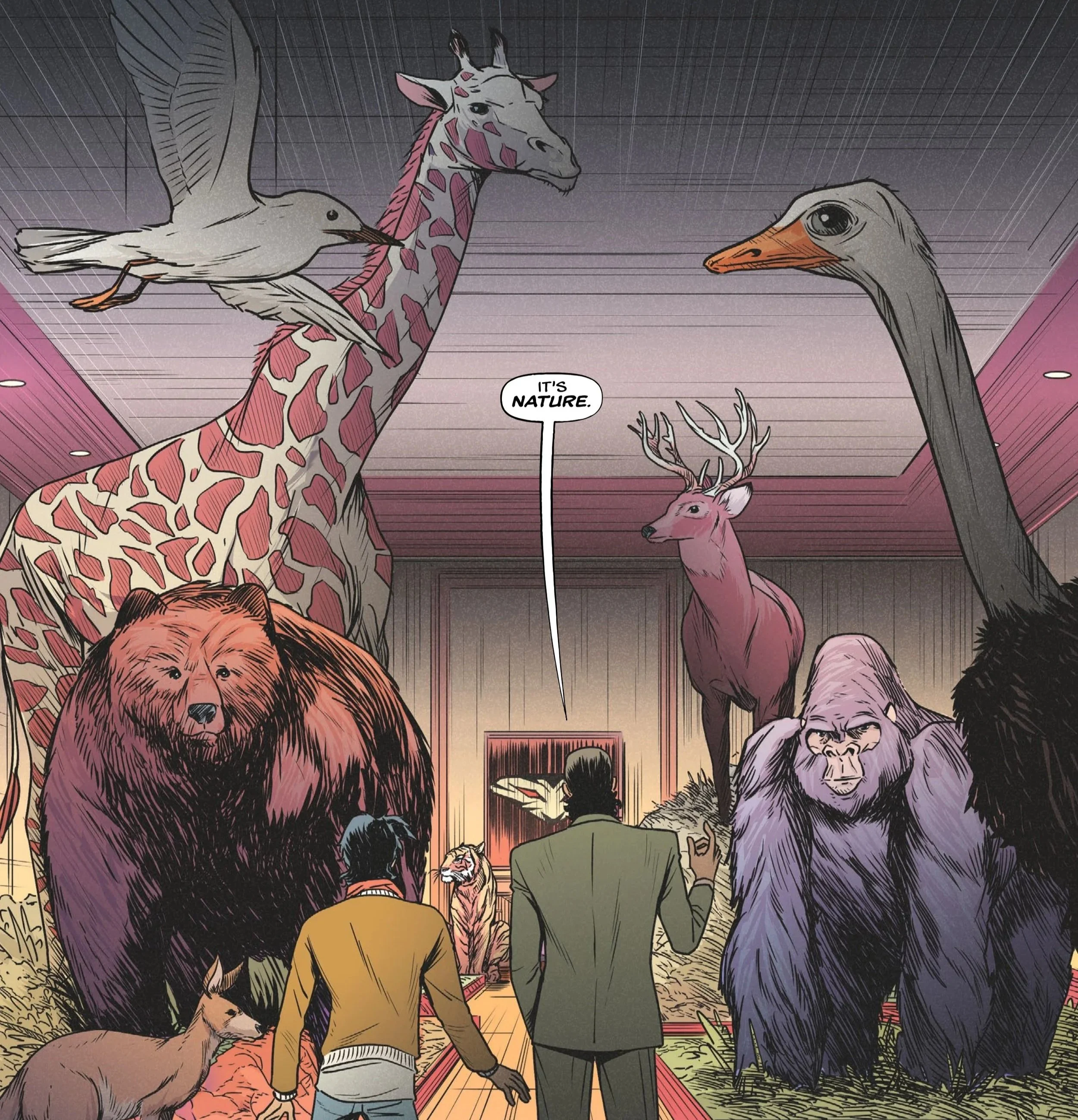
Dante Ferno shows Kim Jugger his taxidermy collection, and also a live tiger.
If Racer X represents controlled survival, Dante Ferno represents survival taken to its most disturbing extreme.
His scenes are quieter in terms of action, but far more unsettling in tone. The boardroom confrontation establishes the stakes, but it is everything that follows that defines his character. There is a calmness to his cruelty that makes it more effective. He is not reacting emotionally. He is making decisions.
The taxidermy reveal is grotesque, but it also feels thematically appropriate. Dante does not just defeat his enemies or outmaneuver them. He preserves them. He turns them into trophies, into reminders of his control. It is not enough for him to win. He needs to display that victory.
That idea carries directly into his interaction with Kim Jugger. Locking him in a room with a live tiger is not just a test of strength. It is a philosophy in action. Adapt or die. Prove that you belong in this system, or become another piece of it.
What makes this subplot work so well is that it mirrors Racer X’s situation without feeling repetitive. Both characters are navigating environments where failure is not an option, but the methods they use could not be more different. Racer X survives through precision and restraint. Dante survives through dominance and fear.
The fact that Jugger ultimately escapes and earns Dante’s approval reinforces the issue’s central idea. Survival is not about morality. It is about outcome. You either make it out, or you don’t.
Themes That Tie It Together
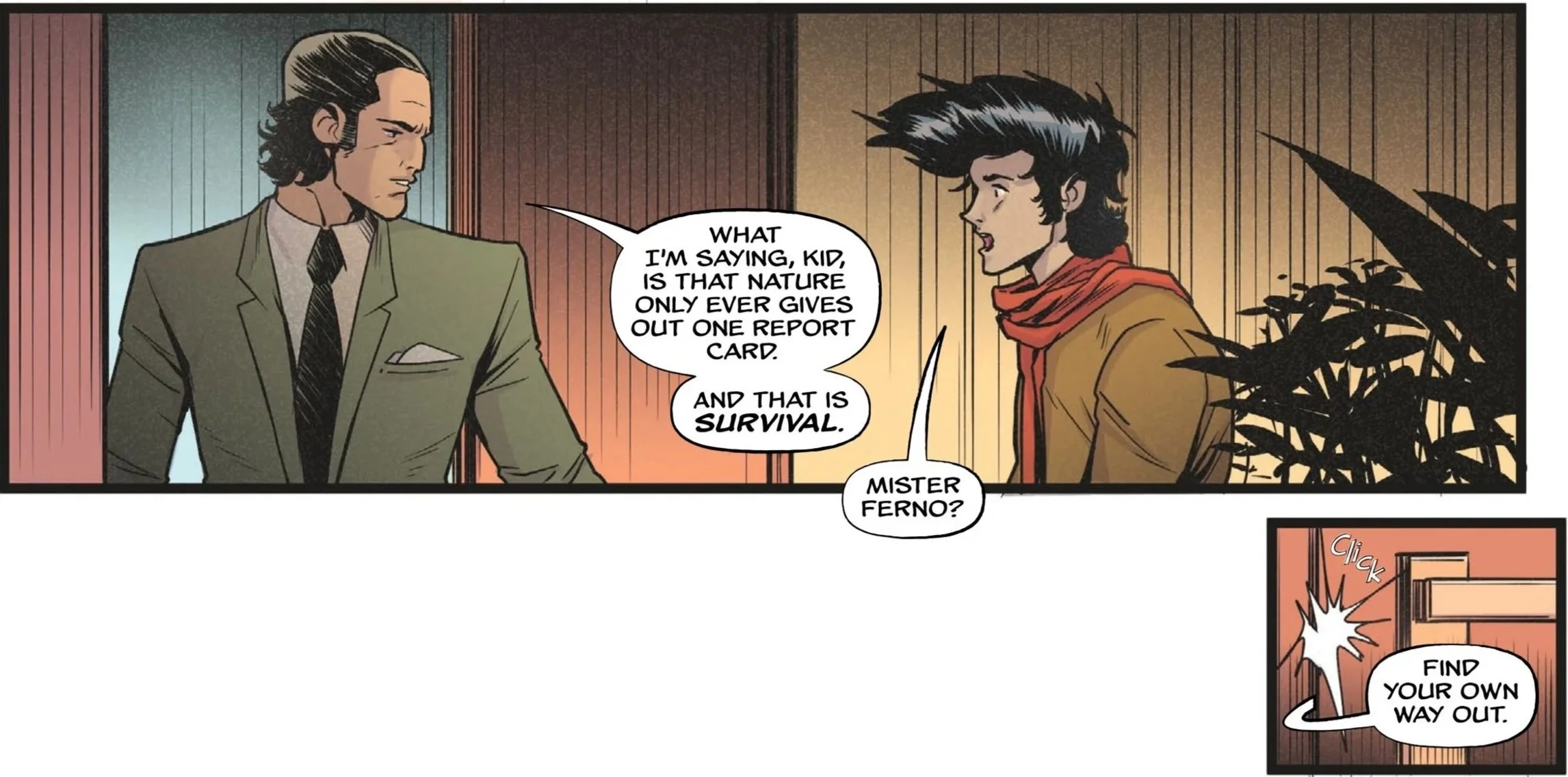
Ferno leaves Jugger to find out if he is the fittest of the CAT Team.
What elevates this issue is how clearly its themes come through without needing to be spelled out. Both storylines circle the same core question: what does it take to survive in a world like this?
Racer X’s internal narration reinforces his isolation. He understands that no one else is going to protect him. Every decision, every risk, falls on him alone. That sense of solitude has been present throughout the series, but it feels especially pronounced here.
At the same time, Dante’s actions show what happens when survival becomes the only guiding principle. There is no loyalty, no legacy, no restraint. Only the next move and the next opportunity to assert control.
By the end of the issue, the two perspectives feel like opposite ends of the same spectrum. One is controlled, the other chaotic, but both are shaped by the same unforgiving environment. The system does not reward kindness or hesitation. It rewards those who can endure.
Art and Presentation
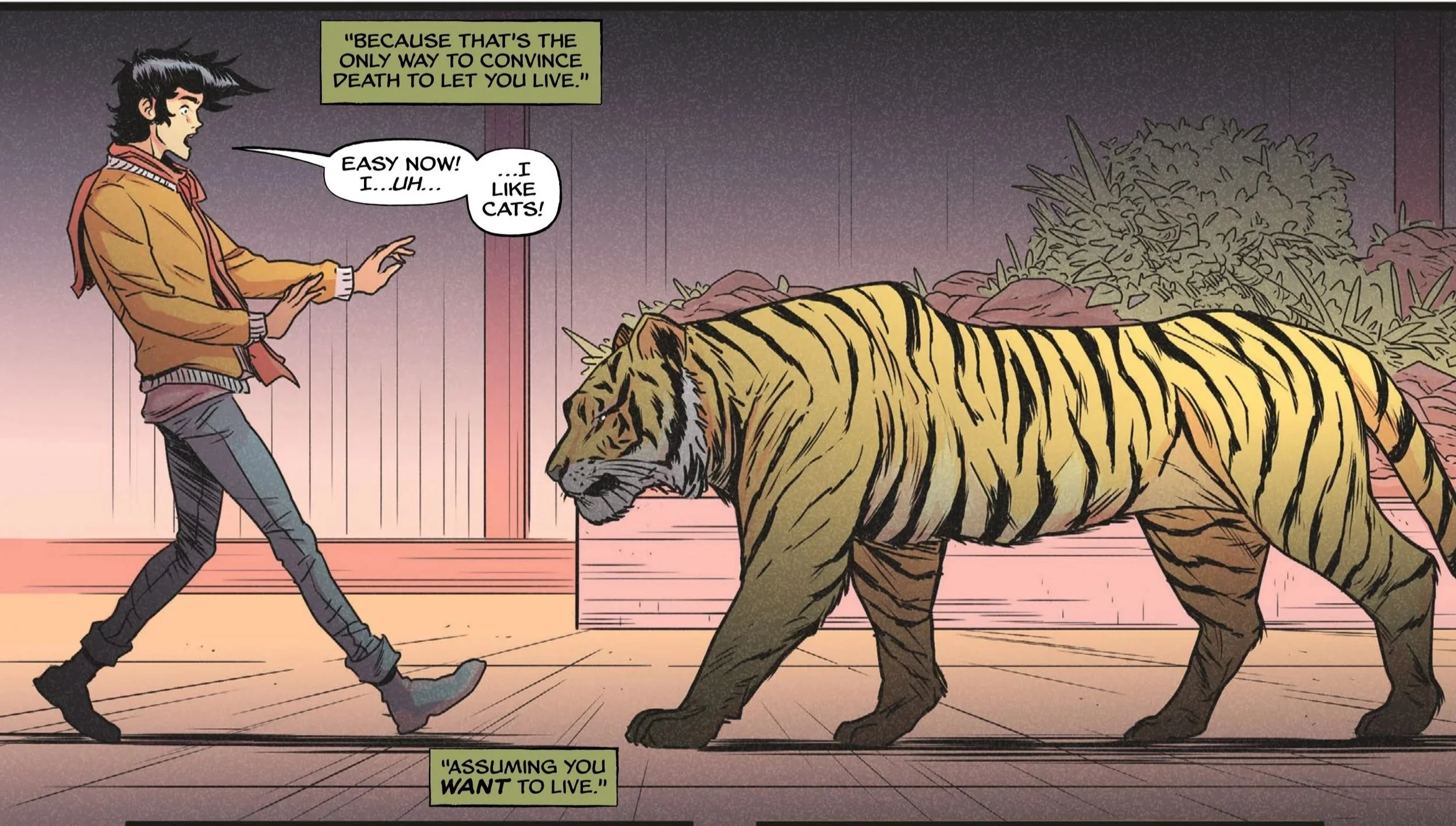
Jugger comes face-to-face with a tiger.
Visually, the issue continues the series’ grounded approach. The action is clear and easy to follow, especially during the chase sequences. There is a sense of momentum without the need for excessive stylization, which fits the tone well.
Where the art stands out most is in the Dante Ferno scenes. The contrast between the sterile boardroom, the eerie stillness of his father’s preserved body, and the raw danger of the tiger creates a strong visual identity for his side of the story. Those moments linger in a different way than the action does.
It may not be the most visually ambitious issue of the run, but it does exactly what it needs to do. It supports the tone, reinforces the tension, and keeps the focus where it belongs: on the characters and the choices they are making.
Final Thoughts and Rating
Racer X #5 is a strong, focused issue that benefits from stepping slightly outside the shadow of Speed Racer. By narrowing its scope and emphasizing theme over spectacle, it delivers one of the most cohesive chapters of the series so far.
The dual narrative structure works exceptionally well, tying together two very different characters through a shared idea of survival. Racer X continues to be a compelling, isolated figure, while Dante Ferno emerges as one of the most unsettling antagonists in the book.
It is not a dramatic reinvention of the series, but it is a confident continuation that reinforces what makes this title stand out. This is not a story about winning. It is a story about enduring.
Rating: 8.5/10
A tense, thematically sharp issue that doubles down on the idea that in this world, survival is not guaranteed, it is earned.