
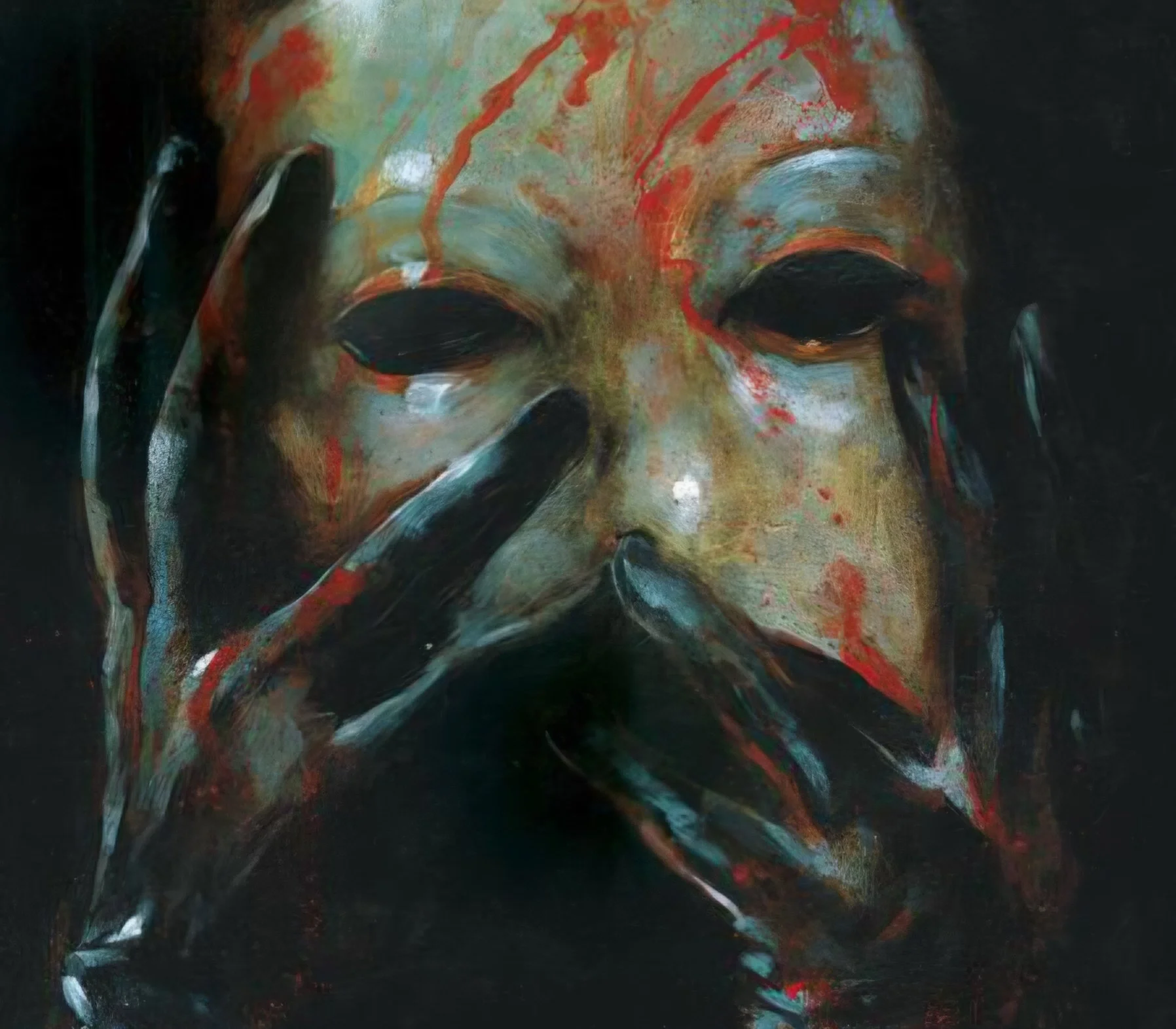
Universe Monsters: Phantom of The Opera is published by Image Comics and is written by Tyler Boss, with art by Martin Simmonds, and lettering by Becca Carey
Recap: The Descent Begins
If you’ve been following the Skybound/Universal Monsters line, you know they aren’t just retreading old ground—they’re digging up the corpses of these classics and giving them a high-fashion, high-horror makeover. After the chilling debut of issue #1, I was dying to see if Tyler Boss and Martin Simmonds could maintain that suffocating, gothic atmosphere without losing the thread of the mystery.
Spoiler alert: Universal Monsters: Phantom of The Opera #2 is a masterclass in visual storytelling that feels less like a comic and more like a fever dream you’d have after falling asleep in the back of a 19th-century theater.
Picking up right after the brutal, public murder of the diva Biancarolli, the Paris Opera House is less a place of art and more a tinderbox of paranoia. Issue #2 hits the ground running with Christine Daaé stepping into a spotlight that feels more like a target.
The issue opens with a stark contrast: Christine is walking the streets of Paris, trying to navigate her sudden rise to fame, when she literally runs into Inspector Raoul Dubert. It’s a moment of levity—a "meet-cute" in a world of shadows—but even then, you can feel the Phantom’s eyes on them. As Christine invites Raoul to her upcoming performance, we see the Phantom watching from the rafters, his presence treated as a literal extension of the architecture.
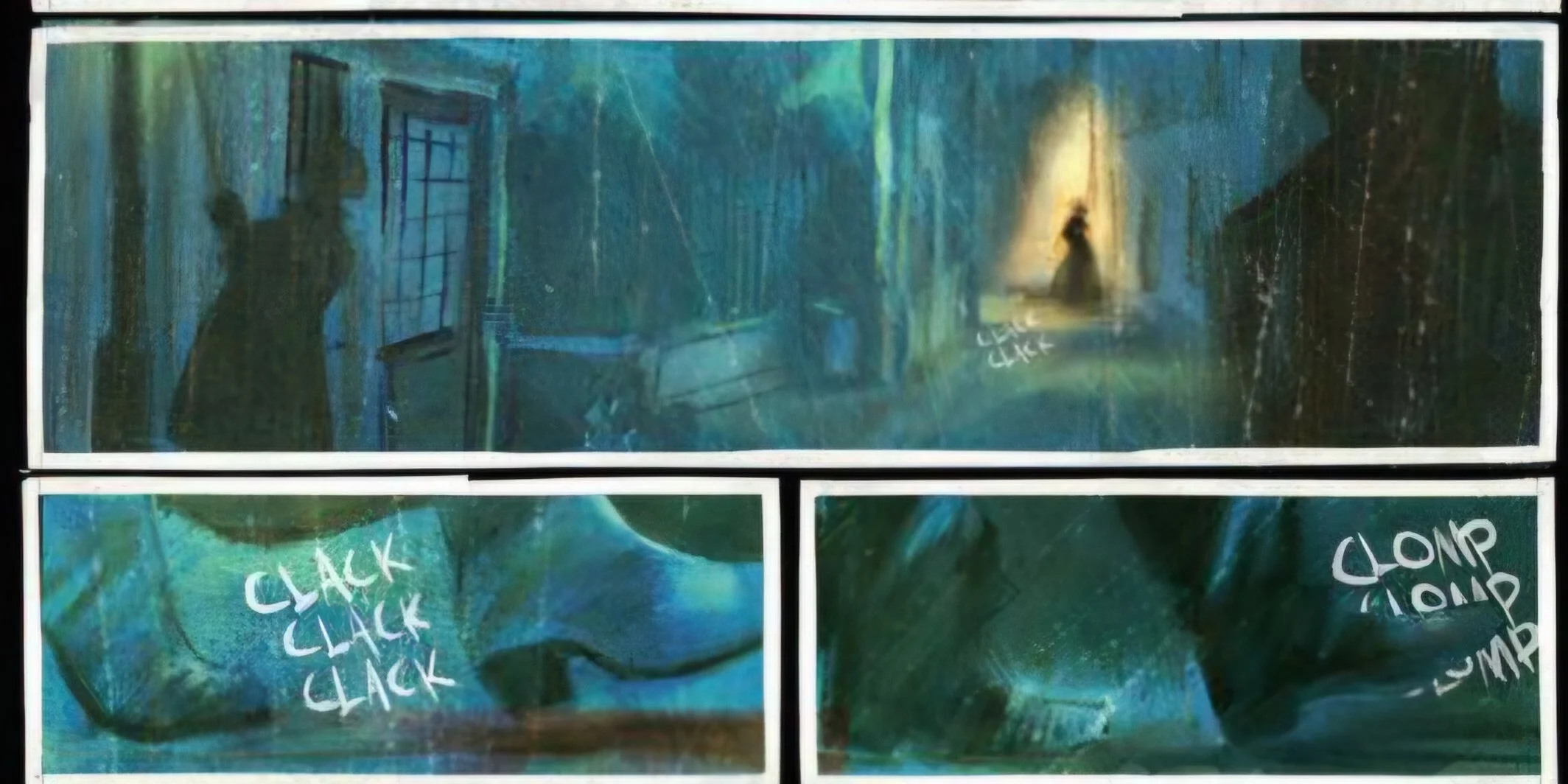
The plot thickens when the theater’s internal politics turn deadly. We’re introduced to Megan, an understudy who isn’t exactly mourning Biancarolli’s demise. In a genuinely terrifying sequence, Christine is lured into a deep storage cellar under the guise of the Maestro's orders. What follows is a claustrophobic nightmare involving a massive swarm of aggressive rats—an "eyes in the dark" moment that Simmonds renders with haunting precision. Though Christine is saved by Monsieur Garron and Anatole, the trauma lingers.
The climax of the issue, however, belongs to the understudy. After Christine collapses during her performance (sabotage?), Megan receives a mysterious note directing her to the roof. She thinks she’s heading to a romantic rendezvous with a lover; instead, she finds the Phantom. The issue ends with a haunting visual of a white rose mixed with blood as Megan falls to her death, marking the Phantom’s second major kill in the series.
Story: Obsession and Shadow
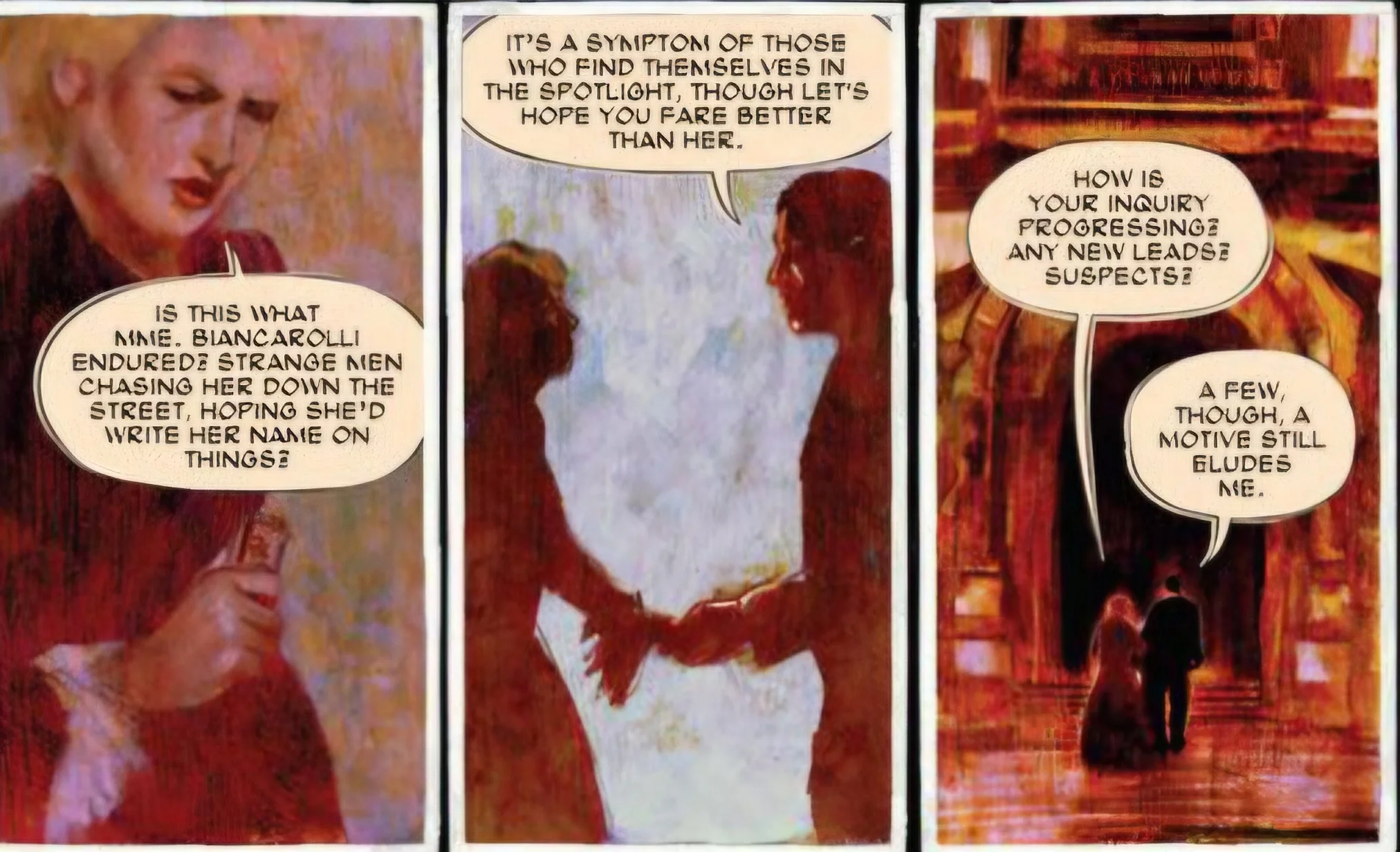
Tyler Boss is doing something really interesting here by leaning into the "ghost story" aspect of the Phantom. In most adaptations, the Phantom is a man hiding in the basement. Here, he feels like a specter—a force of nature that haunts the very idea of the opera.
What I loved most about the writing in this issue is the focus on obsession versus fame. We see Christine struggling with the weight of her new position, and Boss uses the character of the Phantom to highlight the toxic nature of that attention. The Phantom doesn’t just love Christine; he wants to curate her entire existence. When he hears that Raoul is attending the show, his reaction isn't just jealousy—it’s a cold, calculated dismissal. He views Raoul as a "distraction" from the art, which adds a layer of psychological horror that most monster books miss.
The dialogue is sparse but punchy. Boss lets the visuals do the heavy lifting, which is a smart move when you have an artist like Martin Simmonds. The "backstabbing" in the opera house—both literal and metaphorical—is handled with a grit that makes this feel like a 90s Vertigo book (think Sandman meets The Department of Truth).
Pacing: A Tightrope Walk of Tension
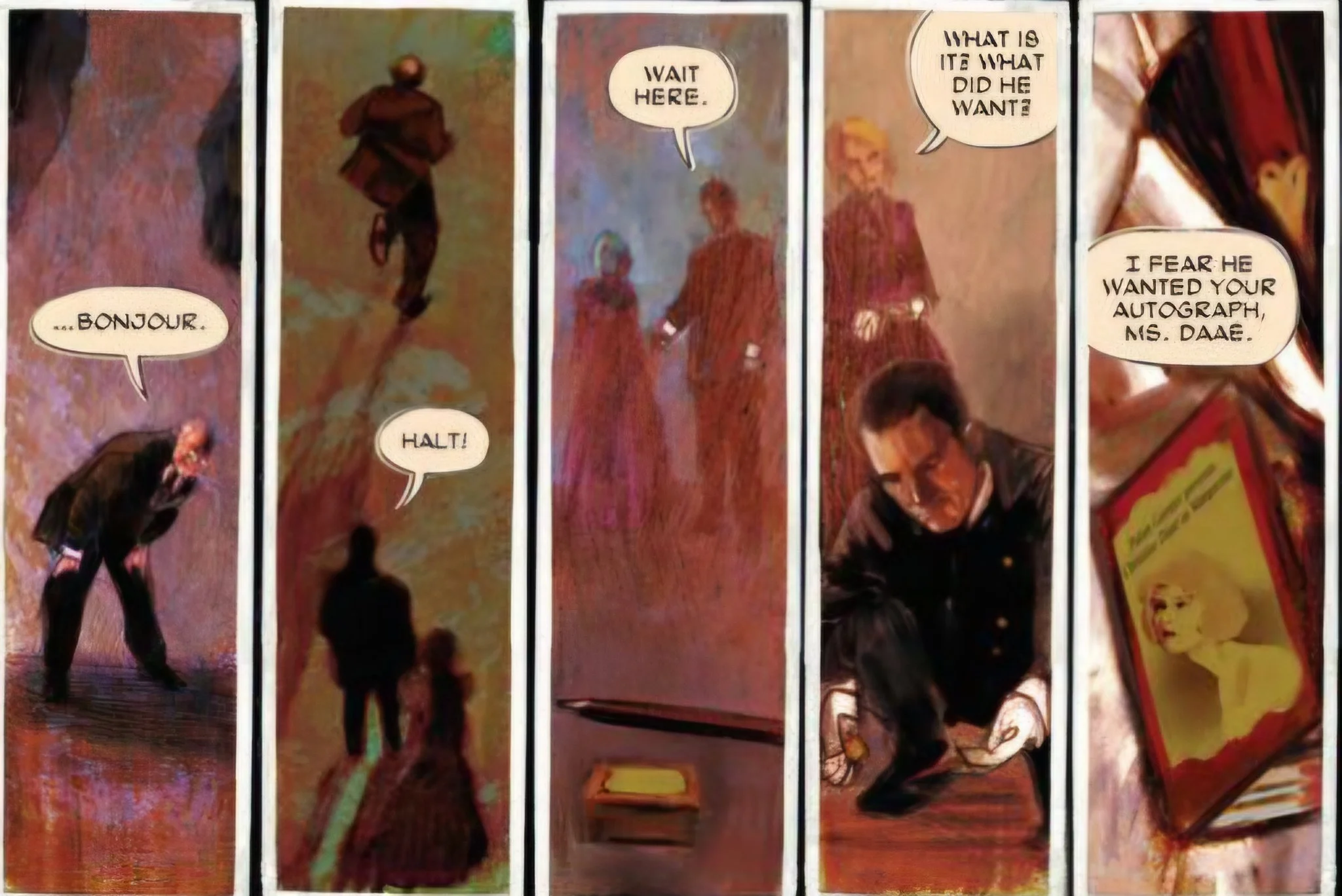
If I have one minor gripe, it’s that the pacing is relentless. The issue moves from a street conversation to a rat-infested cellar to a rooftop murder with very little room to breathe.
However, the "Descent into the Cellar" sequence is a perfect example of how to build tension. The transition from the bright, neon-tinged lights of the stage to the monochrome, oppressive blacks of the basement creates a physical sensation of dread. The story doesn’t linger on the mystery of "who" the Phantom is—we know who he is—but rather on the mystery of "when" he will strike next. This keeps the reader on edge, making the 24 pages feel like they fly by in seconds.
Art: Simmonds’ Operatic Nightmare
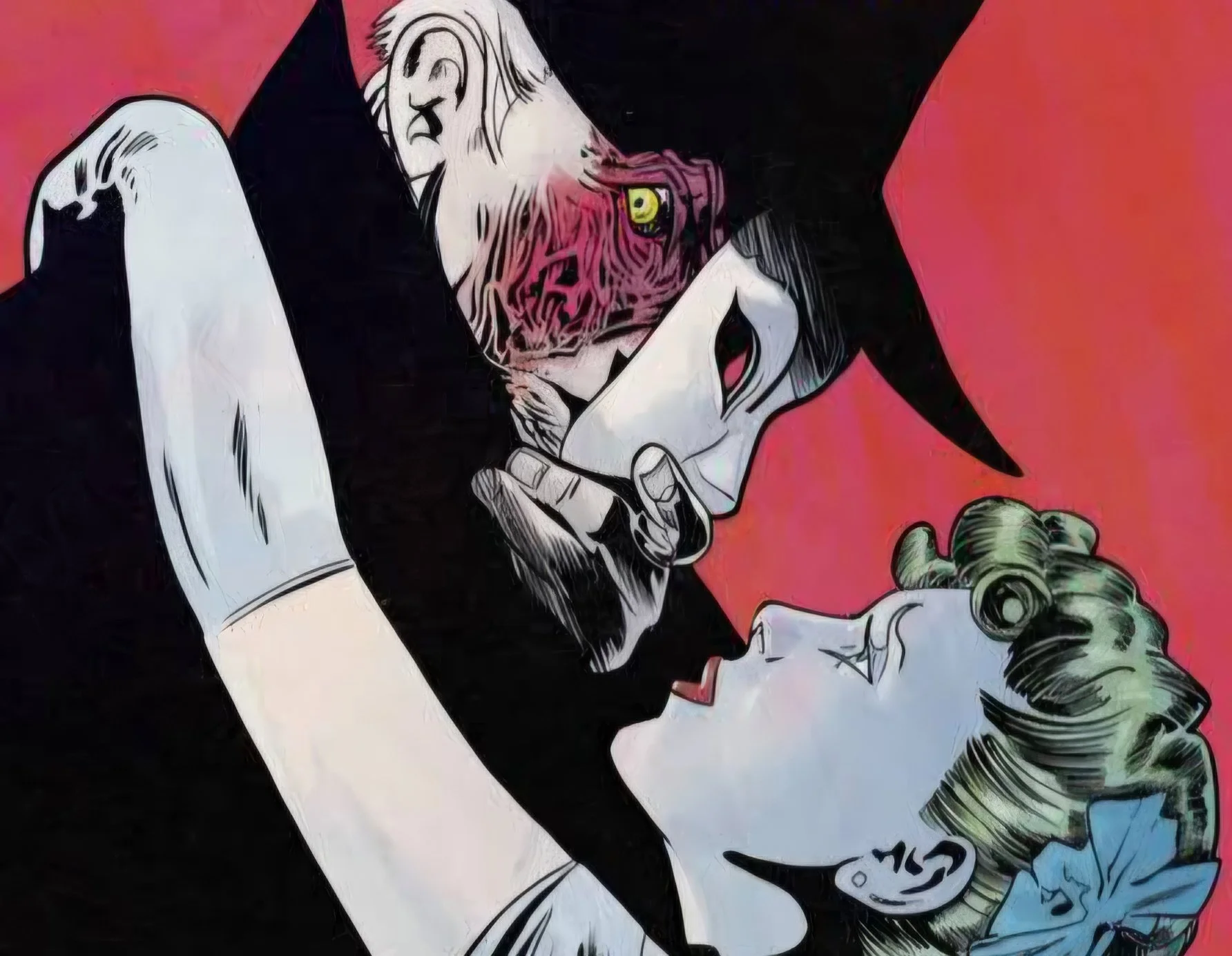
Let’s be real: we’re all here for Martin Simmonds. If there was an Eisner category for "Most Likely to Give a Reader a Beautiful Nightmare," he would win it every year.
Simmonds’ style in Phantom #2 evokes the Belle Époque fever dream of Henri Toulouse-Lautrec. There’s a specific use of "bloody reds" and "lead whites" that makes every page feel like a haunted oil painting. The way he draws the Phantom is particularly genius—he’s often just a silhouette with a stark white mask, blending into the shadows of the opera house so effectively that you find yourself scanning the backgrounds of every panel just to make sure he’s not lurking there.
His approach to sound and atmosphere is also unique. During the opera sequences, the colors shift into bright neons, capturing the artificiality of the stage. But as soon as we move behind the curtain, the palette becomes muddy and grim. The rooftop scene, with the falling white rose and the bright red drops of blood against the dark Paris skyline, is easily the most iconic image of the 2026 comic year so far. It’s the kind of visual storytelling that makes you want to pause and just stare at the page layout.
The Final Verdict
Universal Monsters: Phantom of The Opera #2 is a gorgeous, haunting addition to the Skybound lineup. While the plot follows some familiar beats of the Phantom mythos—the jealous understudy, the secret meetings, the cellar traps—it’s the execution that makes it feel fresh.
Tyler Boss is crafting a story about the dangers of being "seen," while Martin Simmonds is providing the most atmospheric art in the industry. It’s a "duet of romance and horror" that actually lives up to the hype. If you’re a fan of gothic horror or just want to see what happens when you turn a classic monster movie into a psychological thriller, this is a must-pull.