
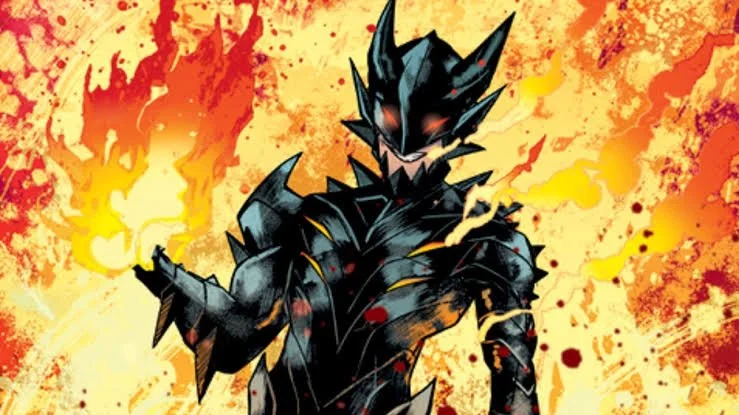
Fireborn is published by Image Comics with writing credits by Curt Pires and Franklin Jonas, art by Patrick Mullholland, colours by Mark Dale.
The Recap: A Rich Kid and a Radioactive Egg
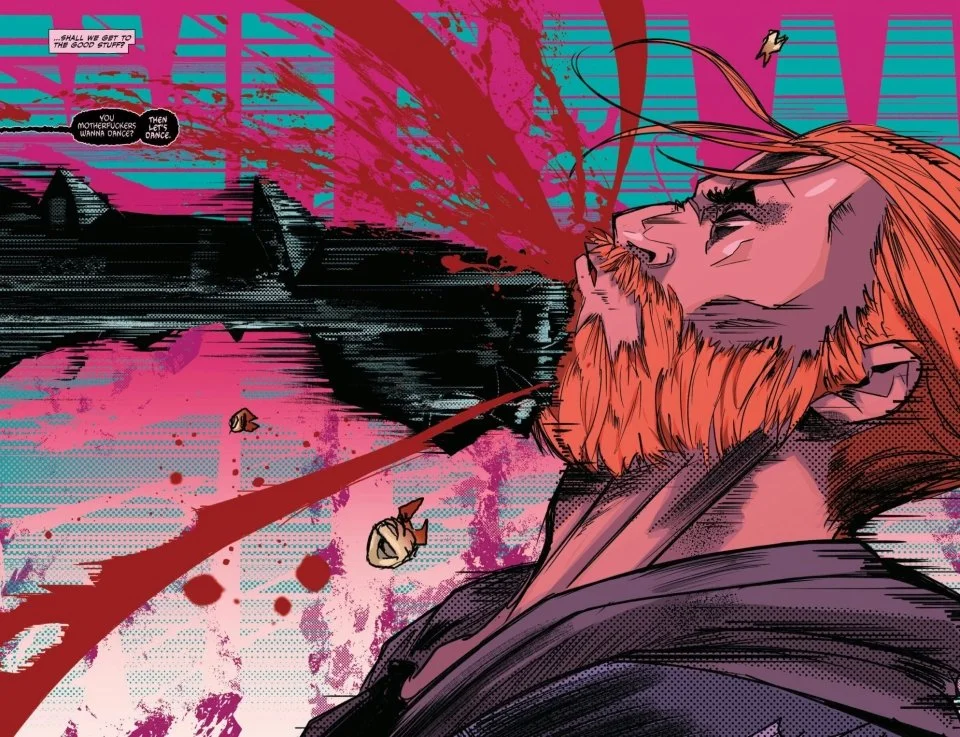
When the solicitations for Fireborn #1 first hit the stands, the hype was immediate. You had Curt Pires (the mastermind behind Lost Fantasy and Indigo Children) teaming up with a surprising new creative voice, Franklin Jonas, and the high-octane art of Patrick Mulholland. Marketing it as a "high-octane fusion of fantasy and superheroes," Image Comics promised something that felt like Invincible meets Skyrim.
Now that the oversized debut is finally in our hands (released April 15, 2026), does it actually live up to the gargantuan expectations? Or is it just another "failson with powers" trope that burns out before the second issue? Let’s dive deep into the fire.
The story centers on Aaron Hillburg, who is—to put it mildly—a massive disappointment to his billionaire father. Aaron is your classic "rich-kid failson." He spends his nights ghosting responsibilities, hopping across New York City rooftops, and nursing a deep-seated resentment for his dad's corporate empire.
The inciting incident happens when Aaron stumbles upon a mysterious, floating dragon egg. It doesn't just sit there; it bonds with him in a visceral, mystical surge, igniting a hidden lineage of ancient magic within his DNA. Suddenly, Aaron isn't just a parkour-loving brat anymore; he’s the Fireborn.
But magic comes with a target on your back. Before Aaron can even figure out how to work his new "armor," he’s being hunted by a laundry list of supernatural threats: biker cultists with magic guns, outlaw wizards, and warlords from a place called "The World Beneath." By the end of the issue, the stakes are clear—everyone wants that egg, and they’re willing to burn New York to the ground to pry it out of Aaron’s (ideally dead) hands.
The Story: Pires, Jonas, And “The Coming of Rage”
Writing a spinoff series set in a pre-existing universe (Lost Fantasy) is always a gamble. You have to please the hardcore fans while making it accessible for the "new comic book day" casual reader. Curt Pires and Franklin Jonas mostly succeed here, though the writing definitely has a specific "edge" that might polarize some.
The core of the story is what some critics are calling a "coming of rage" journey. Unlike Mark Grayson in Invincible, who wants to live up to his father, Aaron Hillburg wants to tear his father’s world down. This gives the protagonist a much sharper, more cynical perspective.
However, there is a "but." Some of the dialogue leans heavily into the edgy, mid-2000s "cool guy" archetype. There’s a lot of swearing—sometimes it feels organic to a frustrated teenager, and other times it feels like the writers are trying a bit too hard to prove this isn't a "kids' book." While the banter between Aaron and his father is biting and effective, some of the supporting cast (like the biker cultists) feel a bit like stock villains. They look cool, but they don't say much of substance yet.
What’s most impressive is how Franklin Jonas handles his debut. For a first-timer, the scripting is tight. He and Pires manage to establish a massive amount of lore—the connection to Lost Fantasy, the mechanics of the dragon egg, and the hierarchy of the magical underworld—without the issue feeling like a dry Wikipedia entry.
Pacing: The "In Media Res" Gamble
Fireborn #1 is a giant-sized issue, and it uses every bit of that page real estate. The pacing is relentless, but it makes a controversial choice right out of the gate: starting in media res.
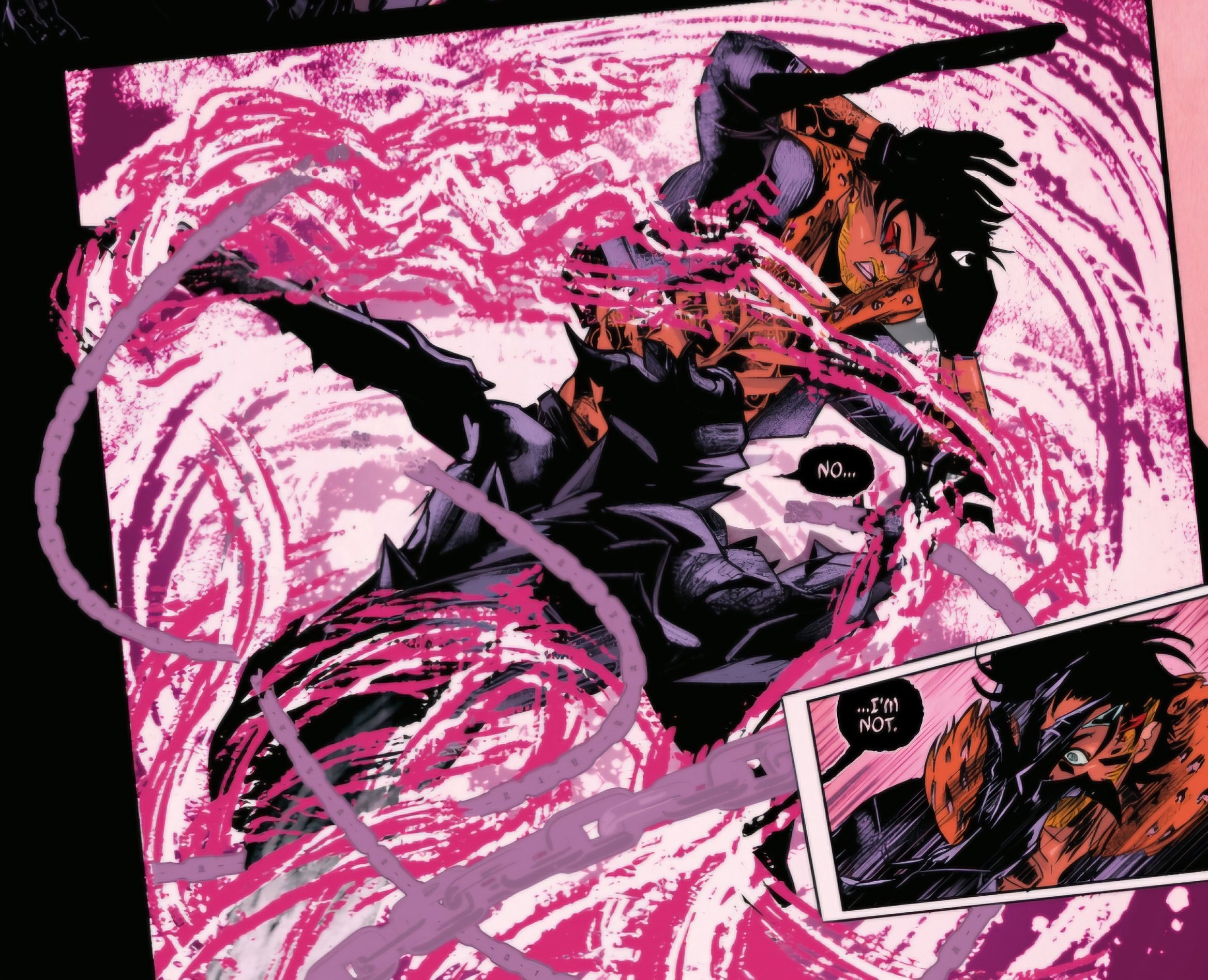
We open on an absolute bloodbath of an action scene before jumping back into a series of flashbacks to explain how we got there. For some readers, this is a tired trope that feels like a shortcut to "excitement." Personally, I think it works here because it showcases Mulholland’s art immediately. It tells the reader, "Hey, stick around for the talking, because this is the level of action you’re getting."
The middle of the book slows down to focus on Aaron’s domestic life and his strained relationship with his father. While these scenes are necessary for character building, they do create a bit of a "stop-and-go" rhythm. You’ll have ten pages of gorgeous, neon-soaked violence followed by ten pages of heavy dialogue. It’s a dense read, and while it’s marketed as a fast-paced epic, you’ll actually spend a good 30 minutes digesting everything packed into this oversized debut.
The Art: Patrick Mulholland is the MVP
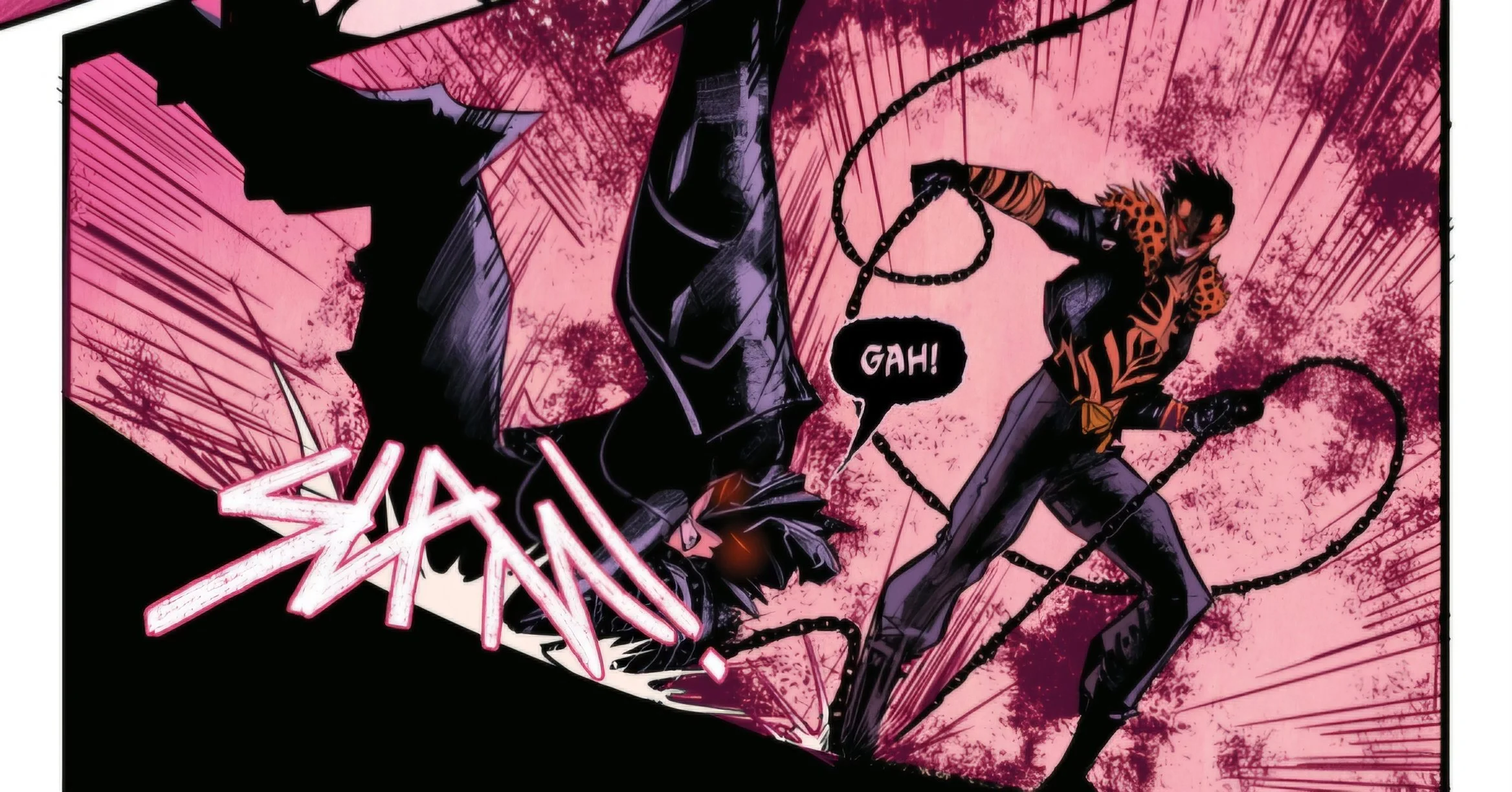
If you buy this book for one reason, let it be the art. Patrick Mulholland (of Power Rangers fame) is doing the best work of his career here.
The character designs are phenomenal. Aaron’s "Fireborn" form looks like a sleek, modern update to the classic "knight in dragon armor" aesthetic—very Skyrim but with a superhero silhouette. The way he draws movement makes the rooftop parkour scenes feel kinetic and fluid, but where he really shines is in the magical combat.
The layouts are incredibly creative. Mulholland isn't afraid to break the panel borders, using dragon fire and energy blasts to guide the reader’s eye across the page. There are several double-page spreads that are genuine "stop and stare" moments.
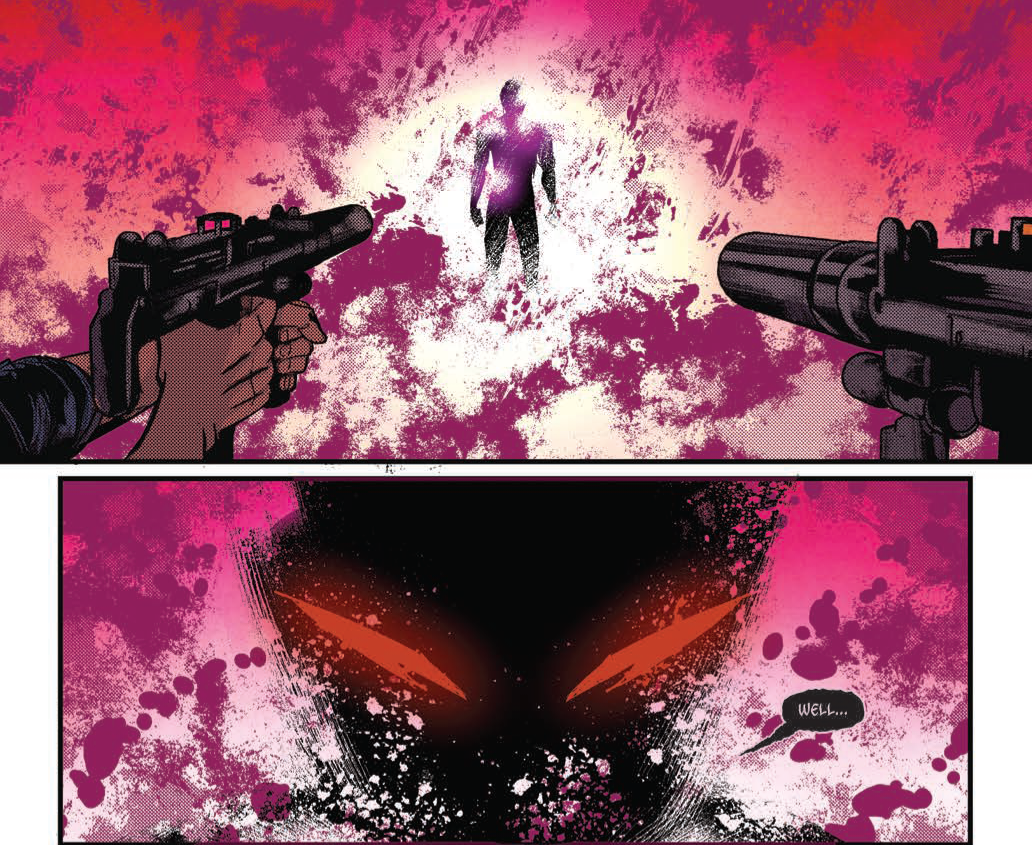
We also have to talk about Mark Dale’s colors. The palette is dominated by vibrant pinks, oranges, and deep purples. It gives the book a "neo-fantasy" vibe that sets it apart from the more grounded, grittier look of other Image titles. Some might find the abundance of bright pink energy effects a bit overwhelming (it literally glows on some pages), but it perfectly captures the high-fantasy-meets-urban-sprawl tone the series is aiming for.
The Final Verdict
Fireborn #1 is a loud, proud, and occasionally messy debut. It’s an ambitious start to a new corner of the Lost Fantasy universe that feels distinct enough to stand on its own two feet.
The Pros:
Visual Masterclass: Mulholland and Dale are a dream team. The book is gorgeous.
Strong Protagonist Hook: Aaron Hillburg is more than just a hero; he’s a flawed, angry protagonist that provides a fresh take on the "chosen one" trope.
World-Building: The fusion of bikers, wizards, and billionaires creates a sandbox that feels like it has endless stories to tell.
The Cons:
Dialogue Tropes: The "edgy" dialogue and constant swearing can occasionally pull you out of the immersion.
Pacing Shiplash: The transition from in media res action to domestic drama is a bit jarring.
Character Overload: It introduces a lot of villains very quickly, making it hard to remember who is who by the final page.
If you’re a fan of Invincible, Radiant Black, or the recent Absolute Batman run, this is a mandatory pick-up. It has that same "anything can happen" energy that made early Image Comics so special. It’s not perfect, but it’s one of the most exciting first issues we’ve seen in 2026 so far.
Pick it up for the art, stay for the dragon-fueled chaos, and ignore the slightly cringey "rich kid" angst. The fire is definitely burning—let’s see if they can keep the heat up for issue #2.