
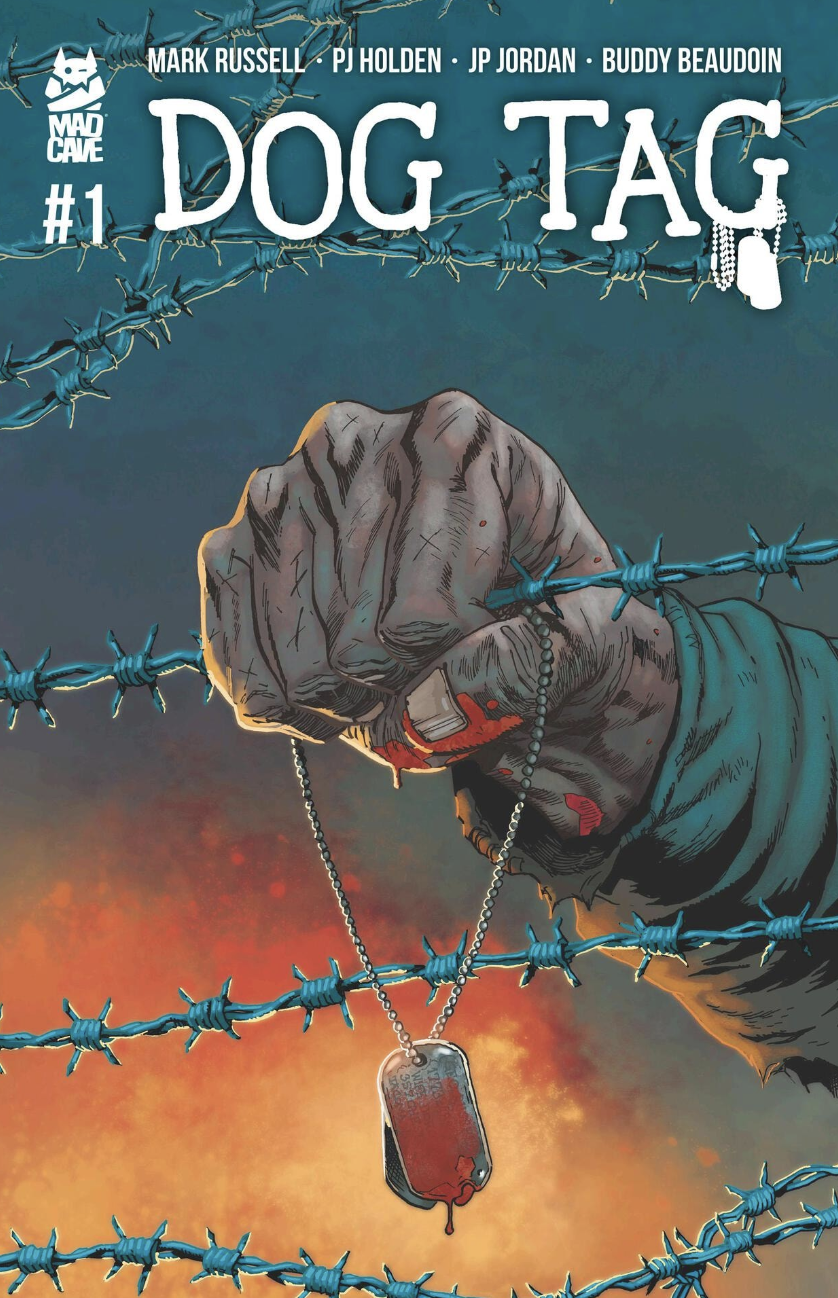
Cover Art for Dog Tag #1
Written by Mark Russell
Pencils and Inks by PJ Holden
Colors by JP Jordan
Letters by Buddy Beaudoin
Cover Art by PJ Holden and JP Jordan
Prior to this last year, war books typically weren’t my first choice to take off the shelf. When I’m looking for a comic to dive into after a day of work, I’ll go with something from the big two or something that has to do with horror or dark fantasy. Slowly but surely, though, I’ve been coming around to comics based on the major wars in our history. Rick Remender’s Escape is one of the best comics I’ve read over the past few years, and I’m proud to say Mark Russell’s Dog Tag follows in Escape’s footsteps to deliver a fantastic war story from a slightly different angle than you’d expect. This six-issue series gets off to a great start with issue #1 and I’m really looking forward to how this story develops over the course of its run. Let’s get into it. Spoiler Warning Now in Effect for Dog Tag #1
A Different Perspective
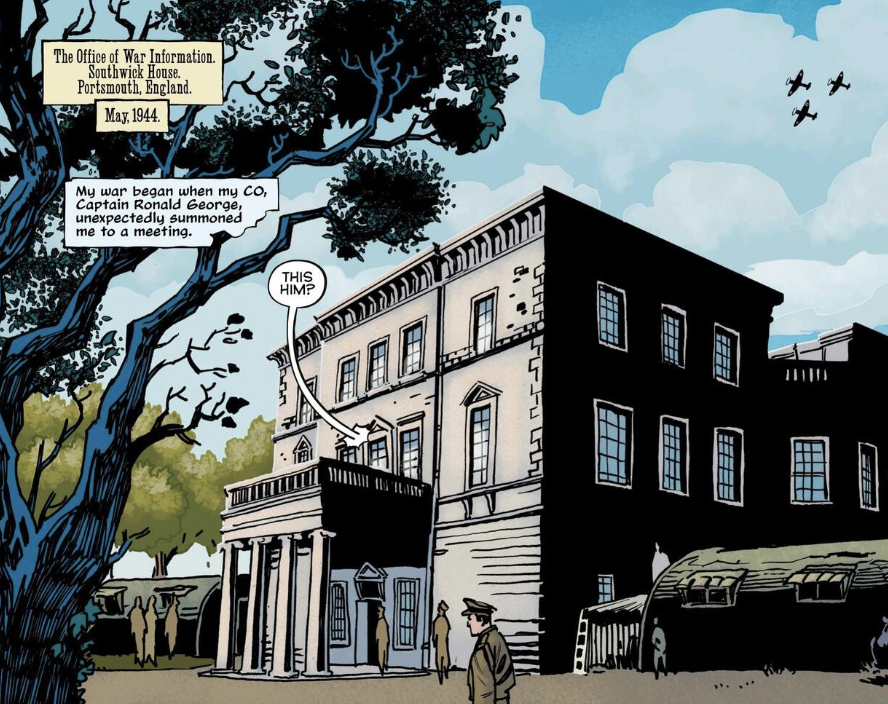
Dog Tag follows the story of Tom Fuller, a United States soldier, during the final year of World War II, from the invasion of Normandy on D-Day to the surrender of the Japanese. This first issue of the limited series takes us through the month before D-Day and its immediate aftermath. So many war stories, from T.V. to the movies to video games and other books, have told the story of the Allies' assault on the beaches of France. We’ve all seen or played through the typical scenes of soldiers in the amphibious vehicles getting ready to storm the beach with the machine gun nests shooting a million bullets a minute to cut them down. We’ve seen the heroic moments and felt the emotion of the troops. This story, however, takes a much different approach and perspective to these violent moments in history.
Fuller isn’t sent to the frontlines, he isn’t sent to storm any beaches, and he doesn’t even need to hold a rifle in his hand for most of this first issue. Fuller’s assignment is to help with one of the most important misinformation campaigns in U.S. history. Whereas most of the U.S. and Allied armies are getting ready to lay their lives on the line in Normandy, Tom is sent to join General George Patton and the First United States Army Group (FUSAG) by the Dover area in England. FUSAG is supposed to be getting ready to invade Europe and help take it back from Hitler’s forces, but the issue is… FUSAG doesn’t exist.
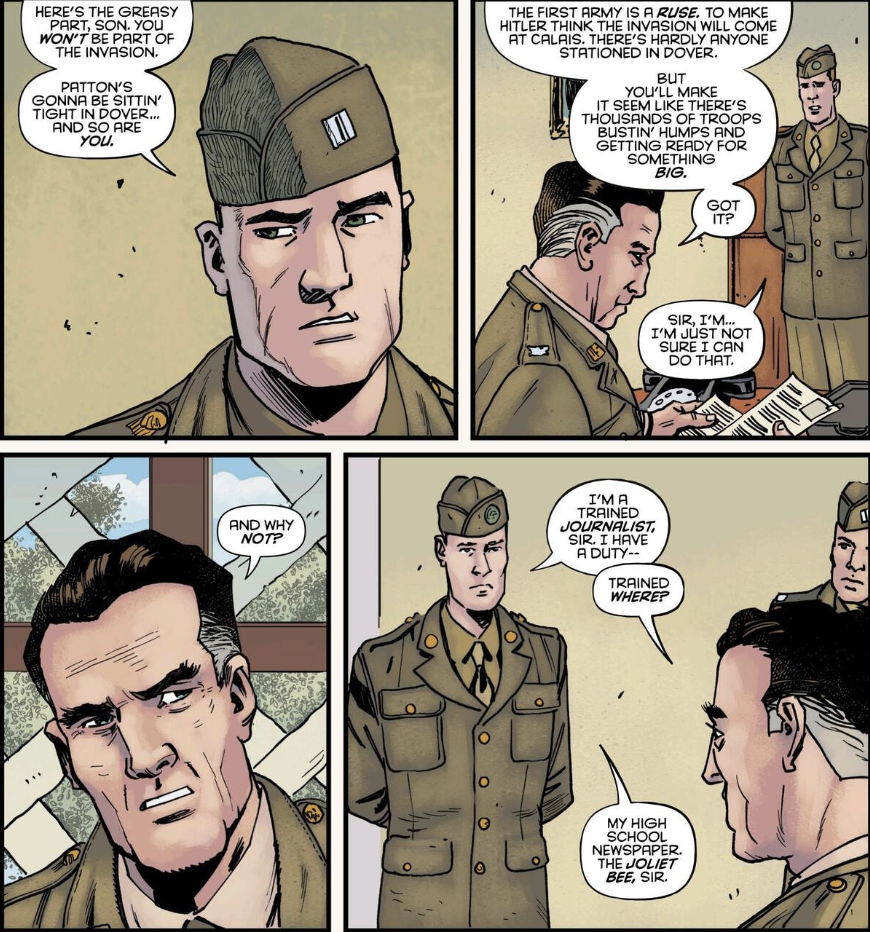
Fuller, a correspondent of a U.S. paper known as Stars & Stripes, is assigned to write and create fake stories in the paper to make it seem like the Allies are building their forces there, while in reality, they are, of course, getting ready in a completely different country. Fuller initially feels hesitant to accept this assignment. As he tells his commanding officer, he’s a trained journalist who has a duty to uphold the truth. He doesn’t feel right writing falsehoods and lying to the general public. Even with this story taking place during WWII, this part feels very timely with how not only journalists are treated in our current climate, but how the truth is treated in our current climate.
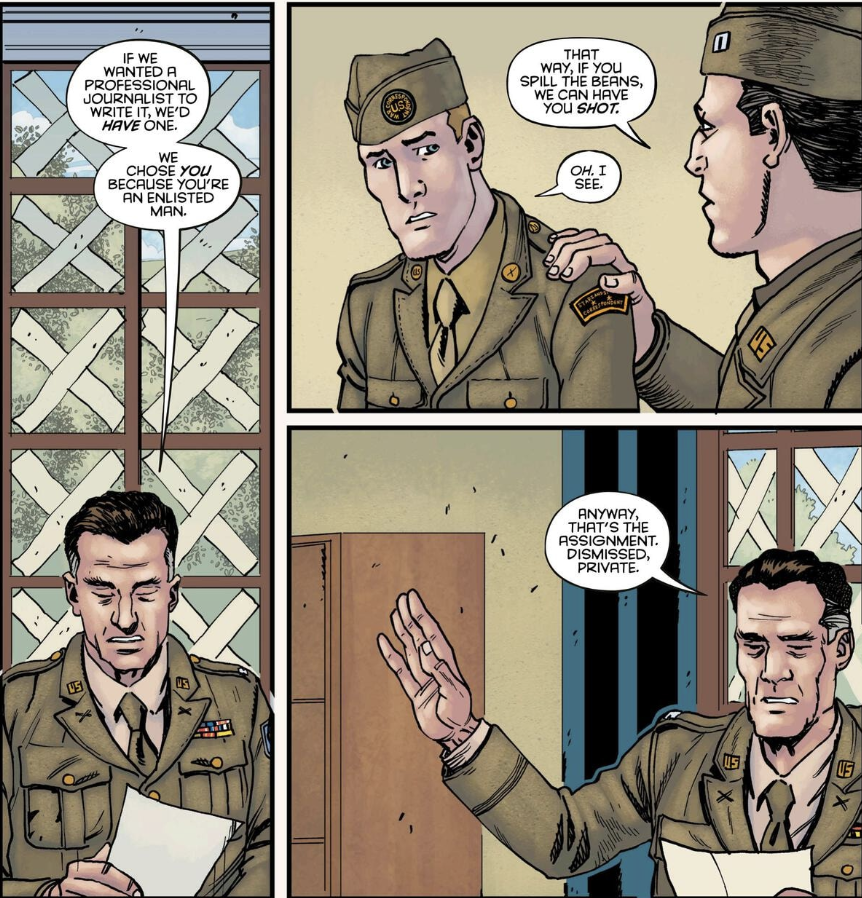
Let’s get this out of the way first: In the case of Fuller’s assignment, yes, the misinformation was needed and was helpful in the case of the overall war, but in many cases, misinformation can be deadly. To me, it was a great plot point in Russell’s narrative that Fuller is hesitant to follow the commands to spread lies and misinformation. He believes, as a journalist, that it's betraying his values. Fuller is ultimately forced to spread misinformation for his superiors because he’s a member of the military and must follow orders, but it made me happy to see that, if given the option, he wouldn’t want to be a part of something like that.
One of the biggest problems we face in today’s society is that too many media outlets spread misinformation without either caring about the long-term consequences or supporting the division it could bring. Those companies then, of course, need their “writers” or “journalists” to go along with it. More journalists these days need to be like Tom Fuller and remember their responsibility to the truth. Even a comic written about an event 80 years ago somehow feels timely, and that's the mark of a great writer.
The Horrors of War aren’t any sort of “Tom-Fullery”
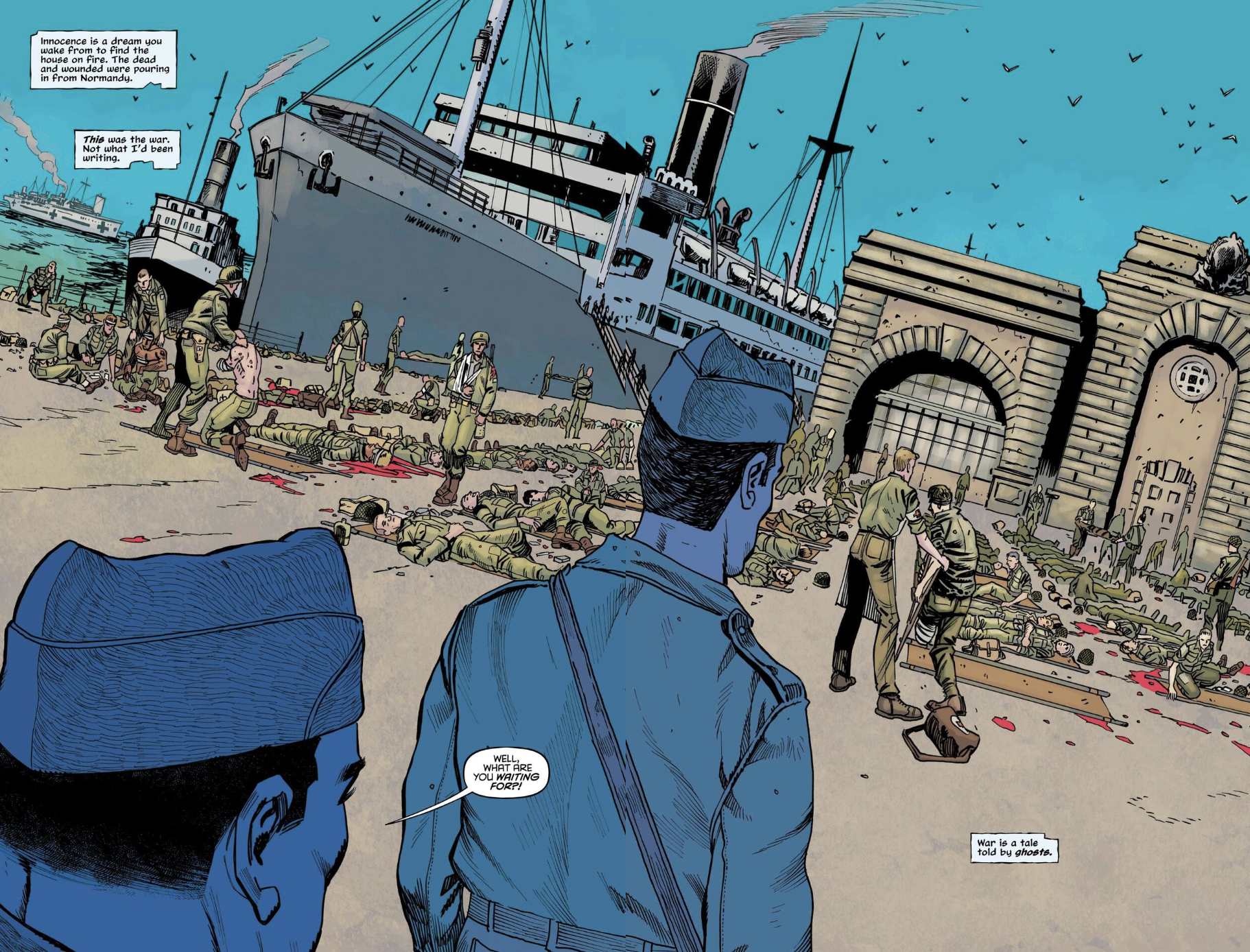
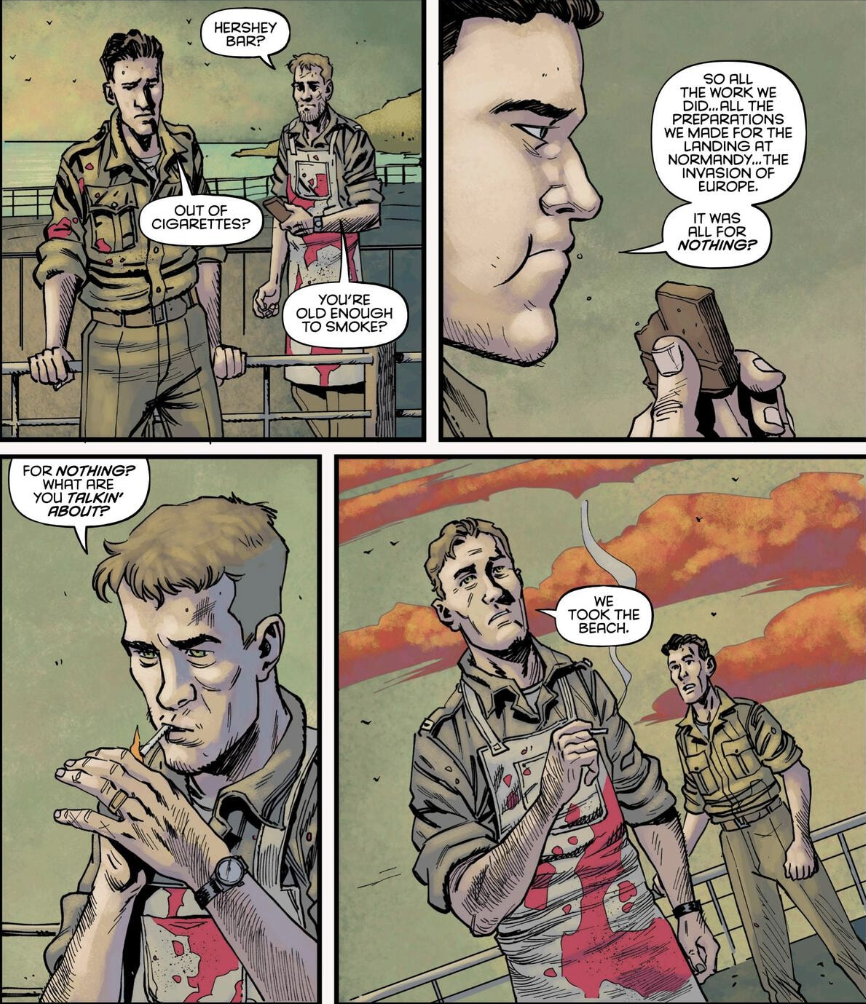
Over the following month, Fuller spreads the misinformation that he has been ordered to spread. While he writes reports of more troops, tanks and planes arriving everyday, in reality the army is parachuting out fake troops, blow-up tanks and fake planes in order to confuse the enemy. Fuller also keeps a journal with the truth of the situation written down that he just keeps for himself. D-Day of course arrives and with it, death and pain on a level that is rarely seen. Injured and dying troops are shipped back to Dover where Fuller is assgined to follow an army doctor and collect dog tags from dead soldiers as they pass on. Fuller tells the army doctor that he can’t believe this invasion was all for nothing but the army doctor tells him that it wasn’t for nothing as they took the beach and won the day. Meanwhile, ships keep pouring in with more injured, wounded and the dead.
With the D-Day invasion now complete and with the Allies pushing into Europe, the fake army of the FUSAG is disbanded as the fake tank balloons are popped and the skeleton crew that was stationed there is sent off to other theaters of war. Fuller is put up for a Bronze Star for his work on the misinformation campaign and is sent to France to fight in the war with his prior duties now wrapped up. Our issue ends with Fuller on the shores of Normandy, looking over a bloodied beach that will live in infamy.
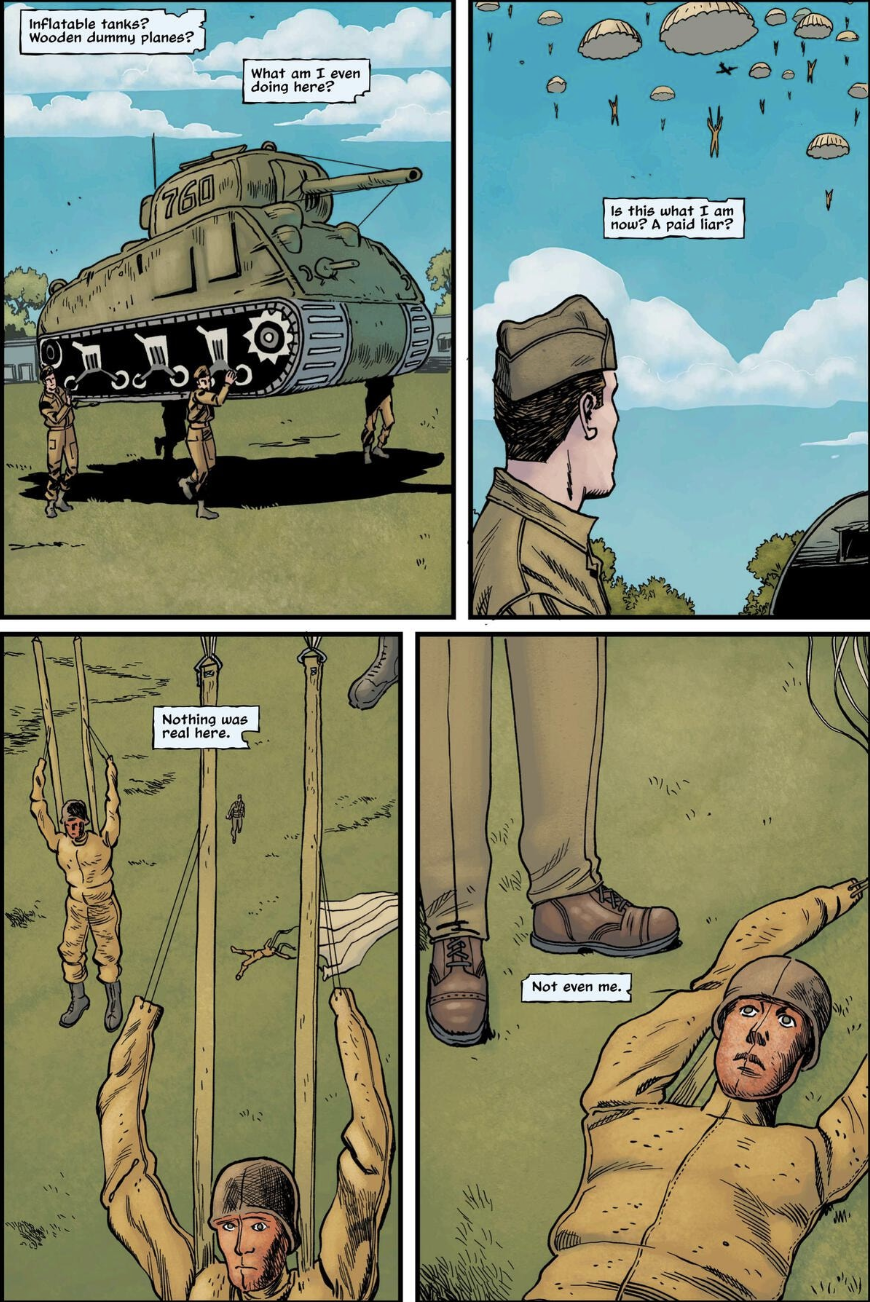
This issue was a solid introduction to the series, and there are some more narrative beats I want to highlight before I jump into the impressive artwork. Throughout the issue, we see these narrative boxes that are colored light blue. These boxes represent the inner thoughts and journal writings of Tom Fuller, and some of the best writing in the issue is featured in these light blue boxes. There are some brilliant quotes from Fuller in them that give needed perspective to the story and offer an insight into his mind as he deals with the ever-changing war.
For a book that deals with the most massive war in the history of humankind, there was little to no combat in this initial issue. This cognitive decision to look at World War II from perspectives beyond the frontlines is something I wish more books based on war would do. Fuller’s role in this war was just as important as someone on the frontlines, and Russell’s choice to highlight that was a decision I really liked. The battle on the beaches during D-Day might have taken place on June 6th, 1944, but the groundwork for that attack lies with a wide range of folks who had important jobs just like Fuller. I’m very intrigued to see how Fuller’s journey evolves as the war reaches its conclusion over the course of the next five issues.
The Art, Concluding Thoughts and Rating
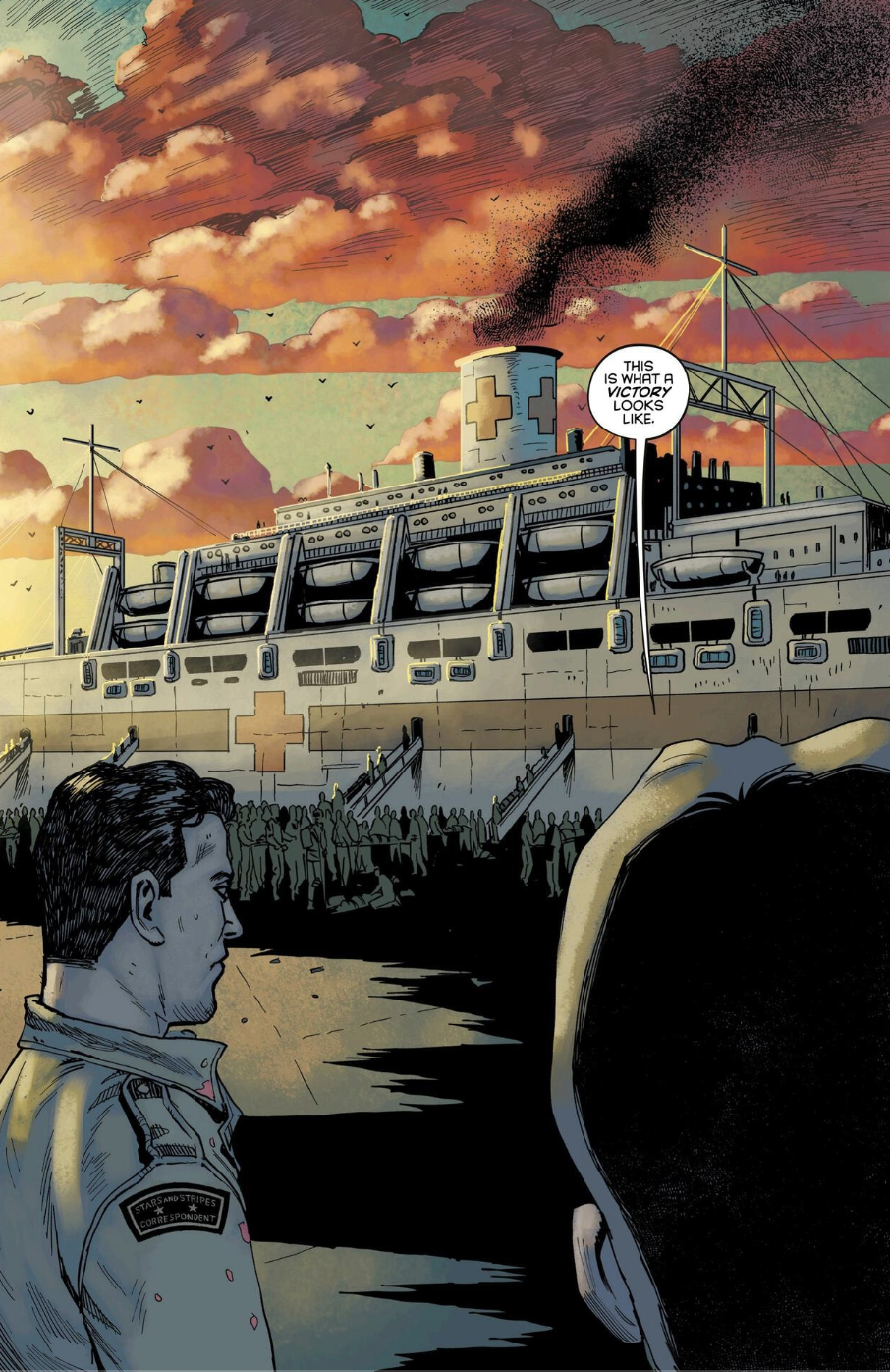
From the opening scenes at the Office of War Information to its concluding scene at the Normandy beaches, the art in this issue looks great and nails the kind of feel needed for this grounded war series. PJ Holden’s art gives off a classic comic vibe and fits right in with the serious nature of the book. Characters’ expressions hold a lot of weight and add a lot to the seriousness of this book. There are a few scenes in this issue that I want to highlight from an art standpoint.
The first is the scene when the bodies are being brought back to Dover after the D-Day attack. The emotion from the characters is very much on display as the darkness of the situation sets in. It’s a tragic scene, but one that isn’t shown with an overt amount of gore. When Fuller and the doctor finish with their initial round of deceased soldiers, we are treated to a great-looking emotional scene between the two, and we get a fantastic-looking splash panel of a medical ship bringing in more troops as the sunsets not only on the day, but on the lives of so many troops.
I look forward to seeing more of PJ Holden’s art as this series continues. JP Jordan’s colors were a pleasant surprise. They aren’t big and bombastic; they have a classic feel and are a perfect complement to Holden’s art. His colors do a good job of bringing levity to a story that deals with dark topics.
Dog Tag #1 doesn’t glorify war; it takes a look behind the curtain at war’s true face. The story of World War II has been told time and time again, but writer Mark Russell and the art team of PJ Holden and JP Jordan have brought a fresh perspective to one of the most horrific events in human history. If issue #1 is any indication, the journey of soldier Tom Fuller is trending towards being one of the best World War II stories we’ve had in a long time.
RATING: 9.5/10