
Death Fight Forever #2 Is Ridiculous and That’s a Good Thing!
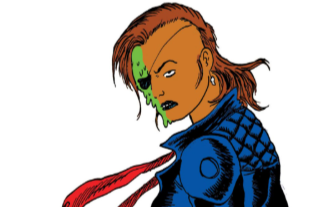
Death Fight Forever #2 is finally upon us, and it’s as trippy, ridiculous, and fun as the first issue. In Death Fight Forever #1, we get the origin story of Bash Biggle, and in issue #2, we take a closer look at Marla Mendoza and how she came to be—specifically, how half her face was burned with acid, leaving her missing an eye. While not as long and lacking substantial progress in the overall story, Death Fight Forever #2 is still an exciting chapter in this weird (compliment) adventure.
The art, story, and themes mesh well together, and Death Fight Forever continues to be unlike anything else being produced in major comics right now. There is still just enough left to explore in this universe to keep readers interested in the next three chapters of the story.
What Happened in DFF #2?
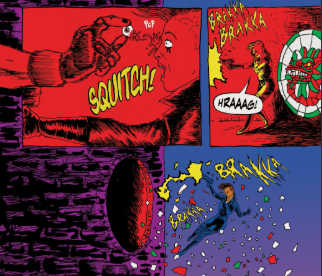
Marla Mendoza has tracked down Lord Slyther’s lair and is determined to get revenge, blaming her former boss for abandoning her to die in the jungles of the Yucatán, which cost her an eye. Mendoza quickly discovers that Lord Slyther’s power is overwhelming—her face is blistered by one of his acid attacks, deepening her personal vendetta.
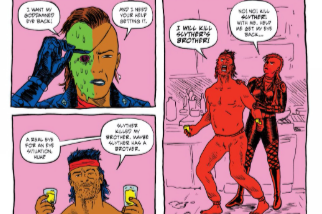
Meanwhile, Bash Biggle is shown drinking himself to death, mourning his brother Crash, who was killed by Lord Slyther. At his lowest moment, Marla intervenes, saving Bash and giving him a new sense of purpose: together, they will seek vengeance against Lord Slyther. For Bash, it is about avenging his brother. For Marla, it is about reclaiming what was taken from her, seeking justice for the betrayal, and finally finding closure.
Where Do We Go From Here?
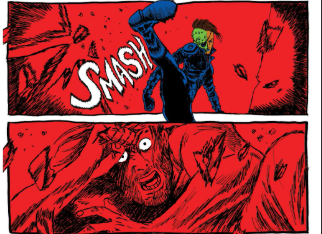
So, when our adventure started, Bash and Marla were portrayed as the Masters of the Phantom Realm. With Death Fight Forever #2, even though we are chronologically closer to that point, there is still so much we need to figure out before we get there. Does Marla get her eye back? From the looks of that first page, it doesn’t seem likely.
I’m also really interested in whether Bash and Marla becoming the Masters of the Phantom Realm happens before or after they defeat Lord Slyther. It would be a great twist if they first build themselves up to that level of power, only to then take down Slyther afterward.
In Theory This Shouldn’t Work. But It Does.
While its storytelling is very simple, DFF #2 is concise and to the point. No panel is wasted, and the pace of the book is set at breakneck speed. MacLean does a good job of mixing the acting, gore, and silliness that is his comic book series. Something that stood out, to me at least, is that even in all of its campiness and gore, there is still heart at the center of the story. It is very “tropy” for the hero to find himself drawing in a bottle of whiskey after the loss of a partner or family member. But the reason it works is that it's an easy layer to add to your character, and it works here for Bash.
With fast pacing, MacLean and Ziritt use creative techniques to move the story. The transition from Bash’s apartment to Lord Slyther’s lair, where Montoya lost her eye, is inventive, emphasizing Montoya’s unresolved feelings toward Slyther.
Mixed in with all of its elements, which I listed already, the sense of humor in DFF #2 is sneaky, but great. The sandwich bit at the beginning and Bash wanting to kill Slyther’s brother were legitimate LOL jokes. A great bit of levity to ground an out-of-this-world story.
Story Elements Were Sacrificed for Pace
DFF #2, while efficient, left me wanting more story. The issue was extremely short, and the world-building and hero's journey were somewhat sacrificed for pace. There are parts of the book that could have benefited from story bridges to provide the reader with more detail. Chronicling Marla's journey to Lord Slyther’s castle could have been a very fun segment of the story, and so would have been her journey to track down Bash. I hope MacLean will revisit those plot points later, but I think that was gold left on the cutting-room floor.
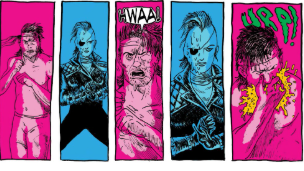
Even though the book moved quickly, more story would have improved this issue. With only five issues in this series and no guarantee of a sequel, I want to explore as much of this world as we can. I mentioned this in my last review of DFF #1; the art is distinctly unconventional. With its prominent gore, use of a single color, and minimalist drawings, it may not appeal to everyone. While I personally appreciate the style, I recognize it may not suit all tastes.
Ultimately, I wish we could have gotten more backstory into Bash and Marla. Again, I don't know if some of my complaints will be resolved in later issues, but since this is just a Death Fight Forever #2 review, it left me longing for more.
The Art Is One of a Kind
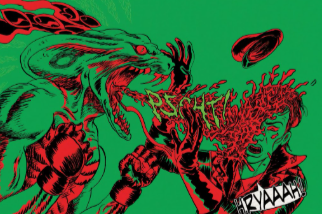
Alex Ziritt was fantastic, once again, in DFF #2. The story became much more gory in this issue, and Ziriitt was up for the challenge. Every character in this series is becoming increasingly recognizable as the world grows ever more far-fetched. The coloring from Ziritt is so vibrant and off-the-wall that it fits the aesthetic almost perfectly. The vibrant colors, mixed with the gory visuals, make for a unique look we aren't getting in any title in the Big 2 or even in Image at this moment.
To me, the monocoloring from panel to panel adds character to Death Fight Forever as a whole and gives the book a cooler tone. In contrast, the first issue used different, brighter colors and looked lively. This issue, however, feels like 'angrily drinking in a dingy bar with the neon light buzzing off and on,' which gives it an '80s retro feeling that fits the story well. The art for Death Fight Forever #2 was great.
Starting with the next issue, we will have a new artist, Al Gofa, followed by two more for the final issues. It will be interesting to compare and contrast the art styles of the different artists in the upcoming installments.
The Final Verdict
Death Fight Forever #2 continues the acid-trip vision of writer Andrew MacLean and artist Alexis Ziritt. Though brief, leaving the reader wanting more, it's still a fun, wild, and intriguing read. The highlight of this issue is the complexity and impact of the sketch art--when it’s not usually associated with deep storytelling or high art. Ultimately, I enjoyed how DFF #2 and the entire series offer an experience —utterly ridiculous in the best ways—that makes everything feel vintage, retro, and silly, a challenging feat this issue achieves.