
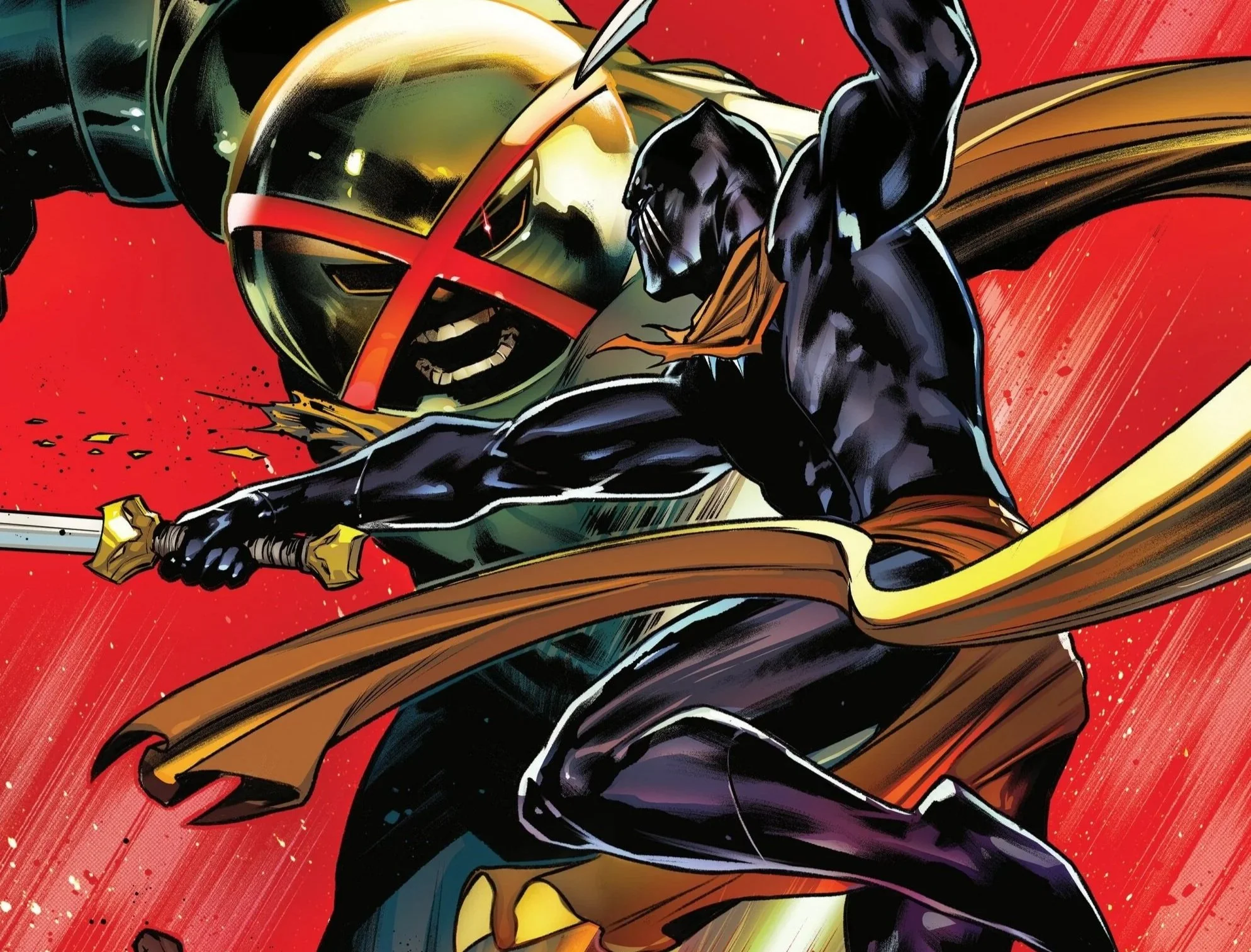
I am sorry to burst the bubble this early, but contrary to the cover, the reader does not see the regular T’Challa facing off against a Juggernaut and Black Panther hybrid of suspiciously robotic origin. A comic book cover falsely advertising a fight that does not happen inside the pages is a common trope. However, the failure to meet certain expectations when promising ambitious concepts has been at the root of the problem with the latest space adventures of T’Challa in Black Panther: Intergalactic.
Thanks to Marvel editorial essentially gutting the entire line of upcoming Marvel cosmic books, Issue #3 finds itself scrambling to wrap the story in this penultimate issue. The result feels like a hurried mess on every level. Again, this is not entirely the fault of the creative team. It becomes very obvious that Lavelle, Nesi, and the rest of the company did have a breathing story in mind. No matter how flawed the narrative was from the start, the team clearly wanted to tell the story to the fruition of the work. Sadly, the unexpected cancellation of the cosmic titles from Marvel has now forced the team to wrap this once confused yet sprawling saga within two issues. That fact seems painfully prevalent across the entirety of this particular issue.
A King by Any Other Name
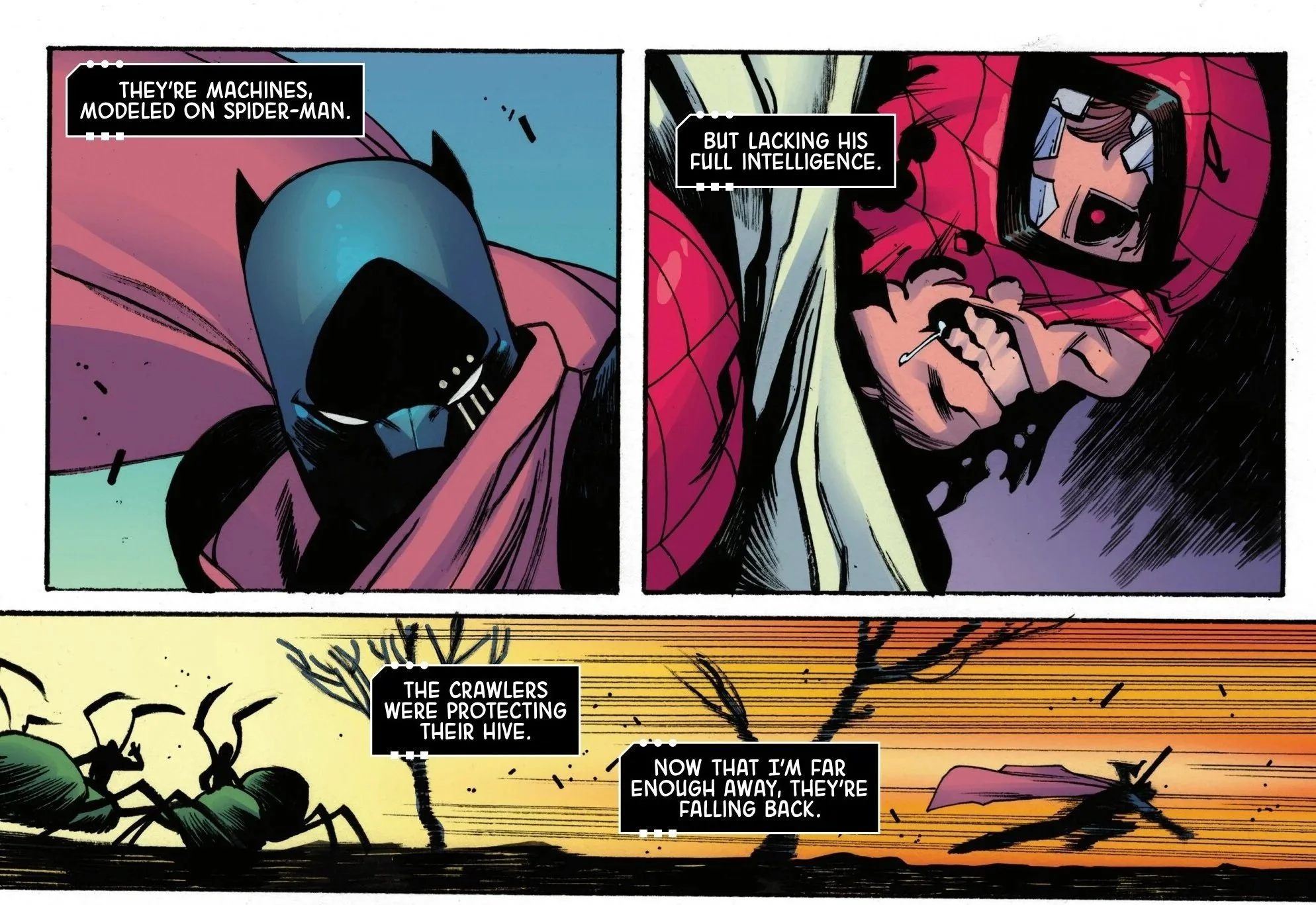
Issue #3 still has T’Challa battling across the robo-clone-infested planet. He takes out the Spider-Crawlers with the head of Doctor Blacktavius still in tow, though the doctor disappears randomly for no real reason in the middle of the fight. With all these weird cyber super-villains on the prowl on a fake planet that is draining itself fast, the erstwhile King is now rushing to overcome the doubts and the mystery of the world all in one go.
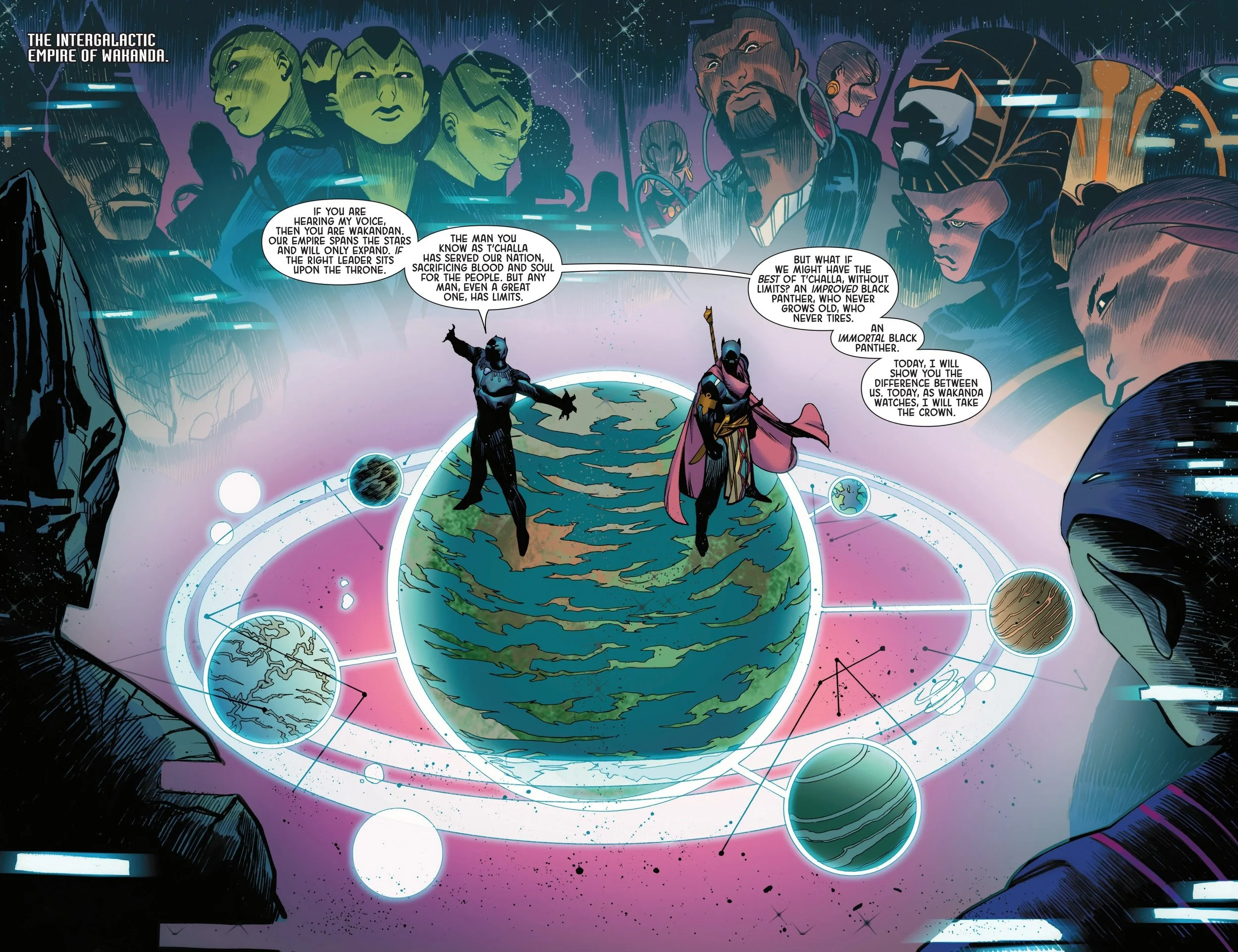
Meanwhile, back on Wakanda Prime, the fake robo-T’Challa, who was planning to secretly take over the empire and be the new Black Panther, is no longer hiding. Deciding to go for the spectacle of it all, Robo-T’Challa instead wants to broadcast a gauntlet of sorts to the world. If he can face the alien clone planet on his own, take the power, and defeat the real T’Challa, he believes he will have earned the right to be the one and true immortal Black Panther. With satellite cameras in place to watch the action and the various worlds and alien leaders of the galaxy watching, Robo-T’Challa gets to work on the master pay-per-view main event. M’Baku is also planning on going to the planet to help T’Challa, so do not be surprised if a family reunion with a heaping helping of heavy ordinance is in the cards for the finale.
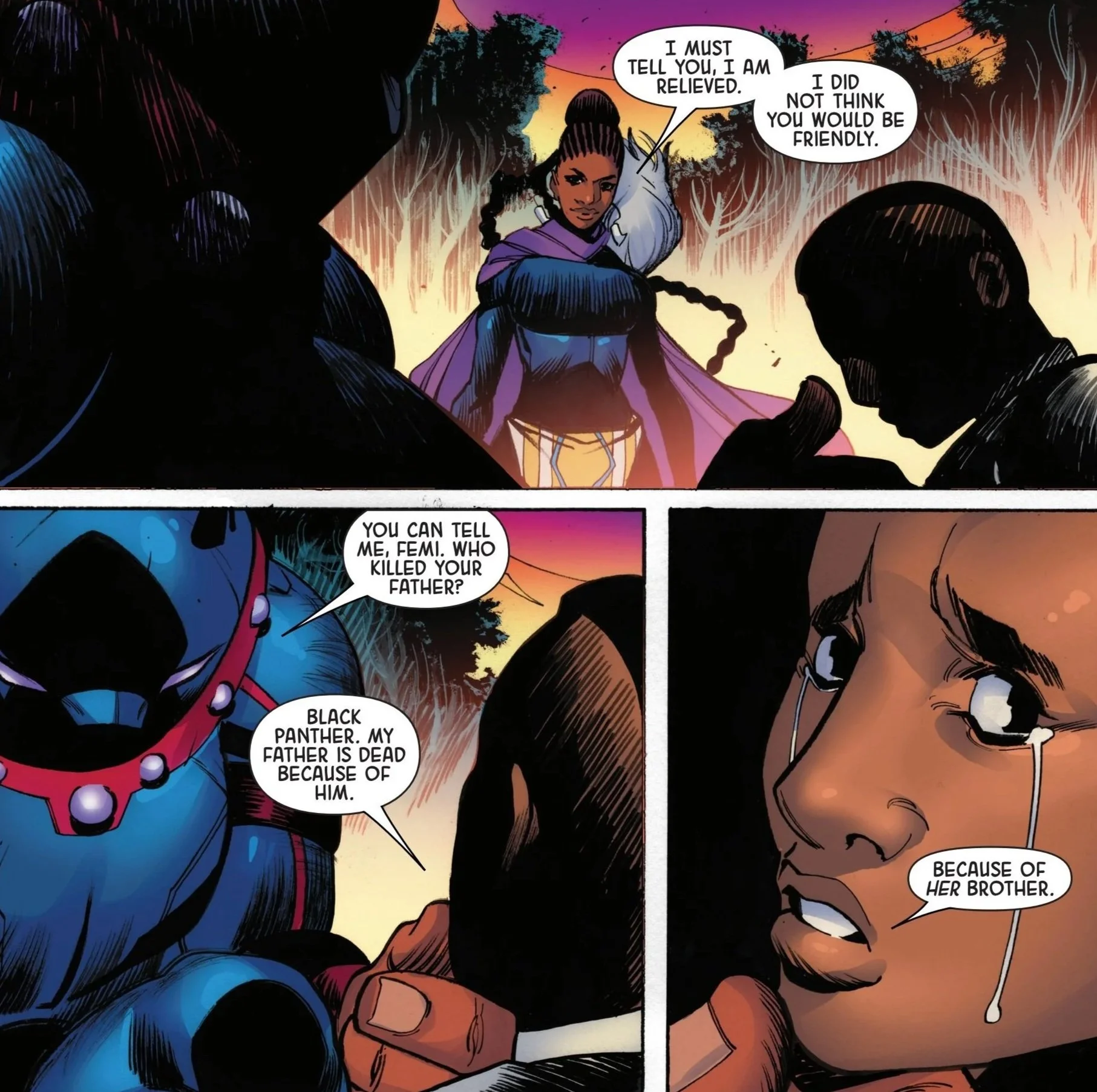
Shuri, the child, and the Juggernaut-Panther are doing their own thing on the same planet as T’Challa. Finding herself outmatched against this hulking, unstoppable, dome-headed kitty wannabe, Shuri is quickly outmatched while Femi cowers in terror. Things, however, take a turn for the unexpected because the Jugger-Panther recognizes Femi. Being a creation of the father of the child, the robot ceases the attack. It feels like a much-needed respite for Shuri and Femi. The Jugger-Panther reminds Femi that the father had programmed all the Panther Murder Bots here with two goals: To Protect my Emperor and To Protect my Son. Femi tells the big, hulking robo-brute that T’Challa is the one who is responsible for the death of the creator. This prompts Shuri to once again gear up for a fight as the Jugger-Panther aims to avenge the creator and Femi with extreme prejudice.
When the Narrative Claws Desperately for Meaning
Two things that never go well together in comics are clones and bad editorial. Unfortunately, this story in particular ticks both boxes. This occurs much to the detriment of whatever grand ambitions Victor Lavelle had in mind when he started on this book. The book was already off to a rocky start with a concept that did little to capitalize on the grander cosmic narrative left behind by Imperial. Instead, it chose to rehash far too many older Black Panther storylines and mash them together with classic science fiction storytelling. Whatever greater narrative was planned for this story has now been utterly gutted by the cancellation of the book. The rushed narrative of this penultimate issue is painfully obvious for the reader to endure. It is a frustrating turn of events. We have already seen Ultimate Black Panther get undercut like this just when things were getting interesting. To see T’Challa once again get the short end of the creative stick in another one of the books is beyond infuriating.
A majority of this book is also taken up by fights. T’Challa is fighting off a literal gauntlet of random supervillains or constructs. These range from mechanized Spider-Man hordes to Green Goblin and a bat-like version of Sauron. The justification that he is now a literal energy vampire made the eyes of the reviewer roll. There is also the fight involving Shuri and the Juggernaut-Panther. These sequences do not really do much to advance the story in any truly meaningful way. They just take up space on the pages while the characters monologue lifelessly while battling to reach the objectives. It is exposition by way of lethargic battle, which is a truly awful way to progress a narrative.
Similarly, a lot of the longer and more thought-out story beats are suddenly changed so quickly that it will give the reader whiplash. The T’Challa clone was perfectly happy to rule Wakanda in secret for the duration of T'Challa's absence until the last issue. He has now suddenly decided to broadcast the fight for everyone to see. Seeing whatever modicum of a plan this character had been thrown completely out of the window is something that feels like a last-minute change to wrap this book up in two issues. Once again, a callous editorial undermines the script. No amount of shallow monologues by the T’Challa clone will rectify some genuinely lazy storytelling.
Similarly, the character of Blacktavius from the previous issue also somehow vanishes. I thought he would be akin to a decapitated Jiminy Cricket for T’Challa. He is present on the first page of the book, but then he is just gone. There is no explanation. It is wildly out of place and further adds to the problem that has plagued this book on top of the already lackluster presentation.
The shocking revelation of Femi pulling a heel turn on Shuri by crying about how T’Challa killed the father also feels less emotional and more infuriating because of the rushed pacing. There is no real buildup to the resentment of the king from Femi. Considering the past interactions, for him to suddenly go comically evil at this opportunity feels insanely manipulative for a child. However, revenge is a powerful force and does not discriminate based on age.
Shuri and M’Baku are written as mind-numbingly forgettable and boring in this issue. Even though the former is literally involved in one of the marquee fights of the book, I have nothing to say as to how the story reached this point. While the editorial is certainly to blame for many of the problems here, the writing from Lavelle is not helping matters either.
I do want to end on one small positive note. I think that Lavelle has the character of T’Challa understood very well. He captures the doubts, fears, ambitions, and analytical mind of the king very effectively. He frames him as a tactician when put in life-or-death situations and retains that consummate sense of calm while he is at it. This is nothing new for the character, and neither is the journey through an alien planet to reach the prize, but it is better than nothing. Quite frankly, with the way Black Panther: Intergalactic has gone so far, I will take whatever little wins I can get.
A Planet of the Panthers
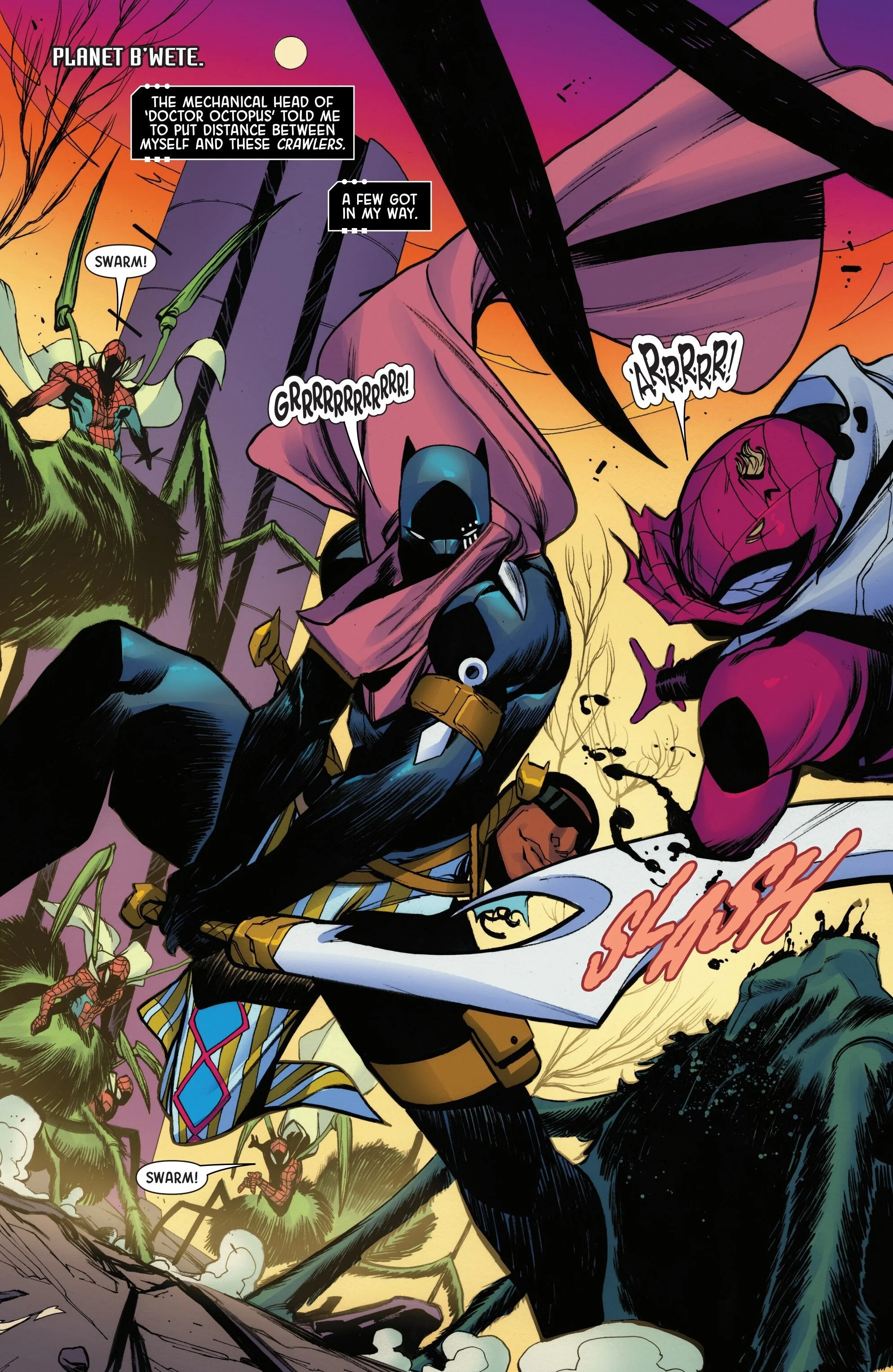
Once again, the real heavy lifting for this book comes at the hands of the pencils from Stefano Nesi. The art genuinely salvages the action sequences and alien aesthetic more than the script ever could. The art style from Nesi captures the science fiction and fantastical feel very naturally once more. It feels like just the right amount of exaggerated while remaining extremely kinetic and fun to watch in an issue that is all about fights and constant action.
Contrary to the restrictions of the script, the art from Nesi really does play up the darkly alien nature of the planet. For the most part, it showcases the twisted automaton abominations that are the robo-villains of the planet. The Spider-Swarm in particular looks disturbing enough, but the other villains do come across as a little bland in comparison. The Juggernaut-Panther hybrid in particular comes across as more goofy than intimidating.
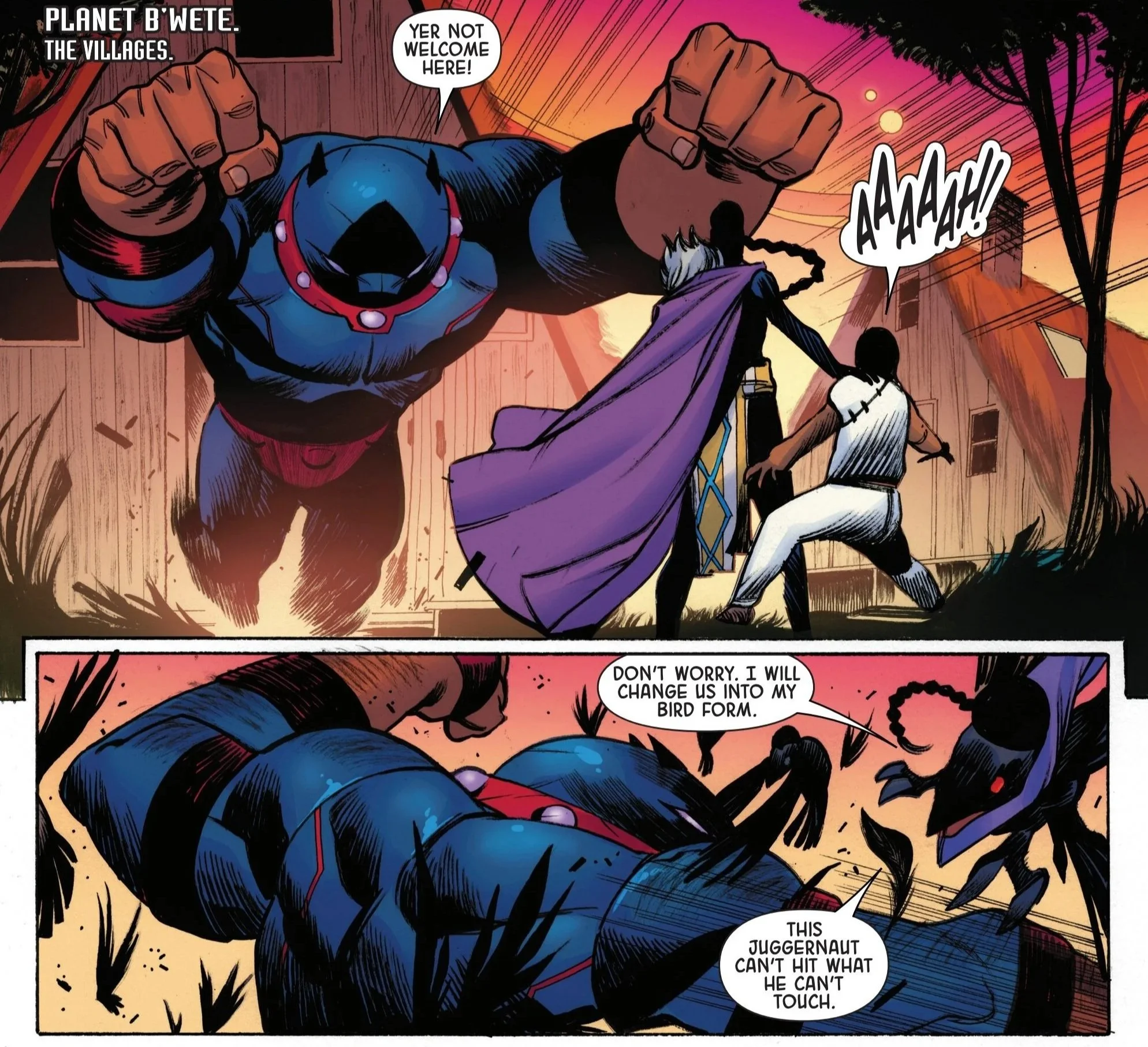
As always, T’Challa himself stands tall with the new look and swagger. He feels like the emperor and warrior he is, both in motion and repose. The powers of Shuri are also fun to watch in motion as she quickly transforms into a flock of birds or transforms her body to match the opponent’s blow for blow. It is the more human expressions that tend to take a bit of a hit sometimes due to the exaggerated art style at play. This warps some emotions into a more comical direction that can feel jarring when compared to the tone of the book at hand.
The colors from Bryan Valenza also amplify this dark space feel. He uses the right amount of vivid and flashier tones spread amidst the generally darker tones of the book to really punch up the action where needed. The line and color work together very slickly. These elements contrast and complement the narrative tone perfectly, where needed, and genuinely elevate the story far beyond the compromised script.
Ambition Without Action
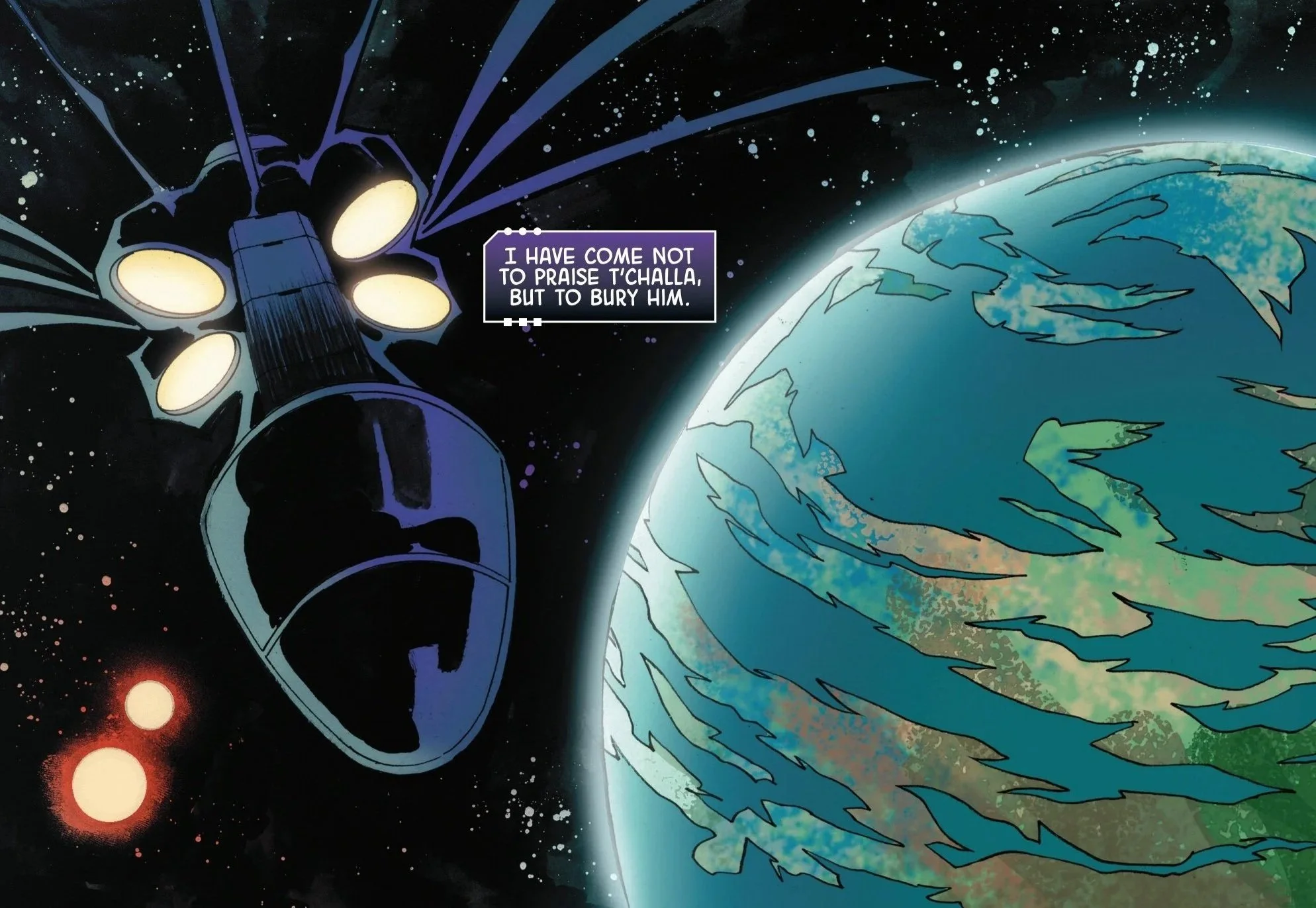
It is painful seeing this happen to any book, but it has somehow been doubly so in the case of Black Panther: Intergalactic. This is due to the sheer wasteful nature of this particular story. On the one hand, a story already exists that is cut in half by questionable editorial decisions. On the other hand, the small amount of content on the page struggles to helplessly define itself as something new while reusing the same old Black Panther tropes seen a hundred times over. If there was truly no scope for the space empire science fiction line of storytelling with traditionally earthbound characters, then doing it again without really changing or saying anything different adds nothing to the mythology or the interests of the readers.
Whatever tiny hook and eye-catching art promised in Issue #1 has been truly and thoroughly squandered in this mess of a narrative that is Black Panther: Intergalactic #3. There is just so much that is frustratingly wrong about this latest adventure. It is hard to feel positive at all about the finale in the next issue, beyond being relieved that this book is finally being put out of its misery.
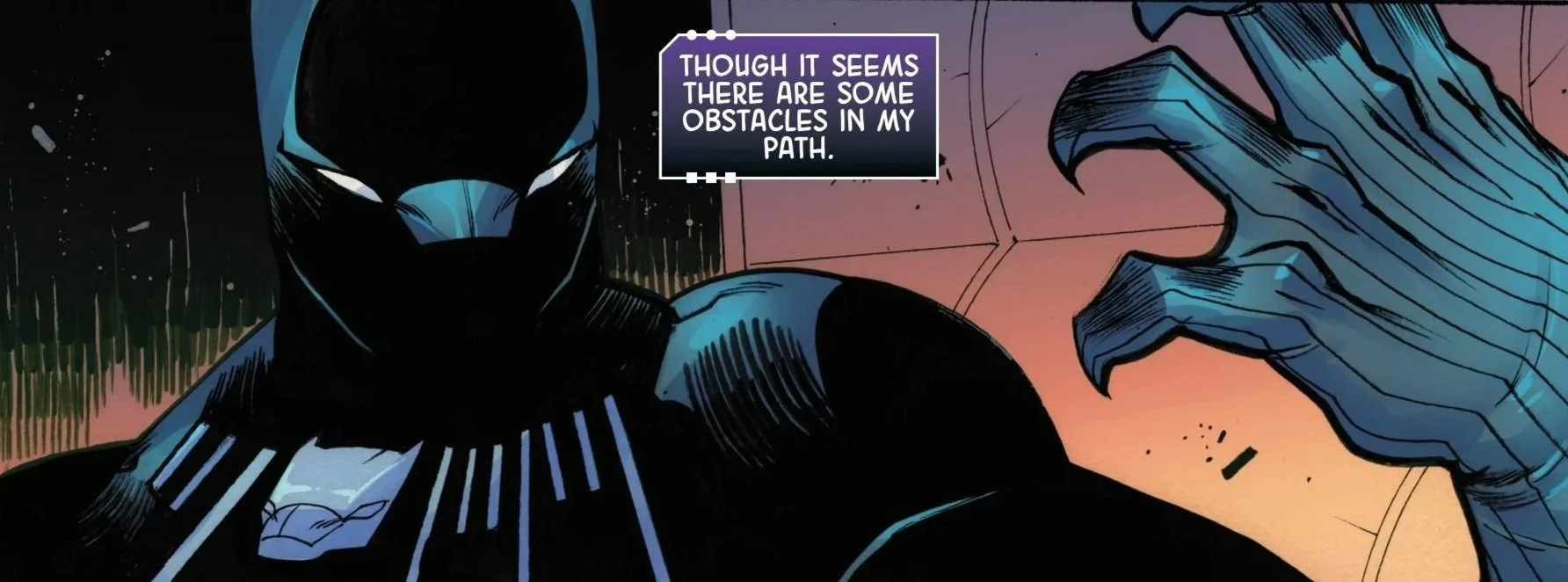
Final Verdict: Black Panther - Intergalactic #3 is a painfully chaotic read with exceptional artwork that still can’t save it from the destructive combination of bland storytelling, rushed pacing and ambitions that are regularly crushed by editorial meddling.