
As bodies wash up in Gotham City, Nightwing investigates where they are coming from…Blüdhaven. Who is behind this all? Is Blüdhaven a safe? Find out a long with Gabe as we dive into Nightwing #1!
The 9 Most Toxic Comic Book Dads In History
Comment
Let’s be real: not everyone gets warm fuzzies when Father’s Day rolls around. Some of us got TV dads. Some of us got deadbeats. And some of us… well, some of us got something that looked a lot like a villain origin story. So to help anyone who grew up with a father who gave more tough than love, ComicBookClique.com proudly presents: the 9 Worst Fathers in Comic Book History — a petty, cathartic, and heavily-sourced therapy session for the comic book kids who deserved better.
But before we get into it, a quick note. We’re not talking about dads who were just bad at showing up for soccer games. So if you came to see Reed Richards or Bruce Wayne on this list? Sorry, but they’re complicated, not cruel. Reed can be cold and dismissive. Bruce is emotionally constipated and turns orphans into weapons. But neither of them were out here raising their kids like science experiments or actively trying to traumatize them. This list is for the truly malicious dads—the ones whose kids had every right to turn evil, go no-contact, or punch their way into therapy.
1. Trigon – Deadbeat Demon Dad of the Year
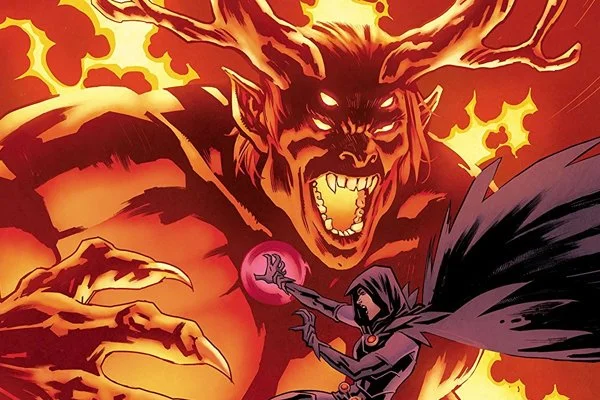
You know your dad's bad when your existence threatens the entire multiverse. Trigon is a literal interdimensional demon who fathered Raven through manipulation and dark magic, then spent her entire life trying to possess, control, or destroy her. In The New Teen Titans #1 (1980), Raven is introduced as a young woman begging for the Titans' help to resist the evil inside her—which just so happens to be her dad. Trigon doesn’t just show up for the occasional “I’m disappointed in you” chat; he tries to remake Earth in his own flaming image and forces Raven to act as his herald of doom.
The real horror of Trigon isn’t just that he’s a demon—it’s that he treats fatherhood like ownership. His "love" is possessive, conditional, and violent. Raven spends most of her life trying to resist the destiny he designed for her, and the few times she defeats him, he always returns—more convinced than ever that she belongs to him. A true father from hell.
2. Norman Osborn – The Green Goblin Gaslighter
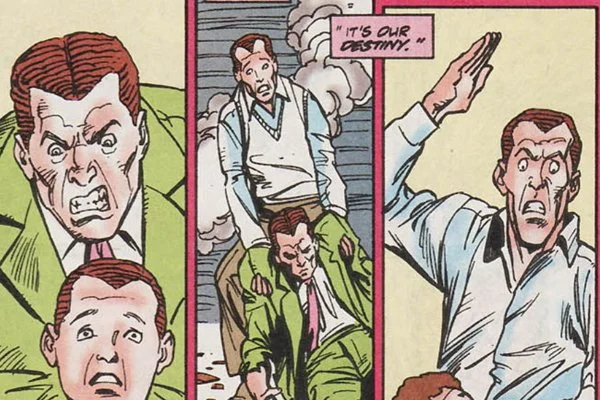
Norman Osborn might just be the most performative father in comics. Father to Harry Osborn, he swings wildly between cold indifference and domineering narcissism. In early Amazing Spider-Man issues, Harry desperately tries to earn Norman’s approval—only to be constantly reminded that he’ll never be good enough. In Spectacular Spider-Man #200, we even get a tragic moment where Harry dies trying to protect Peter, finally stepping out of Norman’s shadow.
But Norman’s greatest hits don’t stop there. He fakes his death for years, traumatizing Harry and blaming Spider-Man. He gaslights his son into taking the Goblin mantle, then shames him for not living up to it. Later, during Dark Reign, he becomes America’s top cop while mentally unraveling—and still finds time to endanger his grandkids. For Norman, fatherhood is a power play. He doesn’t raise children; he grooms legacies.
3. Brian Banner – The Monster Behind the Hulk
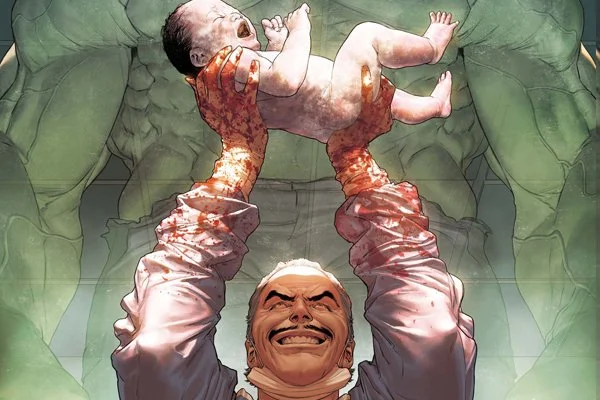
Before gamma radiation, there was generational trauma—and Brian Banner delivered that in full. In Incredible Hulk #312 (1985), we get one of the most disturbing retcons in Marvel history: Bruce Banner’s dad was an abusive, paranoid scientist who believed Bruce was genetically cursed. So what did he do? Beat him. Repeatedly. Until Bruce's mother tried to protect him—and Brian murdered her in front of Bruce.
Brian’s abuse didn’t just traumatize Bruce—it created the Hulk. Later stories, especially in Immortal Hulk, explore how the Hulk isn't just rage—he's protection. A barrier born from a child who couldn’t defend himself. Brian shows up posthumously in visions, flashbacks, and psychic manifestations, continuing to torment his son long after death. He’s not just a bad dad. He’s the foundational trauma that split Bruce Banner’s psyche.
4. David Cain – Built a Daughter Like a Weapon
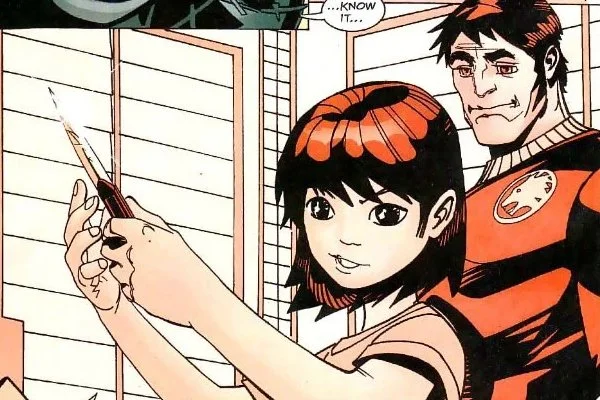
David Cain didn’t raise Cassandra Cain out of love—he raised her like a living blade. As one of the League of Assassins' top killers, Cain decided to raise a child with no verbal language, teaching her to read body language and violence instead. From infancy, Cass was groomed to be the perfect assassin: no words, no distractions, just instinct and execution.
In Batgirl (2000), Cass’s backstory unfolds like a horror show. Her first kill as a child shatters her emotionally. When she tries to escape that life, Cain shows up time and time again, trying to “fix” her by dragging her back into the shadows. He even offers to murder someone for her as a twisted gesture of love. David Cain isn’t a strict parent—he’s a human trauma machine who weaponized his daughter’s innocence.
5. Darkseid – Darkseid IS….A Terrible Dad
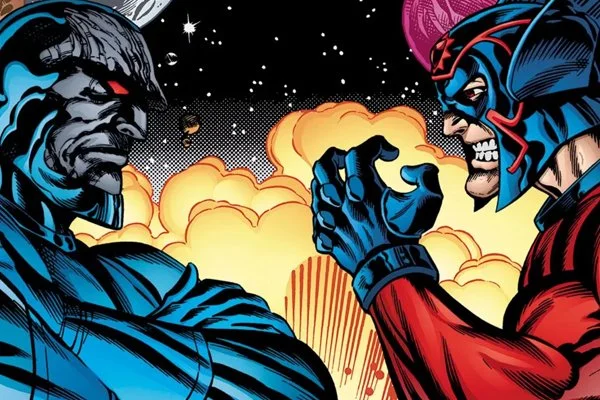
If we’re talking cosmic scale deadbeatery, Darkseid is in a league of his own. The ruler of Apokolips once traded his own biological son Orion to Highfather as part of a ceasefire deal—and in return, he took in Highfather’s son, Scott Free (aka Mister Miracle). Orion was raised among the New Gods of New Genesis, constantly struggling with the darkness inherited from his birth father. Scott? He was tortured in Granny Goodness’ orphanage until he eventually escaped and became the universe’s greatest escape artist.
Darkseid doesn’t see children as heirs—he sees them as leverage. In Final Crisis, New Gods, and Mister Miracle by Tom King and Mitch Gerads, Darkseid’s influence hangs over his sons like a gravitational pull of dread. He’s the kind of father who would drop you off at daycare and then immediately nuke the building to prove a point. Absolute worst.
6. Magneto – Genocidal Dad with Selective Memory
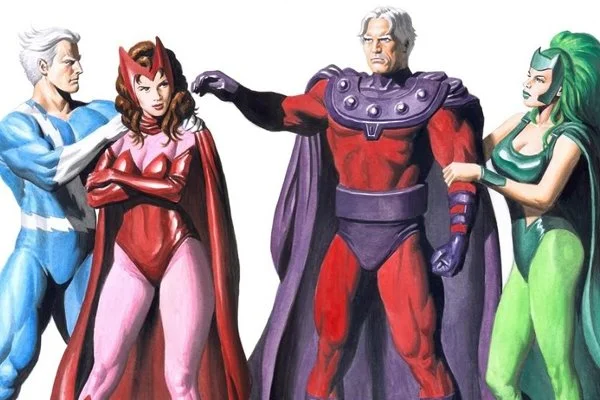
Magneto is the mutant revolution’s most iconic figure—but as a dad? Let’s just say he’s got some X-sized flaws. He fathered twins Wanda and Pietro (and sometimes Lorna, depending on retcons), but has denied, ignored, or emotionally manipulated them throughout their lives. In House of M, his obsession with mutant supremacy leads to reality-warping trauma that nearly wipes out the mutant population—and fractures his relationship with Wanda permanently.
Magneto is the kind of dad who wants to save the world but can’t remember his kids’ birthdays. In The Trial of Magneto, he shows brief remorse—but it’s always in the service of the cause. And when they die? He grieves. When they disobey? He judges. The emotional whiplash is endless. Sure, he’s a Holocaust survivor, and that pain runs deep. But even his most sympathetic backstories can’t undo the fact that he’s a father who uses loyalty like currency.
7. Omni-Man – "It’s Not Personal, Son, It’s Conquest"
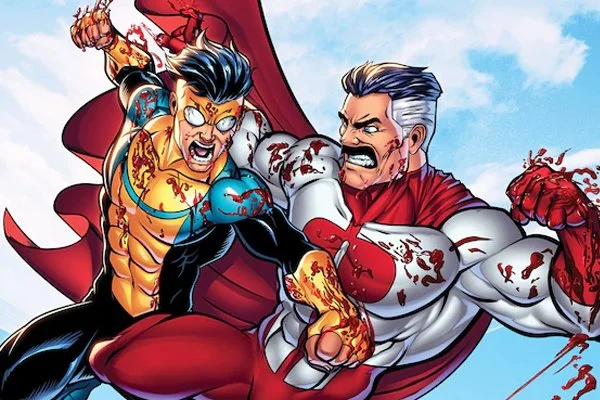
If fatherly betrayal had a mustache, it’d be Omni-Man. In Invincible by Robert Kirkman and Cory Walker, Nolan Grayson starts off as the all-American alien father figure. But in Invincible #11-12, the mask comes off—literally. Nolan reveals he’s a Viltrumite sent to conquer Earth and that his love for his wife and son was more of a performance than a bond.
Then he beats Mark to a bloody pulp. While monologuing. It’s one of the most visceral betrayals in modern comics. He later gets a redemption arc, but that doesn’t erase the trauma. Omni-Man didn’t just fail Mark—he weaponized fatherhood as part of a lie. That uppercut wasn’t just physical; it was spiritual.
8. Thanos – Father of the Snap, Destroyer of Daughters
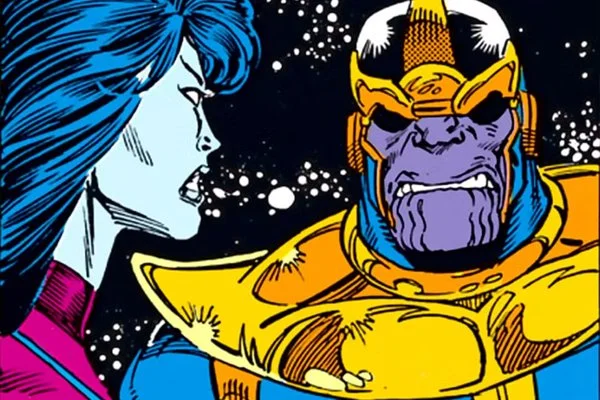
Thanos doesn’t do playdates. Whether we’re talking comics or cinematic universe, Thanos treats his adopted daughters like training dummies. Gamora and Nebula are “raised” through a system of competitive torture—where failure means cybernetic punishment. In Thanos Rising and Gamora: Memento Mori, we see that Thanos views children as disposable tools. Gamora is “the favorite” only because she survives the abuse. Nebula is the eternal runner-up, permanently altered and emotionally gutted.
Even biological children, like his son Thane, are used to fulfill twisted destinies. In Infinity and Thanos: The God Quarry, Thanos oscillates between obsession and neglect. His idea of legacy is leaving behind pain. And when he finally dies, there’s no mourning. Just relief.
9. Professor X – Mutant Messiah, Absent Father
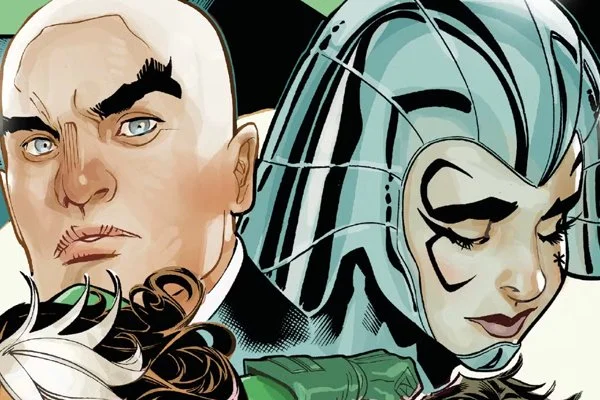
Charles Xavier has a dream. Too bad his son was a nightmare he never wanted to face. David Haller (Legion) is one of the most powerful mutants in existence—and Charles barely acknowledged him for most of his life. In New Mutants #26-28, we meet David as a deeply fractured young man with multiple personalities, each with dangerous powers. His mother kept him hidden for years, and when Xavier finally steps in? It’s more “scientific curiosity” than paternal instinct.
In X-Men: Legacy, we see how David struggles not just with his powers, but with the crushing weight of being the unloved son of the mutant world’s most important man. Even on Krakoa, Professor X keeps him at a distance. There are brief moments of pride, but they’re buried under decades of avoidance and manipulation. Charles Xavier is the kind of dad who builds a school for everyone else’s kids, while leaving his own to rot in the faculty basement.
So Happy Father’s Day, I Guess?
If this list made you feel better about your own family tree—good. That was kind of the point. Not all dads are worth celebrating. Some are better off as cautionary tales with a panel citation. So whether your dad was great, awful, or somewhere in between, just know: at least he didn’t trade you to a torture orphanage in space.
And if he did? You deserve a spinoff.
The 9 BIGGEST HATERS in COMIC BOOK HISTORY
Comment
Some villains want world domination. Others want money, chaos, or revenge. But the pettiest supervillains? They don’t just want to win—they want you to lose. These are the haters who dedicate their entire lives (and sometimes afterlives) to ruining one hero's day, year, or entire existence. From baby-targeting grudges to time-traveling stalkers, here are the 9 Biggest Haters in Comic Book History, complete with receipts!
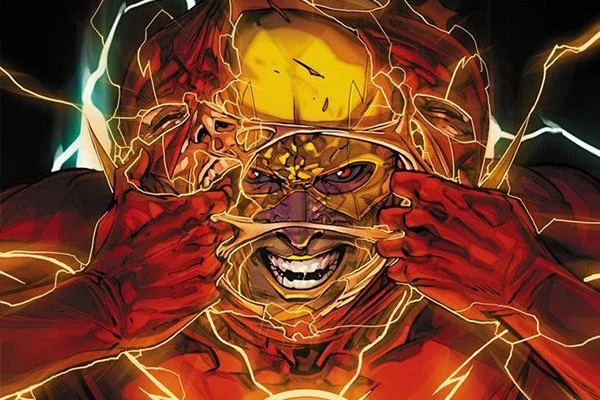
1. Reverse-Flash (Eobard Thawne) – The Hater from the Future
📚 Key Issues: The Flash (Vol. 2) #74, The Flash: Rebirth #1, The Flash #8 (2011)
The Tea: Eobard Thawne was once a 25th-century scientist and massive Flash fanboy. That admiration turned sour when he discovered his destiny: he was fated to become Barry Allen’s greatest enemy.
Thawne doesn’t just fight the Flash—he dedicates himself to ruining his existence across time. In The Flash: Rebirth #1 (2009), he reveals that he went back and murdered Barry’s mother, framed his father, and destabilized his life from childhood onward. That act alone set in motion the events of Flashpoint, rewriting the entire DC Universe.
Thawne also shows up at key moments in Barry's life to taunt him, like a stalker with access to a time machine. He’s even caused memory wipes, retcons, and multiversal shifts—just to mess with Barry. No matter how many times he dies, he finds a way to run it back.
Hater Level: 1000 years of hate, literally rewiring time to mess up someone’s vibes. He’s the reason the DC timeline is always in flux. Hate that breaks continuity.
2. Black Manta – Held a Grudge So Hard He Went After the Baby
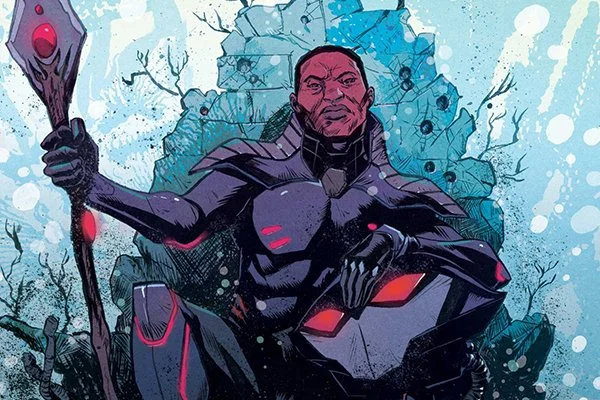
📚 Key Issues: Adventure Comics #452 (1977), Aquaman (Vol. 7) #1 (2011), Brightest Day #3–20 (2010)
The Tea: Black Manta’s vendetta against Aquaman has evolved over the years, but one thing’s always been clear: he’s not just mad—he’s dedicated. In early continuity, his hatred stems from a botched encounter that left Manta’s father dead. That alone would be enough.
But in Adventure Comics #452, he crossed the Rubicon. Manta traps Aquababy—yes, the infant son of Arthur and Mera—in a death chamber and lets him suffocate. Not in a random act of violence, but as a calculated punishment meant to leave Aquaman devastated.
Later stories flesh out his background. In Brightest Day, we see the generational trauma that fuels him. In the New 52 (Aquaman Vol. 7), Manta’s revenge isn’t just physical—it’s deeply psychological. He goes after Aquaman’s legacy, the respect he commands, and the love he has. It’s warfare through grief.
Petty Level: Killing a baby to send a message? That’s villainy in its final form. He even refused a chance at resurrection in Brightest Day because his beef with Arthur meant more than life.
3. Green Goblin (Norman Osborn) – Weaponized Misery in a Business Suit
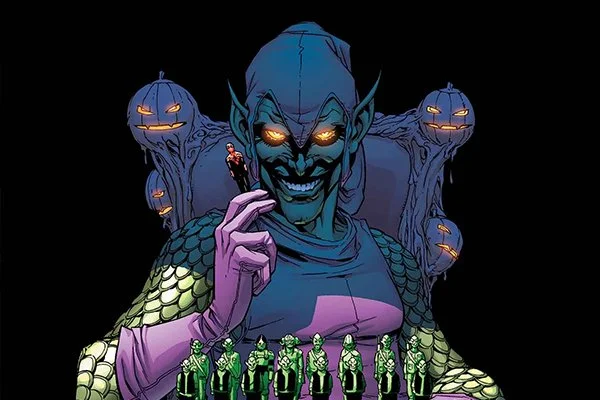
📚 Key Issues: Amazing Spider-Man #121–122 (1973), Spectacular Spider-Man #200, Amazing Spider-Man #512–514 (“Sins Past”)
The Tea: Norman Osborn was already a criminal mastermind, but the day he found out Peter Parker was Spider-Man? That was the day the personal vendetta began.
In Amazing Spider-Man #121, Norman drops Gwen Stacy off a bridge—forcing Peter into an impossible position. Her death marked the end of innocence in comics and proved that Norman wasn’t just evil—he was personal.
But it didn’t stop there. In the controversial Sins Past, Norman allegedly seduced Gwen and fathered twins, gaslighting Peter for years. Even if you reject that retcon (many do), the principle remains: Norman wants to infect Peter’s life, not just end it.
His return during The Clone Saga, his masterminding of Dark Reign, and even his stint as the Iron Patriot all revolve around one thing—outshining Peter. He doesn’t want Spider-Man dead. He wants him humiliated, isolated, and broken.
Hater Level: Corporate gaslighting, fatal love triangles, and cloning schemes. Norman stays ten steps ahead just to ruin the Parker name.
4. Deathstroke – Blamed a Group of Teens for His Son’s Death
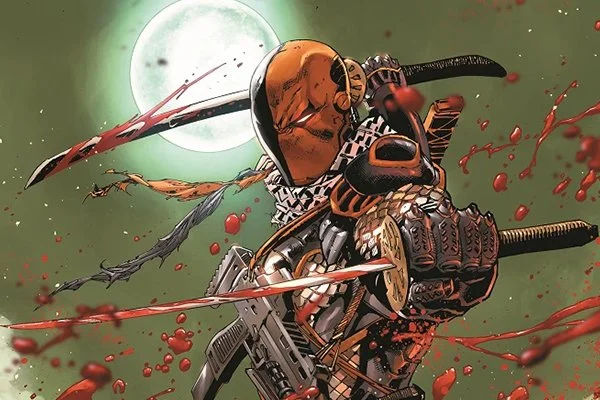
📚 Key Issues: The New Teen Titans #2, 34–44 (1980–1984), Tales of the Teen Titans Annual #3 (1984)
The Tea: When Grant Wilson (Slade’s son) dies after a failed attempt to defeat the Teen Titans, Slade doesn’t blame the people who empowered him or his own absence as a father—he blames the Titans.
So he signs the same contract and vows to destroy them one by one. In The Judas Contract, Slade grooms the emotionally unstable Terra into infiltrating the Titans and betraying them from the inside.
Even after Grant’s death, Slade can’t move on. He forms alliances, double-crosses heroes, and works as a mercenary—but he always comes back to the Titans. It’s obsession disguised as professionalism.
Hater Level: Weaponizing grief and manipulating children. He literally radicalized a teenager just to ruin some other teens’ friendships.
5. Bullseye – Killed for Attention, Lived for Spite
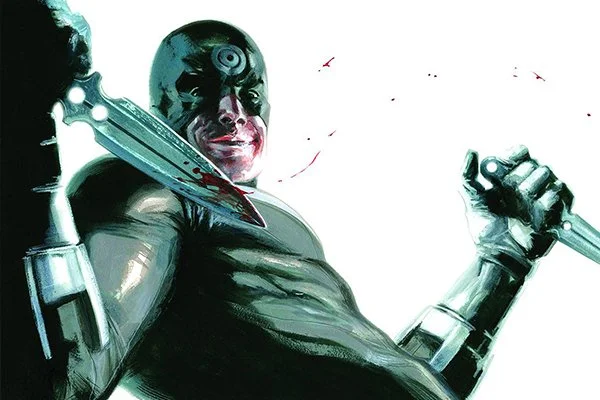
📚 Key Issues: Daredevil #181 (1982), Daredevil (Vol. 2) #26–31 (2001), Dark Reign: Hawkeye #1–5 (2009)
The Tea: In Daredevil #181, Bullseye murders Elektra—not because of some grand plan, but because he was replaced. He wasn’t the Kingpin’s number one anymore.
That began a lifelong obsession with Matt Murdock. From killing Karen Page in Kevin Smith’s run to stalking and impersonating Daredevil in Dark Reign, Bullseye exists to keep a tally of Matt’s pain.
He’s not trying to take over Hell’s Kitchen. He’s not even ideological. Bullseye’s just the bitter ex who refuses to move on.
Hater Level: Burned his whole career down because someone else got the promotion.
6. Sabretooth – Logan’s Forever Hater
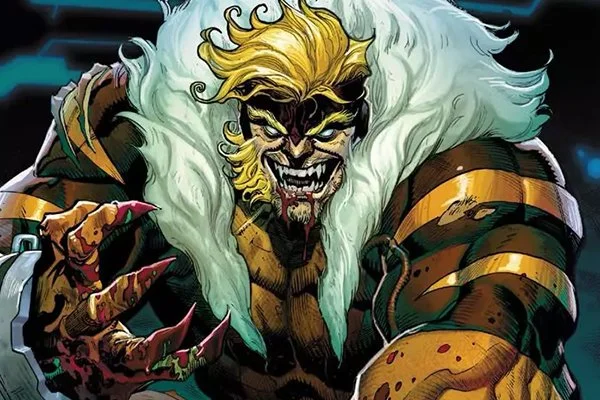
📚 Key Issues: Iron Fist #14 (1977), Uncanny X-Men #213 (1987), Wolverine (Vol. 2) #10 (1989), Wolverine: Origins #3–5 (2006)
The Tea: Wolverine and Sabretooth have a blood-soaked history, but one thing’s clear: Creed hates Logan in a way that transcends logic.
In Wolverine (Vol. 2) #10, we learn that Sabretooth would track Logan down every year on his birthday just to beat him within an inch of his life. Why? To prove dominance. To remind Logan that no matter what he does, he’ll always be beneath him.
This is less about revenge and more about pathological insecurity. Sabretooth doesn’t want Logan dead—he wants him to know who’s better.
Hater Level: Annual birthday beatdowns. That’s a ritualized grudge.
7. Anton Arcane – Came Back from the Dead Just to Keep Beefing
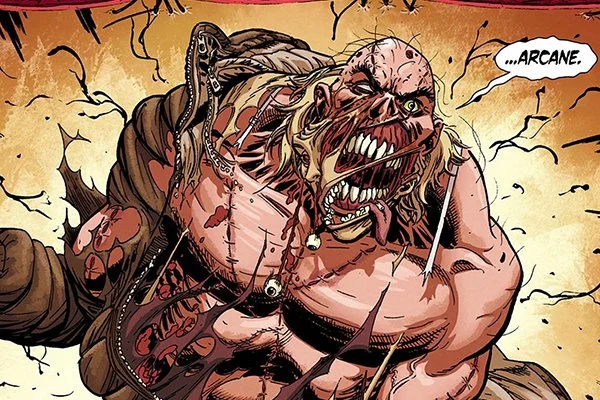
📚 Key Issues: Swamp Thing (Vol. 1) #2 (1973), Saga of the Swamp Thing #29–31 (1984), Swamp Thing (Vol. 2) #50, 76 (1986–1988)
The Tea: Anton Arcane was Alec Holland’s nemesis from the very start—a mad scientist hungry for immortality. But after his death in Swamp Thing #10, you’d think that’d be the end. Oh no.
Arcane becomes something worse. He’s resurrected via the Rot, the elemental force of decay, and makes it his mission to desecrate Alec’s soul. He violates Abby (his own niece), possesses bodies, and even tries to reincarnate through her unborn child.
In Saga of the Swamp Thing, Alan Moore transforms him from a grotesque villain to a cosmic abomination, one who sees Alec not as a man to defeat—but as a spirit to corrupt.
Hater Level: Multiple resurrections, demonic deals, and familial betrayal. When death won’t stop you, that’s next-level hater energy.
8. Kid Miracleman (Johnny Bates) – The Pettiest God Complex Ever Put to Paper
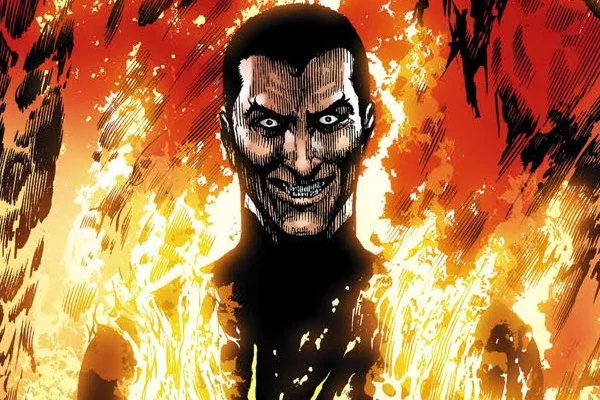
📚 Key Issues: Miracleman #3, 6, 15 (1985–1989)
The Tea: Johnny Bates was once a good-hearted sidekick, but repression turned his alternate persona into something monstrous. After pretending to be normal for years, Bates finally snaps.
In Miracleman #15, he unleashes the most terrifying act of mass violence in comics, leveling London and mutilating civilians. His motivation? Resentment. Because Miracleman came back. Because the power he once had was taken away.
His actions aren’t about justice, power, or revolution. They’re about feeling slighted.
Hater Level: Full god-mode tantrum. He literally nuked a city to throw hands with an old coworker.
9. Lex Luthor – Hated Superman for Daring to Be Better
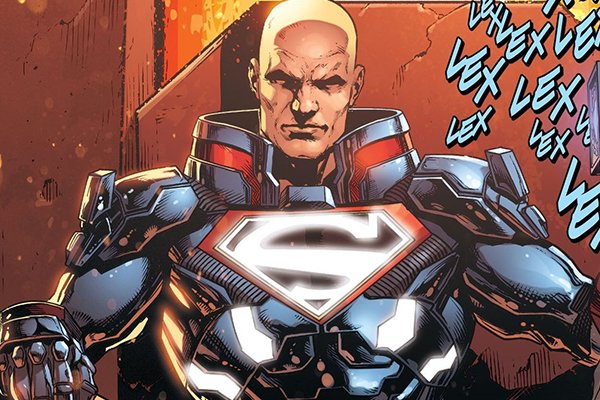
📚 Key Issues: Superman (Vol. 1) #164 (1963), Action Comics #544 (1983), Lex Luthor: Man of Steel (2005), Superman: Birthright (2003–2004)
The Tea: Lex Luthor is the blueprint for the refined supervillain. But his obsession with Superman? It’s raw, emotional, and endlessly petty.
Whether it's because Superman made him go bald (in Silver Age continuity) or because he can’t stand that someone else gets more admiration, Lex is consumed with showing up the Man of Steel. In Lex Luthor: Man of Steel, we watch Lex spiral into philosophical rants about humanity, meritocracy, and alien invasion—just to justify his insecurity.
In Birthright, Lex’s hatred hits its peak when he tries to erase all knowledge of Krypton. Not just to discredit Clark—but to invalidate his identity.
Hater Level: The billionaire who funds anti-alien PSAs and black-ops assassins because he can't emotionally handle one superpowered immigrant.
Honorable Mentions:
Doctor Doom – His hate is intellectual, not petty. He hates Reed Richards because Reed might be smarter.
The Joker – The pettiness fluctuates wildly. Sometimes chaos, sometimes obsession.
Amanda Waller – Ruthless, yes. Petty? Only if you get in her way.
The Plutonian – Tragic backstory, god-tier meltdown. But less about one person.
Why Petty Villains Hit So Hard
What makes a petty villain stand out isn’t just their power or cruelty—it’s their focus. These aren’t world conquerors. They’re character assassins. They live rent-free in their enemies’ heads and refuse to leave. Petty villains remind us that the most dangerous grudges are the personal ones—the feuds built on wounded pride, broken friendships, and failed expectations.
And that’s why they’re unforgettable.
Who did we miss? Did we snub your favorite long-term hater? Let us know who deserves a spot in the Petty Villain Hall of Fame. Stay villainous, stay petty.
REVIEW: Ultimate Spider-Man: Incursion #1: Miles, We're Not In Kansas Anymore
Comment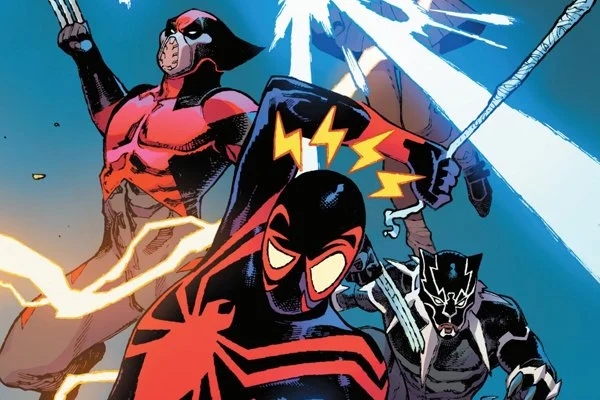
What happens when one of Marvel’s most seasoned Spider-Men steps into a world still trying to figure out what a Spider-Man even is? In Ultimate Spider-Man: Incursion #1, Miles Morales crashes headfirst into Earth-6160, the newly rebooted Ultimate Universe—and it doesn’t take long for things to get messy.
This issue isn’t just the first major crossover of the new Ultimate line—it’s a statement. And that statement is: Miles Morales is not here to play around.
The Team Behind the Tension
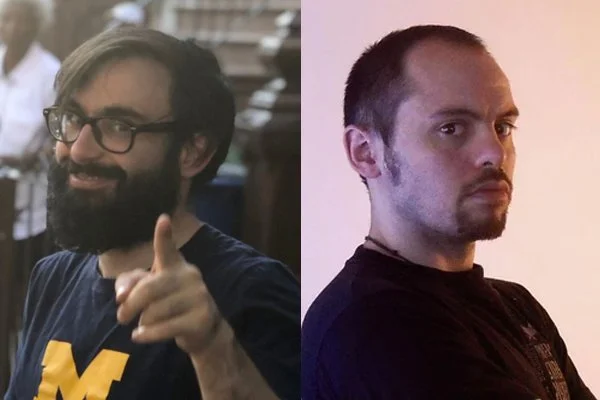
First and foremost, Ultimate Spider-Man: Incursion #1 is written by Deniz Camp, one of the most exciting rising talents at Marvel. Known for his dense, high-concept sci-fi storytelling (Children of the Vault, 20th Century Men), Camp brings a sharp, character-focused edge to this multiversal story. He understands both the weight of continuity and the power of reinvention—and in a crossover like this, you need both.
The art is delivered by Juan Frigeri, whose dynamic paneling and kinetic action beats make every punch, portal, and web-sling feel like it matters. Frigeri’s clean linework—most recently seen in Invincible Iron Man—works perfectly in a universe that’s still forming its visual identity. And with David Curiel on colors, the aesthetic lands somewhere between cinematic and stylized, perfectly capturing the blend of grounded reality and interdimensional weirdness.
Together, this team brings the right mix of polish, danger, and emotional depth to make Incursion #1 feel like a true event—not just a gimmick. Now let’s get into our RECAP!
Miles Returns to the Ultimate Universe
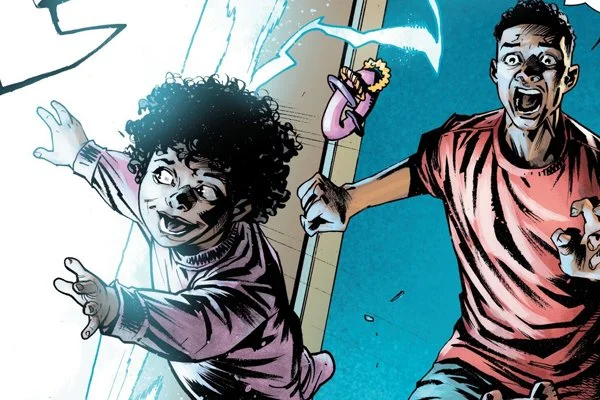
The issue opens with Miles reflecting on his past—his legacy as a Spider-Man who once belonged to a universe that no longer exists. That weight sits heavy. But the spark that kicks off this incursion? Pure family chaos.
Miles’s baby sister, Billie Morales, grabs a card that the Maker once gave Miles (because when you're a Morales, nothing is ever just a keepsake). One wild energy surge later, Billie is gone—sucked into the world of Earth-6160.
And with that, the chase begins.
Miles Morales: The Superior Spider-Man
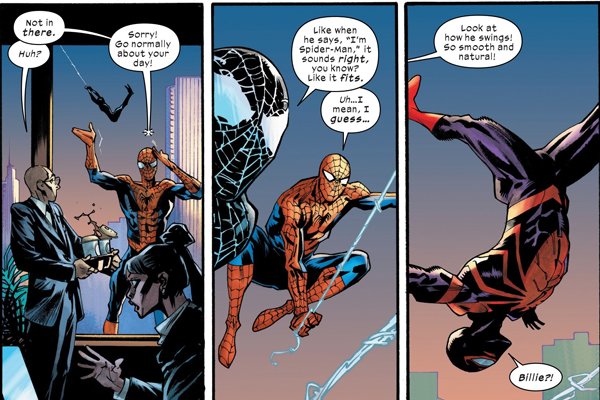
Over in Earth-6160, Peter Parker is still getting his feet wet as Spider-Man. He’s patrolling the city with his son, trying to teach the kid what it means to be a hero—when out of nowhere, a fight breaks out with a version of The Spot who hasn’t even gotten his name yet.
But before things can escalate too far, Miles arrives on the scene—and he absolutely schools this version of Spot in a brutal, efficient beatdown.
Peter and his son are floored. His kid especially can’t stop gushing over how cool, fast, and skilled this Spider-Man is. And that’s the twist: In this world, Miles is the experienced one. He’s been doing this a decade longer. Peter’s the rookie. And that dynamic flips everything we usually expect from a Spider-team-up.
Miles Morales Gives The Spot His Name
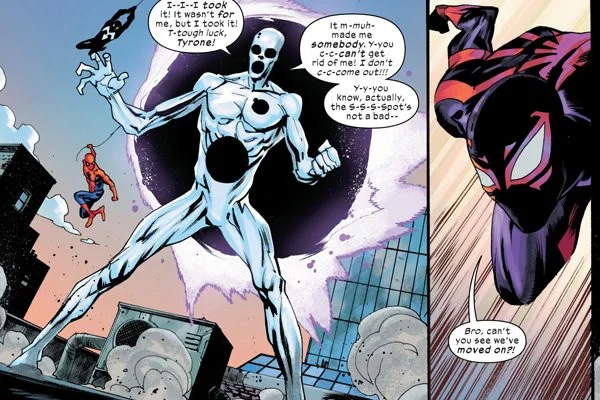
In a cool bit of meta-continuity, this version of Spot isn’t called that yet—until Miles, mid-battle, offhandedly refers to him as such. It’s a small, clever moment, but one that hints at a bigger theme: Miles is already influencing this universe just by being in it.
The butterfly effect is in full swing. And we’re watching the Ultimate Universe mutate in real-time.
Miles Morales Hunts for Billie Morales
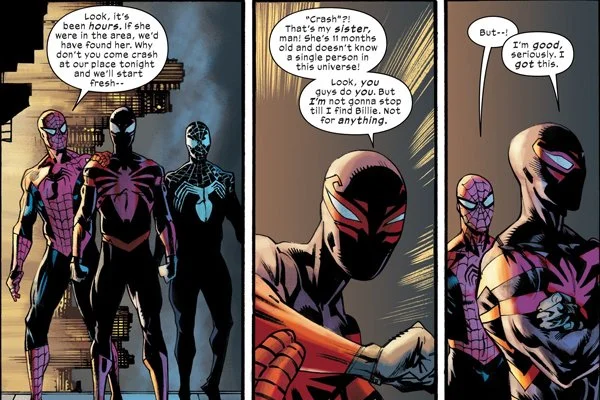
After things settle, Peter decides to pause the search for Billie and try again in the morning. He’s not lazy—just inexperienced. But Miles? He’s not wired that way. He’s a big brother. He’s been through too much. Waiting is not an option.
So while Peter calls it a night, Miles hits the streets alone.
Meanwhile, Billie’s arrival hasn’t gone unnoticed. The Maker’s Council catches wind of the breach and immediately assumes it might be him—back from wherever he’s vanished to. But when they confirm it’s someone else, both they and the Ultimates decide to go hunting for whoever just dropped into their backyard.
And that brings us to the issue’s final gut-punch.
The Ultimates Confront Miles Morales
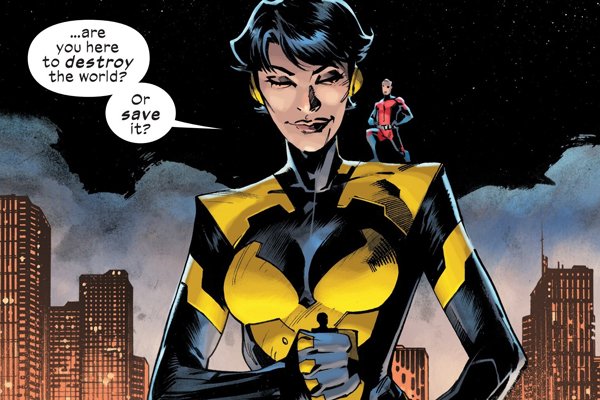
Before the Maker’s goons can find him, Miles is intercepted by two very serious-looking members of this universe’s Ultimates: Janet van Dyne and Hank Pym.
They don’t fight him. They question him. And the question is loaded:
“Are you here to save the world… or destroy it?”
That’s where the issue leaves us. No answers. Just tension. Suspicion. And the very real threat that this universe isn’t ready for what Miles might bring with him.
The Web Is Already Tearing
Ultimate Spider-Man: Incursion #1 is more than just a crossover—it’s a collision of tone, legacy, and intent. It throws Miles Morales into a world that doesn’t know him, doesn’t trust him, and might not survive what he represents.
This isn’t a cameo. This isn’t a team-up. This is a statement of purpose. Miles isn’t visiting this universe. He’s about to leave his mark on it.
The incursion has started. And if this first issue is any indication, Earth-6160 is about to find out why Miles Morales is more than just a Spider-Man—he might just be the Spider-Man.
💬 What did you think of Ultimate Spider-Man: Incursion #1? Is Miles the real anchor of the new Ultimate Universe? Drop your thoughts below
The Discourse Over Iron Heart Has Been Disgusting (And We Know Why)
6 Comments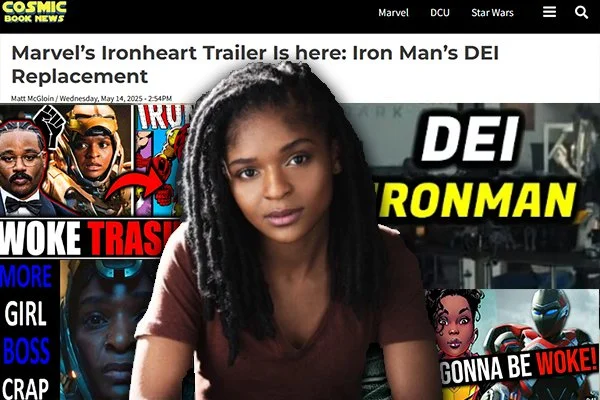
I’ll say it — the backlash against Ironheart has been disgusting. Not just misguided or overly critical — disgusting. And it’s time we stop pretending otherwise.
Let’s be real: the hate against Ironheart has never really been about the story, the suit, or the show. It’s about something uglier. It’s about the discomfort some fans have with seeing Black girls in spaces they were never meant to be in — and the fact that these spaces are finally being cracked open.
The Civil Rights Act was signed just 80 years ago. That’s within the lifetime of people still walking around today. Segregated schools were being abolished around the same time Marvel Comics was being founded. That’s not ancient history. That’s recent memory, and some would love to go back to the way things were before then.

And yet, comic books — from their earliest days — became a place where the marginalized found reflection. The X-Men spoke to civil rights before mainstream media dared. Black Panther stepped onto the page when Black heroes were virtually nonexistent. Ms. Marvel showed Muslim American teens they belonged in the Marvel universe, too.
So why is it that when Ironheart shows up — a brilliant Black girl from Chicago who built her own Iron Man suit at 15 — the internet catches fire?
I’ll tell you why. It’s not about the quality of the writing. It’s not about the CGI. It’s not about “superhero fatigue.” It’s because there are still far too many people who think characters like Riri Williams don’t belong in the conversation — or worse, shouldn’t exist at all.
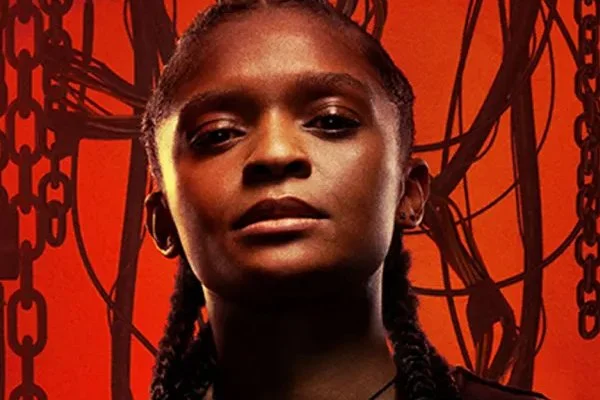
Let’s be honest. Yes, Disney has struggled. Not every project that highlights minority leads has hit. Some stories weren’t great. Some were rushed. Some were clearly part of a larger corporate checklist. But let’s not pretend that’s why these shows and characters are getting torched online.
Some people act like any attempt at representation is an automatic failure. A bad show with a white male lead is just “bad.” A bad show with a Black woman at the center? Suddenly it’s the downfall of cinema, the death of Marvel, the result of "wokeness." Suddenly it’s “proof” that diversity is killing Hollywood. That’s not criticism. That’s a coordinated effort to poison the well.
You’ve seen the YouTube thumbnails. You’ve read the headlines. “Disney’s Woke Agenda DESTROYS Marvel.” “Ironheart is the Death of the MCU.” These aren’t critiques. They’re clickbait outrage, designed to rile up the worst corners of fandom — the ones who think showing any culture outside their own is a personal attack.
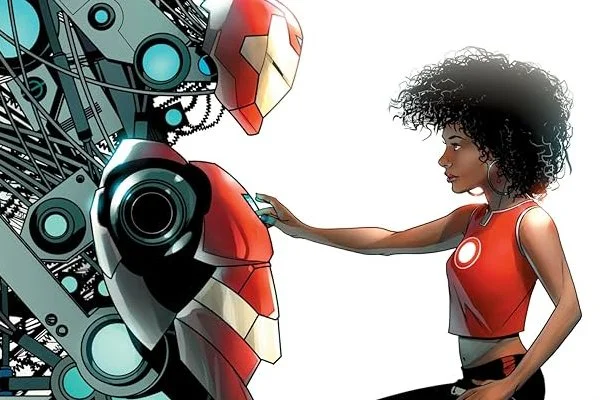
And the hypocrisy? Riri Williams was created in 2016 by Brian Michael Bendis and Mike Deodato — years before "DEI" became a catch-all boogeyman. She wasn't cooked up by some corporate diversity committee. She was created because she was a compelling, brilliant character — and because the Marvel Universe needed someone like her.
Dominique Thorne is portraying Riri, and she’s killing it. She’s not replacing Tony Stark. She’s not erasing his legacy. She’s carving out her own space — one that should’ve existed long before now. But bad-faith actors are intentionally framing her as a “replacement” to stoke rage, as if a young Black genius building a suit of armor is somehow offensive.
Spoiler: It’s not.
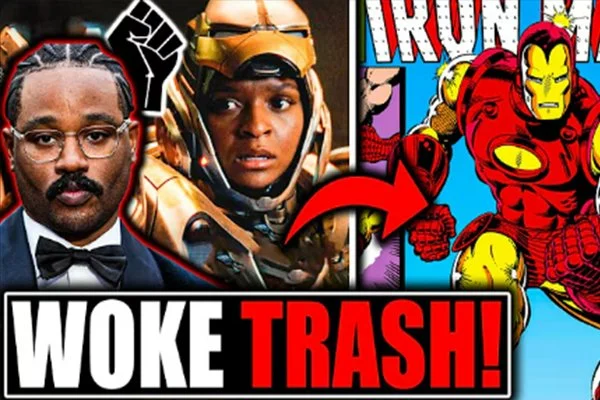
What’s offensive is the sheer number of grown adults gleefully fanning the flames of this culture war. What’s offensive is that comic book conversations — a space that once championed the outsider — have become breeding grounds for bigotry. And let’s be clear: if your first reaction to a new character is to question their race, gender, or sexuality before their story — you are not a “true fan.” You’re a gatekeeper. A bigot. A coward hiding behind nostalgia.
Sorry if strong, independent women, make you uncomfortable. I don’t call that regressive. I call that growth. I like characters like Gamora, Yelena Belova, and Selina Kyle — women who don’t need to shrink themselves to fit outdated molds.
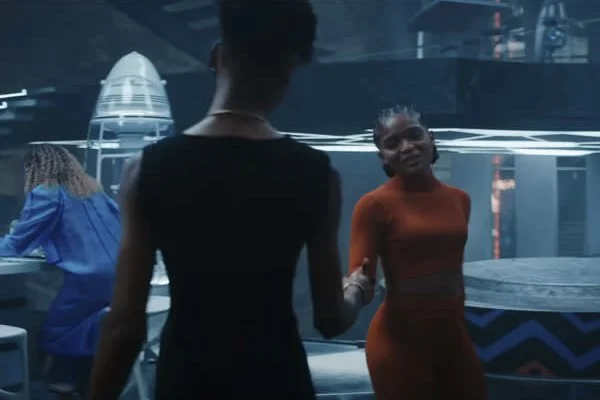
If we listened to the same people crying about Ironheart now, we wouldn’t have gotten Miles Morales. We wouldn’t have gotten Kamala Khan. We wouldn’t have gotten Shuri or Sam Wilson or America Chavez. These characters matter. Not just because of what they look like, but because of what they represent.
They said Spider-Man couldn’t be Black.
They said Black Panther wouldn’t work.
They said diversity was the final nail in Marvel’s coffin.
They’ve been wrong every single time.
And if comic book media has no room for people like Riri, like Miles, like Kamala — then maybe it has no room for you.
The Real Black Widow Has Arrived — And It's Not Natasha
Comment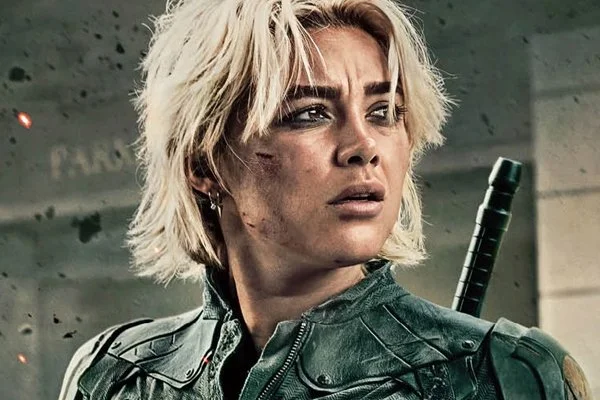
Let’s get this out of the way early: this isn’t a hit piece on Scarlett Johansson. Her portrayal of Natasha Romanoff helped anchor the MCU for over a decade. She had iconic moments, real gravitas, and undeniable chemistry with nearly every Avenger she stood beside. But after Thunderbolts, it’s time to acknowledge something fans have been quietly realizing—Yelena Belova is the better Black Widow.
Not just more fun. Not just more layered. But closer to the character’s comic book DNA and more in step with what audiences expect from complex, modern heroes.
Florence Pugh didn’t just inherit the legacy—she transformed it. (Extremely Minor Thunderbolts Spoilers)
Natasha Romanoff - The Off-Screen Opperative
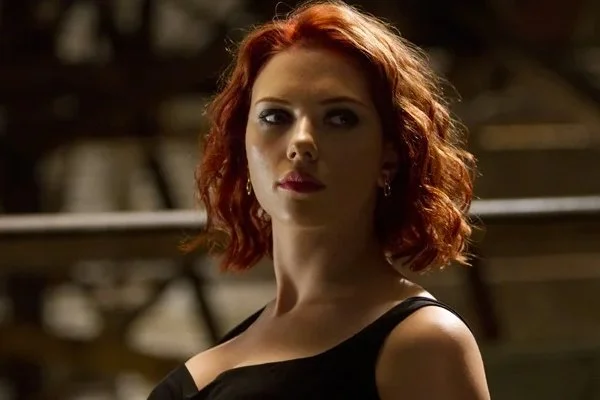
In the comics, Natasha is a study in contradictions: a former villain, a KGB-trained operative, a woman built on deception and betrayal. She's the epitome of the Russian femme fatale—a trope that only works when audiences are shown the full depth of that duplicity.
But in the MCU, Natasha never fully got that treatment.
We’re told she has a “red ledger.” That Budapest was messy. That she has blood on her hands. But we’re never truly shown the horrors she’s haunted by. Her darkest moments are usually referenced in past tense, and her motivations are more whispered than explored. When you stack that against her comic counterpart—who’s morally murky and deeply manipulative—it becomes clear the films played it safe.
And by the time her solo movie arrived, she had already died. Her arc was retroactive instead of proactive, robbing her story of weight it could have carried from the beginning.
Meet The New Black Widow
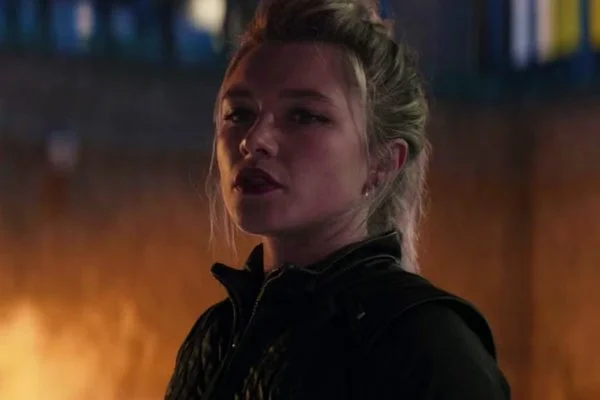
Now enter Yelena. Florence Pugh's introduction in Black Widow was a mission statement. Yelena is pragmatic, efficient, sarcastic, and deadly—immediately more morally ambiguous than Natasha was allowed to be across multiple films. She murders in her very first scene. She jokes about mind control with haunting realism. She calls out Natasha’s “posing,” mocking the performative elements that always seemed to linger around the original Widow.
But it’s in Thunderbolts that Yelena truly evolves. She becomes both the emotional core and the tactical spine of the group. She pulls a broken teammate from the brink, but by the end of the movie, it’s clear that she’s also playing her own chess game. Valentina—one of the MCU’s most composed manipulators—looks legitimately afraid of what Yelena might do next. That’s a power dynamic shift we never saw Natasha pull off.
Yelena Isn’t A Plot Device - She’s The Plot

What sets Yelena apart isn’t just her skill—it’s her agency. She’s not a sidekick, a love interest, or the token woman rounding out the team. She’s her own person, with her own goals, trauma, and decisions.
When Natasha was on screen, she often existed in orbit around male characters. Tony flirted with her. Steve respected her. Bruce broke her heart. Clint knew her past. But rarely did Natasha define the story itself.
Yelena, on the other hand, is the story. Her trauma isn’t just window dressing—it’s a living part of how she moves through the world. Her redemption arc is compelling because we saw the depths she came from. Her humor is sharp, awkward, and distinctly her own. She feels real. And more than anything, she feels free.
Renovating A Legacy
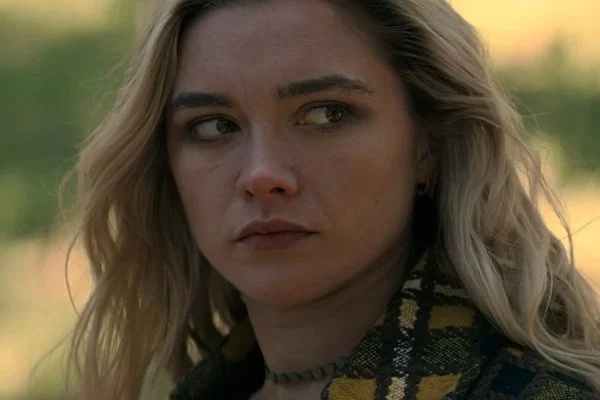
And maybe that’s the real win here—Yelena represents a shift in how women are written in superhero films.
The “sexy spy with a tragic past” isn’t a dead trope. It can still work—when we’re shown the full weight of that past. When we see the darkness, the conflict, the scars. With Natasha, most of that was off-screen. With Yelena, we’re in the trenches with her. We feel the damage, and the humor she uses to survive it.
She’s still stylish, still cool, but she’s also awkward, combative, deeply emotional, and sometimes messy. That’s what makes her relatable. That’s what makes her modern. And that’s why fans aren’t just admiring her—they’re rooting for her. She is without a doubt, one of the best, if not the best, MCU legacy characters in the franchise.
Reddit threads, YouTube breakdowns, and TikTok edits are all filled with fans who see Florence Pugh’s Yelena as the character Black Widow was always meant to be. That’s not a slight on Scarlett—it’s a testament to how far storytelling has come.
A New Widow For A New Generation
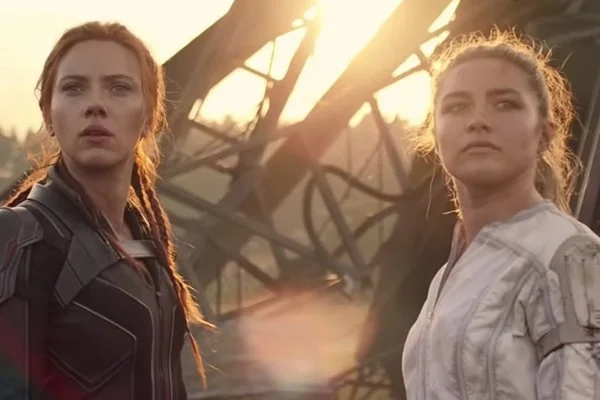
This isn’t about disrespecting Natasha Romanoff. It's about recognizing that her successor has done something rare: she’s taken a legacy character and made it more grounded, more dimensional, and—frankly—more interesting. Yelena Belova isn’t a replacement. She’s a revelation. And if Marvel’s smart, she’s also the future.
The truth is, we don’t have to choose one or the other. Natasha Romanoff walked so Yelena Belova could run—and now, Yelena is sprinting toward a future where complex, powerful women lead their own stories unapologetically. It’s exciting to imagine where her journey will go next. If Thunderbolts was any indication, we’re just scratching the surface of what this new Black Widow can be. And for fans who’ve been waiting for a Widow with grit, charm, and real narrative weight?
The best is yet to come.
7 Shocking Twists in Thunderbolts* That Changed the MCU Forever
MoviesComment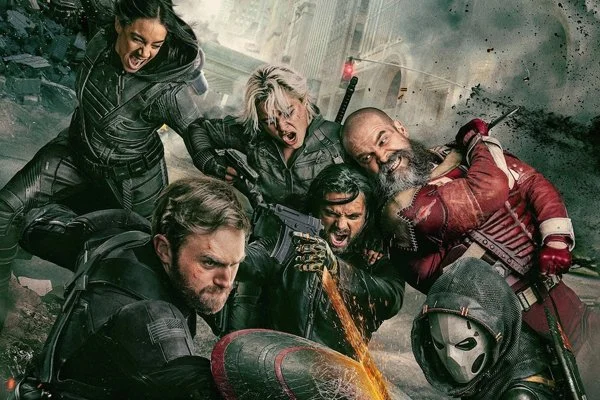
For a while now, the Marvel Cinematic Universe has felt like it’s been stuck in a holding pattern. With scattered storylines, delayed payoffs, and a growing sense of uncertainty about what comes next, fans have been waiting for something—anything—to shake up the status quo. Enter Thunderbolts*. What looked like a ragtag mission featuring some of the MCU’s most unlikely allies turned out to be a pivotal moment in the franchise. Not only did it deliver unexpected twists and high-stakes drama, but it also planted seeds for the MCU’s future in ways that can’t be ignored. Here are 7 ways the events of Thunderbolts* changed the MCU forever.
SPOILER WARNING FOR ALL THINGS THUNDERBOLTS*
1. Red Hulk’s Fury Enabled Valentina’s Ascension
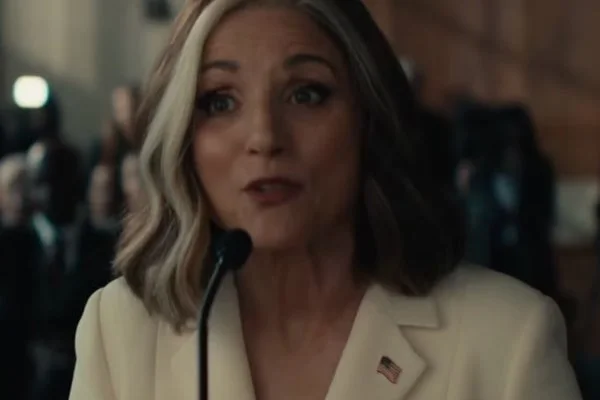
Thunderbolts takes place after the events of Captain America: Brave New World, where President Thaddeus “Thunderbolt” Ross goes full Red Hulk and unleashes chaos on Washington, D.C. The aftermath is devastating—not just in terms of destruction, but in the trust shattered at the highest levels of government. Ross is forced to step down, leaving behind a fractured administration and a gaping power vacuum at the top.
That vacuum is exactly what Valentina Allegra de Fontaine has been waiting for. Now operating as Director of the CIA, she quickly moves to tighten her grip on influence. With Ross gone, Val erases whatever shady paper trails connect her to the darker side of OXE Corp, dodges impeachment, and emerges politically unscathed. In fact, she’s more powerful than ever—arguably the most dangerous non-powered player in the MCU.
But power without a symbol is just a shadow. And Val’s next move makes her intentions crystal clear…
2. Earth’s Mightiest PR Stunt
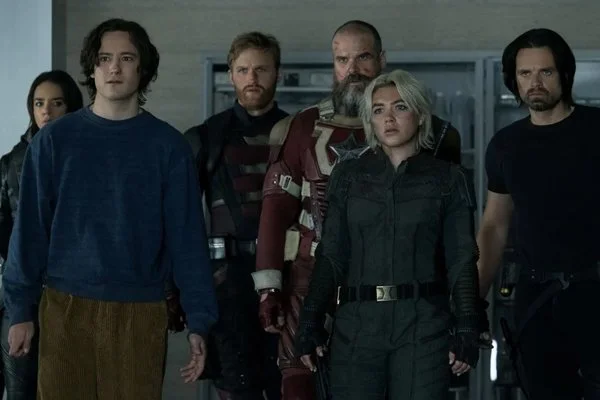
With the dust still settling from Ross’s resignation, Valentina seizes the moment and steps into the spotlight. In front of the press—and the world—she unveils her boldest play yet: the New Avengers. It’s a full-on rebrand of her black-ops squad, and it includes U.S. Agent, Red Guardian, Ghost, Yelena, Bucky, and maybe even Bob. Yes, that Bob.
According to Val, she’s been working on this team “for quite some time,” but it’s clearly a calculated PR stunt—meant to restore public faith in superhero oversight while laundering her own shady past. And thanks to a one-year time jump, we see just how far the brand has come. The team now sports official insignia, public support, and government backing. Unlike the Avengers of old, this squad doesn’t answer to Nick Fury or act independently. They work for the U.S. government, with Valentina calling the shots.
In her own words, “Righteousness without power is just an opinion.” And now, with both power and public favor, Valentina’s vision is in full motion. But not everyone in the superhero community is going to be thrilled about this…
3. A New Team, a New Conflict: Sam Wilson's Avengers
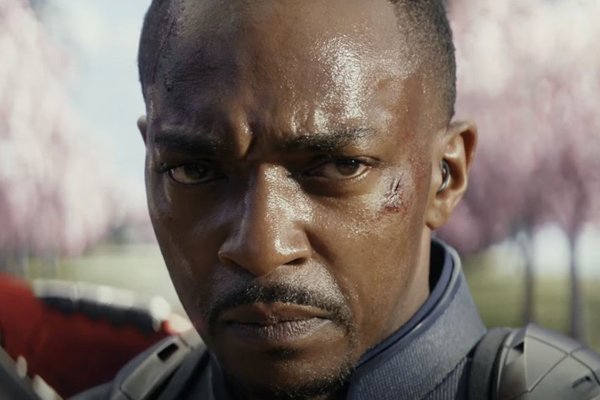
Sure, Earth has a new set of Avengers, but that doesn’t mean the former members are down with this rebranding. In a post-credit scene, Sam Wilson, the new Captain America, makes it clear that he isn’t on board with the idea of the New Avengers carrying the same name as the iconic team he was once a part of. According to Sam, the Avengers aren’t meant to be government puppets, and after all the history they've shared, he doesn’t believe they should be tied to Valentina's agenda.
Bucky, as always, has a nuanced take on the situation. He and Sam had a talk about it, but in his words, “it did not go well.” It’s an interesting dynamic, and even more intriguing is the possibility that Sam may form his own version of the team—one that operates outside the government's influence, especially when it comes to Valentina’s grip on power. A showdown over the very name of the Avengers might be brewing, and it could open the door for Sam to assemble his own crew.
This idea of Wilson’s Avengers comes straight from the comics, where we saw Steve Rogers lead his own “Secret Avengers” while Norman Osborn formed his Dark Avengers. The potential lineup for Sam’s team is wide open: Thor, Shang-Chi, Doctor Strange—just to name a few. But the implications are bigger than just who makes the cut. Could we see another Marvel Civil War?
We’ll have to keep watching to find out.
4. Ticking Time-Bob
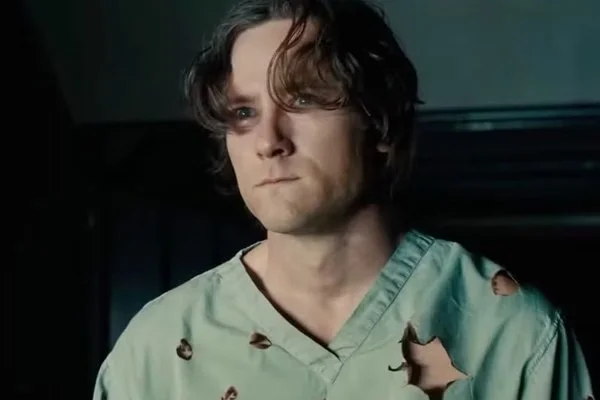
Although Thunderbolts shows that the team has managed to subdue the Void side of Bob’s personality, make no mistake—the threat is far from gone. Bob, now part of the New Avengers, is seen hanging out in their shiny new headquarters. He claims he doesn’t transform into the Sentry anymore, but only because he can’t be the Golden Guardian without releasing the Void. It’s a chilling statement, and with it comes the haunting question: when—not if—will the Void return?
We’ve only begun to scratch the surface of what Bob can do as a hero, but the same can be said about the terrifying darkness the Void can bring. If Bob’s dark half re-emerges, the destruction could be catastrophic, and it’s clear that the stakes are high. Yelena, fully aware of Bob’s potential for both heroism and chaos, has sworn to keep him close. But is it wise to keep such a volatile figure within a government-backed super team? Valentina may think so, but the real question remains: how long before Bob’s inner demons break free again, potentially endangering everyone he’s supposed to protect?
5. The Superhero Arms Race Heats Up
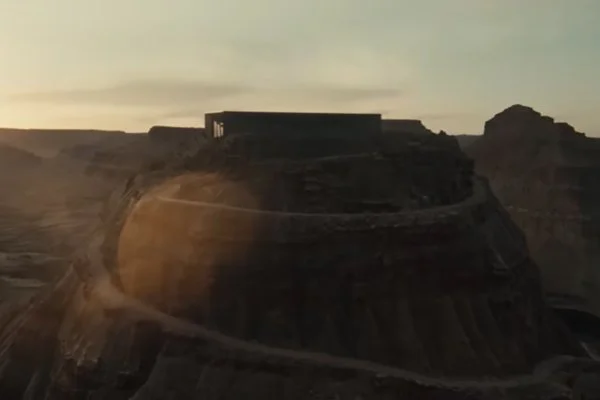
The race to build the perfect hero began with Steve Rogers. Ever since the U.S. turned a skinny kid into Captain America, the rest of the world has been trying to catch up. Bruce Banner, Red Guardian, and even Bucky Barnes were all products of this long-running push to weaponize superhumans.
Thunderbolts confirms what we've suspected for years: that race is far from over. Valentina may have wiped OXE Corp off the map, but she freely admits other nations are already developing enhanced individuals of their own. This isn’t hypothetical — it's happening now.
America’s New Avengers aren’t just about optics — they’re a strategic countermeasure. A way to stay ahead in a world where nations like Wakanda, Ta Lo, and even the Talokanil already have powerful champions at their disposal. It’s no longer about who has the strongest army — it’s about who has the strongest heroes.
What happens when those heroes are forced to pick sides? When countries deploy metahumans like missiles? We’re not just watching the next phase of global politics unfold — we might be seeing the early days of a powered cold war.
6. Avengers?! We Have A (Space) Problem!
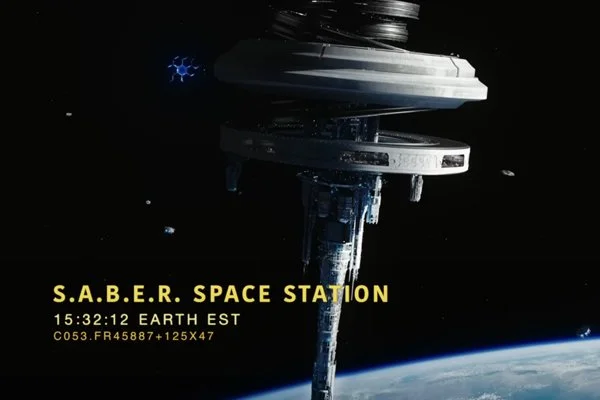
While Valentina’s shiny new Avengers seem ready to tackle any terrestrial threat she throws their way, there’s one battlefield they’re suspiciously being kept away from: space. In the final moments of the film, Yelena casually mentions a growing “space crisis”—something she and the rest of the team haven’t been briefed on. The fact that even her sharp instincts are being left out of the loop suggests something massive is unfolding beyond Earth’s atmosphere… and someone doesn’t want them knowing about it. So what exactly is happening in the stars? And why has Valentina chosen to keep her own hand-picked team in the dark?
The state of Cosmic Marvel is murky. Nick Fury is still operating from the S.A.B.E.R. satellite with his Skrull wife, presumably monitoring galactic affairs. A newly assembled variant of the Guardians of the Galaxy is still patrolling the cosmos. The Hulk has returned from outer space with a son, bringing his own mysteries back to Earth. Even more curious? Both Star-Lord and Captain Marvel, two of the MCU's most seasoned cosmic veterans, are currently grounded on Earth. With them out of orbit, it’s entirely possible a new threat has risen in their absence.
Whether this is setting the stage for Avengers: Doomsday, Nova, Fantastic Four, or something completely unexpected, one thing is clear: Valentina is choosing not to inform her “Avengers” about it. And when your boss keeps you out of the biggest fight in the galaxy, it usually means you’re being protected… or you're being used. Whatever the reason, the cosmic storm is coming—and the New Avengers are the last to know.
7. Fantastic Fourshadowing

The biggest bombshell in Thunderbolts comes during its final post-credits scene — and it’s a moment that could reshape the MCU forever.
A mysterious ship breaches Earth’s atmosphere, caught on a satellite feed. It’s sleek, retro-futuristic, and nothing like anything we’ve seen in this timeline. As the rocket turns, it reveals a symbol no one could mistake — a glowing “4” emblazoned across its hull. At that exact moment, Michael Giacchino’s mischievous Fantastic Four: First Steps score swells, confirming what fans have long been waiting for: Marvel’s First Family has officially arrived. The scene cuts out, but the implications couldn’t be more urgent.
From the First Steps trailer, we know Reed Richards and his team have been battling Galactus, Eater of Worlds, after receiving a dire warning from his herald, Shalla-Bal. If the Fantastic Four have crossed into this universe, then something critical has happened. Either Galactus won, and they had no choice but to flee their doomed dimension — racing here in a desperate bid to regroup, survive, and warn whoever will listen, or Galactus was defeated, but in the aftermath, something even worse is rising — a threat powerful enough to shake the multiverse and send Marvel’s most brilliant minds looking for reinforcements. One thing is clear, their sudden arrival isn’t a cameo. It’s a countdown. However this team factors into the future of the MCU… I’m sure it’ll be fantastic.
The MCU is on the brink of a monumental shift, and it’s impossible to know exactly what comes next. With new power structures emerging, and global superhuman forces being unleashed, the landscape is forever changing. Will the heroes of today be able to keep up with the escalating threats, or will the world be torn apart by the very powers they’ve unleashed? One thing is certain: things will never be the same. The clock is ticking, and as these dangerous games unfold, the MCU is headed for a future where nothing is guaranteed, besides the fact that all these roads…lead directly to Doom.
REVIEW: Predator VS Spider-Man #1 - P.V.S.: Dawn of Slaughter
Comment
Predator VS Spider-Man #1 Variant Cover by Ryan Brown
Writer: Benjamin Percy Artist: Marcelo Ferreira Inker: Jay Leisten Colorist: Frank D'Armata Letterer: Clayton Cowles
The city’s heating up, the bodies are skinned, and Peter Parker is one wrong turn away from a face-off with death itself. Let’s dive right into this recap and review of Predator Vs Spider-Man #1!
WARNING: Spoilers and graphic images to follow
1. The Heat Is On
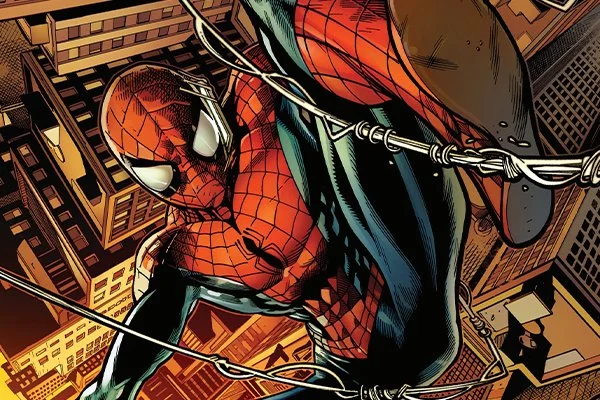
Predator vs. Spider-Man #1 opens in a sweltering New York City, where the rising temperature feels like a ticking time bomb. Detective LaPearl is knee-deep in one of the most disturbing crime scenes Marvel’s ever published: multiple men, skinned alive and missing body parts. The details are grotesque, the tension immediate. And before the real forensics team can arrive, LaPearl realizes the CSI she was chatting with has already vanished—because it wasn’t a CSI at all. It was Peter Parker.
That’s the kind of book we’re dealing with. Tense. Twisty. And absolutely unwilling to pull its punches.
2. The Hunter Strikes First
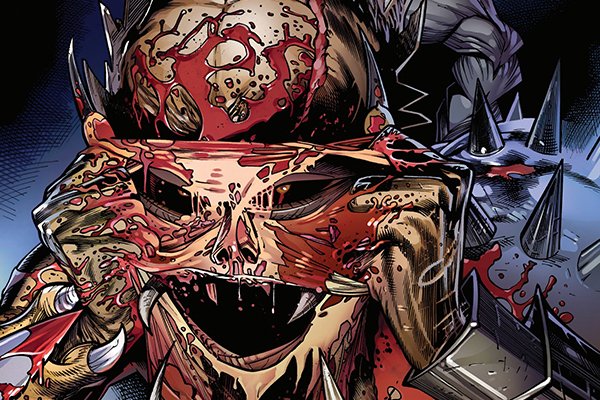
Once Peter suits up, things spiral fast. A speeding van, a group of bank robbers in alien masks, and a close call with some kids playing by a fire hydrant give us our superhero action beat. But when the robbers reach their hideout, the issue leans fully into horror.
One by one, the criminals are picked off in the shadows—culminating in one of the most gruesome moments in recent Marvel memory: a full-on face-rip straight out of a Predator film. Artist Marcelo Ferreira doesn't hold back here, and it's stunningly effective.
Peter, meanwhile, stumbles across the aftermath—bodies skinned, limbs missing. He thinks it’s a serial killer. We know it’s something much worse.
3. Darkness Below, Chaos Above
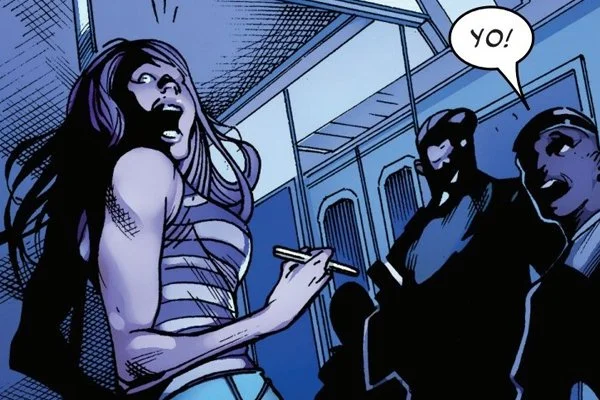
Down in the subway, Mary Jane gets her own horror movie moment. Power goes out. A fellow passenger panics. MJ offers comfort and shines her phone light out the window—only to find the Predator, mask made of human skin and all, lurking in the darkness like a monster from myth.
It’s terrifying. And back above ground, Peter and Jonah decide to go public. Jameson uses his paper to stoke panic. LaPearl, pissed that her case has leaked, wants to bring Peter in for questioning. But he’s already back in the suit—and MJ still isn’t home.
4. Percy and Ferreira Understand the Assignment
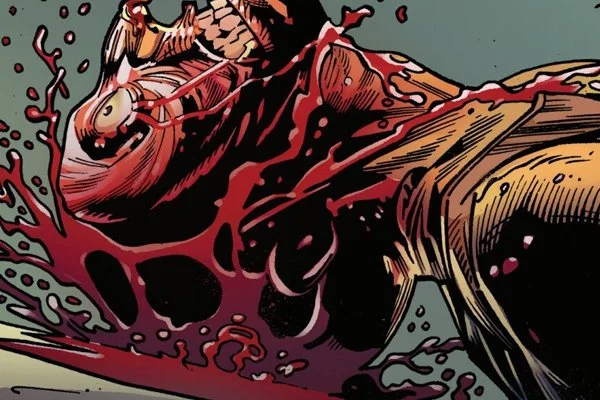
I’d like to take a second to gush about the creative team behind this series. Writer Benjamin Percy (Predator vs. Wolverine, Wolverine, X-Force) proves he knows how to make the Predator work in a superhero universe. His horror sensibilities are sharp, his pacing relentless, and he strikes a perfect balance between gritty realism and Marvel’s signature character voice.
Marcelo Ferreira (Miles Morales: Spider-Man, Doctor Strange) brings dynamic action and grotesque, haunting detail to every panel. The more brutal scenes (like a face being peeled away from bone) are nightmare-inducing, but they never feel excessive—just chillingly effective. Inked by Jay Leisten and colored by Frank D’Armata, the visuals pop with just enough grime and shadow to make you sweat alongside the characters.
5. A Savage Twist That Changes the Game
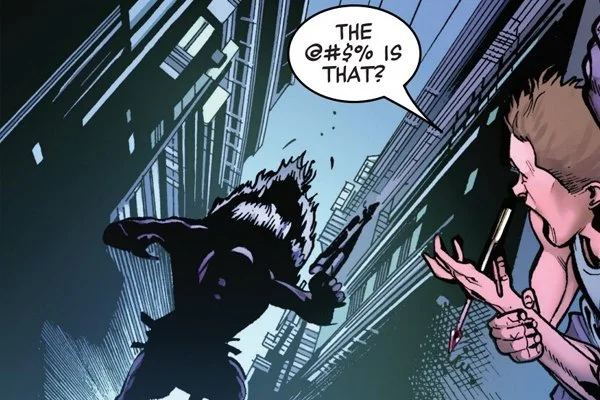
Ok, back to our recap. I must say, going into this series, I was cautious. Crossovers that don’t impact continuity often feel like filler. But Predator vs. Spider-Man avoids that trap by fully committing to the tone. This feels like a slasher story—with Spider-Man as the final girl and NYC as the haunted house.
And just when you think you’ve got it figured out—boom—Kraven the Hunter enters the fray. What started as Predator wearing Kraven’s narrative skin suddenly gets real. Now there are two apex predators on the loose.
So now we’re left wondering: Will Kraven the Hunter become Kraven the Hunted? Will Spider-Man have to team up with the devil he knows to fight the devil he doesn’t? Can NYC survive a war between a wall-crawler, a wild man, and a walking nightmare?
Final Verdict: A Brutal, Brilliant Kickoff
Predator vs. Spider-Man #1 doesn’t just mash up franchises—it sets the tone for a nightmare-fueled mini-series that earns its spot in both Marvel and Predator canon. The creative team is firing on all cylinders, delivering a book that reads like a horror-thriller with superhero stakes. It’s sharp, gory, fast-paced, and smarter than it has any right to be.
This isn’t a gimmick—it's a genuine clash of ideologies: the Predator's cold, calculated cruelty versus Spider-Man’s human heart and tireless heroism. With a shocking final-page twist and impeccable atmosphere, this issue does exactly what a first issue should do: hook you, haunt you, and leave you desperate for more.
REVIEW: Daredevil: Cold Day In Hell #1 - Old Man Murdock aka The Dark Matt Returns
Comment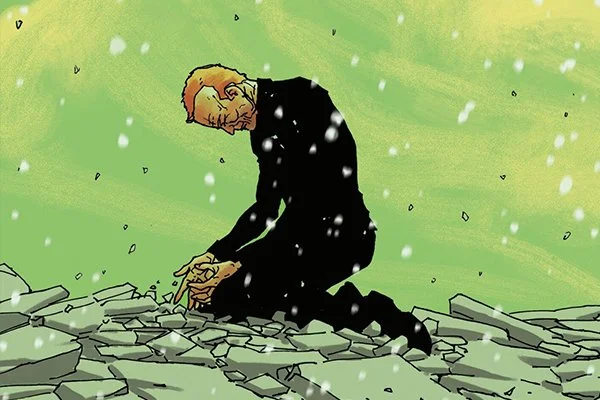
Marvel’s newest limited series throws Daredevil into a world that's barely holding together — and shows us a Matt Murdock who might not be either. Cold Day in Hell #1 is grim, heavy, and honestly, exactly the kind of Daredevil story I love. Here’s how the Devil found his way back… and why it might break him all over again.
SPOILERS
Ashes of a Fallen City
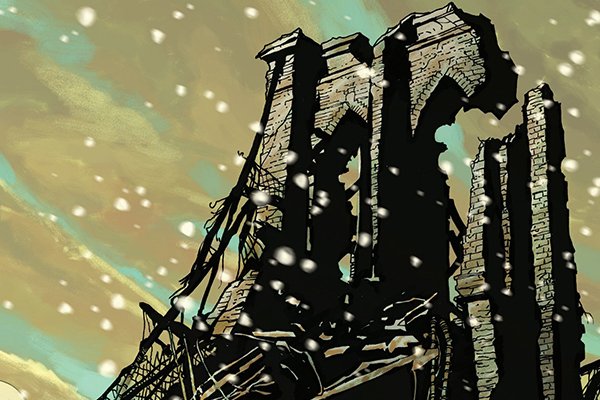
Daredevil: Cold Day in Hell wastes no time showing us that this isn’t the Marvel Universe we’re used to. New York is wrecked, divided, and rotting away after some world-breaking event that’s left society in shambles.
At the center of it all is Matt Murdock — older, weaker, and long since retired from being Daredevil. We first catch up with him visiting Wilson Fisk’s grave, casually mentioning a run-in with Jessica Jones. Nowadays, Matt’s way of helping is running a soup kitchen called Battlin’ Jack’s — a small light in a world that's mostly darkness.
The Man Without Hope
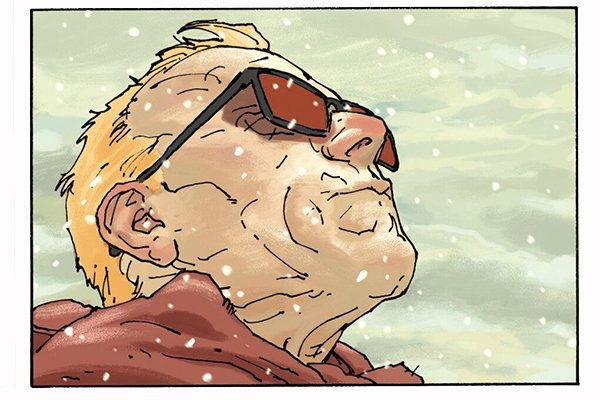
The creative team of Charles Soule and Steve McNiven does a killer job showing just how far Matt has fallen. He’s not a fighter anymore. He’s just a man trying to be kind — and even that doesn’t get him very far.
In one of the book’s rougher moments, Matt tries to help a homeless man only to get mugged and shoved down a flight of subway stairs for his trouble. Even after that, Matt still offers the guy a free meal at Battlin’ Jack’s. It’s a heartbreaking beat that reminds you: Matt Murdock might be broken, but he’s still Matt Murdock.
The Blast That Brought the Devil Back
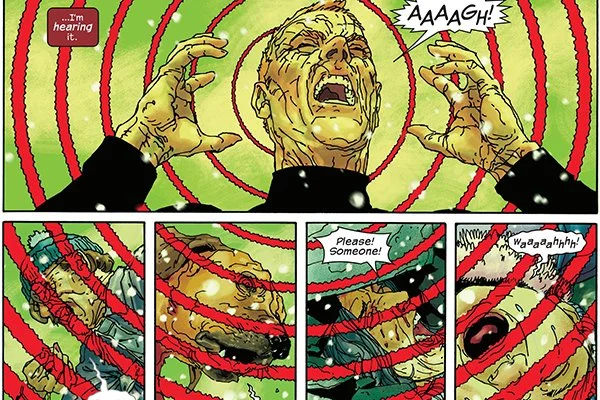
Everything changes after a dirty bomb rips through a subway station, filling it with some weird radioactive gas. Matt breathes it in — and in a brutal sensory overload, his superpowers come roaring back.
The creative team makes you feel it — the pain, the confusion, the flood of information. But once Matt gets a grip, the old instincts kick in. Even half-dead, Matt dives right back into saving people trapped in the wreckage. Because that’s just who he is.
A Soldier’s Last Stand
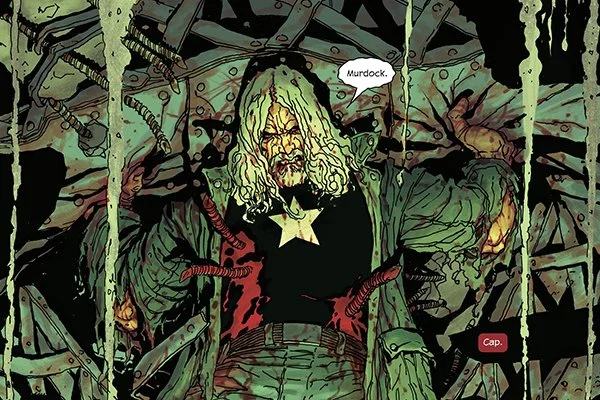
While pulling people from the rubble, Matt stumbles on a brutal sight: a battered, grizzled Captain America holding up a mountain of debris to protect a passed-out kid.
Cap’s dying, and he knows it. With what little strength he has left, he begs Matt to save the girl — calling her “the key to all this” — before finally succumbing to his injuries. It’s a gut punch. Even legends die in this world.
Blood in the Shadows
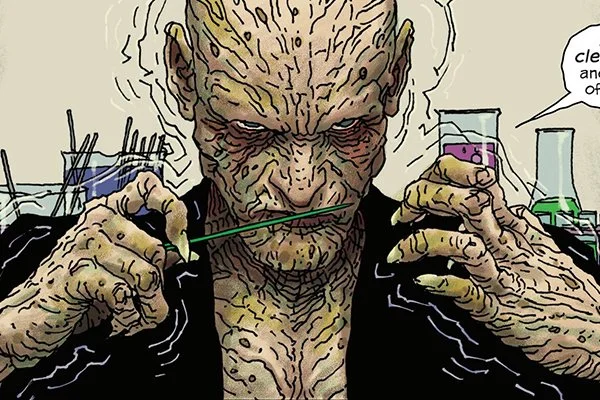
Later on, Matt spots a crew of hazmat-suited thugs trying to steal Cap’s shield for their mysterious boss. Despite being older and battered, Matt’s reflexes are back — and they’re deadly.
Tracking their scent, he tails them to a hideout straight out of a nightmare: a radiation-poisoned madman holding a limbless Frank Castle (yeah, the Punisher) hostage.
When the thugs mention their assailant was a redheaded blind man, the boss immediately figures it out: Daredevil is back.
And that boss?
Bullseye.
Still one of Matt’s most brutal, twisted enemies — and somehow even worse in this new world.
The Last Temptation of Matt Murdock

Meanwhile, Matt finds what’s left of his old Daredevil costume. It’s tattered. It’s dusty. And it’s exactly what he needs. The Devil of Hell’s Kitchen might be older, slower, and beat to hell — but he’s not done yet.
Verdict:
Daredevil: Cold Day in Hell #1 feels like a brutal mix of Old Man Logan and The Dark Knight Returns, but it still feels completely Daredevil at its heart. It is everything I love in an end-times story and there’s no getting around it — Daredevil: Cold Day in Hell wears its inspirations proudly on its sleeve. If you’re a fan of books like Old Man Logan or The Dark Knight Returns, you’ll feel right at home here.
But what makes this story stand out is that Matt Murdock isn’t just fighting against a broken world — he’s fighting against himself. Unlike Logan or Bruce, who come back because they’re angry, Matt comes back because he can’t refuse the call. Even when it gets him hurt. Even when it’s hopeless. It’s a quieter, sadder kind of return. And honestly? That makes it hit way harder.
The art carries so much of the heavy lifting, painting New York like a rotting fruit eaten away by war and violence. And through it all, Matt wrestles with the idea that maybe — just maybe — all of this is part of God’s plan. Maybe it is. Maybe it isn’t. But whether it’s faith or just stubbornness, Matt chooses to believe it. And that's enough to put the Devil back in the fight one last time. I can’t wait for Issue #2.
Superman #159 Review!
ReviewsCommentReview: Captain America Brave New World – A Safe Bet or a Missed Opportunity?
1 Comment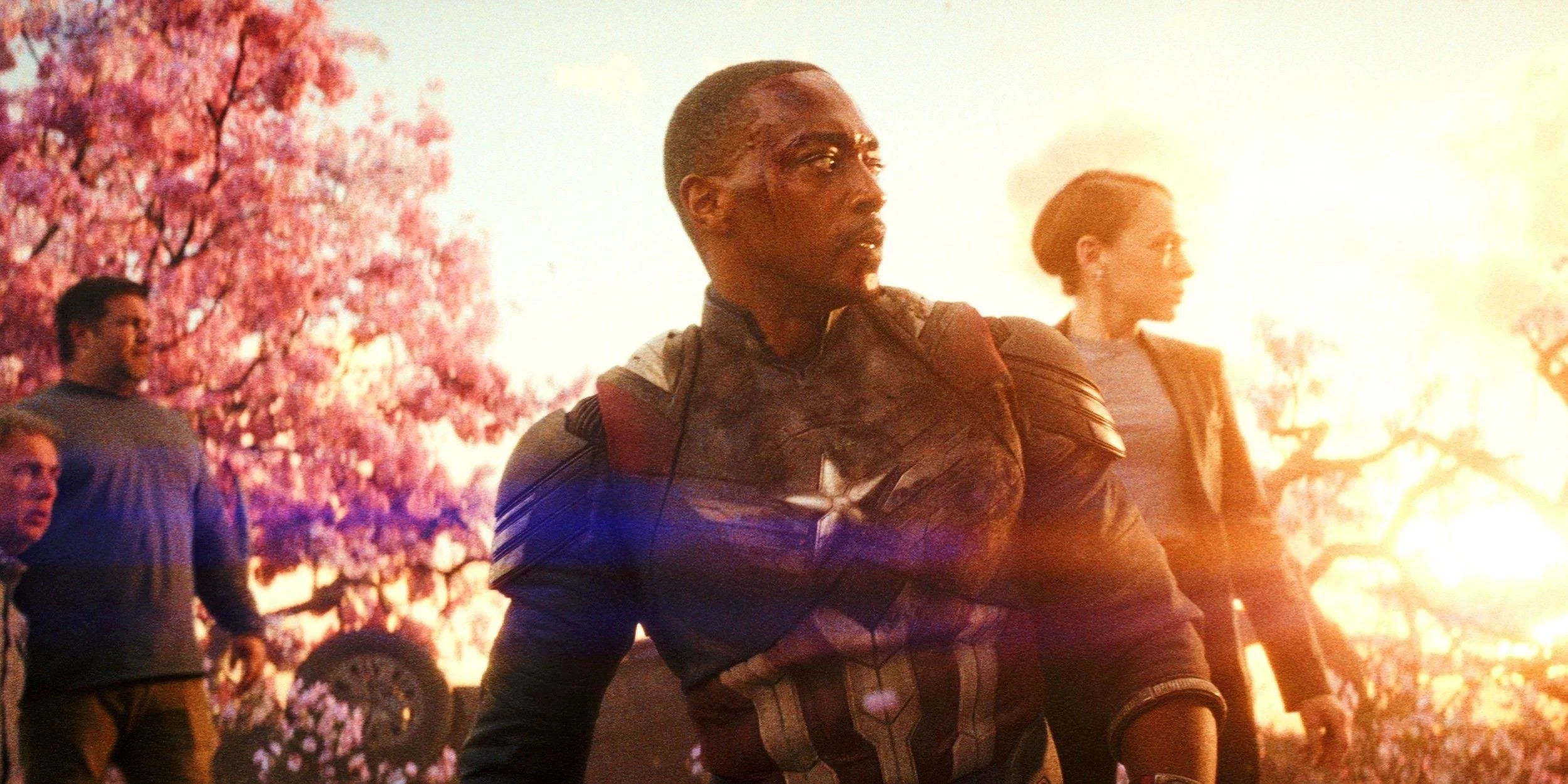
Picture this: you're at work, and you get a text from your partner, who’s home. They tell you not to worry about dinner tonight because they’re cooking and know exactly what you like—so get excited! The anticipation builds as the day goes on, especially since your partner is a skilled chef who’s prepared amazing meals for you before.
On your way home, though, you get another text, this time from a neighbor, asking if everything is okay because they saw smoke coming from your house. You assure them everything’s fine and arrive to find nothing out of the ordinary—except for the strong smell of something burnt. As you walk into the kitchen, you spot shrimp tails on the floor, a broken bottle of A1 sauce in the trash, and orange peels scattered on the counter. Your partner greets you with a sheepish smile and says, “Sorry, some of the cooking didn’t go as planned, but it’s ready!” They hand you a juicy cheeseburger and a side of fries.
You take a bite, and it’s good—no complaints there. But as you chew, you can’t help but wonder: what was the original meal supposed to be? All the signs point to something more elaborate—shrimp, A1 sauce, orange peels—but here you are with a burger instead. While the meal in front of you is fine, the thought of what you might have missed out on lingers. That’s exactly how it felt watching Captain America: Brave New World.
Minor Spoilers Ahead
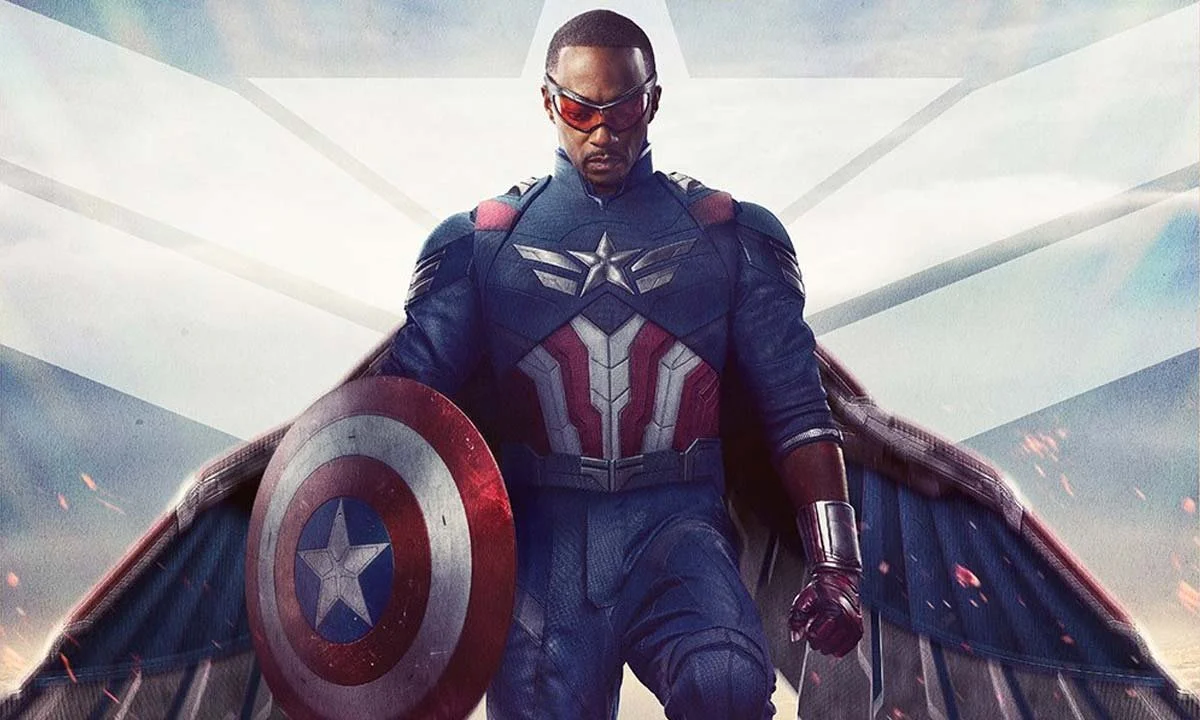
I should start this review by saying that I genuinely enjoyed the film. Maybe it was the immersive Dolby Atmos, maybe it was the thrill of seeing some of my favorite characters brought to life, or maybe it was just the company I was with—but at no point did I find myself checking my phone out of boredom or sighing at ridiculous plot points. It kept me engaged, and in today's blockbuster landscape, that’s already a win.
Let’s start with what worked. First and foremost, Anthony Mackie delivers a solid performance. Taking on the mantle of Captain America is no small feat, and this film does its best to portray Sam Wilson as, above all else, a good man—something essential to the character of Captain America. He’s not trying to be Steve Rogers; he’s trying to be the best version of himself, and that struggle is at the heart of his arc.
Action-wise, the film delivers some well-executed dogfight sequences, and it does make an effort to acknowledge lingering MCU plot threads—though not necessarily resolve them. We get nods to the Celestial corpse in the Indian Ocean, the absence of an Avengers team post-Endgame, President Ross’ declining health (as hinted at back in Civil War), and the scattered presence of former Black Widows across the globe. The issue is that, while it’s nice to see these loose ends addressed, the film doesn’t really commit to tying them up. At this point, it almost feels like too little, too late.
Ultimately, this movie doesn’t reinvent the wheel—but after recent missteps, I was beginning to wonder if Marvel even remembered what a wheel looked like in the first place. This film feels like a return to the spirit of Phase One, a back-to-basics approach reminiscent of The First Avenger—a grounded, character-driven story about identity, duty, and the weight of expectations.
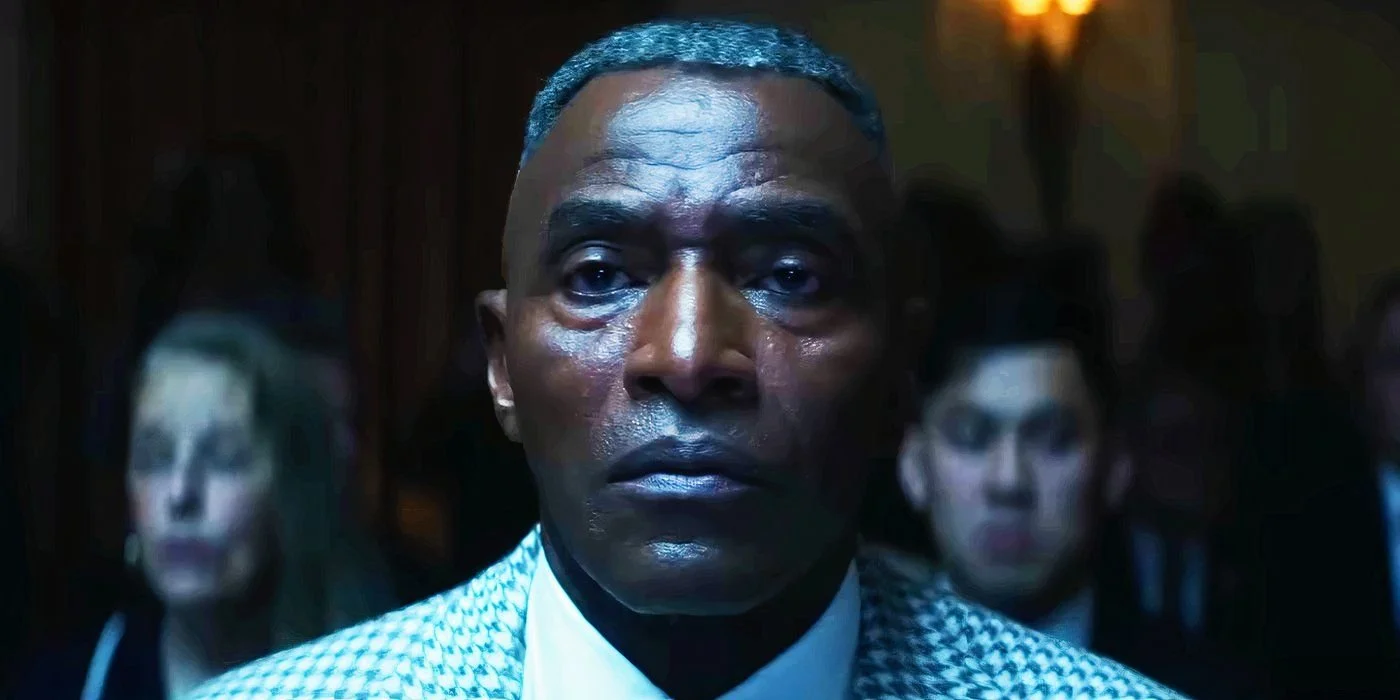
Carl Lumbly’s return as Isaiah Bradley, however, is what gives the film its emotional core. His presence adds weight to the story in a way few other elements do. Every time he’s on screen, the movie feels more grounded, more real. His storyline pulled at my heartstrings the most, and I found myself deeply invested in his journey. It’s through him that I figured out what the crux of this movie truly was.
At its core, the film is about men trying to do what they believe is being asked of them. Isaiah believes that disappearing is the best option because the last time he was a hero, he was imprisoned and erased. Sam keeps his head down, knowing he can never be Steve Rogers, and fearing that any statement he makes only worsens his situation. Joaquin Torres, eager to prove himself, goes above and beyond as Sam’s right-hand man, believing that’s the path to heroism. And then there’s President Ross, who leads with force and aggression because that’s what got him power in the first place.
These are misguided men trying to navigate a world that doesn’t always reward the right choices. It’s a theme that resonates, particularly when viewed through the lens of real-world struggles faced by veterans—who are statistically at a 72% higher risk of suicide due to untreated mental health issues and a lack of support. Watching these former servicemen try and, in many ways, fail to be the men they need to be adds an unexpected layer of realism that I appreciated.
But I do have two Major Issues (wink) with this film.
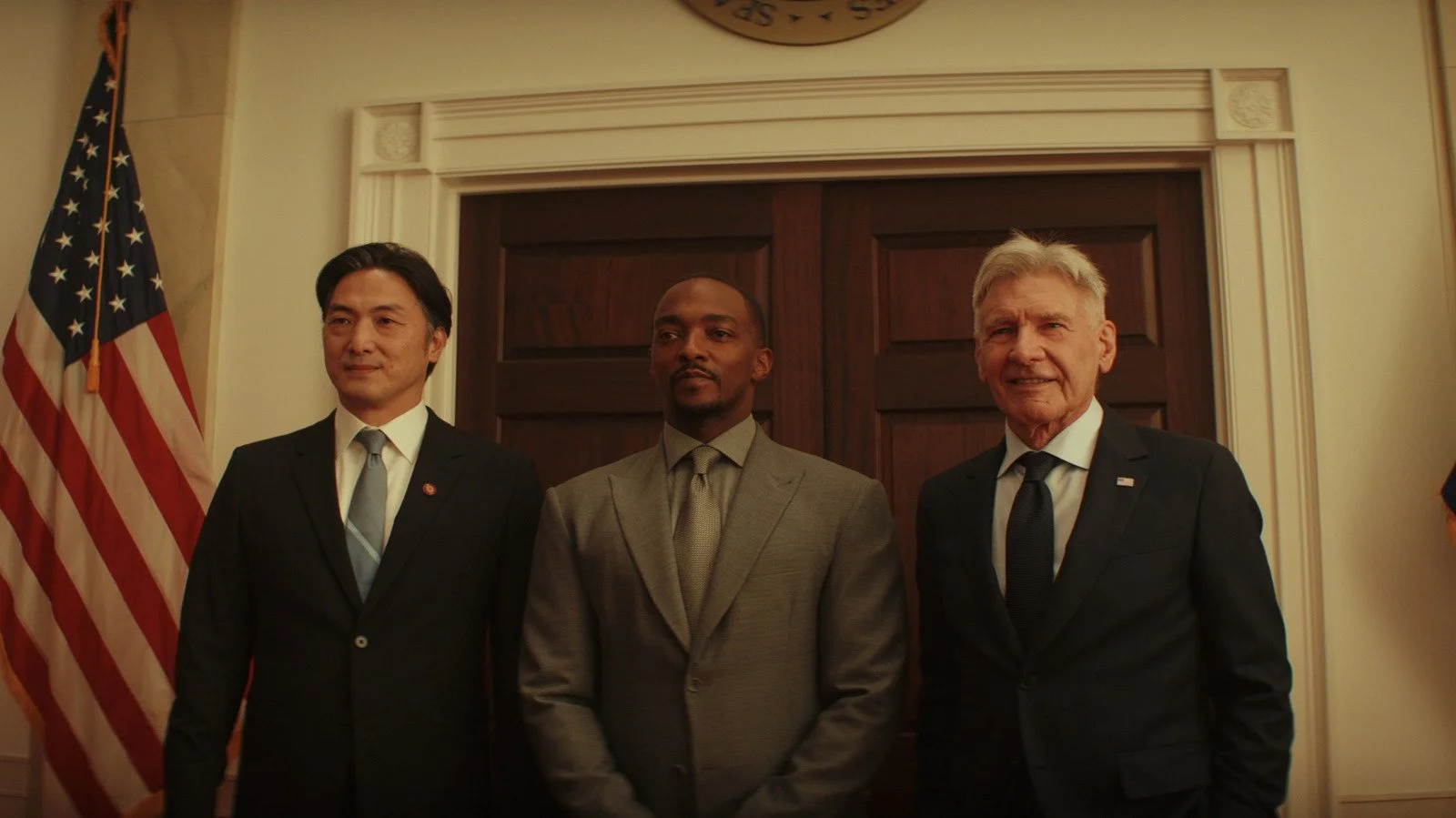
First, despite being titled Brave New World, the film itself doesn’t feel particularly brave. Marvel Studios was clearly aware of the backlash certain elements of the story would generate—a Black Captain America, an authoritarian leader turning into a red rage monster, an Israeli mercenary operating in a politically charged climate. Rather than embracing the controversy and making a bold statement, the film opts to play it frustratingly safe. There’s no denying that making a billion-dollar political film is impossible—politics are divisive, and neither Disney nor Marvel is willing to alienate half of their audience to make a point. But that reluctance waters down what could have been a more compelling and timely story.
The backlash against this film was loud before a single plot detail was even revealed, and I have a hard time believing any of it was in good faith. I remember the uproar when Sam first took up the shield in the comics, and the online vitriol surrounding this movie feels eerily similar. To be clear, disliking this film does not automatically align someone with those who weaponize terms like "DEI" as an insult. But it’s disappointing to see so many people rooting for this movie to fail for reasons that have little to do with the actual film itself.
By refusing to take a stand, Brave New World ends up feeling toothless—caught between wanting to say something meaningful and fearing the backlash of doing so. In its attempt to appease everyone, the film ultimately satisfies no one, resulting in an underwhelming experience that lacks the boldness its title suggests. Worse yet, this hesitation only serves to validate the worst corners of the fanbase—those who were already against the film simply because Sam Wilson is Captain America. Instead of challenging their preconceived notions or proving them wrong through strong storytelling, the movie’s reluctance to commit to its themes makes it easy for bad-faith critics to dismiss it as unnecessary or hollow. A film that could have been a powerful statement instead becomes just another entry in the MCU, easily brushed aside by those who wanted to see it fail from the start.
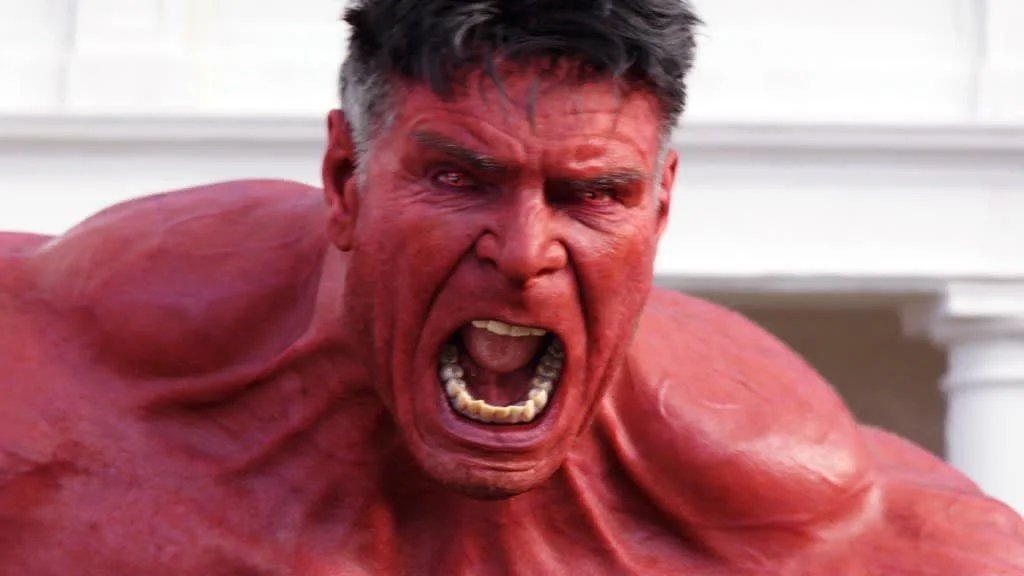
My second major issue is with Red Hulk and how Marvel handled his reveal. Imagine how much more impactful it would have been if we had gone into this movie without knowing that President Ross would transform. Instead, Marvel plastered Red Hulk across every poster, every trailer, making the eventual third-act showdown feel predictable and underwhelming. It robbed the film of tension—every prior scene with Ross felt less weighty because we already knew where it was heading.
Harrison Ford does a great job as Ross, but I never fully bought into this being the same character who hunted Bruce Banner in The Incredible Hulk. That sense of continuity was lacking, which hurt some of his emotional beats. As a metaphor, though, Red Hulk works—he represents unchecked ego, blind rage, and the corruption of power, forces that permeate both politics and public discourse today. His arc needed to end with self-realization rather than just brute-force defeat, and I think the film handled that aspect well.
But Marvel’s marketing department didn’t trust the movie enough to keep Rulk a secret. And they didn’t have enough confidence in Anthony Mackie’s Sam Wilson to carry the film without a headline-grabbing reveal. The result? They gave away their biggest twist in the very first trailer. Without a bigger surprise left in the chamber, what could have been a standout MCU entry ends up feeling merely serviceable.
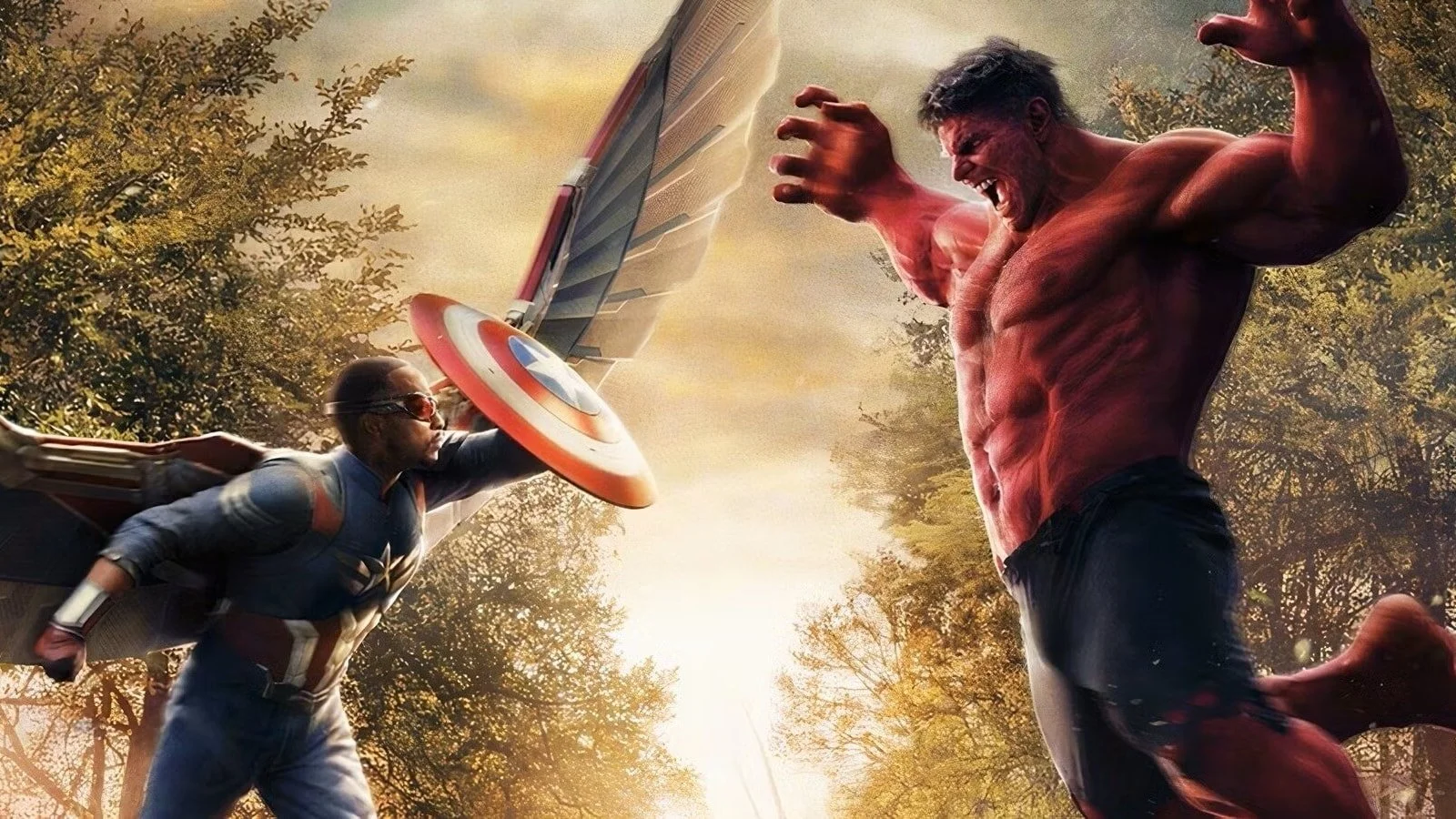
Brave New World is an enjoyable but flawed film—one that had the potential to be something great but played it too safe. Anthony Mackie shines as Sam Wilson, and Carl Lumbly delivers the film’s strongest moments, but the unwillingness to take a stand leaves the story feeling hesitant and underwhelming. Worse, by sidestepping controversy, Marvel unintentionally validated those who wanted this movie to fail from the start. That said, there are glimpses of what the MCU could be again—character-driven, grounded, and meaningful. This isn’t the bold new era Marvel needs, but if they’re willing to take risks again, there’s still hope for the future.
Rating: 3.5/5 Stars and Stripes
DC Comics PREVIEW: Superman #23 "Enemy of My Enemy”
Comment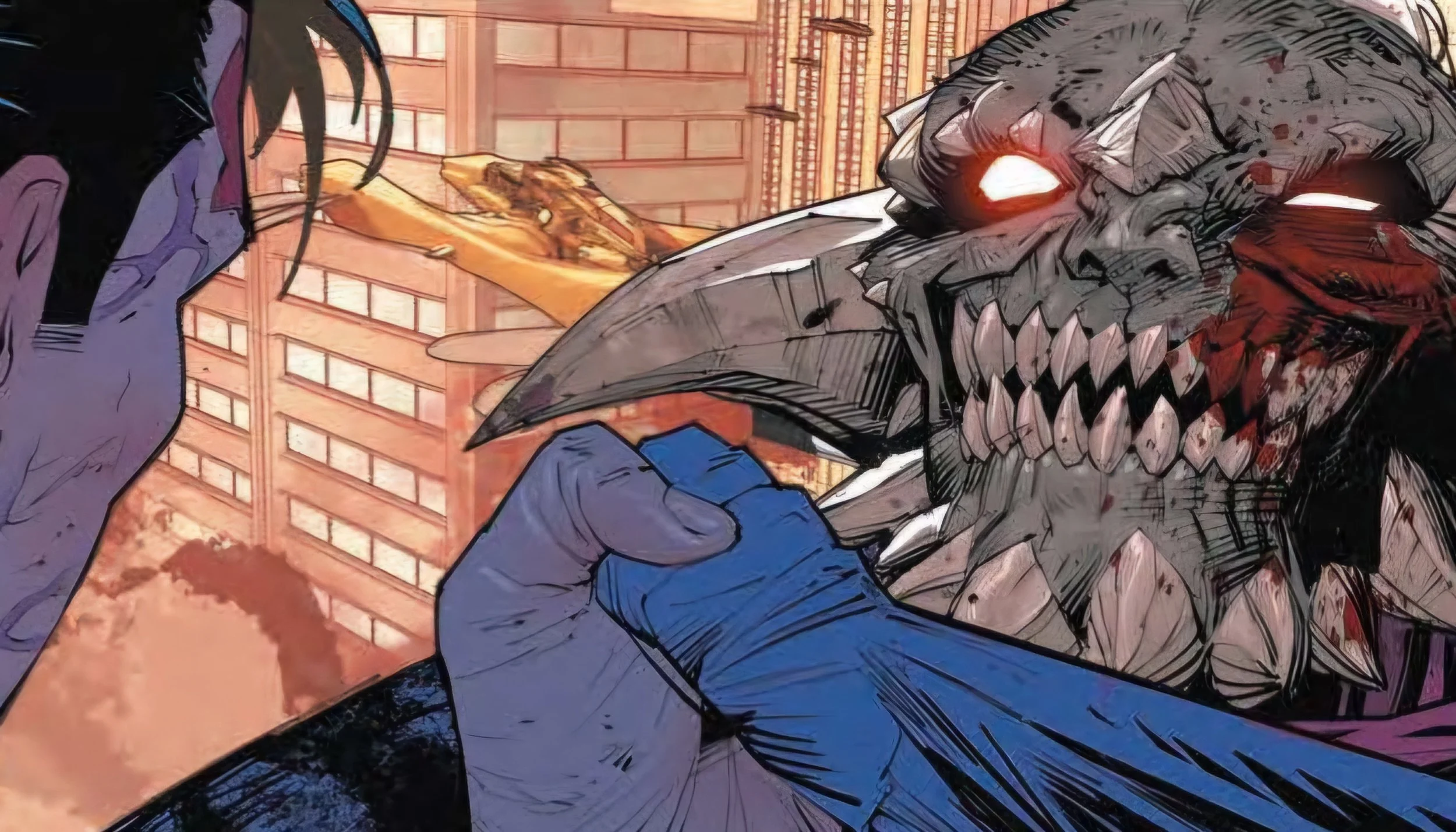
This ain’t your grandpa’s Doomday. Credit DC Comics
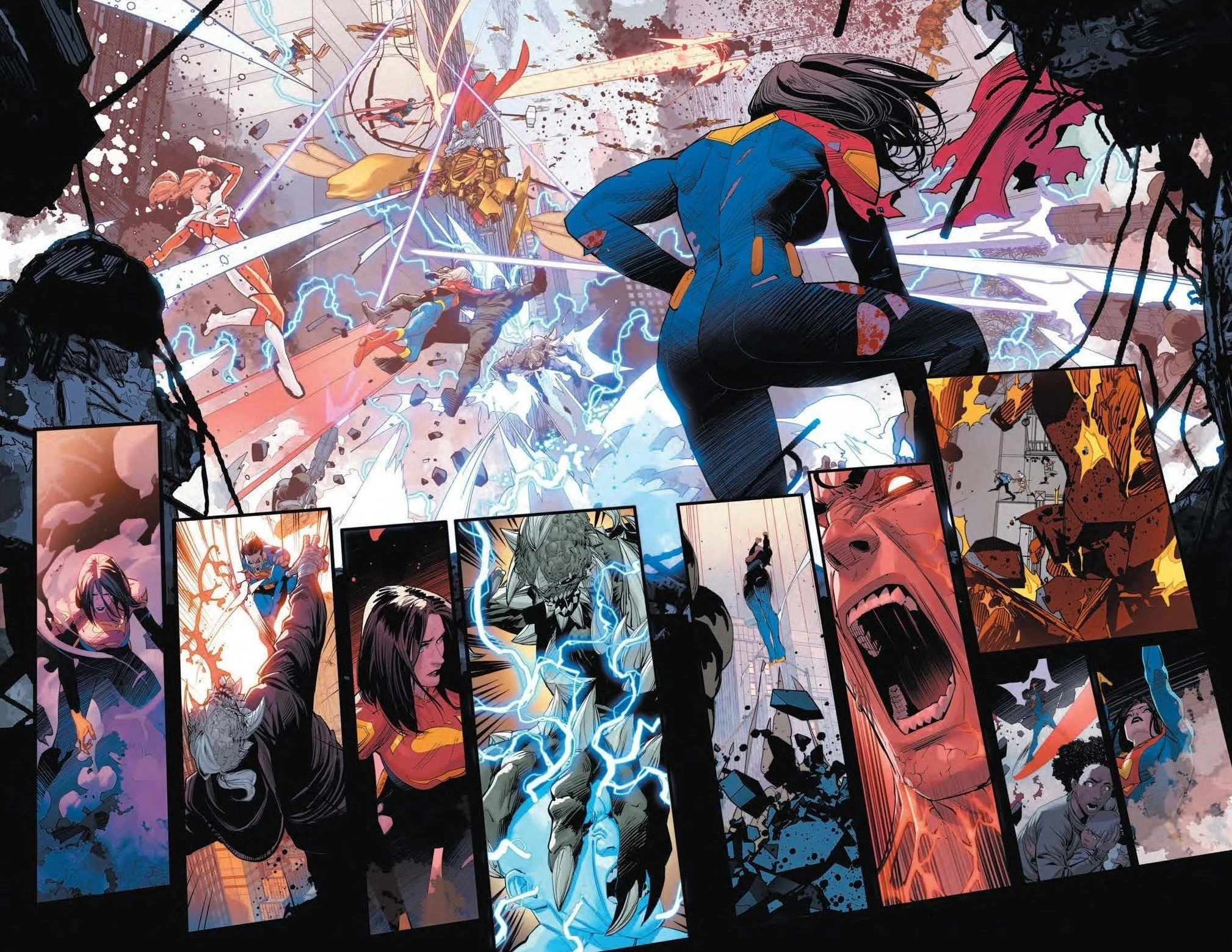
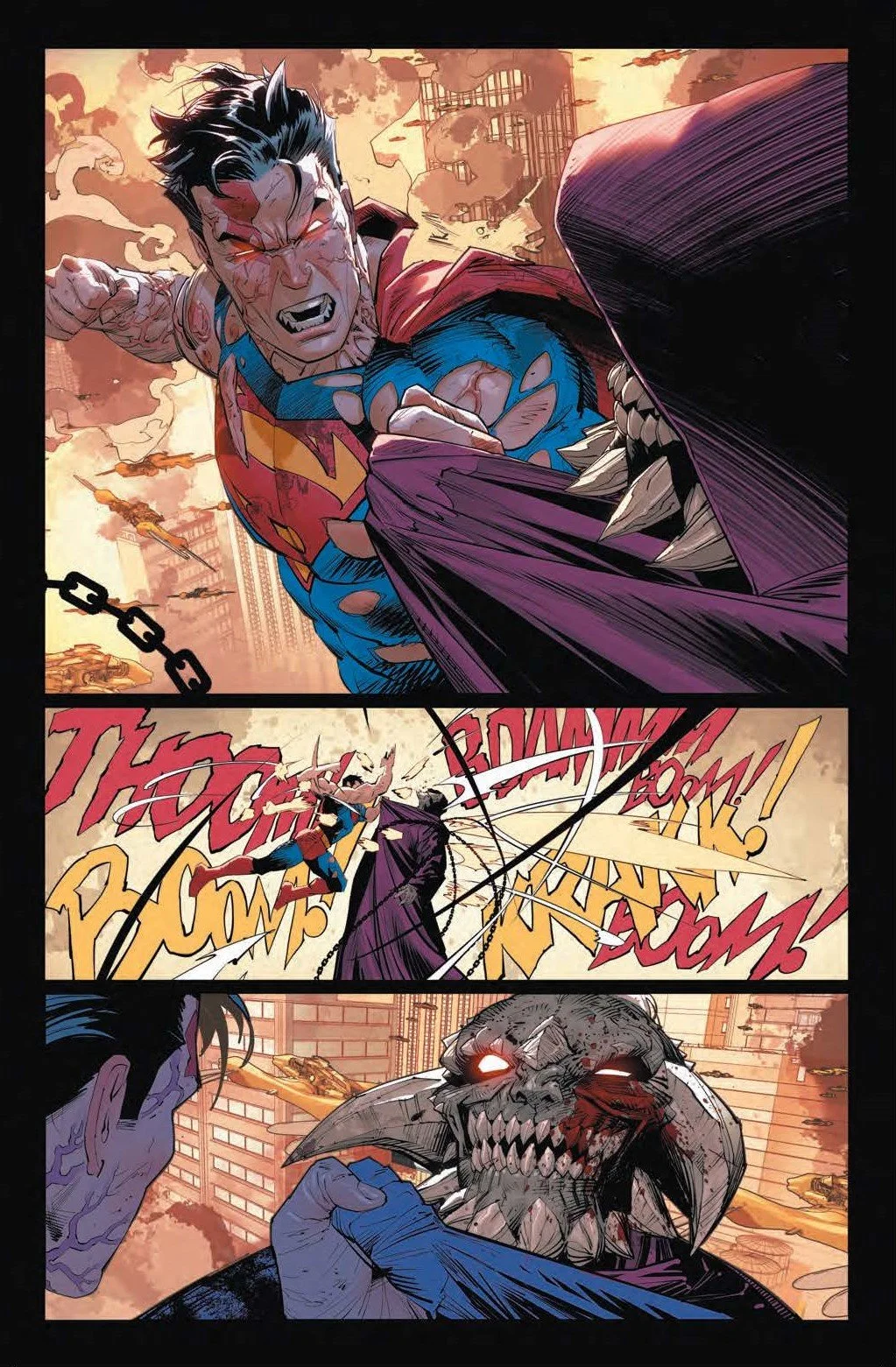
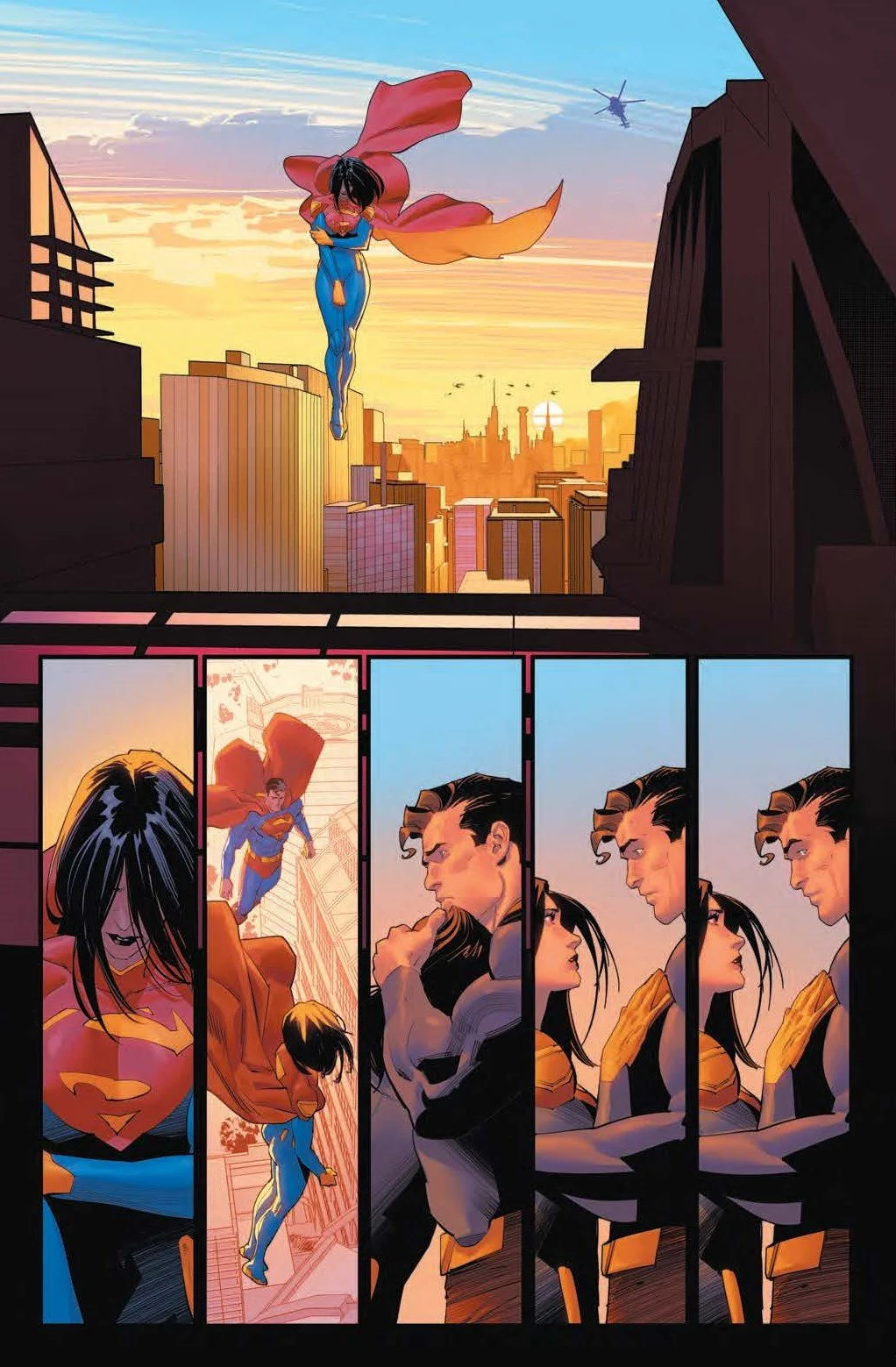
Superman’s latest adventure has him face to face-to-face with one of his most dangerous foes yet! Written by Joshua Williamson, with stunning artwork by Dan Mora, Alejandro Sánchez, and Ariana Maher, Enemy of My Enemy is a pivotal chapter in the ongoing Many Deaths of Doomsday arc. This issue not only deepens the stakes of the story but also lays the groundwork for major developments in Superman’s journey this summer. Check it out when Superman #23 hits shelves on February 26th!
Official Preview for SUperman #23
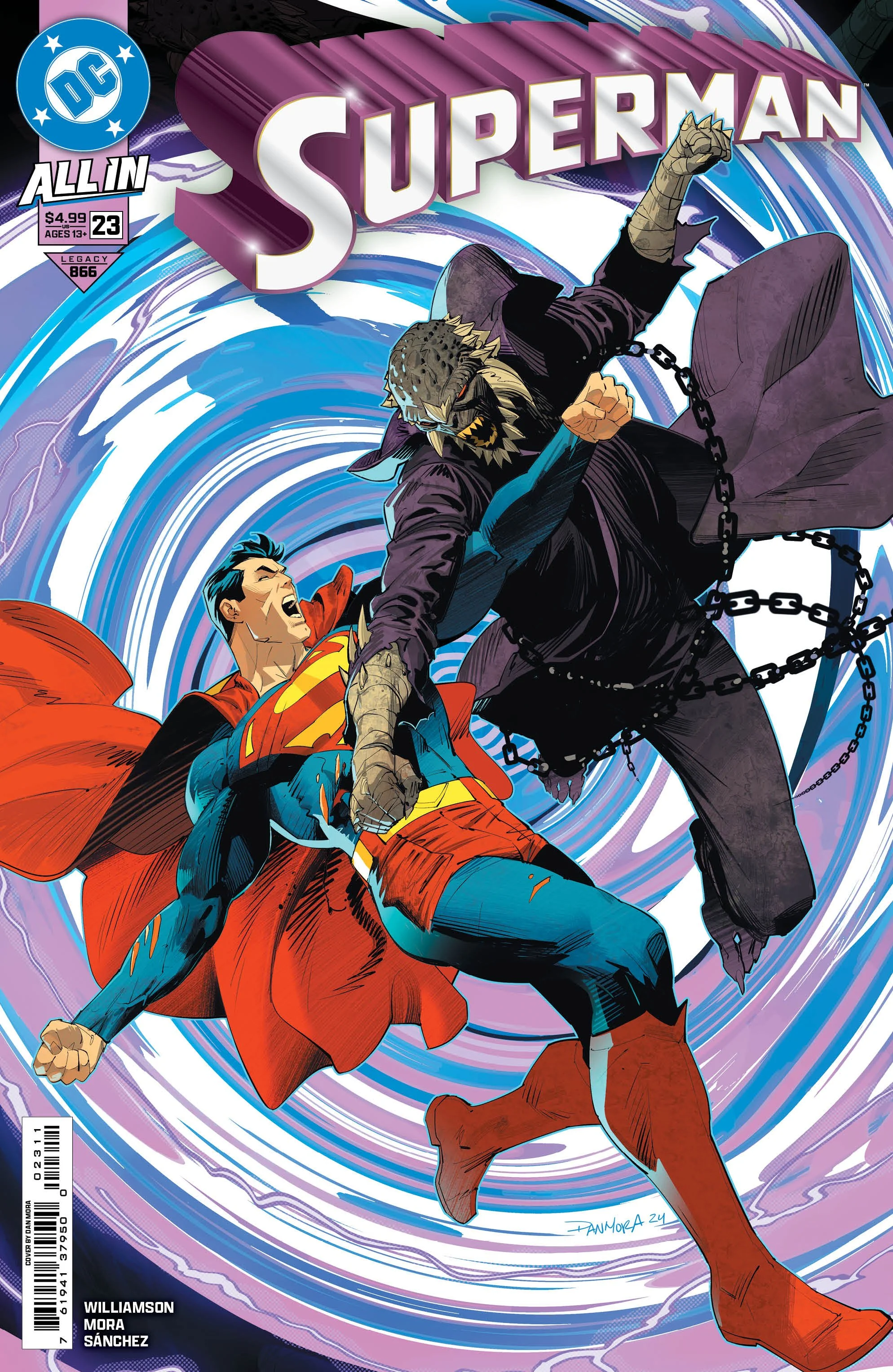
Superman #23 Cover A by Dan Mora
Synopsis:
As the Man of Steel battles for the life of his deadliest adversary Doomsday, Superwoman travels across time and space to unlock the secrets of the Time Trapper!
What life-shattering secrets lurk at the end of time? What clues can Lois Lane find to save the future? And can these answers be uncovered in time to halt Time Trapper’s evolution into God-Mode?
Variant Covers by Dan Panosian, Guillem March, Nathan Szerdy, Dave Johnson, and Kaare Andrews (Batman: Hush variant)


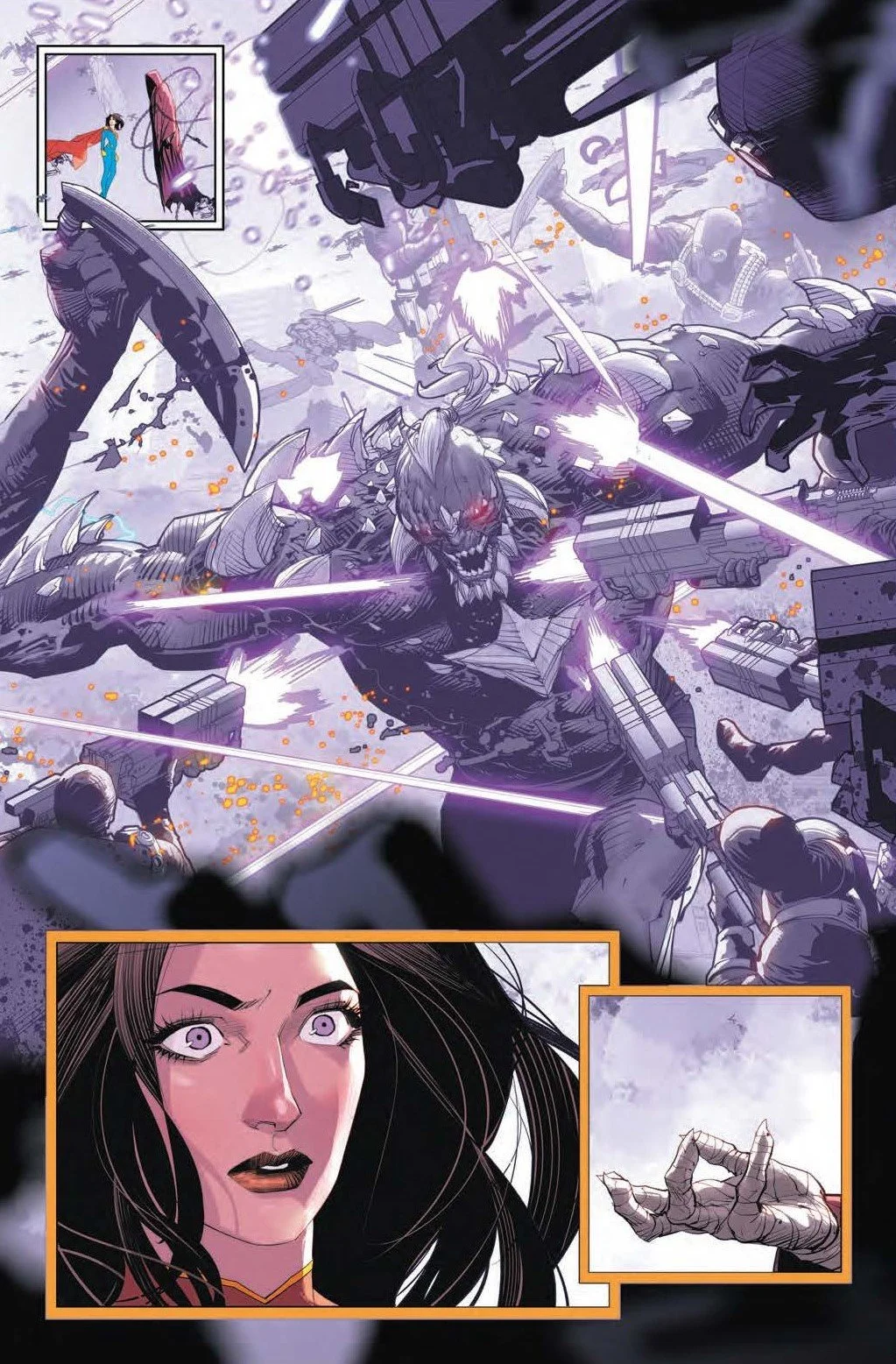
Interior Panel Preview
Super/ Man: The Christopher Reeve Story (2024) Review: The Untold Tale of the Man Behind the Legend
Comment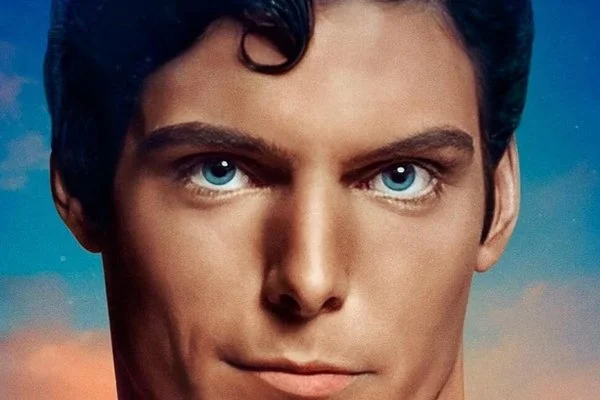
When I heard Super/Man was being released, it immediately brought to mind my memories of watching Superman 1 and 2 on television as a kid many, many times. I loved Gene Hackman as Lex Luthor and Margot Kidder as Lois Lane. But Christopher Reeve had me in awe as a kid. He was Superman to me. So I knew I had to see this documentary to better learn about the man known as Christopher.
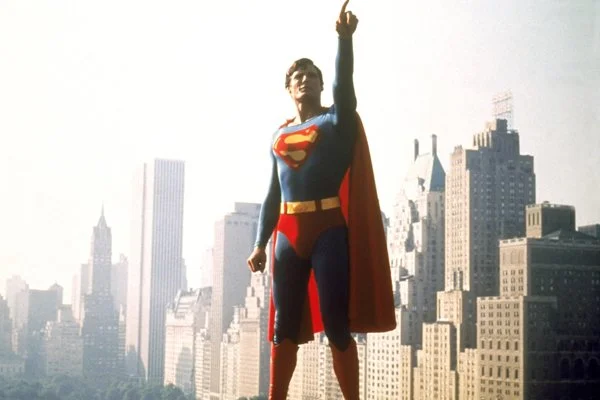
Super/Man: The Christopher Reeve Story explores the life of the legendary actor from his traumatic childhood all the way to his tragic death. It makes us privy to one of the most inspiring lives ever to be the subject of a documentary. He was not the obvious choice to be Superman in 1978, yet he went on to become the face of the superhero to this very day.

When he had his horse-riding accident, many people wrote him off for future obscurity. Those with less personal strength would have allowed the injuries he incurred to be the end of their stories, but for Reeve, it presented a challenge. It catapulted him to a new level of success. He became an icon again, but this time to an underserved population: the disabled. He brought attention to and fundraised for research that could advance spinal cord injury treatment. His work is still changing lives as I write this. This man proved that he was Superman in all he did.
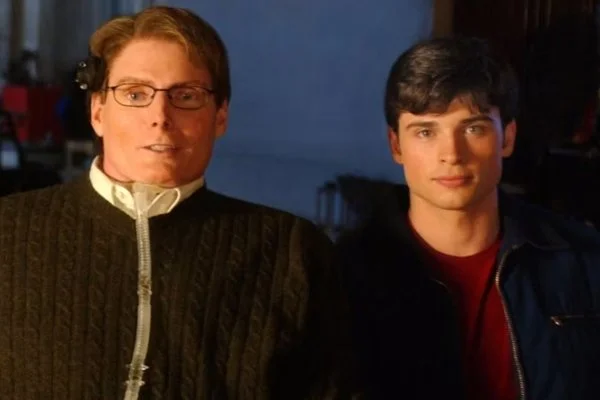
The documentary was an emotional roller coaster, yet amazingly uplifting. The filmmakers showed the humanity and superhumanity of this modern titan. The only shortcoming was the glossing over of his time on Smallville at the end of career. As a fan, I was enthralled by those few appearances. I think addressing what he said to Tom Welling would have shown another level of humility that Reeve had. "I remember in the end he [said] to me, 'I'm really glad they chose you to be the next Superman,' I highly recommend that fans of cinema and of comics watch this movie. It is Kryptonite to ennui.
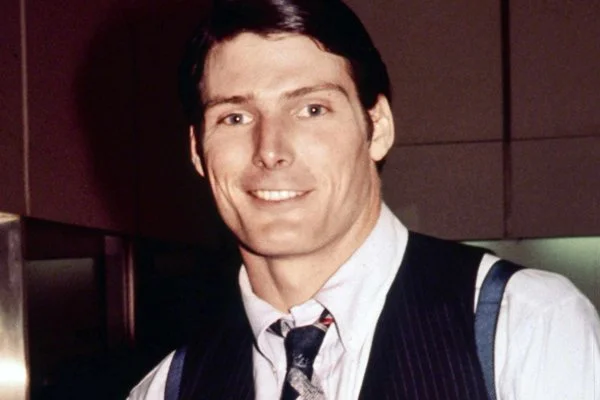
This film was a real eye-opener. It brought so many emotions to the surface and compelled me to write a review. This documentary made me, and I hope it does for you as well, realize that Christopher Reeve was and is Superman.
My Rating: 4.5/5
Absolute Batman #1 Recap & Review
CommentThe Mandalorian Season 3 Review: Chapter 18: The Mines of Mandalore
Comment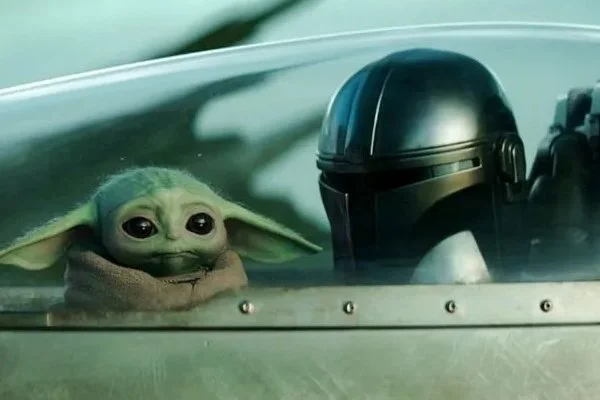
Baby Yoda on Board
The Mandalorian’s quest for redemption leads him to test his faith.
Crash Test Droid
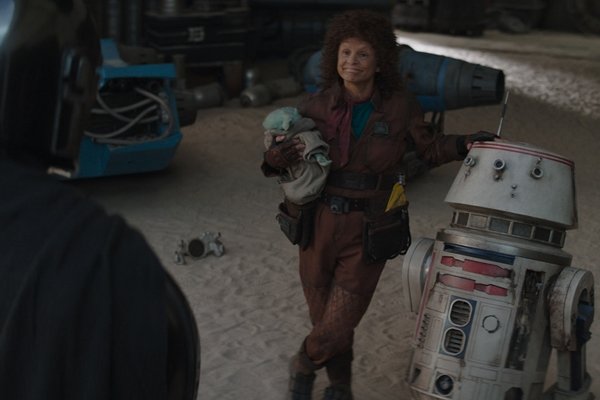
With IG-11 still needing repairs, our episode starts with Din stopping by Peli Motto’s shop on Tatooine in search of the part needed to fix him. After being told by the Jawas that the piece is unavailable, Pelle offers an R5 droid instead. Mando’s distrust of droids is legendary, but he settles for R5D4 so long as it can scan the surface and air of Mandalore, for poisons or toxins as the planet is said to be uninhabitable. R5 has a bit of a personality and seems downright petrified to go on this mission to Mandalore with Din but a deal is a deal. This opener sets up the episode's big mystery. Is Mandalore truly uninhabitable as many have feared, or will Din be able to get the redemption he seeks by bathing in the waters of it’s mines?
En route to the abandoned planet, Mando teaches Grogu how to use a map, saying that navigation is an essential skill for the Mandalorians. He gives Grogu a bit of the backstory of his people before they land and R5 scans the area for poisons. The droid is reluctant but beeps and boops away until it disappears. Soon after Mando has a hard time communicating with the droid on comms so it’s decided that he and Grogu will investigate. If R5D4 looks familiar he was featured in the very first Star Wars film, A New Hope, where he is bought by Luke’s uncle Owen but malfunctions and is replaced by R2-D2. The callback is chef’s kiss, but this opener sets us up for a spooky series of events moving forward.
Grogu’s Day Out
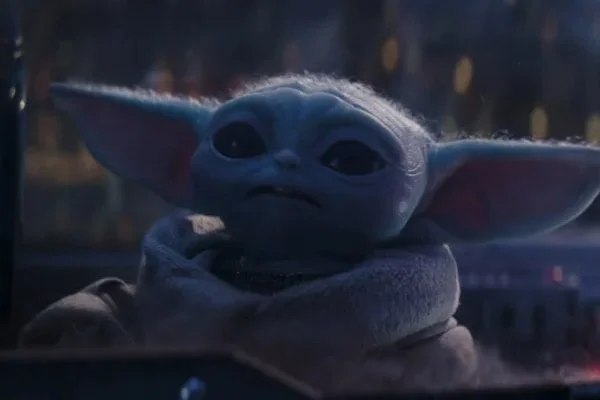
Seeing the desolate planet of Mandalore is depressing enough knowing how it came to be, but following Din and Grogu into the planet’s depths was a sight to see. The former cityscape is now in complete ruin, yet it is not abandoned. We know this because Mando is assaulted by three Alamite warriors. Thank Vader he left Grogu in the Starfighter. After besting them, Mando hears the faint beeps of R5 and goes to investigate. He finds the droid turned over, and rights it They return back to the starfighter and Mando is shocked to find out that the air IS breathable, as Bo Katan had predicted. Taking Grogu with him, Mando almost gives a tour of what he has heard about his people. Suddenly, Din and Grogu come upon a pile of discarded Mandalorian helmets which distracts Din long enough to spring a trap.
He is captured by a weird mechanical being with an organic eye. (I apologize for not identifying the creature but it is out of the scope of my personal knowledge. Grogu does his best to try to free his Dad but barely escapes with his own life. Mando pleads with Grogu to find Bo Katan and as he runs as fast as his little legs can take him, he is confronted by an Alamite. Using The Force, he knocks the beast out of his way and does a sweet flip into the starfighter.
In a sweet moment, Grogu uses the map reading skills he learned from Mando earlier to successfully navigate to Bo Katan’s castle! He’s proven he can take orders and learn, which are probably lessons he experienced while he was training with Luke Skywalker. Either way, giving Grogu the spotlight was cool because he’s often portrayed as a MacGuffin to be fought over
The Queen’s Gambit
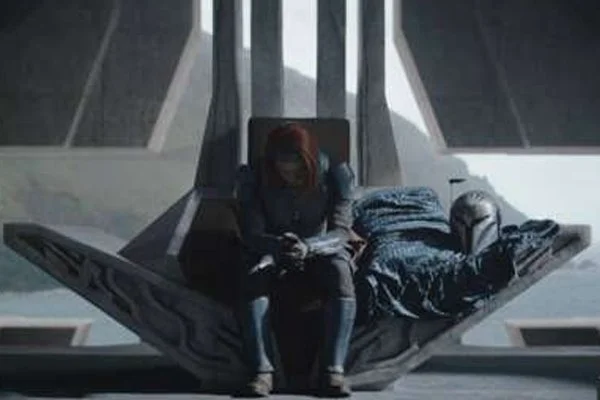
Bo-Katan Kryze is very surprised to see Grogu on her doorstep and knows something has gone wrong with Din’s trip to Mandalore. I was wondering to myself, why would Bo help anyone, especially someone she deems a zealot? Before she knows it’s Grogu she says “Let’s get rid of him once and for all”, seemingly proving. If you ask me, Bo-Katan is playing 3D Chess. She truly believes Mandalore to be a lost cause but if this unpredictable loner can prove she’s wrong there might actually be a chance for her people to be reunited on their planet. My point is, I don’t think all of Bo’s motives are altruistic in this episode.
We get to see her signature starship, the Gauntlet as she and Grogu traverse the galaxy to find, and save, Mando. Once they are close enough to view the wreckage of the planet, Kryze gives her side of the Mandalorian backstory, one Din only knew about but Bo experienced. It’s a reminder of how invested Bo has been in the liberation of her people and how shameful she feels over her perceived failure to save them. Heavy is the head, and this Queen has no people or army to command. All she has now is the sliver of a chance that Din could be right about the mines.
It’s Bo Time
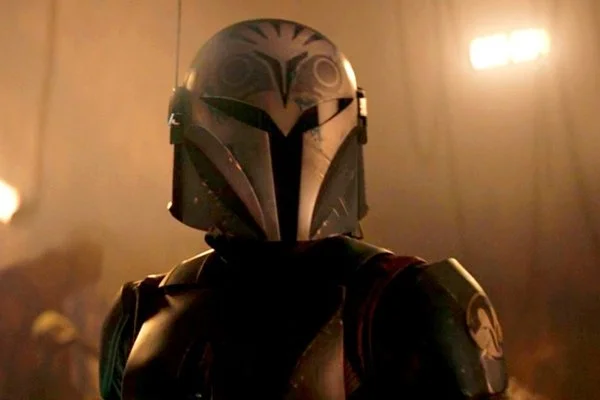
Suddenly it’s “Bo Time” as we watch the former wielder of the Darksaber, make her way through the same perilous cave that Din did. Unlike our Mandalorian however, Katan is a seasoned vet and manages to take down some Alamites with the help of her vast array of weaponry. As someone who is just now getting into “Star Wars: Legends” this scene feels like the show is demanding we put some respect on the Kryze name. They want you to know that Bo is a force to be reckoned with. The question is, is she a force for good or evil?
After impressively taking down the Alamites, she seems to take pleasure in Grogu’s reacting to her skillset. She reminds him that his “dad” isn’t the only Mandalorian, whilst wondering what else could have survived the purge. This is the beginning of Bo-Katan's willingness to believe Din Djarin might be correct. The embers of hope have been stoked but will it all go up in smoke? Kryze manages to save Mando from his robotic captures who seemed to have been draining Mando of his blood. Realizing his weakness Bo makes some soup and they speak about how their people have always been torn apart by civil war. If you recall, I believe this Civil War will be the final set piece of this season, if not the series as a whole, and this hint has all my Spider-Sense going nuts.
The Lore of Mandalore
Luckily, there is no infighting just yet although Bo and Din differ over the ceremonies and traditions of Mandalore. Bo, as a member of royalty, saw these things as necessary but performative theater, meant to make her people feel safe. Mando was raised by these teachings, and after the death of his parents, “The Way” of the Mandalorians has been the only thing that can give him comfort. Despite their differences, they are able to locate the mines and the living water beneath them. Din disrobes in ceremonial fashion whilst Bo continues to make a mockery of the whole scenario. I love how Mando is unphased even when confronted by a non-believer who claims to serve the same side as he does.
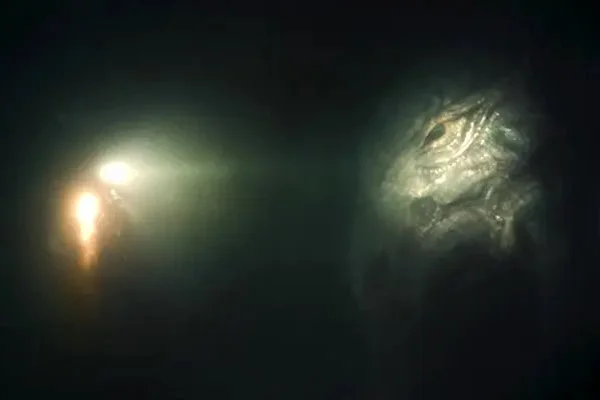
He doesn’t argue. He doesn’t try to convince her. He just goes about his business. Suddenly while walking in the living waters and reciting the creed Din drops from view. Terrified, Bo Katan dives into the waters without a second’s notice and uses her jet pack to search the murky depths for our hero. She finds Mando unconscious and while she is doing her best to bring him to the surface we see an incredible sight. First, we notice there is some gigantic figure looming in the ocean. When Kryze sets her helmet-mounted light upon it, we see the creature for what it truly is, a Mythosaur. That’s right! The lauded and fabled leviathan, which was thought to be extinct, lives comfortably underneath the mines of Mandalore. For Bo, this is like bumping into Santa Claus on the street. What do we do when we find out the bedtime stories we were told as a child are true?
My Take
While it is only episode 2 of this season I am already extremely impressed with how they have been able to lead us through this crash course in Mandalorian history. Fans of Clone Wars and Rebels are being rewarded by seeing the effects of events details in those series. Seeing Sundari in ruin after it was the location for so many memorable moments was rough.
I also liked how this episode was a mix of both sci-fi and biblical horror. Those robots were incredibly creepy, and then we see a ghost of tradition in the depth of the lving waters. That ending was definitely a jaw dropper and I hope we get to see Mythy (that’s what I’m calling it) in all its glory soon. Similar to his loose allegiance to Bo, this Mythasuar serves as a unpredictable element that has to come into play. Imagine being Bo-Katan in that moment. It would be like an athiest witnessing a man walk on water. Whether or not she’s convinced that this is a sign, Mando looks to be in some rough shape so let’s see where this adventure takes us. I s
My Rating: 4/ 5 Dark Sabers
The Mandalorian Season 3 Review: Chapter 17: The Apostate
Comment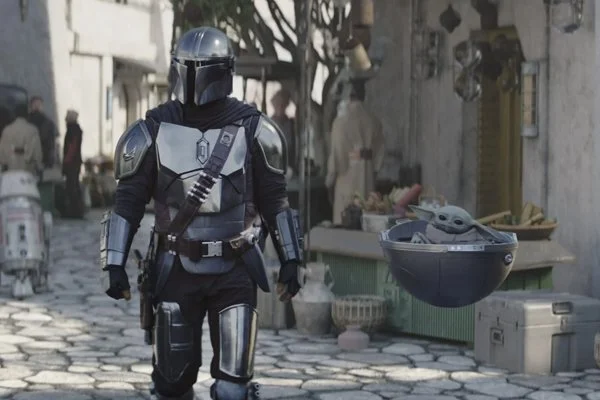
The Boys are back in town.
After being told he is no longer a Mandalorian for removing his helmet, Chapter 17 begins Din Djarin’s expedition to the mystical planet of Mandalore.
Thems The Rules
The perfect gift for any child.
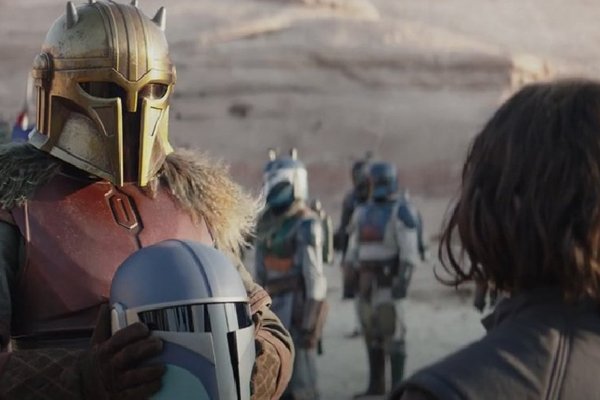
Our third season starts with some top-notch cinematography as we watch the Armorer craft a new Mandalorian helmet for a foundling they hope to indoctrinate to their cause. We witness all of this in a shore-side ceremony that is interrupted when a sea beast suddenly rises from the depths and attacks the tribe. This scene serves as our first action set piece as we see a whole legion of Mandalorian warriors try and fail to subdue this massive alligator-like creature. The foundling manages to step up to the monster, showing his own bravery but is almost killed for his efforts. Things seem dire until our boy Din Djarin, with Grogu in tow, flies in and saves the day. While I’m happy to see Mando and Grogu, the Armorer is not.
She repeats that Din is no longer Mandalorian, saying redemption is no longer possible because there are no mines of Mandalore for him to purify himself in. This is of course referencing how the Galactic Empire massacred the Mandalorian people on the planet Mandalore during the Great Purge. They sent a large contingent of bombers and destroyed cities on the surface, while KX droids and Viper probe droids terminated any survivors. By firebombing every inch of the entire planet, the surface of Mandalore became fused into a crystalline form. As it stands, it is impossible for anything to grow there again. The planet is said to be poisoned.
Desperate to get his status as a Mandalorian back, Din promises he can prove the mines, and the waters beneath them, still exist. The Armorer agrees that if he can purify himself in these waters beneath the mines, he will regain his status. Thems the rules after all. To be honest, I thought this entire scene was a flashback to show how Din was first brought in after being adopted. This bait-and-switch sets the episode in motion and gives us our 1st mission for the season. Get to Mandalore and get to those waters.
Good Greef
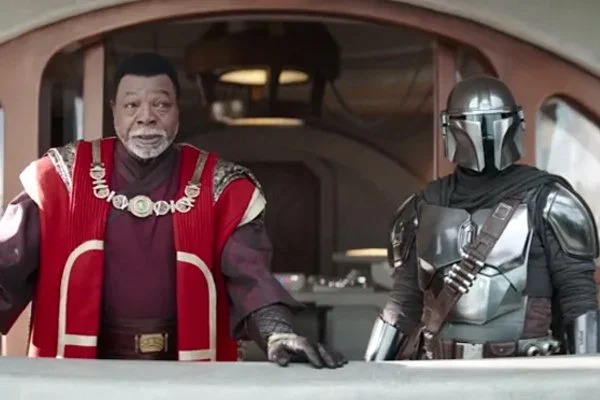
Mando travels to Nevarro to meet Greef Karga, or should I say High Magistrate Karga? Boy, Carl Weathers looks good in that new gear, complete with two droids holding his cape’s train. When pirates show up and demand to be served, a standoff ensues between Karga and the pirates. Eventually, Karga beats the lead pirate to his blaster and fires a warning shot. When the rest try to retaliate, Karga and Mando kill all but the leader, so he can let people know Navarro is respectable now. He’s right! The whole town seems to have converted from a cesspool of scum and villainy, to a place where children can play freely without worry. What was once a "bounty hunter hive" as Mando called it, has transformed into a beacon of hope in a dark galaxy, all thanks to Greef Karga.
It’s then that we learn that Cara Dunne was enlisted into the special forces after turning in Moff Gideon, who was taken to a New Republic War Tribunal to answer for his crimes. I love Greef's trajectory as a character over the course of this series. He really believes Nevarro to be a place of change and earnestly wants to do good things. He asks Mando to be his sheriff and help him keep order under this new regime, but Mando respectfully declines the offer because our boy has places to go.
The Droid He’s Looking For
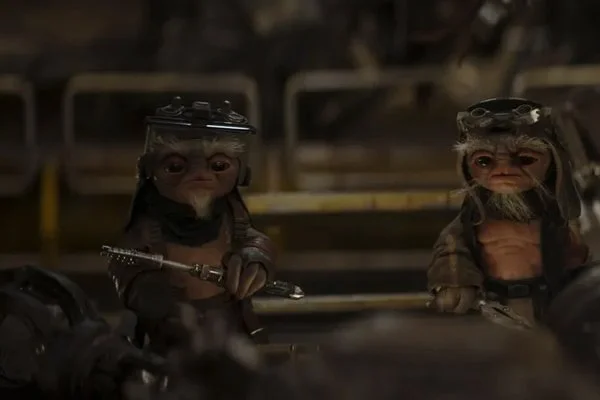
Knowing he must be there for business, Karga asks Mando what he wants and he says he wants IG11, the droid that saved him and Grogu’s life in season 1, to be resurrected. This proves to be a tall task, as IG11’s body was used for a statue commemorating his sacrifice, but they take it down and Mando tries to repair him. After a horrifying scene of IG11 powering back on and going full Terminator, Karga tells Mando to take 11’s body to some droid smiths.
After a stop at the smallest workshop in the galaxy, the smiths, who are Anzellans, tell Mando they need a rare part if they hope to repair IG11. Mando agrees to get the part. We met an anzellan before in Babu Frik. Frik aided in retrieving vital information in C-3PO's memory banks in The Rise of Skywalker. I love these scrappy little guys and Grogu seems to feel the same way. Chances are we will see them again and I cannot wait. By the way, hilarious was Carl Weathers serving as a translator for this whole interaction? He just gets better and better.
Asteroid Ambush
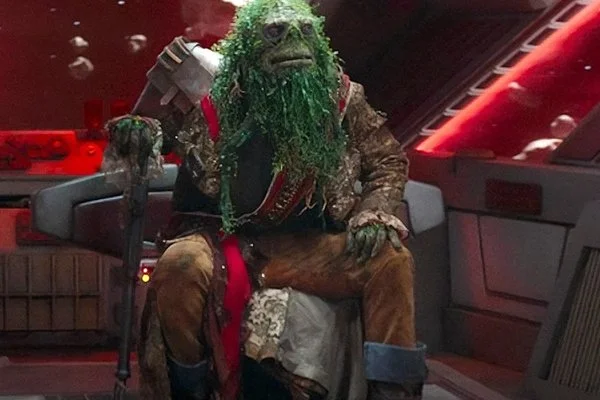
I don’t know if he needs a haircut or his weeds trimmed.
While flying to his next occasion, Mando is ambushed by pirates, led by the one Karga let go earlier. The pirates are outmatched, outgunned, and it's quite the spectacle watching Din take them down in his starship. To be honest, I don’t know what’s more impressive, Mando’s flying skills, or that he managed to do all that while holding Grogu safe in his lap. The situation turns sour when it's revealed that Mando was led right to the pirate mothership.
After some banter with Gorian Shard, the leader of these pirates, Mando narrowly escapes, but a new enemy is made. Gorian’s design looks to be a mix of Old Greg from Mighty Boosh and Swamp Thing, and I am not complaining. Speaking of which, all the creatures and aliens in the episode looked amazing and I suspect it is because of the use of more practical effects. It’s been a while since we’ve seen a new antagonist, from an unknown species. The blank parts of the map are being filled in and it’s very exciting.
Do, or Do Not. There is No Try.
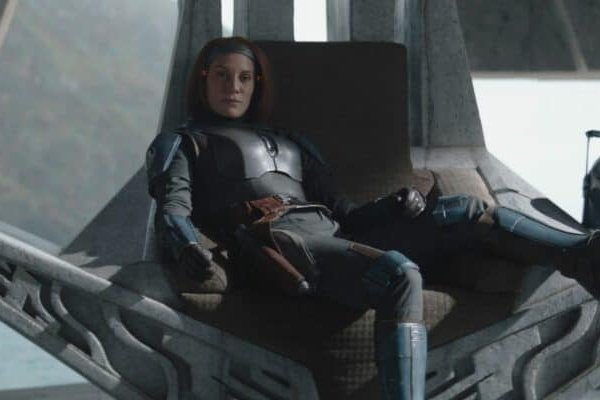
After his fight with the pirates, Mando heads to Kalevala, a planet in the Mandalorian system. There, we see a Mandalorian Castle, and sitting on the throne, all by herself, is Bo Katan. Mando requests to join Bo and her sect, but she reveals she is a queen with no kingdom. Without the Dark Saber, she lost her allies and had to drop her mission to retake Mandalore. I’ve never seen Bo-Katan so dejected before but she’s worked her whole life to liberate Mandalore and is seemingly now a Queen of Ash.
She sarcastically tells Mando to lead the wayward Mandalorians of the galaxy, seeing as he has the saber, before accusing him and his “cult” for fracturing the people of Mandalore in the first place. He explains why he's going to Mandalore to bathe in the living water and be redeemed but she scoffs and says it's all superstition but to be her guest. She tells them where he can find the waters and he promises to find out if the planet is actually poisonous. Will he make it to Mandalore and redeem himself once and for all? We will just have to tune into the next episode to find out!
My Take
I really liked this episode and underestimated how much I missed the world of The Mandalorian since Season 2 ended. The sets are gorgeous, the action sequences are sleek and to the point, and Mando and Grogu seem more like partners now than Father and (green) son. What I like most about this season is it seems to be trying to delve into the zealotry of the Mandalorians. Star Wars is known for exploring the way of the Jedi, and the positives and negatives of being so devoted or strict in one's beliefs. Now we get to explore the customs, ceremonies, and pitfalls of the Mandalorian religion. The show is taking a stance on this very serious subject and isn't hiding it. Both Filoni and Favreau have been quoted saying this season we will explore what Mando’s faith means to him. Will his faith grow in the face of adversity, or is he fated to lose hope in his own beliefs?
This episode is even titled “The Apostate”, which is a person who renounces a religious or political belief. Mando is being outcasted for not being devout ENOUGH. Is he destined to have to prove his loyalty forever? I firmly believe this season will end one of two ways. Either Din will be able to unite both the hardcore zealots he was raised with and the outliers like Bo Katan and her ilk, or there will be a full-on Mandalorian Civil War. I think the latter is more likely, but who will come out on top? The fans will.
My Rating: 3.5/ 5 Dark Sabers
Oh Batman, My Batman. A Tribute to Kevin Conroy
Comment
Oh Batman, My Batman.
They say you never forget your first. In this case, it's hard to forget the first superhero I saw on television. It was the Dark Knight, the World’s Greatest Detective himself, Batman. I had already seen Batman Returns (which is underrated in my opinion), but my fondest memories of the character centered around watching Batman The Animated Series which made its debut when I was too young to attend kindergarten. The series was full of colorful characters and entrancing music, but the star of the show undoubtedly was Kevin Conroy, the voice of Batman/ Bruce Wayne. His character commanded every scene he was in and was a force to be reckoned with. When you saw those white eyes peering at you through the shadows of Gotham City, you knew you were in some trouble. Sadly, today I lost my Batman. Today WE lost Kevin Conroy and the world will never be the same. As Batman, he managed to give his Bruce voice more bass, and at a lower register, the sound is authoritative, threatening, and dominant
No scene encapsulates the duality of Batman quite like one from the Justice League Unlimited show. After being informed by Amanda Waller that Ace, a dangerously powerful telepathic villain, will suffer an aneurysm that could create a psychic backlash that could kill millions, Batman volunteers to neutralize the child and take Ace out. He doesn’t do so out of anger or some righteous need to be the one to put the threat down. Ironically, he agrees to the assignment because he met Ace before, and thinks she will allow him to get close. Behind all her power, Ace turns out to be a lost child made into a weapon, and being one himself, Batman chooses to sit with her and hear her out instead of neutralizing her on the spot. Knowing she is about to die, Ace makes a request. She asks Batman to sit with her so she does not have to die alone, and that is exactly what he does, holding her hand the entire time. The scene is a tear-jerking reminder that Batman is a human, with a heart, and no one could have pulled off that performance quite like Conroy.
I owe a lot to Kevin Conroy, even if he doesn’t know who I am. Batman The Animated Series opened the Pandora’s Box that would become my comic book obsession. Fast forward to the release of shows like Justice League, Justice League Unlimited, and Batman Beyond and it felt like the DC Animated Universe’s Batman was growing up alongside me. When I signed up for the military and was shipped overseas, I drowned myself in Batman comics, and guess which person’s voice I heard delivering every line in every book? It was always Kevin Conroy.
When a state-of-the-art video game series, hoping to capture all aspects of BEING Batman complete with an open world is created, who do they choose to play the savior of Gotham? The Arkham series recruited Kevin Conroy. Injustice, Batman VR, heck even some of the Lego games snagged Conroy to play Batman, knowing how much his voice resonates with a generation. Selfishly, I loved that his Batman was seemingly always around, with a voice that’s constantly evolving but always felt like home. The sheer longevity of his version of the caped crusader is something a voice artist dreams of, and Kevin deserved every single bit of praise he’s received over the year for delighting Batman fans for 30 years.
Kevin’s voice was a Swiss army knife, ready to deliver whatever emotion the scene needed to convey. Seriously, check out some of his most iconic lines from the show and you will see a level of variety that would make other Batmen jealous. We also can't forget how well he played off Mark Hamill, who voiced Joker in a litany of projects alongside Conroy. Hamill was leagues more famous than Conroy when the series began so it was amazing seeing Kevin become a superstar in his own right. Their pairing was always one for the ages.
Today is a sad day, but I will choose to think of moments with Mr. Conroy that make me happy. When I think of that mischievous grin splashed across his face as he met adoring fans at comic conventions, I’m happy. When I see the video messages that he gleefully recorded for his fanbase, reenacting some of his famous lines, I’m happy. When I realize that because of his longevity as Batman, he has inspired countless other voice actors to reinvent themselves and perfect their craft, I can’t help but be happy.
I’m happiest when I think of the projects Mr. Conroy was a part of, in the latter stages of his career. During the Crisis on Infinite Earths crossover event on the CW, Conroy finally got to play a version of Bruce Wayne/ Batman and his journey finally came full circle. For the first time, the voice of Batman was the FACE of Batman, and it couldn’t have happened to a nicer guy. Unbeknownst to most of the world, Kevin Conroy was a gay man who was happily married to Vaughn C Willaims. This year, as part of DC Comics' 2022 Pride anthology, Conroy wrote "Finding Batman". Not only did the tale serve as a story that recounted his life and experiences as a gay man, but his choice to let his truest self be known to the entire world, in a medium that far-reaching takes a level of courage I could not even fathom.
There will never be another quite like you, Mr. Conroy. A star of both stage and screen, you brought happiness and a sense of belonging to a middle-class Puerto Rican from Brooklyn. You were so many things to so many people, and you will be dearly missed. You’ll see a lot of tributes in your honor in the coming weeks, as everyone around the world tries to give back to you what you gave to so many. I can only hope this tribute is a fitting one, dear friend.
To Vengeance. To The Night. To Batman. Love The Don.
Rest in Power Kevin Conroy
The One Change That Can Fix 'Multiverse of Madness'
Comment
As someone who is no stranger to comic books and comic book media, I am always excited when a comic book film makes its way onto the silver screen. I love seeing these adaptions of famous stories and compelling characters come to life in front of my eyes. The Marvel Cinematic Universe has done an incredible job bringing these stories to the forefront of popular culture, delighting those dedicated to the medium and those just looking for a good movie.
Recently the MCU dropped its 28th feature film, Doctor Strange In The Multiverse of Madness, and unlike many of its predecessors, the film has divided audiences. A lot of digital ink has been spilled, trying to convey what people liked and didn't like about the film, but I think a simple change could have ultimately pleased both parties, and it isn't as big of an alteration as one might think.
Doctor Strange in The Multiverse of Madness is the 28th film in Marvel’s Cinematic Universe!
First, I'd like to discuss what I enjoyed about Multiverse of Madness. I love Sam Raimi's eye for direction, particularly in the horror genre. We have evolved past the cookie-cutter formula of the generic comic book movie, complete with tired tropes and uninspired dialogue, and that freedom allowed Raimi to leave his unique mark on this film. I thought Danny Elfman was a welcome addition, composing his first Marvel film since the first Spider-Man trilogy just like Raimi. Benedict Cumberbatch was a delight and seemed to enjoy embodying the more sinister versions of his beloved Doctor Strange character.
The Master of the Mystic Arts has evolved over the years through countless battles against evil, and we see the consequences of that responsibility here. Benedict Wong is used well here, although I think his comedic timing is still massively underrated. Newcomer Xochitl Gomez shines as America Chavez, the latest youngster to join the MCU ranks as it evolves from the core Avengers team established ten years ago. Rachel McAdams is a delight, and it's always great to see a Bruce Campbell cameo.
This Witch ain’t playin’ around.
The star of the show is undoubtedly Elizabeth Olsen. While we knew we would be seeing Wanda Maximoff return and be featured in the Strange sequel, her role in the film was kept a secret. The Scarlet Witch is a sight to behold, and the movie itself dares to turn a sympathetic hero into a callous villain. Maximoff's pain is something we are well aware of, as we were shown just how hard of a life Wanda had in her series WandaVision.
Her entire existence is full of trauma, loss, and chaos. Fortunately, this film pulled no punches when trying to show how someone strays from the path of righteousness into the path of selfishness given the option. In her mind, not only had she lost everyone she loved but now the people who call themselves her friends are standing in the way of her getting any of it back. I relate to Wanda and in some instances, rooted for her to release her scorn across the multiverse. Even so, after the film ended, I found myself feeling a bit incomplete. I enjoyed the ride, but something felt off.
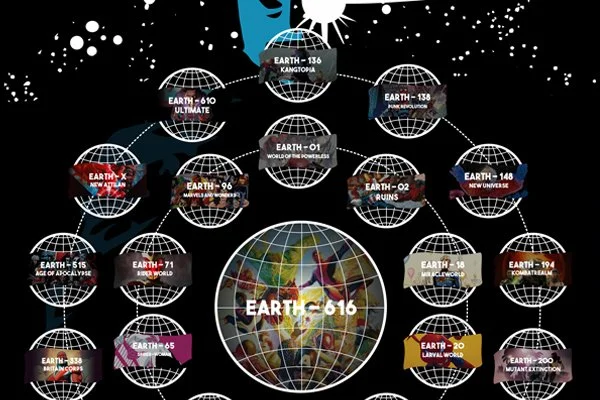
Marvel’s Multiverse as shown in the comics.
When I returned home, it seemed as if the internet was divided about how to feel about this movie. While most filmgoers liked the newest entry into the MCU, others also felt something was missing. Some blamed the lack of high-profile cameos as to what they felt was missing, while others chimed in that perhaps the viewers’ expectations got in the way of their enjoyment. As the dust settled after the events of Multiverse of Madness, I found myself questioning just how much of the Multiverse we actually saw.
As I pondered that thought, I began to worry if I had become the type of fan who is impossible to please. I went out of my way to rewatch the film, this time choosing to focus solely on the conflict between Doctor Strange and the Scarlet Witch and my second viewing was much more enjoyable. It felt like a complete film. Was I wrong all along? Of course not, dear reader!
After much introspection, I realized that one small change could not only change people's expectations of the film but in turn give one of its stars top billing, all while keeping the film's biggest secrets under wraps.
Needs a bit more Multiverse, don't ya think?
The truth is, I think the title “Multiverse of Madness” is a bit misleading. While the adventures of Doctor Strange, The Scarlet Witch, and America Chavez give us a glimpse of Marvel’s multiverse, the film fails at exploring the incredibly interesting implications of doing so. For the entirety of the film's runtime, we only spend considerable time in 3 Universes, which feels like a bit of a letdown. If this was the first piece of media in the last few decades to attempt to depict different universes and other versions of familiar heroes, Multiverse of Madness would get a pass. Unfortunately, TV shows like Rick and Morty and films like Everything Everywhere All At Once, do an expert job at showing how a single change in one universe could have massive implications on everything else.
We, as an audience, are no longer strangers to the concepts of String Theory and divergent timelines. The "Arrowverse" tackled the subject in its “Crisis on Infinite Earths” crossover, and Into The Spider-Verse was able to simplify the concept for the youngest of Marvel fans. This Doctor Strange film advertises a MULTIVERSE of Madness, doesn’t it? So why are fans upset with other fans who wanted to see Marvel’s multiverse explored more thoroughly? It is in the title, after all! Seeing as the film is about the downward spiral of Wanda Maximoff, why not center the promotional material around that?
For some reason, most of what was shown in trailers leading up to the movie's release did its best to keep Wanda’s villainous turn a secret. The thing is, those who have watched "WandaVision" already saw the hero on a dangerous trajectory. We knew she was willing to break bad to save her children, and the film reveals this secret less than 20 minutes in. What I am suggesting is, instead of banking on the reveal that Wanda, now the Scarlet Witch, is the antagonist of the film, Marvel should have put that revelation front and center.
Advertise the movie as a Doctor Strange VS The Scarlet Witch matchup of the ages and hide the fact that their conflict will cause our heroes to traverse Marvel’s Multiverse. Call it Doctor Strange: The Wrath of The Scarlet Witch, and center all your promotional material around Wanda’s fall from grace and Strange’s reluctance to put a fellow hero down. Not only does this put Elizabeth Olsen on the marquee alongside Benedict Cumberbatch, but it also tempers expectations because the only thing Marvel Studios is promising with that title is a fight.
Put my girl on the marquee!
Think about how much that would have changed the publicity of the film. You could have people “Pick a Side” just like the promotional campaign for Captain America: Civil War. You could implore those who never gave WandaVision a chance to try the series out simply by mentioning that the show’s events caused Wanda’s downward spiral. You could have everyone salivating over what The Scarlet Witch was truly capable of instead of trying to speculate what universes we might visit in the vast Multiverse.
Imagine showing promo videos depicting feats of magical strength between Dr. Strange and Wanda throughout their time in the MCU. All of this would create an atmosphere where the fans will be so distracted by the incoming conflict that they would not have time to predict that this film will not just take place on Earth 616.
Once THAT reveal is dropped on the unsuspecting moviegoer, people would have lost their minds. Without mentioning Multiverse in the title, fans wouldn’t have been given months to speculate who was going to make a cameo appearance. Suddenly every cameo is a blockbuster surprise, instead of something the fans predicted months in advance. We have already seen that it is not wise to give MCU fans time to speculate, as the most seasoned Marvel fans can craft theories you WISH were true. Instead of promising something both the budget and shooting schedules would have made impossible, you could have put Scarlet Witch on the map by simply changing the title.
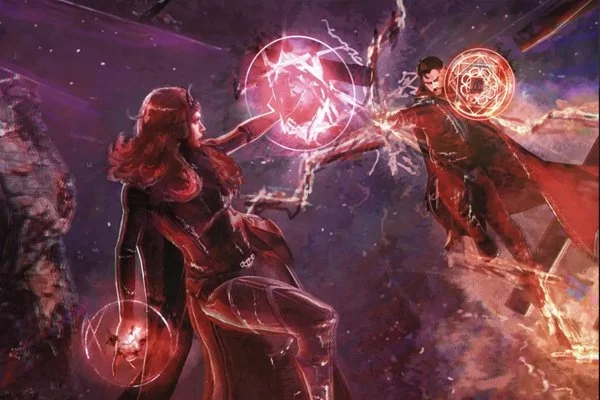
Now I know this doesn’t fix other people’s issues with the film. While not perfect, I did enjoy the Doctor Strange sequel for what it was worth. My expectations were high but as I stated before, they were set by the film’s title, and that one change could have eased expectations while getting us hype for an Avenger-on-Avenger fight for the ages. Odds are the Multiverse concept is here to stay as the film itself teases a potential Secret Wars adaption might be coming soon. With that being said, we could have used this film as a jumping-off point instead of suggesting it would be anything more than that. Lastly, just make sure if you didn’t dig the film, that you aren't ruining it for those who did. That, you see, would truly be madness.
Thanks for reading! Never forget that you….(yes you)…are WORTHY!
8 Reason Why The Hawkeye Series Hits It's Mark
Comment
Merry Clint-Mas one and all! Seeing as how we are now fully wrapped up with the Disney+ series Hawkeye, I figured that it would be the talk of the town! A street-level series following an OG Avenger as he traverses threats from the MCU seems like an immediate slam dunk. After some research on the internet, it turns out it had a pretty low audience. It actually had the least amount of viewers of any MCU Disney+ show. Personally, I think people aren't giving this show the chance it deserves. There are so many nuggets of greatness in the Hawkeye series that I believe, if we took the time to highlight them, you might want to give the show a shot or a rewatch if you already have. Grab your bow and arrow, arm your quiver, and get margaritas in the blender as we go over 8 Reasons Why The Hawkeye Series Hit Its Mark!
Adapting A Modern Classic
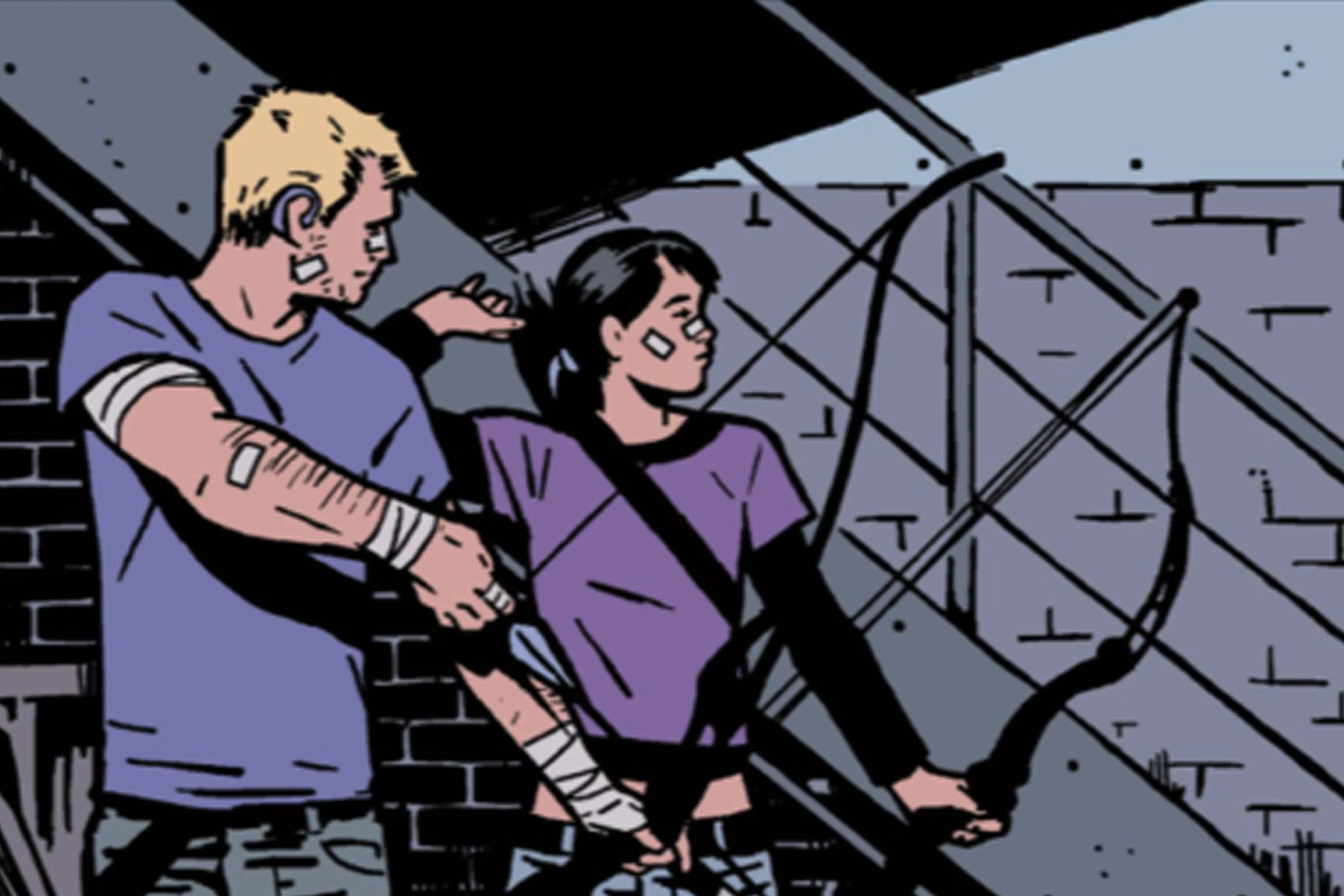
Last January, I read Matt Fraction and David Aja’s Hawkeye run for the first time. I completely fell in love with the story, especially the character of Kate Bishop. Clint Barton is a character I have always loved, not only because of Jeremy Renner’s performance in the Marvel Cinematic Universe, but for the character's role in such comic book classics as "Avengers Disassembled", "Age of Ultron" and "Old Man Logan".
The issue was, I hadn't read anything that centered on the Avenging Archer that caught my eye. I can confidently tell you, I have never read a piece of literature that had me as excited as much as that Hawkeye run. I became downright giddy when promotional material seemed to hint that this run was the biggest influence on the show. Over the course of 4 weeks, I got to watch Matt Fraction’s writing and David Aja’s artwork come to life on my TV screen.
From Kate and Clint standing side-by-side with their bows, the introduction to Lucky the Pizza Dog, even right down to the comic book accurate costumes, this show pulled out all the stops. Watching David Aja’s panel artwork depicted in live-action made me cry in ways I did not think were possible. Seeing Kate holding a pizza box on her head might seem like a dumb throwaway scene, but images like that are ripped straight from the comic, and it is that level of attention to detail that makes me believe the studio cares about the product they are adapting.
Master of Foreshadowing

Chekov's Gun. For those of you who don't know, Chekov's Gun is the dramatic principle that suggests that the details within a story will contribute to the overall narrative. A very simple tool used in writing, but the method can be so effective. Hawkeye managed to excel at the technique in every way, from the subversive use of a simple butterscotch candy to a throwaway joke like Kate telling Clint he needs to label his arrows. These scenes seem like filler, but throughout the show many of these things are brought around and have satisfying conclusions.
Remember me mentioning Kate and the labels? When the duo eventually does make trick arrows together, she is the one labeling them. Every time the show has introduced something, whether major or minor, they bring it back around to give it meaning. Helping the LARPers comes full circle, Kate protected her mom with the bow and arrow she bought her, and Clint's coin trick helped save the day in the end.
When the watch the tracksuit mafia stole in Episode 1 came back around to confirm Laura Barton worked for S.H.I.E.L.D as Agent Mockingbird, I gasped. How could I not? This show wowed me purely because it rewards you for remembering every detail of its ever-expanding universe.
Mourning Black Widow
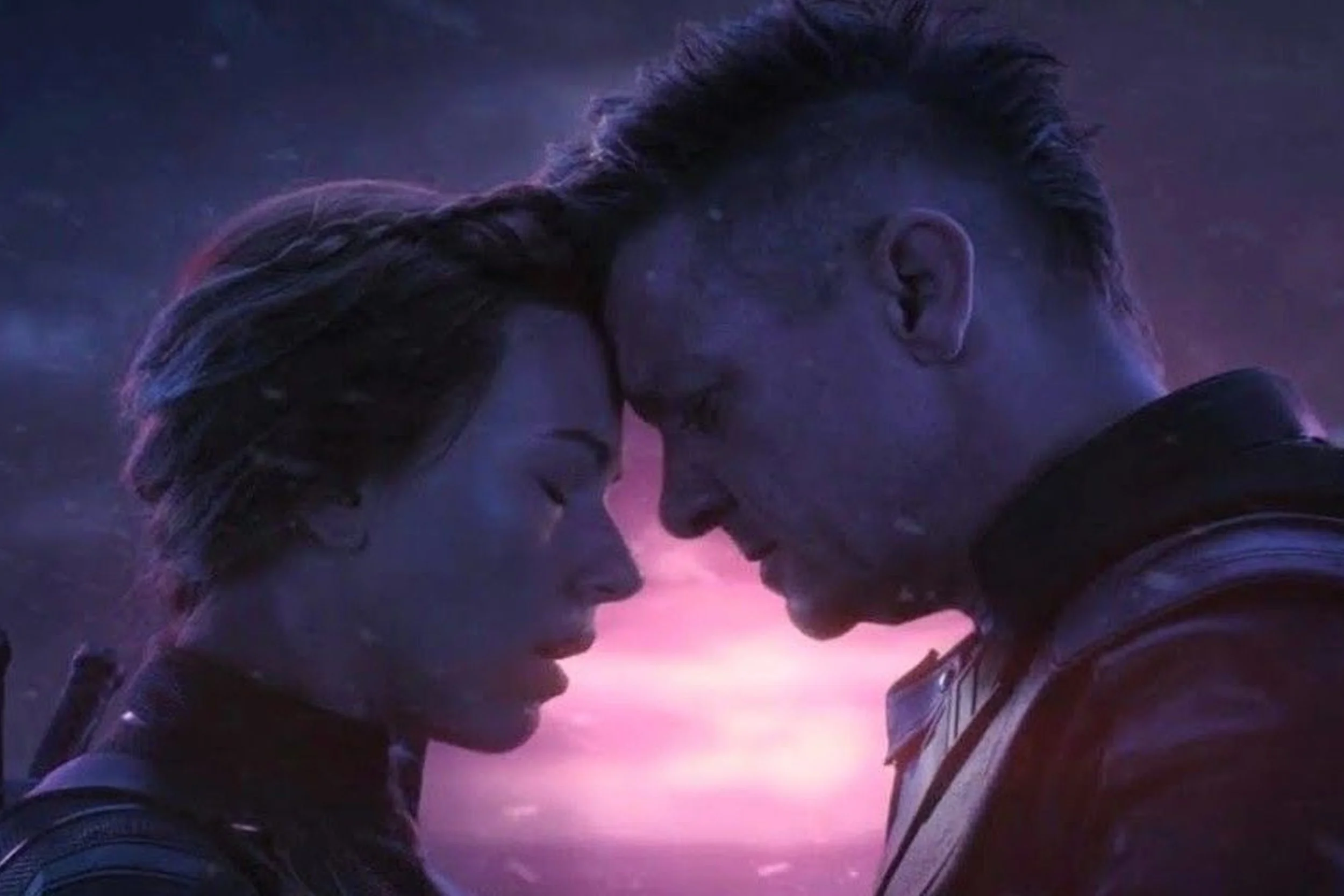
One of the biggest Christmas treats that the MCU managed to give me this year, besides the spectacle that was No Way Home, was seeing them pay tribute to Natasha Romanov, The Black Widow. I have always felt that Natasha was the heart of the Avengers, which is showcased in the entirety of the Infinity Saga. We first meet her in Iron Man 2, where she is tasked with keeping an eye on Tony Stark, and the two become acquaintances. She was the first real friend that Steve Rogers had after being thawed out of the ice, and she showed Steve a side of the world that he wasn't ready to see. Even then, she never judged him for his moral stances and helped him escape the airport in Germany during Civil War.
Natasha showed up at the funeral of Peggy Carter, just so that Cap didn't have to be alone. Natasha also managed to show Bruce Banner that he can love again and should want to love again, even if that meant accepting The Hulk version of himself. Finally, Natasha managed to save Clint from that deep and dark place he was in during the events of a Post-Infinity War/Pre-Endgame world. Throughout this series, you see what Nat’s death meant to Clint, from his inability to stomach her being portrayed in the Rogers musical, to his heartfelt confession to Kate about their first interaction.
Watching Clint eulogize his best friend at the Avenger's monument was a big moment as well. I'm so glad the show touched on what that friendship truly meant to Clint. Natasha Romanov touched a lot of hearts, not only in the MCU but ours as well. Rest in Power Widow. We'll always have Budapest.
The Characterization of Jack Duquesne
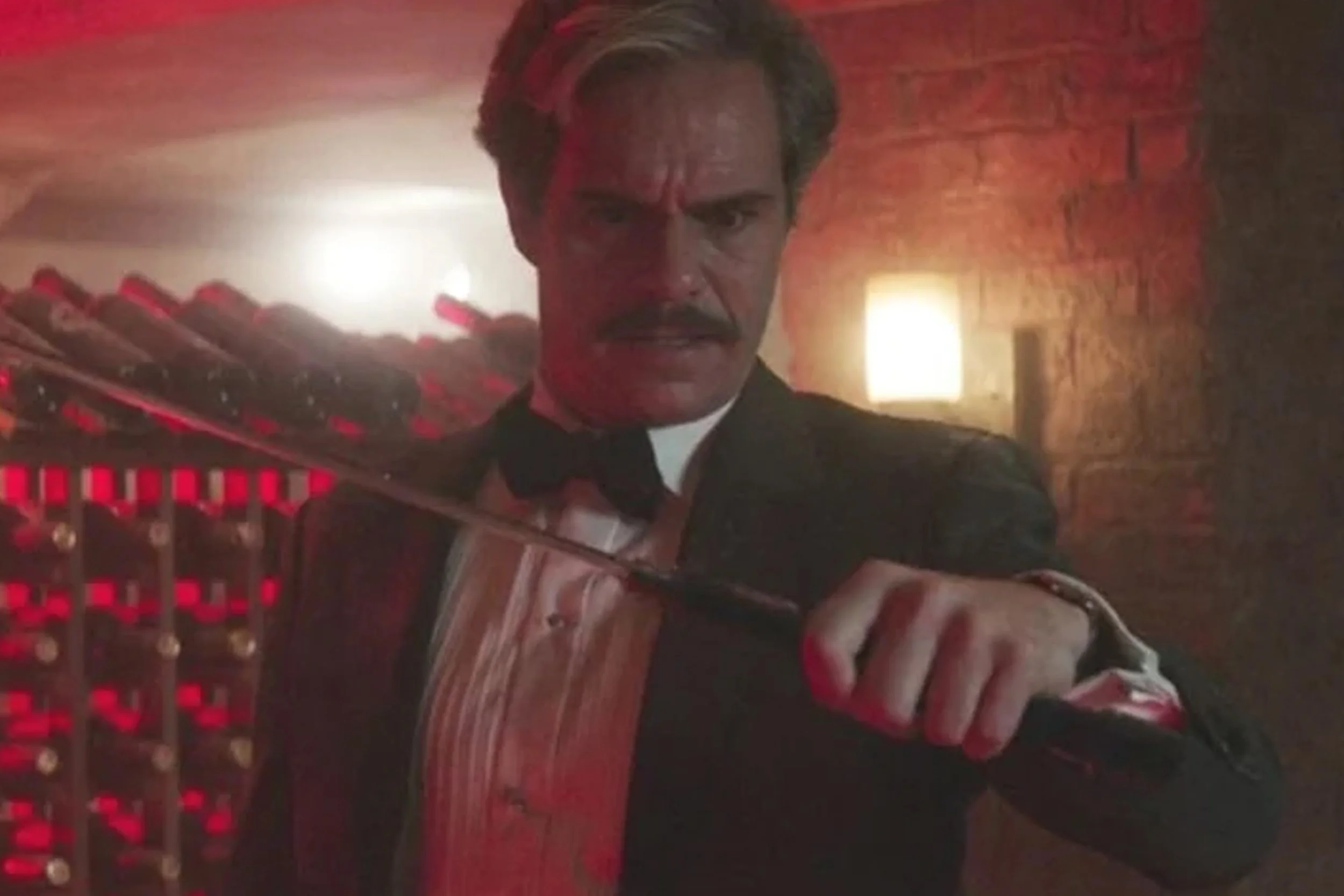
Casting is a hard job in Hollywood. Finding the right actor to play a particular role sounds a lot easier than it is. One of my favorite casting choices in this show was Tony Dalton as the role of Kate’s soon-to-be stepfather, Jack Duquesne. Tony Dalton, who I was first introduced to as Eduardo “Lalo” Salamanca in Better Call Saul, has become such a treat to watch, mainly because of the charm he can bring to any series. The character seemed to be written as the main villain (like his comic book counterpart) but ended up nothing more than a condescending, albeit somewhat clueless, master of swords.
What makes him so charming is the confidence he displays even while getting famous idioms wrong. Pay attention to when Jack is fencing with Kate. Initially, it seems as if he was letting her win so he could test her skills while hiding his own, perhaps in case of an actual showdown one day. Now we know that Jack was probably having genuine fun with Kate, even if it was at her expense. The show expertly frames Jack as suspicious, then when it is revealed that he isn't the villain you end up feeling bad for Jack, especially after four weeks of swearing he was the man in charge.
In all fairness, only Dalton can pull off showing up to a Christmas party brandishing a sword after being the suspect of murder via said sword. That kind of unabashed confidence makes him so much fun to watch. Even though I will bring up the characters of this show as a whole, I feel that Tony Dalton deserves a separate place on this list.
Character Chemistry
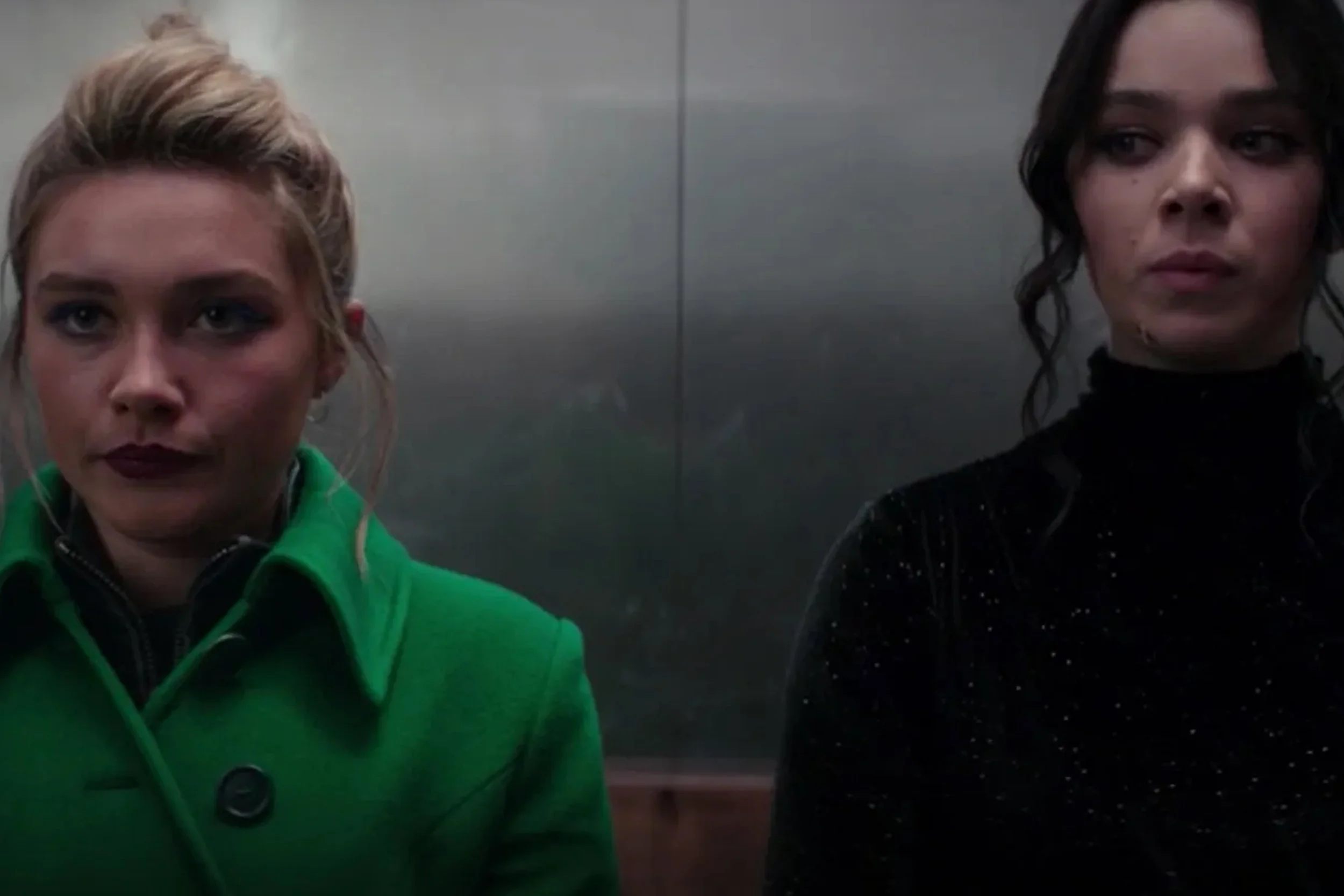
No show would be truly complete without the perfect chemistry between its cast of characters, and every member on this show went together like peanut butter and jelly. First, we have the amazing Barton clan, who are easy to buy as a believable and grounded family. You can tell Clint and Laura love one another, and not just because the writing tells you that they're married. I was heartbroken when Clint had to say goodbye to his kids in New York, or when Laura cried on the phone. I gasped when Clint couldn’t hear Nathaniel, and Kate had to help him because of how much I believed in their family unit. You not only want to see this poor man make it home for Christmas, but you also need him to make it home Christmas for your own sanity. Jeremy Renner and Hailee Steinfeld’s relationship is as magnificent on-screen as it is in the comics. It's another believable relationship that does an expert job at capturing how much both Hawkeyes meant to each other. From the moment they met, you can tell that these two were going to blend so well.
Of course, we can't forget about the beautiful May Queen herself Florence Pugh, and how she was able to jump right back into the Yelena shoes for the second time this year. Kate and Yelena’s shared screen time has made my cheeks hurt from how hard I smiled, and that is a testament to the acting chops that both women have. These two are the perfect successors to the Hawkeye and Black Widow mantle, right down to Kate not taking her own best shot on Yelena. I would love to see them back in the future. Even the villains played their roles perfectly, setting up interesting dynamics between Echo, The Tracksuits, Kazi, and Kingpin.
Lastly, I want to mention the Live Action Role Players and how they had the same vibe as the tenants from the comics. I knew we were getting Lucky the Pizza Dog in this show, but when they brought in Grills, there was a special tear that fell down my eye.
Validation for Marvel Netflix Fans
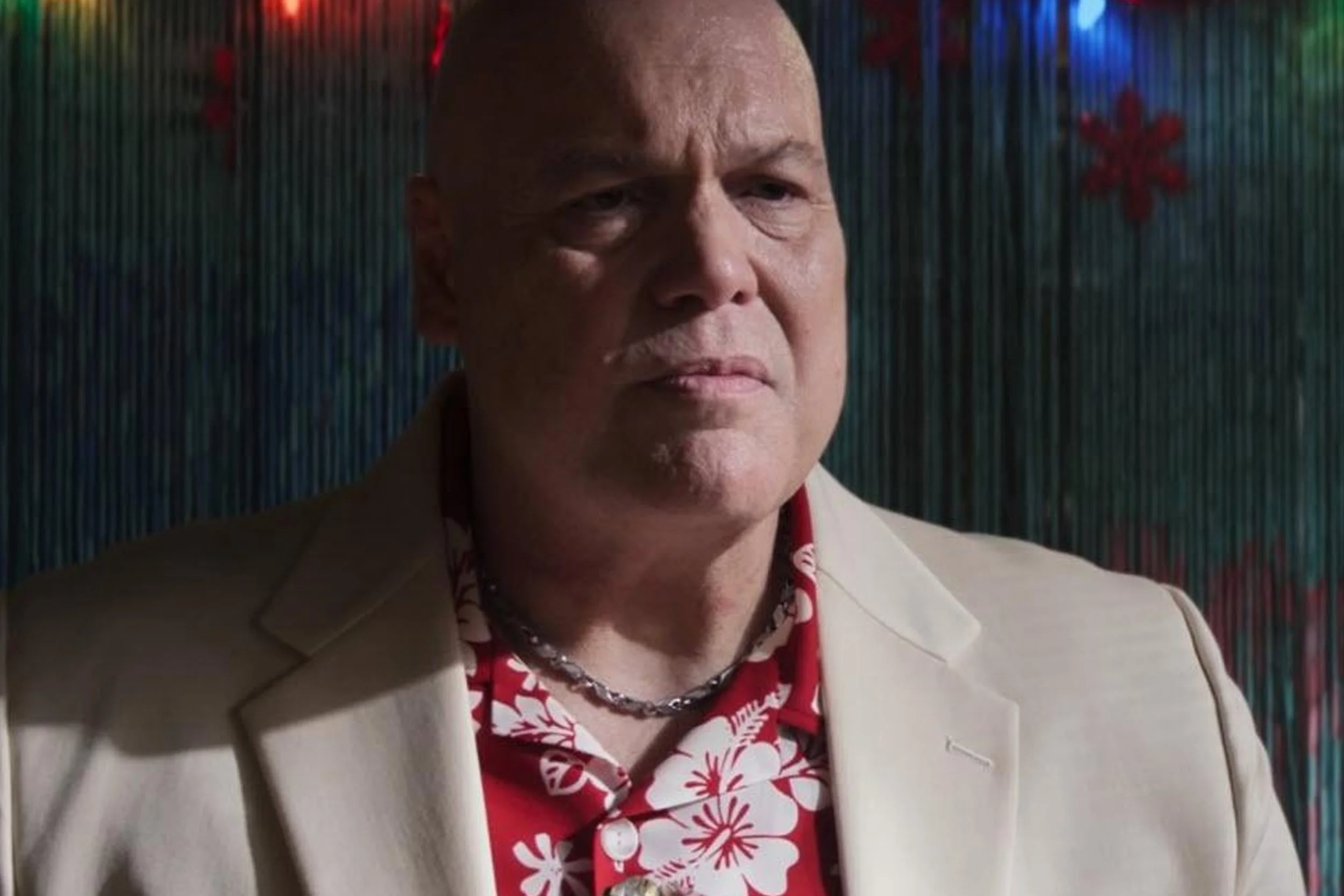
If there is one argument that I have found myself in more times than I care to count, it's whether or not the Marvel Netflix shows are cannon. I would like them to be, but there are certainly detractors who feel they shouldn’t. When I look back on shows like Daredevil, Jessica Jones, and Luke Cage, I can't help but think of all the times I've read these characters in the comics. Before Netflix, I had to put my own voice to the artwork and imagine the mannerisms these writers were trying to convey. When I think of all the talent that Charlie Cox, Kristen Ritter, and Mike Coulter possess, I get mad that anyone could think these characters don't deserve a place in the main MCU continuity.
Well, ladies and gentlemen, we have finally seen Marvel Studios give the Netflix spin-offs the recognition they deserve. Not only did we get a Charlie Cox appearance in Spider-Man: No Way Home but they also brought back Vincent D'Onofrio in the form of Wilson Fisk aka Kingpin in Hawkeye. Having Fisk as the puppet master pulling all the strings establishes that the Netflix shows, if not the characters themselves, exist in the same world that Tony Stark sacrificed himself for. I had no other choice but to release my emotions as tears of joy. It almost felt like a personal thank you from the studio, for holding out hope that they might see their Defenders again one day.
Cinematography and Chorography
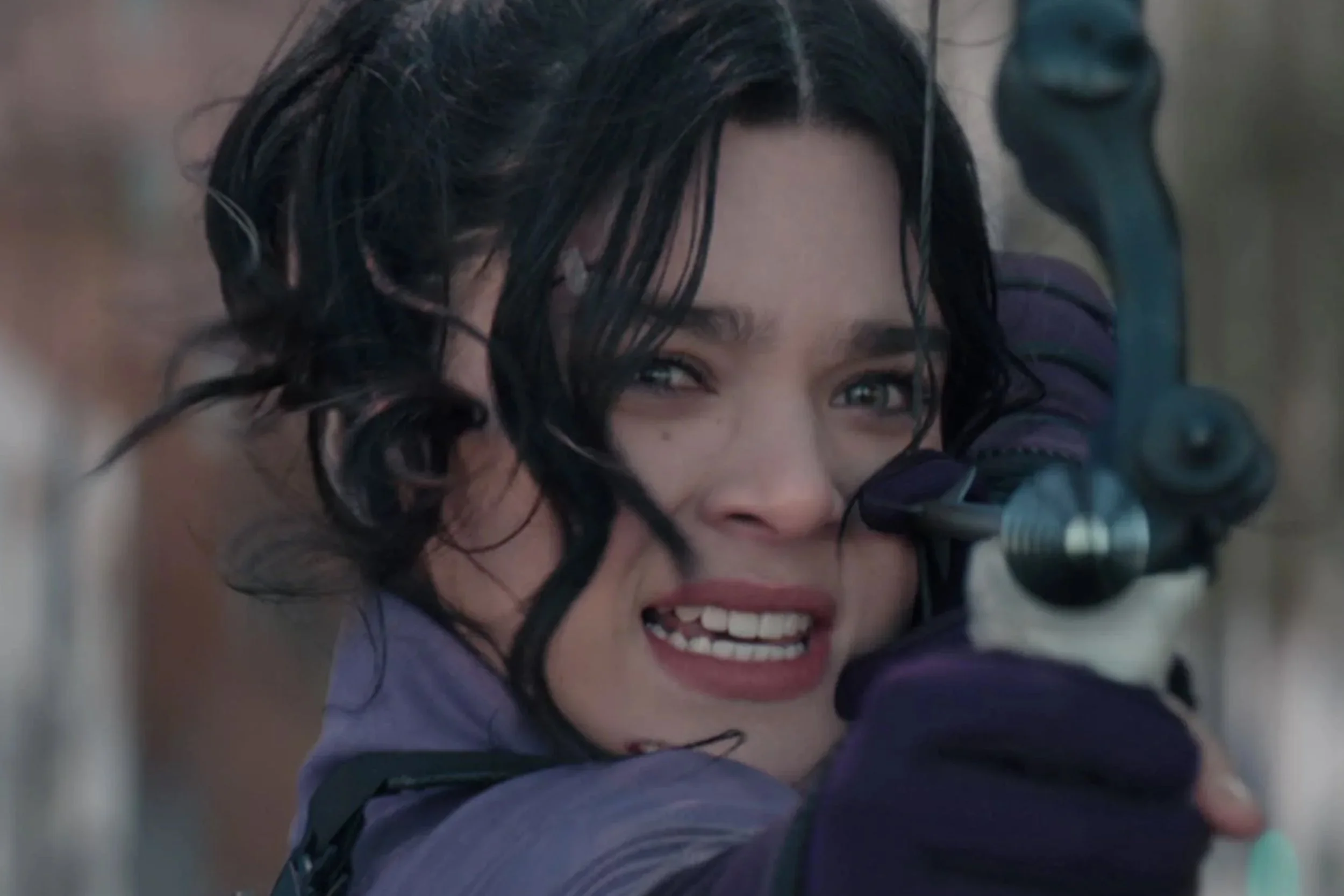
Fans of the Major Issues podcast were probably waiting for me to talk about the cinematography and they've come to the right place. If there is one thing that I am a sucker for, it is the way that cameras move to invoke emotion. One of my favorite scenes in this show was during the car chase in Episode 3 because it had this Children of Men-style camera trick where the camera does a constant 360° following shot from inside the car, all in one take. When there are multiple close shots of the bow and arrows as they are used, you can't help but be in awe at how cool this show makes archery look. When Kate and Yelena are fighting in that office building, they frame it in a wide-angle following shot, and you can see every swing, every kick, every moment, of a criminally short scene.
Then we have the choreography, which I feel is some of the best work that we've seen in the MCU. It may sound like a bold claim, but when you look back on a lot of the hand-to-hand combat in the MCU, it is choppy and nondescript. Every swing of a fist, every kick that is thrown, has so many cuts in between that you never see anything land, and it makes for pretty disappointing action. While I'm not claiming that there are no cuts in the fight scenes of this show, there is a lot less than there has been in Winter Solider and Civil War. They showcased their expertise early on when Kate faces off against the tracksuits for the first time in spectacular fashion. They even added a few slow-motion moments in their fight scenes.
I've racked my brain to see if the MCU has used a ton of slow motion before, and I don't think they have. I challenge you to go back and watch the Highway scene from Winter Soldier and the rooftop fight from episode 4, so you can witness not just the differences, but the overall growth in the MCU’s action. That kind of cinematic maturity alone is why I feel that makes my list.
Redemption for the Hawkeye Brand
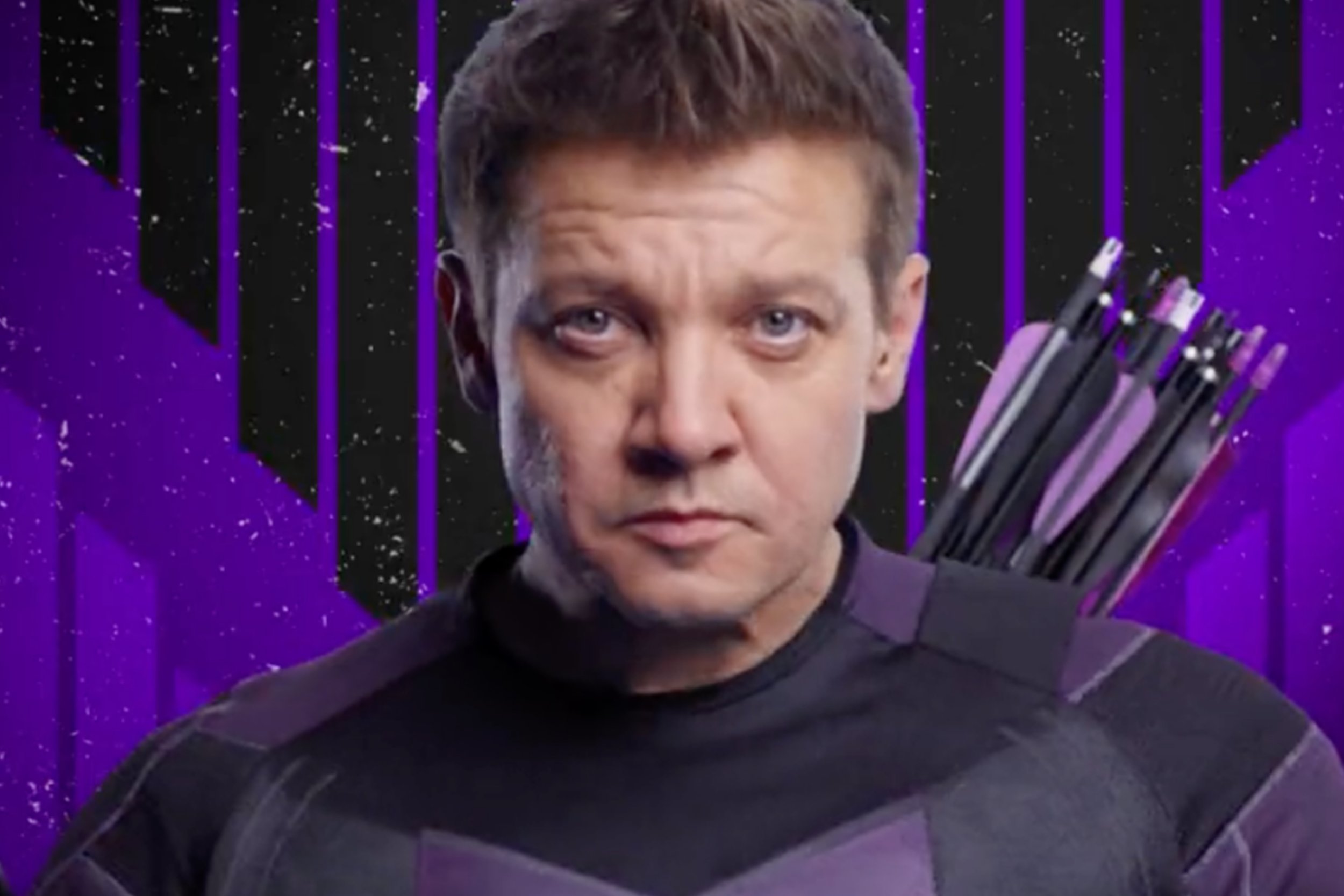
It took a lot of meditation on what message the writers had in mind when managing a show about an Avenger that the fans haven't shown enough love towards. It seems like this show's true motive was to show the world just how awesome Clint Barton, a.k.a Hawkeye, truly is. We have all seen the jokes and the comments about how Clint and Natasha are seen as jokes and have no reason to be on the Avengers. We’ve all heard the arguments before as well. "What can someone with a bow and arrow or a gun do up against an alien invasion?"
Certain fans of the Marvel Universe didn't wanna take these characters, especially Clint, seriously. Throughout this series, they showed us Barton's mindset first-hand. He doesn't believe himself to be a role model to anyone, as he tells Kate in episode 3. Whether that is because of his blood lust as Ronin, or his Survivor's Guilt over Natasha, Clint is uncomfortable with being put on a pedestal. Kate tells Clint that being a hero doesn't mean superpowers, but it means going out of your way to help, no matter the cost. We've seen Clint embody this hero mentality with how he saves people at the expense of his own body. We also get to see the consequences of being a hero with bumps, bruises, and overall use of a hearing aid due to damaged hearing.
Clint has gone out of his way to help civilians but has also helped recruit and rescue Natasha, Wanda, and now Kate. He is a hero for his ability to adapt to the role of father/big brother to those who need someone to stick up for them. All Kate, the Hawkeye fanatic, wanted was for Clint to have a better brand. This show got us there in the end with the David Aja suit to match! This show is a tribute to a single man making a difference, in a world he might not fit in anymore, and that is Hawkeye through and through.
Kate is also gonna do some great things for the Hawkeye brand in the future, just you watch!
But what did you think of the show? Was it everything you expected or did you expect more? If you would like to hear other members of the cliques thoughts on the show, be sure to check out our podcast review. My name is Dan “The Comic Book Man” and always remember….that you are worthy.
8 Sadistic Spider-Man Villains Who Should Debut in The MCU
Comment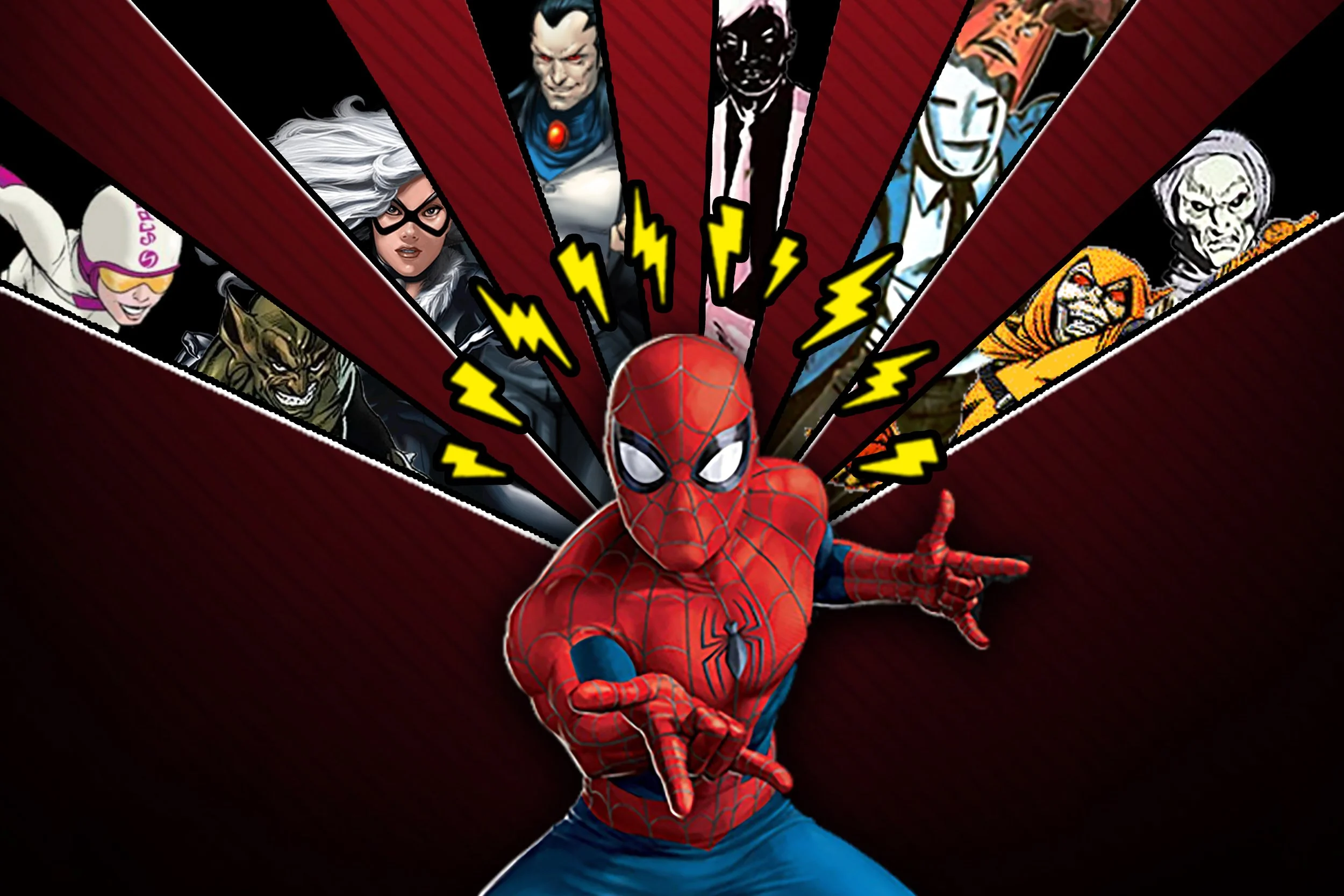
With the dust barely settling on Tom Holland’s near-perfect Spider-Man trilogy, all signs are pointing to a sequel trilogy happening for the world-famous wall-crawler soon. While there have been 8 live-action films in the last 20 years, filled with some of the best and brightest that is the Spider-Man rogues' gallery, we decided to look to the future and predict which tricky troublemakers may have our Friendly Neighborhood Spider-Man in their crosshairs.
Not on the list are seemingly confirmed villains like Morbius, Kraven, and The Scorpion, the latter two of which were hinted at in the final scenes of Spider-Man No Way Home. We also wanted to challenge ourselves by picking villains that have never been depicted in live-action before. With all that out of the way, join us as we discuss 8 sadistic Spider-Man villains who should debut in the MCU!
Black Cat
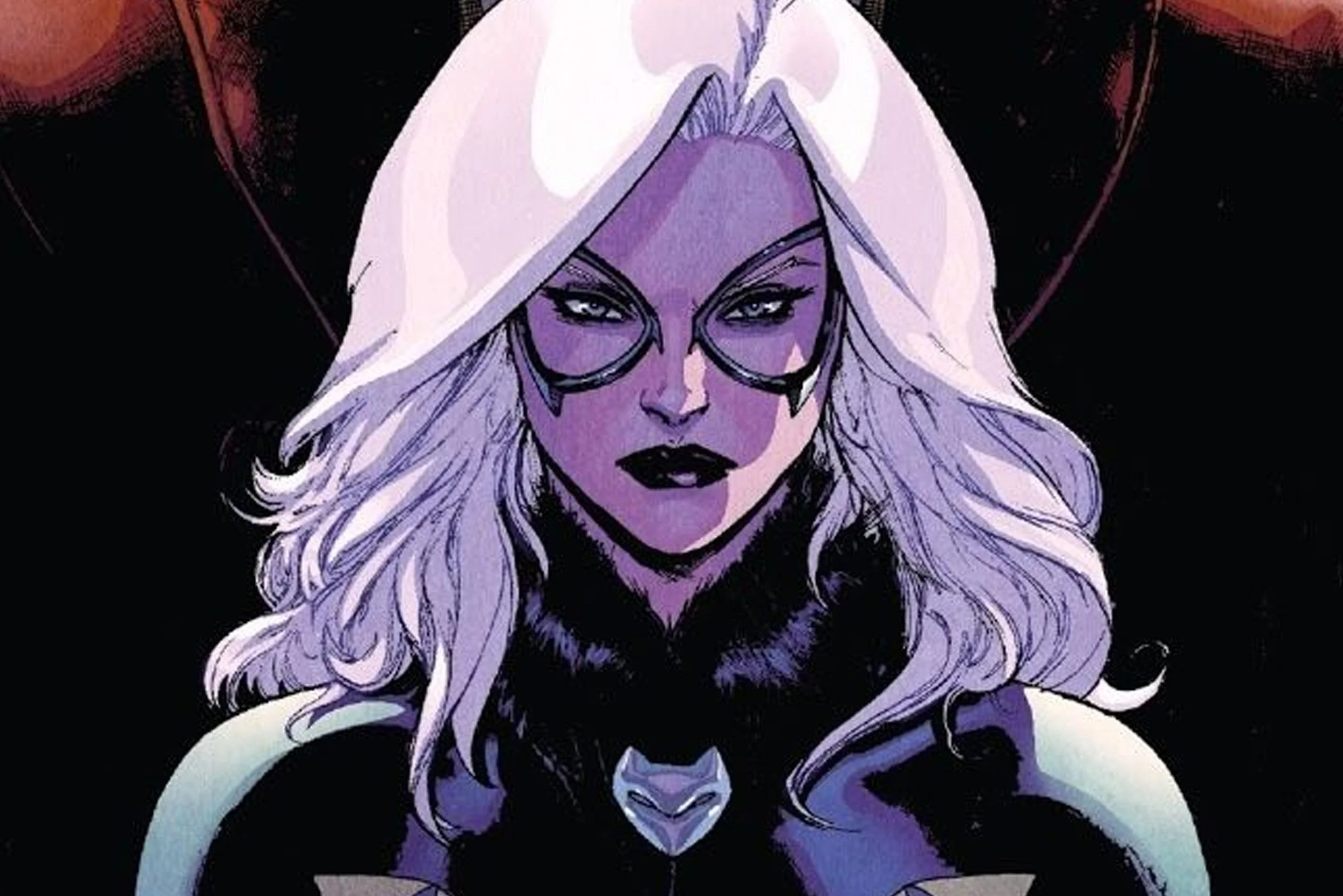
The first entry might not necessarily be the most sadistic, but Felicia Hardy aka The Black Cat is well overdue to make a live-action appearance. Over the past decades, all of Spider-Man’s cinematic threats have been male, so what better way to blaze a new trail than to slide this femme-fatal into a film as Spidey’s main antagonist? Making her comic book debut in Amazing Spiderman #194, way back in 1979, Black Cat was initially created as a Spider-Woman villain before editorial changes put her on Peter’s path.
The daughter of Walter Hardy, an accomplished burglar, Felicia found herself following in her father’s footsteps. Under the moniker of The Black Cat, Hardy would go on to be one of the deadliest thieves in Marvel, using her heightened strength, agility, and skills as a martial artist to get the job done. While she initially had no superpowers, the character was later given the psionic ability to affect probability fields, essentially giving her enemies “bad luck” (which was incredibly fitting given her codename). In her first foray as Black Cat, she crossed paths with Spider-Man. Since then, the two could be seen either fighting or kissing one another, depending on the comic. With Peter’s relationship on hiatus after the evens of No Way Home, Felicia could be a fun addition to the Parker Dating Pool.
The introduction of Black Cat can allow Marvel to explore the grey side of their universe, as Felicia finds herself more on the side of good these days than evil. Also, given the history of the character as a sexually abused woman, Hardy could potentially be seen as an inspiration to those who feel their story would never be told in a superhero epic. Felicity Jones played Felicia in Amazing Spider-Man 2 although the role was reduced to nothing short of a cameo.
Morlun (and the Inheritors)
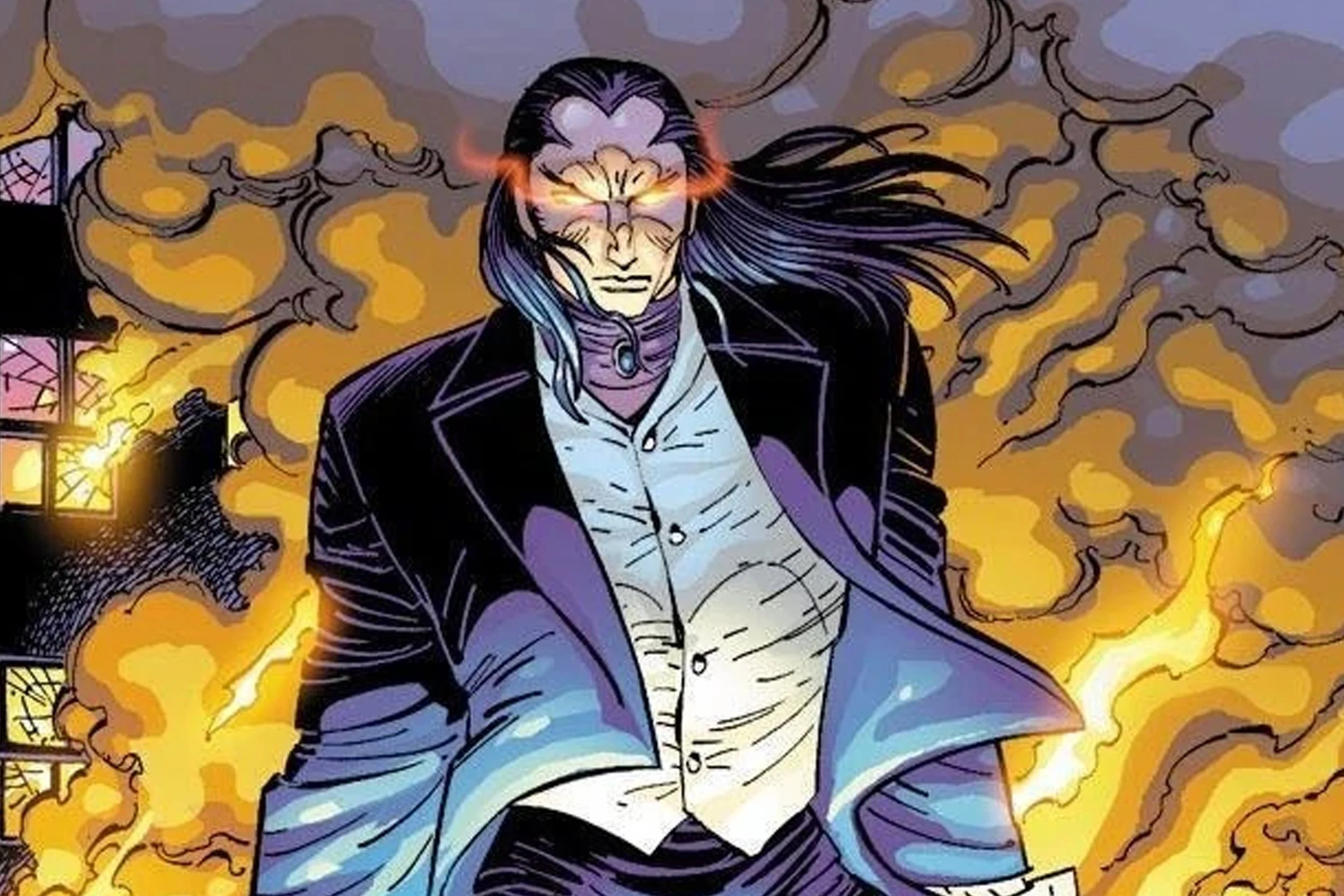
Belonging to the Inheritors, a group of dimension-hopping hunters hoping to feast on anyone possessing a Spider-Totem, Morlun is well-known for his involvement in the Spider-Verse & Spider-Geddon crossover events. In those stories, he and his clan travel to different dimensions, draining the lives out of numerous versions of Spider-Man for their own sustenance. This outside threat causes some of the remaining Spider-Men (and Women) from across the multiverse to band together in hopes of stopping these energy vampires once and for all.
While Morlun is a fairly recent addition to Spider-Man lore, what he lacks in longevity, he more than makes up for in brutality. Using his superhuman strength, speed, and stamina, he was able to drain the life-forces out of many versions of Spider-Man, without even breaking a sweat. As a matter of fact, the Inheritor was only subdued once the otherworldly Spider-Men started to work together.
Considering Marvel’s newfound interest in exploring the multiverse and the financial success of Spiderman: Into The Spider-Verse, a live-action version of Spider-Verse has to be in the cards when thinking of the big picture. They say, “If it ain’t broke, don’t fix it”, and that sentiment rings true of the villains of the comic book version of the story. Not only would bringing in Morlun give you an excuse to bring in Spider-Gwen (Ghost-Spider), Spider-Man Noir, or Spider-Ham, but if you include his family in the mix, you may just have the right amount of destruction and devastation for an instant classic Spider-Man film! In the meantime, the Inheritors will be waiting until the Hunt… is on.
The Chameleon
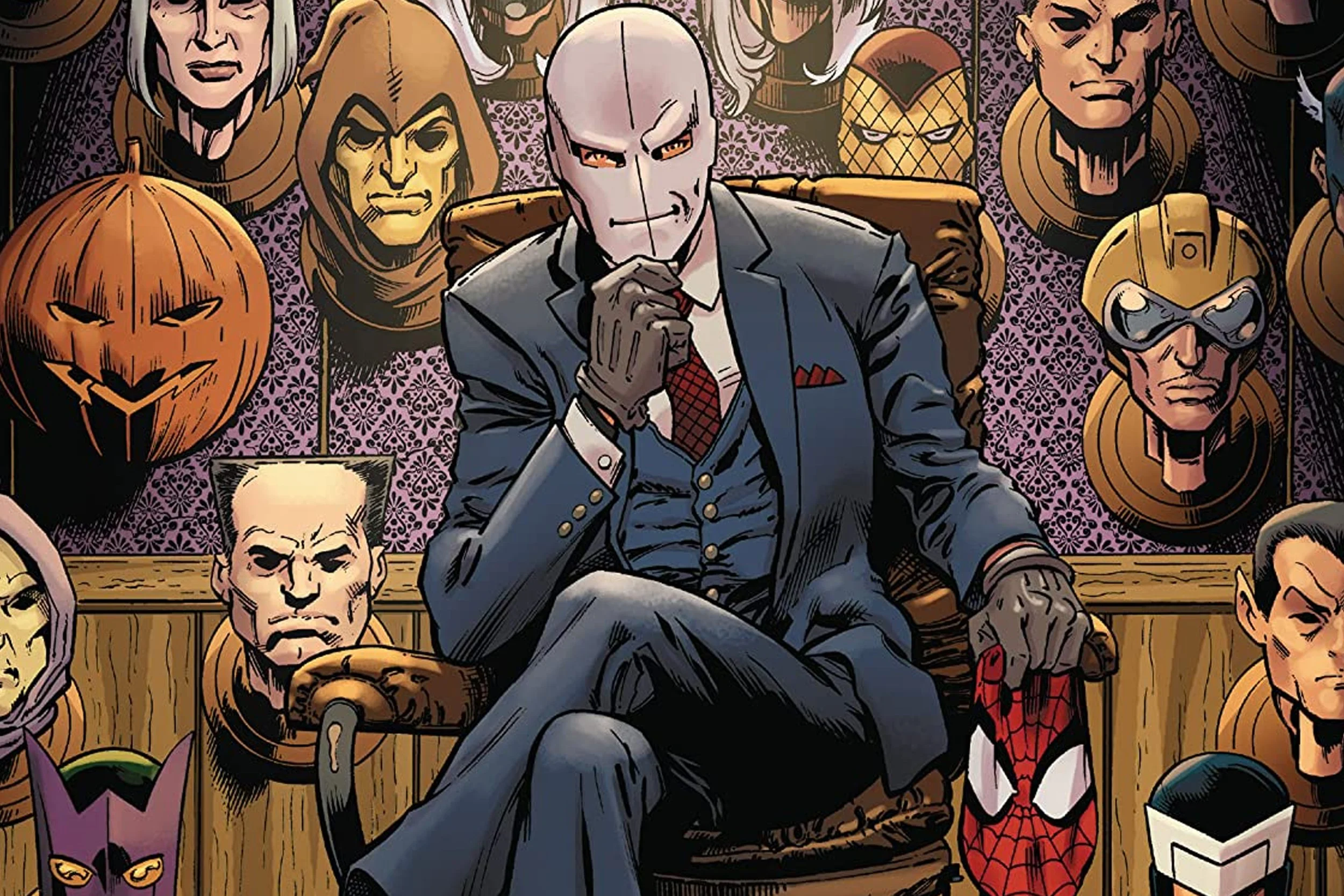
Spider-Man is left with a bit of an identity crisis at the end of No Way Home, and what villain would be better to underline that theme than the master of disguise and skilled impressionist known as The Chameleon. Chameleon, also known as Dmitri Smerdyakov, has the distinction of being Spider-Man's first supervillain, debuting in the pages of Amazing Spiderman #1 in 1963.
The character has since appeared in different Spider-Man properties and gets his namesake because of his ability to mimic anyone's body language and speech patterns. That, plus his ability to make convincing masks, was his claim to fame in early years, and he managed all this without superpowers. Since then, Chameleon has used technology to achieve his means, often shown wearing a holographic belt that can help him appear to be anyone he wants. This ability has made him incredible at espionage and a dangerous threat in general.
The most sadistic version of the character could be seen murdering his victims via an acid bath, then examining their screams of pain so he could better train his voice to sound like them. He would kill a person, assume their identity, and try to live out their lives the way he felt THEY should have. As Peter Parker takes time to find out who he wants to be in this world, it would be apropos if he faced a villain who could be anyone he wants to be. Chameleon can also serve as a surrogate for those who don't feel comfortable in their own skin. Did we mention he also just so happens to be Kraven The Hunter’s half-brother?
Screwball
Another villain who could be a welcome addition to the MCU is Screwball, a social media influencer who used her massive platform to commit crimes for her adoring audience. As the world's first live-blogging super-villain, not much is known about Screwie other than the fact that she loves an audience and loves to exploit Spider-Man. Most know Screwball from her appearance in Marvel’s Spider-Man for PS4, where players had to complete her “Screwball Challenges” to beat the game.
The lack of female villains depicted in live-action Spiderman films is downright criminal, and the addition of Screwball would not only diversify his silver screen rogues’ gallery, but the film could make a point about the dangers of social media fame by pointing out the need to constantly up the ante to get more followers. Screwball has yet to be completely fleshed out as a character in the comics, only making sporadic appearances to stir up trouble, but the MCU could add additional layers to the villain that didn’t exist initially. In the era where TikTok and “challenges” are all the craze, why not try a live-streaming villain for a Spider-Man sequel?
Anyone who would harm innocent people purely for entertainment has sadistic tendencies, but when you factor in her constant need for an audience, Screwie is downright sociopathic. With her parkour skills, 18 million followers, and desire to be the talk-of-the-town, Screwball might be one challenge too many for the wall-crawler.
The Jackal
After High School, Peter will need to go to college, and odds are he would end up attending Empire State University just as he did in the comics. If that’s the case, it may be time to introduce one of Spidey’s oldest foes, Miles Warren also known as The Jackal, who was introduced to readers in Amazing Spider-Man #31 in 1965. A certified expert in biochemistry, Warren was a professor at ESU who became obsessed with cloning and the evolution of man. The professor developed an unhealthy obsession with one of his students, Gwen Stacey, who was dating his pupil Peter Parker. After Gwen’s death at the hands of the Green Goblin, Warren became heartbroken and blamed Spider-Man for her death.
Determined to reverse her fate, Miles made flawed genetic clones of Gwen Stacey and Peter Parker, creating a perversion of the couple themselves. Once the professor learned that Peter Parker was Spider-Man, he became hell-bent on ruining his life and would do so by creating exact clones of the wall-crawler and causing confusion over which version of Spider-Man was the real one. Ben Reilly and Kaine Parker, both of whom would take on the Scarlet Spider moniker, started as clones of Peter Parker created by Warren. The Clone Saga, the story in which most of these revelations come to light, has been marred by fans for being convoluted and confusing. Marvel Studios could potentially streamline the event for fans who are unfamiliar.
Miles Warren would eventually go full-on insane in the comics and develop a split personality which he blamed all of his malicious deeds on, calling him The Jackal. Jackal's grotesque visage and his advanced intellect combined with his unethical science experiments, make him a foe worthy of a live-action adaptation. Bringing him into the fold allows you to introduce characters like Ben Reilly and others involved in the Clone Saga storyline if you choose to.
Carrion
This next one might be dicey, as it plays on world events, but what about bringing in Carrion? This failed clone of Miles Warren created in 1978 also had Warren’s hatred for Spider-Man, blaming him for the death of Gwen Stacey. Retaining the professor's memories, he set his sights on destroying the web-head once and for all. Carrion's body resembles a human corpse, giving him a zombie-like appearance as Warren had created the clone but seemingly died before he could release him. The clone was left developing in the capsule for far too long, causing its body to age at an artificially accelerated rate. His ghoulish appearance aside, Carrion could disintegrate organic matter to ash with a simple touch and has the powers of telepathy, self-levitation, and telekinesis of organic matter. He also has unlimited access to Miles Warren’s scientific equipment used in his "cloning" experiments.
Later on in comics, we would see different versions of Carrion including a college classmate of Peter Parker, and a S.H.I.E.L.D Agent named William Adam. Both men were exposed to the dangerous virus by accident, becoming villains because of it. The final version of Carrion resembles a sentient and incredibly viral version of the virus itself, that can hop from body to body, controlling them at will. It can even create a physical form for itself that resembles the classic appearance of Carrion himself.
Marvel is known to “remix” some villains to best suit their needs, and I believe you could combine various versions of Carrion to make the ultimate villain. You can have a rival of Peter Parker find a substance that makes him the living Carrion, and his defeat could release the sentient Carrion Virus, which could ravage New York City until Spider-Man comes up with a cure. Having a fictitious virus run rampant for the sake of cinematic drama might be a bit much for those experiencing the horrors of the Covid-19 pandemic, but art is best when it imitates life, don’t you think?
Mister Negative
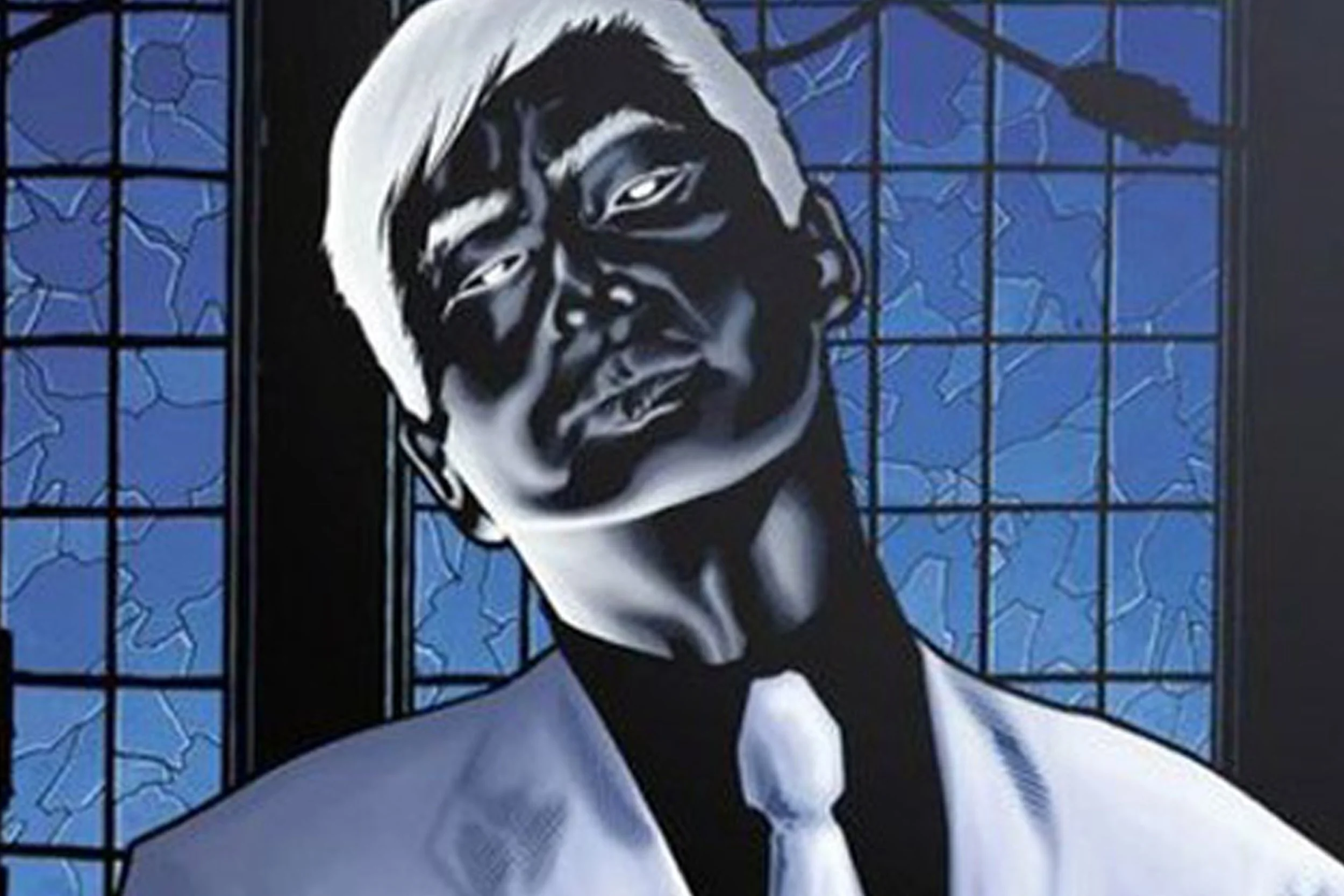
There will be an Aunt May-sized hole left in New York City when we pick back up with Spidey. She was such a giving person, even going so far as to work for FEAST, a non-profit organization that does its best to provide food, emergency aid, shelter & training to those in need. In the pages of Marvel Comics, May isn’t the only character associated with the organization as it was originally founded by Chinese immigrant and kind-hearted philanthropist Martin Li. If that name rings a bell, it's because Martin Li is one of the characters in Marvel’s Spiderman, the critically acclaimed PlayStation 4 game. In it, players got to deal with Li, or more importantly, Li’s sadistic crime lord alter ego Mister Negative.
That’s right! A mild-mannered community leader by day, and cutthroat criminal mastermind by night, Mister Negative masquerades as a man of the people while strengthening his chokehold on New York City. After exposure to the drug D-Lite, Li mastered control over both the Darkforce and the Lightforce. He has the power to heal, once healing Eddie Brock’s Cancer, and the ability to corrupt and brainwash his enemies with the same touch. Using the latter, Li managed to take control over Spider-Man, as the wallcrawler was not immune to the Darkforce’s ability to fully corrupt one’s morals and values.
Li can show up as a man who wishes to lead F.E.A.S.T. in May’s absence. Using his charm and outright generosity to disarm anyone on his trail, he could covertly build his personal army, the Inner Demons from the shadows. His duality makes him a perfect antithesis of everything Peter Parker is, and his perversion of May’s legacy may give Peter the motivation he needs to step up and take him down.
Hobgoblin (Ned Leeds)
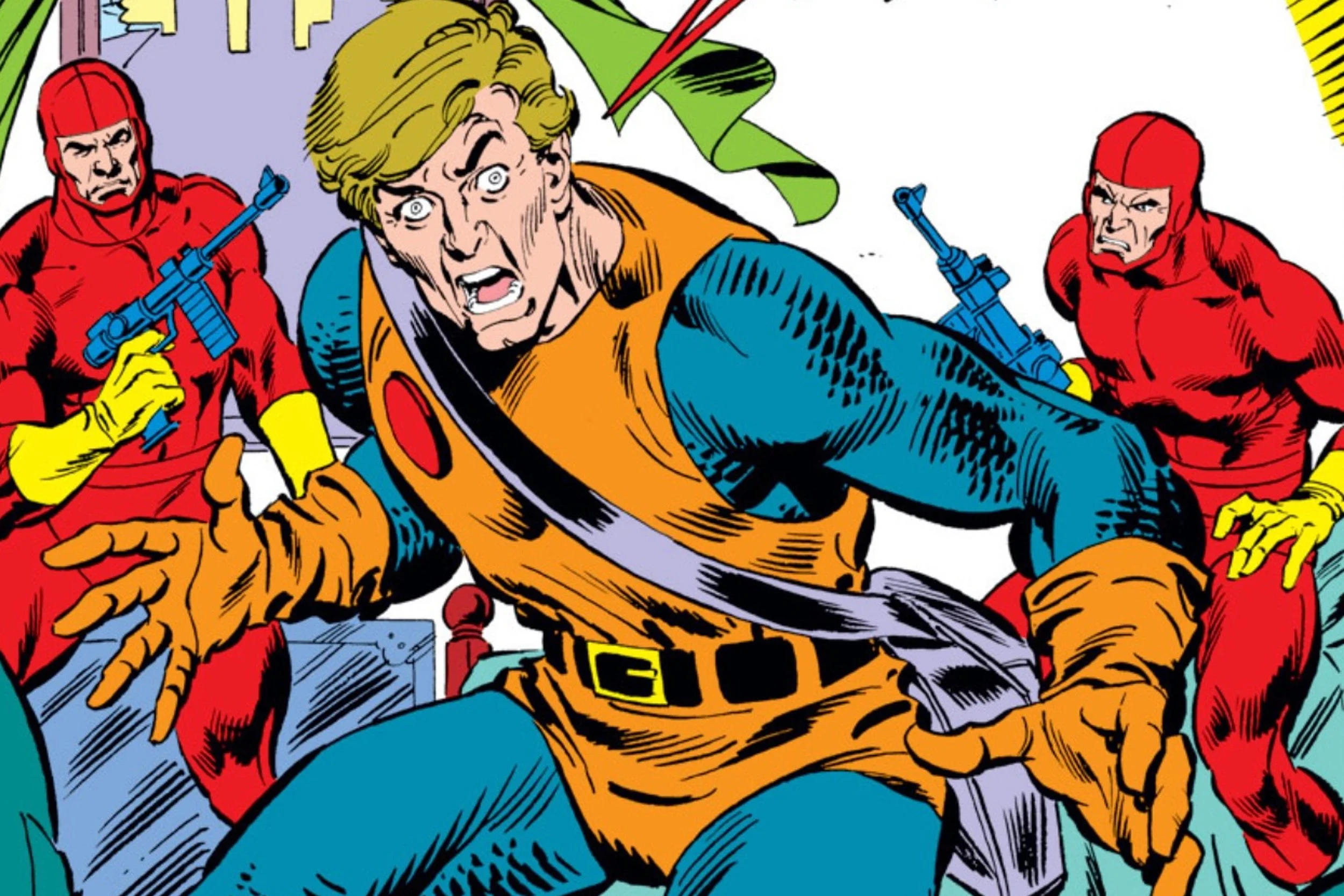
What is a better superhero tale than best friends turning into bitter enemies? As soon as Ned Leeds was introduced to us Spider-Man fans in Spider-Man: Homecoming, a quick google search revealed one name; Hobgoblin. Many people have committed crimes under this moniker, the most well-known version being Roderick Kingsley, a fashioned designer turned criminal who happened upon Norman Osborn's Green Goblin gadgets and gear and altered it to distinguish himself from the original. His reflexes, speed, stamina, and intellect were all enhanced by taking the Goblin Formula, making him extremely dangerous.
In the comics, Ned is a reporter for the Daily Bugle and is tasked with investigating the Hobgoblin. Unfortunately, after tracking the villain down, Leeds ends up kidnapped and brainwashed by the Hobgoblin and used as a patsy for all of his crimes. That is one of the most tragic things of all. Leeds never wanted to become the villain, he was only brainwashed into thinking he was so he could take the fall if Hobgoblin was ever captured. As a matter of fact, when things got too dangerous for Kingsley, he "leaked" Ned's identity as the Hobgoblin, which ultimately gets Leeds killed in a case of mistaken identity.
Is this tragic story in the cards for OUR Ned Leeds? There is no straight answer to that question. His eventual turn to the Darkside was hinted at in a joking way in Spider-Man: No Way Home, and he's already shown to be incredibly skilled at technology. Now that he and Peter are no longer friends, all bets are off on whether or not Parker could keep his "guy in the chair" safe.
With no friend to steer him from his dark fate, we might see a completely brainwashed and unhinged Leeds don the yellow Goblin mask and unknowingly face off against his former best friend. While none of us may be ready for it, the MCU may have already laid the groundwork for the death of Ned Leeds, and we didn't even know it.