
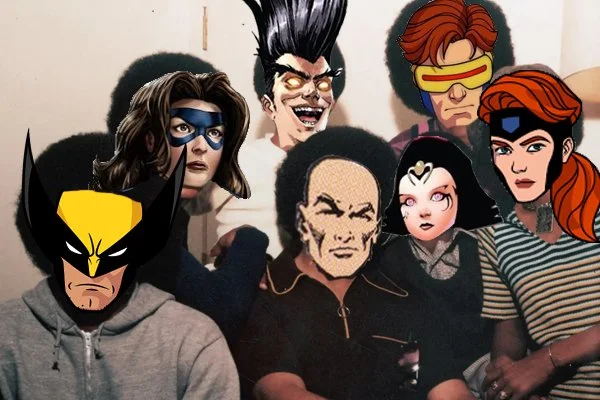
Let’s be real: not everyone gets warm fuzzies when Father’s Day rolls around. Some of us got TV dads. Some of us got deadbeats. And some of us… well, some of us got something that looked a lot like a villain origin story. So to help anyone who grew up with a father who gave more tough than love, ComicBookClique.com proudly presents: the 9 Worst Fathers in Comic Book History — a petty, cathartic, and heavily-sourced therapy session for the comic book kids who deserved better.
But before we get into it, a quick note. We’re not talking about dads who were just bad at showing up for soccer games. So if you came to see Reed Richards or Bruce Wayne on this list? Sorry, but they’re complicated, not cruel. Reed can be cold and dismissive. Bruce is emotionally constipated and turns orphans into weapons. But neither of them were out here raising their kids like science experiments or actively trying to traumatize them. This list is for the truly malicious dads—the ones whose kids had every right to turn evil, go no-contact, or punch their way into therapy.
1. Trigon – Deadbeat Demon Dad of the Year
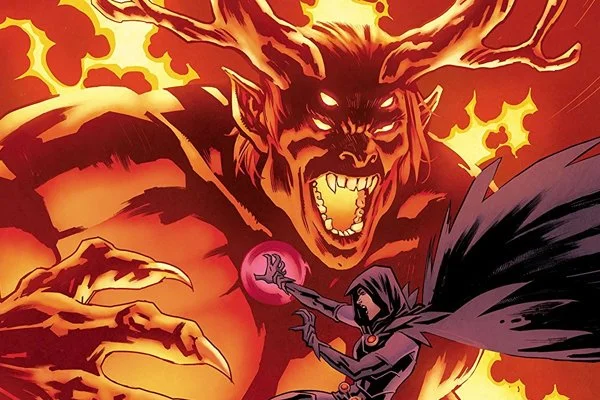
You know your dad's bad when your existence threatens the entire multiverse. Trigon is a literal interdimensional demon who fathered Raven through manipulation and dark magic, then spent her entire life trying to possess, control, or destroy her. In The New Teen Titans #1 (1980), Raven is introduced as a young woman begging for the Titans' help to resist the evil inside her—which just so happens to be her dad. Trigon doesn’t just show up for the occasional “I’m disappointed in you” chat; he tries to remake Earth in his own flaming image and forces Raven to act as his herald of doom.
The real horror of Trigon isn’t just that he’s a demon—it’s that he treats fatherhood like ownership. His "love" is possessive, conditional, and violent. Raven spends most of her life trying to resist the destiny he designed for her, and the few times she defeats him, he always returns—more convinced than ever that she belongs to him. A true father from hell.
2. Norman Osborn – The Green Goblin Gaslighter
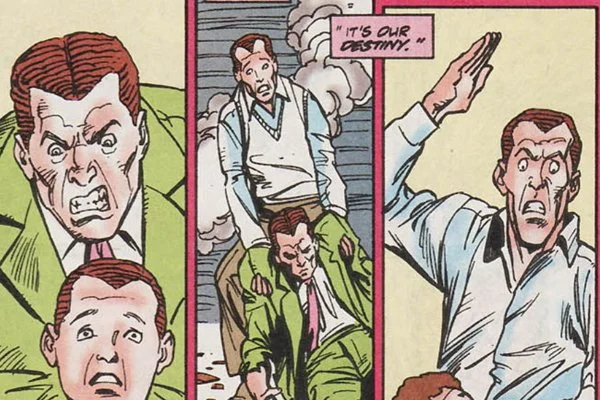
Norman Osborn might just be the most performative father in comics. Father to Harry Osborn, he swings wildly between cold indifference and domineering narcissism. In early Amazing Spider-Man issues, Harry desperately tries to earn Norman’s approval—only to be constantly reminded that he’ll never be good enough. In Spectacular Spider-Man #200, we even get a tragic moment where Harry dies trying to protect Peter, finally stepping out of Norman’s shadow.
But Norman’s greatest hits don’t stop there. He fakes his death for years, traumatizing Harry and blaming Spider-Man. He gaslights his son into taking the Goblin mantle, then shames him for not living up to it. Later, during Dark Reign, he becomes America’s top cop while mentally unraveling—and still finds time to endanger his grandkids. For Norman, fatherhood is a power play. He doesn’t raise children; he grooms legacies.
3. Brian Banner – The Monster Behind the Hulk
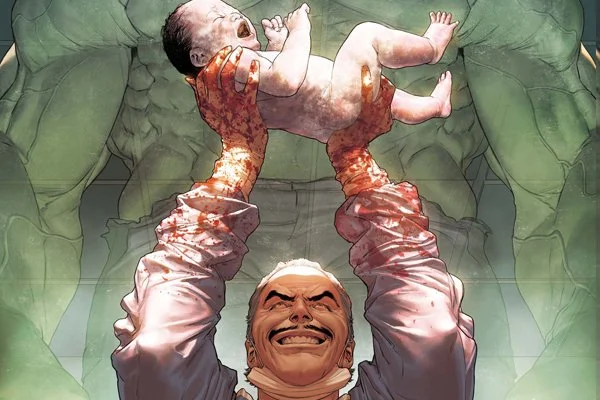
Before gamma radiation, there was generational trauma—and Brian Banner delivered that in full. In Incredible Hulk #312 (1985), we get one of the most disturbing retcons in Marvel history: Bruce Banner’s dad was an abusive, paranoid scientist who believed Bruce was genetically cursed. So what did he do? Beat him. Repeatedly. Until Bruce's mother tried to protect him—and Brian murdered her in front of Bruce.
Brian’s abuse didn’t just traumatize Bruce—it created the Hulk. Later stories, especially in Immortal Hulk, explore how the Hulk isn't just rage—he's protection. A barrier born from a child who couldn’t defend himself. Brian shows up posthumously in visions, flashbacks, and psychic manifestations, continuing to torment his son long after death. He’s not just a bad dad. He’s the foundational trauma that split Bruce Banner’s psyche.
4. David Cain – Built a Daughter Like a Weapon
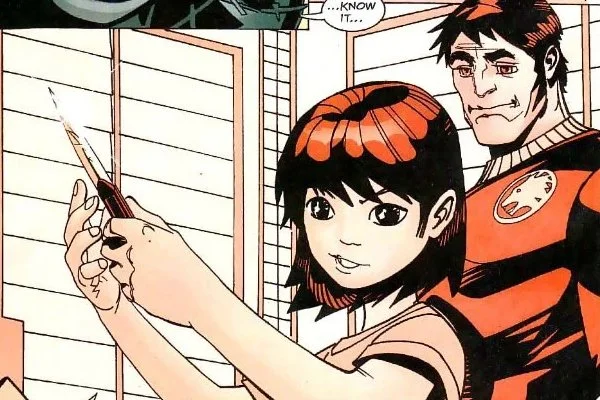
David Cain didn’t raise Cassandra Cain out of love—he raised her like a living blade. As one of the League of Assassins' top killers, Cain decided to raise a child with no verbal language, teaching her to read body language and violence instead. From infancy, Cass was groomed to be the perfect assassin: no words, no distractions, just instinct and execution.
In Batgirl (2000), Cass’s backstory unfolds like a horror show. Her first kill as a child shatters her emotionally. When she tries to escape that life, Cain shows up time and time again, trying to “fix” her by dragging her back into the shadows. He even offers to murder someone for her as a twisted gesture of love. David Cain isn’t a strict parent—he’s a human trauma machine who weaponized his daughter’s innocence.
5. Darkseid – Darkseid IS….A Terrible Dad
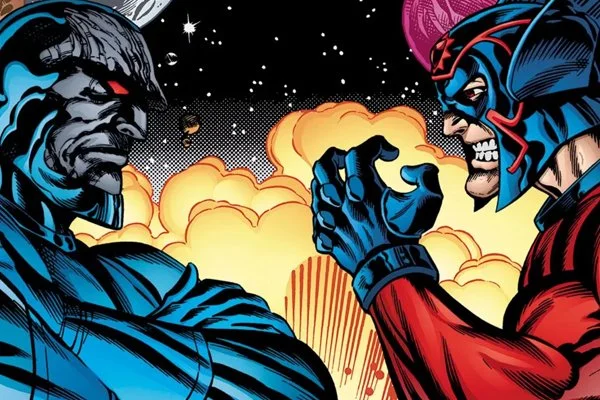
If we’re talking cosmic scale deadbeatery, Darkseid is in a league of his own. The ruler of Apokolips once traded his own biological son Orion to Highfather as part of a ceasefire deal—and in return, he took in Highfather’s son, Scott Free (aka Mister Miracle). Orion was raised among the New Gods of New Genesis, constantly struggling with the darkness inherited from his birth father. Scott? He was tortured in Granny Goodness’ orphanage until he eventually escaped and became the universe’s greatest escape artist.
Darkseid doesn’t see children as heirs—he sees them as leverage. In Final Crisis, New Gods, and Mister Miracle by Tom King and Mitch Gerads, Darkseid’s influence hangs over his sons like a gravitational pull of dread. He’s the kind of father who would drop you off at daycare and then immediately nuke the building to prove a point. Absolute worst.
6. Magneto – Genocidal Dad with Selective Memory
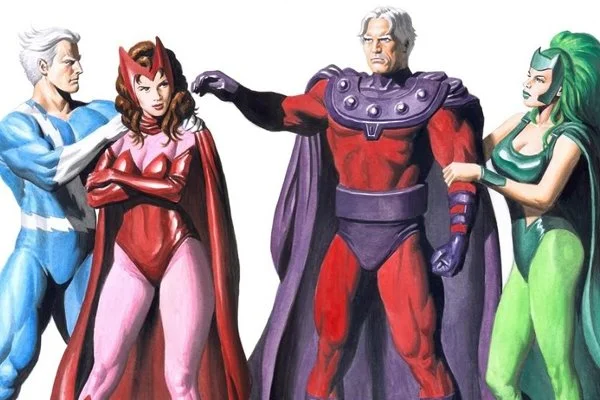
Magneto is the mutant revolution’s most iconic figure—but as a dad? Let’s just say he’s got some X-sized flaws. He fathered twins Wanda and Pietro (and sometimes Lorna, depending on retcons), but has denied, ignored, or emotionally manipulated them throughout their lives. In House of M, his obsession with mutant supremacy leads to reality-warping trauma that nearly wipes out the mutant population—and fractures his relationship with Wanda permanently.
Magneto is the kind of dad who wants to save the world but can’t remember his kids’ birthdays. In The Trial of Magneto, he shows brief remorse—but it’s always in the service of the cause. And when they die? He grieves. When they disobey? He judges. The emotional whiplash is endless. Sure, he’s a Holocaust survivor, and that pain runs deep. But even his most sympathetic backstories can’t undo the fact that he’s a father who uses loyalty like currency.
7. Omni-Man – "It’s Not Personal, Son, It’s Conquest"
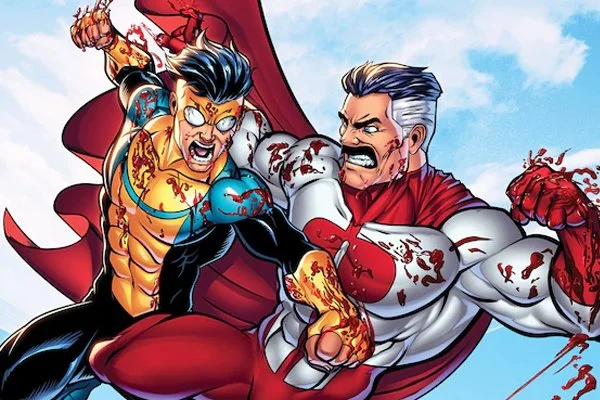
If fatherly betrayal had a mustache, it’d be Omni-Man. In Invincible by Robert Kirkman and Cory Walker, Nolan Grayson starts off as the all-American alien father figure. But in Invincible #11-12, the mask comes off—literally. Nolan reveals he’s a Viltrumite sent to conquer Earth and that his love for his wife and son was more of a performance than a bond.
Then he beats Mark to a bloody pulp. While monologuing. It’s one of the most visceral betrayals in modern comics. He later gets a redemption arc, but that doesn’t erase the trauma. Omni-Man didn’t just fail Mark—he weaponized fatherhood as part of a lie. That uppercut wasn’t just physical; it was spiritual.
8. Thanos – Father of the Snap, Destroyer of Daughters
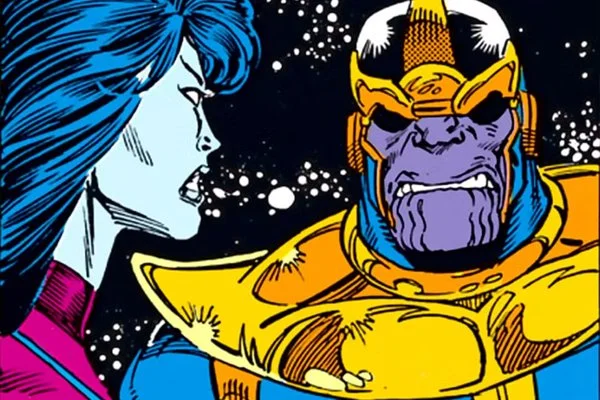
Thanos doesn’t do playdates. Whether we’re talking comics or cinematic universe, Thanos treats his adopted daughters like training dummies. Gamora and Nebula are “raised” through a system of competitive torture—where failure means cybernetic punishment. In Thanos Rising and Gamora: Memento Mori, we see that Thanos views children as disposable tools. Gamora is “the favorite” only because she survives the abuse. Nebula is the eternal runner-up, permanently altered and emotionally gutted.
Even biological children, like his son Thane, are used to fulfill twisted destinies. In Infinity and Thanos: The God Quarry, Thanos oscillates between obsession and neglect. His idea of legacy is leaving behind pain. And when he finally dies, there’s no mourning. Just relief.
9. Professor X – Mutant Messiah, Absent Father
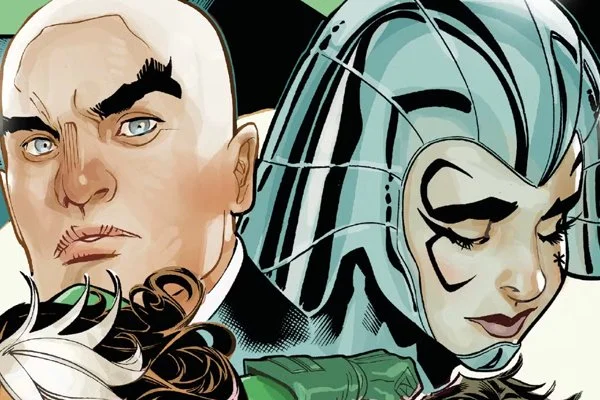
Charles Xavier has a dream. Too bad his son was a nightmare he never wanted to face. David Haller (Legion) is one of the most powerful mutants in existence—and Charles barely acknowledged him for most of his life. In New Mutants #26-28, we meet David as a deeply fractured young man with multiple personalities, each with dangerous powers. His mother kept him hidden for years, and when Xavier finally steps in? It’s more “scientific curiosity” than paternal instinct.
In X-Men: Legacy, we see how David struggles not just with his powers, but with the crushing weight of being the unloved son of the mutant world’s most important man. Even on Krakoa, Professor X keeps him at a distance. There are brief moments of pride, but they’re buried under decades of avoidance and manipulation. Charles Xavier is the kind of dad who builds a school for everyone else’s kids, while leaving his own to rot in the faculty basement.
So Happy Father’s Day, I Guess?
If this list made you feel better about your own family tree—good. That was kind of the point. Not all dads are worth celebrating. Some are better off as cautionary tales with a panel citation. So whether your dad was great, awful, or somewhere in between, just know: at least he didn’t trade you to a torture orphanage in space.
And if he did? You deserve a spinoff.