Welcome to Frank’s Favorites, my own little corner of the internet where I get to share some of the comics that have meant the most to me over my three-and-a-half (or so) decades of reading. I hope that by sharing these, I help you find a new favorite book—or at least have a good time with one…
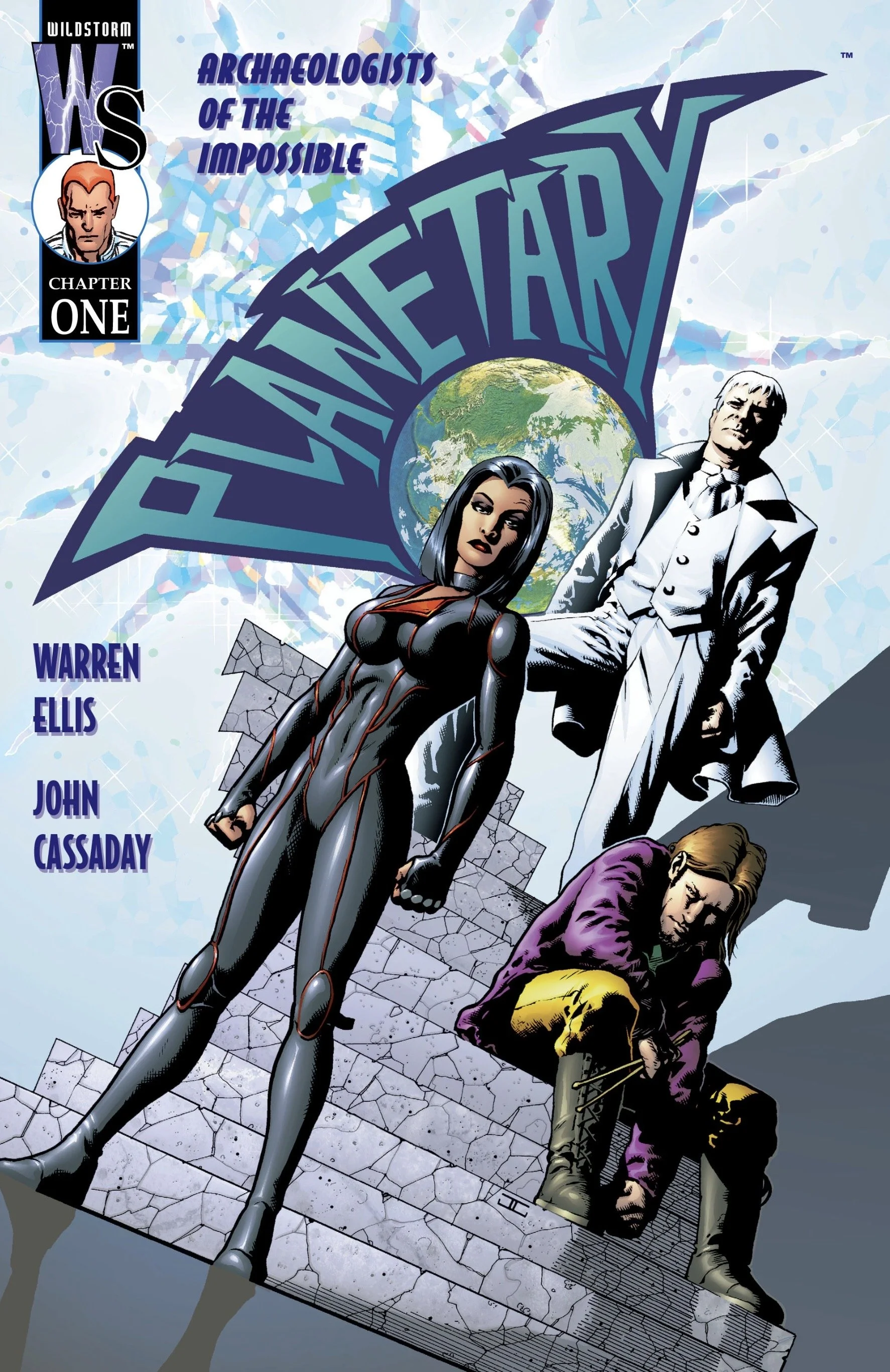
If you told me right now to take all the comics I’ve ever read and come up with the top five or ten, I don’t know if I could do it. I’ve read a ton of great books over the years (hence this column). What I can tell you is that Planetary by Warren Ellis, John Cassaday, and Laura Martin would absolutely be on that list.
The Elephant in the Room

Today, talking about this book is complicated. It would be irresponsible of me not to acknowledge the misconduct allegations made against Ellis by the group So Many of Us. I in no way excuse or condone the actions he’s been accused of, nor is it up to me to determine his innocence or guilt. Each of us must decide how we feel about him and his work. In the case of Planetary specifically, it is the work of multiple creators, not just Ellis—in fact, many consider it to be the late John Cassaday’s magnum opus.
I’m one of those people.
Archaeologists of the Impossible
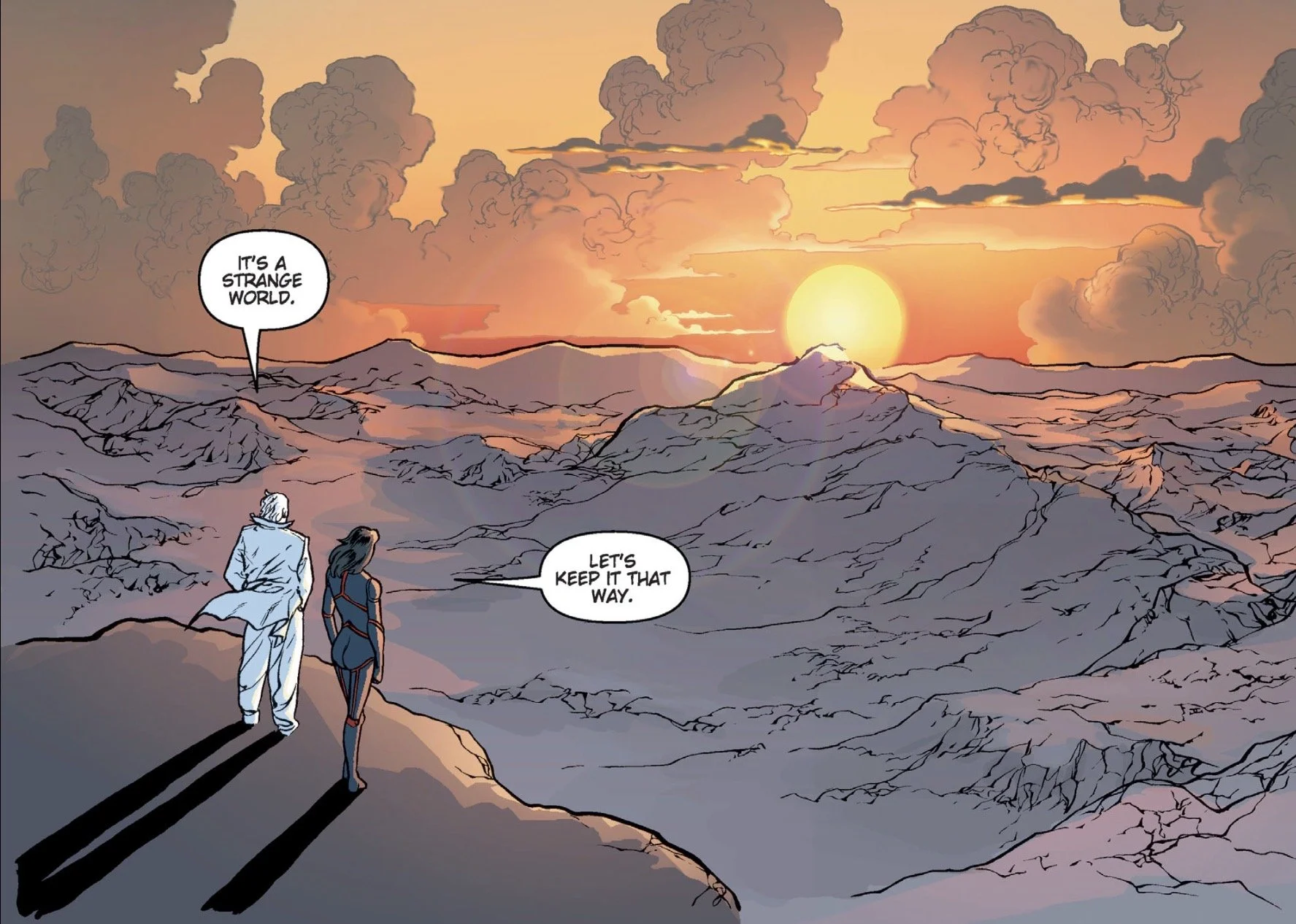
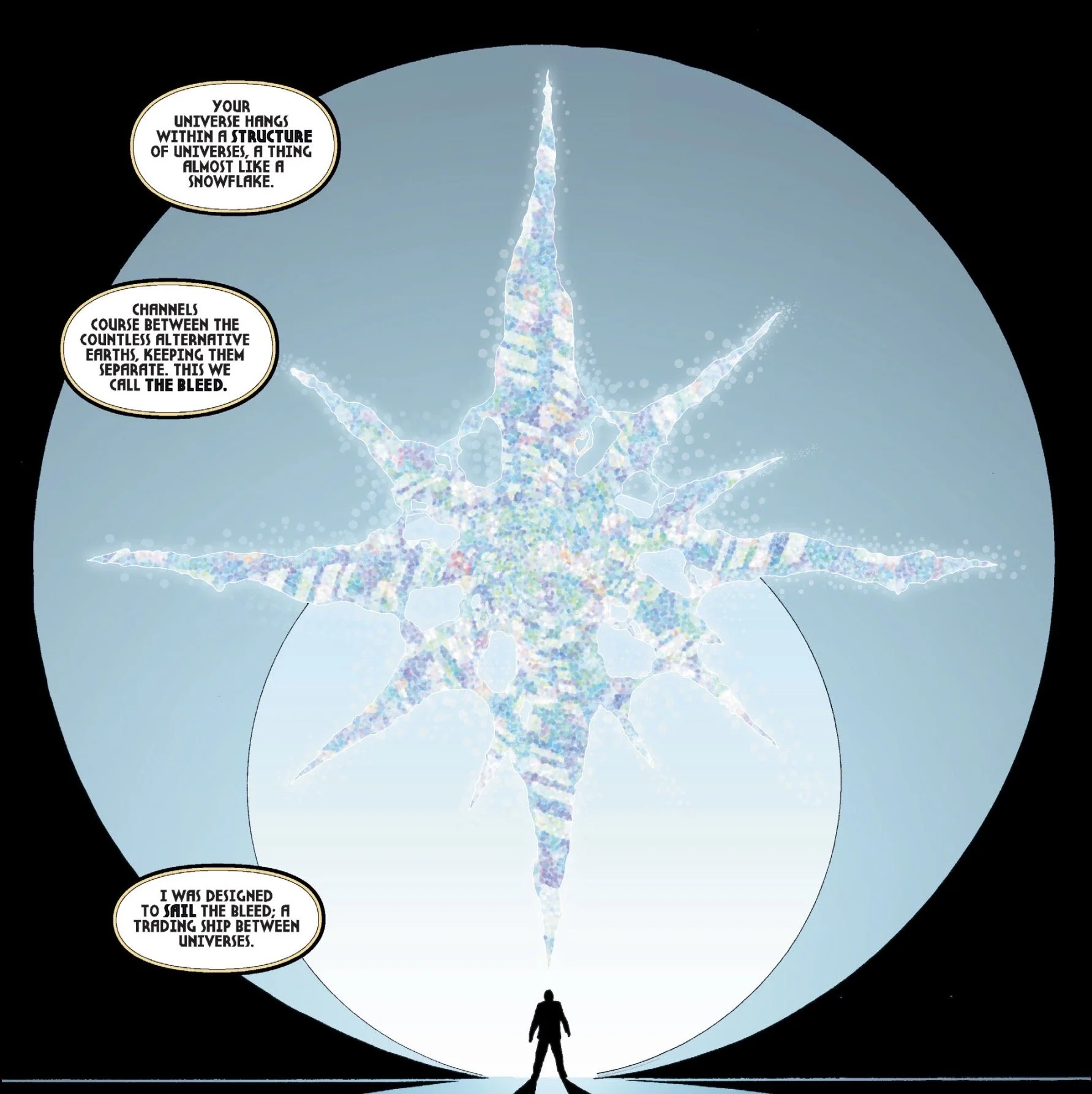
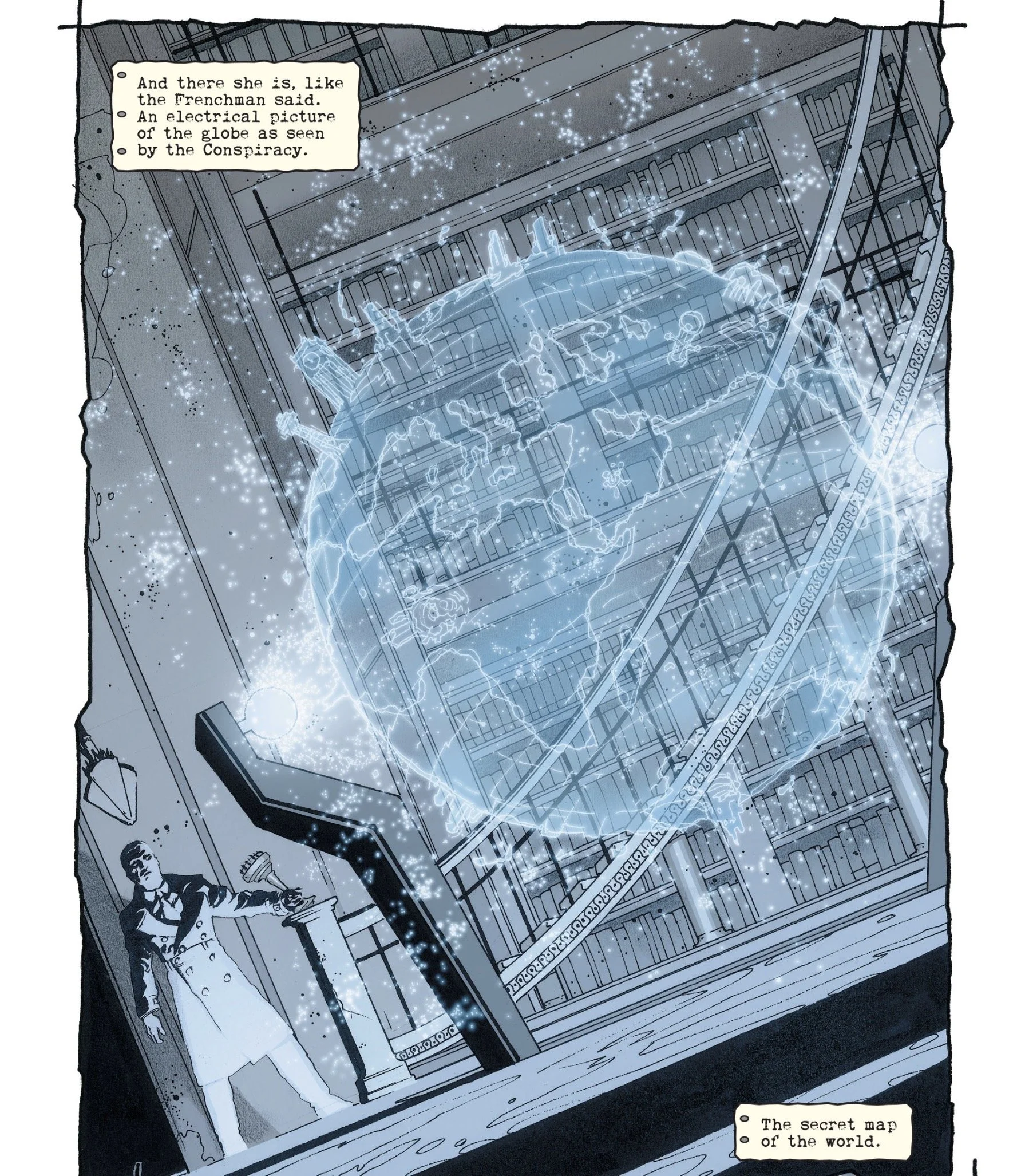
The elevator pitch for Planetary is that it’s about a team of “archaeologists of the impossible” who work to unearth the secret history of the world. From that starting point, the series both celebrates and deconstructs pulp and superhero fiction, often using pastiches or homages to familiar characters.
The main cast consists of three names: Elijah Snow, a 100-year-old man with memory issues and cold-based abilities; Jakita Wagner, a woman strong of both body and will; and the Drummer, a man who is never without his drumsticks and can communicate with machines. This trio has been employed by the Planetary Society under the direction of the mysterious Fourth Man, whose identity is one of the overarching mysteries for the first half of the series.
Paradigm Shift
In a way, Planetary reminds me of the anime Trigun. For roughly the first half, the stories largely stand alone and aren’t as grim in tone. But once we hit the midpoint, things change. In Trigun, we learn the dark truth behind Vash the Stampede. In Planetary, we learn who the Fourth Man really is, and the true villains of the piece—the Four, an evil version of the Fantastic Four—move to the forefront. The characters and the overarching mission remain the same, but events move in a much darker direction overall.
Part of what keeps me going back to Planetary time and again is the sheer variety of stories it tells. In one issue, they might interact with a Man of Bronze not unlike Doc Savage, then in the next one, they’re learning the origins of the first kaiju. Through each story, we get insights into the characters, glimpses into their larger world, and commentary on the art form of comics itself.
You could take away everything else—the scripts, the characters, the colors—and leave only Cassaday’s artwork, and you’d still have a strong contender for “one of the best comics of all time.” His artwork is that good. Combine that with Martin’s colors, and yes, Ellis’s scripts, and you get a finished product that is so good it’s almost unfair to other comics that must share shelf space with it.
Cassaday draws everything with a high level of detail and a perfect combination of realism and the fantastical. He’s able to effortlessly mimic the looks and styles of countless different genres—in the first three issues alone, we get Doc Savage-inspired pulp, kaiju craziness, and a John Woo-inspired ghostly revenge story in Hong Kong. Issue after issue, he just keeps topping himself.
Journey of 1,000 Miles
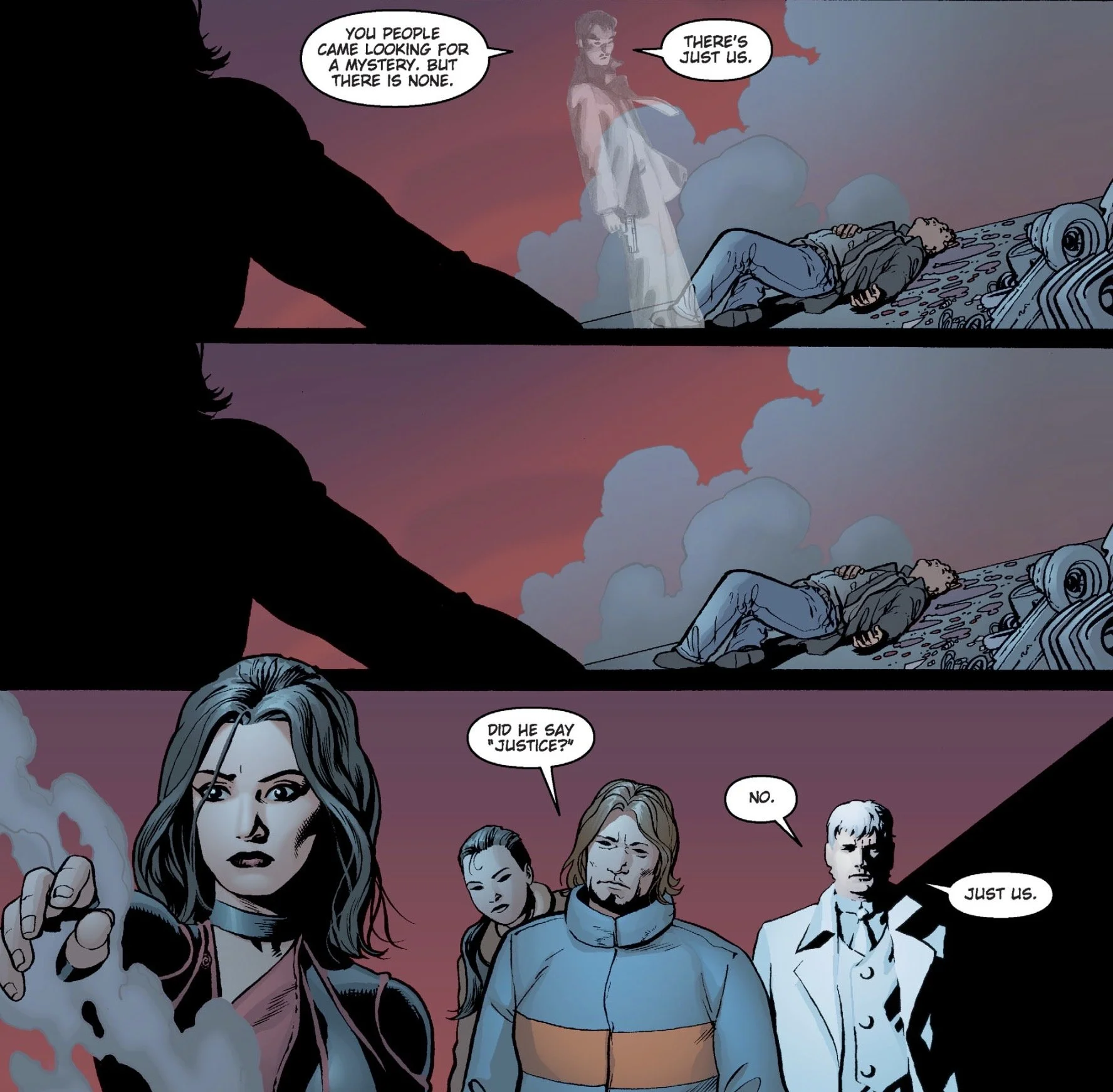
Planetary ran for a total of 27 issues, released between 1999 and 2009. Originally planned as a 24-issue bimonthly series, it was placed on hold for several years due to Ellis being ill for some time. Cassaday's commitments to other books like Astonishing X-Men with Joss Whedon (which experienced several delays of its own) also kept the book from maintaining a regular schedule.
If you are checking this series out for the first time now, you have a distinct advantage. You can actually read the whole thing at once and not have to wait literally years between issues (issue #27 came out three years after #26). In fact, DC Comics is releasing a softcover Compendium of the complete series, including three crossover one-shots featuring The Authority, the JLA, and Batman, on July 14. I couldn't have timed this column any better if I'd planned it, eh?
Why It Made the List

I think by now I’ve given you enough information to decide if Planetary is for you or not. Now I’d like to talk a bit about why it definitely is for me.
Planetary came at just the right time—the years before it had definitely disenchanted me with comics overall. I had stuck it out through the entirety of Spider-Man’s Clone Saga, made it through Heroes Reborn, and watched Gotham City get hit twice by a plague and once by an earthquake in way too short a period of time. Plus, I’d gotten more into the idea of the pulps, thanks to movies like The Phantom, The Rocketeer, and The Mummy. So the idea of an original story that still had familiar-looking characters and concepts was right up my alley.
The fact that I could pick up an issue and get a stand-alone story was an absolute breath of fresh air after countless multi-title crossovers. Ellis’s anarchistic tone spoke to 19-year-old me. And Cassaday’s art, combined with Martin’s colors, absolutely blew my mind. I was chomping at the bit for more.
As time (and delays) passed, my enthusiasm wavered. There was a point where I didn’t even realize new issues had come out. I eventually realized I’d missed some, and the bonus then was that I got to read several at once. It was like hanging out with an old friend that I hadn’t seen for a while, not for any bad reason but just because we kept missing each other.
The decade between when Planetary began and when it ended included a huge explosion of talent and great comics. By the time the series finally ended, my enthusiasm had cooled greatly and I was buying way too many books every week. It wasn’t until years later, when I reread the whole series at once, that I truly realized just how special it was. Since then, I’ve owned Planetary in multiple formats and revisit it regularly. I tell anyone who will listen that they should check it out. Phrases like “one of a kind,” “ahead of its time,” and “lightning in a bottle” get thrown around a lot, but they all absolutely apply here. Despite the fact that I already own the Absolute Edition and the Omnibus, there is a good chance that I’ll be buying the Planetary Compendium too—those big hardcovers are heavy, after all—and I hope to see you at the shop picking up a copy of your own.
You won’t regret it.