
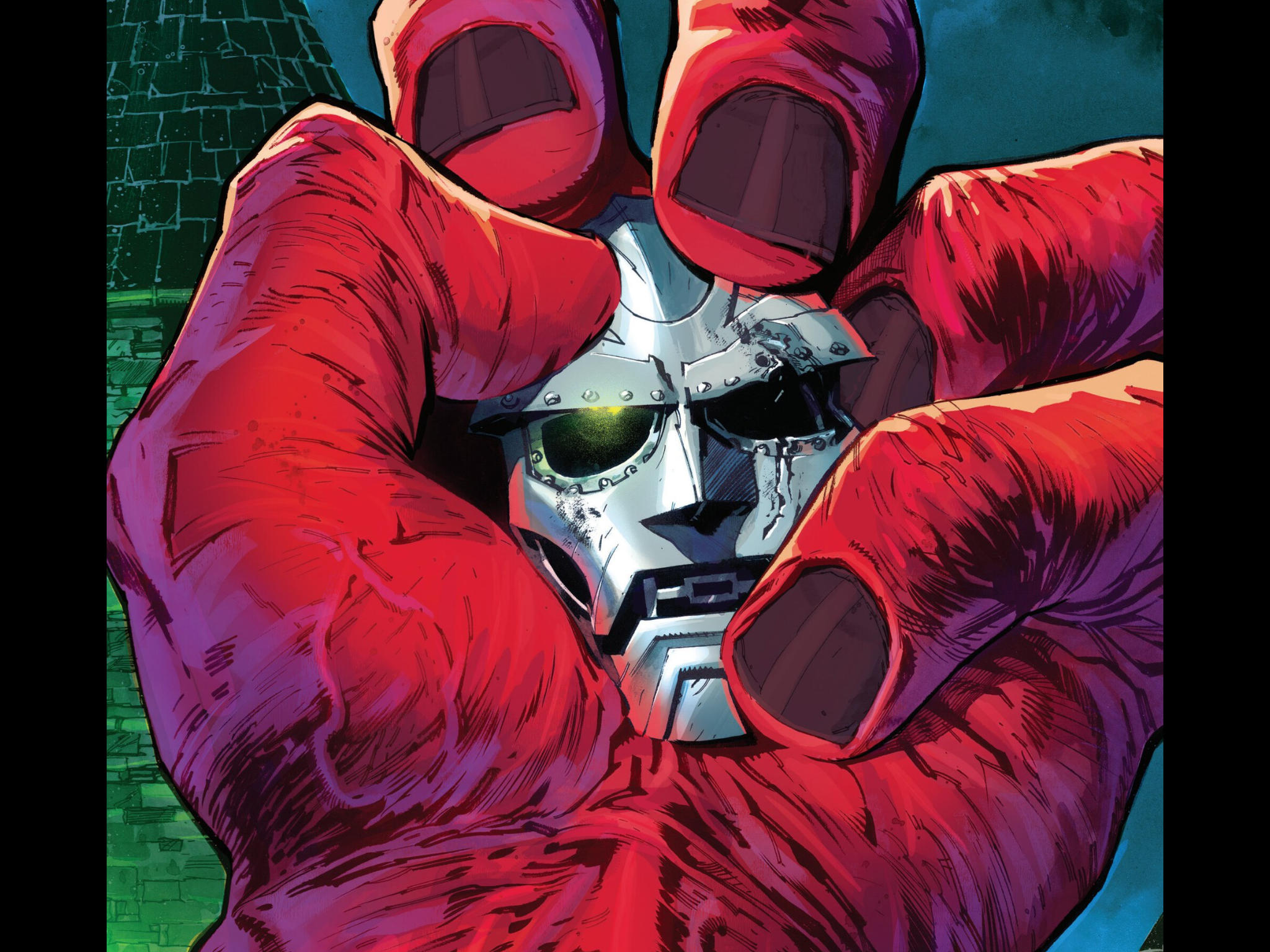
The Shadow of Doom
Doctor Doom—apologies, I meant Emperor Doom, the Sorcerer Supreme—is dead. Slain while facing down a rebellion from the so-called “superheroes” of the world, his Last Will and Testament has been delivered to his chosen Executor: Dr. Reed Richards of the Fantastic Four. In those documents, the sole heir to his estate has been named as Valeria Richards, daughter of Reed and Sue, and goddaughter of Doom. No, none of this is going to be awkward at all...
Funeral for a Fiend
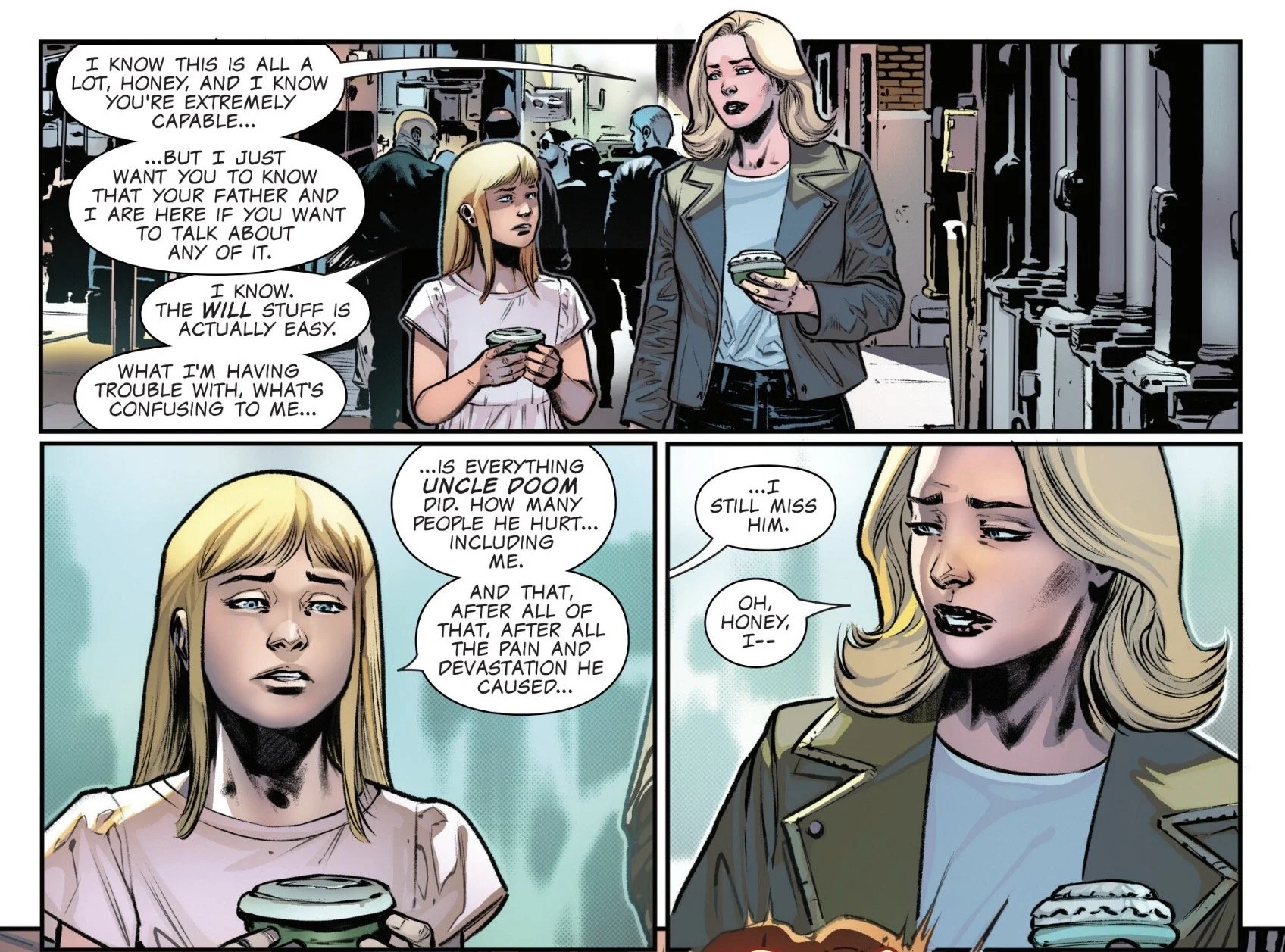
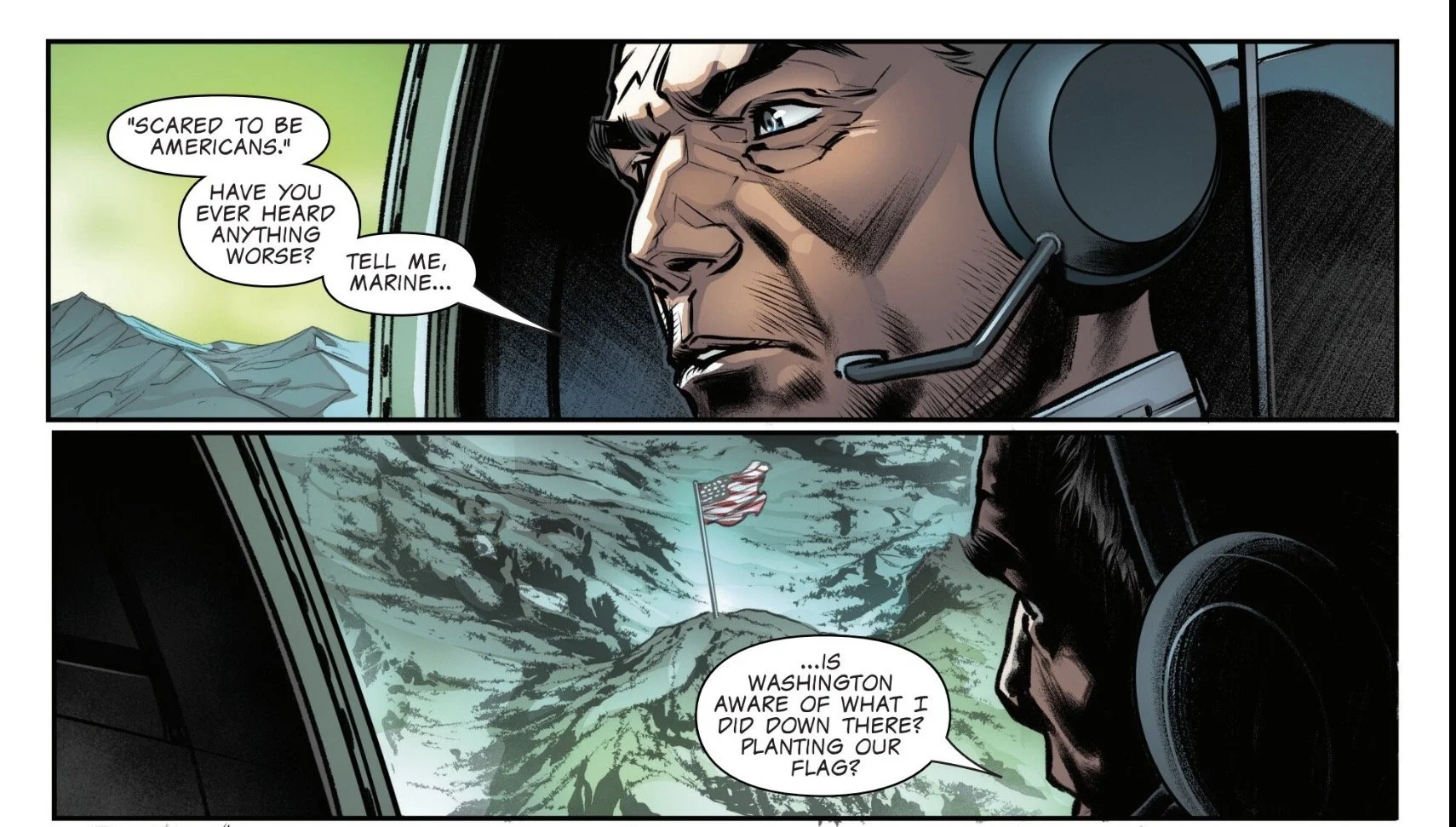
In a rare moment of selflessness, Victor Von Doom—the self-proclaimed Emperor of the World—made a deal with the Living Tribunal: reverse his ultimate victory so that Valeria Richards could be returned to life, and Doom would give his own life in exchange. Now the world is left to pick up the pieces, while Valeria must deal with her survivor’s guilt. Meanwhile, Thaddeus “Thunderbolt” Ross, the Red Hulk, is no longer a prisoner within the kingdom of Latveria and has his own ideas about America’s role in a post-Doom world.
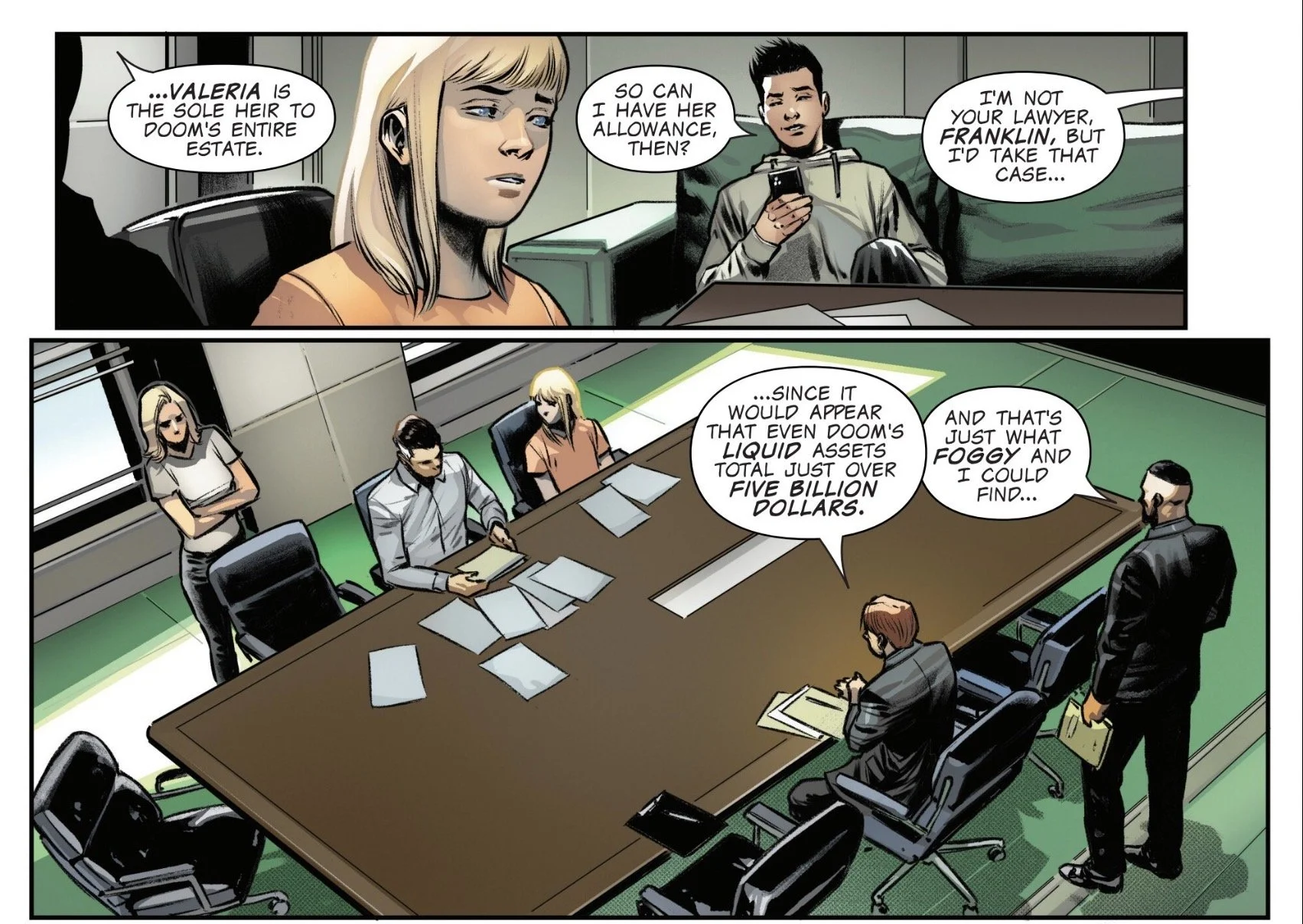
This is a much heavier story than the current Fantastic Four run by Ryan North has been; it is a tale built around grief and uncertainty. Valeria finds herself the sole heir to Doom’s estate, which appears to contain at least twenty properties, hundreds of patents, and over $5 billion. That’s a lot for anyone, but especially a tween—particularly one who just died and is only alive because her godfather sacrificed himself in her stead. (Even if he was the one who killed her in the first place, that is still a lot of emotional weight to sort through.)
This isn’t the first time Doctor Doom has been “gone,” and a constant during those periods is that the Fantastic Four and the United States government rarely see eye-to-eye on what to do about the nation of Latveria. Add in the wild card of the Red Hulk, who was just a “guest” on the inside and believes the U.S. must act fast to prevent anyone else from seizing Doom’s laboratory and armory, and you have a volatile situation.
Good thing an army of Doombots chose this moment to appear and attempt to overthrow the world's governments in the name of Doom, right? Nothing eases tensions between allies like a common enemy to punch in the face, after all. And as Doom’s heir, there should be an opportunity for Valeria to work through her complicated feelings as well...
All Richards’s Fault
The very nature of comics, especially in this modern age where the movies seem to drive the content of the books instead of vice-versa, suggests that Doom will return—likely by the end of 2026. Something about a big movie with his name in the title? But in the meantime, there is plenty of material to be mined from his continued absence.
I get wary when real-world politics get involved in my comics, but I also know that the Marvel Universe has always been “the world outside your window,” so this has always been one of their hallmarks. It just hits a little differently in today’s climate. Add in the fact that I’m not a fan of the Red Hulk—and never have been—and that makes his portion of the story a bit of a tough sell for me. Personally, I never saw the reveal of Thaddeus Ross as the Red Hulk as anything more than an attempt to have the most “shocking” reveal possible. It makes little sense from a character perspective, and I don’t think he has felt like the same character since. Consequently, any story where he is at the forefront shouting, “The United States needs to get in there before anyone else,” is going to be a hard sell.
On the other hand, I am very much a fan of the Fantastic Four, so I’m all-in on their portion of the story. The idea of Valeria having to deal with her feelings about dying and coming back—compounded by her complicated relationship with “Uncle” Doom—is a great hook. Given her super-intelligence, it is easy to forget how young she really is. That would be enough to mess up anyone, let alone a girl who is probably only twelve at this point.
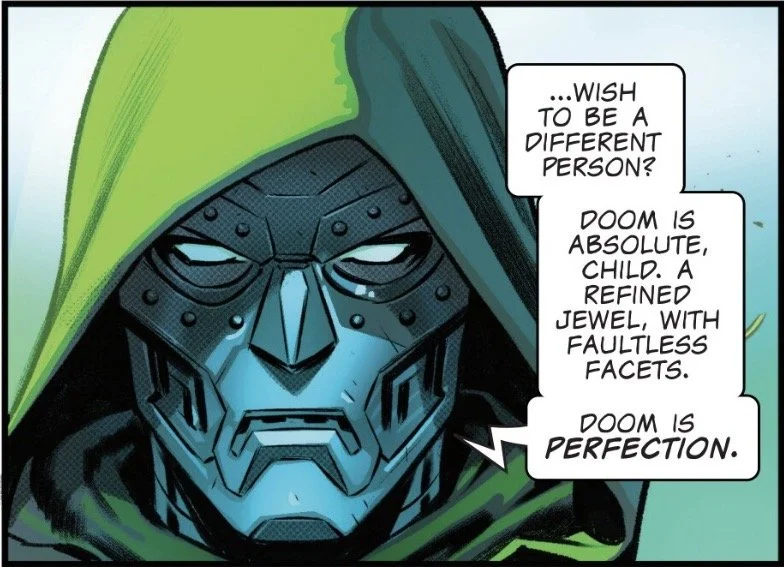
The Doombot assault can be seen as a way to give the rest of the family something to do—and it is—but it also features some great character moments, particularly for Reed. The idea that Doom would think, “Even in death, I’m a better leader than anyone else on Earth—heck, even my Doombots would be better,” is totally in character. Even in death, nothing can top the Hubris of Doom.
“And Why Would Doom…”
The next phase of the Marvel Universe begins here. Writer Chip Zdarsky keeps the cast small, focusing mainly on the Fantastic Four’s place in a post-Doom world, with a sprinkling of Red Hulk as well. Zdarsky delivers his usual excellent character work; everyone sounds as they should, and each character gets a cool moment or two. While I still contend that Ross hasn't sounded like himself for years, he is written consistently with his Red Hulk persona, so that works, I suppose. Zdarsky is the major architect of everything leading up to the Armageddon event, so having him pen this story makes sense. Furthermore, he has history with Marvel’s First Family, having written half of them in Marvel Two-in-One post-Secret Wars, as well as the X-Men/Fantastic Four miniseries during the early days of the Krakoa era.
Art duties are handled by CAFU, who I’ve always felt does solid work. There are panels where his art carries the look of a Steve Epting or a Butch Guice (who was taken from us far too soon), and I occasionally see hints of Carlos Pacheco in there. It’s fair to say he wears his influences on his sleeve, but if it means his art is clean, detailed, and easy to follow, I’m perfectly okay with that. I don’t want to sound as if I’m damning him with faint praise here, because I’m not; when I see his name in the credits, I know I’m going to get a visually solid story. Given that visuals are a major part of the medium, that’s always a good thing.
Letters are handled by VC’s Travis Lanham, and they are once again the standard Big Two style. The only thing I noticed—and I’m not sure if this was the choice of the letterer or someone else on the editorial team—is that the Doombots all have “robotic” speech bubbles, except for the one in the early-issue reveal. From a story standpoint, I understand the distinction, but from a stylistic standpoint, it makes the presentation look slightly inconsistent.
Colors are handled by David Curiel, and they work well with CAFU’s art. The Fantastic Four and the Red Hulk are bright, the Doom elements are draped in shadows, and the government “talking heads” segments have a darker tone. The colors serve the story being told rather than detracting from it, and that’s really all one can ask for.
Towards Armageddon
One World Under Doom was a much better event than I expected, especially given my overall event fatigue. So, as you can imagine, I was wary knowing that the aftermath was going to be the first stepping stone toward the next event already. Fortunately, they put this one in the hands of Chip Zdarsky, a writer I am a big fan of (well, maybe not his Batman—that was… something).
Nothing in this book made me care about the Red Hulk or whatever he does next, but the seeds planted with the Fantastic Four genuinely excite me regarding their potential for future stories. Seeing that Captain America is going to be a major part of the lead-in to Armageddon was enough to push me over the edge into checking that book out. I originally skipped the initial arc because I’m not big on "lost tales" that involve sliding the timeline into something more modern, but I think I see the mission now. Plus, the Wolverine miniseries coming up in February already sounded interesting, so I guess I’m in for that, too.
Darn it, Chip. It looks like you got me invested in the lead-up to Marvel’s next big event. Well, maybe not the Red Hulk parts—but still, well done.
Oh, and #doomwasright.