
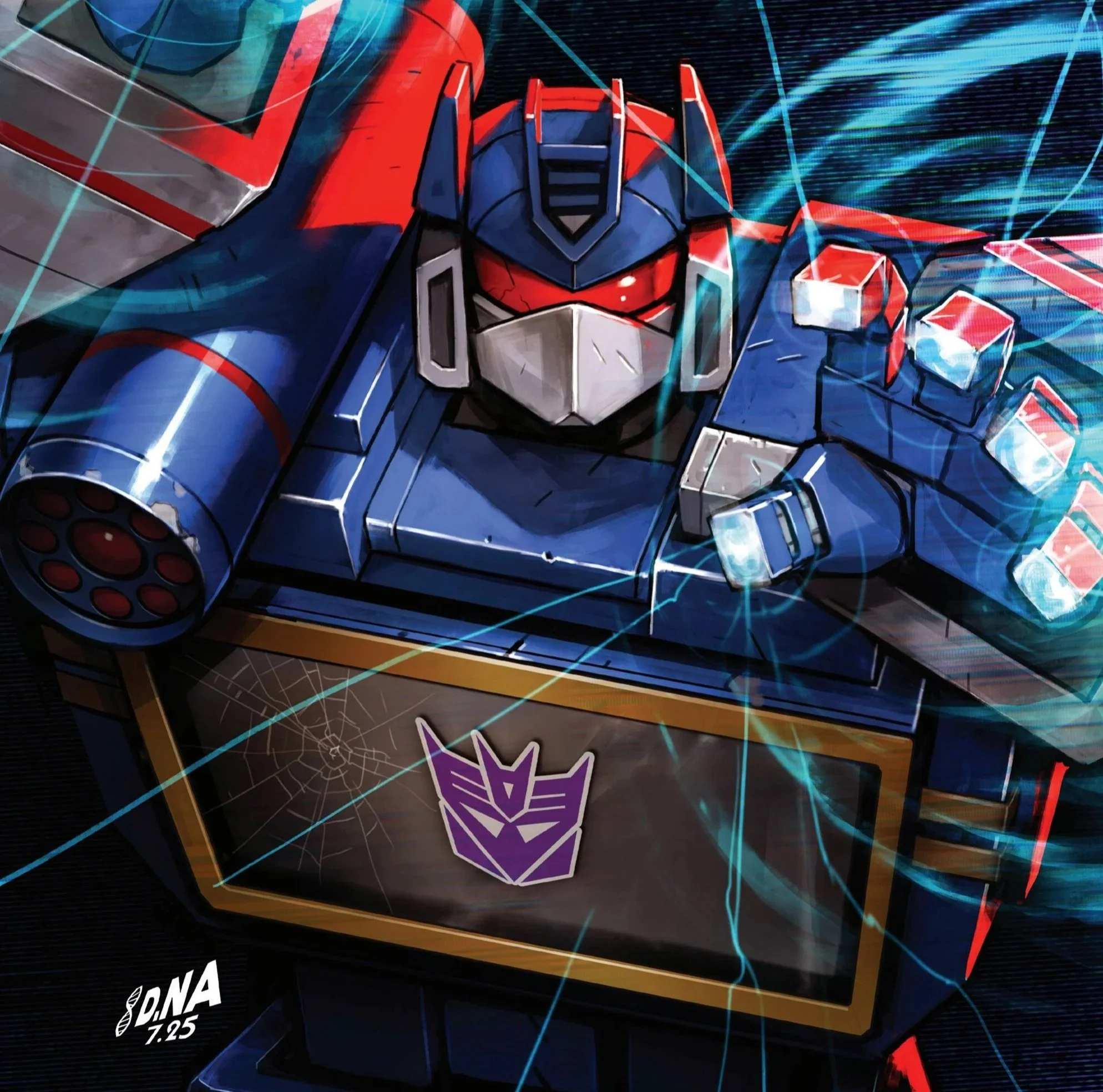
Transformer #27
Writer: Robert Kirkman
Artist: Dan Mora
Colors: Mike Spicer
Cover: David Nakayama
Right out of the gate, I loved Transformers #27 and everything it is clearly building toward. This issue feels confident, ambitious, and energized in a way that signals the series is entering a new phase rather than simply maintaining momentum. It balances major character moments with meaningful plot progression, all while laying track for future payoffs that feel exciting rather than exhausting. If this is the tone Robert Kirkman is setting for his run, then this book is in very good hands.
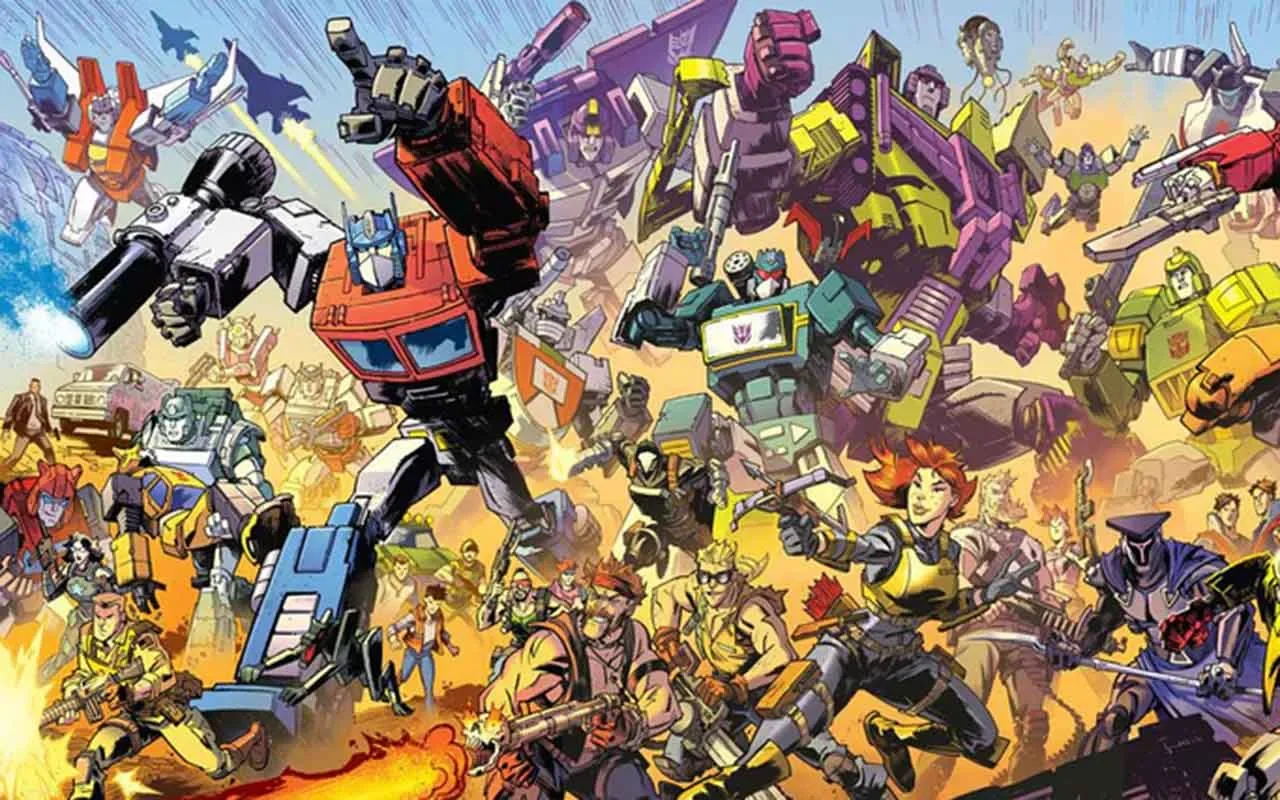
All of the players in the Energon Universe.
The Strength of the Energon Universe
By the time Transformers #27 arrives, Skybound’s Energon Universe has firmly established itself as one of the most successful and creatively confident shared universes in modern licensed comics. What began as a bold experiment has quickly become a must-read line, weaving together Transformers, Void Rivals, and G.I. Joe into a cohesive setting that feels both deeply respectful of decades of lore and unafraid to take real risks.
Issue #27 stands as a particularly important chapter within that larger success story, not only because it continues to escalate the stakes, but because it marks the third issue of Robert Kirkman’s run on the title. With Dan Mora now fully settled into his role as series artist, this creative team is beginning to define what the next era of Transformers is going to look like.
The War So Far
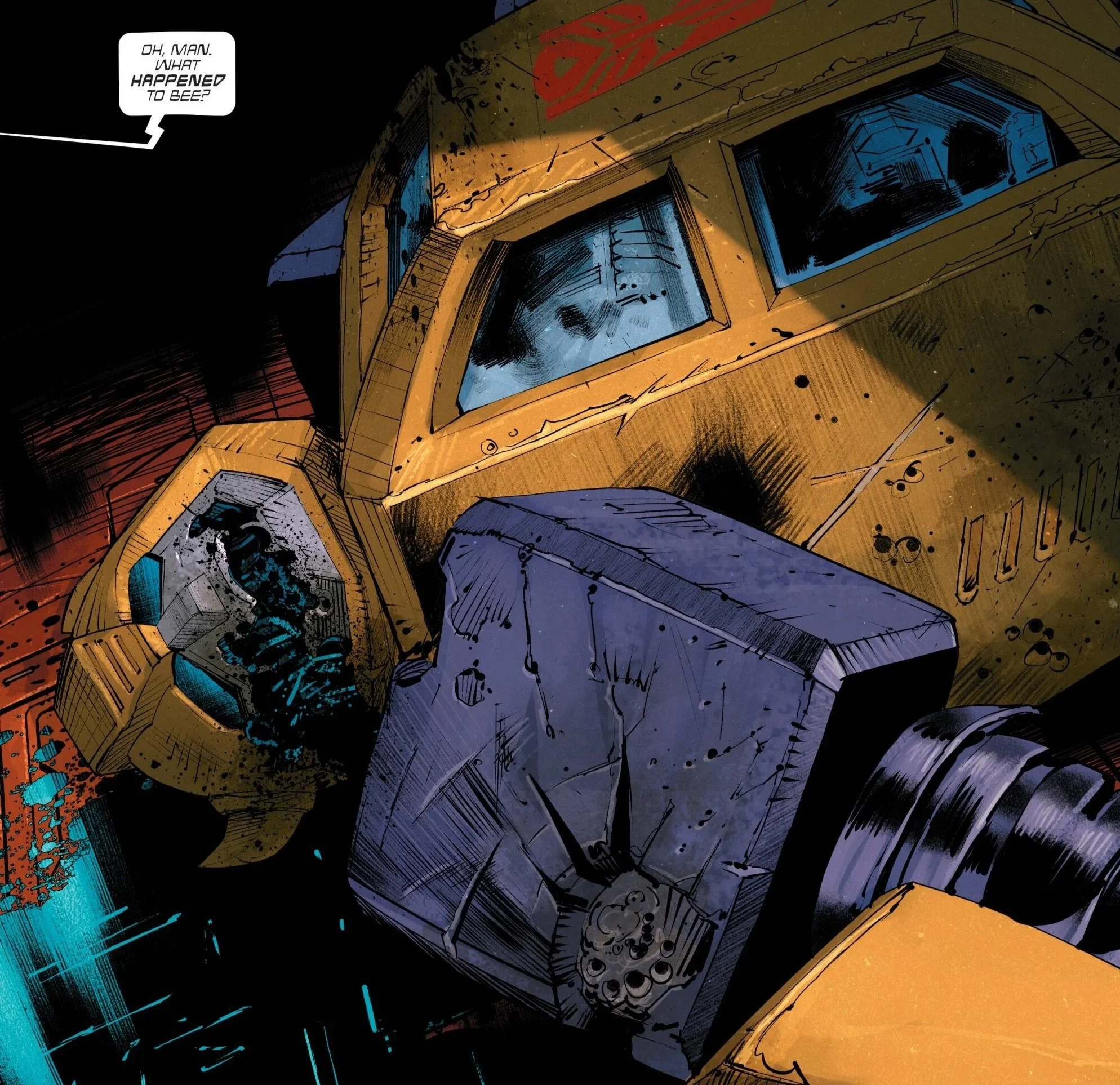
Bumblebee’s fallen form.
Since the launch of Skybound’s Transformers, the series has been defined by escalation and consequence. Daniel Warren Johnson’s opening arc dropped readers into an Earth already caught in the middle of a brutal Cybertronian war. The Autobots, led by Optimus Prime, allied themselves with humanity out of necessity as much as morality, while the Decepticons pursued domination with ruthless efficiency.
The conflict quickly became personal. Cities were destroyed. Humans were killed. Autobots fell in battle, including Bumblebee, whose death was treated not as a shock twist but as a lingering wound that reshaped the emotional landscape of the book. Optimus was forced to reckon with leadership in a world where even doing the right thing resulted in irreversible loss.
As the series progressed, the line between ally and threat blurred. Human military forces, particularly G.I. Joe, grew increasingly wary of the Autobots’ presence, while Decepticon operations became more strategic and ideological rather than purely destructive. Soundwave emerged as a central figure on the Decepticon side, acting not only as a tactician but as the embodiment of their cold, uncompromising worldview.
When Robert Kirkman took over writing duties, he did not reset the board. Instead, he leaned into the instability already present. His early issues focused on conversation as much as combat, emphasizing political tension, ideological division, and the fragile nature of alliances. Transformers #27 builds directly on all of this groundwork, using past losses and unresolved conflicts as fuel rather than background noise..
Thundercracker’s Choice
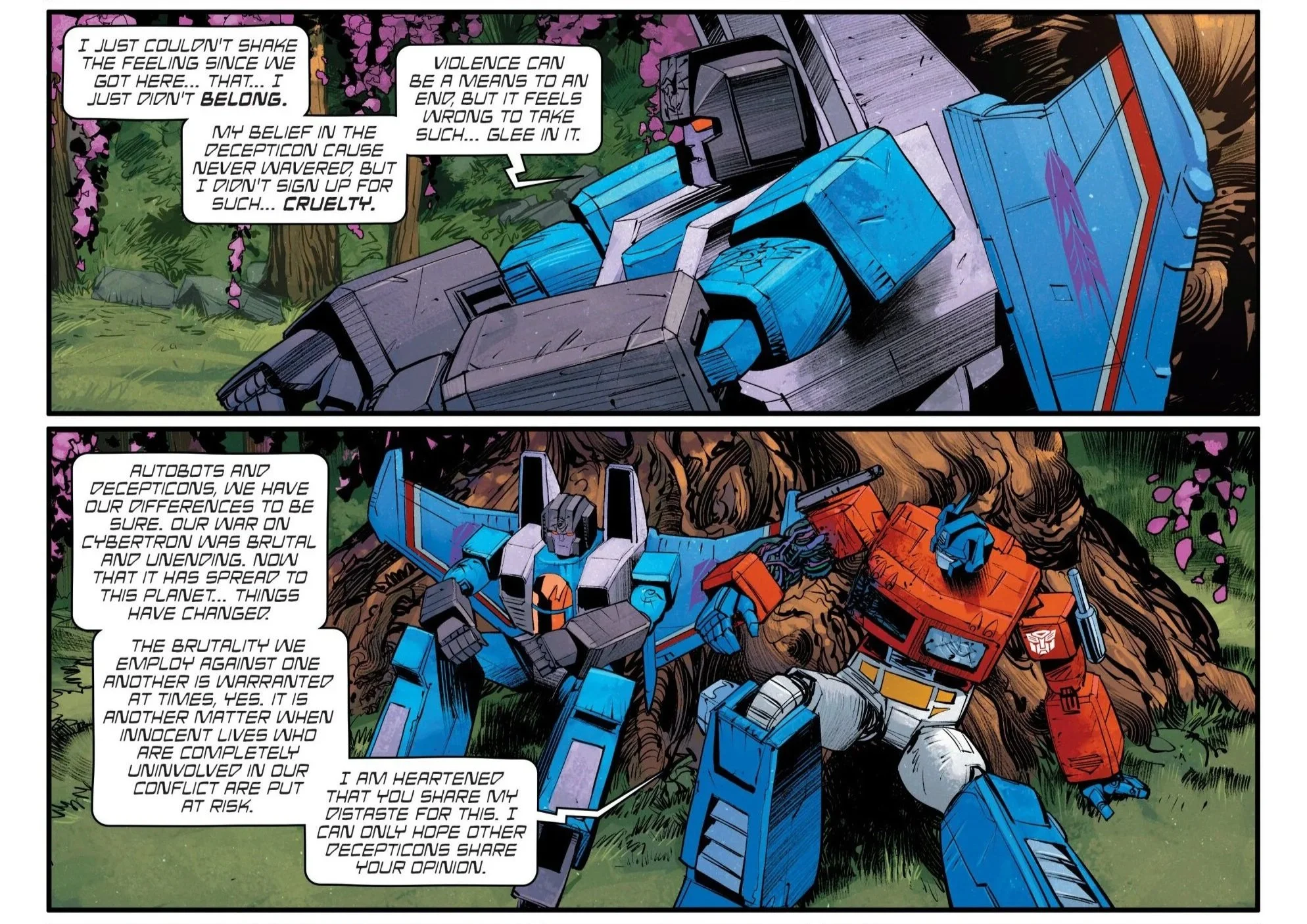
Optimus and Thundercracker discuss what it means to be Autobot and Decepticon.
Issue #27 wastes no time making its presence felt. The most impactful development is Thundercracker’s apparent defection from the Decepticons. Yes, it finally happens. Thundercracker openly aligns himself with the Autobots, standing among them rather than against them.
For longtime fans, this moment carries real weight. Thundercracker’s doubts and moral unease date all the way back to his original character profile in the 1980s, and later interpretations, particularly IDW’s continuity, leaned heavily into his introspection and eventual independence. Seeing him take this step feels earned, even if Kirkman’s reputation for long-term storytelling makes it impossible not to suspect complications ahead.
The conversation between Thundercracker and Optimus Prime is one of the issue’s strongest scenes. Their discussion touches on responsibility, belief, and whether redemption is something that can simply be chosen or must be proven through action. It is quiet, thoughtful, and emotionally grounded, exactly the kind of scene this series excels at when it slows down.
Elsewhere, tension continues to mount. Ultra Magnus’ confrontation with General Flagg crackles with barely restrained hostility, reinforcing just how fragile the Autobot-human alliance has become. On the human side, Spike and Carly share a tender, grounding moment that reminds readers what is at stake beyond the battlefield.
The issue also doubles down, almost humorously, on the idea that Bumblebee is absolutely, definitively dead. There are no winks, no teases, no comforting hints of resurrection. Kirkman makes it clear that this loss still matters. Bulkhead also makes his official debut, adding another familiar face to an already expanding cast. Even smaller touches, such as a G1-inspired Slipstream design, show a level of care that rewards longtime fans without letting nostalgia dominate the story.
Soundwave Ascendant
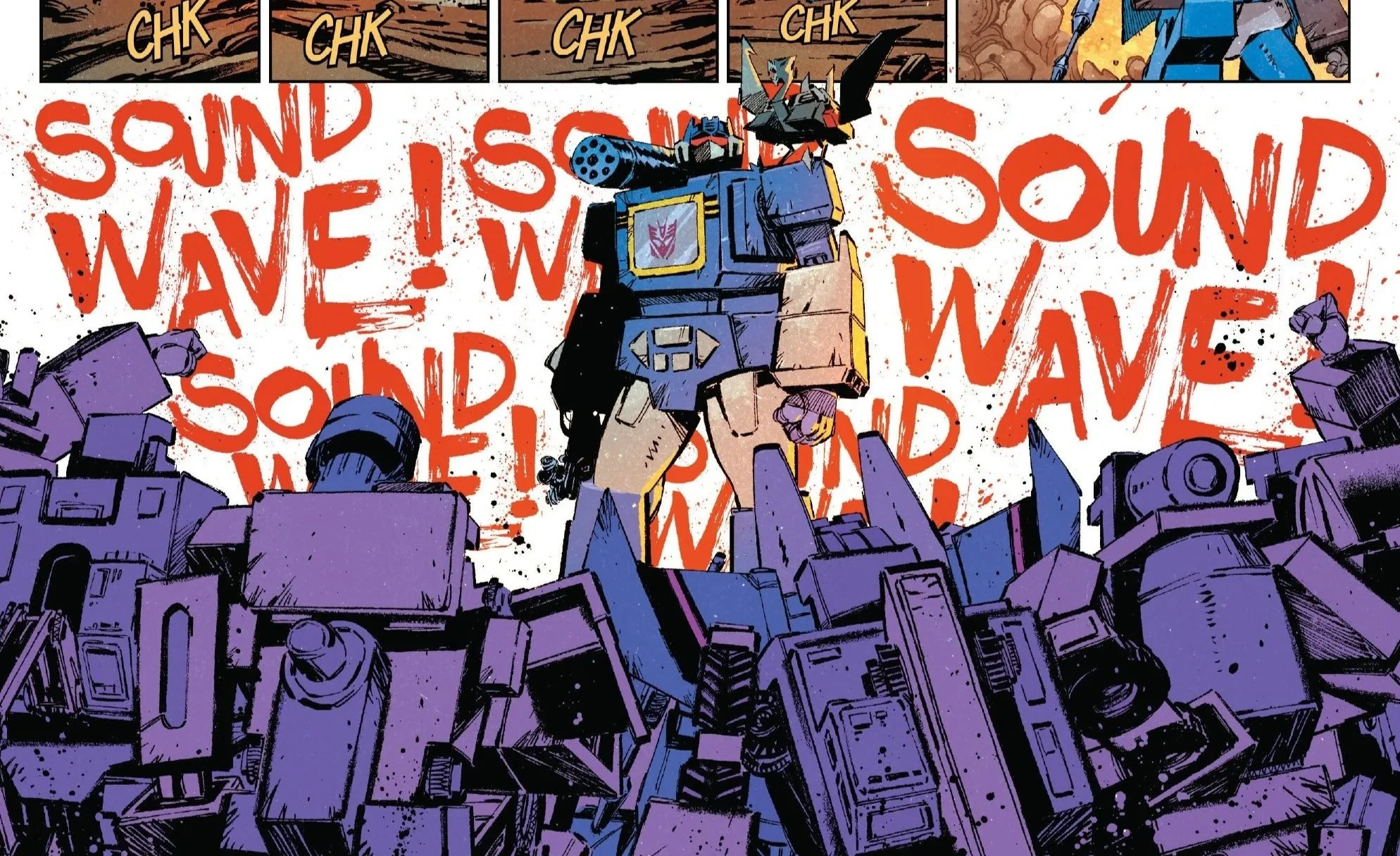
Soundwave is hailed as the leader of the Decepticons after usurping Starscream (in a previous issue).
As someone who has always been a big Soundwave fan, this run continues to feel tailor-made for my interests. Kirkman understands what makes the character compelling. Soundwave is not loud or theatrical. He is methodical, precise, and unwavering.
Even when he is not physically present on the page, his influence is felt. When he does appear, it is never incidental. Positioning Soundwave as a central figure rather than a background lieutenant elevates the Decepticons as an ideological force, not just a collection of villains waiting to be defeated.
Dan Mora Unleashed
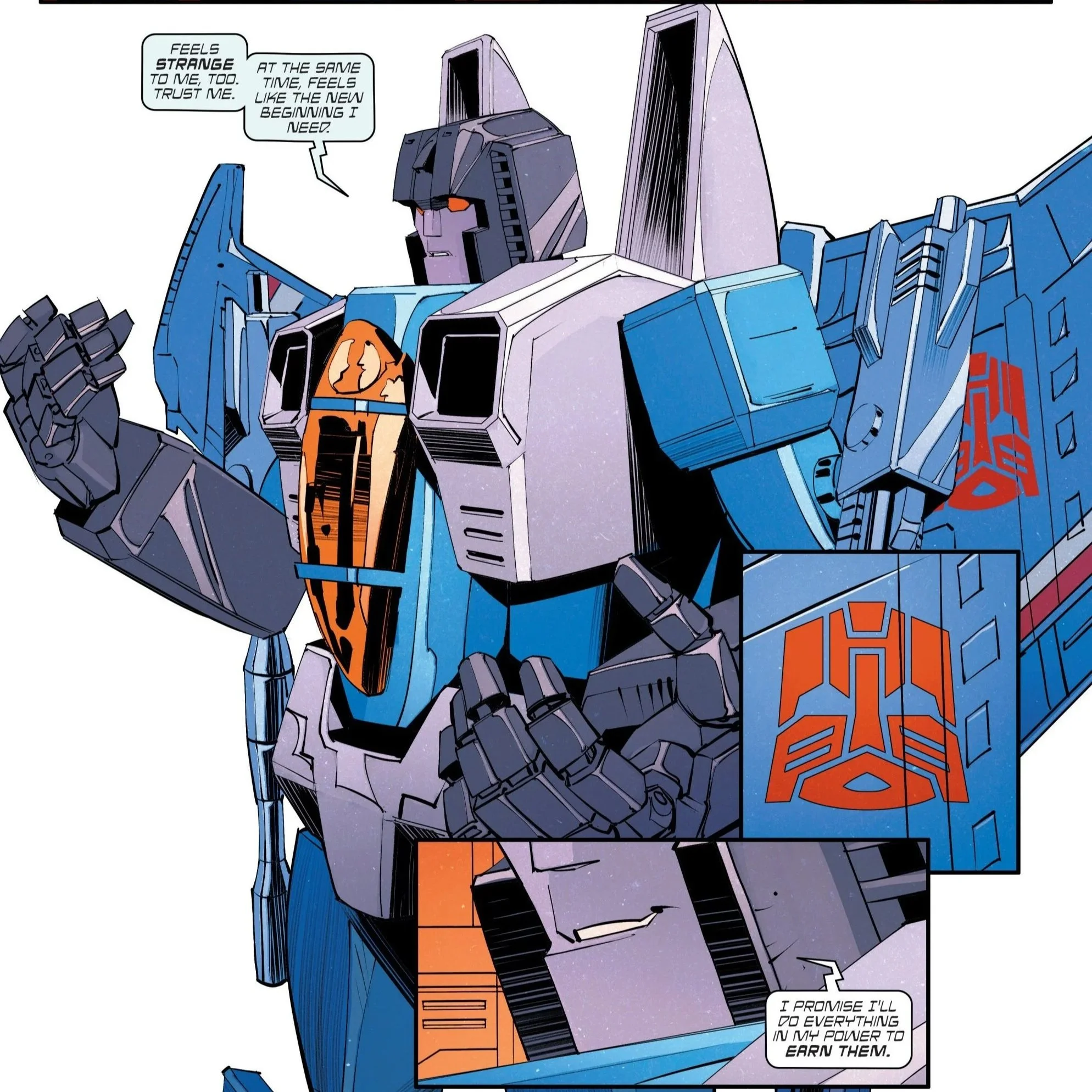
Thundercracker gets his Autobot emblems.
Dan Mora’s artwork in Transformers #27 is nothing short of spectacular. While his first issue showed minor signs of adjustment to the blocky, mechanical design language of Transformers, those growing pains are completely gone here. Mora’s linework is confident, expressive, and dynamic, making even dialogue-heavy scenes visually engaging.
His sense of scale is especially effective, emphasizing the sheer physical presence of the Cybertronians without sacrificing clarity. I have been a fan of Mora’s work for years, and his style fits this story remarkably well. He brings a cinematic quality to the book that enhances both the emotional beats and the action. Facial expressions, body language, and panel composition work together to communicate character in a medium where that is often difficult with robotic designs.
This is easily some of the strongest Transformers art the franchise has ever seen.
Final Thoughts and Rating
Transformers #27 is a statement issue. It confirms that Robert Kirkman and Dan Mora are not merely maintaining a successful book, but actively shaping its future. The Energon Universe continues to thrive because it treats its characters with respect while allowing meaningful change, and this issue embodies that philosophy perfectly.
Between Thundercracker’s defection, Soundwave’s growing importance, and Mora’s exceptional artwork, this feels like a creative high point for the series so far.
Rating: 9.5/10
If this is the direction Transformers is heading, the future looks very bright indeed.