
Generation Unto Generation
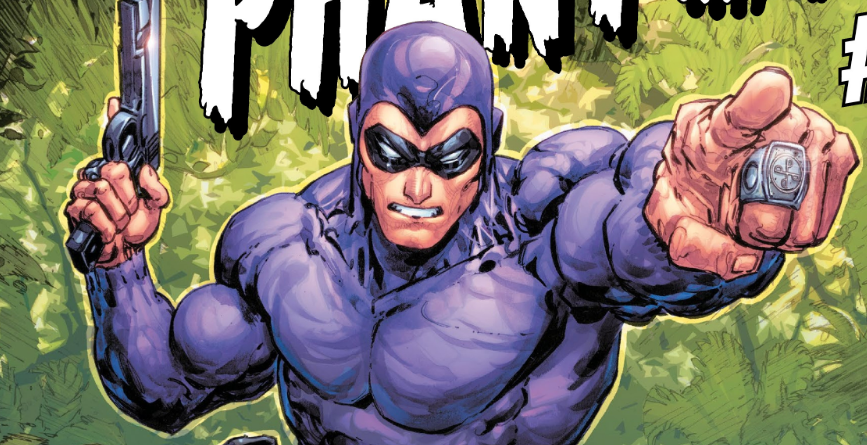
I was a teenager in the 90’s when they were trying to make movie versions of many of the old pulp heroes. The Rocketeer, that one was the best. The Shadow, that one was okay. Dick Tracy, I didn’t really appreciate that one until I was older. And The Phantom? I loved it, despite Treat Williams devouring the scenery like he was in a different movie entirely than the rest of the cast. Around the same time, there was also the awesome Phantom 2040 animated series, so I got plenty of exposure to the Ghost Who Walks.
In the years since, I’ve checked in and out of the character through various comic incarnations, some better than others. Like most licensed books, they never seem to last for long, no matter their quality. So now Mad Cave is taking another stab at the character, this time with Ray Fawkes penning his tales and Russell Olson on art. In his “Behind the Mask” notes at the end of the first issue, Fawkes noted that he wants to introduce the character and his world slowly, showcasing different elements in each of the first few arcs. Unfortunately, I think the key word there is “slowly.”
John McClain, This Ain’t
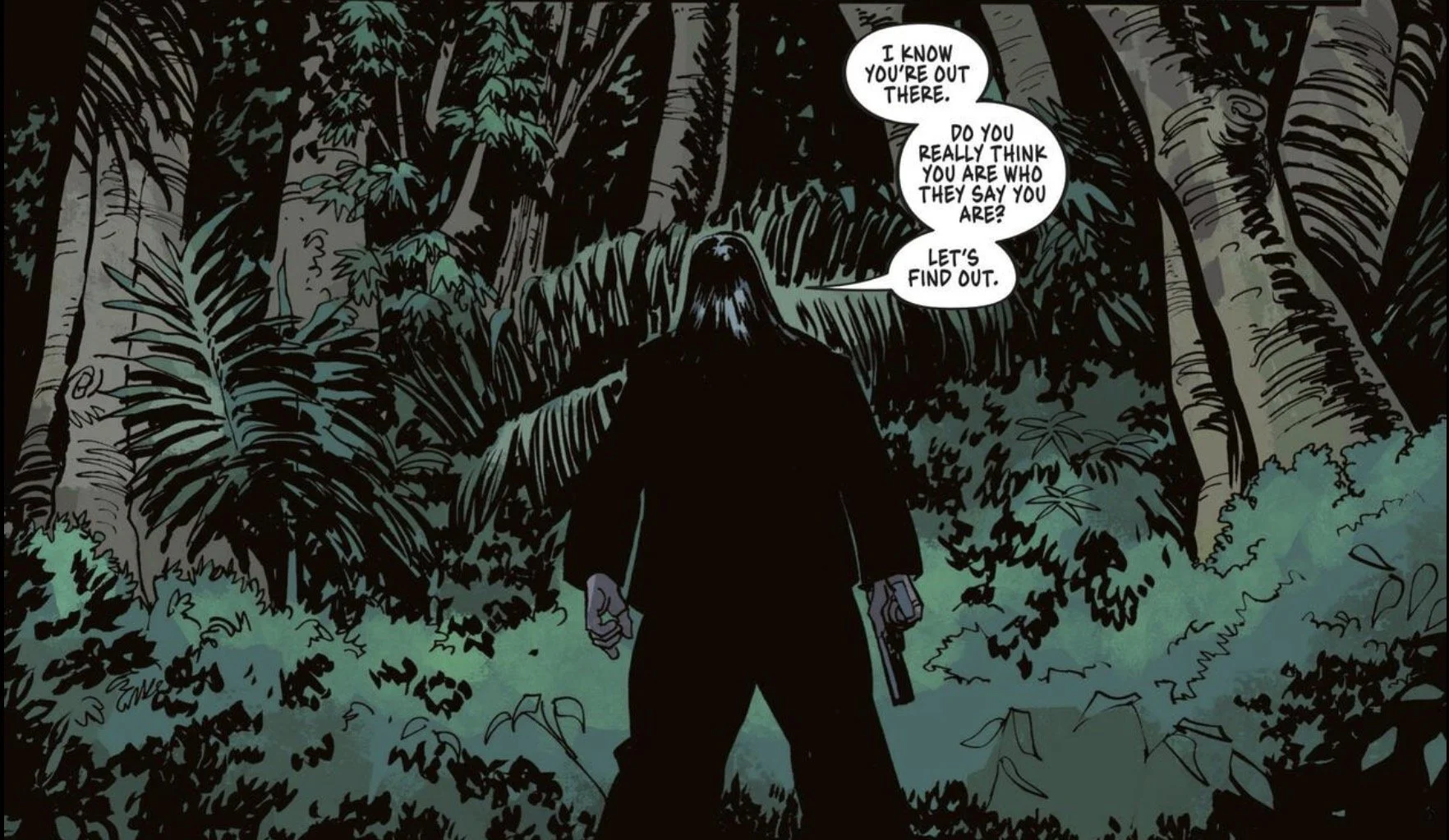
This first story arc, which will run for at least 4 issues (although I’m guessing 5), is basically “Die Hard” in the Bengalla Jungle, with the Village of the Bandar functioning as Nakatomi Plaza. Their quiet day having been interrupted by a drug-running plane crashing nearby, the Bandar tribe find themselves occupied by the Singh Brotherhood, headed by Asif Singh. The Phantom, living up to the “ghost” part of his moniker, has been quietly taking out soldiers one by one, but is still vastly outnumbered.
Despite the claims that he cannot die, The Phantom is, of course, just a man, so each soldier he takes out requires planning, timing, and a bit of luck. Although realistic, this accounts for part of the slower pace of the book.
The Ghost Who Thinks a Lot
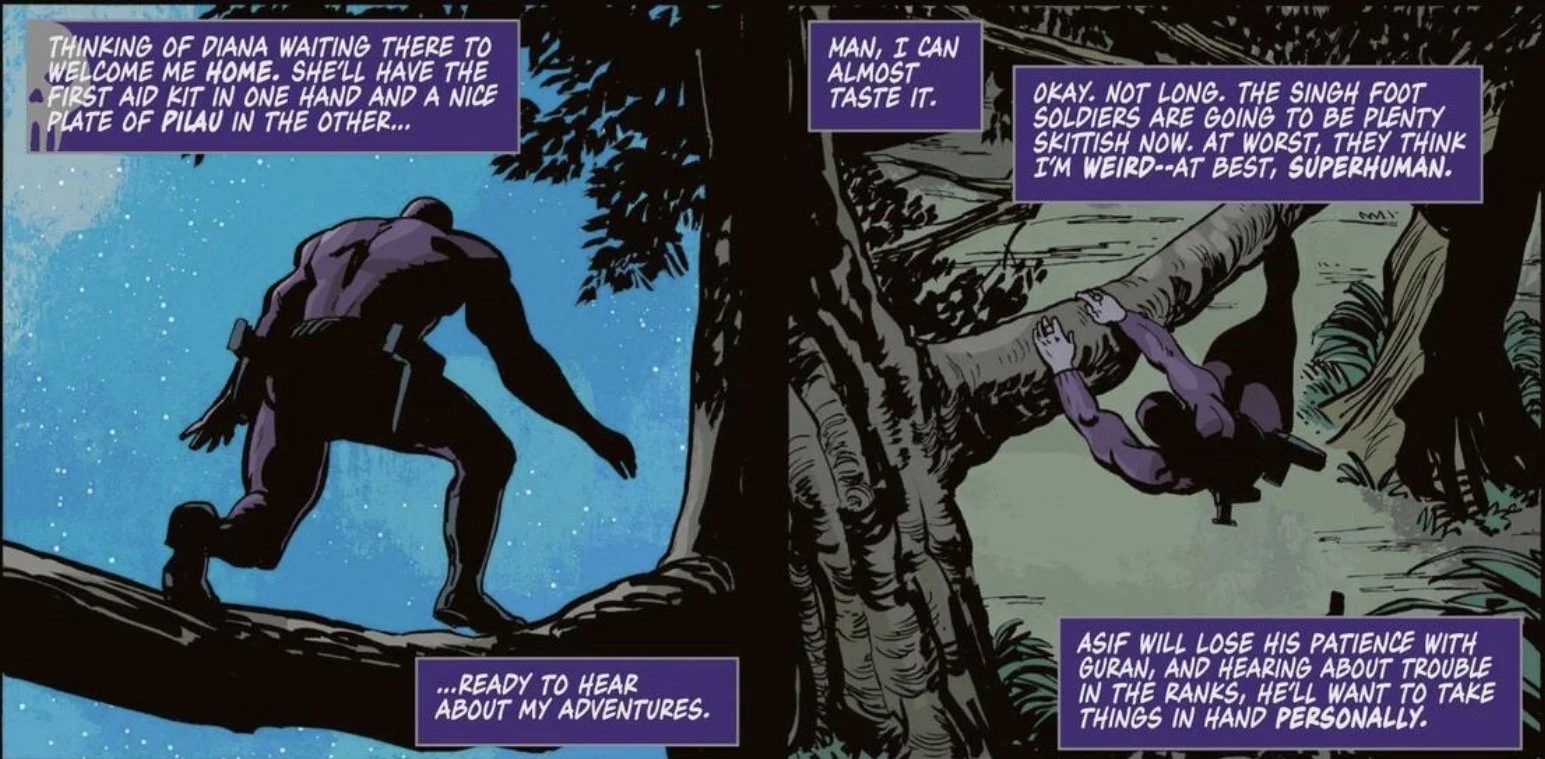
The narration spends a good amount of time in the Phantom’s head, which in this case is both a blessing and a curse. We get to follow his thought process as he plans and adapts when those plans don’t quite work, but we’re also there when his mind randomly wanders to things like Diana waiting for him with a kiss and a plate of pilau. This is again realistic, but maybe there’s a little too much realism for a pulp story?
I’m not saying he needs to be a stoic Superman, but so far I’m not seeing a lot of what makes him a mythical force to be feared. He’s coming across as Batman without the gadgets, which is scary to criminals, but not the kind of thing that lives on for hundreds of years.
Heart of the Jungle
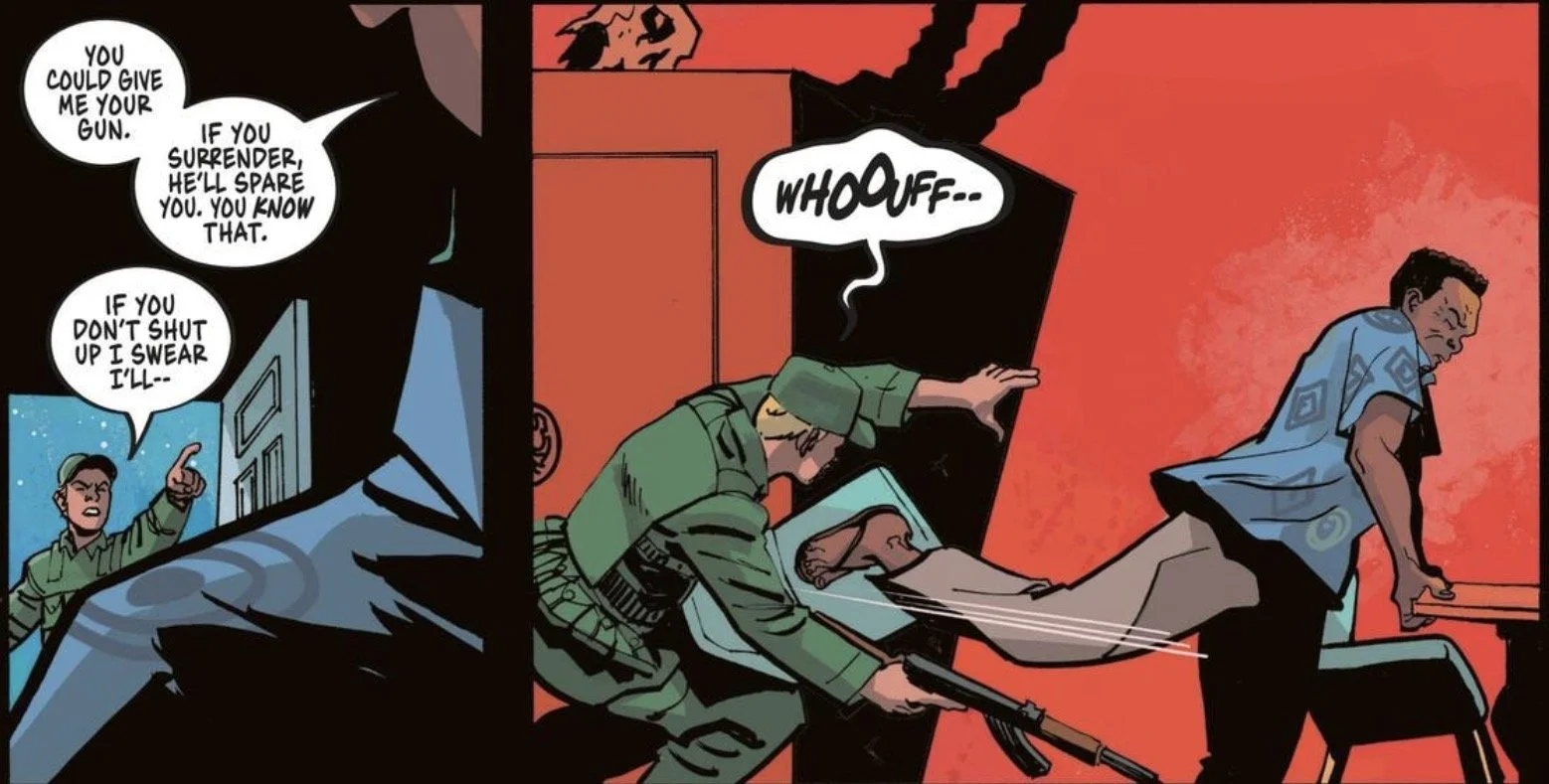
The art and coloring are working together really well in this book. Olson’s art is clean and expressive, not cartoony but not overly realistic either. It’s a good mix. And the uncredited colorist (really, guys, no credits?) keeps things interesting, which must be tough for a story about a guy clad in all purple going around the jungle at night. The bursts of color from gunfire, explosions, and the like break things up enough so that it’s not all dark shades, all the time. And some action panels have colored backgrounds to help show the motion and give things an almost anime kind of look. I should mention the lettering by Taylor Esposito, too. It’s not the super-clean “typewriter” look of a Big Two book, but it’s not the handwritten, overly “indy” look like Marvel Knights Punisher had this week, either. It’s a good space in between the two, clean and readable while still having a bit of character to it.
King of the (Skull) Ring
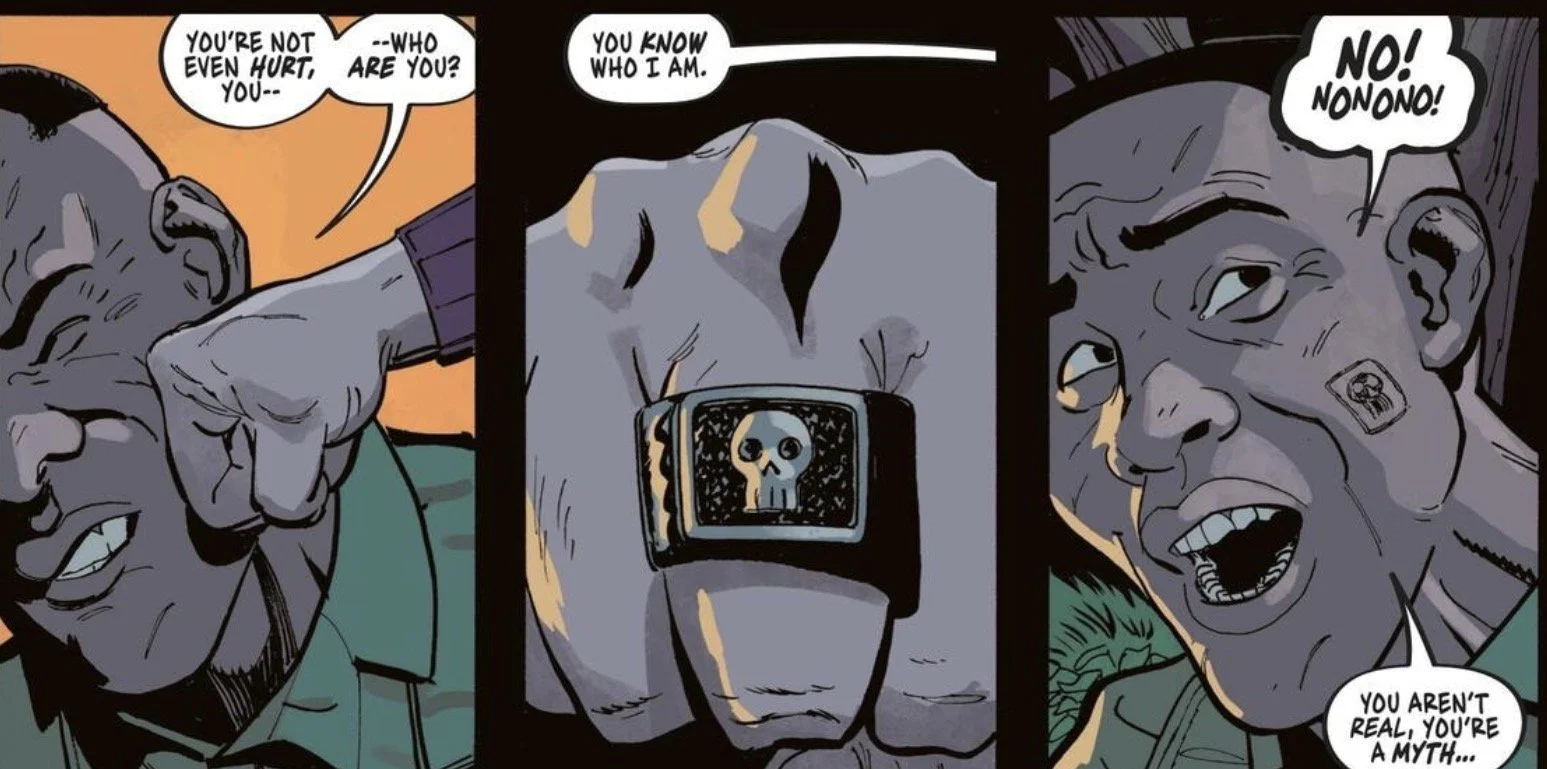
It may seem like I’ve grumbled about this book more than I’ve praised it, and maybe I have. That doesn’t mean it’s bad—far from it, in fact. It’s well-written, with expressive art and solid coloring. The story is starting to feel a little stretched out, though, which isn’t anything new in the age of “write for the trade.” Four-or-five-issue arcs make for nice, tidy collections, after all. That’s just a reality of the business, so I can live with it. I really do wish that things felt a bit more “pulpy,” though. I dunno. Maybe the old pulp aesthetics just don’t work as well in the modern day, or maybe less time in the Phantom’s head and a slightly faster pace would do the trick. Hard to say. As I said, I’m enjoying the book; I’m just not as in love with it as I hoped I’d be. I still have hope, though. And hey, if this incarnation doesn’t eventually get it right, we know the Phantom will rise again.