
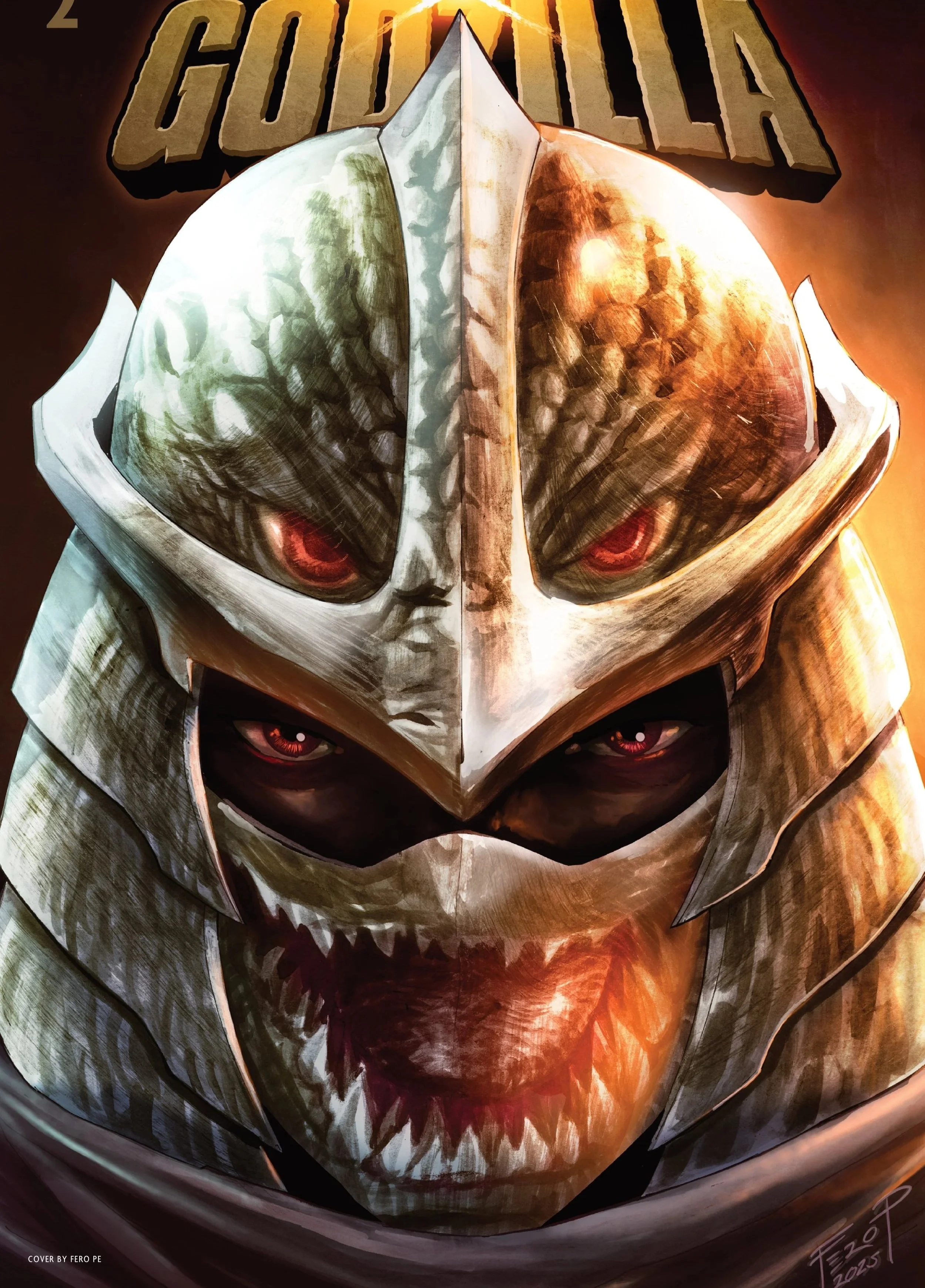
Writer: Tim Seeley
Artist: Fero Pe
Colors: Luis Antonio Delgado
Cover Artist: Fero Pe
Teenage Mutant Ninja Turtles x Godzilla #2 wastes no time delivering on the promise of spectacle that hovered over its debut. Where issue one was largely concerned with tone-setting and narrative justification, this chapter leans hard into chaos, scale, and action. King Ghidorah arrives in New York City, Tokyo is thrown into open kaiju warfare, and the crossover finally feels as large as its concept demands.
And yet, for all its noise and movement, this issue also highlights a familiar tension. It is exciting, energetic, and visually impressive, but it is still hesitant to fully integrate its two worlds in a way that meaningfully advances the story. Like the best and worst crossover chapters, it escalates everything while delaying the consequences.
What Issue #1 Set Up
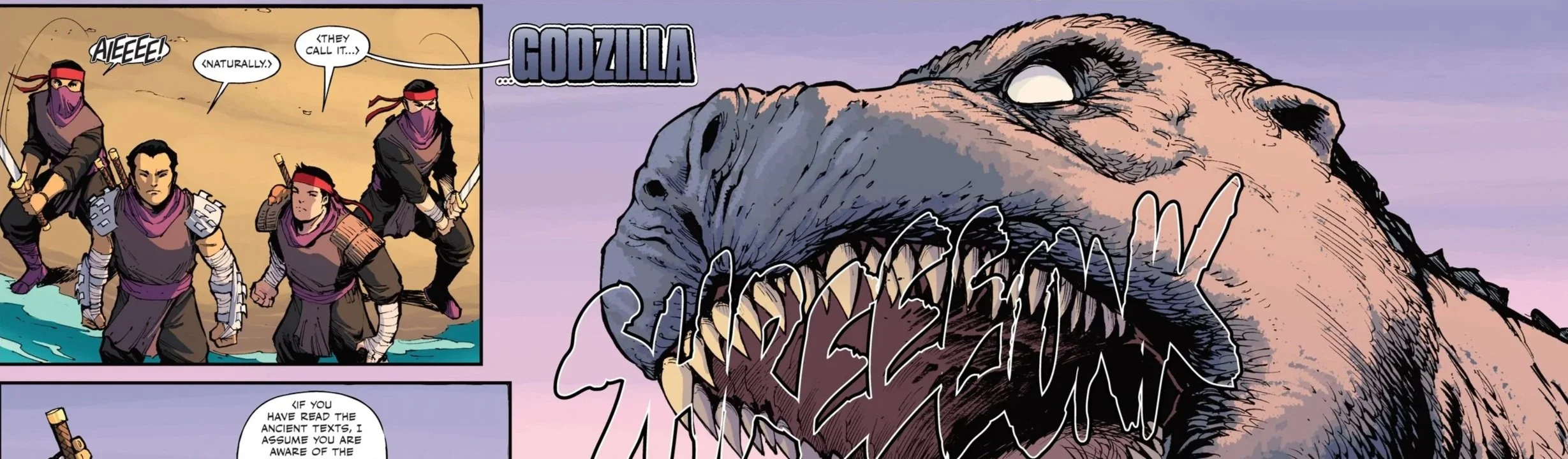
The Foot Clan encounter Godzilla in Issue #1.
By the end of issue one, the series had clearly established its framework. The ancient history of the Foot Clan with kaiju, the interest of Shredder and Krang in weaponizing kaiju biology, and the inevitability of global destruction once these forces collided were all firmly in place. What was missing was follow-through. The debut promised monster mayhem, but it largely kept that mayhem at a distance.
Issue two exists to correct that imbalance. The arrival of King Ghidorah in New York signals an immediate shift in scale, while Tokyo becomes a second battlefield where Godzilla, Rodan, and Anguirus clash with Mechagodzilla. The story is no longer about whether these universes can coexist. It is about whether anyone can survive once they do.
The issue benefits from this clarity. The conflict is no longer abstract or looming. It is active, destructive, and impossible to ignore.
A Louder, More Direct Issue
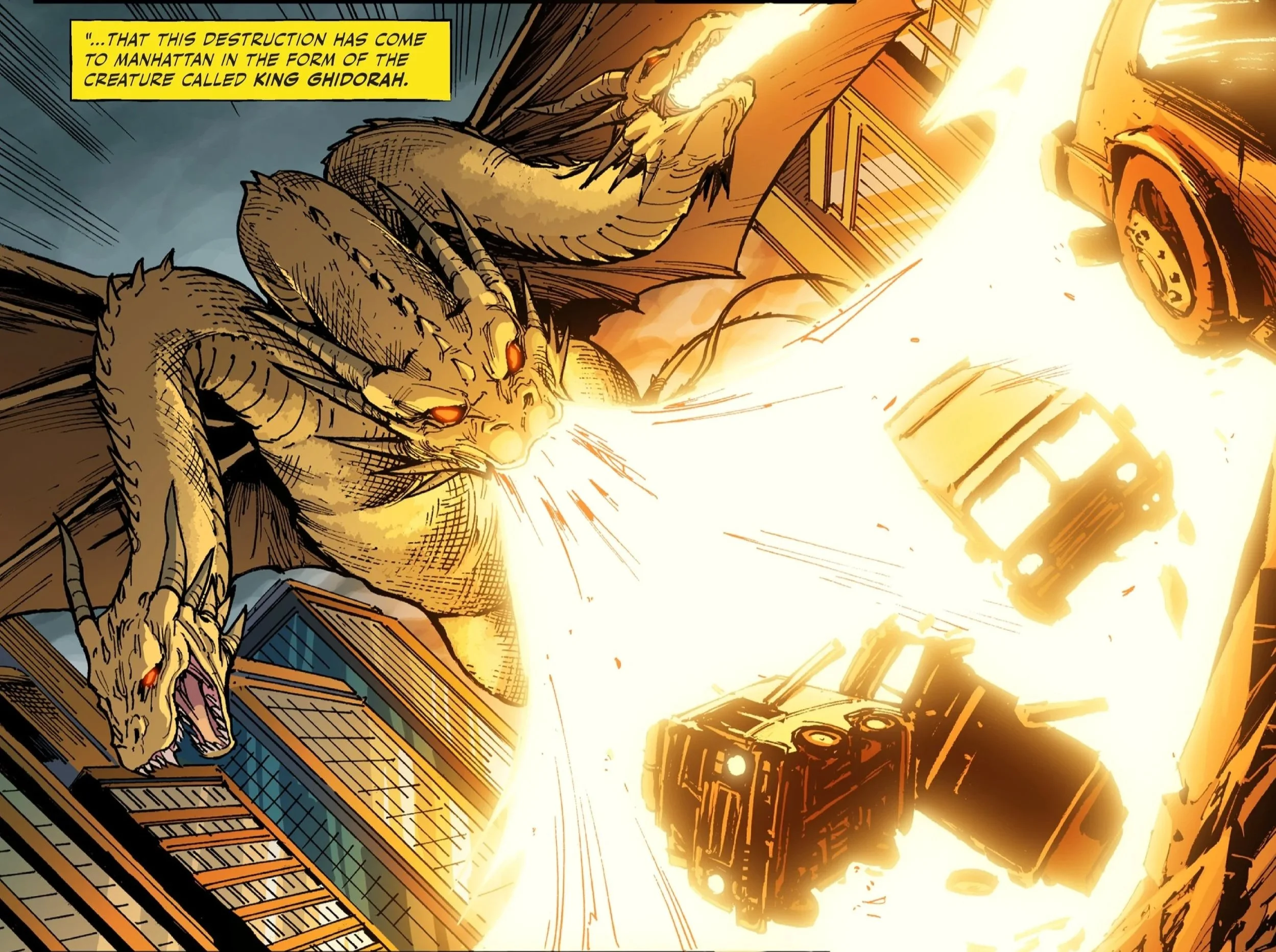
King Ghidorah lands in New York City.
From its opening pages, issue two commits to momentum. The sight of King Ghidorah tearing through New York is not treated as a tease or a background threat. It is the core event driving the narrative forward. Buildings collapse, military forces are overwhelmed, and the Turtles are immediately outmatched by the scale of what they are facing.
Tim Seeley handles this escalation well in terms of pacing. The issue moves briskly between New York and Tokyo, reinforcing the idea that this is a global crisis rather than a localized crossover gimmick. The back-and-forth structure keeps the energy high and avoids lingering too long in any one location.
That said, the issue is more concerned with maintaining spectacle than deepening its themes. While the action is plentiful, much of it serves to reaffirm the stakes rather than complicate them. The story grows louder, but it does not necessarily grow richer.
The Turtles on the Periphery
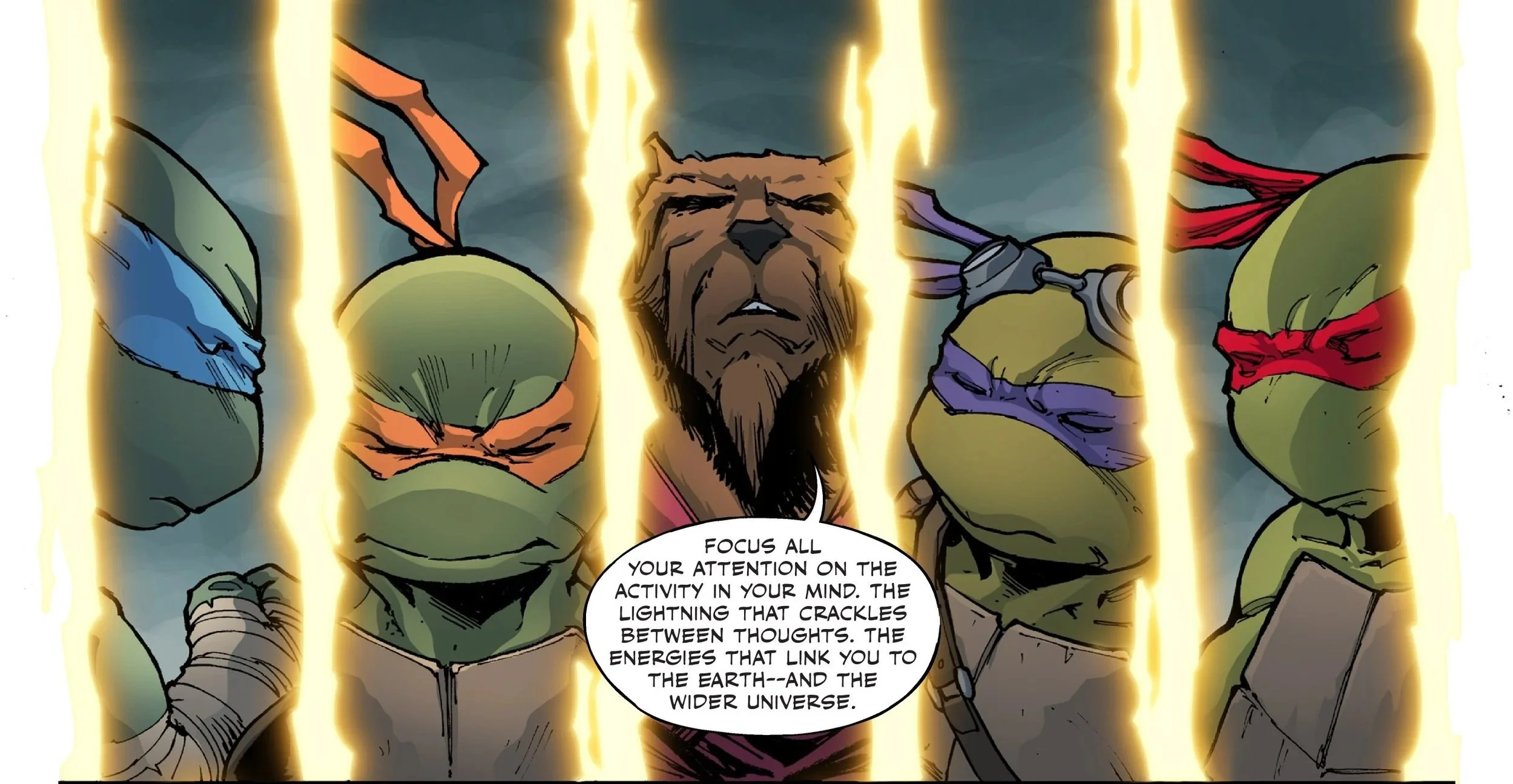
The Turtles and Splinter prepare to enter King Ghidorah’s mind.
One of the most notable aspects of issue two is how often the Turtles feel adjacent to the primary kaiju conflict rather than embedded within it. They attempt to stop King Ghidorah, briefly engage with the mind of the creature, and are ultimately thrown from its back as the monster departs. Their role is reactive rather than transformative.
This is not inherently a flaw, but it does shape the identity of the issue. Much of the physical kaiju combat is handled by Godzilla, Mechagodzilla, and the military, while the Turtles function as investigators, survivors, and witnesses. Casey Jones and Mondo Gecko take on more overtly heroic action, which further sidelines the core quartet.
The telepathic encounter with King Ghidorah is an intriguing idea. It hints at a more emotionally complex relationship between the Turtles and the monsters. However, it also reinforces the sense that the series is more comfortable exploring kaiju psychologically than letting the Turtles engage them directly. For readers hoping to see ninjas trading blows with gods, this restraint may feel frustrating. For me, however, it works and I like it.
Shredder’s Quiet Advancement
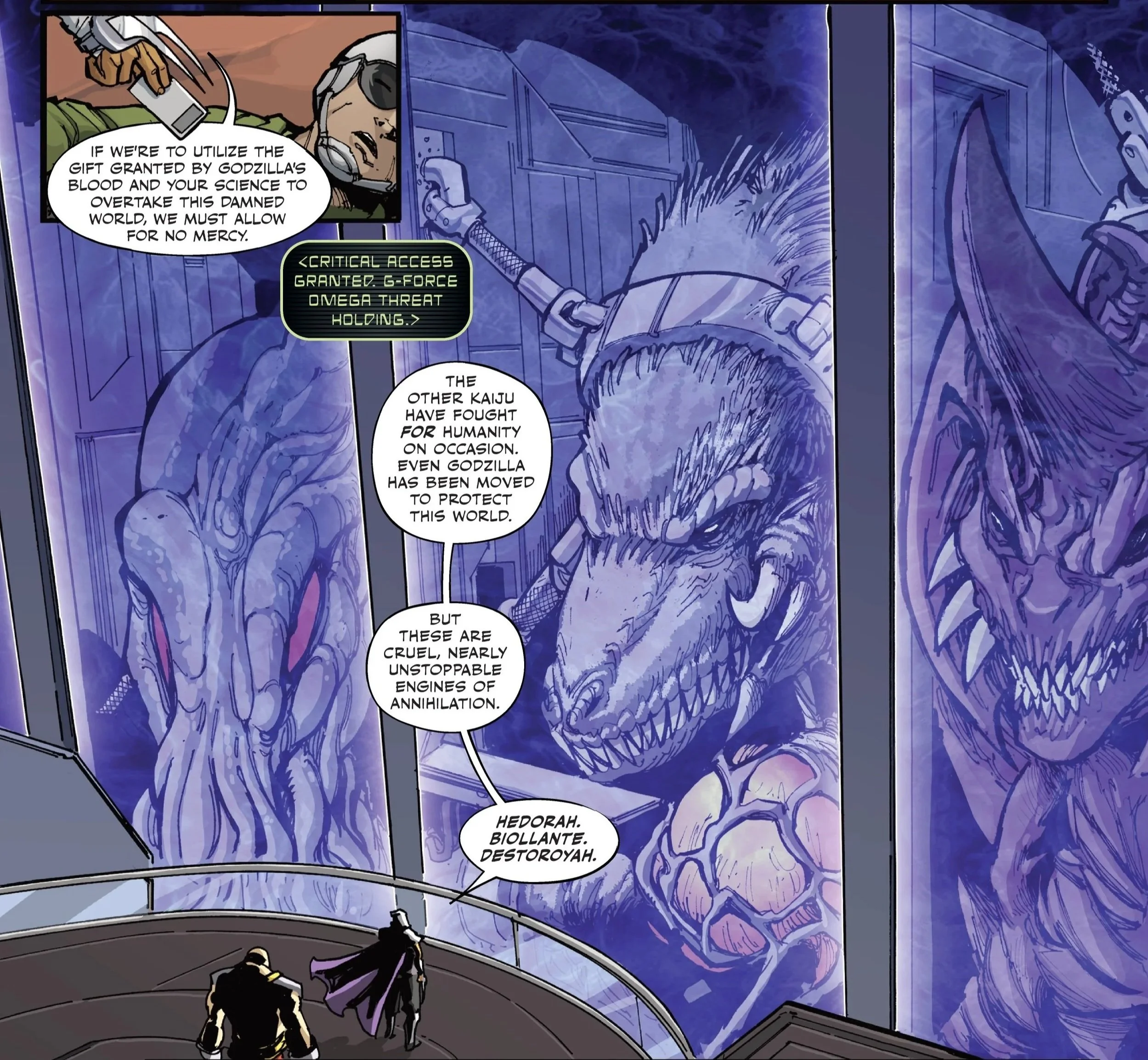
Shredder discovers Hedorah, Biollante, & Destoroyah.
While the world burns, Shredder continues to operate in the shadows. His movements in this issue are subtle but significant. With Godzilla and King Ghidorah occupying global attention, he advances his plan to harness kaiju power largely undetected. This remains one of the strongest narrative threads of the series.
Shredder is framed not as a battlefield presence, but as an opportunist. He thrives in distraction and chaos, and issue two reinforces that characterization effectively. The glimpses of additional kaiju such as Hedorah, Biollante, and Destoroyah expand the scope of his ambition and suggest that the worst is still to come.
This is where the issue feels most purposeful. While the action itself does not dramatically shift the direction of the story, the positioning of Shredder quietly does.
The Art Carries the Spectacle
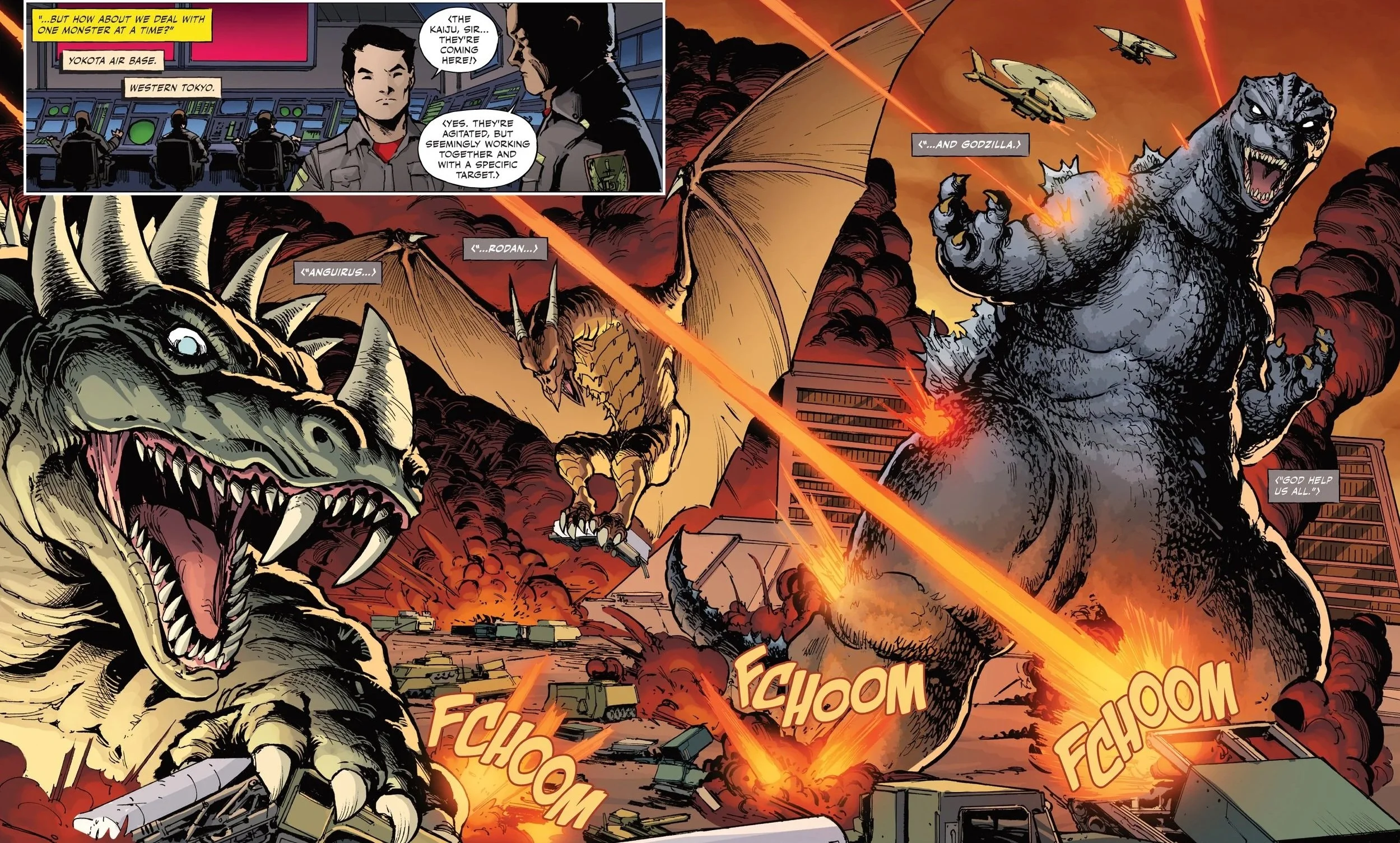
Anguirus, Rodan, & Godzilla attack a Japanese military base.
The artwork of Fero Pe is once again the greatest strength of the issue. The destruction of New York feels appropriately overwhelming, and the presence of King Ghidorah dominates every panel it occupies. Pe excels at conveying scale, ensuring that the monsters feel massive without sacrificing clarity or composition.
The colors by Luis Antonio Delgado amplify the chaos. Bright energy blasts, fiery skies, and crumbling cityscapes create a sense of constant motion and danger. The battles in Tokyo feel distinct from those in New York, both visually and tonally. This distinction helps prevent the issue from blending together despite its rapid pacing.
If the series is occasionally unsure of how to balance its narrative priorities, the art never is. The spectacle is confident, readable, and consistently engaging.
Final Thoughts and Rating
Teenage Mutant Ninja Turtles x Godzilla #2 is an improvement over its debut in nearly every technical sense. The action is bolder, the stakes are clearer, and the crossover finally embraces the chaos it promised. As a spectacle-driven issue, it succeeds.
However, it also reveals a lingering hesitation to fully commit to the Turtles as active agents within the kaiju conflict. The issue escalates the situation dramatically, but it does not fundamentally change it. The story feels louder and bigger, but it is not yet deeper.
Still, the foundation remains strong. With Shredder maneuvering behind the scenes and the kaiju threat expanding, the series is poised to deliver something truly special if it can align its spectacle with sharper character-driven momentum.
Rating: 8/10
A thrilling, visually impressive escalation that delivers on action while still holding its biggest narrative moves in reserve. Exciting and confident, but not yet definitive.