
Godzilla #6
Writer: Tim Seeley
Artist & Cover Artist: Nikola Čižmešija
Colors: Francesco Segala (w/ Gloria Martinelli)
Godzilla #6 closes out the first arc of the series with confidence, clarity, and a sense of finality that has been missing up to this point. Structurally, it is easily the most cohesive issue of the run so far. The action is cleaner, the dialogue is less bloated, and the emotional throughlines are clearer than they have been in previous chapters. As a conclusion, it works. As a Godzilla story, however, it reinforces many of the same fundamental issues that have held the series back from the start.
This is an issue that understands how to land an ending, but the ending it chooses will be divisive. For readers invested in Godzilla as the heart of the franchise, it will be deeply frustrating.
Where the Series Stands Going In
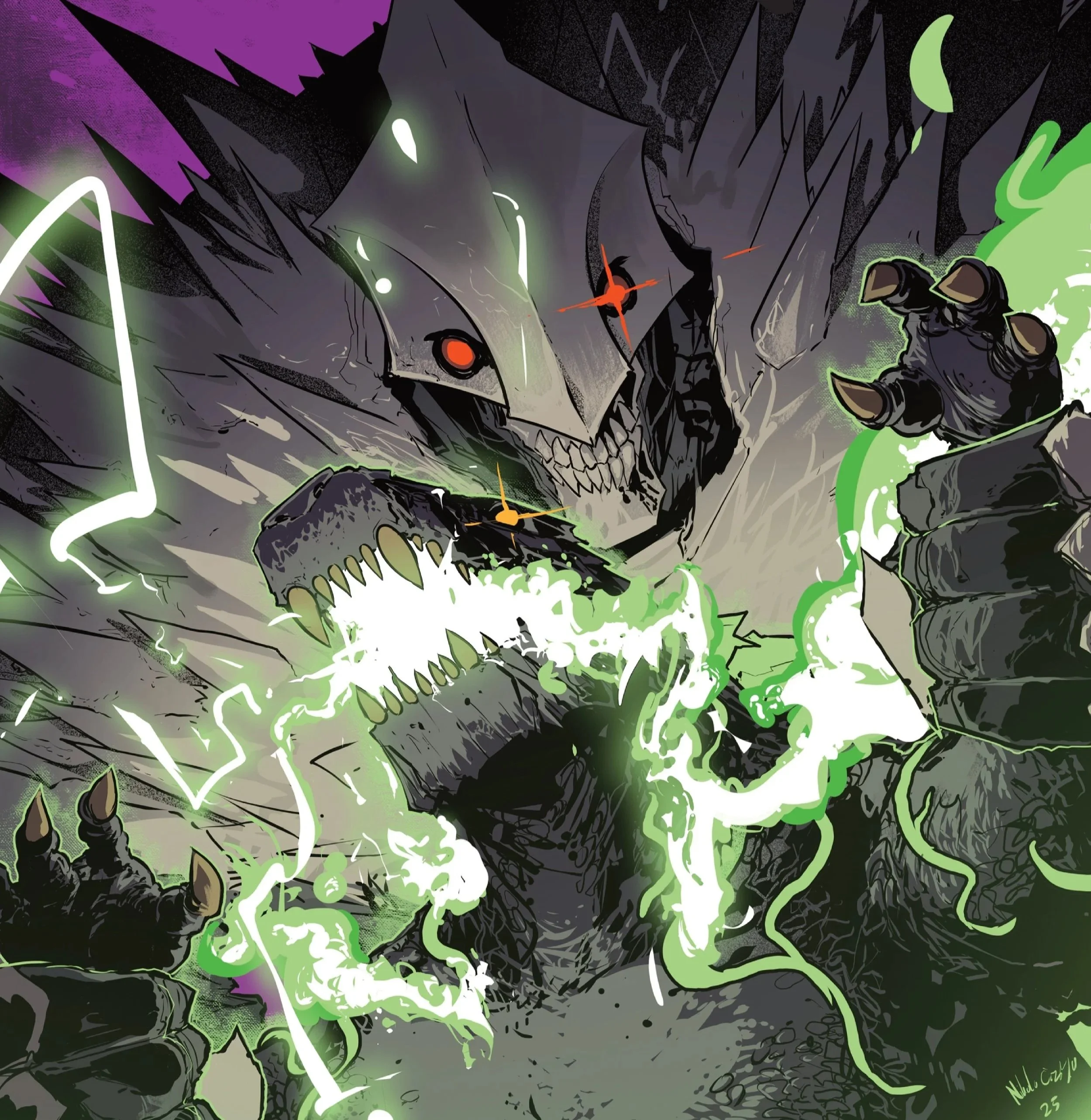
Jacen starts his fight with Godzilla in Issue #5.
By the end of issue five, the series had piled up a dense web of ideas. These included Kai-Sei energy, synthetic kaiju, international response teams, parasitic monsters, and a deeply personal revenge narrative centered on Jacen Braid. Godzilla himself had become less of a protagonist and more of a volatile force orbiting the human drama.
Issue six inherits all of that baggage, but for the first time, it feels as if the creative team knows exactly what kind of story they want to tell. The focus narrows. The conflict becomes direct. Godzilla and Jacen clash while Rumi and the rest of G-Force USA confront Lament head-on. There is no mystery box left to open and no mythology left to tease. Everything moves toward resolution. That clarity alone makes Godzilla #6 feel more satisfying than most of what came before it.
A Cleaner, More Confident Issue
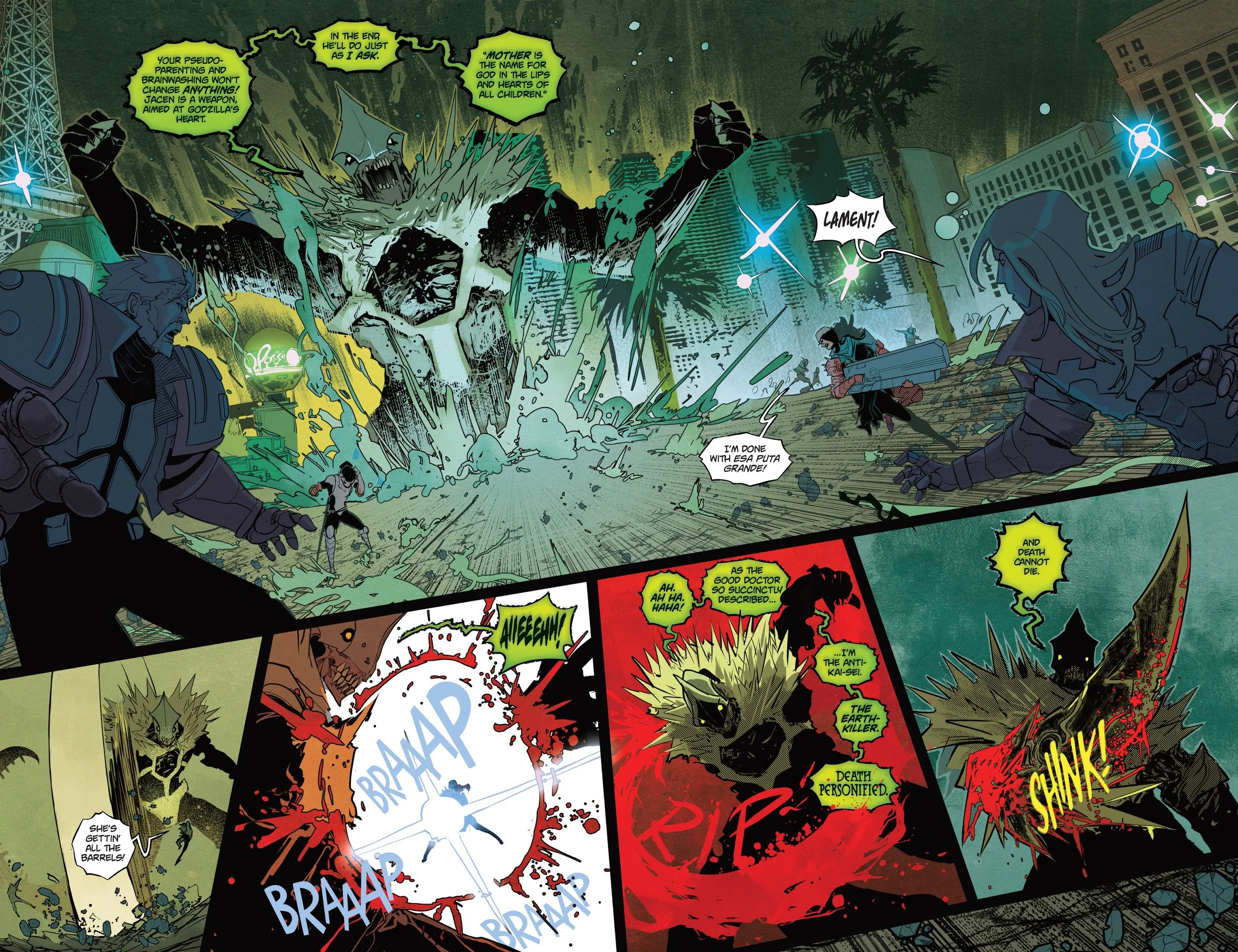
Lament begins the battle with G-Force USA.
The core of the issue is split between two parallel battles. Godzilla and Jacen face each other directly, while Rumi leads the effort against Lament. The pacing here is noticeably improved. Scenes are allowed to breathe without being buried under constant exposition. Furthermore, the dialogue, while still far from subtle, is less suffocating than in earlier issues.
The action is also more sustained. Unlike previous chapters where kaiju fights felt interrupted or truncated, issue six commits to spectacle. The clash between Godzilla and Jacen has weight, and the fight against Lament finally gives the creature a sense of urgency and threat, even if it still lacks personality. This is the first time the book feels as if it trusts momentum rather than explanation.
Rumi, Lament, and the Emotional Kill Shot
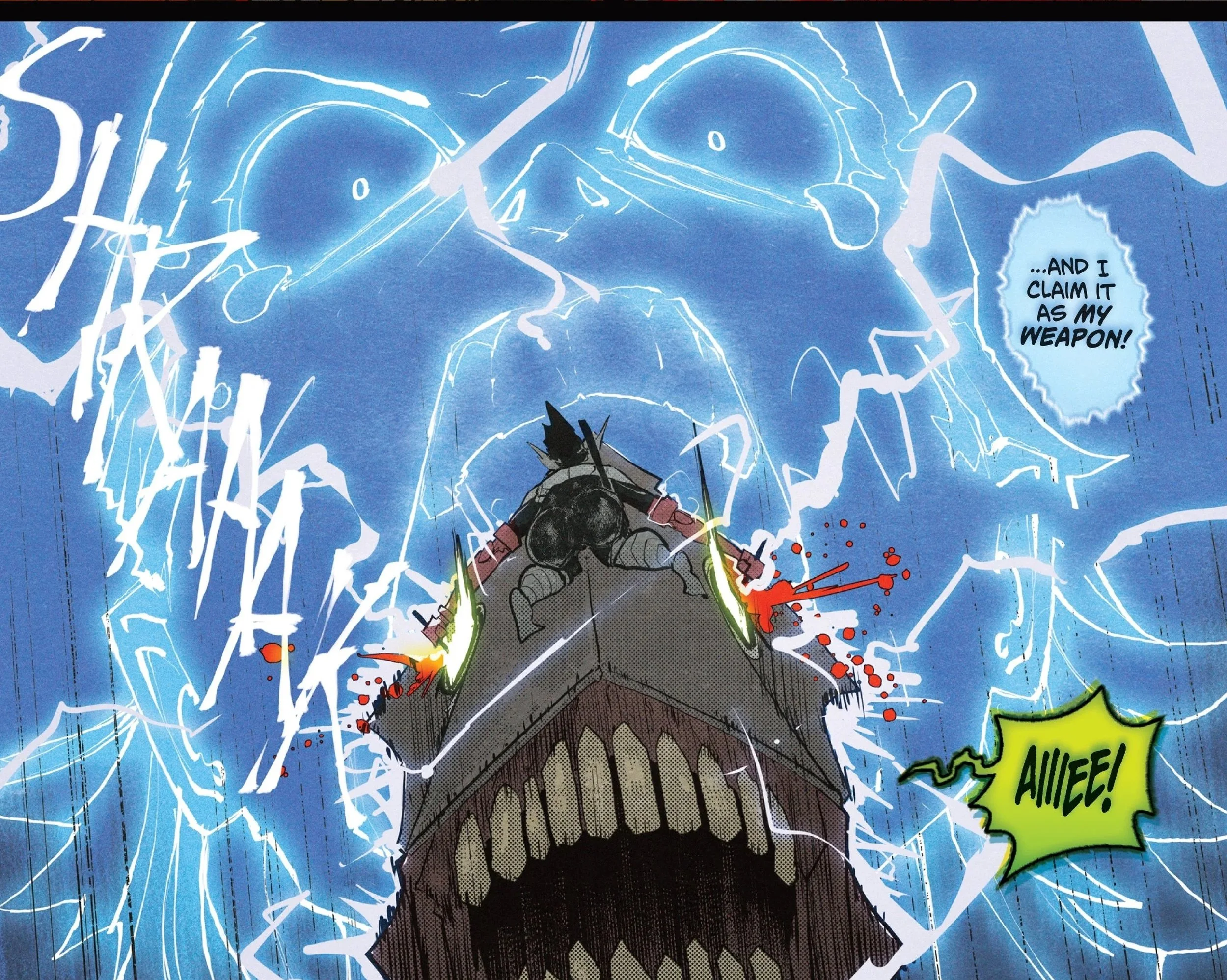
Rumi delivers the final blow on Lament.
The most narratively significant moment of the issue occurs when Rumi uses the memories of Lament, specifically its past as the mother of Jacen, to incapacitate it. The idea carries weight, but it does not fully earn the emotional depth the story seems to want from it. The moment works more because of its placement in the climax than because of any genuine connection the series has built between the characters.
Importantly, this sequence functions better than similar attempts earlier in the run because it is treated as action rather than metaphor delivery. The memories are not just symbolic; they are weaponized. The kaiju acupuncture technique used by Rumi, which had previously felt like a strange narrative shortcut, finally has tangible consequences. For once, the emotional manipulation is embedded in the mechanics of the fight instead of being explained in dialogue.
The Death of Godzilla
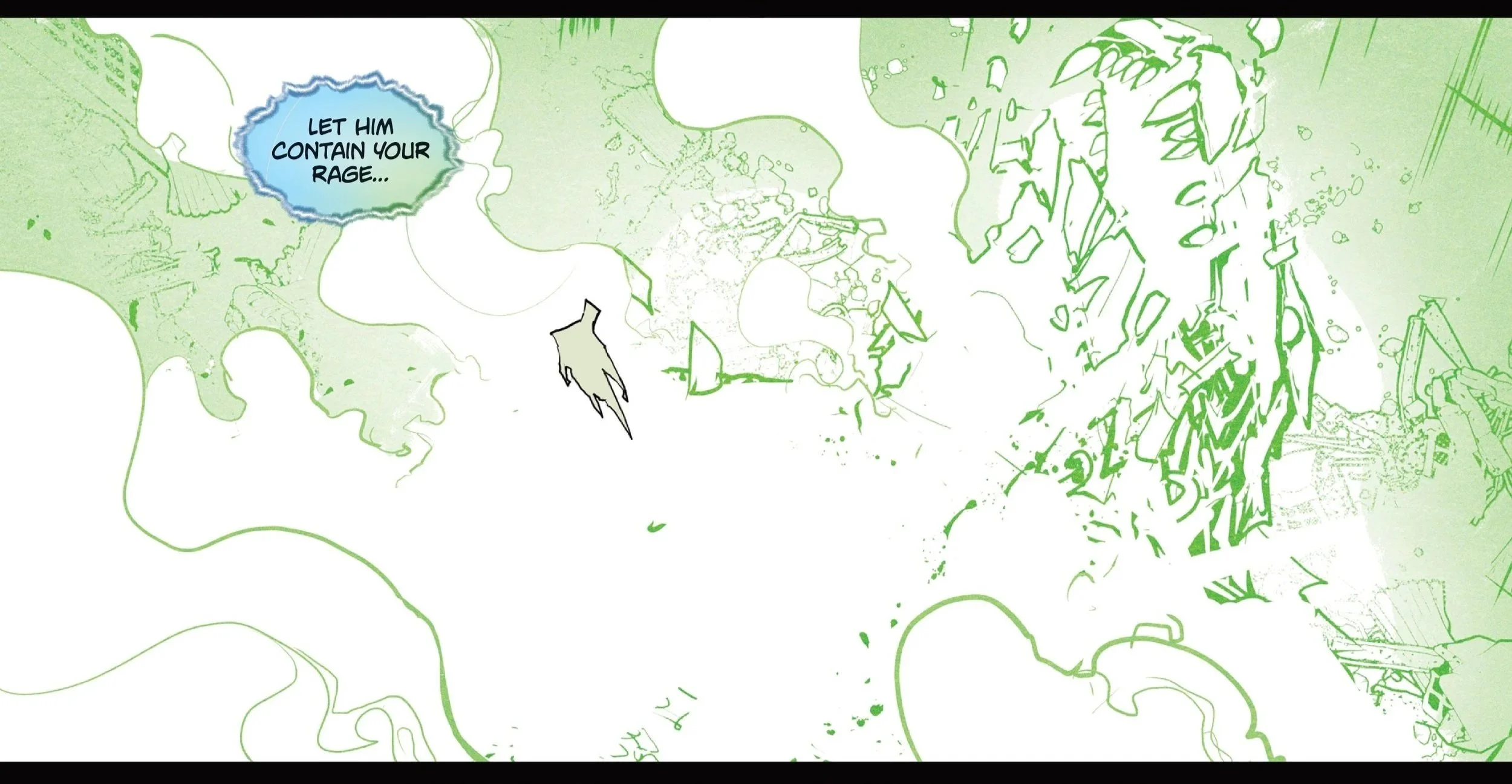
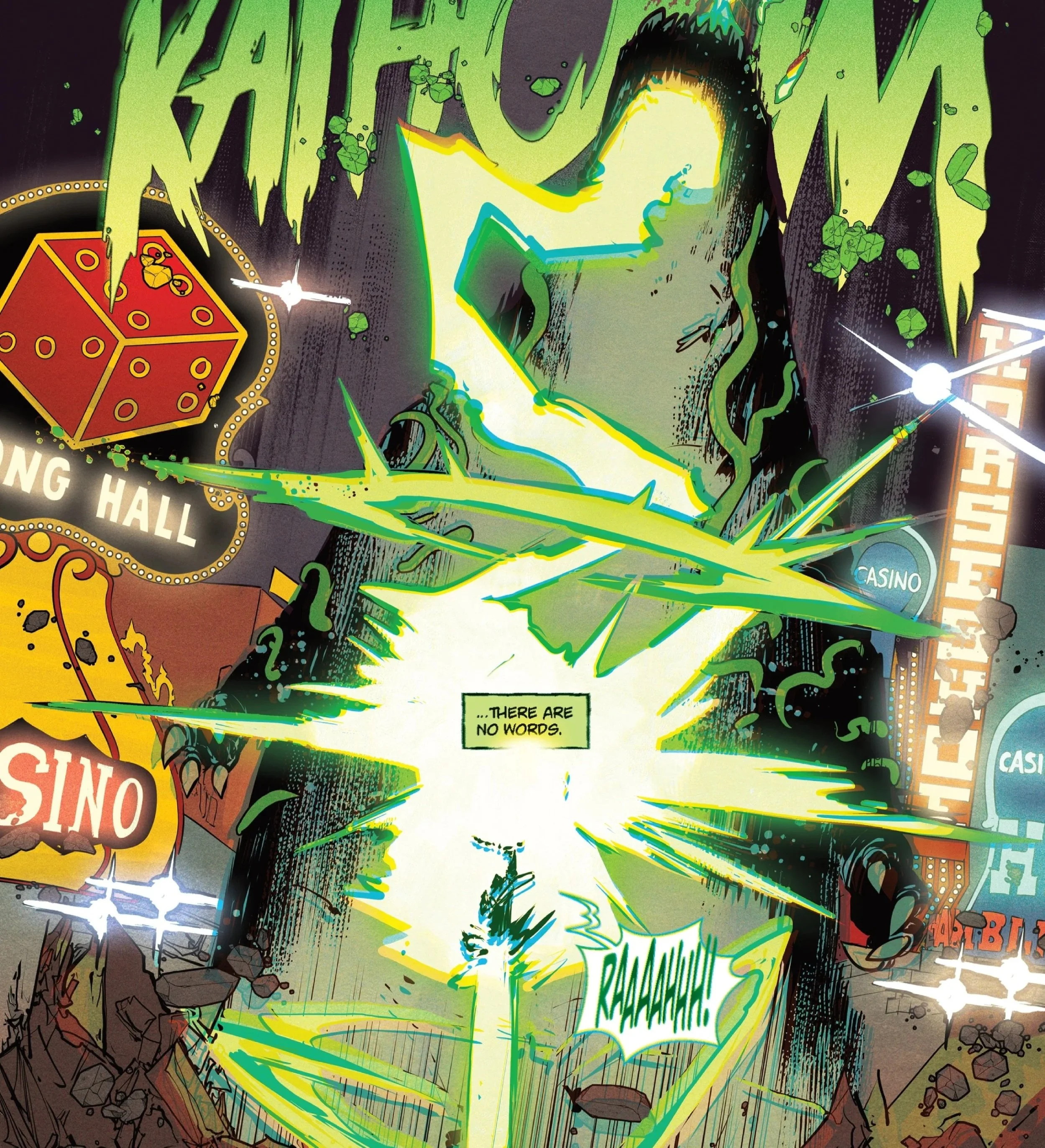
Godzilla’s physical form disintegrates.
Then comes the moment that will define this arc for many readers. Rumi siphons the Kai-Sei energy of Godzilla and transfers it to Jacen, essentially killing Godzilla in the process. From a structural standpoint, this act is effective. It is decisive, irreversible, and thematically aligned with the obsession of the story regarding energy, responsibility, and escalation. It gives Jacen a grim and unsettling victory while closing the arc with a sense of consequence.
From a franchise standpoint, however, it is deeply misguided. The death of Godzilla does not feel earned through character or mythology. Instead, it feels earned through narrative utility. He is sacrificed not because his arc reaches a natural conclusion, but because the story is more interested in the transformation of Jacen than in the role of Godzilla as a force of nature. Once again, the kaiju becomes a means to resolve a human storyline rather than the axis around which the story revolves.
For readers already frustrated by how sidelined Godzilla has felt throughout this run, this moment confirms the worst fears regarding the priorities of the series.
A Better Issue, Not a Better Direction
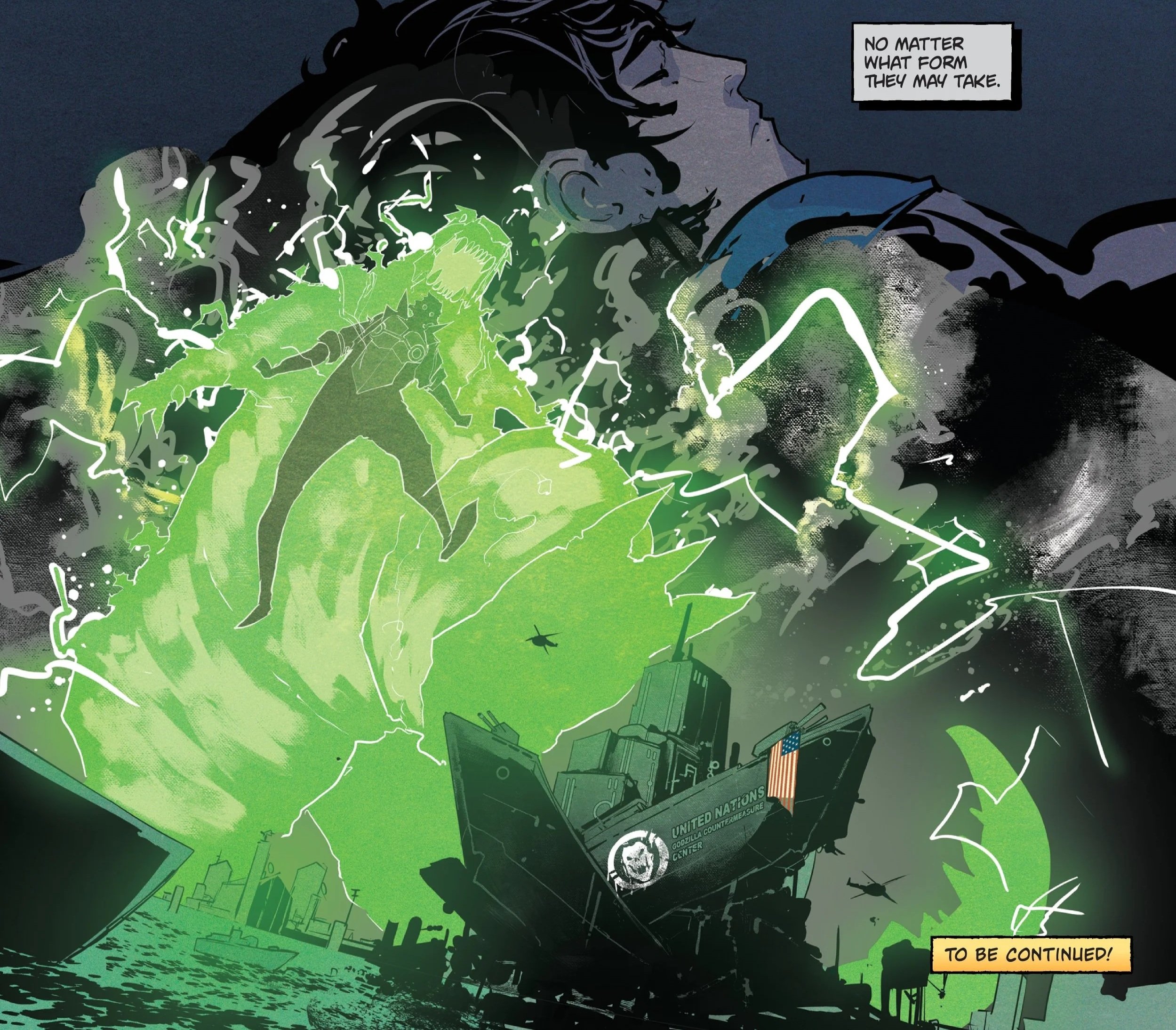
The teaser for the remaining story.
To the credit of the issue, it avoids many of the pitfalls that plagued earlier chapters. Captain Stine is far less intrusive. The dialogue, while still direct, is not relentlessly on the nose. The fights are visually clear and emotionally legible. As an ending, it lands.
However, it also clarifies something uncomfortable: this is not really a series driven by Godzilla. It is a human drama that uses kaiju as accelerants rather than as characters or thematic centers. Issue six is effective because it fully commits to that approach instead of wavering between spectacle and sermon. Whether that commitment is appealing will depend entirely on what readers want from a Godzilla
The Art Still Carries the Weight
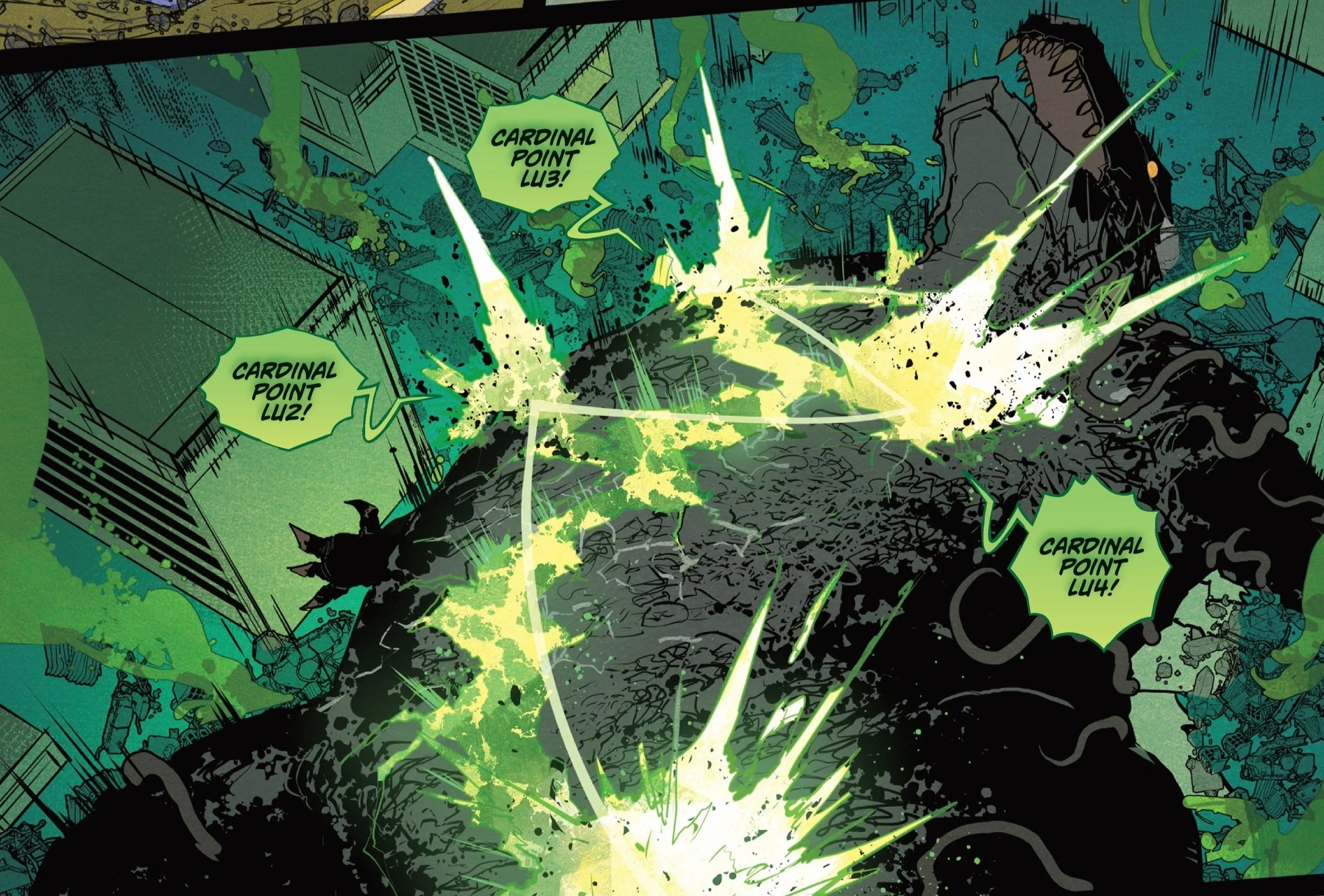
Jacen attacks Godzilla’s weak spots with the techniques Rumi taught him.
Nikola Čižmešija once again delivers the strongest work in the book. The final moments of Godzilla are rendered with real physicality, and the fights have scale, impact, and clarity. Even readers who dislike the narrative direction will likely agree that the visuals sell the emotion far better than the script alone.
The fight choreography is tight, the kaiju designs remain imposing, and the sense of destruction finally matches the claimed stakes of the story. The colors provided by Francesco Segala and Gloria Martinelli continue to enhance the chaos, especially during the energy transfer sequence. That specific moment feels appropriately violent and unnatural. If the series has a saving grace, it remains the art.
Final Thoughts and Rating
Godzilla #6 is the most effective issue of the series so far, and that is both its greatest strength and its most revealing flaw. It proves that the creative team can deliver a strong, coherent, and emotionally charged chapter when they narrow their focus. Unfortunately, it also confirms that their focus is not on Godzilla.
As the conclusion to the first arc, it is satisfying. However, as a Godzilla story, it is frustrating. Killing Godzilla to complete a human character arc feels like a fundamental misunderstanding of what makes the franchise endure. The issue works, but it succeeds by sidelining the very element that should be central to the narrative.
Rating: 6/10
This is a well-executed finale that improves on the earlier missteps of the series, but it also doubles down on a creative direction that prioritizes human drama over kaiju mythology. It is effective, divisive, and ultimately emblematic of the core problem of the run.