
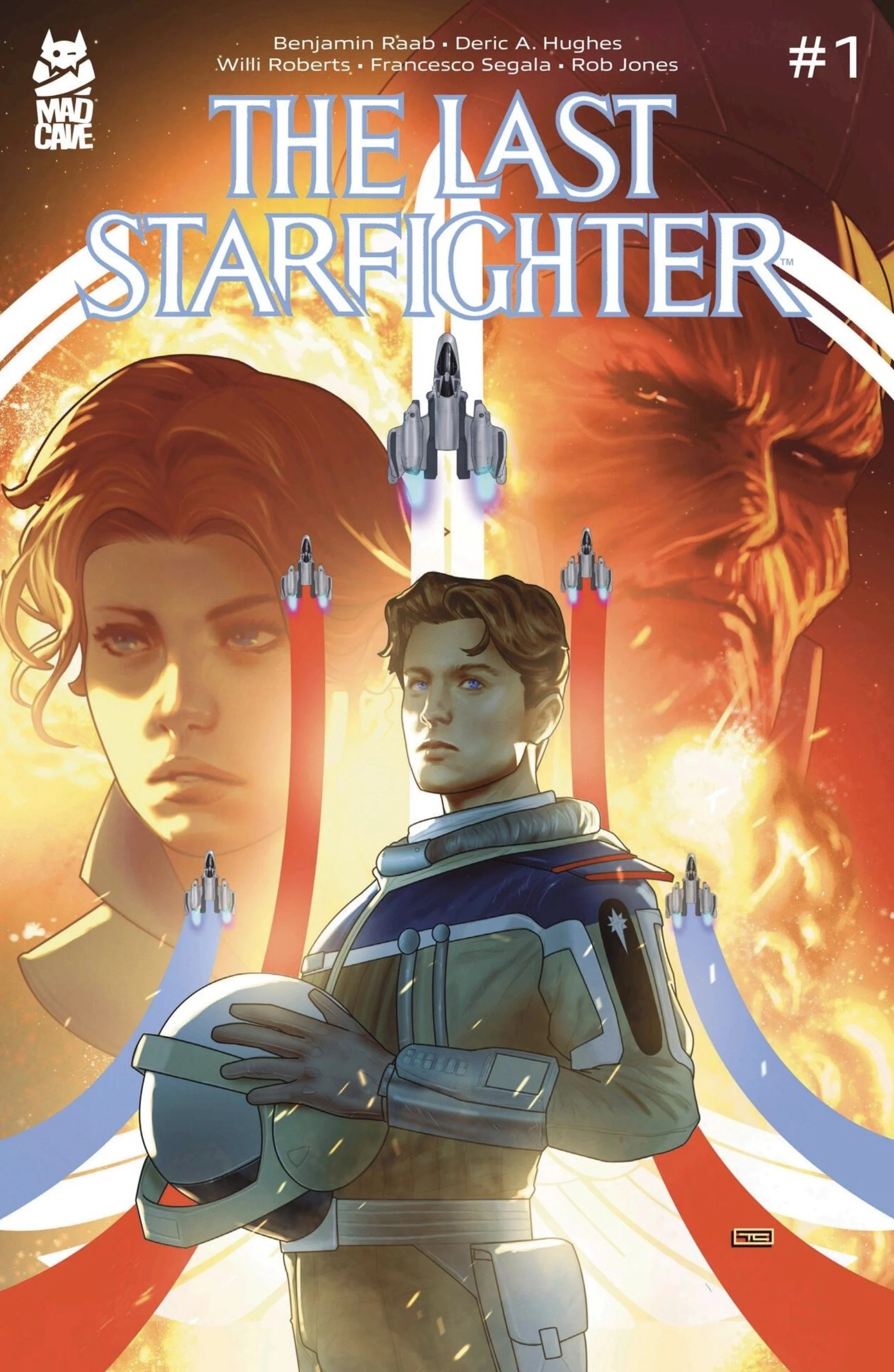
The Last Starfighter #1
Writer: Benjamin Raab and Deric A. Hughes
Artist: Willi Roberts
Colorist: Francesco Segala
Cover Artist: Taurin Clarke
The Last Starfighter.
Didn’t that movie come out in the '80s?
Yep—1984, to be precise.
So why make a sequel to it now?
Let’s find out.
Nostalgia Bait
If you’ve never seen The Last Starfighter (and why not?), this is going to spoil it for you.
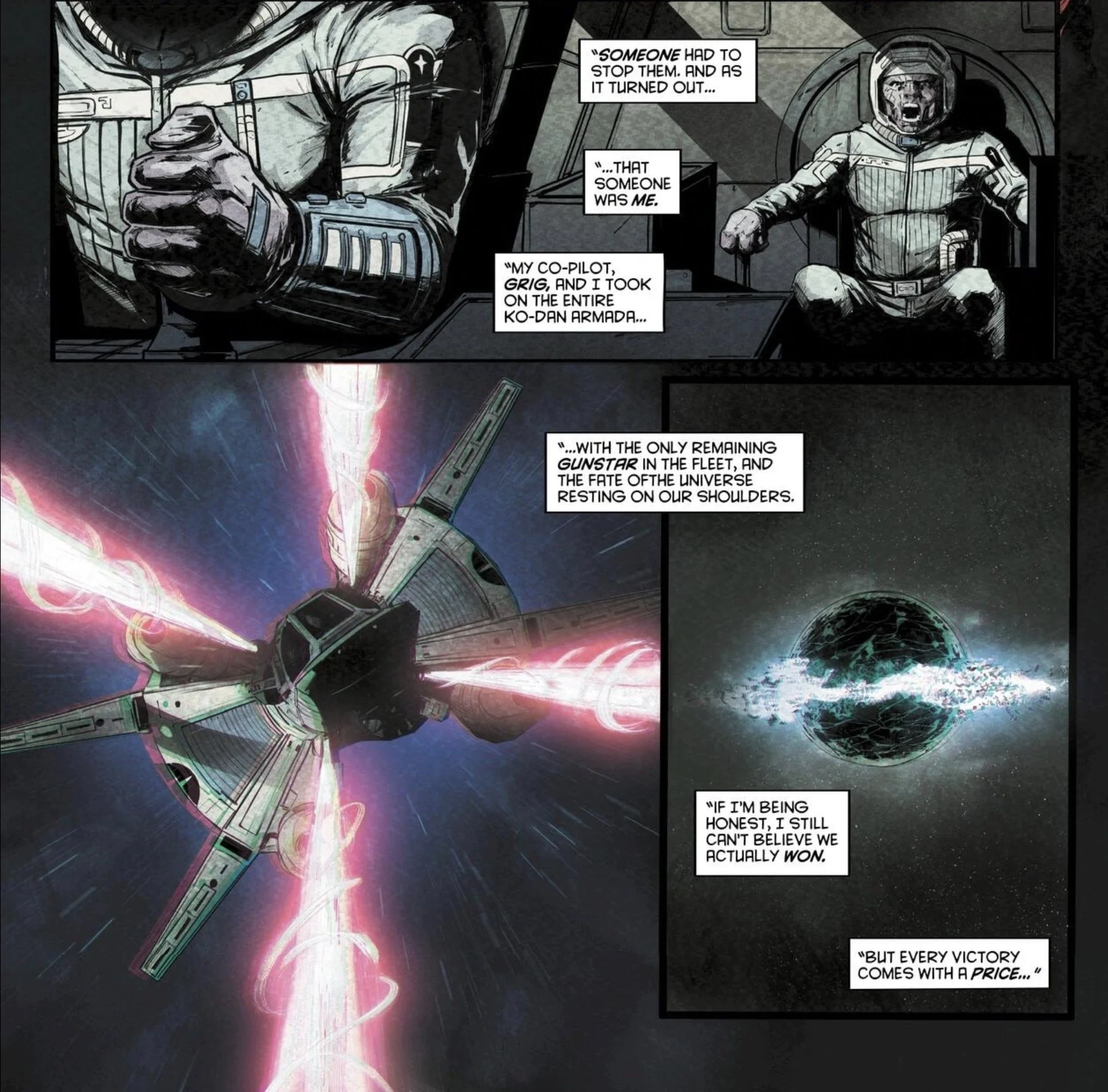
Alex Rogan wasn’t going to amount to anything until he got the high score on the Starfighter arcade game. Turns out, it was a test, and he passed. Soon, he was in space, helping the Star League win a war against the Ko-Dan Armada. The victory wasn’t without casualties, and Alex found himself the last Starfighter (see what they did there?)
Issue #1 starts with Alex realizing that he and his co-pilot Grig, must now shoulder the burden of rebuilding the Starfighter Legion. With the help of Centauri, who designed the test disguised as an arcade game, they begin the process of finding capable new recruits. But evil isn’t content to wait for the Star League to finish rebuilding…
After The End
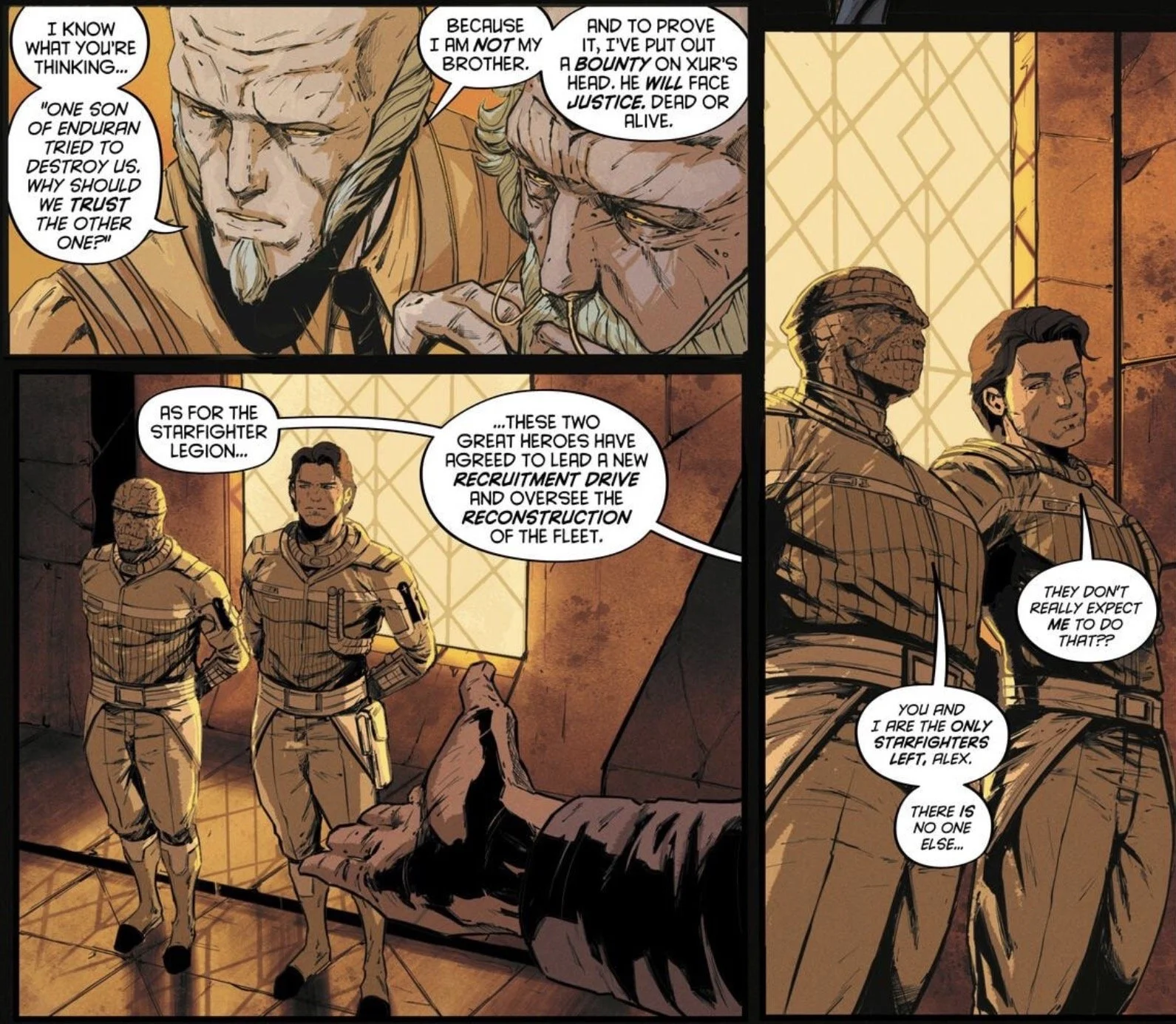
Most science fiction or fantasy stories end right after the good guys score the big victory. The cleanup that comes after the win isn’t glamorous. But there’s still plenty of tales to tell. That’s the angle this new series is coming from, and it’s an intriguing one. In fact, outside of the many different Star Wars sequel series, I’m hard-pressed to think of another science fiction tale that has taken this approach.
Earlier, I asked, “Why now for a sequel to this cult classic movie?” The reason, I think, is twofold. First, thanks to publishers like Mad Cave, there are more spaces to tell these kinds of stories. And second, this is exactly the kind of story that we don’t get to see much of.
You could pick this up without ever having seen the movie, and you’d be perfectly fine. The film’s story is nicely recapped in the first couple of pages, and then we hit the ground running. Right away, we can sympathize with Alex—he’s eighteen years old, just found out he’s supposed to save the universe, then he does, but now what does he do? It’s not like he can just return home as if nothing ever happened, right?
At least he’s not completely alone. His girlfriend Maggie made the trek into space with him, and if you think that Alex is having a hard time adjusting… he’s got nothing on her. Maggie is what they refer to as a “spitfire,” and isn’t shy about speaking her mind. Fortunately for Alex, she’s always got his back. Their relationship is handled well—you can tell that they really care for each other.
After six months of preparation, Alex is finally ready to start recruiting. His first choice is… unconventional, to say the least. Before we can meet any others, we learn that someone is hunting down all of the candidates who have beaten the game. Alex realizes the next target is on the world that he sent Maggie and Centauri to, so now it’s a race against time.
I really enjoyed the pacing of this issue. Since it’s largely about reconstruction, you’d expect a slower pace. We do get that, but there are still moments where things pick up as well. We’re able to spend just enough time with the characters that, when they start to end up in mortal peril, we care enough to be concerned for them. There’s hardly any action in this issue, but we end with the promise of plenty to come.
Fly in Formation
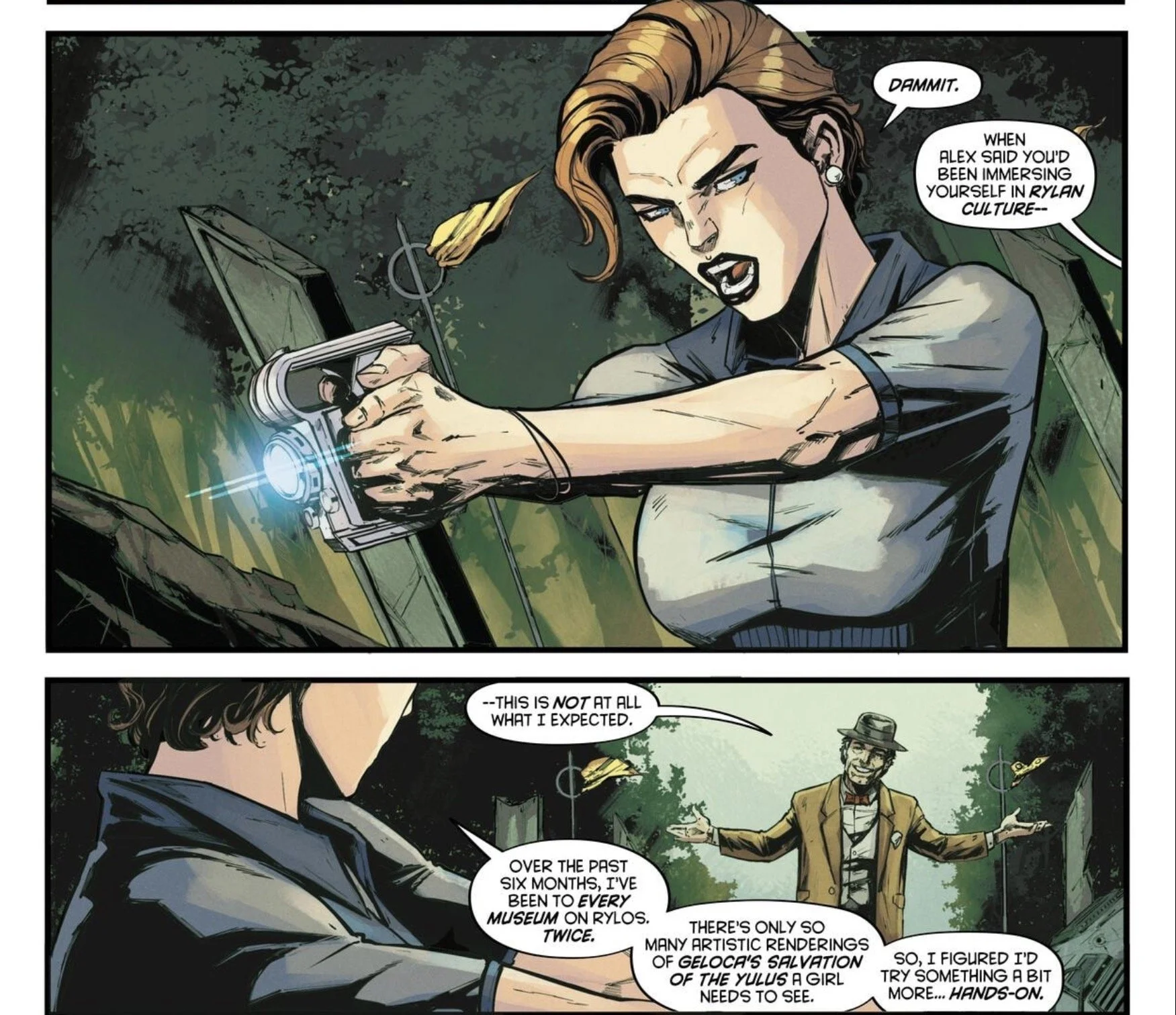
This "after the curtain call" sequel is brought to us by the writing team of Benjamin Raab and Deric A. Hughes, artist Willi Roberts, and colorist Francesco Segala. The writing team does a good job of recapping the movie in just a handful of pages, then getting right into the thick of things. We can immediately tell how in over his head Alex is, and Maggie's lack of patience with the Star League leadership shows that she's having a hard time adjusting as well. This is going to sound weird when much of the cast are aliens, but everyone feels very human and relatable. When the action starts up towards the end, you can feel the stakes rising with each subsequent page.
If you're telling a science fiction story about aliens and spaceships in comic book form, then you'd better be able to draw a detailed and varied assortment of those things. Fortunately, Willi Roberts can do just that. His alien figures actually look alien, and not just like humans in makeup and prosthetics (like they would have been in the movie). We don't get to see a lot of spaceships in this issue, but based on the bits we do see here, I have faith that they'll look cool as well. He's able to keep the panel layouts and the camera angles varied and interesting so that the issue of largely talking heads doesn't get stale or boring.
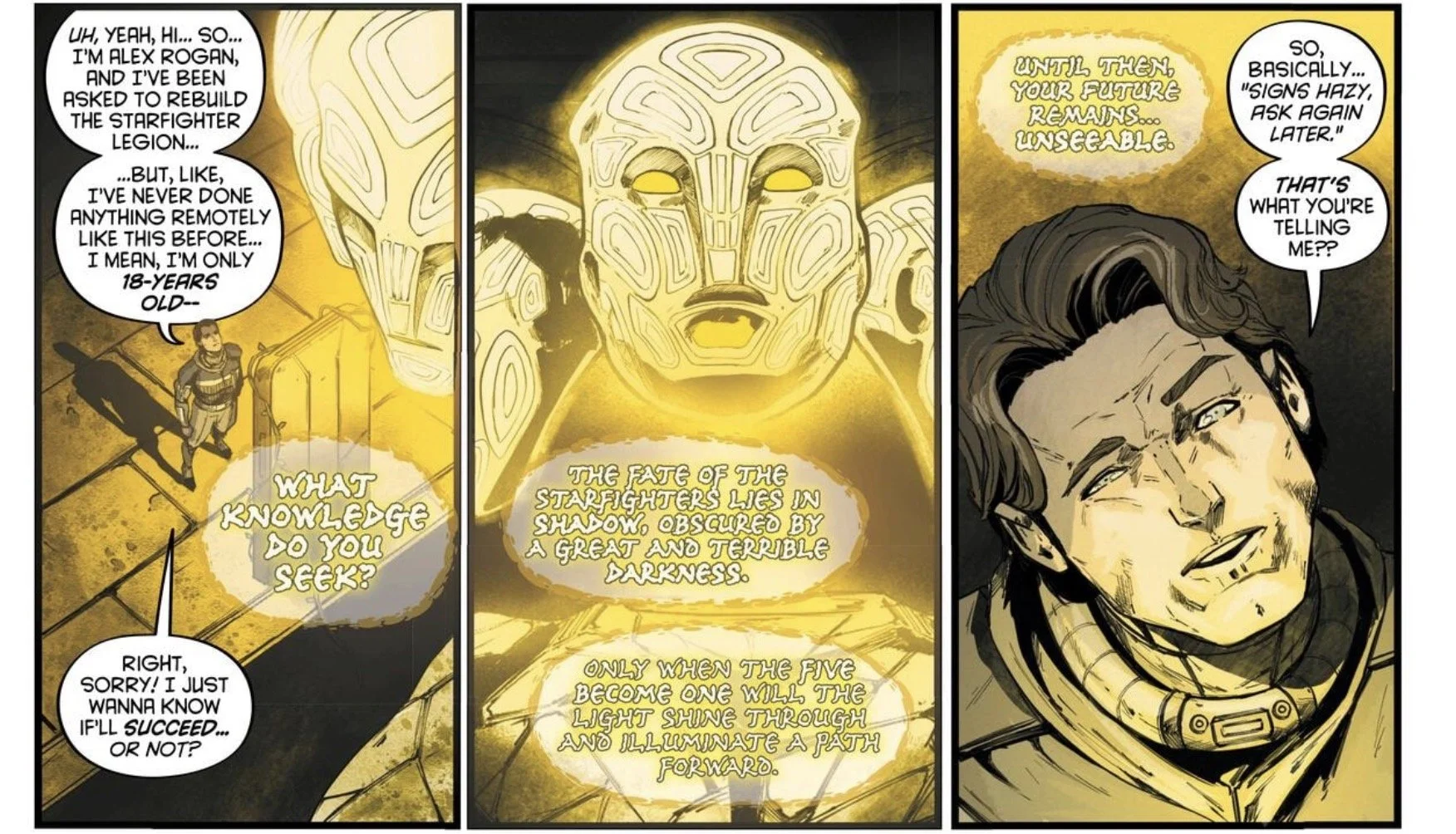
The colors by Francesco Segala work well in tandem with the art. The scenes in space itself are on the darker side, as you would expect. The planetside bits are much brighter overall, with either alien suns or internal light sources adding illumination to the various locales. The Kyrellian Oracle looks particularly impressive, the way the colors wrap it in a kind of eerie glow.
High Score
The Last Starfighter #1 may seem like an odd release in 2026—a sequel to a movie from forty-two years ago?—but it smartly uses the premise of the cult film as the springboard for a story not often seen in science fiction, "What happens after the good guys win?" So far, the story is interesting, and I'm excited to see where else the creative team takes things.