
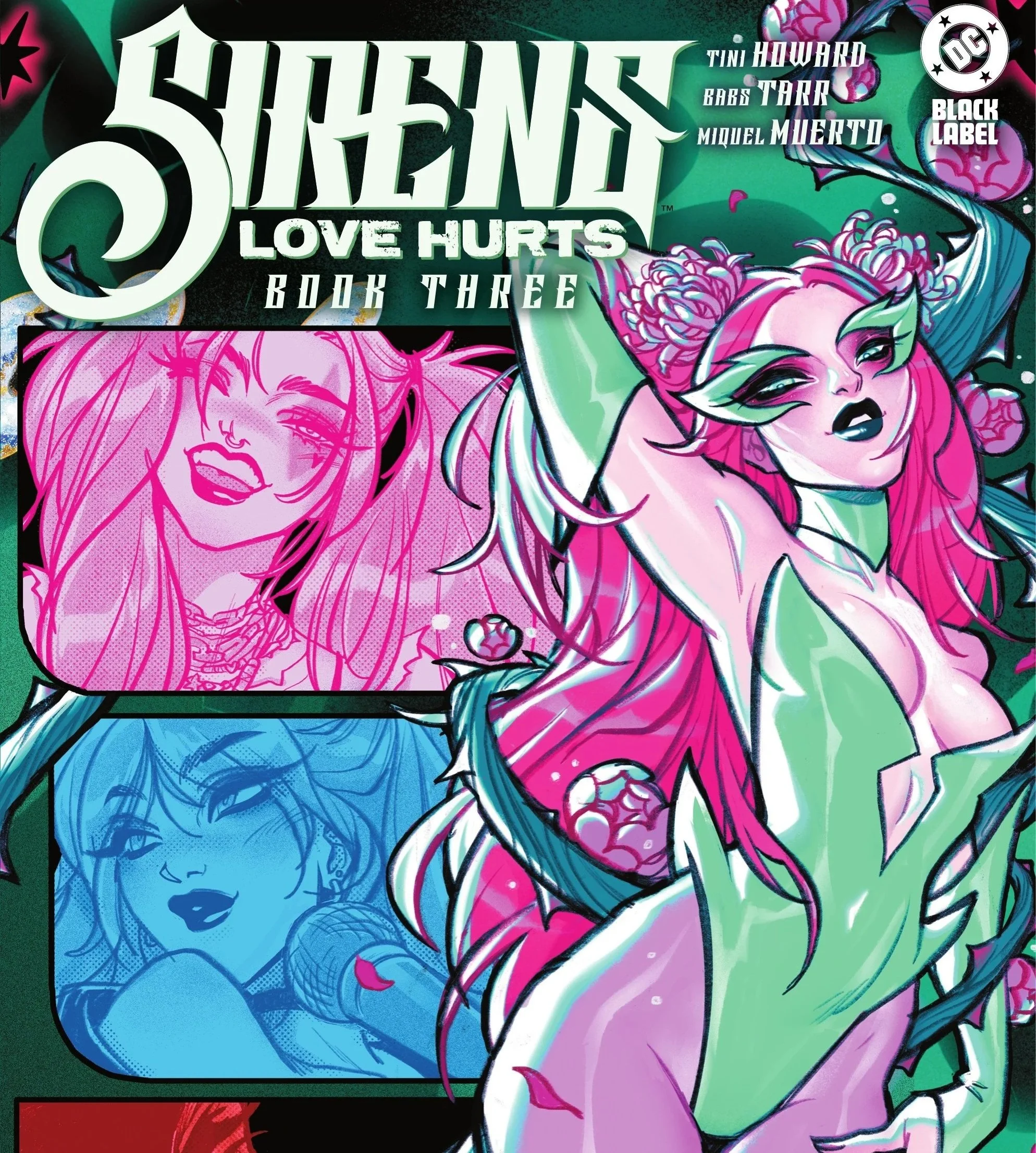
Writer: Tini Howard
Artist: Babs Tarr
Colorist: Miquel Muerto
Cover Artist: Babs Tarr
After a tightly constructed second issue that sharpened both the mystery and the team dynamic, Sirens: Love Hurts #3 takes a different approach. Instead of pushing forward with that same precision, it settles into the characters themselves, letting their relationships, frustrations, and contradictions take center stage.
That shift works more often than it doesn’t, but it does come with trade-offs. The issue is engaging, stylish, and full of personality, yet it occasionally feels like it’s circling its ideas rather than driving straight through them.
Less About the Case, More About the People
What stands out immediately is how little urgency the investigation carries this time around. The killer is still out there, and the stakes are technically higher than before, but the issue rarely treats it that way. Instead, it focuses on how the characters exist around the case rather than how they actively push it forward.
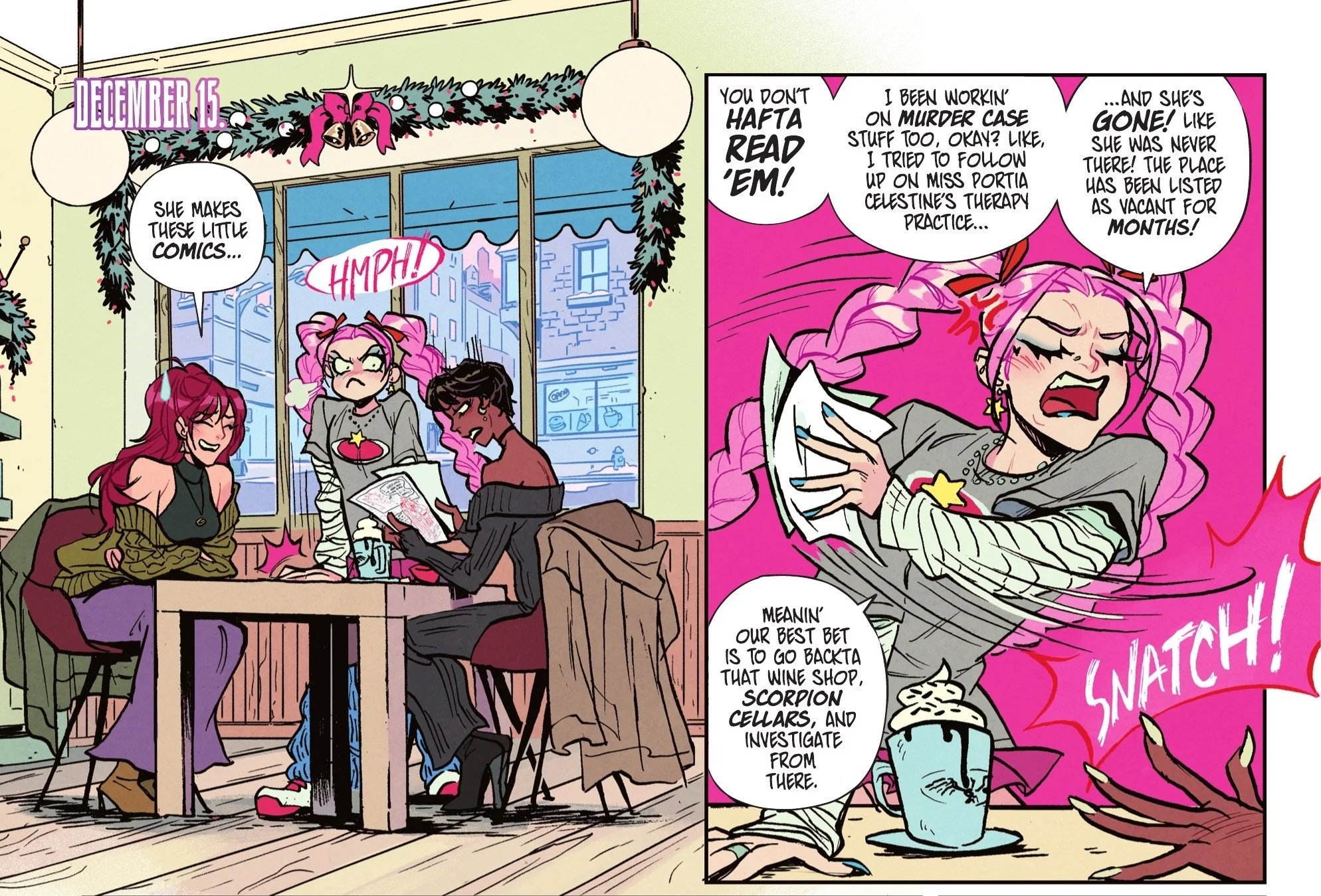
The opening café scene sets that tone perfectly. It’s playful, slightly chaotic, and driven almost entirely by personality. Harley’s comic timing, Ivy’s awkward deflection, and Selina’s quiet judgment all land because the book trusts those interactions to carry the moment.
It’s not a scene that advances the plot in any meaningful way, but it tells you everything you need to know about how these characters function together. That ends up being the priority throughout the issue.
Dinah Doesn’t Fit Cleanly Anywhere
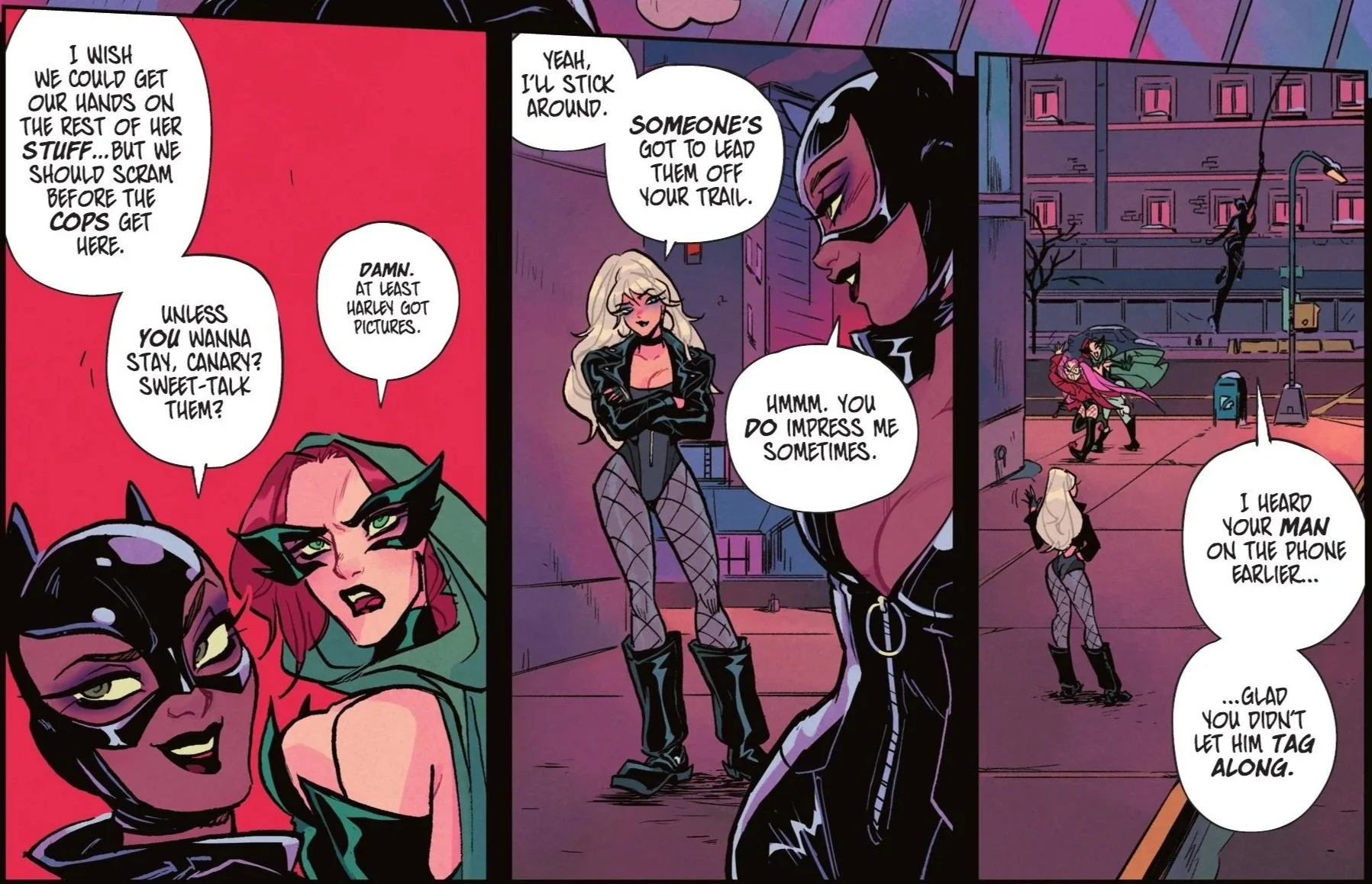
Black Canary continues to be the most interesting piece of the puzzle, largely because she still doesn’t belong in a clean or comfortable way.
What’s different here is how that tension starts to turn inward. Earlier issues framed her as an outsider trying to integrate. Now it feels more like she’s caught between two versions of herself that don’t fully align.
Her relationship with Green Arrow represents stability, expectation, and a more traditional sense of right and wrong. Her time with the Sirens is messier, more flexible, and in some ways more honest. The problem is that those two worlds are starting to feel incompatible.
That conflict never boils over into something dramatic in this issue, but you can feel it building. The longer she stays in Gotham with the Sirens, the harder it becomes to pretend those lines aren’t blurring.
Harley and Ivy Steal the Spotlight
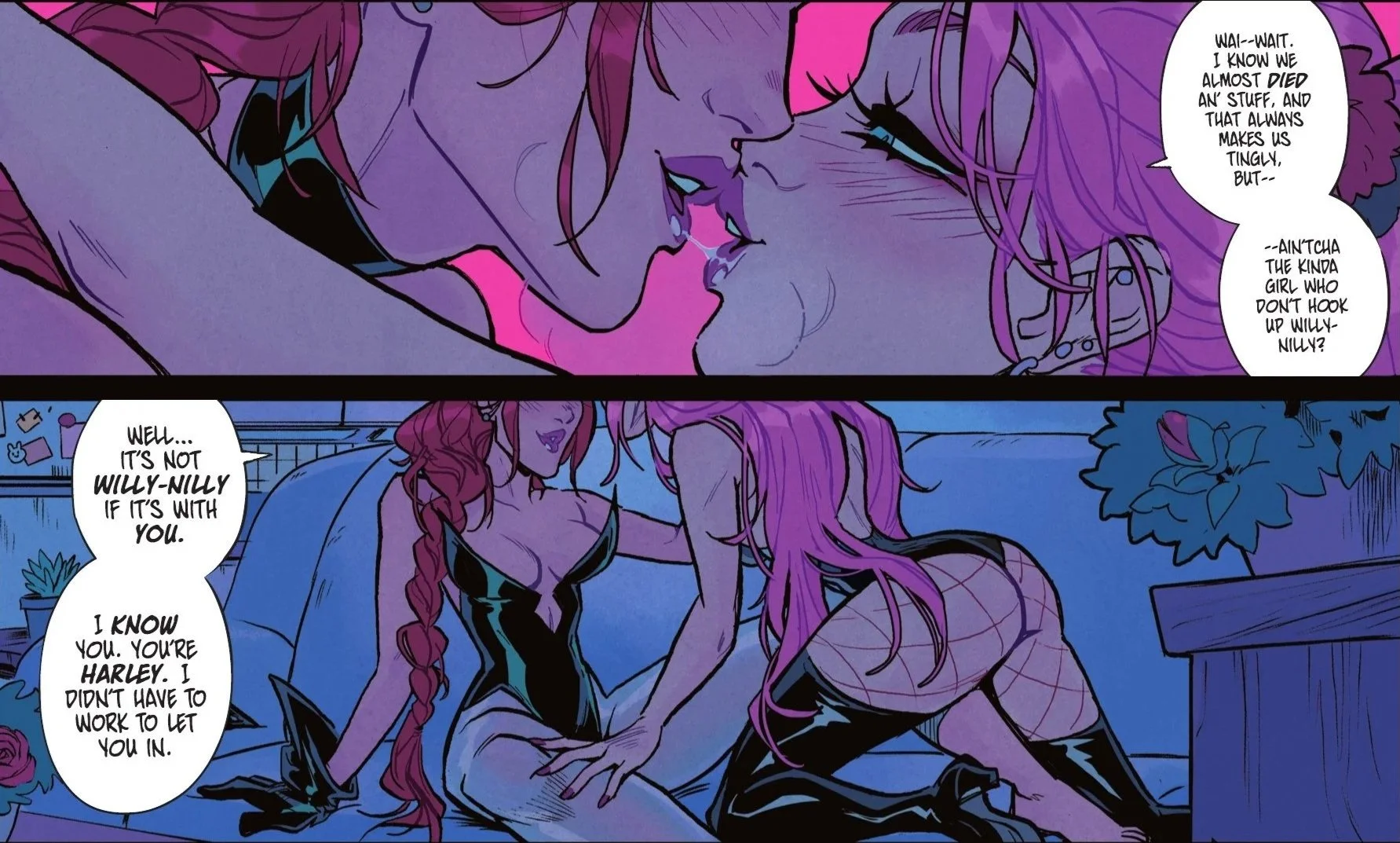
If Dinah is the emotional anchor, Harley and Ivy are the engine that keeps the issue moving. Their relationship is front and center in a way that feels intentional, not just as fan service but as a key piece of the book’s identity.
Their interactions carry a lot of weight, even when they’re light on the surface. The flirting, the tension, and the small moments of vulnerability all feel natural. It’s not just about showing that they’re together; it’s about showing how they function as a unit.
What makes it work is that their dynamic doesn’t exist in isolation. It influences how they approach the case, how they interact with Dinah, and how the group operates as a whole. It’s not a side plot. It’s part of the foundation.
Selina, as usual, plays the role of observer and counterbalance. She rarely pushes herself to the forefront, but her presence shapes the tone of every scene she’s in. There’s a sense that she sees more than she lets on, especially when it comes to the others.
When Scenes Overstay Their Welcome
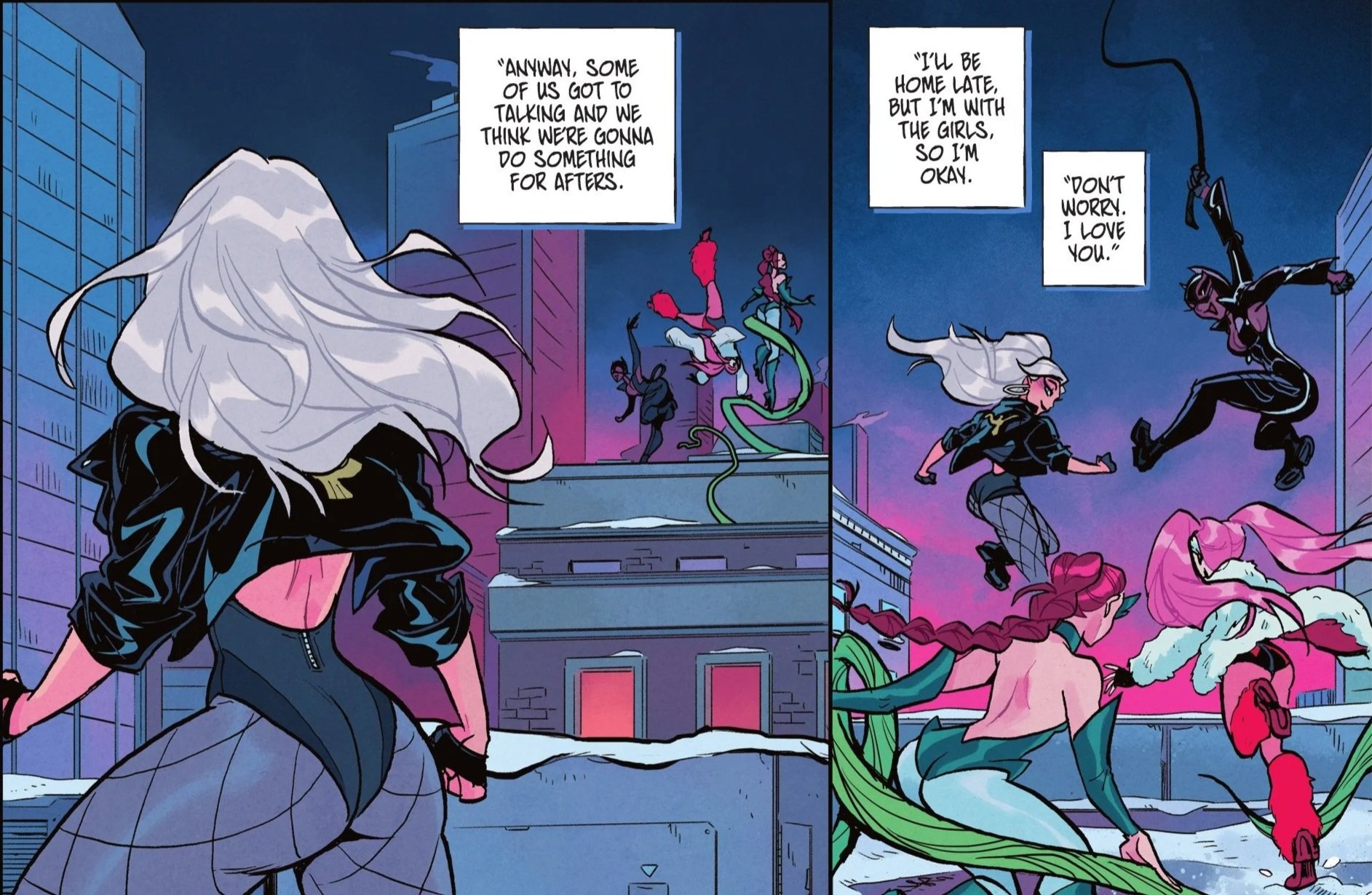
For all the strengths in the character work, there are moments where the issue lingers a bit too long. Certain scenes feel stretched past their natural endpoint, especially when they rely heavily on dialogue without a clear shift in direction.
The rooftop stakeout is the clearest example. It’s meant to reinforce Dinah’s leadership and the team’s dynamic under pressure, but the scene doesn’t quite justify the space it takes up. The same idea could have landed just as effectively in a more condensed form.
This is where the issue occasionally loses its footing: not because the material is weak, but because it doesn’t always know when to move on.
The Mystery Isn’t Standing Still
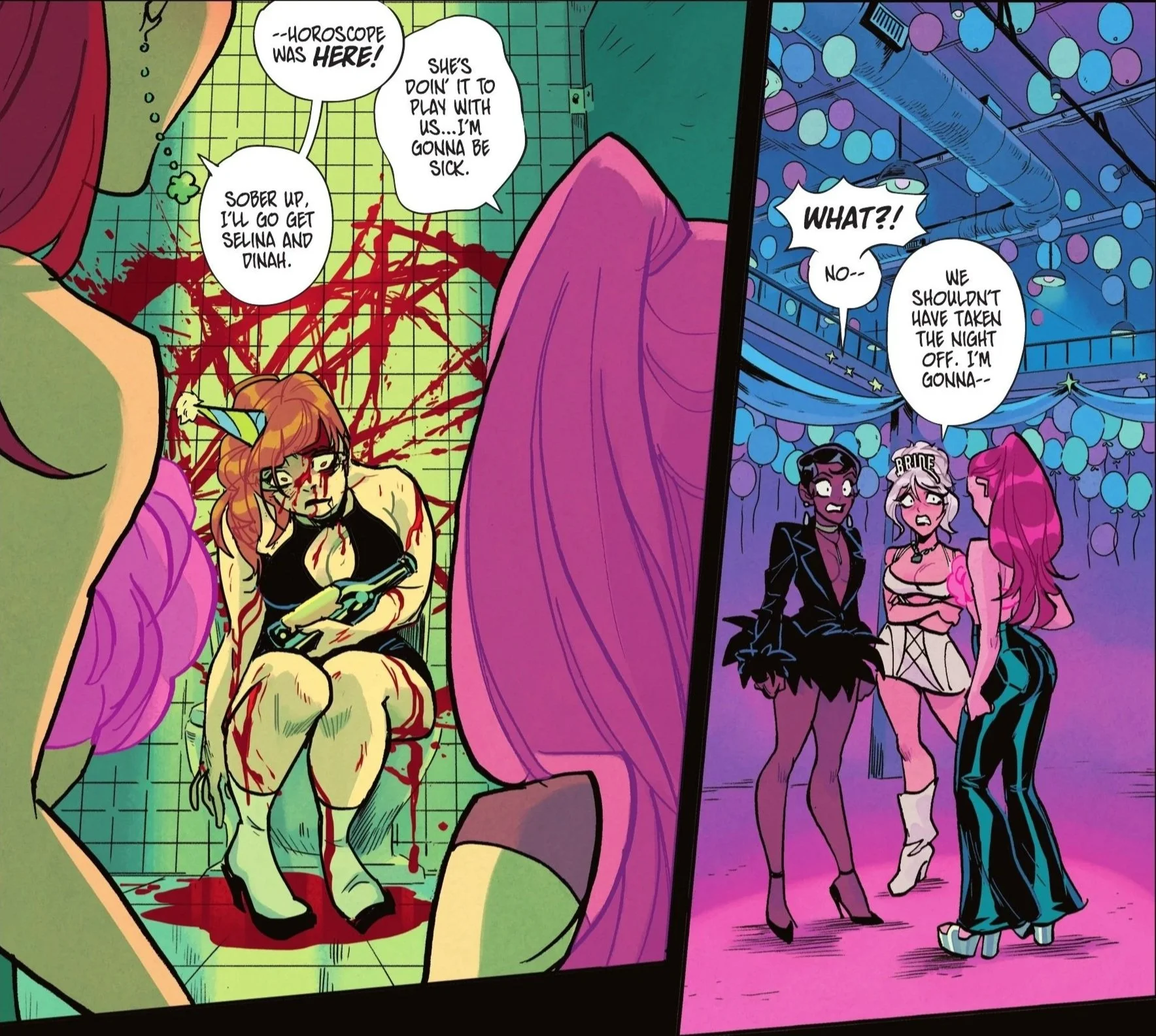
Even with that, the story is not completely idle. There is real movement when it comes to the killer. The issue pushes past the “who could it be” phase and starts to focus more on the “what are they doing and why.”
That shift is important. It reframes the mystery from something abstract into something more immediate. The danger feels more defined, even if the issue doesn’t always emphasize it as strongly as it could.
It’s a quieter kind of progression, but it matters. The pieces are moving into place.
Babs Tarr Carries the Energy
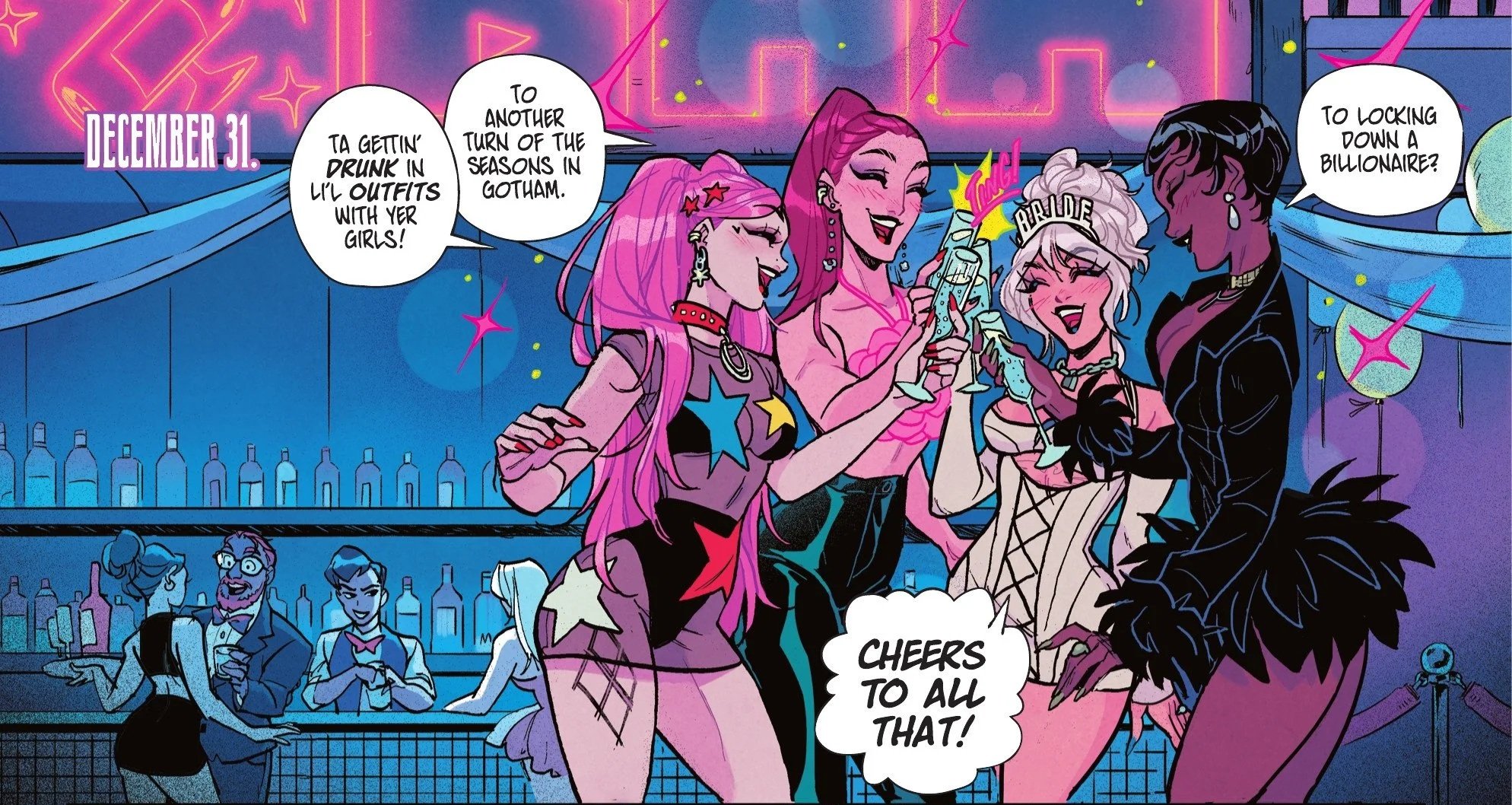
As with the previous issues, the artwork does a lot of heavy lifting. Babs Tarr’s style is perfectly suited for a story like this, where personality and expression are just as important as action.
The characters feel alive in every panel. Small details in posture, facial expressions, and movement add layers to scenes that might otherwise feel static. Even when the story slows down, the visuals keep things engaging.
The fashion and design choices continue to stand out. Each character has a distinct presence, and every setting feels tailored to the tone of the scene. Whether it’s a quiet café or a high-end party, the environments feel intentional rather than generic.
The color work complements all of this nicely, helping define mood without overwhelming the page. It’s a consistent strength of the series.
A Different Kind of Momentum
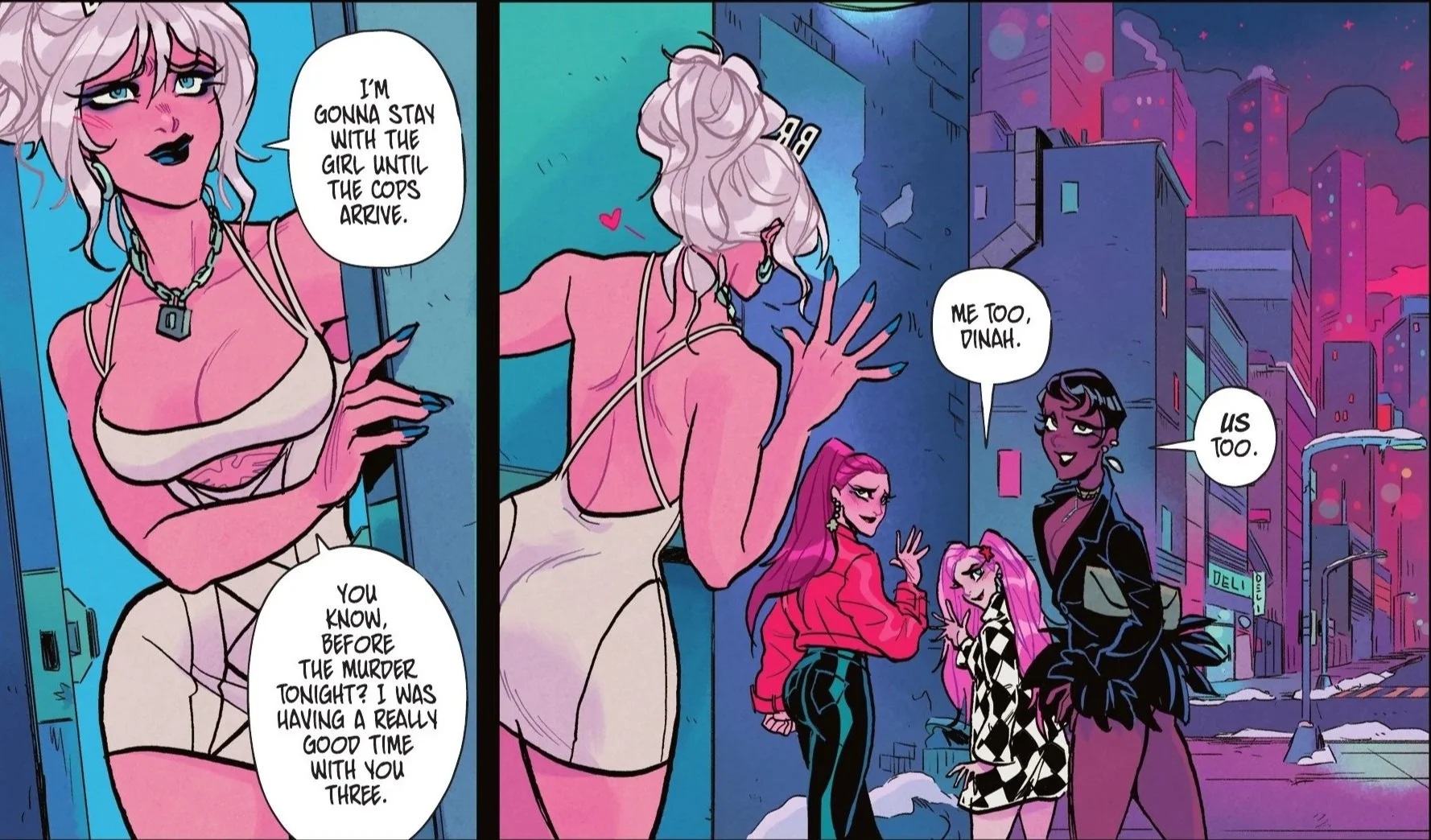
What this issue ultimately does is shift the definition of progress. Instead of focusing on big reveals or dramatic turns, it invests in relationships and character dynamics.
That approach works, especially if you’re already invested in these characters. There’s a lot to enjoy in how they interact, how they clash, and how they slowly start to understand each other.
At the same time, it does mean the issue lacks the same sense of drive that made the previous chapter stand out. It feels more like a pause between major beats than a major beat itself.
Final Thoughts and Rating
Sirens: Love Hurts #3 leans heavily into personality, relationships, and atmosphere, delivering an issue that is engaging even when it isn’t particularly urgent. The character work remains strong, especially with Dinah, Harley, and Ivy, and the artwork continues to elevate everything on the page.
There are moments where the pacing drifts and certain scenes last longer than they need to, but the core of the book remains intact. The mystery is evolving, the dynamics are deepening, and the tension between these characters is only getting more complicated.
It may not hit as cleanly as issue #2, but it adds important texture to the story in a way that feels intentional.
Rating: 8/10
A more relaxed chapter that focuses on relationships over urgency, offering strong character work even as the story takes its time getting where it’s going.