
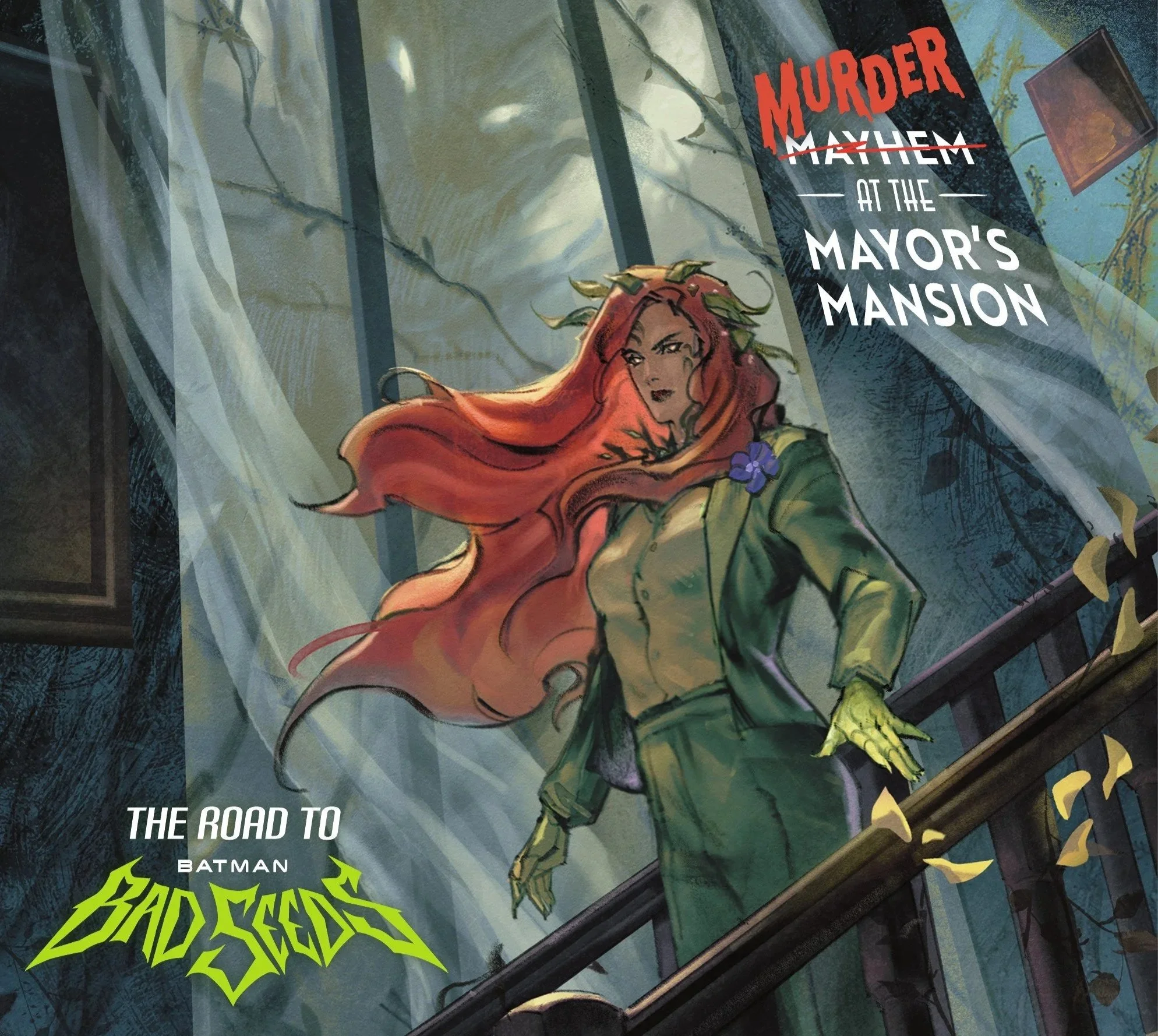
Writer: G. Willow Wilson
Artist: Leandro Fernandez
Colorist: Arif Prianto
Cover Artist: Jessica Fong
After spending the previous issue showing Gotham’s political establishment, the Parliament of Trees, the media, and even Batman turning against our esteemed mayor, Poison Ivy #45 shifts its focus toward the emotional consequences of that mounting pressure. Rather than introducing entirely new threats, this chapter examines what happens when all of those existing problems begin crashing down on Ivy at once. The result is a tense and surprisingly introspective issue that finds one of DC’s most stubborn characters confronting the possibility that she may have become exactly the kind of leader she once despised.
What makes the issue particularly effective is that it doesn’t suddenly soften Poison Ivy or absolve her of responsibility. The series remains clear-eyed about her increasingly authoritarian behavior as Mayor of Gotham. At the same time, G. Willow Wilson allows readers to see the doubt, fear, and loneliness beginning to emerge beneath Ivy’s increasingly rigid exterior. It’s a balancing act that Wilson has handled exceptionally well throughout this run, and Poison Ivy #45 continues that trend while laying important groundwork for the upcoming Batman: Bad Seeds crossover.
The Walls Continue Closing In
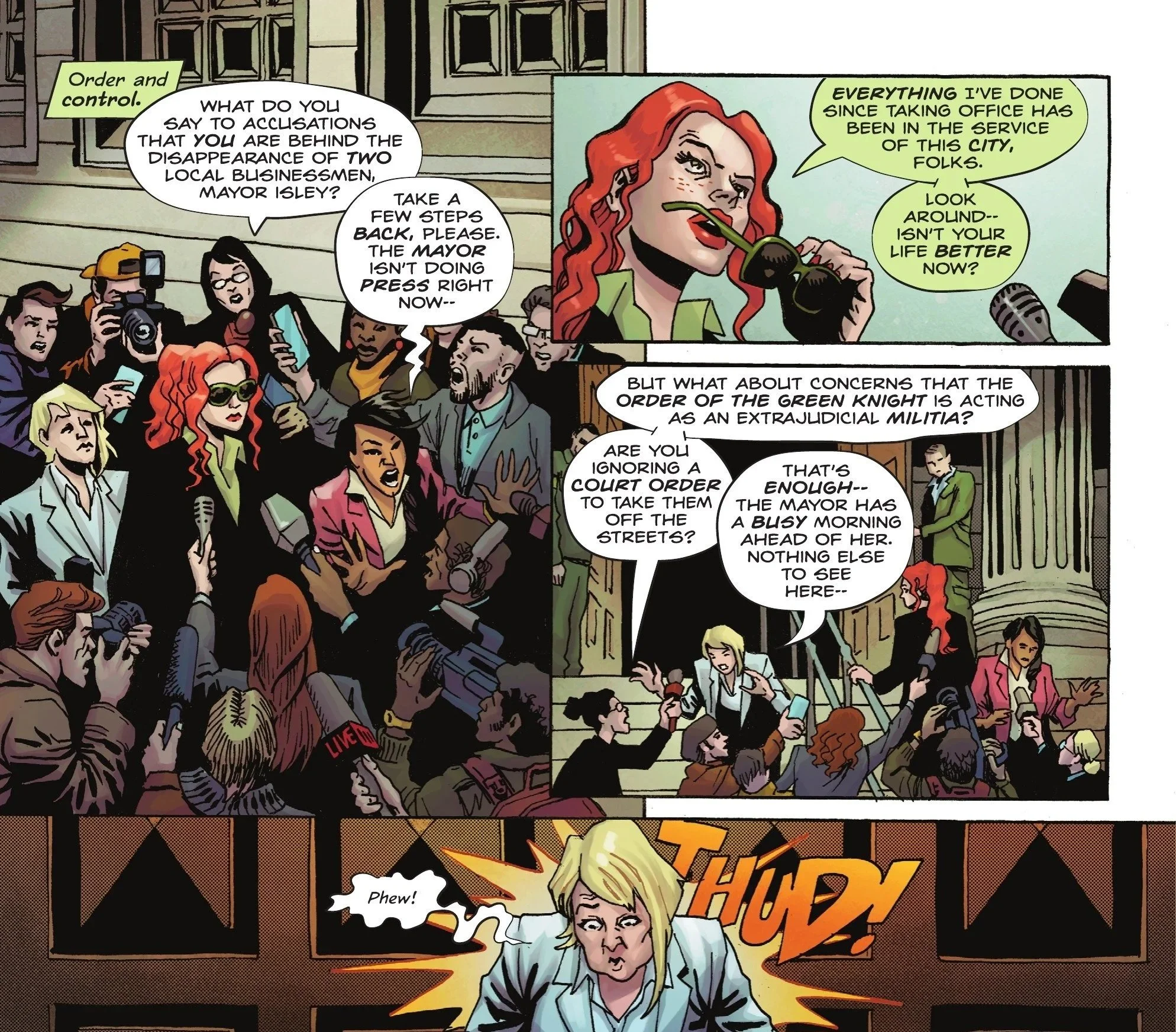
One of the strongest aspects of the current mayoral storyline has been its willingness to show that power has consequences, even when wielded by someone whose goals may be admirable. Poison Ivy #45 continues building on that idea as Poison Ivy’s position becomes increasingly unstable. Nearly every major conflict introduced throughout the last several issues continues escalating, creating the sense that Gotham’s mayor is running out of allies and running out of options.
The issue repeatedly emphasizes how isolated Ivy has become. Political opponents are circling, Batman has begun actively intervening, the Parliament of Trees is demanding accountability, and even some of her closest supporters appear increasingly concerned by her behavior. Rather than stepping back and reassessing the situation, however, Ivy continues tightening her grip on power. The opening sequence involving her manipulation of the local media immediately establishes how far she has drifted from the ideals that helped put her in office.
What makes these developments compelling is that the series never presents Ivy as entirely wrong. Gotham remains a deeply corrupt city, and many of the people opposing her have questionable motives of their own. The problem isn’t necessarily what Ivy wants to accomplish. The problem is that she increasingly believes her goals justify any method necessary to achieve them.
A Rare Moment of Self-Awareness
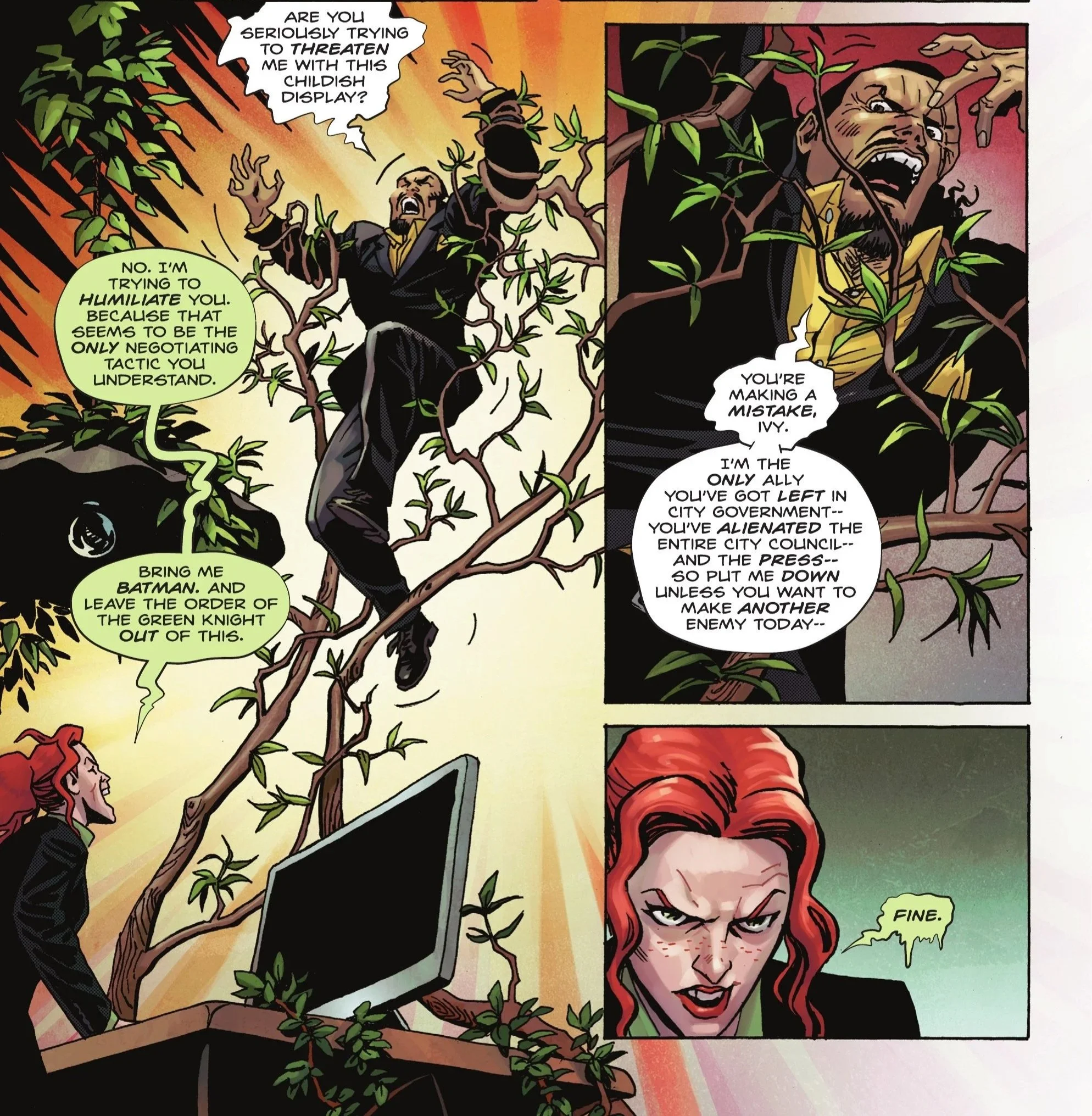
While much of the issue focuses on Ivy's growing desperation, some of its strongest scenes involve her finally acknowledging her own failures.
Throughout this mayoral storyline, Ivy has frequently dismissed criticism and doubled down whenever challenged. That's part of what makes her confrontation with the representative of the Parliament of Trees so effective. For perhaps the first time in quite a while, readers see Ivy genuinely reflect on the damage she has caused and the mistakes she has made.
Her admission that she has been given incredible gifts but doesn't know how to properly use them stands out as one of the issue's most important moments. It's a rare instance of vulnerability from a character who typically masks insecurity with confidence and anger. Rather than portraying Ivy as a tragic victim of circumstance, Wilson allows her to recognize her role in creating many of the problems she now faces.
That self-awareness doesn't magically solve anything, nor should it. Instead, it makes Ivy feel more human. For a character who often operates on an almost mythological scale, those moments of emotional honesty carry significant weight.
Harley Remains Ivy’s Emotional Center
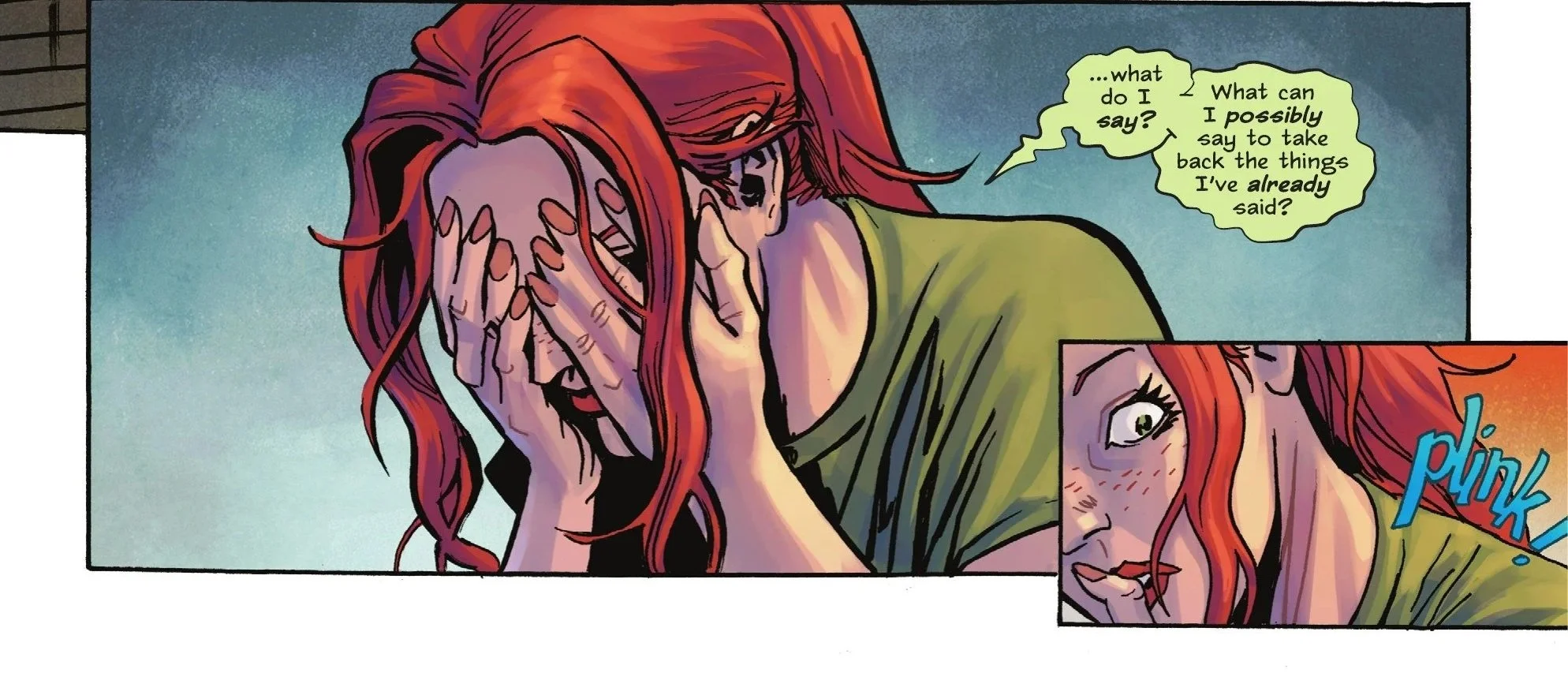
Another standout aspect of the issue is the continued emphasis on Harley Quinn's importance in Ivy's life.
The fallout from their breakup continues to be one of the most emotionally resonant threads in the series, and Poison Ivy #45 reinforces just how much Harley still matters to her. Whether she's struggling to write an apology letter or reacting to threats against Harley's safety, it's clear that Ivy's feelings haven't changed despite the distance between them.
One of the issue's strongest lines comes during her confrontation with the Parliament's representative when she explains that Harley is the only human who matters to her. It's a simple statement, but it speaks volumes about Ivy's current state of mind. At a time when nearly every relationship in her life appears strained or broken, Harley remains the one person capable of cutting through Ivy's defenses.
These moments also help ground the larger supernatural and political conflicts. The story may involve ancient elemental forces and citywide power struggles, but Ivy's feelings toward Harley continue to provide an emotional anchor that keeps everything relatable.
Strong Storytelling, Uneven Artwork
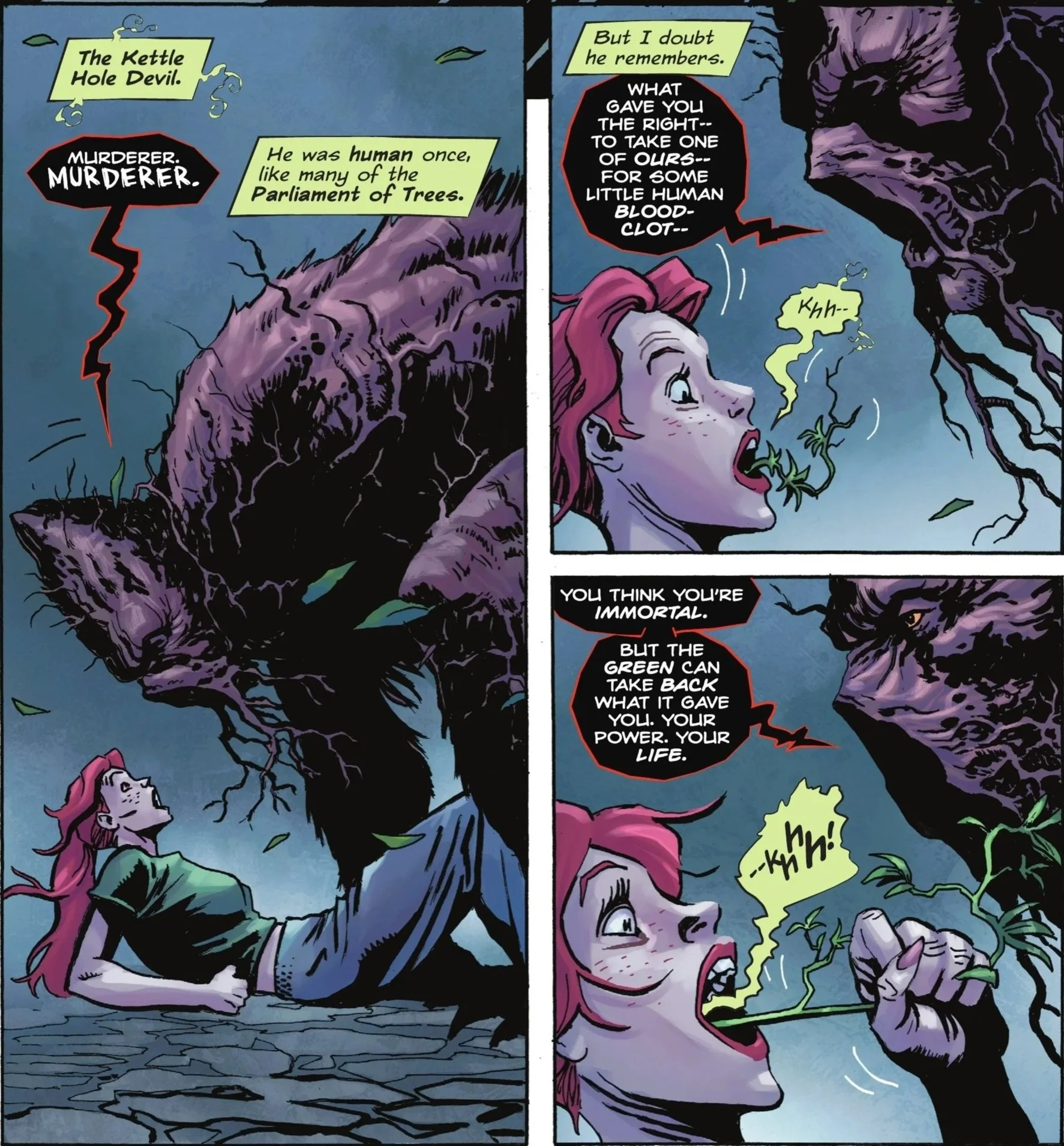
From a writing perspective, Poison Ivy #45 continues demonstrating why this has become one of DC's most consistently strong ongoing series. Wilson has spent years carefully building Ivy's evolution as a character, and this issue feels like another important step in that journey.
The artwork, however, is somewhat more mixed.
Leandro Fernandez delivers some genuinely impressive visuals throughout the issue, particularly when dealing with the Parliament of Trees, Xylon, and the more overtly supernatural elements of the story. Those sequences possess an eerie atmosphere that fits the tone of the series perfectly and help emphasize the growing threat Ivy faces from forces beyond Gotham's political landscape.
At the same time, I found the human characters noticeably less effective than they were under the previous artist on the title. Facial features occasionally feel rougher and less expressive, and some character designs lack the visual appeal that helped define earlier chapters of the run. While I can certainly see readers appreciating Fernandez's style, it didn't connect with me as strongly as some of the artwork we've seen in recent issues.
The result is an issue that still contains several striking images but doesn't consistently reach the visual heights the series has established elsewhere.
Building Momentum Toward Batman: Bad Seeds
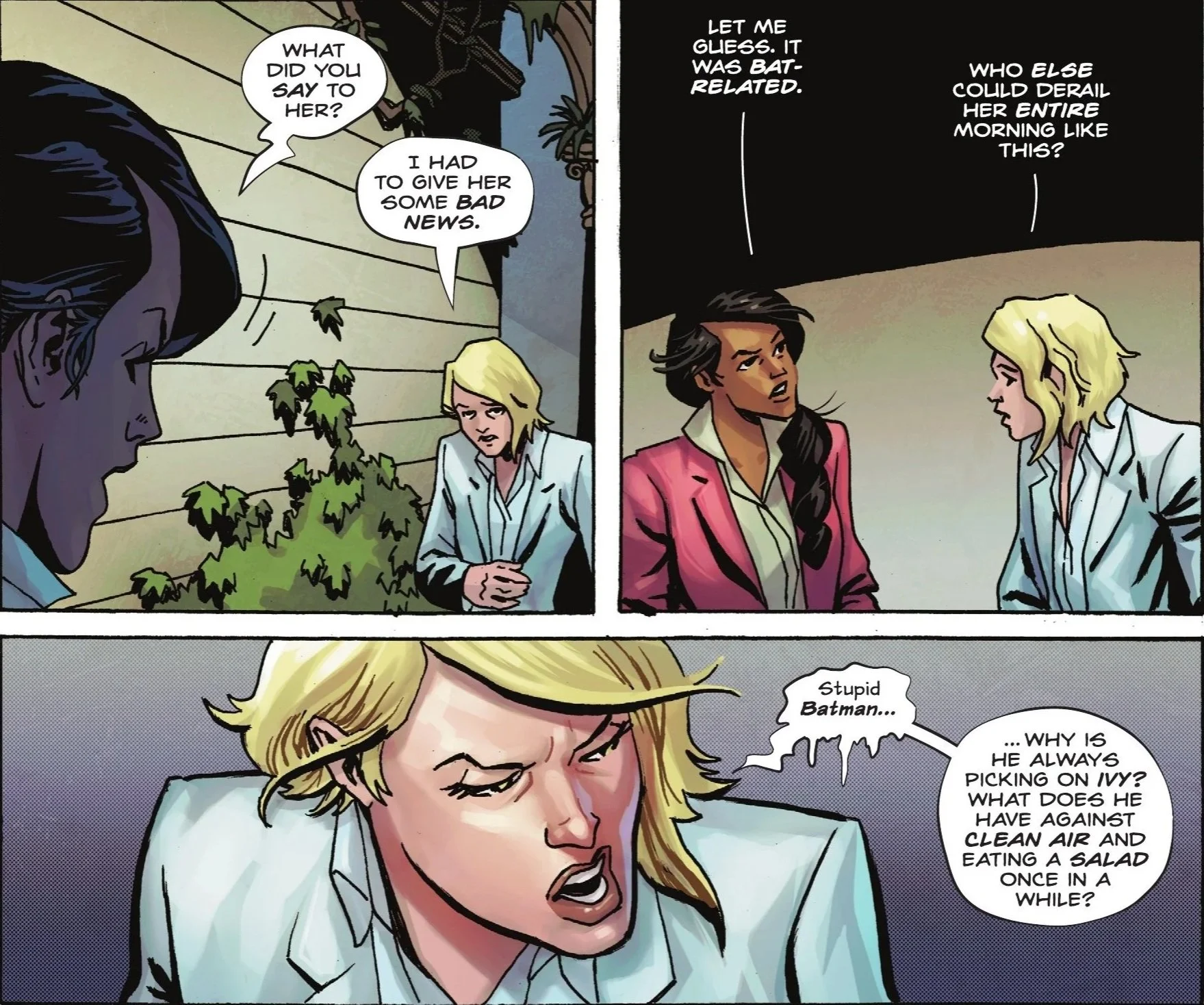
One of the most important jobs this issue needed to accomplish was preparing readers for Batman: Bad Seeds, and in that regard it succeeds admirably.
What impressed me most is that the setup never feels forced. Rather than abruptly shifting gears to accommodate a crossover, the story positions the upcoming event as a natural extension of everything that's already been happening. Ivy's growing isolation, increasing desperation, and deteriorating judgment all point toward a major breaking point.
Because Wilson has spent so much time laying the groundwork, the transition feels earned.
As someone excited for Batman: Bad Seeds, this issue only increased my anticipation. It creates the sense that Gotham is approaching a crisis that has been building for months rather than one that exists solely because an event needs to happen. That's an important distinction, and it's one of the reasons the setup works so well.
Final Thoughts and Rating
Poison Ivy #45 succeeds because it understands that the most interesting part of this storyline isn't Gotham's political turmoil or even the looming crossover event. It's Pamela Isley herself.
By focusing on Ivy's growing isolation, moments of self-awareness, and continued emotional attachment to Harley Quinn, the issue provides meaningful character development while still moving the larger story forward. At the same time, it continues escalating the consequences of Ivy's increasingly authoritarian approach to leadership, making it clear that her position as Mayor may not be sustainable for much longer.
While the artwork didn't work for me quite as well as some previous installments, the strength of Wilson's writing more than compensates. Forty-five issues into this run, it's genuinely impressive how consistently compelling Poison Ivy remains. The fact that Wilson has managed to sustain a solo Poison Ivy series for this long while continuing to deepen the character is a testament to both her writing and her understanding of what makes Pamela Isley such a fascinating protagonist.
With Batman: Bad Seeds rapidly approaching and Ivy running out of allies, the series feels like it's accelerating toward something major.
The question is no longer whether Ivy can hold everything together.
The question is what she'll do when it finally falls apart
Rating: 9/10
A character-driven chapter that balances political tension, emotional vulnerability, and effective event setup. While the artwork is somewhat uneven compared to previous issues, G. Willow Wilson continues to deliver one of DC's strongest ongoing series as Ivy's world edges closer to collapse.