
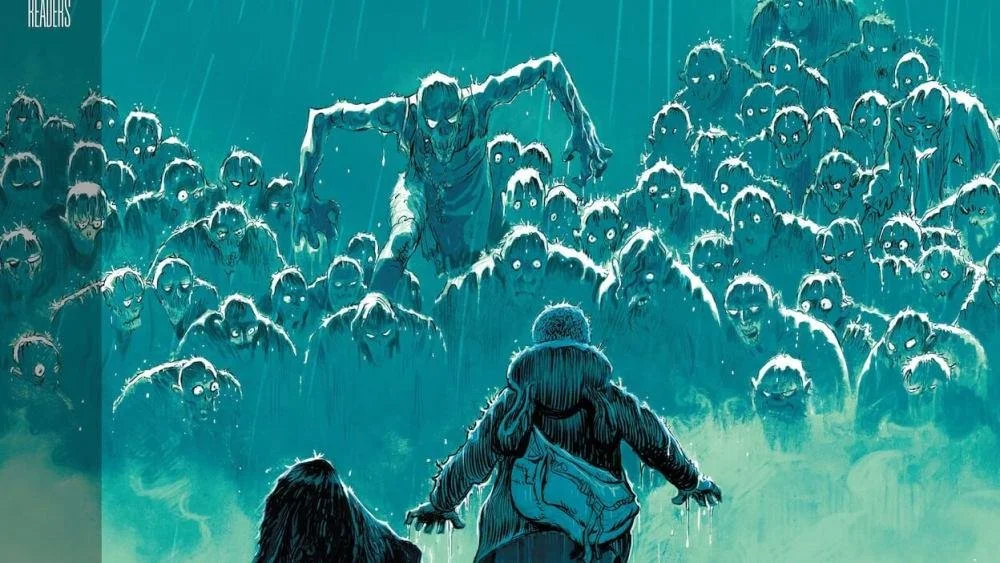
Bleeding Hearts is published by DC Comics under their Vertigo imprint, and is written by Deniz Camp, with art by Stipan Morian, lettering by Hassan Otsmane-Elhaou.
The Recap: How We Got Here
We are officially three issues into Deniz Camp and Stipan Morian’s psychedelic zombie odyssey, and with Bleeding Hearts #3, the series has evolved from a “cool high-concept pitch” into an essential, heartbreaking masterpiece. This isn’t just another zombie book; it’s a masterclass in perspective, empathy, and the sheer terror of being misunderstood.
To understand why issue #3 hits so hard, we have to look at the groundwork laid in the first two chapters. In Issue #1, we are introduced to Poke (full name: Mouse-Pokes-Golf-Ball-Through-Hole-In-Head). In this world, the zombies won ten years ago. They aren’t mindless drones; they have a culture, a language, and a hierarchy based on their “achievements” (which usually involve eating people in creative ways). Poke is a happy, shambling member of this society until the unthinkable happens: his heart starts beating again.
Suddenly, the world looks different. Humans aren’t just “food” anymore; they are people. Issue #2 flips the script, giving us the perspective of Cara (Mama) and her daughter Rabbit. We see the brutal reality of a mother trying to raise a child in a world where every sound is a death sentence—highlighted by that haunting, silent birth sequence that I’m still thinking about. The issue ends with Poke and Cara finally crossing paths, with Poke trying to return Rabbit’s lost doll while Cara points a gun at his head.
The Story: A Beautiful Failure to Communicate
Bleeding Hearts #3 picks up exactly in that moment of high-wire tension. The central theme here is communication—or the tragic lack thereof. Deniz Camp does something brilliant with the narrative structure: he shows us how Poke perceives the humans and how Cara perceives Poke.
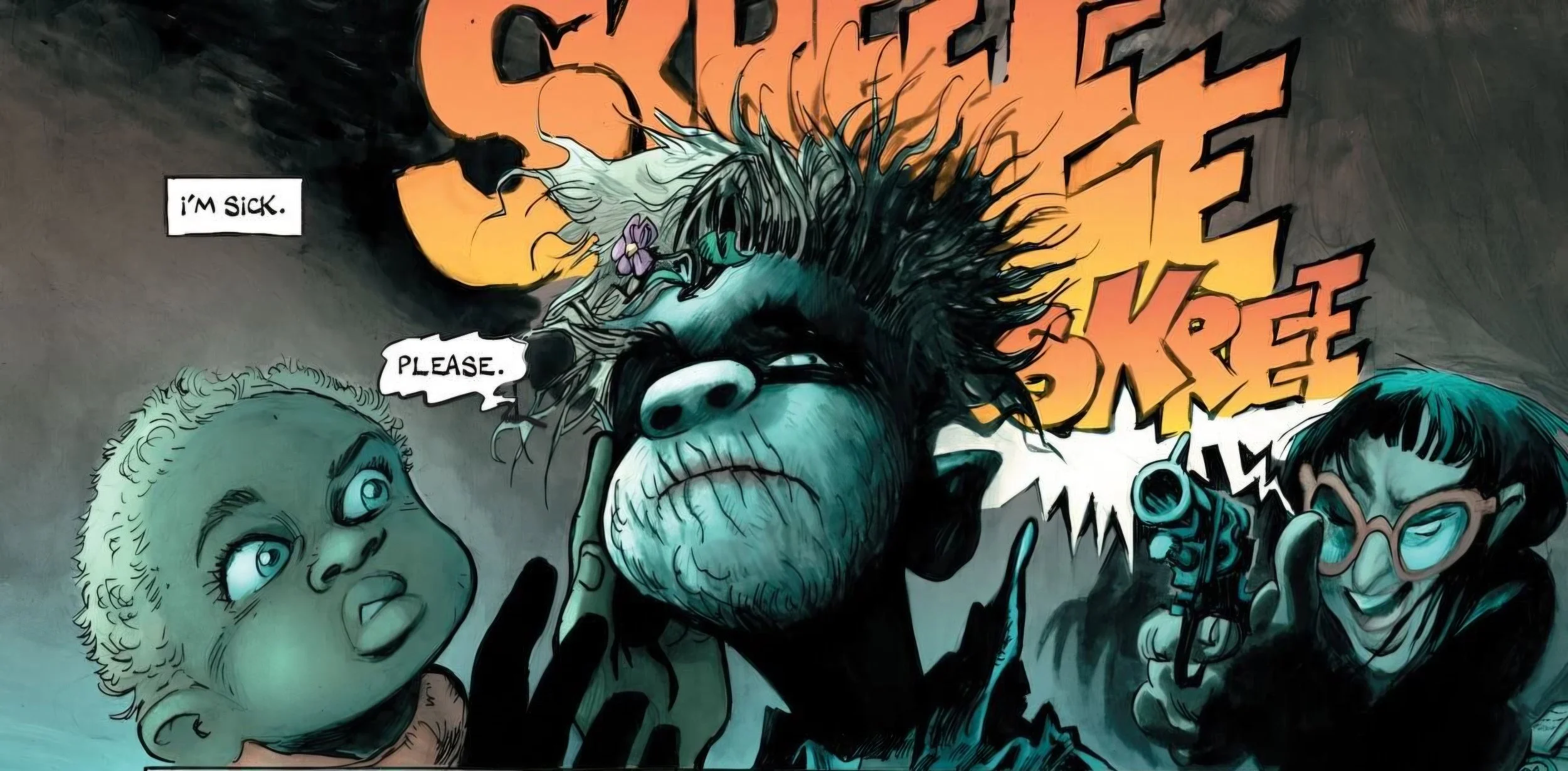
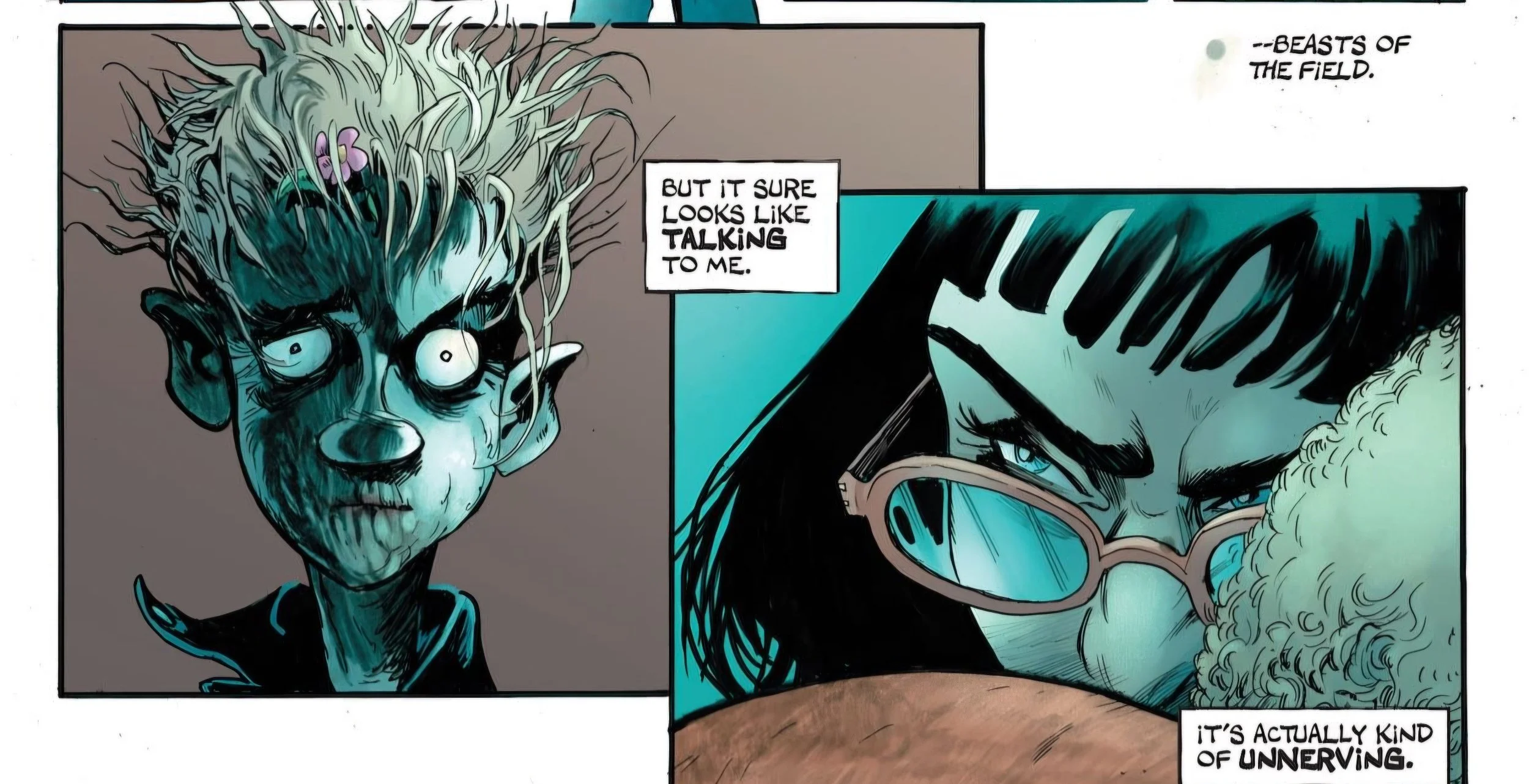
To Poke, Cara’s desperate warnings and screams sound like high-pitched, unintelligible screeching. To Cara, Poke’s attempts at “talking” or showing kindness come across as the predatory grunts of a monster playing with its food. It is agonizing to watch two parties who ultimately want the same thing—safety—be completely unable to bridge the gap because of their biology.
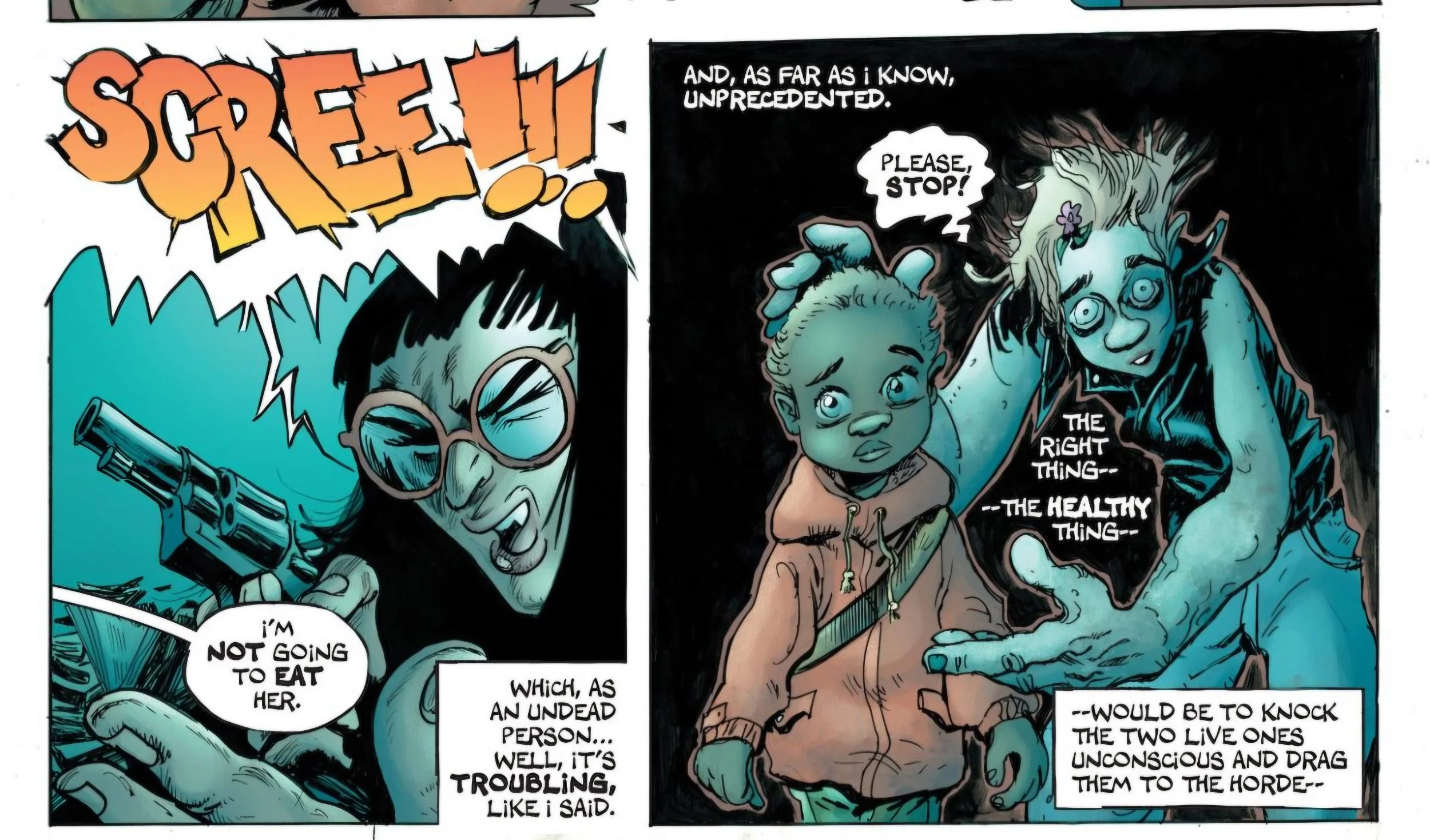
The plot of this issue follows Poke as he tries to lead Cara and Rabbit to safety. Cara has a busted ankle, making her vulnerable, and a massive zombie hunting party is closing in. The tension is palpable. Poke isn’t just fighting his own kind; he’s fighting his own instincts and the crushing weight of Cara’s justified mistrust. There’s a specific sequence where Poke has to distract a horde—including his old “brother-in-arms,” Mush—that feels like a classic spy thriller wrapped in a horror skin. It’s dense, emotional, and frankly, some of the best writing Camp has ever done.
Pacing: From World-Building to White-Knuckle Action
The first two issues are arguably a bit “slow-burn,” focusing heavily on the sociological aspects of the zombie world and Cara’s backstory. Issue #3 is where the series finds its gears. The pacing here is frantic but controlled.
Once the “horde” enters the frame, the book moves at a breakneck speed. However, Camp never loses the character beats. Even in the middle of a life-or-death distraction, we get glimpses into Poke’s internal monologue—his confusion, his burgeoning sadness, and the “beating heart” that is making him a stranger in his own skin. The transition from the quiet, tense standoff in the opening pages to the chaotic, shadow-drenched finale is seamless. It feels earned. We’ve spent two issues learning who these people are; now we get to watch them suffer through the consequences of this world.
The Art: Stipan Morian is a Wizard
I need to scream about the art for a minute. Stipan Morian and colorist Matt Hollingsworth are doing work here that reminds me of the peak ’90s Vertigo era—think Sandman or Preacher, but with a modern, grittier edge.
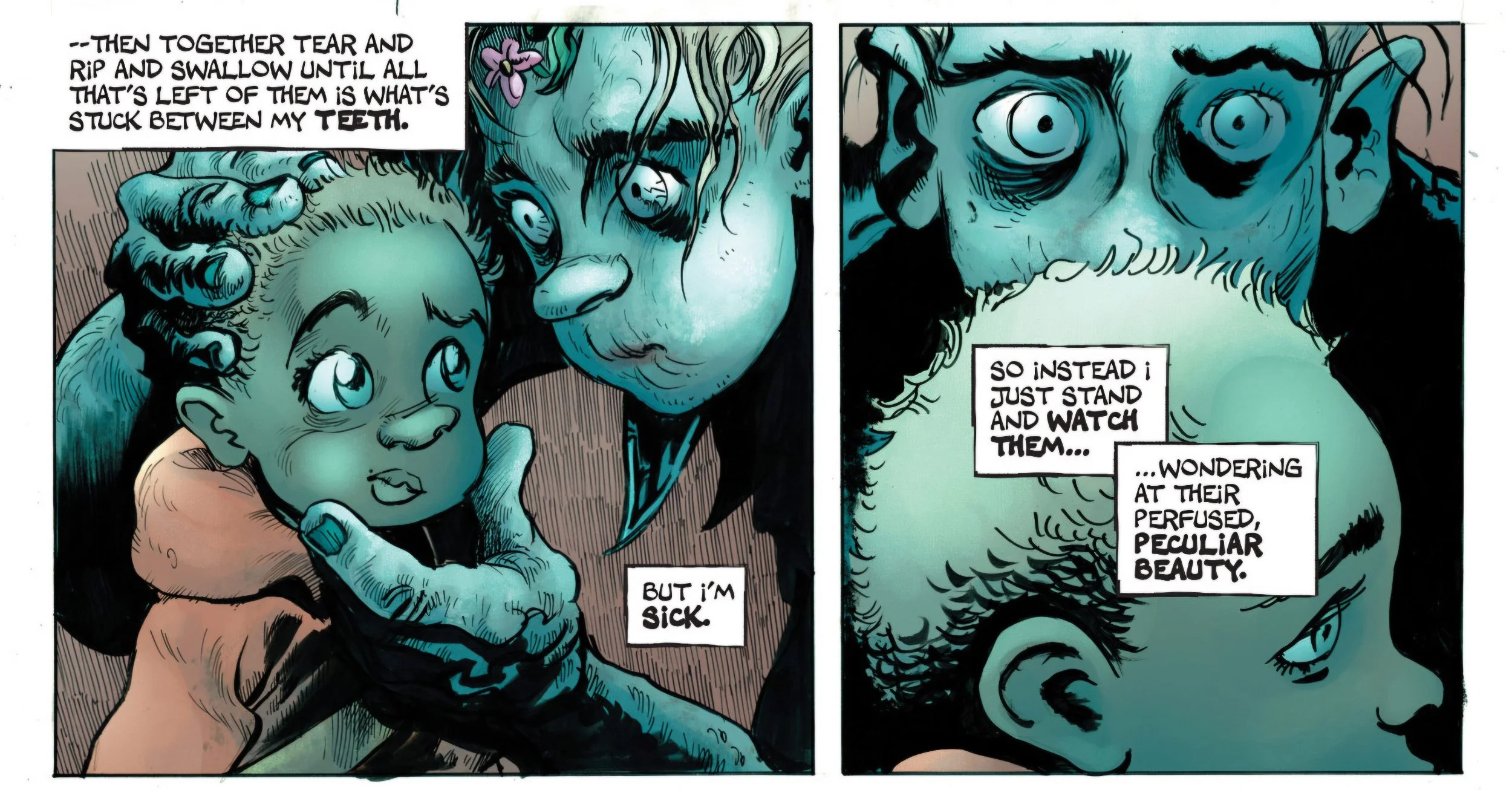
Morian’s use of negative space and heavy crosshatching in this issue is revolutionary. In Poke’s perspective, the world often looks hallucinatory and surreal. When the shadows take over, Morian uses them to create a sense of claustrophobia that makes you feel as trapped as Cara is. The character designs for the zombies remain some of the most “ugly-beautiful” things in comics today. Seeing Mush (the zombie with mushrooms growing out of him who hears voices from the fungus) is both disgusting and weirdly tragic.
A huge shoutout also goes to Hassan Otsmane-Elhaou on letters. The way he visualizes the “screeching” of the humans from Poke’s POV is a stroke of genius. It’s jagged, discordant, and uncomfortable to look at, which perfectly mirrors how Poke is experiencing the sound.
The Final Verdict
Bleeding Hearts #3 is a triumphant continuation of what is shaping up to be the best horror/sci-fi series of the year. It takes the “sentient zombie” trope and strips away the campiness, replacing it with a raw, existential dread that hits you right in the chest.
Deniz Camp is asking big questions: Can empathy exist in a world built on consumption? Is a heartbeat a gift or a curse when everyone else is dead? This issue doesn’t give you easy answers, but it gives you a hell of a ride. If you aren’t pulling this book, you are missing out on a piece of comic history in the making.
Bleeding Hearts #3 is Vertigo at its absolute finest. It’s weird, it’s gross, it’s beautiful, and it’s going to break your heart. Go to your LCS and demand a copy of the second printing if you missed out. You’ll thank me later.