
I think by this point, the wait between new issues has really let readers marinate on the absolute whiplash that Ultimate Endgame has been since its first issue in terms of quality. For two whole years, the Ultimate Universe has built itself around convincing readers that this line was different. Heroes aged like real people, consequences stuck around longer than a single crossover, and hell, Spider-Man actually looked happy for a while. In hindsight, that was probably the first real warning sign that things were too good to be true.
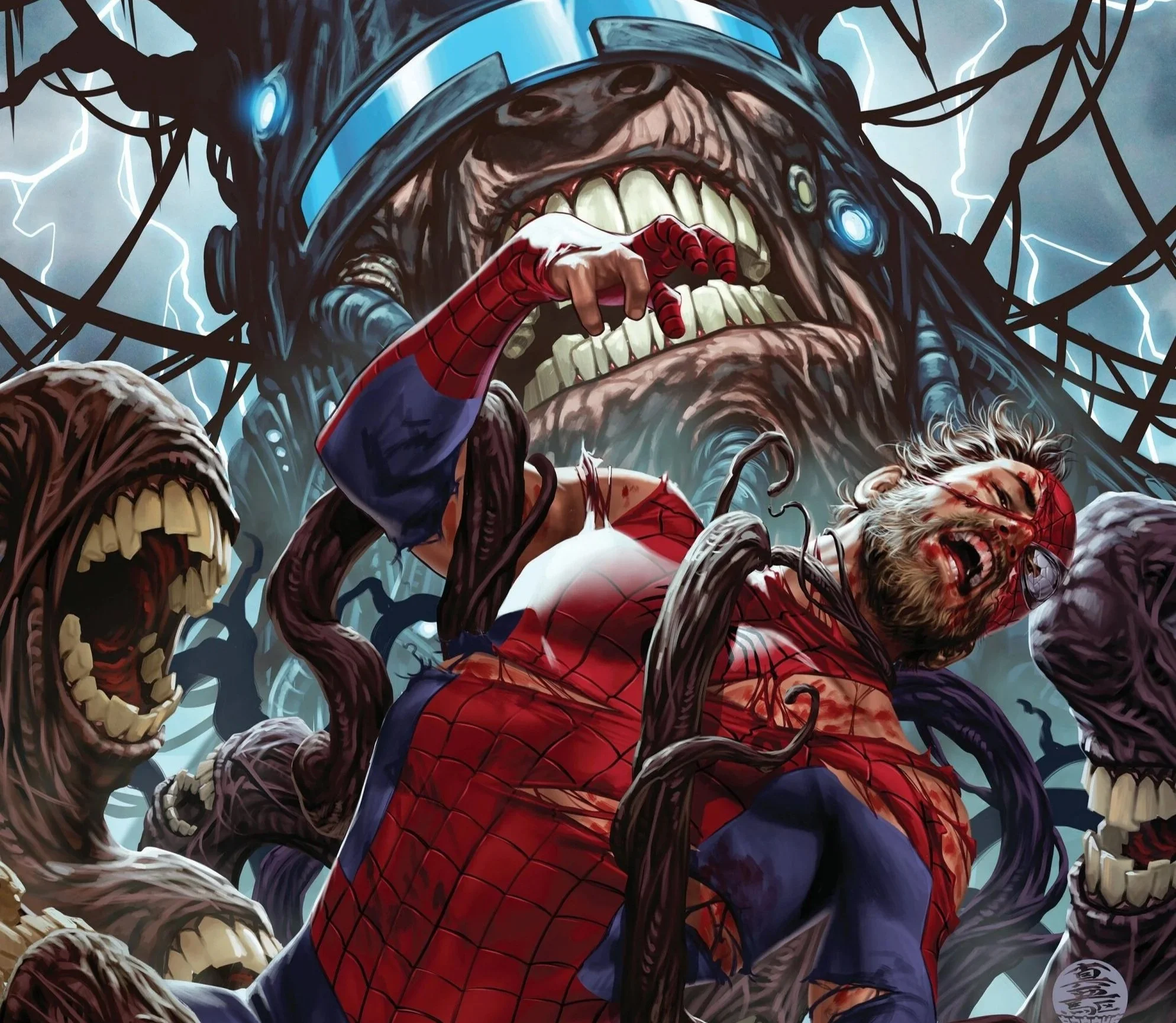
Ultimate Endgame #4 continues this wildly eventful, editorially mandated collapse of Earth-6160, and by this point the series has fully committed to sheer devastation — usually to the point of illogical shock value — as a storytelling strategy. In the last issue, we had the egregious death of Spider-Man. The Maker is close to escaping through some of the greatest loopholes ever envisioned, and the rest of the Ultimates are truly running on fumes and trauma. Every page feels exhausted in a way that almost becomes oppressive.
I mean this as both praise and criticism, but this penultimate issue leans way too heavily into every possible outcome being worse than the last. The strange thing is that it mostly works. The creative team behind this book understands how to build dread and draw horror like they have a personal grudge against any sense of human decency or anatomy. At the same time, Ultimate Endgame #4 feels miserably trapped between meaningful tragedy and pure shock value. The comic wants readers to feel hopeless, and that’s valid, but it all too often drifts so far into misery porn that any emotional weight starts to feel utterly meaningless.
There’s Something Rotten About This City
** Once Again.. MASSIVE Spoilers ahead for Endgame #4. Tread with caution **
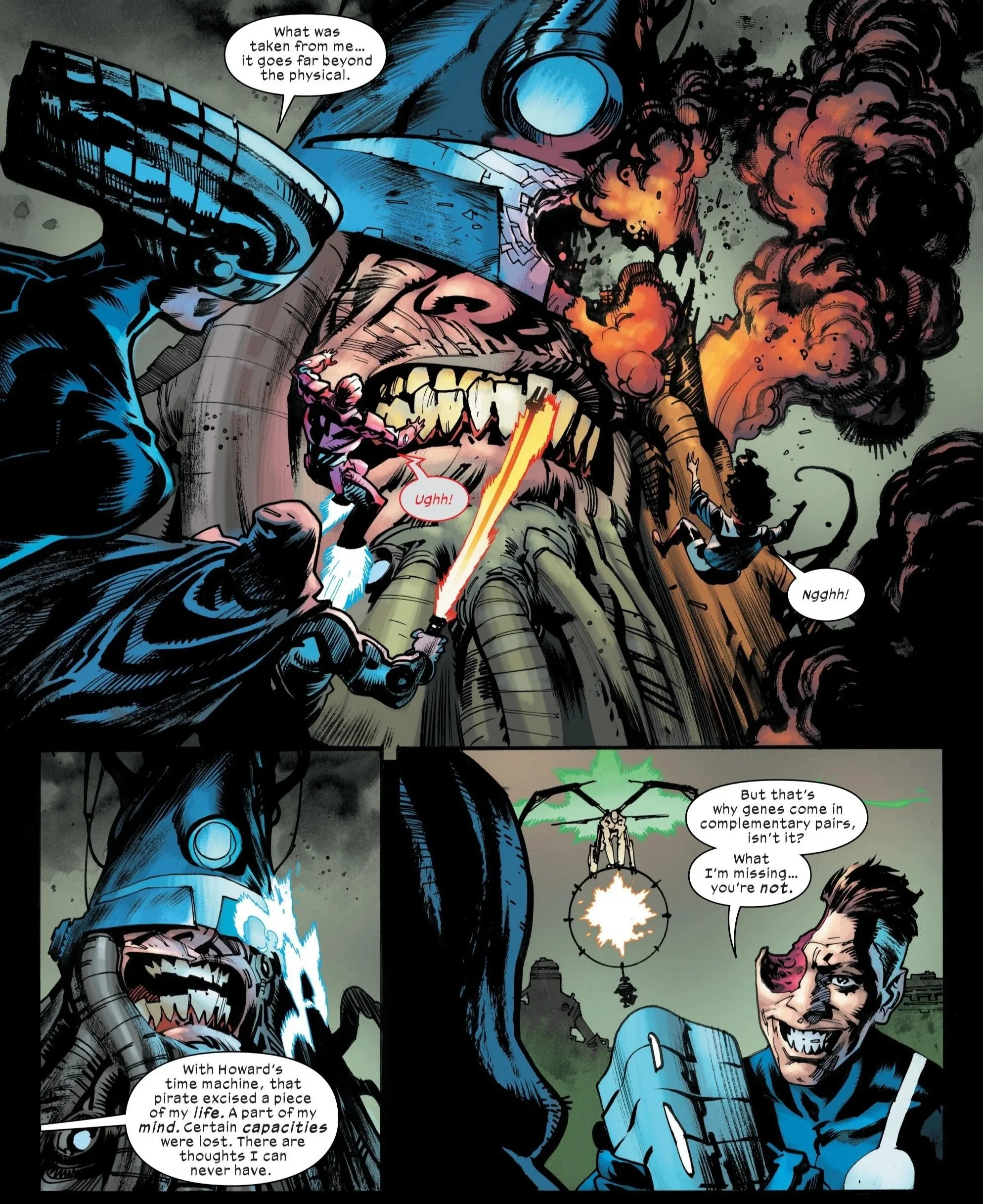
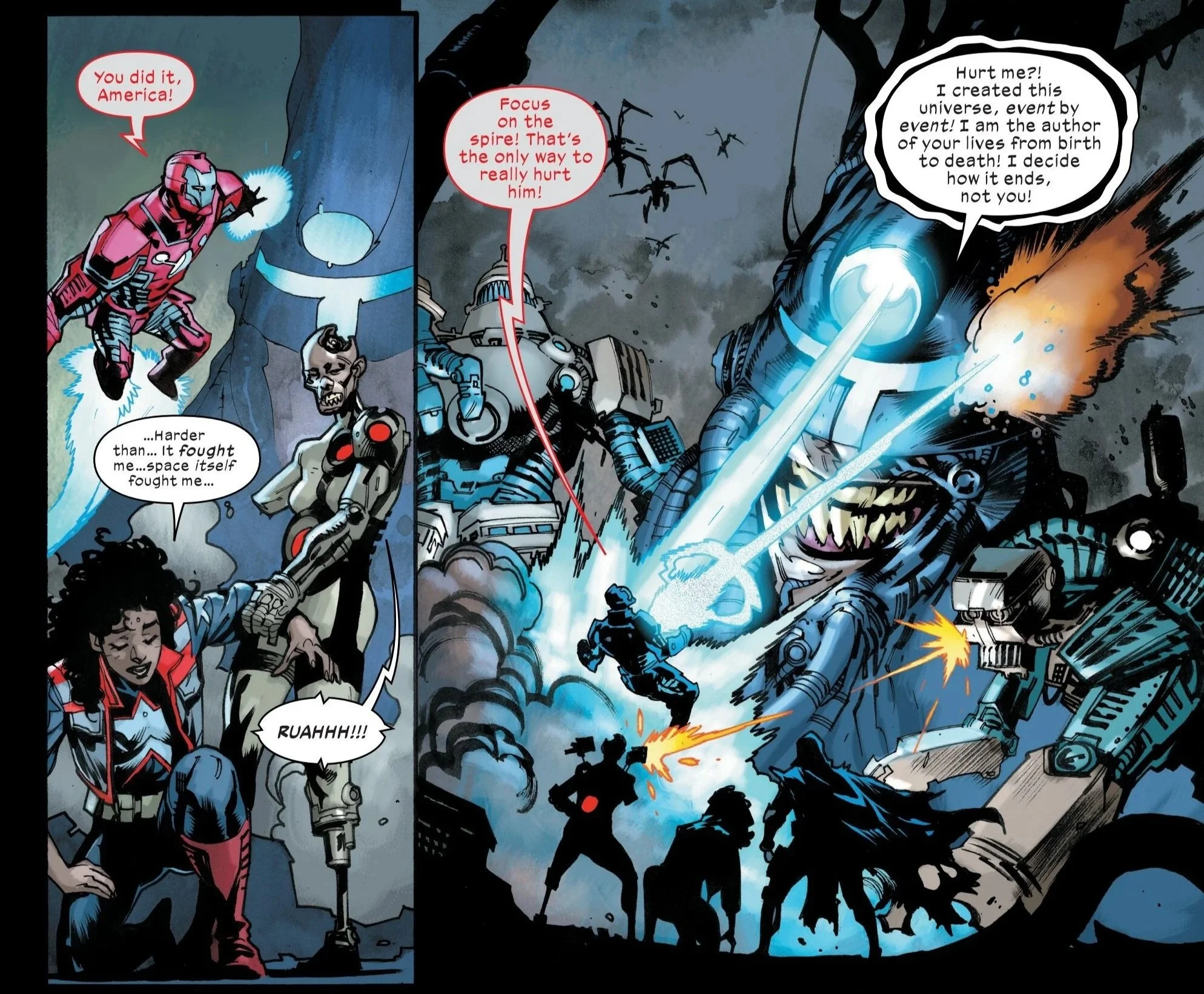
This issue picks up after the fallout of Spider-Man’s death, which ominously hangs over the team even as they fight for their lives. Despite the remaining Ultimates’ pleas for Tony Stark to bring Peter back, he can’t because he still hasn’t truly mastered the Immortus Engine. Meanwhile, The Maker continues to taunt Doctor Doom even as the Ultimates make their escape thanks to America Chavez’s timely assistance. Despite them directly attacking his primary tower form at the heart of the city, the Maker is still able to spread his consciousness enough to continue spreading his influence outside the dome in Latveria while also probing Doom’s mind for any weakness he can exploit.
And while Doom puts up a valiant effort staving off the Maker’s corruption, he’s left vulnerable enough for the Maker to truly plumb his deepest secrets, namely where Howard Stark’s Immortus Engine is kept. While the Ultimates try their best to stop him, the Maker proves victorious in the end, gaining the power he’s sought for so long and the means to now gleefully escape the city and wreak havoc beyond its walls.
And speaking of things outside the city, it’s not any better there either. With war occurring on two fronts — Captain America and the remaining Ultimates fighting the Maker’s council forces in Boston, while Wakandan forces led by Black Panther and the X-Men face off against the Maker’s spreading virus in Latveria — it’s a grim situation in both areas. Captain America is far too traumatized from his recent escapades with the Red Skull to have his head fully in the game, ensuring that morale on that battlefront is at an all-time low. And over in Latveria, things really seem lost to the point of futility when T'Challa sees no option but to drop nukes on the dome to end the Maker’s spreading influence for good.
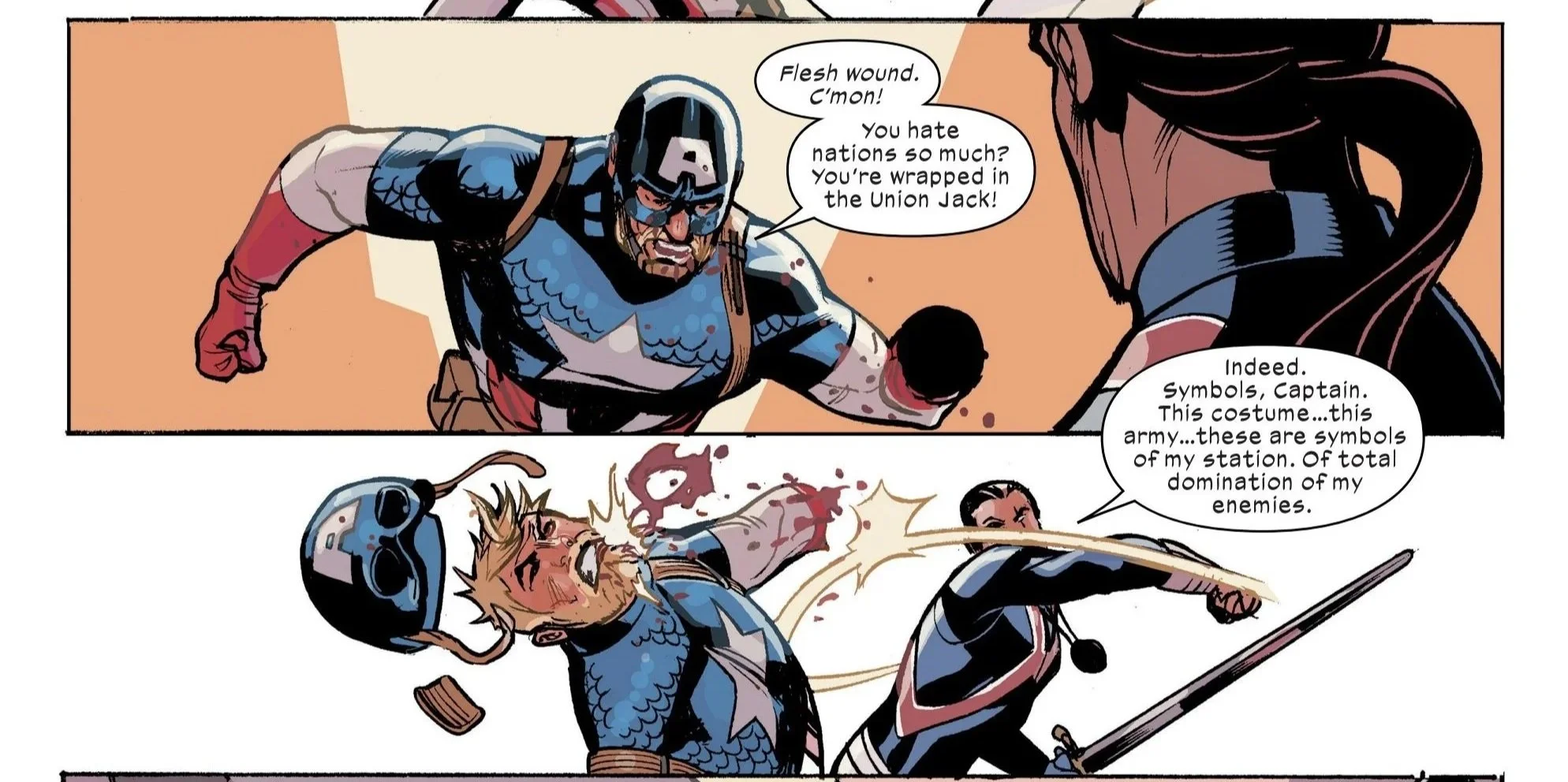
Fortunately, America did manage to get enough of a signal out to get the Guardians of the Galaxy to show up, and they effortlessly clear out the Maker’s plague from Latveria in the blink of an eye. But not everything is as hunky-dory as people would like. Back in Boston, Captain America is quickly overpowered by Captain Britain, who shockingly and casually kills the First Avenger. And that’s nothing compared to the Maker himself finally being able to break out of the Dome and into the world beyond.
Chaos Simply for Chaos’ Sake
I’ll be blunt about this: while Deniz Camp remains one of Marvel Comics’ most interesting writers right now because he takes massive swings, Ultimate Endgame #4 just seems to reinforce the idea of how much editorially forced oversight and the pressure of big event books really are his kryptonite. It feels lazy and frustrating, and it turns the usual strengths of Camp’s narratives into almost insincere psychobabble that places far too much emphasis on the kind of storytelling tropes he’s usually critical of in his more focused comic runs like The Ultimates or Absolute Martian Manhunter.
Now, to be fair, Camp understands long-form storytelling better than most modern event writers. Threads from earlier Ultimates issues pay off here in ways that reward readers who stuck with the line from the beginning. Captain America’s deteriorating mental state leading to his shocking death connects directly to previous issues. America Chavez and the Guardians of the Galaxy finally cash in on setups that have been sitting quietly in the background for months. That continuity work gives the comic a greater degree of real weight.
The issue also succeeds whenever Camp focuses on exhausted people trying to function during total, almost apocalyptic collapse. Doctor Doom’s scenes in particular are especially strong because he feels genuinely haunted, once again by events that Camp more masterfully set up in his Ultimates run. The Captain America segment especially captures both the strengths and weaknesses of the issue as a whole. Camp writes Steve as a man completely consumed by duty and grief, and there is something admirable about how stubbornly he keeps fighting. At the same time, his fate lands with so little reflection afterward that it almost feels like a footnote.
Where the comic starts to completely fall apart is when the event seems to force Deniz Camp to stack tragedies on top of each other so quickly that the emotional impact weakens under a literal Jenga tower of misery. I kept thinking back to Ultimate Endgame #3 while reading this issue because that chapter still balanced character work with apocalyptic spectacle pretty well, even though it still suffered tremendously from much of the same shock value that this issue has. But issue #4 really tips harder in that direction: a sudden major death, The Maker’s near-omnipotent climb to victory, and several convoluted timey-wimey contrivances that exist mostly to remind readers that everything is terrible.
If “You think that’s bad? Watch this.” were an event, that’s what this would be, and this penultimate issue really exemplifies that ethos. Similarly, Camp’s lackluster writing for characters outside the Ultimates also feels in direct contradiction to what other writers have established for the likes of Black Panther, the X-Men, and even Spider-Man in this universe. Instead, they’re all mushed into convenient character archetypes whose sole aim is to keep the story moving as editorial intends, rather than having the characters react in accordance with how they were written in their own respective Ultimate series.
I feel bad having to say these things about Camp, as I’m normally a massive fan of his writing, but this event simply has not been it. So, on a final note, I will say that the Maker continues carrying the series because Camp writes him with such terrifying conviction. His speeches about controlling narratives and shaping destinies could have become unbearably self-important in weaker hands, but Camp mostly keeps them grounded through sheer menace, like a man who has completely detached himself from ordinary humanity and then some.
His dialogue about authorship and destiny pushes the story into openly meta territory, and that’s where the problems really start to mount. He sees himself as the architect of this universe, someone who has already decided how everyone’s story ends, and that kind of meta-commentary really only works in small doses. The ultimate problem, pun intended, is that the issue honestly keeps mistaking nihilism for depth. By the end, Ultimate Endgame #4 starts feeling less like an event comic and more like a competition to see just how miserable this universe can become before readers completely tap out.
A Saving Grace
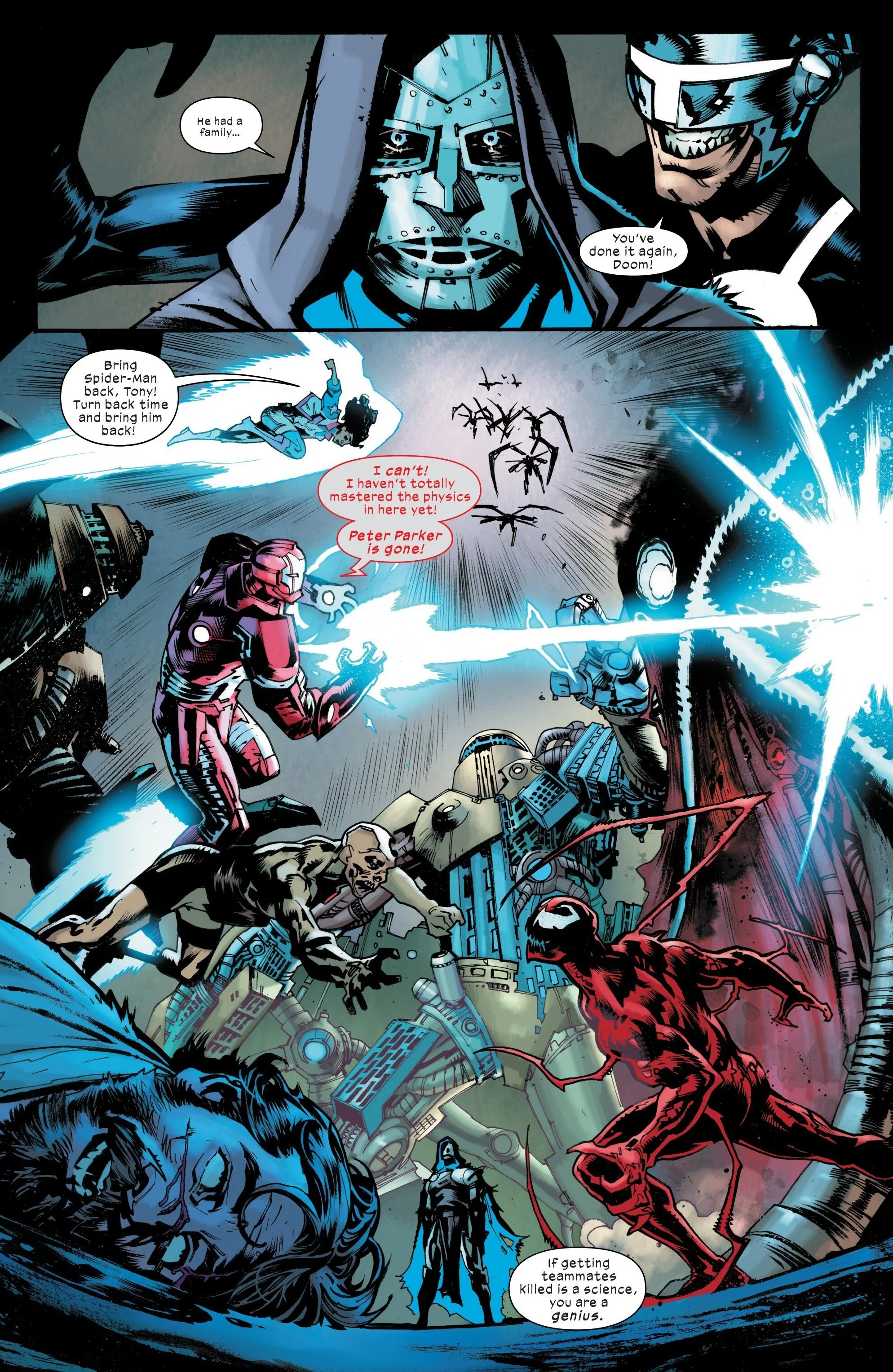
The real MVPs of this book, however — and the only thing that stops issue #4 from collapsing under the weight of its own misery — are the art team. With Jonas Scharf and the The Dodsons returning to deliver some great linework, while once again being backed up on colors by Edgar Delgado. In the previous issue, the Dodsons had been a little off their game on the art front, with some uncharacteristically weak line and color work, but this issue has them back in form with some of their better work in particular, really helping to maintain the desolate atmosphere.
Within the confines of the Dome, Scharf’s artwork, as always, truly holds everything together. His version of The Maker is a personified horror that feels wet, diseased, and deeply uncomfortable. The Maker truly does look like a cosmic nightmare pretending to be vaguely human and losing the patience to keep that façade going at all. Scharf fully commits to this grotesque imagery and mirrors it in the faces of desperation and trauma the Ultimates are experiencing throughout their desperate fight inside the city itself.
Delgado’s inky black colors also provide so much atmosphere to these horrific visuals, even with all the energy and action in between. There’s certainly enough color for our heroes within the Dome, but it always feels like it’s being sucked into nothingness by the Maker’s vile influence.
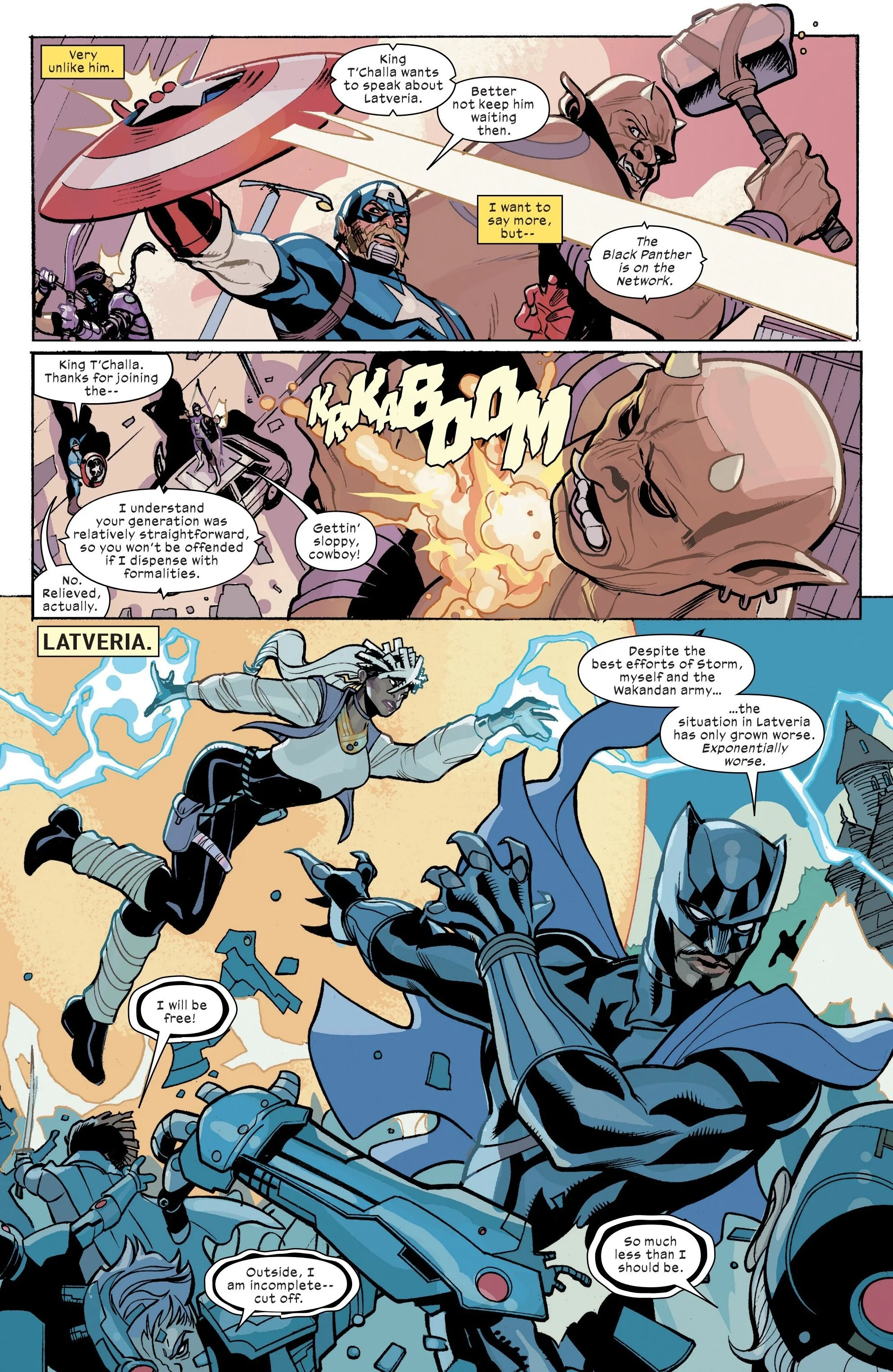
Outside the Dome however, Terry and Rachel Dodson redeem themselves after their issues in the previous chapter deserve credit too. There’s a lot of sharp detail to the bigger, more bombastic action scenes that feel brighter and more visible, with more heroics from titular characters like the Wakandans and the X-Men. Having been given the opportunity to show off Captain America’s final stand, the Dodsons show that quick battle in all its grim and hopeless detail. It’s shocking, its quick but it’s visually stirring regardless of how you feel about the writing. And all these events across the world hit home even more thanks to Terry Dodson’s colors, which are restrained but never flat.
Annihilating Any Sense of Investment
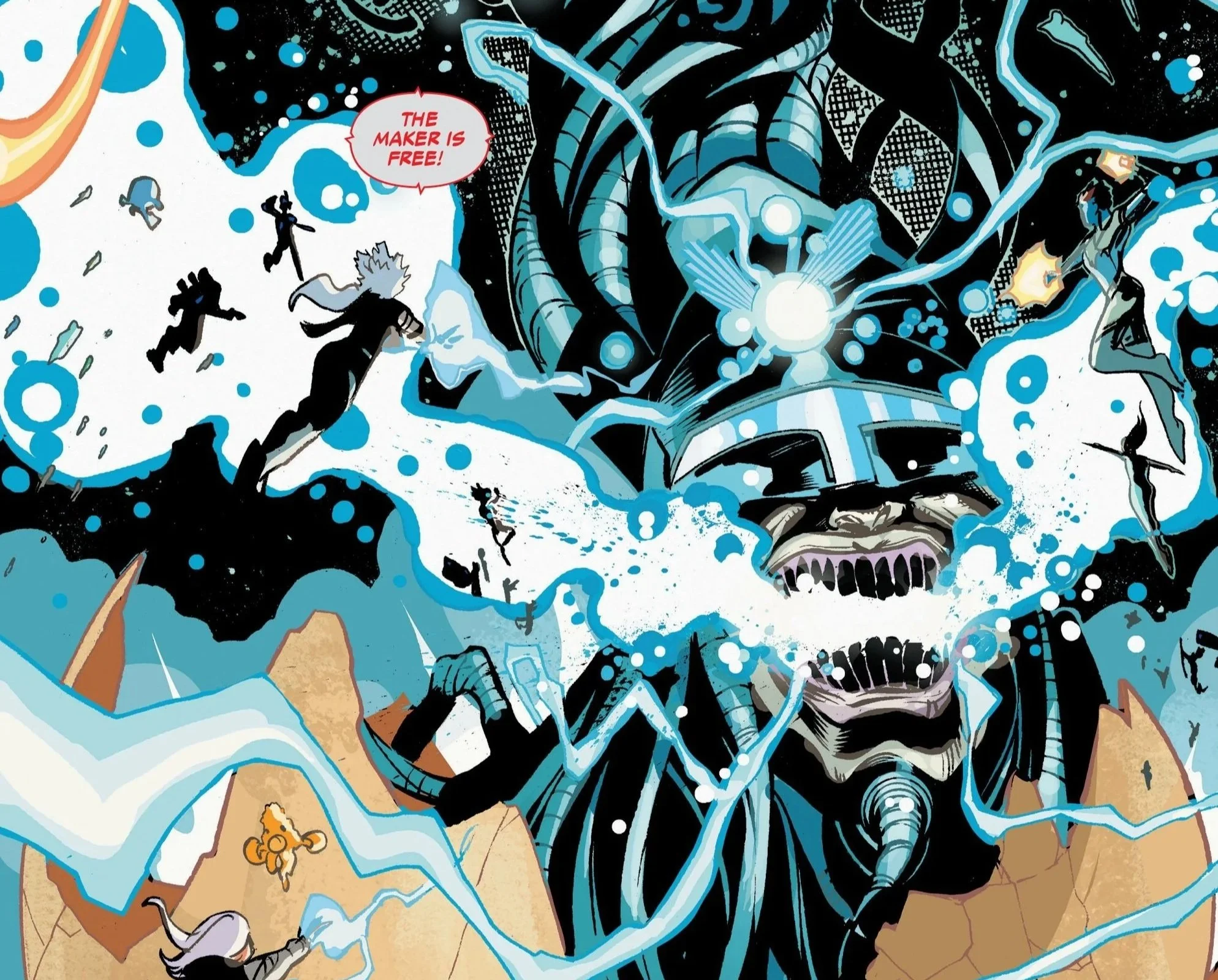
The creative team for Ultimate Endgame do clearly want this event to feel like the collapse of an entire reality rather than a temporary superhero crisis, and issue #4 somewhat succeeds in that regard sure, with every page carrying the foreboding sense that Earth-6160 is dying faster than its heroes can save it. The problem is that the series increasingly relies far too much on escalation instead of emotional resolution. Spider-Man dies. Captain America dies. The Maker grows more monstrous. Doom spirals further into despair. The comic keeps piling tragedy on tragedy until parts of the story begin feeling emotionally numb. There’s nothing inherently wrong with that, considering some of the best stories come from finding hope during the darkest of times, but if Marvel itself wants to wrap this up as fast and as messily or shockingly as possible for some quick wins, then how can you expect readers to stay invested after feeling like two years of their time was wasted on this? Also seriously, where the hell is Wolverine and the other European X-Men? Is there going to be another shocker to end all shockers from the cast of that book in the final chapter? Only another groan-inducingly long wait till the next issue will even begin to answer that question.
At this point, I swear to god I wish I could use the Immortus Engine to go back in time and tell myself not to get invested in the Ultimate Universe, because Ultimate Endgame #4 really personifies that exact impulse and the disappointment that’s tied to it. The only positive I can say is that despite it all, this book is never boring, with even its failures providing something to take interest in. I just wish the actual emotional pacing matched the absurd sense of ambition, even if it feels shallow at times. Instead, Ultimate Endgame #4 spends so much time trying to devastate readers that it forgets devastation only works when the story occasionally gives people room to breathe.
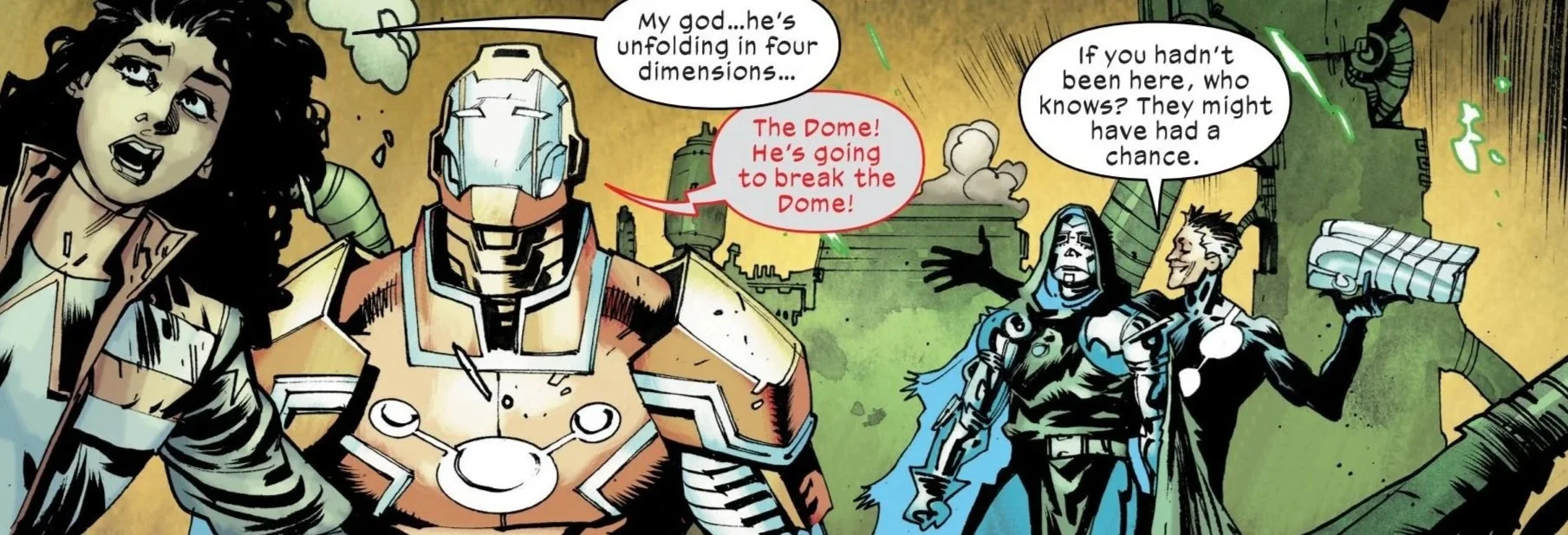
Final Verdict: Ultimate Endgame #4 is ambitious, ugly, frustrating and occasionally, almost comically brilliant, but does little to beat the shock-value marketing allegations as each page mounts more contrived misery on top of itself to make this penultimate issue mean anything at all.