
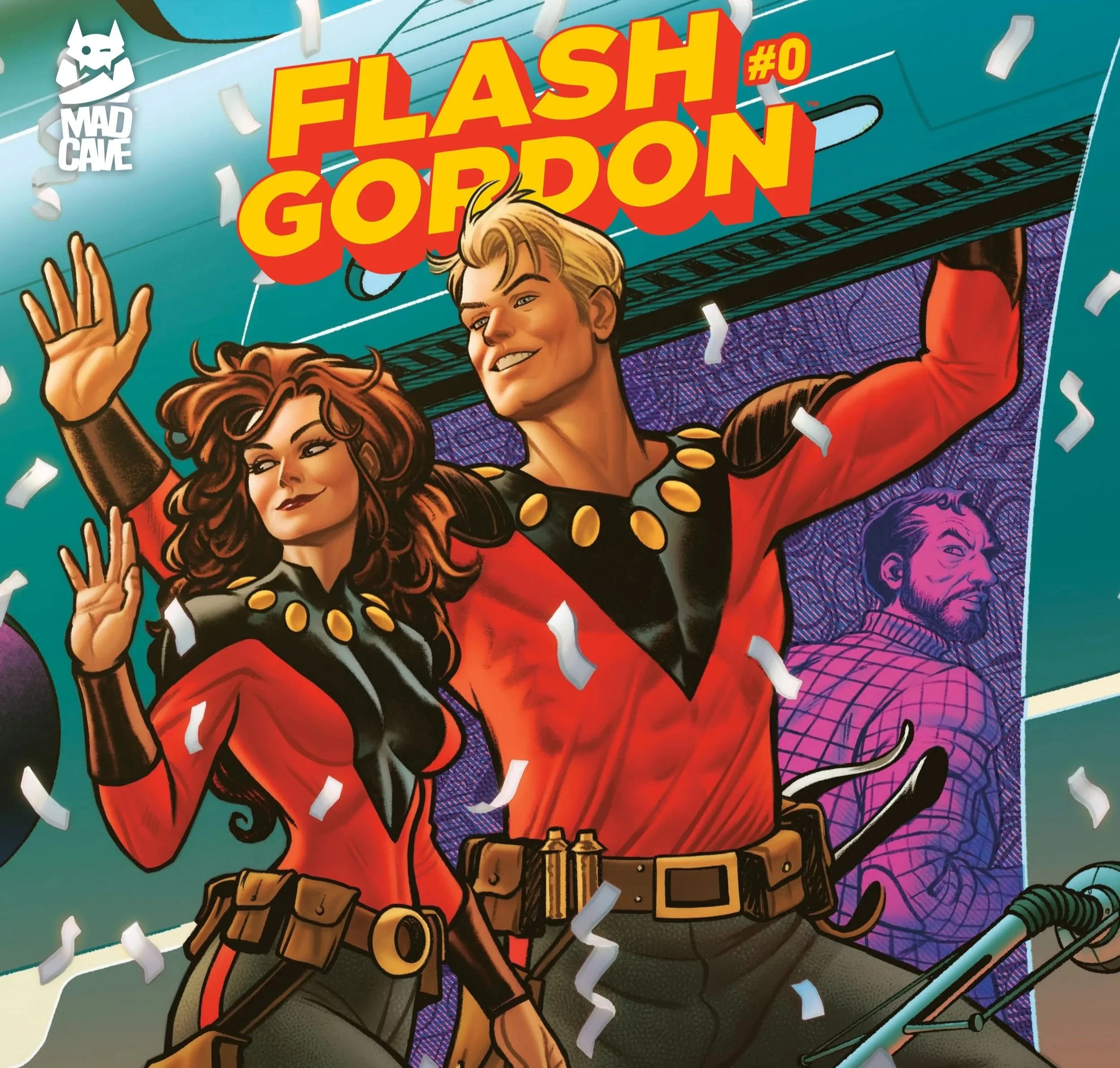
Writer: Dan Abnett
Artist: Manuel Garcia
Colorist: Ceci de la Cruz
Cover Artist: Joe Quinones
Flash Gordon #0 takes the legendary pulp hero in a direction that feels both intriguing and slightly unexpected. Rather than opening with nonstop cosmic adventure, the issue focuses heavily on aging, relevance, and what happens after the adventure is supposedly over. It’s a thoughtful premise, and in many ways, it works remarkably well.
At the same time, the issue occasionally struggles to fully feel like a Flash Gordon story.
Written by Dan Abnett, with art by Manuel Garcia and colors by Ceci de la Cruz, the issue picks up after Flash’s apparent final victory over Ming the Merciless. With Mongo lost somewhere in deep space, Flash, Dale Arden, and Hans Zarkov return to Earth for the first time in years and attempt to settle back into ordinary life.
For Flash, however, ordinary life may be the most difficult challenge he has ever faced.
A Hero Without a War
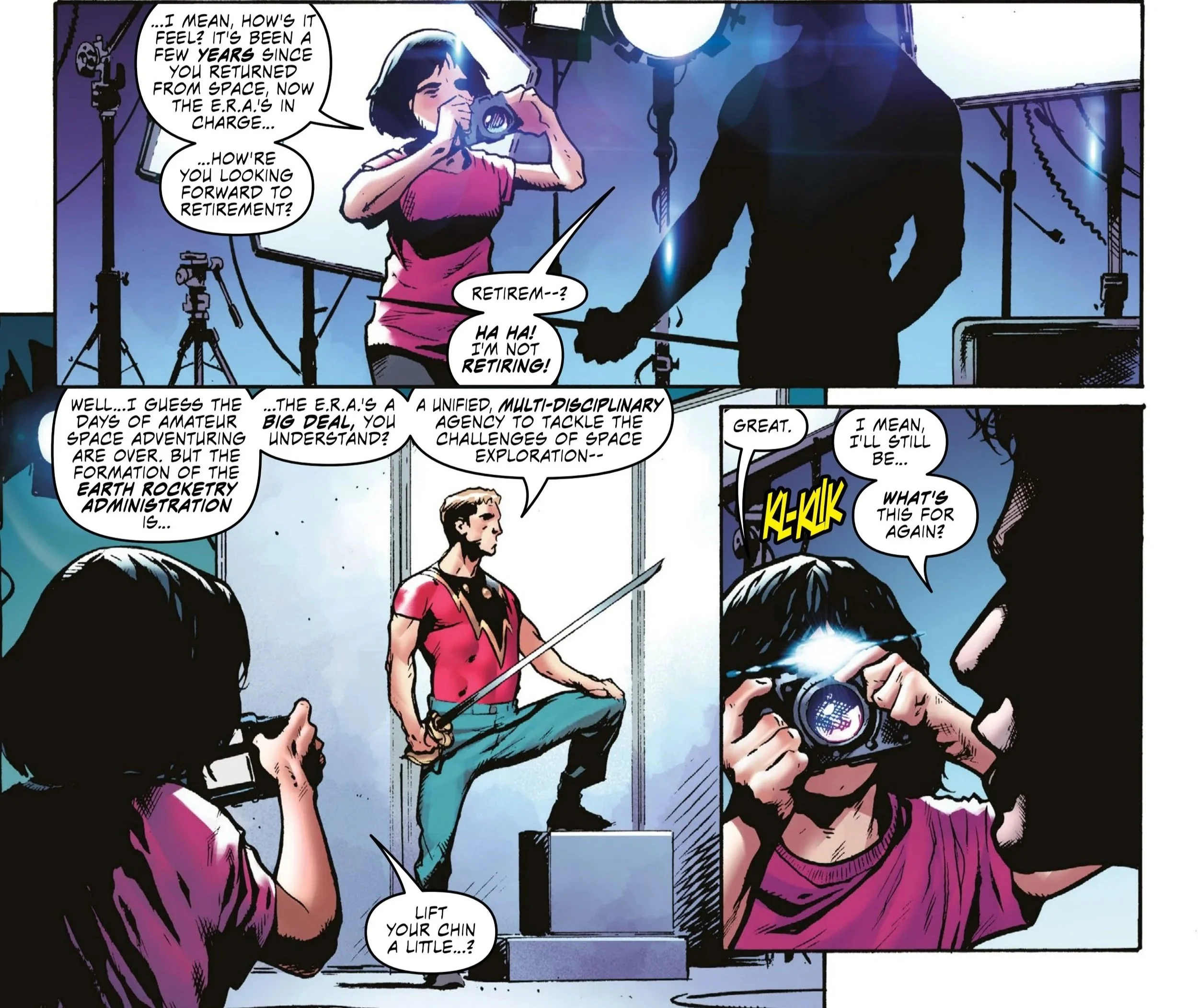
One of the issue’s strongest ideas is its portrayal of Flash Gordon as a man struggling to function in peacetime.
Flash takes a teaching position at the Earth Rocketry Administration, training younger recruits in piloting and survival skills, but it quickly becomes obvious that he feels trapped. He misses adventure, danger, and the sense of purpose that came with saving worlds. Earth is safe, but that safety leaves Flash restless.
The comic draws an obvious comparison to Star Trek II: The Wrath of Khan, presenting Flash as an aging adventurer who no longer knows where he belongs. Rather than treating him as the unstoppable pulp hero readers usually expect, the issue focuses on his uncertainty and dissatisfaction.
That approach gives the comic a surprisingly reflective tone.
The Story’s Commentary on Ageism
Thematically, the issue is really about aging and relevance.
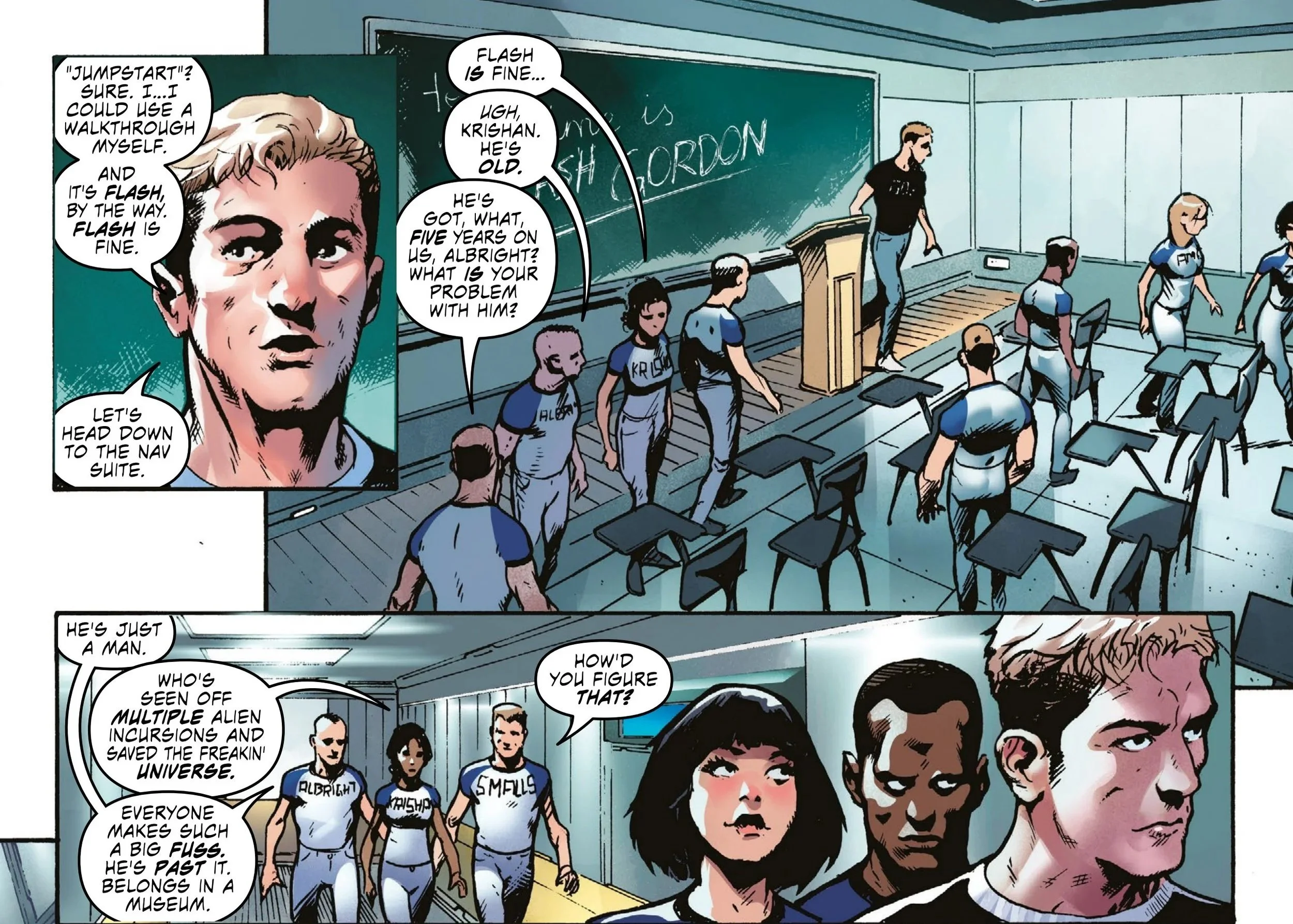
Flash Gordon is still admired for his accomplishments, but there’s also a growing sense that society views him as someone whose greatest achievements are behind him. He’s respected, but he’s also being quietly pushed aside in favor of younger generations.
That theme works extremely well because it feels larger than just the character himself.
In many ways, Flash Gordon almost becomes symbolic of the franchise as a whole. Flash Gordon remains hugely influential to science fiction and adventure storytelling, but modern audiences rarely talk about the character with the same excitement or cultural importance that he once carried. The issue seems fully aware of that reality.
There’s even an argument to be made that longtime fans of Flash Gordon may relate to Flash’s situation here. Like Flash, they may sometimes feel appreciated for their history while also being treated like artifacts from another era. Whether intentional or not, that layer gives the issue genuine emotional weight.
Importantly, the comic never portrays Flash as weak or incapable. Instead, it presents him as someone struggling to understand his place in a rapidly changing world.
An Unusual Take on Flash Gordon
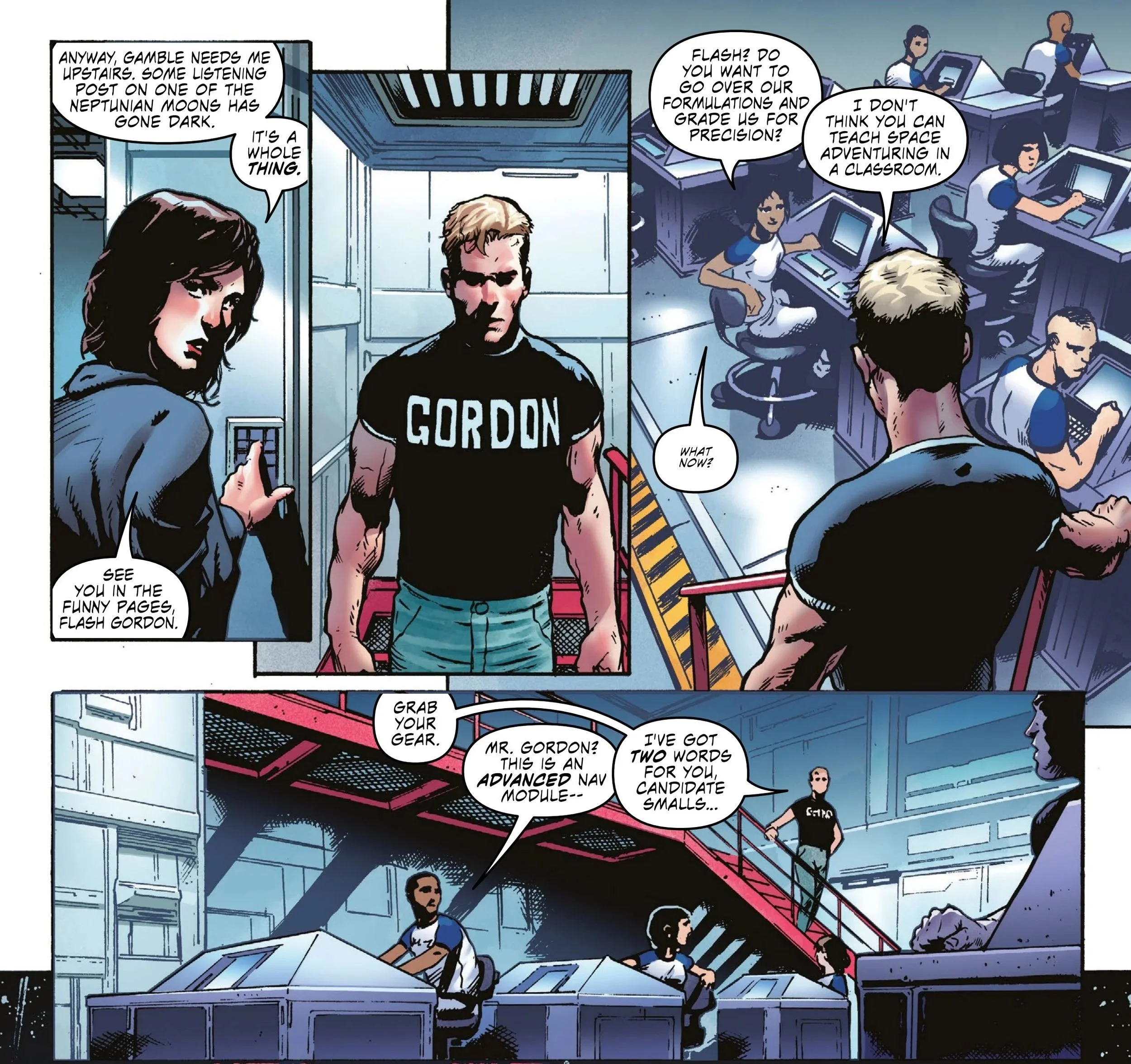
At the same time, that reflective tone is also what makes the issue feel somewhat strange as a Flash Gordon comic.
As a general science-fiction story, the issue works fairly well. The themes are interesting, the pacing is solid, and the character dynamics are engaging enough to keep the story moving. However, readers expecting the larger-than-life swashbuckling energy traditionally associated with Flash Gordon may find the comic surprisingly subdued.
Flash himself often feels more like an aging action hero searching for purpose than the fearless pulp icon readers are used to seeing.
That creative decision is understandable given the premise, but it occasionally creates a disconnect between the character and the franchise’s adventurous roots. Earlier runs leaned heavily into Flash’s optimism, charisma, and daring nature. Here, he feels quieter, more frustrated, and more introspective.
None of that makes the comic bad. In fact, it’s part of what makes the issue interesting.
It just doesn’t always entirely feel like Flash Gordon.
Neptune and the Return of Adventure
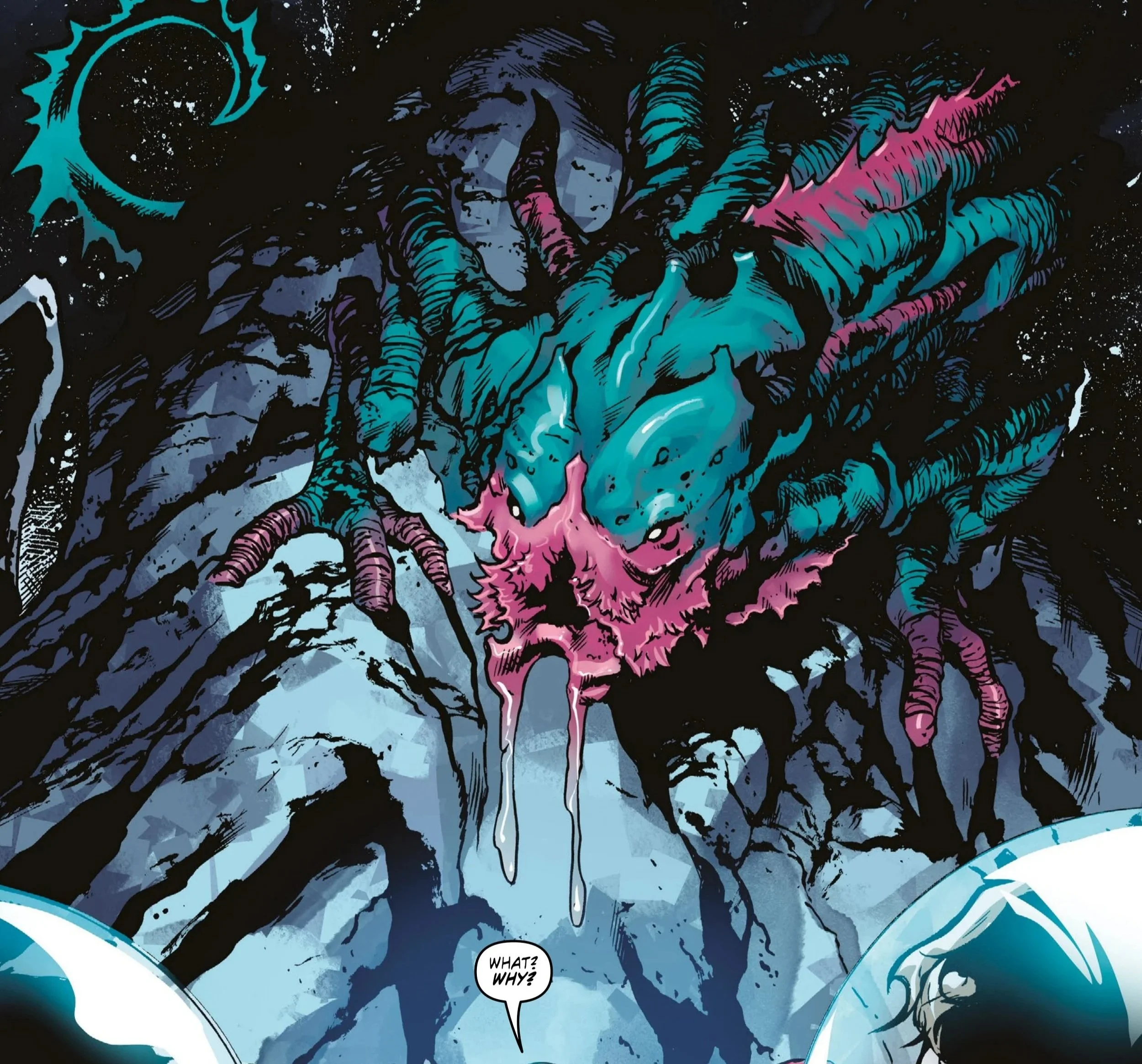
Once Flash Gordon decides to leave Earth with his students and head toward a remote communications outpost on one of Neptune’s moons, the issue begins embracing more traditional sci-fi adventure elements.
The space sequences are easily the most entertaining parts of the comic.
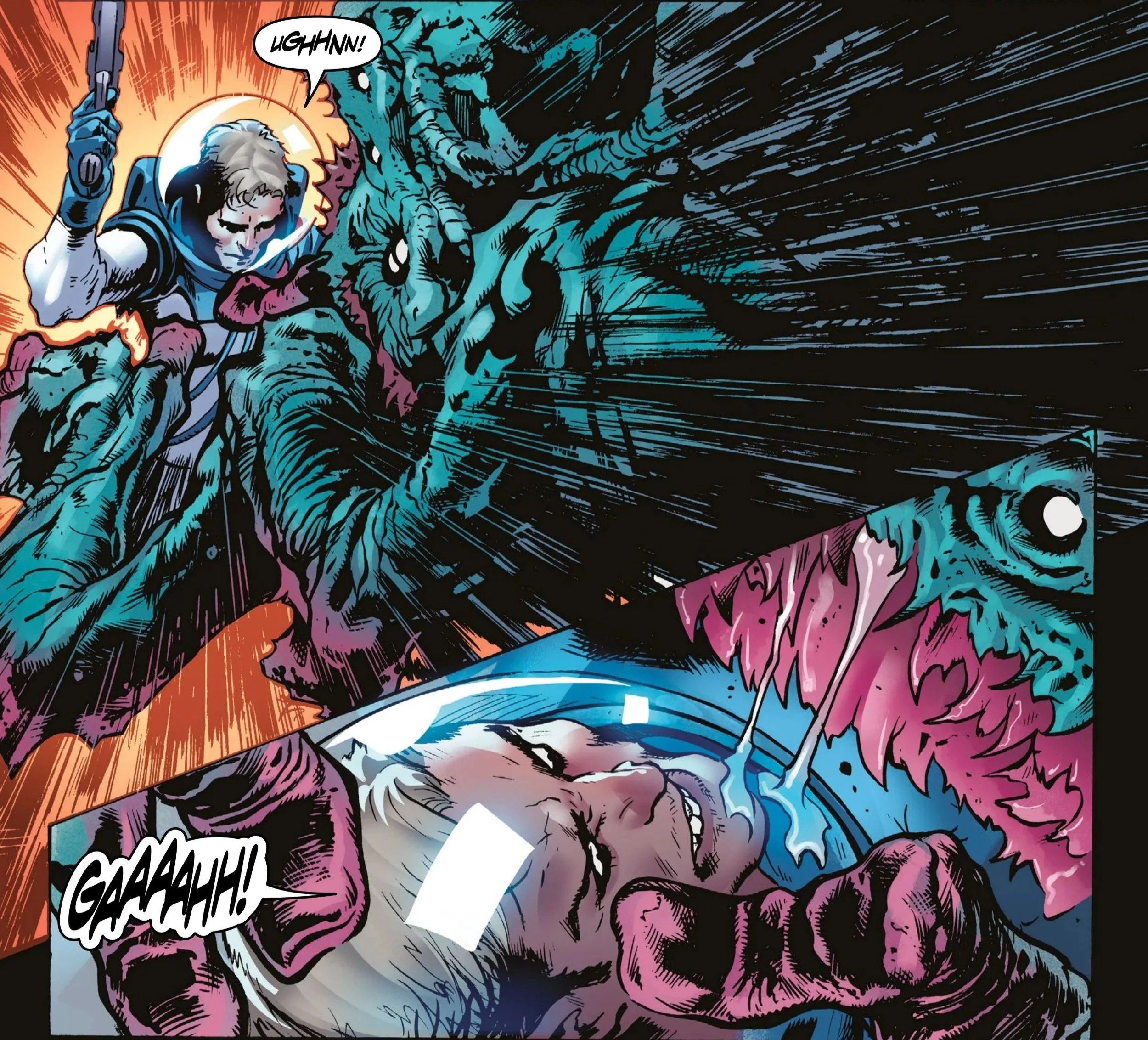
A giant creature attacks the communications towers scattered across the frozen landscape, immediately shifting the tone toward classic pulp spectacle. The setup feels delightfully old-fashioned in the best possible way, almost like something pulled directly from a serialized matinee adventure.
The supporting cast also works reasonably well here. Flash’s students each have distinct personalities, though Albright clearly receives the most attention. His reckless “act first, think later” attitude mirrors Flash’s younger self, and the issue strongly hints that the two may eventually develop a mentor-student relationship.
Their constant clashes add some welcome energy to the quieter first half of the comic.
Art That Captures Classic Sci-Fi Spectacle
If there’s one area where the issue succeeds completely, it’s the artwork.
Manuel Garcia delivers genuinely fantastic visuals throughout the comic, especially during the Neptune sequences. The massive creature roaming the icy terrain immediately evokes the feel of a classic Ray Harryhausen monster, complete with oversized cinematic spectacle that perfectly fits a Flash Gordon-inspired universe.
The creature designs feel retro without looking dated, which helps the comic maintain its pulp identity even during its more introspective moments.
Neptune itself also looks appropriately alien. The frozen mountains and vast icy landscapes give the setting a genuine sense of scale while reinforcing the idea that Flash Gordon belongs among the stars rather than being confined to Earth.
Colorist Ceci de la Cruz strengthens that atmosphere considerably. The colder blues and whites of Neptune contrast nicely with Earth’s cleaner, more sterile environments, helping the issue feel visually dynamic even during slower scenes.
Even when the story itself doesn’t fully feel like classic Flash Gordon, the artwork absolutely does.
Final Thoughts and Rating
Flash Gordon #0 is an interesting relaunch because it succeeds more as a reflective science-fiction character study than as a traditional pulp adventure. Its exploration of aging, relevance, and the fear of becoming obsolete gives the comic more emotional depth than readers may initially expect.
At the same time, the issue occasionally feels disconnected from the adventurous spirit that traditionally defines Flash Gordon as a character. This version of Flash is more introspective and uncertain than many readers may prefer, and while that direction makes thematic sense, it doesn’t always feel entirely true to the franchise’s roots.
Still, the comic remains engaging throughout, and the artwork alone makes it worth following.
Manuel Garcia and Ceci de la Cruz do an excellent job capturing the scale, wonder, and retro-futuristic spectacle that should define a Flash Gordon comic. Even if the characterization does not completely land as a definitive take on Flash himself, the thematic ideas and visual presentation are compelling enough to make the series worth continuing.
This may not be a great Flash Gordon story specifically, but it is a solid comic with strong art and enough intriguing ideas to justify coming back for the next issue.
Rating: 7/10
A thoughtful and visually striking relaunch that explores aging and relevance in compelling ways, even if it occasionally loses sight of the adventurous spirit that makes Flash Gordon unique.