
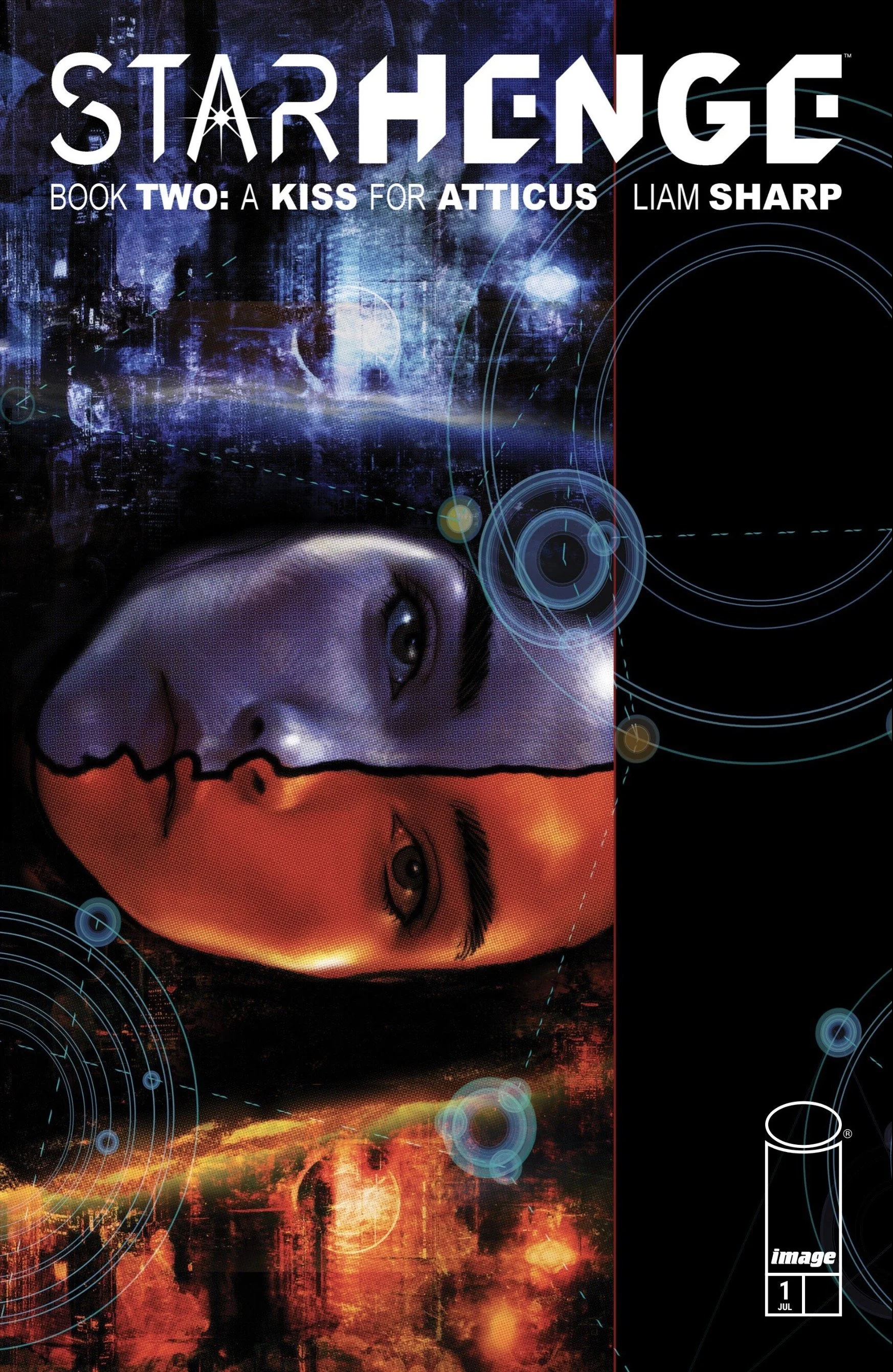
Starhenge: Book 2 - A Kiss for Atticus #1
Writer/Artist/Letterer: Liam Sharp
Letterer, pages 18-27: Roger Langridge
I…
I don’t even know where to begin.
Starhenge is simultaneously beautiful, confounding, innovative, and maddeningly incomprehensible. And I say this as someone who read, and mostly understood, Book 1 - The Dragon and the Boar. If you picked up this first issue of Book 2 without having read that first, hoo boy. You, my friend, are a very brave soul.
The Future is Prologue
Before we dive into discussing Book 2, we need to talk about Book 1.
Starhenge is a mixture of Arthurian myth, far-future science fiction, time travel, and maybe a few psychedelic substances. Book 1 appears to be a comic book created by Amber Weaver, a Wiccan artist who turns out to be so much more than she thought she was.
In the far future, humanity is besieged by an artificial intelligence known as the Cast. Magic is real, woven into the fabric of the universe—tying time itself in a sort of loop. The legendary Merlin of Arthur’s time is actually Mer-Lyn from the future, sent back to save magic—and therefore, all time. And Amber finds herself at the center of it all.
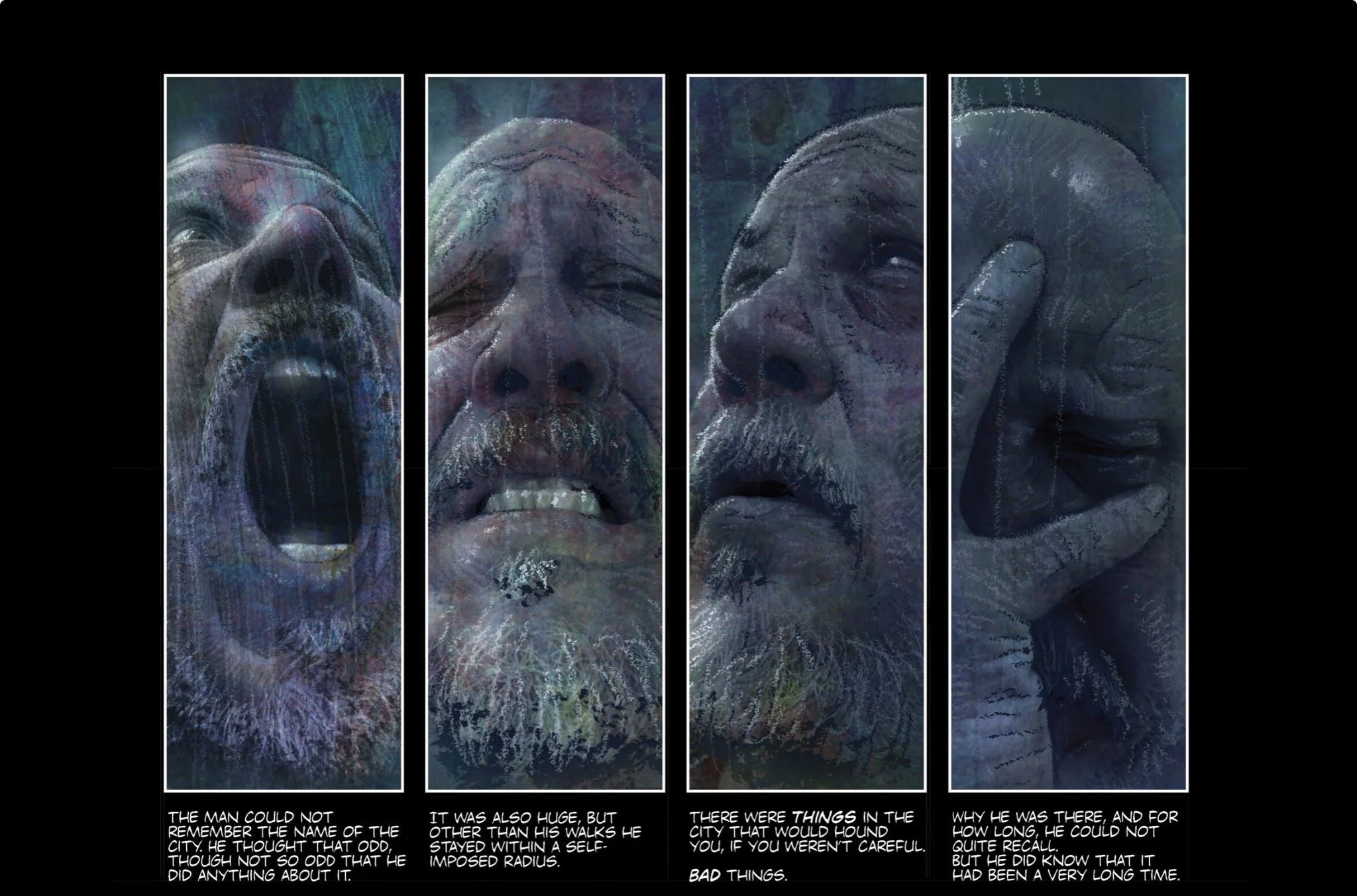
After closing the book on Amber’s chapter (literally, she has the last page of Book 1 open in Photoshop and she presses “close.”), we find ourselves in a city out of Blade Runner. Here we meet an unnamed man who walks for a very specific time each day—a man who, after an encounter with the Cast, dreams of a woman who paints.
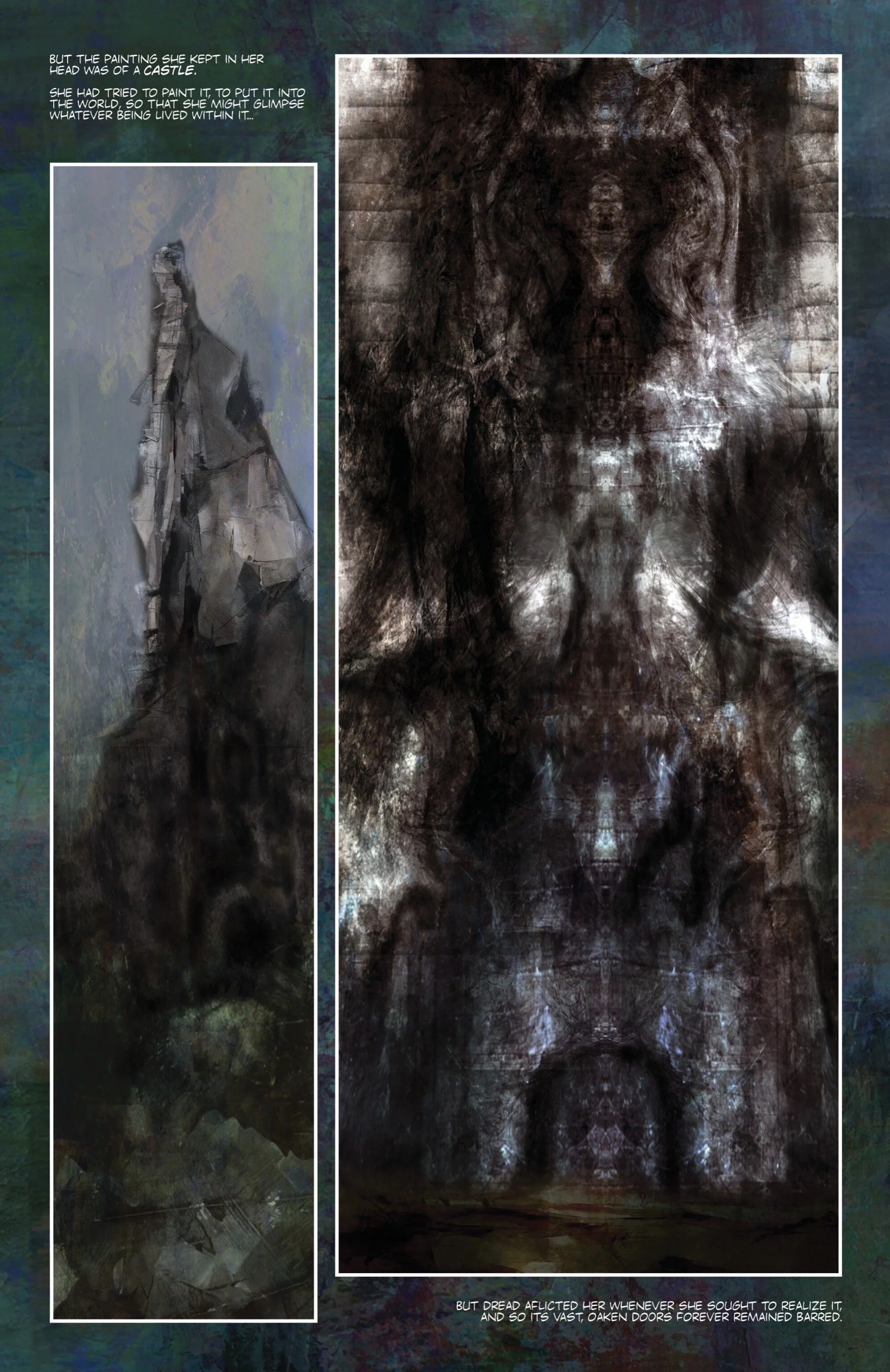
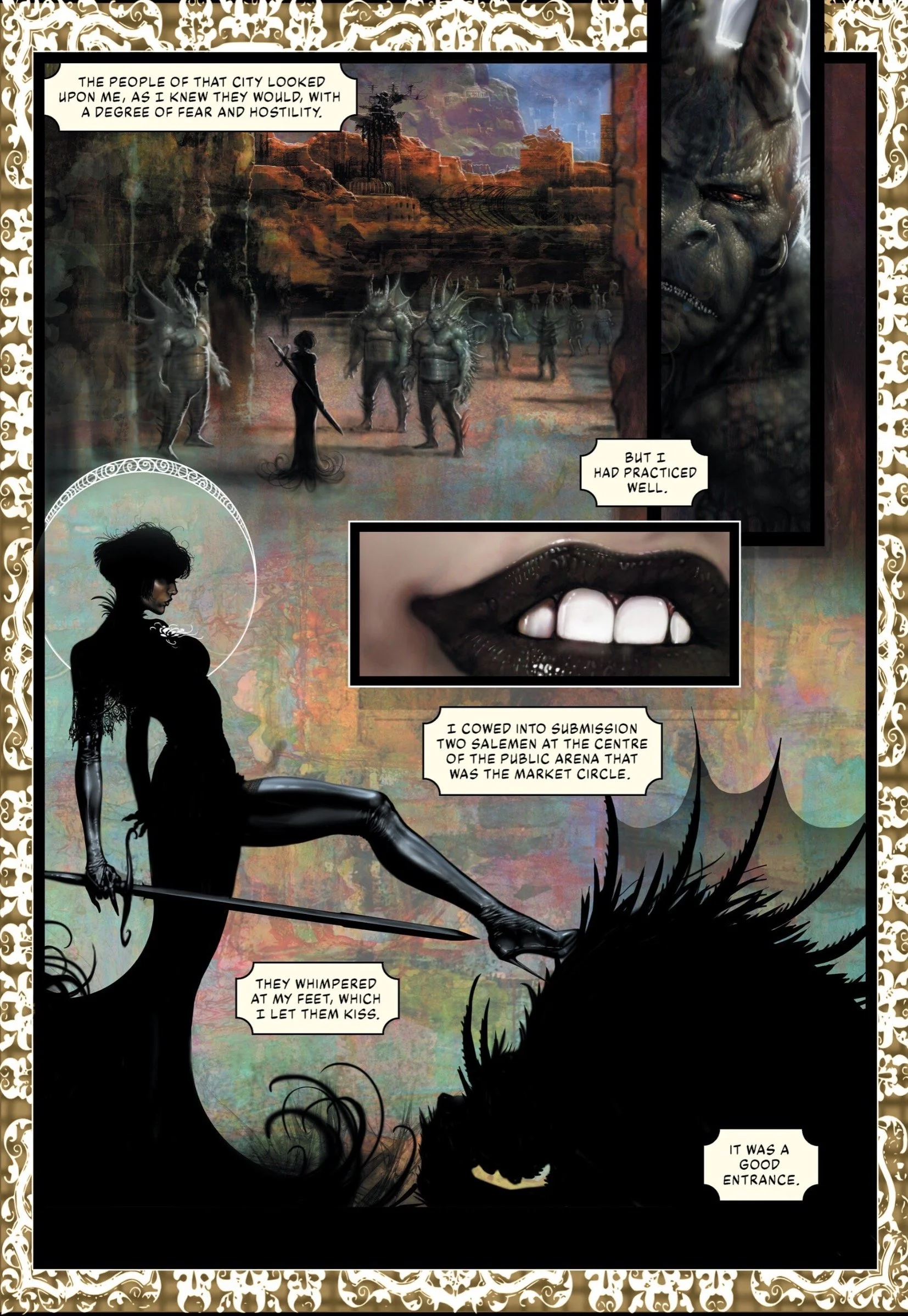
One sequence of the woman’s paintings tells of a lost soul who travels to the city of Verbatim. She seeks the Earl of Form, supposedly half-man and half-machine. What she finds shakes her to her core and challenges her perceptions of fate and time.
As the issue draws to a close, we pan out to find a woman—Amber Weaver?—standing before a canvas, painting…
The Past is the Present
You may not know this about me, but I’m a nut for Arthurian stuff. Once & Future by Kieron Gillen and Dan Mora. The Pendragon Cycle by Stephen Lawhead. The Pendragon roleplaying game. So many more.
I’m also a huge fan of science fiction, particularly of the space opera variety.
So this series—this science fiction, fantasy, time travel epic—was always going to be right up my alley.
Book 1, with its melding of Arthurian myth with future science fiction concepts, was complex but largely possible to follow. Book 2, at least as of this issue, is a lot harder. Being introduced to whole new characters and concepts, even if one of them turns out to be Amber, is a lot to take in at once. There's no indication of when we'll be getting back to the cliffhanger of Book 1, and it's too soon to tell where Book 2 is headed. So why, then, am I still so captivated?
Part of it is the earnestness with which Liam Sharp tells these stories. In many circles, he may be thought of as an artist first and a writer second, but that's not what we see here. Here, we see a man with a story he wants to tell, and the utmost confidence in his ability to tell it. The poetry, be it something published or his own, flows well and fits in with the rest of the narration. There is no dialogue in this issue, but the storytelling is steady. He's also good about not making up too many nonsense science fiction words, and doesn't get carried away with the language—no five-dollar words when a two-dollar one will do, as an old friend would say.
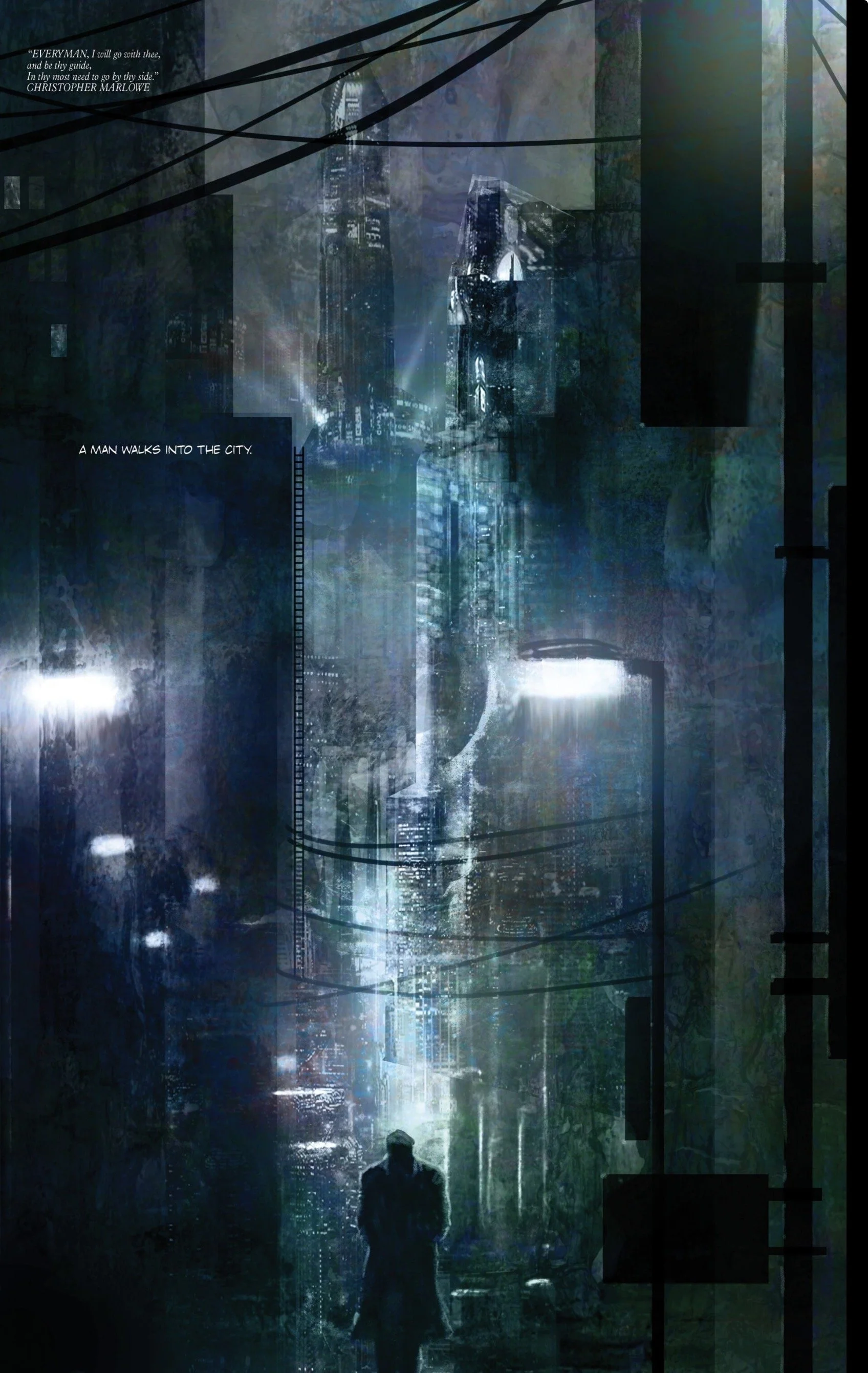
Even if I completely discounted the story (which would be easy to do, since I have no idea what’s going on right now), Starhenge would still be amazing based on the art alone. Sharp is bringing his A-game to this title and experimenting on almost every page. The first "new" image of the issue, a full-page shot of a figure in a trenchcoat walking through the previously-mentioned Blade Runner city, looks like it could be a movie poster. Heck, it should be a poster. I'd buy it.
As the story shifts to talking about the female painter, so too does the art shift. Here, we see multiple actual paintings, done with incredible detail. As the narrative gets more abstract and obtuse, so too does the art, with some panels that are almost like infrared patterns and others that are almost psychedelic in nature.
Then the art shifts again, as we get the tale of the "lost soul" woman. These are in another style entirely, one that allows a bit more focus on her as she travels the city of Verbatim on her quest to find the Earl. As this story draws to a close, we end on an image of what I assume to be Amber Weaver, since it's almost exactly the same as one on the cover of the Book 1 trade paperback...
I don't often talk about lettering in comics, because to me there are really only two styles: "Indie" and "Big Two." This book disproves that. Much of the lettering in the early pages appears to be done by hand, as the narration includes several poems. When we shift to the story of the "lost soul," we get something closer to a traditional lettering style, but it still has a flair all its own. I find myself curious why that particular story warrants its own unique lettering, from a completely separate letterer—Roger Langridge, in this case.
For All Times
Starhenge: Book 2 - A Kiss for Atticus #1 is worth looking at for the artwork alone. If you've already read Book 1, then you're already picking this up to see where the story is heading. If you haven't, I would really recommend starting there first, the trade paperback is on sale right now. That being said, you could still pick this issue up and experience a combination of storytelling and innovative artwork found in few other books. Just be prepared to be a little lost. No matter when you start, Starhenge is a wild ride that doesn't look to let up anytime soon.