
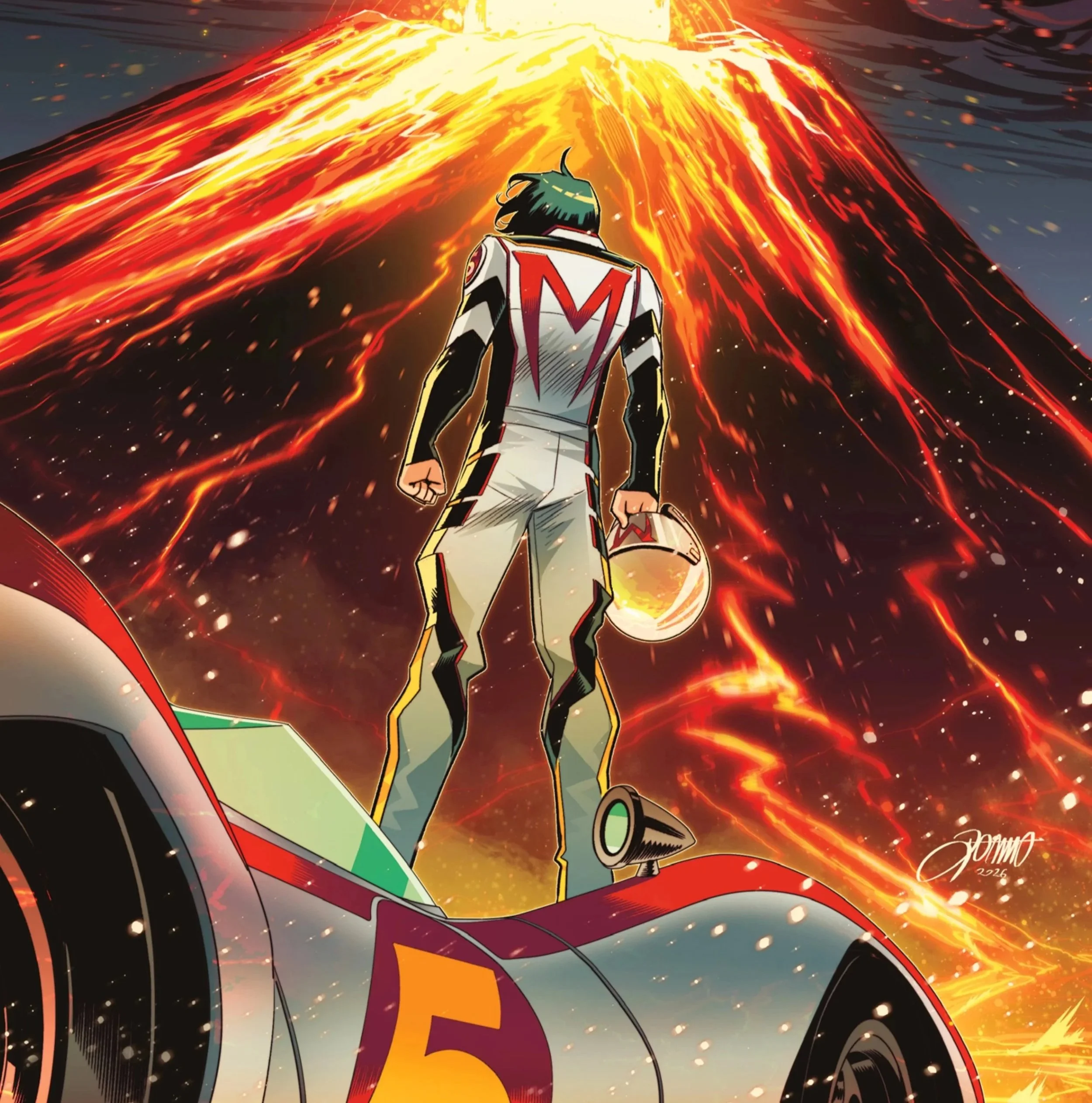
Writer: David Pepose
Artist: Davide Tinto
Colorist: Jāo Canola
Cover Artist: Alessio Zonno
David Pepose's Speed Racer has consistently understood that great racing stories aren't really about the cars. They're about the people behind the wheel. Speed Racer #10 brings that philosophy into sharp focus, concluding the V-Gas storyline while proving that the series's greatest strength has always been its characters. Over the course of this run, Pepose has modernized the classic franchise without sacrificing the optimism, sincerity, and larger-than-life excitement that made Speed Racer an icon in the first place. While the recent V-Gas arc introduced some surprisingly dark subject matter, it never lost sight of those core strengths.
This issue brings that arc to a satisfying conclusion. Rather than simply asking whether Speed can win another race, the issue asks whether he can reclaim the person he has always tried to be. The result is one of the strongest emotional chapters of the series, balancing explosive racing action with meaningful character development while proving that this book still has plenty of places to go next.
The V-Gas Storyline Reaches a Worthy Conclusion
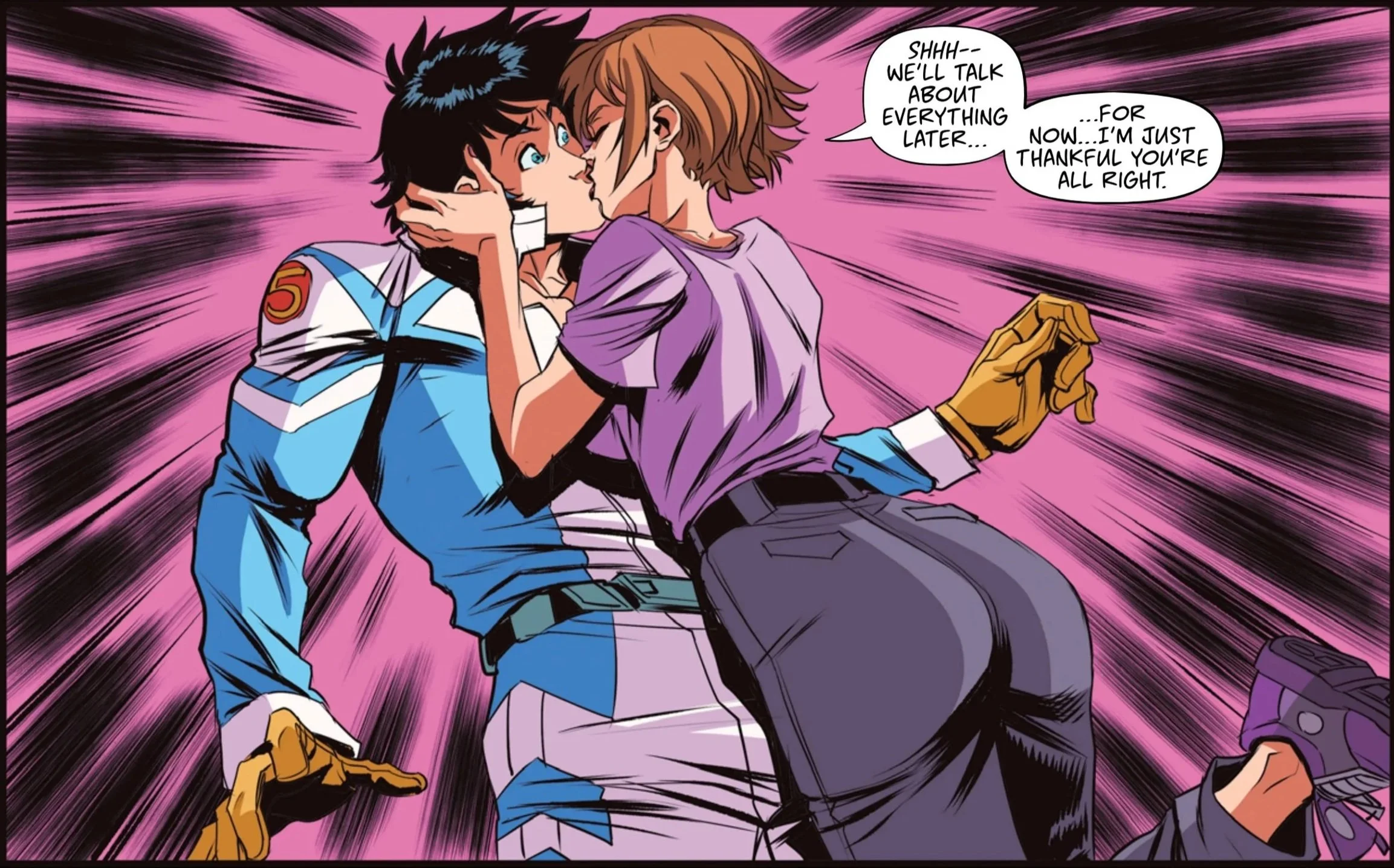
The smartest decision Pepose makes is refusing to treat V-Gas as something that completely transformed Speed into a different person. Instead, the drug amplifies flaws that have been present since the very beginning of the series. Speed has always been fiercely competitive, stubborn, and willing to push himself further than anyone else. Under the influence of V-Gas, those qualities become dangerous, turning his greatest strengths into his biggest weaknesses.
That approach makes this storyline far more effective than if Speed had simply become an unrecognizable villain. Readers understand why his behavior is so alarming because we've spent the previous nine issues watching him try to be the kind of hero everyone believes he is. His struggle feels personal rather than artificial, and that gives this issue genuine emotional weight.
Pepose also deserves credit for allowing the consequences of Speed's actions to linger throughout the issue. The people around him are no longer simply worried about winning races. They're worried about losing someone they care about. That shift raises the stakes considerably and gives the story an urgency that extends well beyond the competition itself.
By the end of the issue, Speed's recovery feels earned because it comes through the support of the people closest to him rather than through a convenient solution. The series has always emphasized family and friendship alongside fast cars and spectacular races, and this chapter reinforces that those relationships are ultimately what define its hero.
Racer X Continues to Be One of the Series’ Best Characters
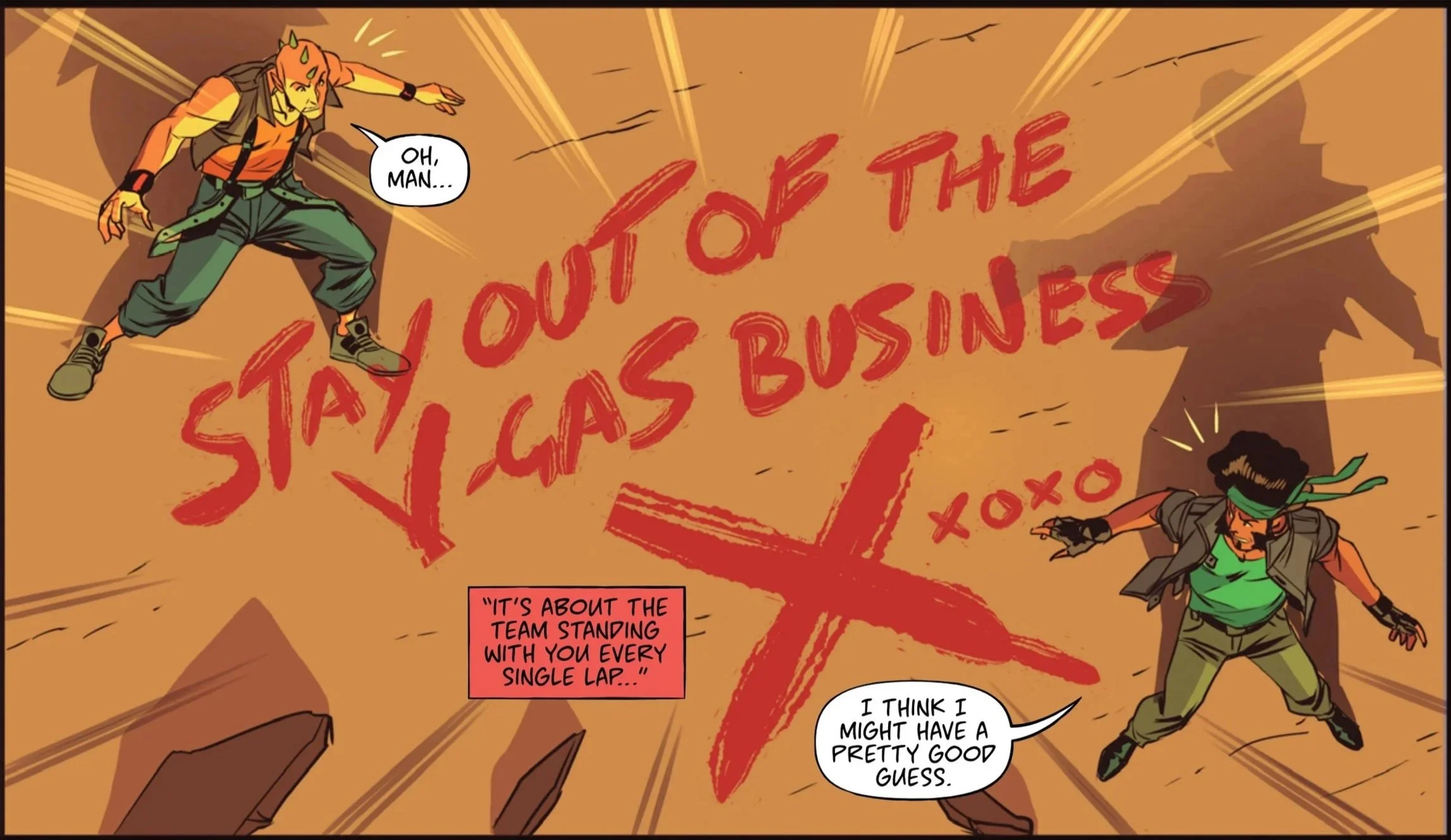
While Speed remains the emotional center of the story, Racer X once again steals several of the issue's strongest moments.
Coming off the conclusion of his own excellent miniseries, it would have been easy for Racer X to simply return as another supporting character. Instead, Pepose continues developing the relationship between the brothers in meaningful ways. Racer X isn't trying to lecture Speed or prove himself right. He's simply trying to save someone he loves before it's too late.
Those interactions carry genuine emotional weight because they build upon everything both series have established. Seeing Racer X become more openly protective of Speed while still respecting his independence gives their relationship a warmth that wasn't always present in this run. It also helps make the broader Speed Racer universe feel more interconnected without requiring readers to have followed every title.
Trixie also continues proving why she's one of the strongest supporting characters in the series. Rather than standing on the sidelines, she actively refuses to give up on Speed even when his behavior pushes everyone away. The emotional support she provides helps ground the larger spectacle and reminds readers that these relationships matter just as much as the races themselves.
A Volcano Makes for Another Outstanding Race
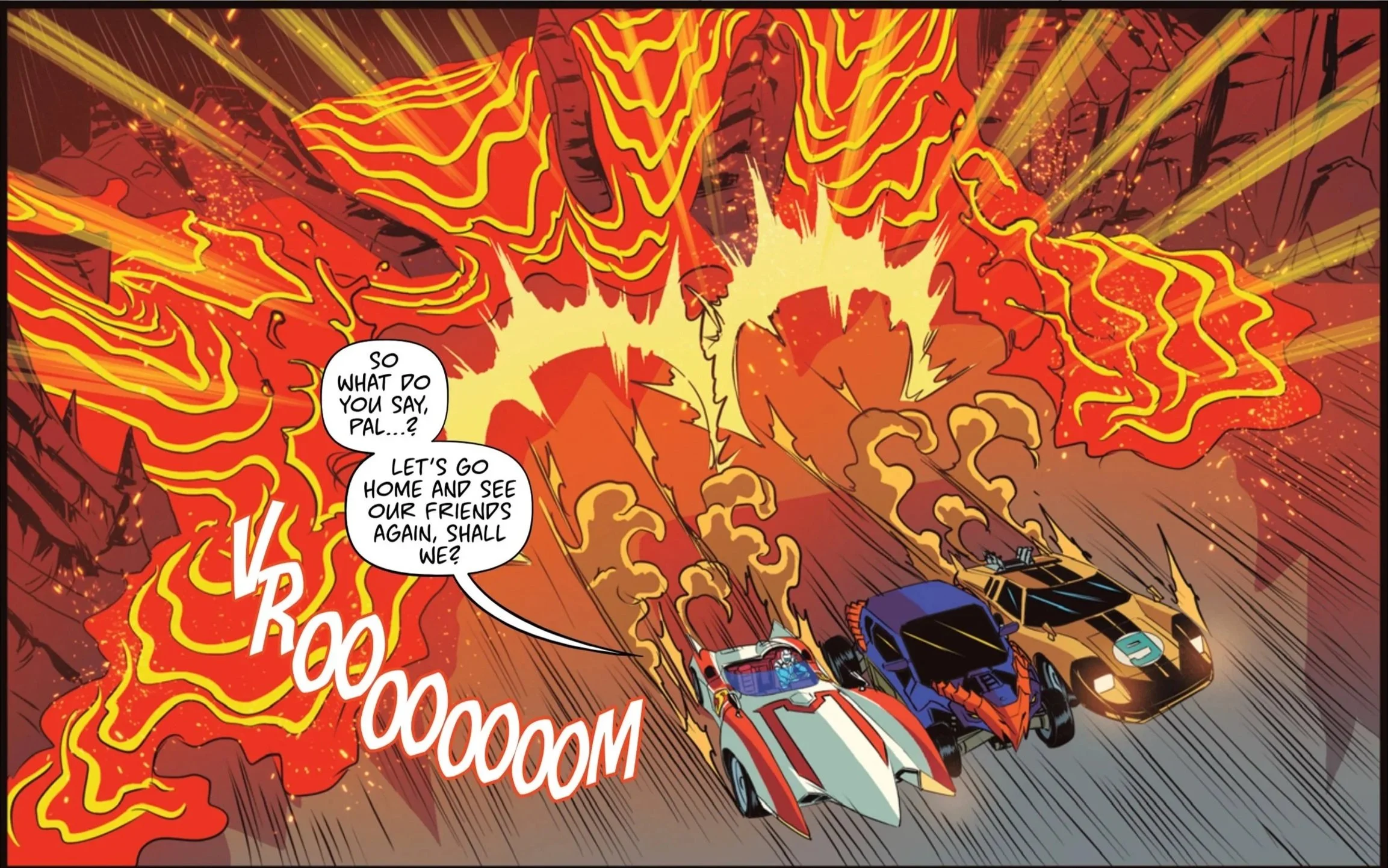
Even with so much emphasis placed on character drama, Speed Racer never forgets that exhilarating races are the series's biggest selling point.
The Great Fire Race immediately stands out as one of the most memorable tracks Pepose has introduced. Racing through an active volcano is exactly the kind of wonderfully exaggerated concept that fits this franchise perfectly. The setting feels dangerous, visually striking, and just over-the-top enough to capture the spirit of the original cartoon while embracing modern comic storytelling.
The race itself maintains excellent momentum throughout the issue. Rather than existing solely as spectacle, every major moment reflects Speed's emotional state and the difficult position he’s placed himself in. The action constantly serves the story instead of distracting from it.
This results in a race that feels exciting for more than just its explosions and near misses. Readers remain invested because every dangerous turn has consequences beyond who crosses the finish line first.
Another Beautiful Showcase for the Creative Team
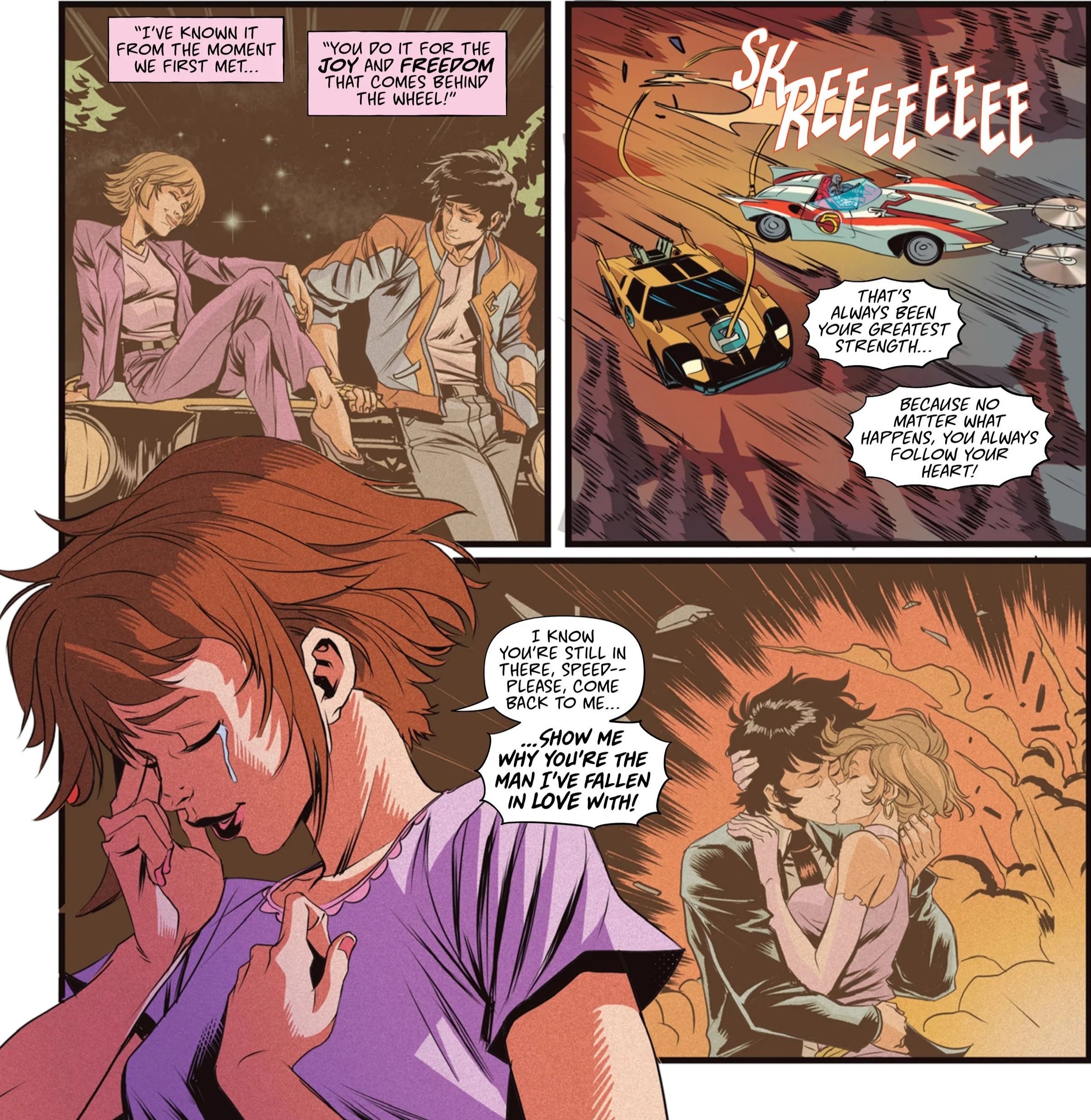
Davide Tinto continues delivering some of the strongest artwork in comics centered around speed and motion. The volcanic setting gives him plenty of opportunities to create dynamic pages filled with lava, smoke, collapsing rock, and high-speed action, and he takes full advantage of every one of them.
Just as impressive, however, are the quieter moments between the races. Tinto excels at facial expressions, allowing Speed's internal struggle, Racer X's concern, and Trixie's determination to come across naturally without excessive dialogue. Those emotional beats carry just as much impact as the racing itself because the artwork communicates so much through body language alone.
Jão Canola's colors elevate every scene, particularly during the volcanic sequences where fiery reds and brilliant oranges dominate the pages without becoming visually overwhelming. The coloring keeps the action easy to follow while reinforcing the danger surrounding every turn of the race.
Together with Buddy Beaudoin's consistently strong lettering, the creative team once again delivers a visually polished issue that captures both the excitement and emotional sincerity that define this series.
Final Thoughts and Rating
Speed Racer #10 delivers exactly what this storyline needed. It brings the V-Gas arc to a satisfying conclusion while reinforcing the themes of family, perseverance, and personal responsibility that have defined the series from the beginning. Rather than ending with a simple victory lap, the issue reminds readers that Speed's greatest strength has never been his ability behind the wheel. It's the people willing to stand beside him when he loses his way.
What impressed me most is that this never feels like the end of the series. While the V-Gas storyline reaches a natural conclusion, the issue clearly positions the book for its next adventure. Racer X's growing presence in the main title is particularly exciting following the end of his own series, and the evolving relationships between the core cast leave plenty of room for future stories.
Pepose continues proving that Speed Racer can honor its source material while still telling fresh, emotionally engaging stories. Between its heartfelt character work, thrilling racing sequences, and consistently excellent artwork, this remains one of the most entertaining licensed comics on shelves.
Rating: 9/10
A heartfelt conclusion to the V-Gas storyline that combines exhilarating racing, meaningful character growth, and outstanding artwork. Rather than feeling like a finale, it successfully closes one chapter while accelerating confidently toward the next.