
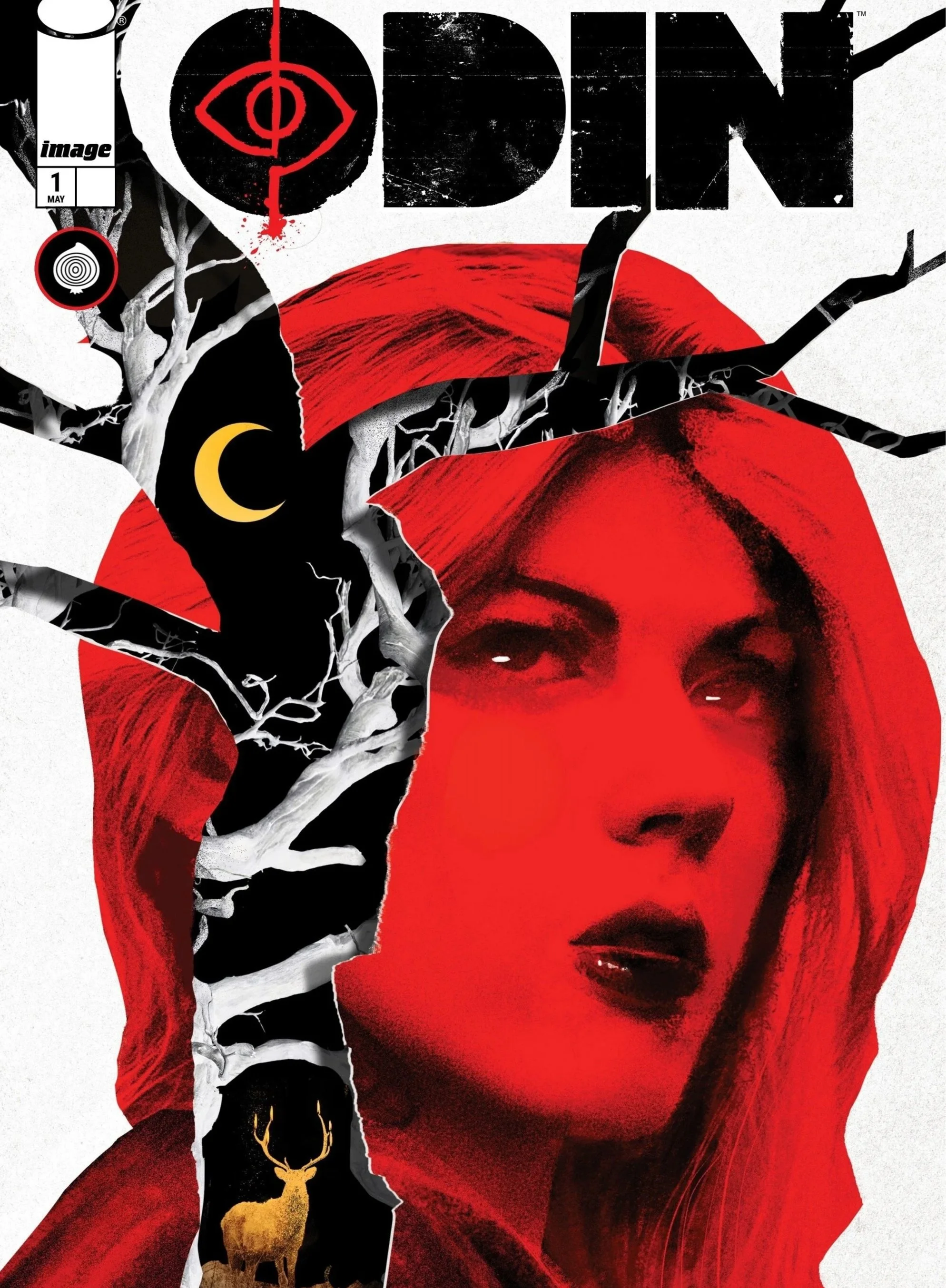
Writers: Marguerite Bennett & James Tyion IV
Artist: Letizia Cadonici
Colorist: Jordie Bellaire
Cover Artist: Alex Eckman-Lawn
Going into Odin #1, I expected a dark take on Norse mythology. What I didn't expect was just how fully James Tynion IV and Marguerite Bennett would commit to horror. From its opening pages, this debut issue feels unsettling, blending mythology, mystery, psychological horror, and graphic violence into a story that immediately grabbed my attention.
At its core, Odin #1 follows journalist Adela Weber as she embeds herself within a neo-Nazi cult that believes it can summon the Norse god Odin. It's a premise that immediately stands out, not only because of its unusual combination of mythology and modern extremism, but because of the way the story uses both elements to create a constant sense of unease.
From the opening pages, readers understand that Adela has placed herself in an incredibly dangerous situation. Even before the supernatural elements begin to emerge, there is tension simply from watching her navigate a group of people whose beliefs and motivations are deeply disturbing. That tension only increases as the issue progresses and the line between reality and something far more terrifying begins to blur. By the time the final pages arrive, Odin #1 has established itself as one of the most intriguing first issues I've read this year.
An Intriguing Premise That Hooks You Immediately
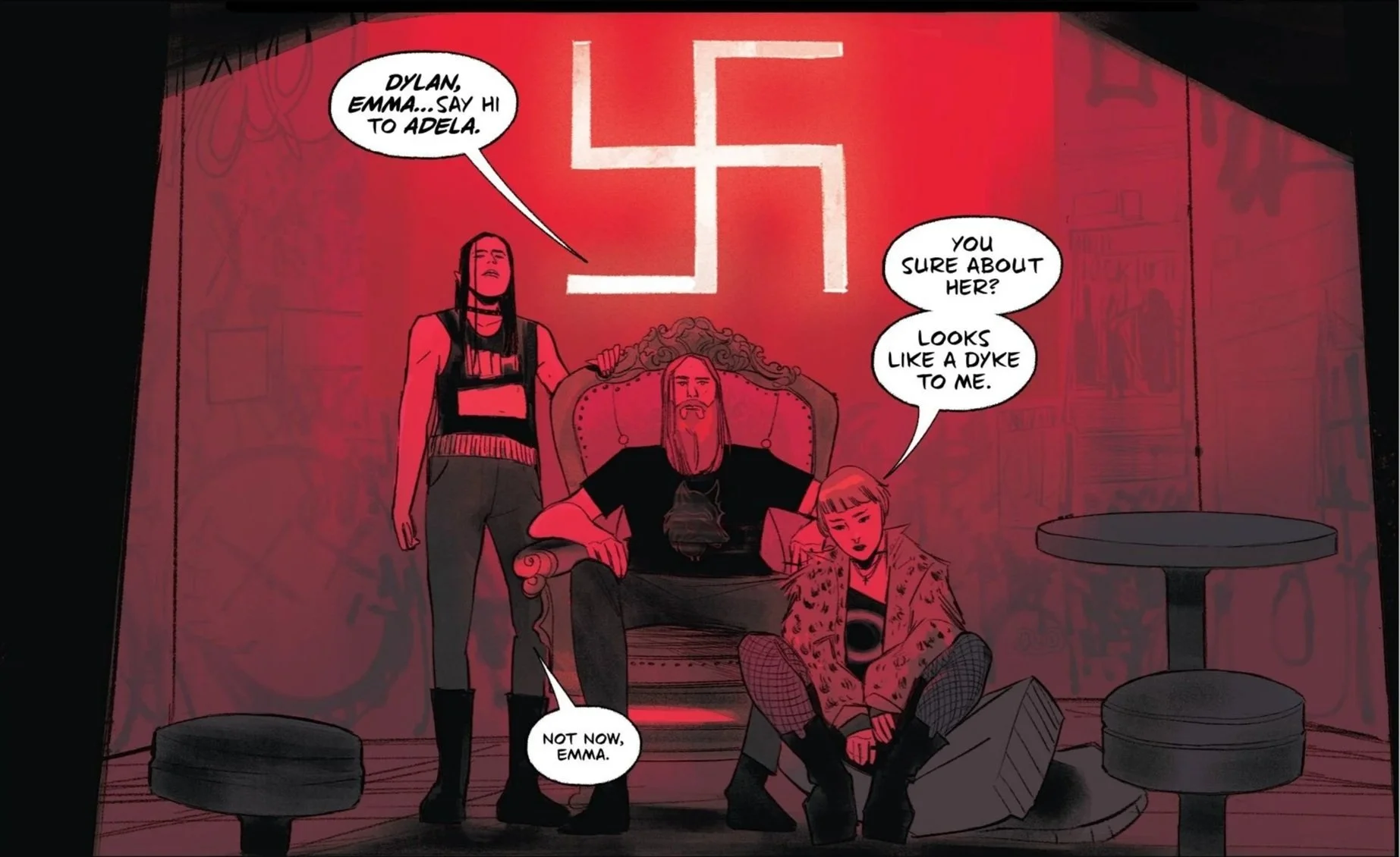
One of the things I appreciated most about Odin #1 was how quickly it hooked me. The premise alone is enough to grab your attention, but the creative team does an excellent job of keeping readers invested once the initial intrigue wears off.
The concept of a journalist infiltrating a dangerous group is compelling on its own, but Tynion and Bennett add another layer by introducing the possibility that the cult may not be completely delusional. Throughout the issue, there is a lingering question hanging over every scene: are these people simply fanatics chasing a fantasy, or is there something genuinely supernatural waiting for them at the end of their journey?
The uncertainty keeps the story engaging. The writers wisely avoid providing easy answers, instead allowing the mystery to build naturally as Adela spends more time with the cult members. Every conversation feels important because readers are constantly searching for clues about where the story is headed.
The issue also does a solid job of differentiating the members of the cult. While none of them are particularly sympathetic figures, they don't all feel identical. Some appear to be motivated primarily by hatred and ideology, while others seem genuinely devoted to the mythology they have built their lives around. That distinction adds texture to the story and prevents the group from feeling one-dimensional.
At the center of it all is Adela, who serves as an effective point-of-view character. Through her eyes, readers experience both the fascination and the danger of what is unfolding. She is determined to uncover the truth, but the deeper she gets into the cult's activities, the more apparent it becomes that she may be in well over her head.
The issue leaves readers with more questions than answers, but that's exactly what a first issue should do. By the time I reached the final page, I was fully invested in finding out where this story goes next.
Horror Takes Center Stage
While mythology provides the framework for the story, horror is unquestionably the book's primary focus.
What surprised me most was how effective the atmosphere is. Even before the issue's more graphic moments arrive, there is a constant feeling that something is wrong. The cult members are unsettling enough on their own, which makes the eventual supernatural elements feel even more disturbing when they finally emerge.
The creative team wastes no time establishing a grim and unsettling tone. The opening sequence alone is enough to signal that this won't be a traditional fantasy interpretation of Odin. Instead, the issue embraces the darker and often more brutal aspects of Norse mythology, presenting them in a way that feels genuinely disturbing.
What makes the horror particularly effective is that it isn't limited to graphic violence. There is certainly plenty of gore throughout the issue, but some of the most memorable moments come from the growing sense that something is fundamentally wrong. Readers know danger is approaching, but the story keeps them guessing about what form it will ultimately take.
The pacing plays a major role in creating that feeling. Much of the issue unfolds deliberately, allowing tension to build before eventually erupting into moments of chaos and violence. That patience pays off because the horror feels earned rather than forced.
By the time the issue reaches its climax, the sense of dread that has been building throughout the story pays off in a major way.
A Timely Look at Radicalization
Beyond the horror elements, one aspect of Odin #1 that stood out to me was its willingness to engage with a very real modern issue.
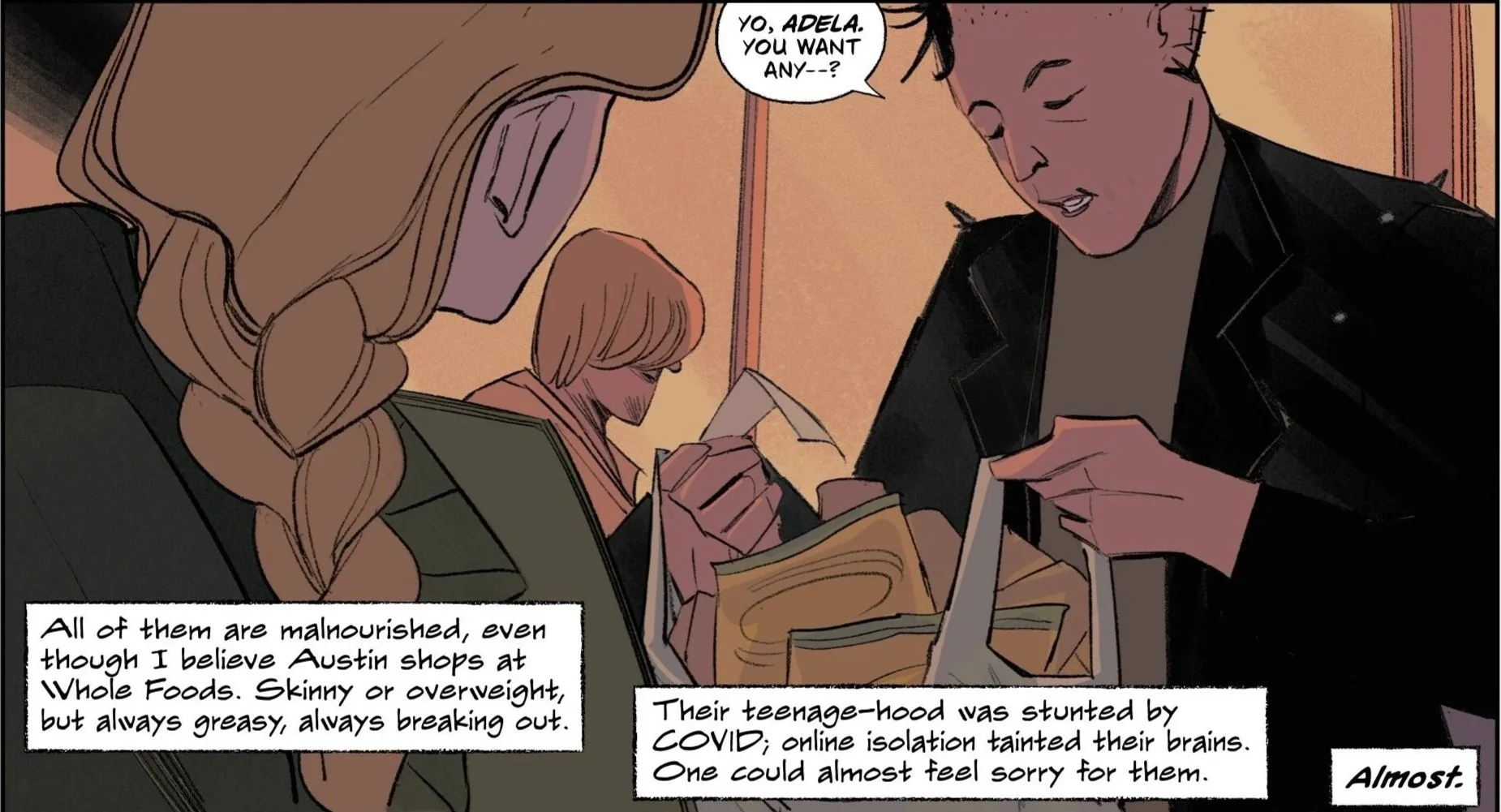
The comic doesn't simply use a neo-Nazi cult as window dressing for a horror story. Instead, it spends time examining the beliefs, recruitment tactics, and motivations that allow extremist movements to attract followers in the first place. In particular, I found its exploration of the alt-right pipeline to be an important element of the story.
Over the last decade, conversations about how young men are exposed to increasingly radical ideologies online have become more relevant than ever. Odin #1 doesn't attempt to offer easy answers, but it does highlight how vulnerable people can be drawn into communities that promise belonging, purpose, and identity before gradually introducing more dangerous beliefs.
What makes this aspect of the story work is that it never feels preachy. Rather than stopping the narrative to make a point, the comic weaves these themes naturally into the cult's dynamics and the interactions between its members. The result is a horror story that feels grounded in something frighteningly real.
In many ways, the real-world horror presented throughout the issue is just as unsettling as the supernatural elements. That combination gives Odin #1 an added layer of depth that elevates it beyond being simply another mythology-inspired horror comic.
Letizia Cadonici Delivers Stunning Visuals
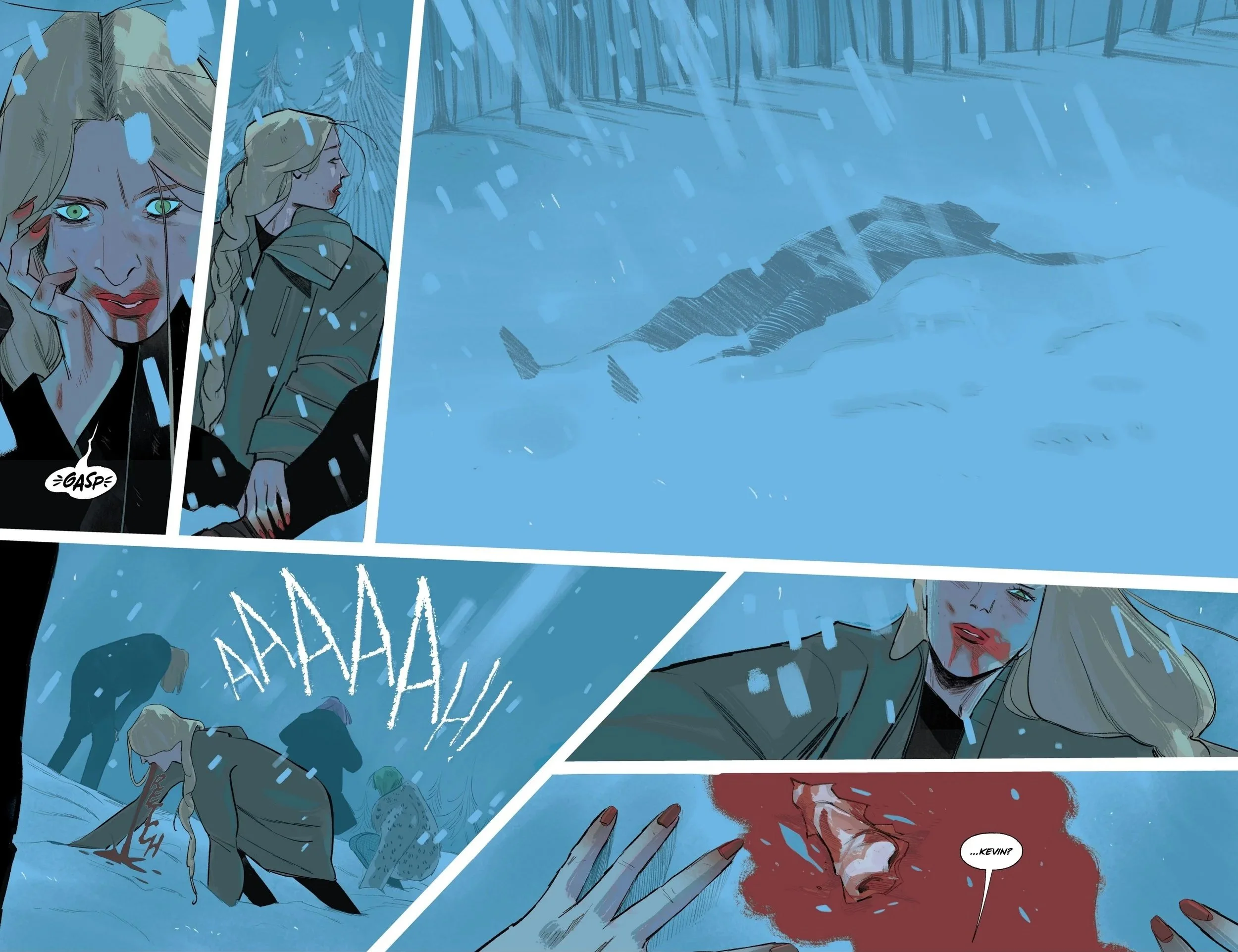
As much as I enjoyed the story, the artwork is what truly sold me on Odin #1. There were several moments where I found myself lingering on pages just to take in the visuals before moving on.
Letizia Cadonici's work throughout the issue is exceptional. Every page contributes to the unsettling atmosphere that defines the story, whether through graphic horror imagery or subtle visual details that make scenes feel increasingly uncomfortable.
The character work is particularly impressive. Facial expressions communicate fear, suspicion, and unease in ways that often say more than the dialogue itself. Adela's growing discomfort is apparent throughout the issue, helping readers connect with her experience even when she isn't openly expressing her concerns.
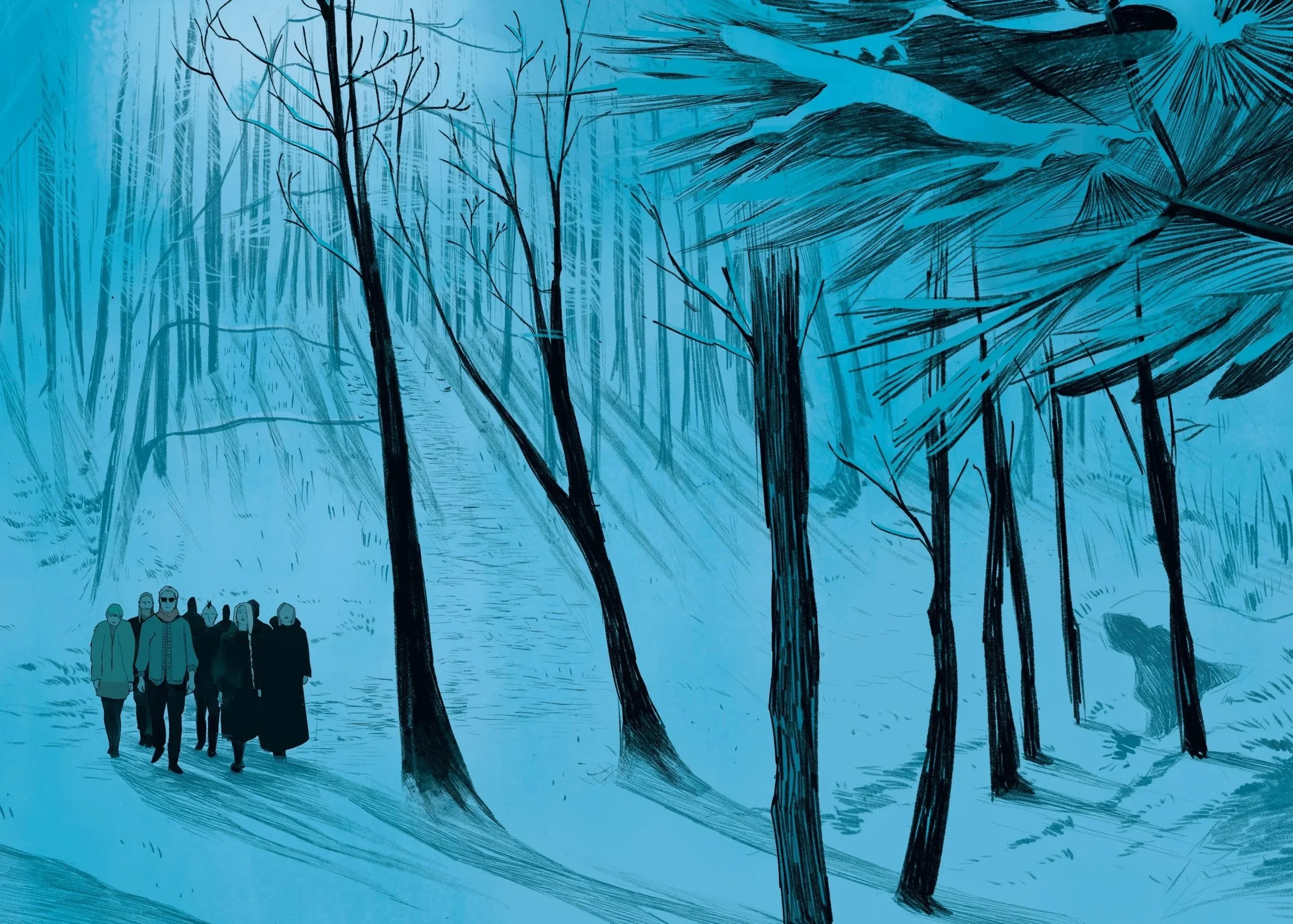
The environments are equally effective. The isolated settings create a feeling of vulnerability that perfectly complements the story's themes. Characters often seem small compared to the landscapes surrounding them, reinforcing the idea that they are dealing with forces beyond their understanding.
The issue doesn't shy away from gore, but what impressed me most wasn't the violence itself. It was the way Cadonici uses those horrific moments to create a sense of unease that lingers long after you turn the page. Every disturbing image serves a purpose and contributes to the larger atmosphere of dread.
Perhaps most importantly, Cadonici excels at creating visual uncertainty. As events become increasingly surreal, readers are often left questioning what is real and what may be the result of hallucination or manipulation. That ambiguity enhances the horror and makes the story feel even more unpredictable.
Jordie Bellaire’s Colors Steal the Show
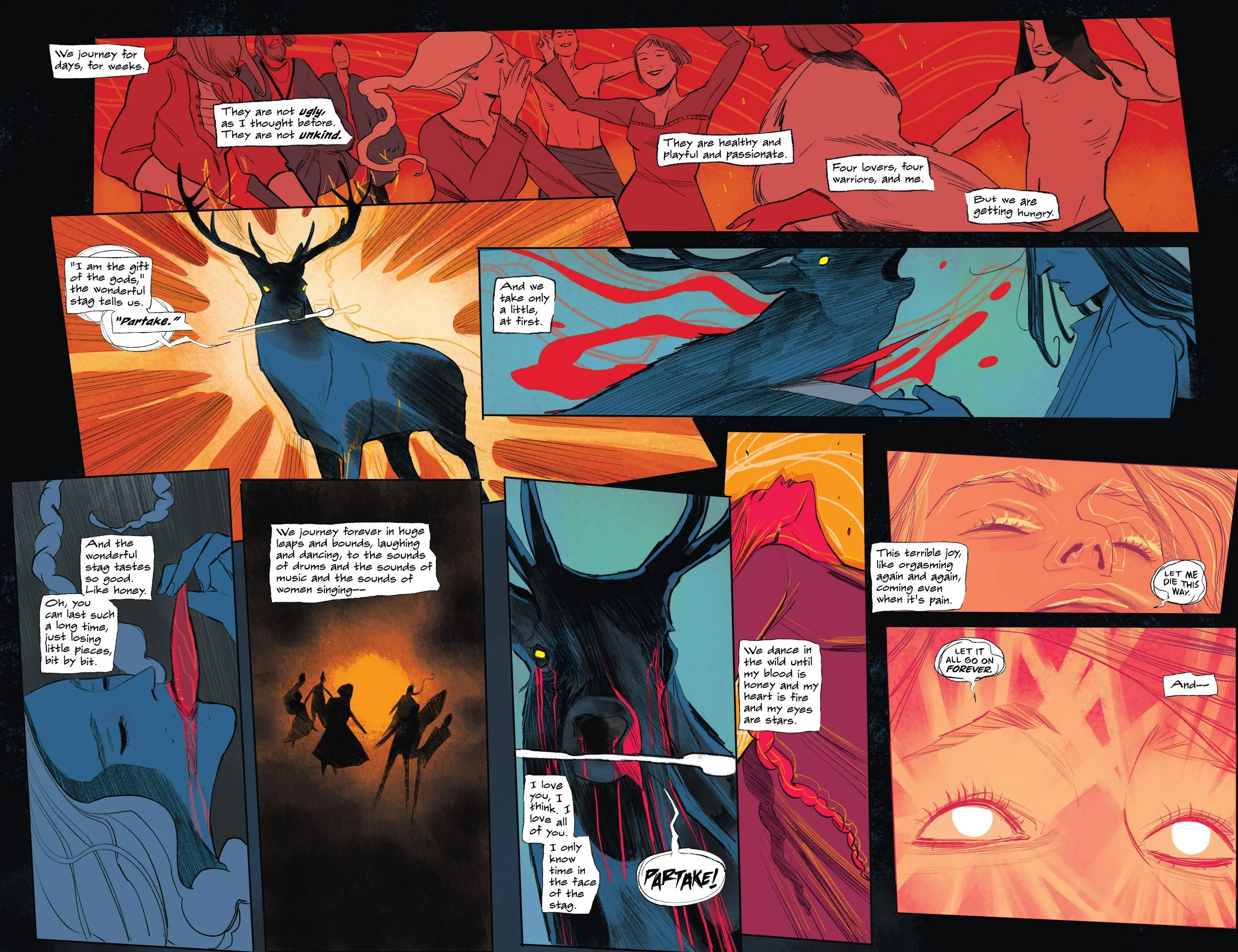
As impressive as the artwork is on its own, Jordie Bellaire's colors elevate the entire issue to another level.
If there is one aspect of Odin #1 that completely blew me away, it was the coloring. Throughout the issue, Bellaire uses color not simply to make pages look attractive, but to actively shape the mood and emotional impact of every scene.
Cold blues dominate much of the book, emphasizing the harsh and isolated environment in which the story takes place. Those cooler tones help establish a sense of discomfort long before the horror reaches its peak. Even in quieter moments, the colors contribute to the feeling that something is deeply wrong.
The stag sequence, however, was the moment where the issue fully won me over.
Without getting into spoilers, the colors become increasingly surreal and hypnotic as the scene unfolds, creating a dreamlike quality that perfectly complements what's happening on the page. It was one of those rare comic-book moments where I stopped reading for a second just to appreciate how everything was coming together visually.
The combination of Cadonici's artwork and Bellaire's coloring creates some of the most memorable pages I've seen this year. Even outside of that sequence, the colors consistently enhance the storytelling. Whether emphasizing danger, isolation, or outright terror, Bellaire demonstrates exactly why she remains one of the industry's premier colorists.
There are many great-looking comics released every month, but few use color as effectively as Odin #1 does.
Final Thoughts and Rating
Odin #1 is exactly what a debut issue should be. It introduces an intriguing premise, establishes memorable characters, creates a distinct atmosphere, and leaves readers eager for more.
James Tynion IV and Marguerite Bennett craft a story that successfully blends mythology, horror, mystery, and real-world social commentary without allowing any one element to overwhelm the others. The result is a comic that feels unique within the current market and immediately stands apart from other mythology-inspired books.
At the same time, Letizia Cadonici and Jordie Bellaire deliver some of the strongest visuals you'll find in a debut issue this year. The artwork is consistently impressive, while the coloring elevates several sequences into truly unforgettable territory.
More than anything else, Odin #1 left me wanting the next issue immediately. The mystery is compelling, the horror is effective, and the artwork is some of the most memorable I've seen in a first issue this year. By the time I reached the final page, I was fully bought into both the premise and the world the creative team has created.
For a first issue, that's about the highest compliment possible.
Rating: 9/10
A chilling and visually stunning debut that blends mythology, horror, and timely social commentary into one of the year's most compelling first issues. With an intriguing mystery, exceptional artwork, and absolutely breathtaking colors, Odin #1 earns an easy recommendation and immediately secures a place on my pull list.