
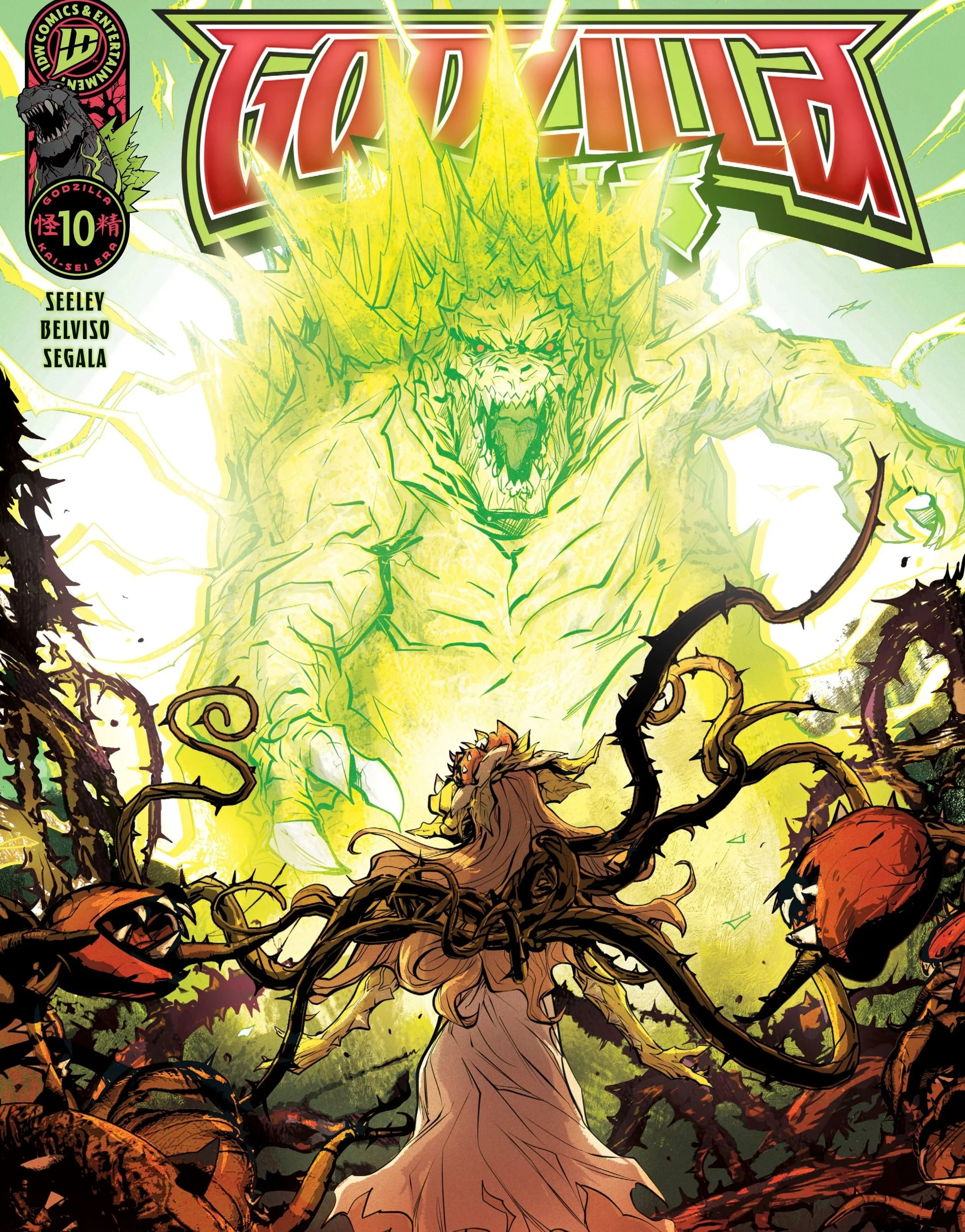
Writer: Tim Seeley
Artist: Giada Belviso
Colors: Francesco Segala w/ Gloria Martinelli
Cover Artists: Hendry Prasetya & Francesco Segala
After the explosive escalation of the previous issue, Godzilla #10 deliberately slows the pace to focus on the emotional consequences left behind by the kaiju stampede. Rather than attempting to outdo the constant chaos of issue #9, the series pivots toward character drama, centering on Jacen’s deteriorating mental state and the increasingly uneasy buildup surrounding May and Biollante. The result is an issue that feels more restrained and transitional, but still effective in several important ways.
While the story lacks the relentless momentum that made the previous chapter so exciting, it succeeds at deepening the relationships within G-Force and reinforcing the emotional stakes driving the conflict forward. Tim Seeley leans heavily into the idea that the team has become something resembling a family, and much of the issue’s strongest material comes from watching the pilots try to save Jacen before his connection to the Kai-Sei Godzilla spirals completely out of control.
At the same time, the book continues to ask readers to invest in the mysterious Biollante storyline, and that remains a harder sell. The concept of May as the centerpiece of this looming kaiju uprising still feels somewhat awkward, even as the issue works hard to frame her as an ominous and increasingly dangerous figure. The tension surrounding the inevitable confrontation with Godzilla is compelling, but the emotional and thematic weight of the reveal has not fully landed yet.
Even so, the issue does enough groundwork to keep the series moving in an interesting direction.
The Calm Before the Collision
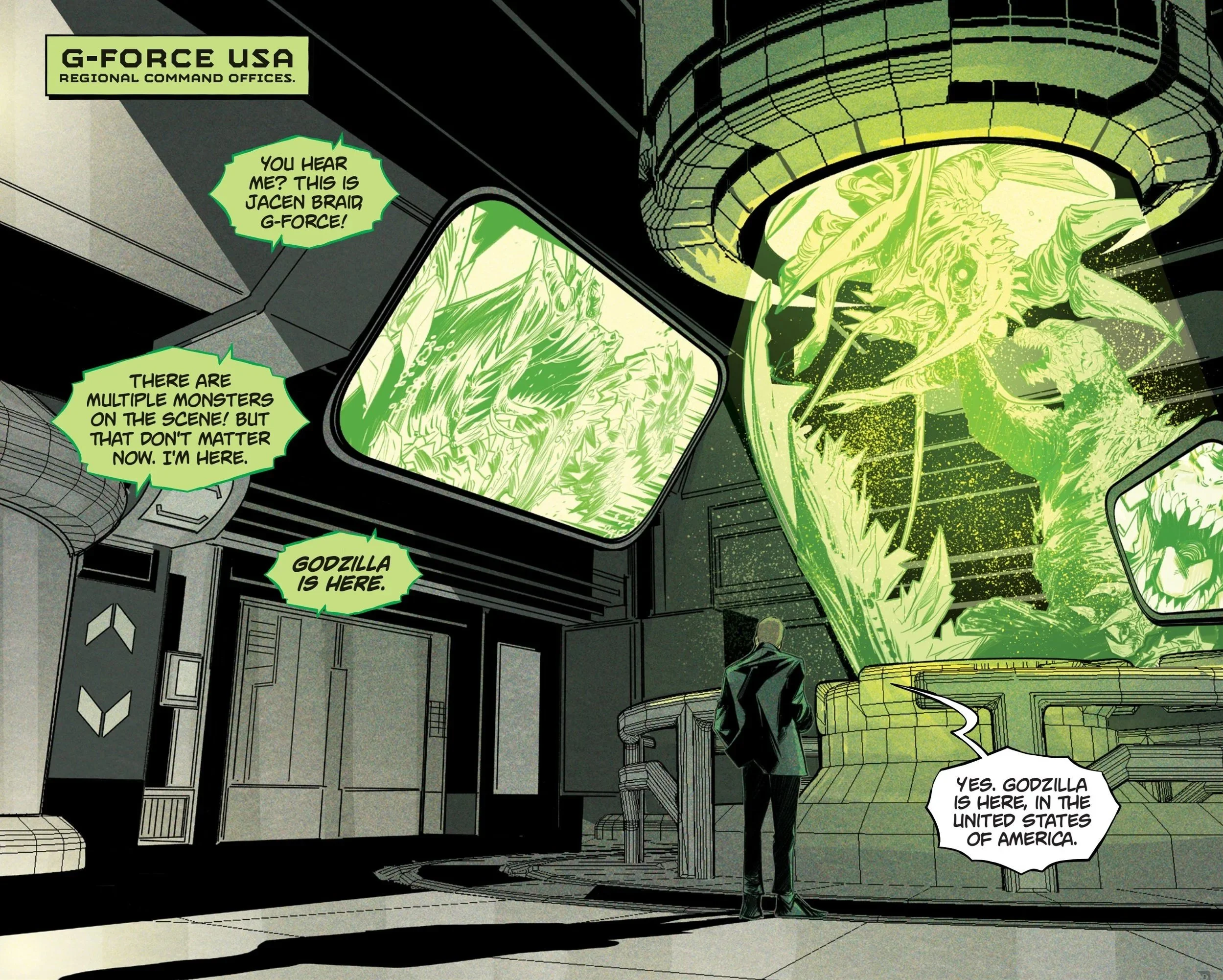
The story picks up immediately after the disastrous ending of the previous issue. Jacen, consumed by grief and anger after Nuki’s apparent death, has fully unleashed the Kai-Sei Godzilla once again. Unlike earlier transformations, this version of Godzilla feels less like an unstable power surge and more like Jacen actively surrendering himself to rage.
That distinction becomes central to the issue.
Rather than portraying Jacen as merely losing control, the comic emphasizes how willingly he is feeding his anger into the transformation. The parallel to characters like the Hulk becomes increasingly obvious here: the more Jacen embraces his fury, the more destructive and irrational Godzilla becomes in response.
Seeley handles this aspect of the story fairly well because the emotional trigger feels earned. The previous issue spent significant time building Jacen and Nuki’s relationship, so his reaction carries genuine emotional weight. More importantly, the team’s response to his breakdown reinforces how much these characters have grown closer over the course of the series.
Instead of treating Jacen like a weapon that needs to be contained, the others genuinely want to save him.
That shift in dynamic gives the issue much of its emotional core.
Nuki Remains the Emotional Anchor
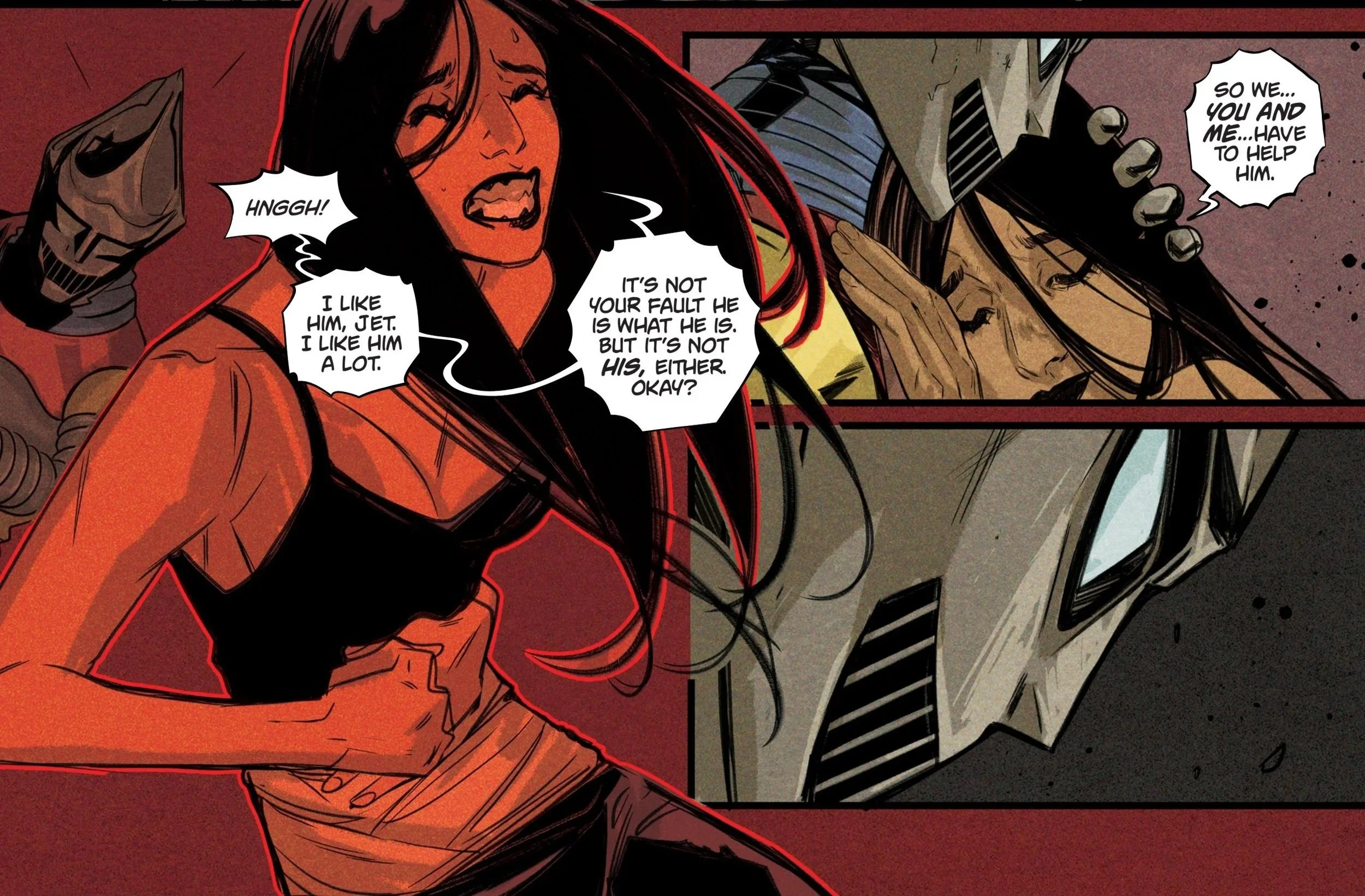
Nuki once again emerges as one of the strongest characters in the book. Even while severely wounded, she continues trying to reach Jacen emotionally, refusing to abandon him despite the danger he now represents.
The issue makes it abundantly clear how deeply she cares for him, and her willingness to put herself at risk to help him regain control becomes one of the story’s strongest throughlines. What makes these moments work is that the relationship feels surprisingly sincere compared to some of the more exaggerated personalities elsewhere in the cast.
Nuki’s scenes also help ground the increasingly bizarre Kai-Sei mythology in something emotionally recognizable. Giant monsters and psychic energy manifestations can sometimes make the series feel abstract, but her concern for Jacen keeps the conflict personal.
That emotional grounding is especially important in an issue with comparatively little large-scale action.
The Biollante Problem
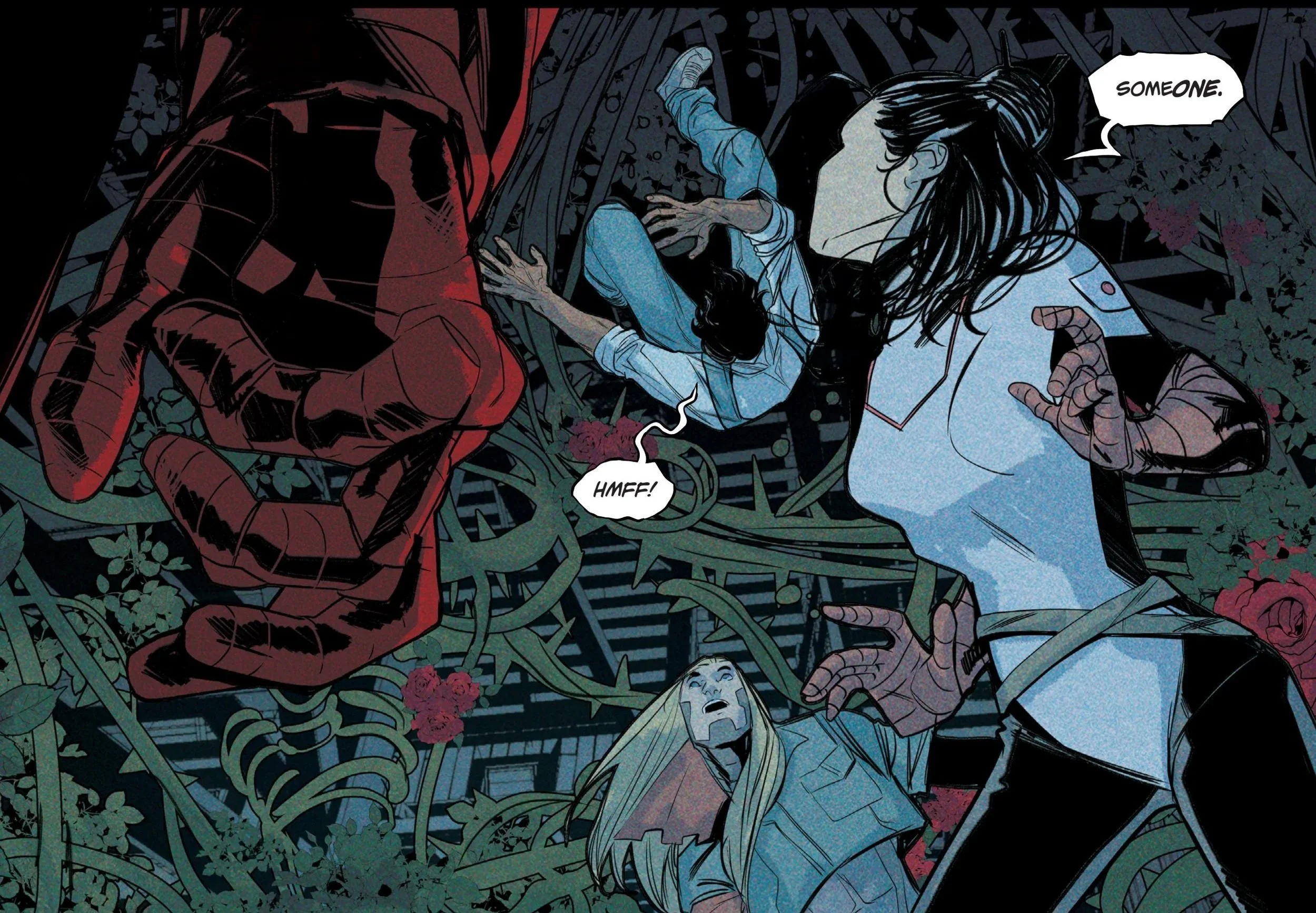
Where the issue becomes less convincing is in its continued handling of May and the Biollante storyline.
The comic clearly wants May to feel unsettling and mysterious, and visually, the overgrown farm succeeds at creating an eerie atmosphere. The monstrous roses spreading across the Midwest give the setting an appropriately apocalyptic tone, and the idea of nature overtaking civilization fits Biollante conceptually.
The problem is that the emotional side of the storyline still feels underdeveloped.
The series continues framing May as this immensely important figure within the Kai-Sei era, but the “Biollante as a little girl” concept remains difficult to fully invest in emotionally. There is intrigue in the mystery itself, and the comic does a solid job building anticipation for the eventual showdown between Godzilla and Biollante, but the character work behind May still feels thinner than the material surrounding Jacen and the G-Force team.
Right now, the story is relying more on the promise of what Biollante might become than what the character currently is.
Fortunately, the looming confrontation itself still generates excitement. The issue repeatedly positions the coming clash as a major turning point for the entire series, and there is a strong sense that the narrative has been building toward this collision for quite some time.
A lot may ultimately depend on how effective Biollante’s full reveal ends up being in the next chapter.
A Stronger Balance Between Drama and Spectacle
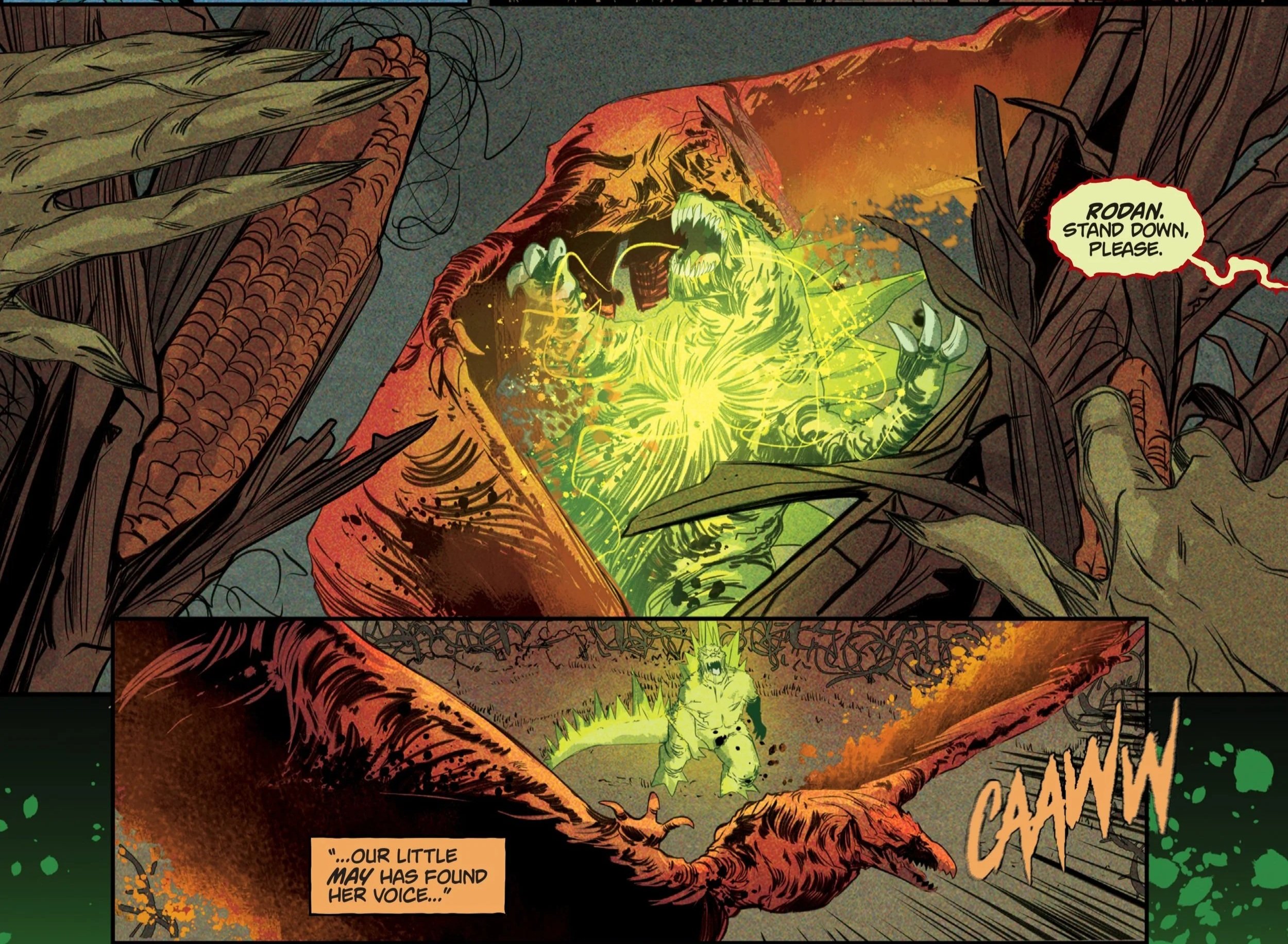
Although this issue contains far less action than its predecessor, it generally understands how to use restraint effectively. Rather than feeling empty, the quieter pacing allows the emotional fallout from the kaiju attacks to breathe.
That slower structure also benefits the supporting cast. Characters like Riviera and Richard feel more engaged with the central conflict because the issue gives them opportunities to react emotionally instead of simply jumping from one battle to another.
Even Incense, who has often been one of the weaker elements of the series, feels somewhat less grating here simply because the issue tones down the influencer comedy and focuses more on the group dynamic.
The result is an installment that feels more cohesive emotionally, even if it is less immediately thrilling.
The Artwork Carries Much of the Atmosphere
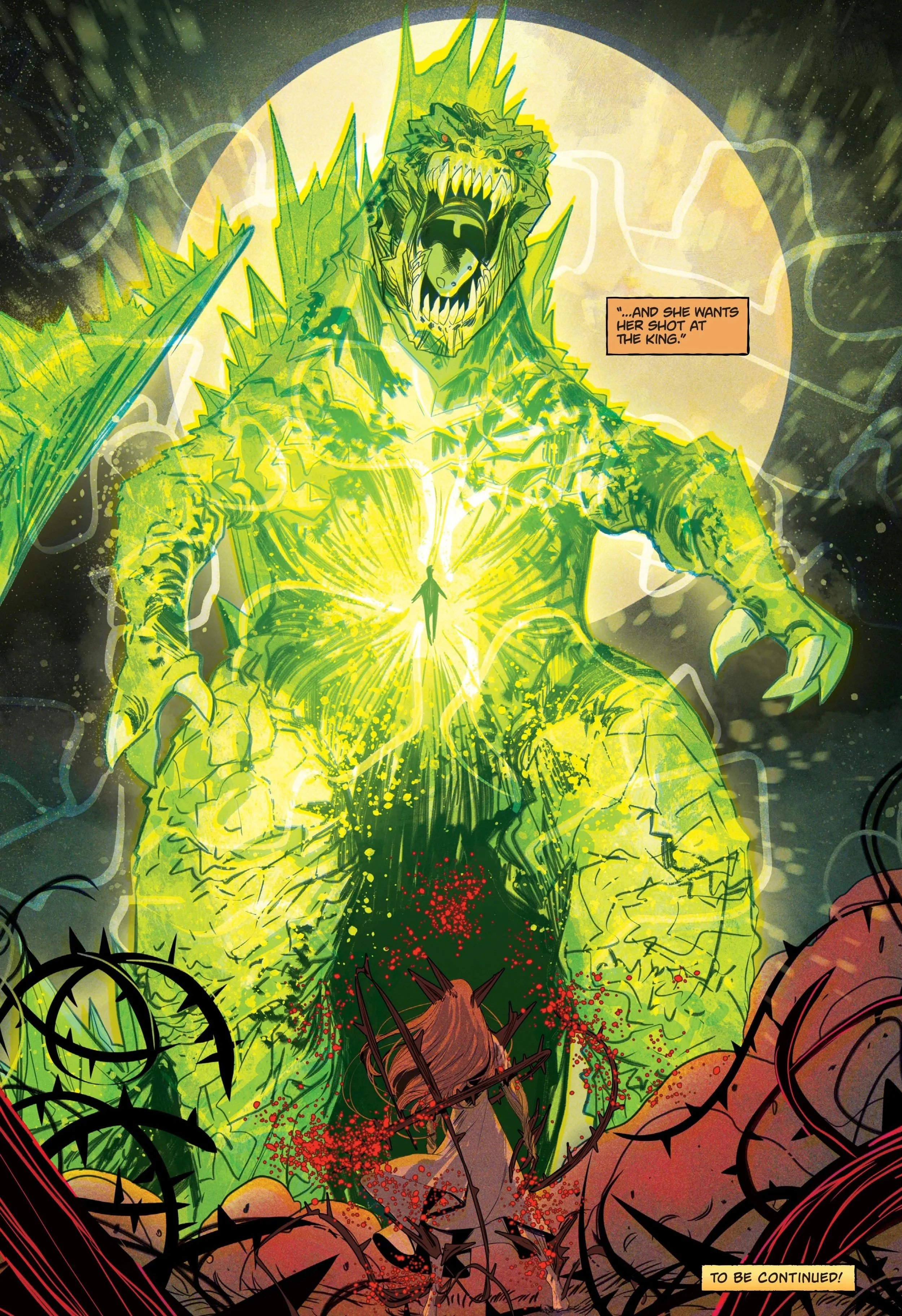
Giada Belviso’s artwork continues to be one of the series’ biggest strengths. The emotional scenes throughout the issue are handled with strong facial expressions and effective panel composition, helping the quieter moments maintain tension even without constant monster fights.
The overgrown farm setting is particularly striking. The massive rose growths and warped plant life create an unsettling visual identity that helps distinguish the Biollante storyline from the more traditional kaiju battles elsewhere in the series.
When Godzilla does appear, Belviso gives the character an appropriately imposing presence. The Kai-Sei manifestation feels enormous and volatile, reflecting Jacen’s emotional instability without needing excessive exposition to explain it.
Meanwhile, Francesco Segala and Gloria Martinelli’s colors continue to elevate the atmosphere across the board. The vibrant greens and reds surrounding May’s farm give the environment an unnatural, almost dreamlike quality that contrasts nicely with the colder military settings surrounding G-Force.
Even in an issue with less spectacle overall, the art team consistently delivers pages that feel dynamic and visually memorable.
Final Thoughts and Rating
Godzilla #10 works best as a bridge issue. After the relentless escalation of the previous chapter, this installment shifts focus toward emotional fallout and character relationships while positioning the series for the major confrontation still to come.
The slower pace may disappoint readers hoping for nonstop kaiju action, but the stronger emphasis on Jacen’s emotional collapse and the team’s loyalty toward him gives the story genuine weight. Nuki, in particular, continues to stand out as the emotional center of the series.
At the same time, the Biollante storyline remains somewhat uneven. The atmosphere surrounding May is compelling, and the anticipation for the eventual Godzilla vs. Biollante clash is undeniably strong, but the character herself still feels more conceptually interesting than emotionally engaging.
Still, the issue succeeds at building tension for what comes next, and the artwork remains consistently excellent throughout.
If the next chapter can deliver on the confrontation this issue spends so much time building toward, the series could be heading toward its strongest stretch yet.
Rating: 7.5/10
A slower, more emotionally focused chapter that successfully builds tension for the coming Godzilla vs. Biollante showdown, even if some of the mythology still hasn’t fully clicked.