Author : Phillip Kennedy Johnson
Artist : Stefano Raffaele
Colourist : Marcelo Maiolo
A Silent Twist
Just when you thought you had all the answers, PJK changes the questions. And like a (Roddy) Pied Piper, Johnson has the reader dancing to his quiet tune. This issue does a tremendous job of not just furthering the story itself, but also bending the arc in a way that I certainly did not see coming, which makes it that much sweeter to read—who doesn’t love surprises, especially this close to Christmas.
Johnson dials the Dark Detective’s art of deduction up to ten, as this issue focuses more on understanding the motives of Cyrus Mercer, aka the Quiet Man. We find out why he’s after the Ventriloquist, how Penguin and Two-Face are involved, and what brought all of these characters together many years ago to set this path of vengeance in motion.
Quietly Moving to a Crescendo
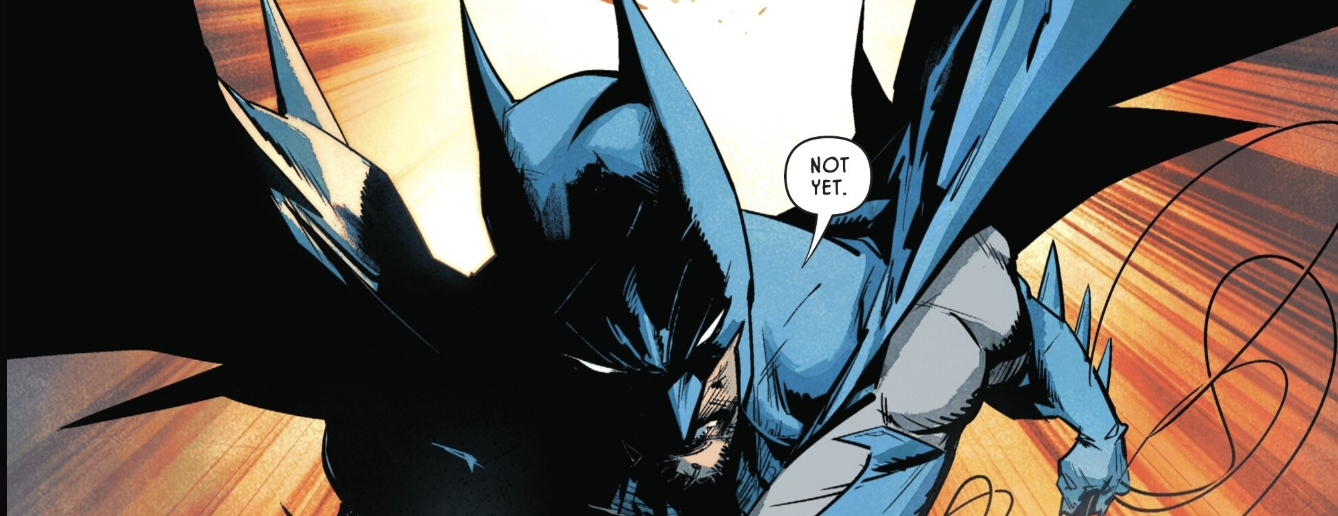
What a time it is to be a Batman fan, because we’ve got sensational stories coming from every writer and artist! Fraction’s Batman, Snyder’s Absolute Batman, Taylor’s Detective Comics, and what we’re talking about here—Kennedy’s Batman & Robin—have all been going all in with incredible arcs.
Unfortunately, PKJ’s run will be coming to an end with issue #30 after he signed his exclusive contract with Marvel. Best of luck to you, Mr. Johnson! Before his time is up, though, he’s giving us a riveting arc with a fresh new antagonist—or is he an anti-hero?
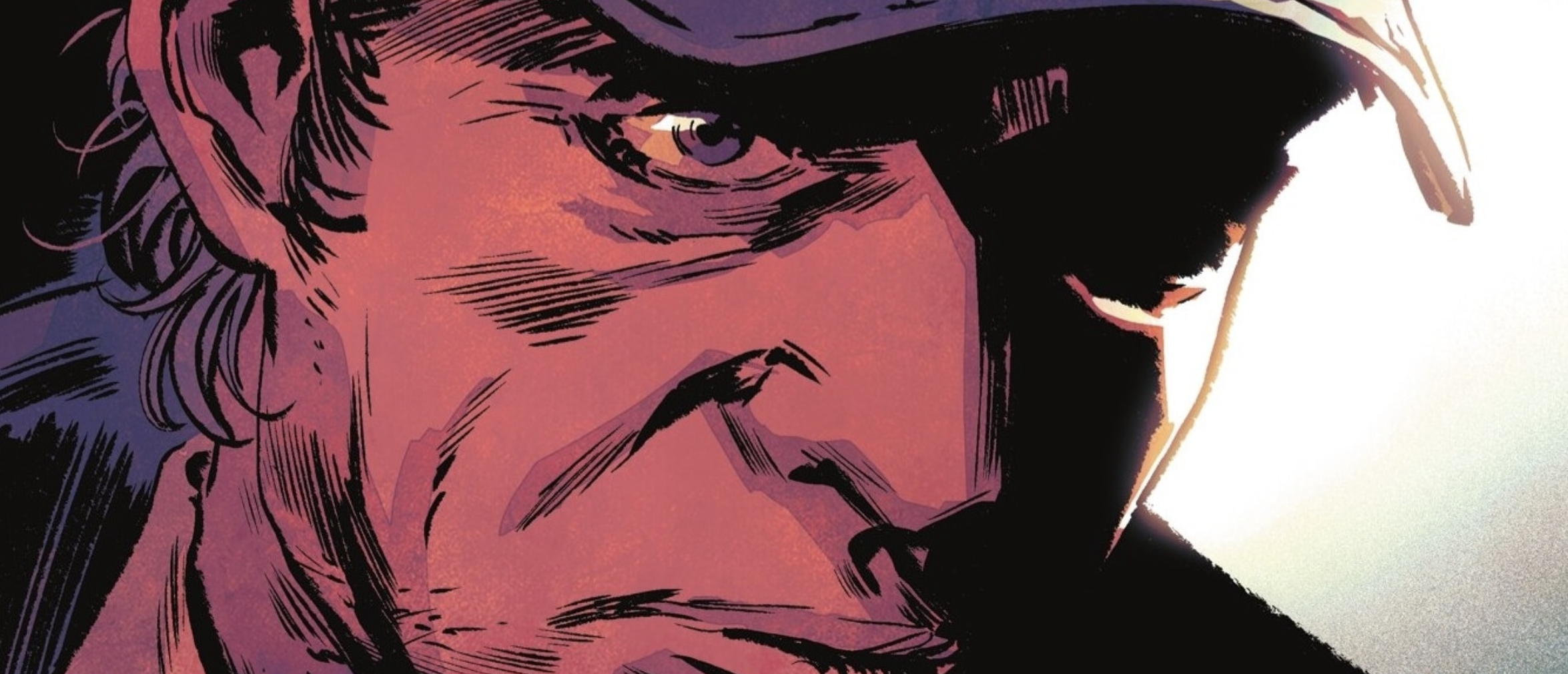
I love the way PKJ has crafted this narrative so far, turning it into a noir revenge tale with the Quiet Man, a haggard, haunted killer who doesn’t need a gimmick or superpowers—just a haunted past and cold resolve. We don’t even know his real name yet, just that he’s a hitman recently released from prison with a vendetta against Gotham’s underworld. His motivation is deeply personal and revenge-driven, blurring the line between supervillain and vengeful anti-hero.
Quiet Whispers in the Dark
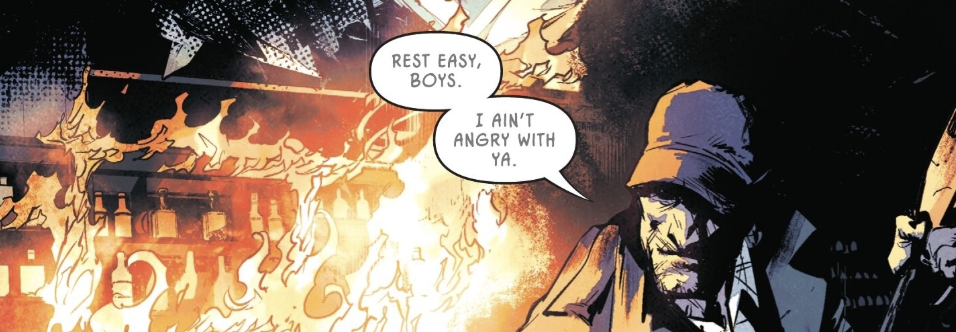
The story opens on a tense note, a reminder that Gotham’s underworld is far from safe. Whispers circulate about a silent killer stalking the Iceberg Lounge—a hitman who doesn’t roar, but delivers death in whispers. When the smoke clears, bodies lie cold, their eyes covered with silver coins. That coin-mark becomes more than a calling card; it is the final punctuation on a brutal, whispered warning. The Quiet Man doesn’t need theatrics—his violence speaks in cold metal and silence. Gotham reels, its streets darker, its shadows deeper.
Meanwhile, Bruce Wayne and his son Damian attempt to reclaim a sliver of normality—a movie night, laughter, parental sincerity—but Gotham doesn’t allow pauses. Bruce insists that Damian must live as both Robin and as himself, refusing to let fear dictate their lives. That desperate balancing act underscores the entire issue: the world is trying to break you, but perhaps what is even more terrifying is refusing to let the darkness steal your life. It’s a shock to the system, a reminder to Batman—and to us—of what this city demands.
The Quiet Man Makes Some Noise
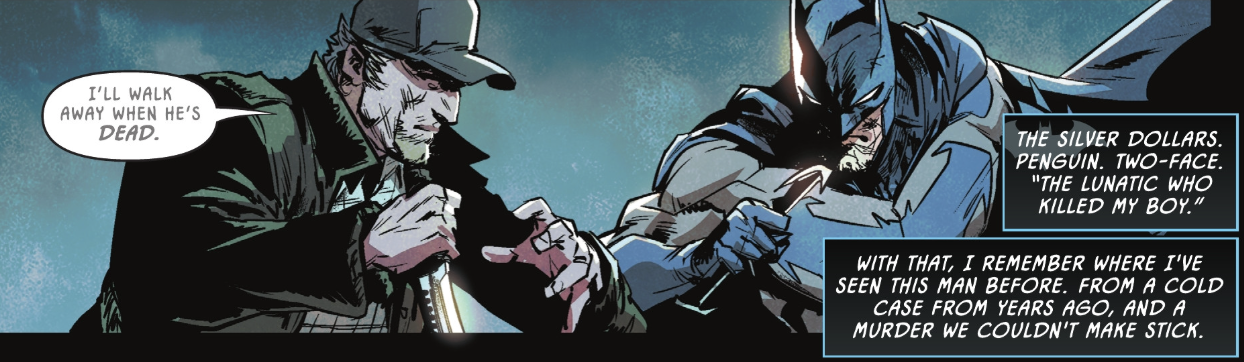
Issue #26 pulls back the curtain on the investigation—and makes the hunt personal. At the Iceberg Lounge’s wreckage, Batman and Robin question the survivors, including the shaken yet suspicious Penguin. The killer arrived unarmed, polite in his whispers, but ruthless, leaving rare 1898 “Justice Dollars” on the dead. That detail transforms the murders from crimes into statements, steeped in vengeance and history. Batman digs into the coin’s origins. It’s not about money—it’s about message, memory, and pain. The Quiet Man isn’t seeking headlines; he’s collecting a debt.
Meanwhile, Robin continues to grow. Training Gotham Irregulars, instructing stances—even joking when he “accidentally” decapitates a dummy hostage—he finds his balance between kid and vigilante. It’s human, awkward, and real. While Batman follows leads, including a shady meeting between Penguin and Two-Face, the Quiet Man makes his move. He confronts them, demands his target by name, and ratchets up the tension. The issue ends with Batman realizing who the Quiet Man truly wants—and the chase is on. Gotham’s underworld is cracking, and vengeance moves in silence.
Old Ghosts, New Fears, and a Race for a Man on the Run
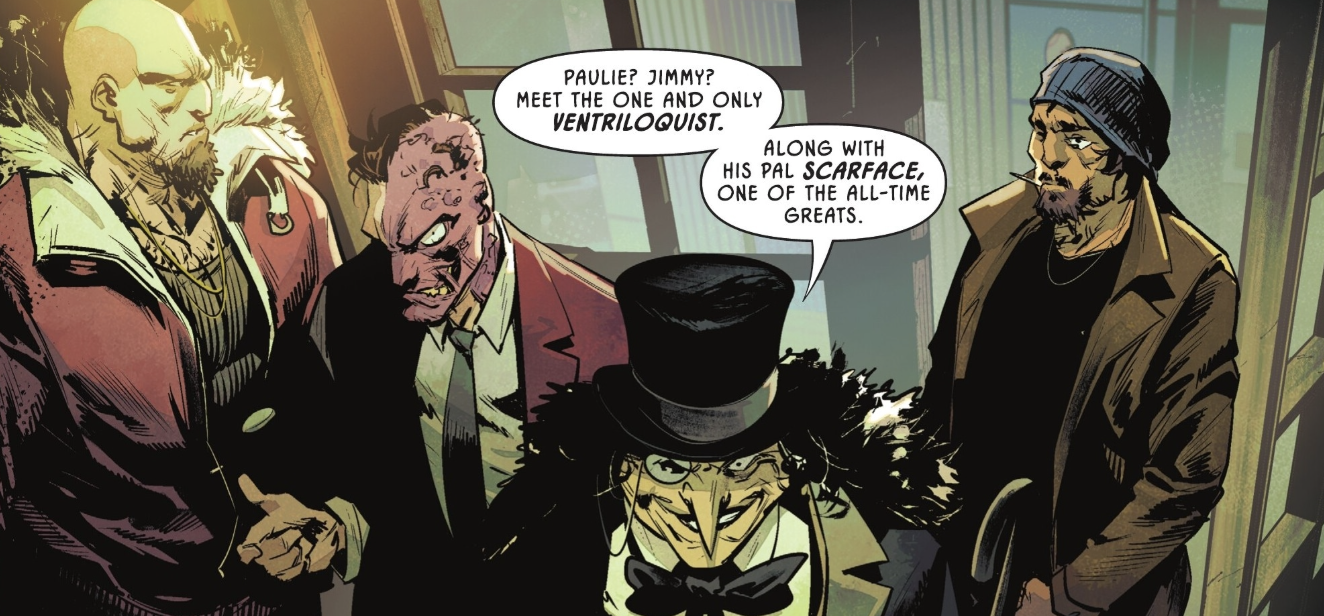
Now the chase collides with history. The man the Quiet Man hunts—Arnold Wesker, formerly the villainous Ventriloquist—is revealed to be out in the open, supposedly reformed, rebuilding a quiet life. But old sins never die quietly in Gotham. As Penguin and Two-Face’s thugs show up to hunt Wesker down, the stakes explode; a chaotic fight breaks out, bullets fly, a giant mechanical wreck threatens to crush Robin, and Batman finds himself under the weight of failure and responsibility. The Quiet Man intervenes—not to save the villains, but to remind Batman of what this fight is about; vengeance, memory and justice. Despite all the chaos, Wesker flees into the night.
Amid all this violence, there’s a quiet break. Bruce Wayne invites old friends into the fray—a chance to show Damian that beyond the cowl there’s family, friendship and normalcy. When Clark Kent and his son, Jon come calling, we get a breath of light in the darkness; friendship, burritos and laughter. But it’s a fragile reprieve. Above them looms the threat that the villains know Wesker is alive—and now they’re coming for him. Batman & Robin #27 ends on that edge; a once-silent man, a reformed monster, and a city ready to swallow them both if they slip. The hunt has only begun—and Gotham’s ghosts won’t rest.
I am really looking forward to the way in which this storyline carries on and eventually concludes. PKJ has set a high bar with this run; delving deeper into the Dynamic Duo and how they function as father and son. This run has been built on heart, hurt and the hard work of being a family.
Batman and Robin Issue #28 Review
WARNING : SPOILERS AHEAD
Gotham Growls & Batman Roars
Things are heating up in Gotham City as Cyrus Mercer, aka The Quiet Man, hunts Arnold Wesker, aka The Ventriloquist—voice of Scarface. Mercer claims Wesker is responsible for the death of his son—we’re not told how or when—but PKJ has provided a clear motive for The Quiet Man’s path of vengeance through Gotham’s underworld. This is something I’ve appreciated throughout the arc: Johnson weaves an elaborate story with many moving parts, yet keeps the reader focused with a directed, purposeful plot.
This approach gives real depth to Mercer’s actions, allowing readers to empathize with him even as he wreaks havoc. An uneasy alliance forms between the audience and the villain—you feel what Mercer feels, understand his grief, and sometimes even find his attacks on Gotham’s exploiters, like Penguin and Two-Face, almost justified.
Just as readers are guided by Johnson, Mercer is guided by Penguin. Oswald Cobblepot chooses to give The Quiet Man exactly what—or who—he’s been searching for. After Mercer breaks into Cobblepot’s home, Oz appears on a screen and provides instructions to locate the Ventriloquist, complete with an address on a piece of paper.
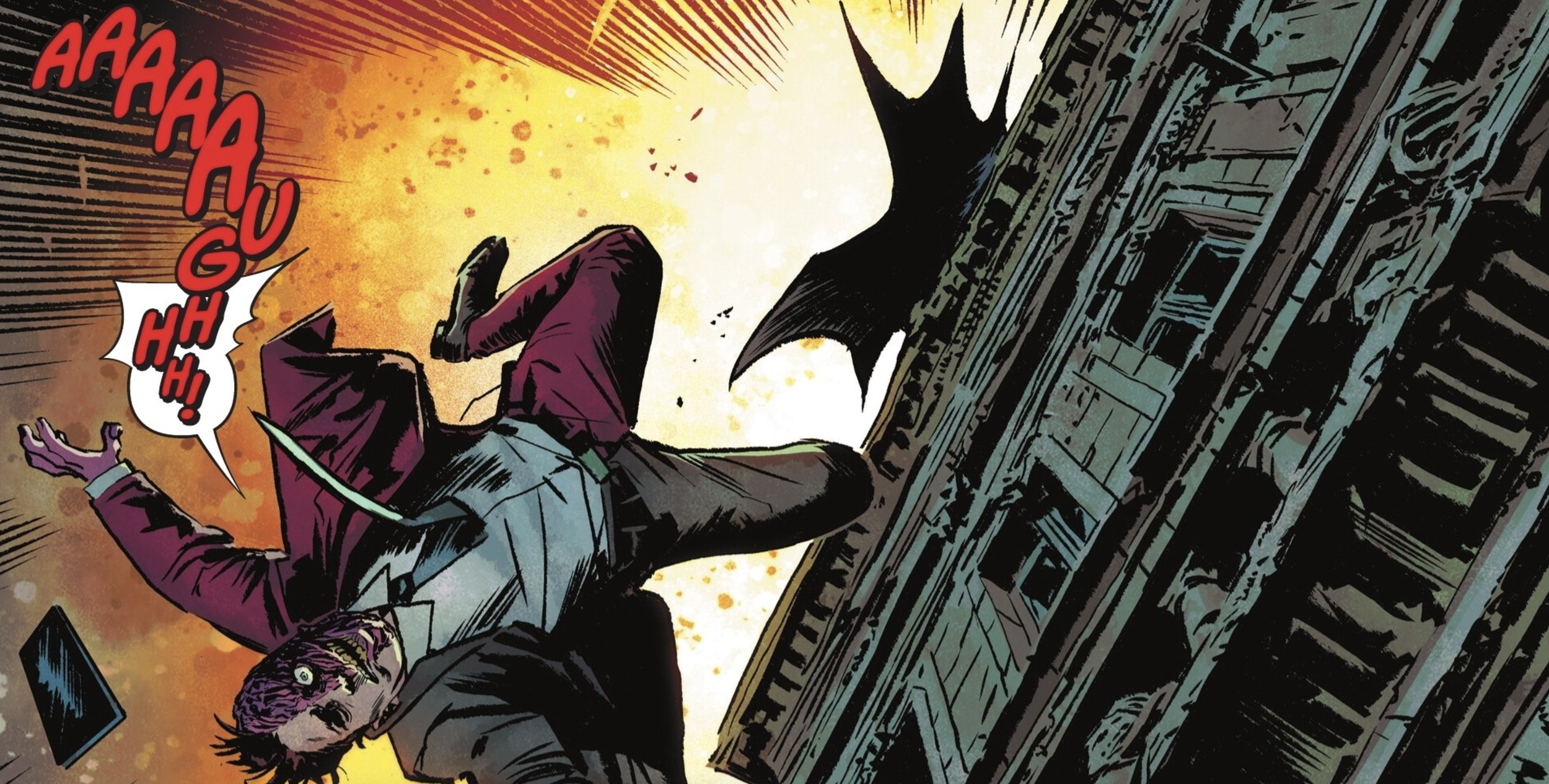
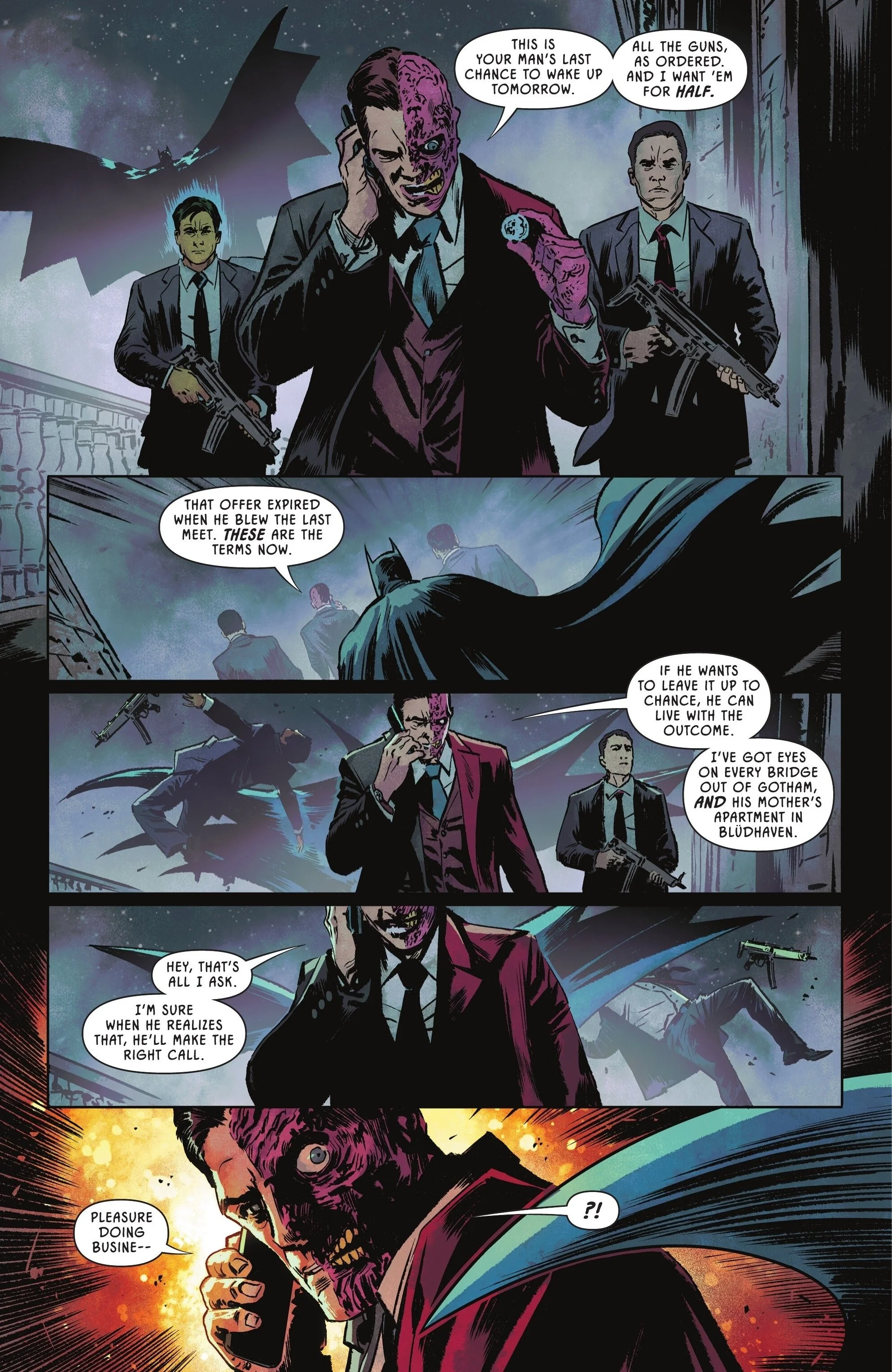
Batman, fully in vengeance mode, tracks down Two-Face in one of the issue’s standout sequences. He takes out Two-Face’s men before even realizing something is amiss, and Raffaele does a phenomenal job illustrating how silent, dangerous, and fleeting Gotham’s Shadow can be.
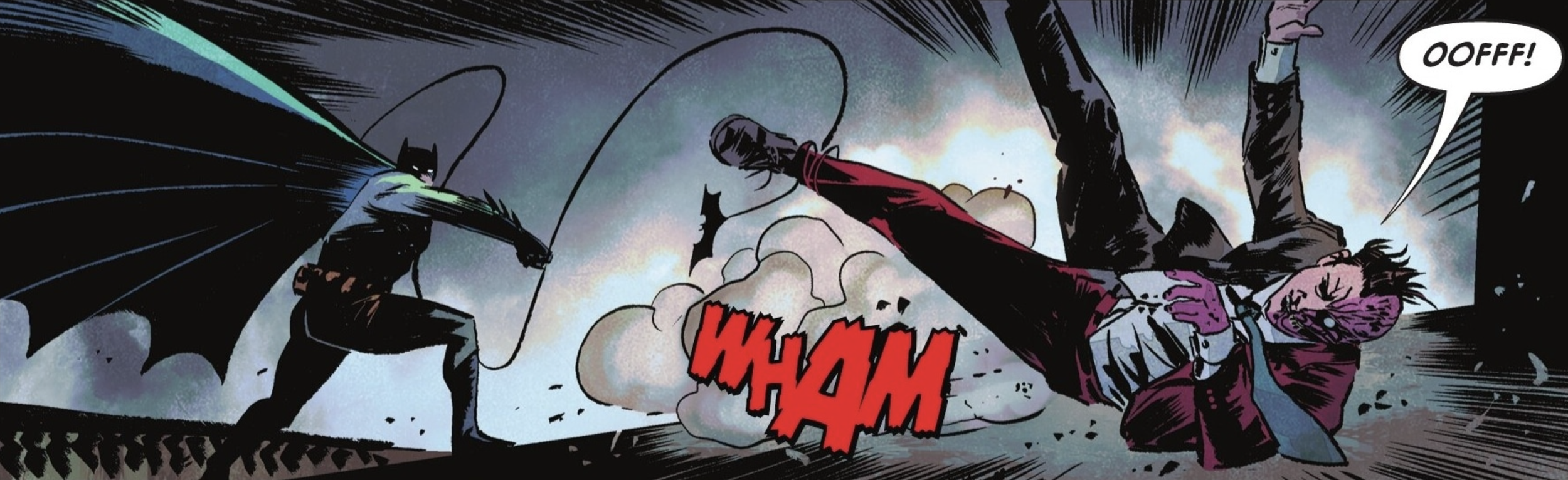
As with much of Johnson’s run, the underlying story remains the father-son relationship. In this sequence, you sense more Bruce than Batman. When he confronts Two-Face on the roof, reminding him that he nearly killed Robin the night before, the moment immediately feels personal. It’s a brilliant way to heighten emotional engagement—you’re invested not only in The Quiet Man’s arc but also in how Batman navigates his fierce protectiveness of Damian.
Enemy Entanglement
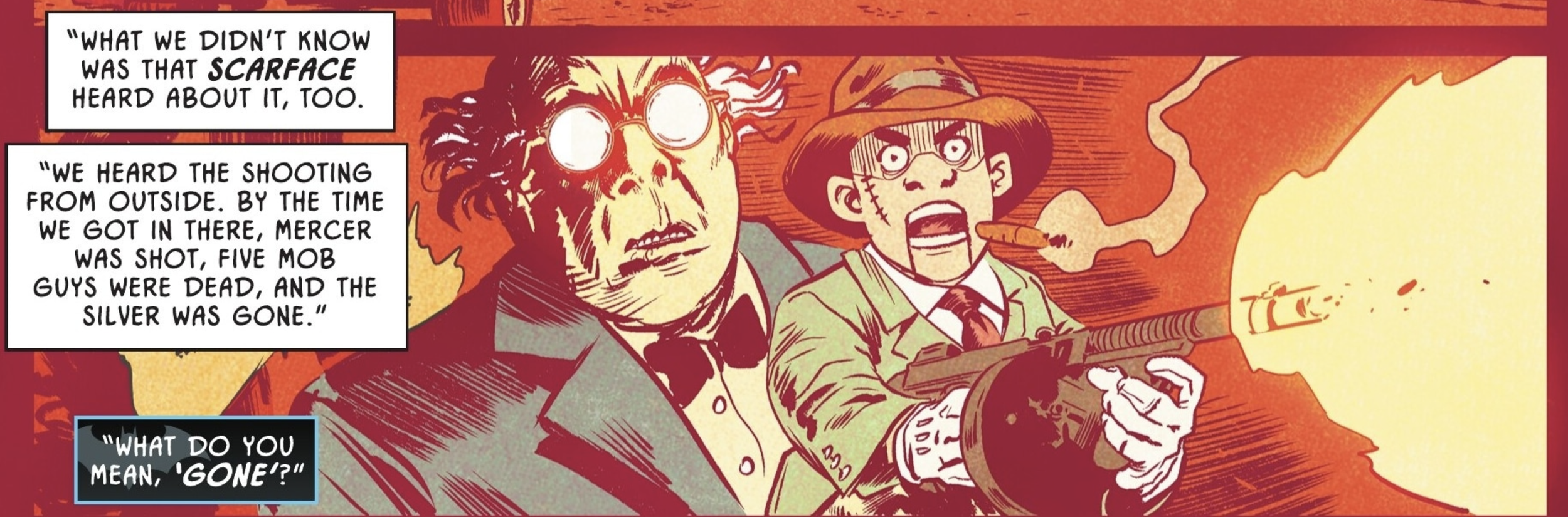
This one scene from PKJ is crucial to the overall story because it begins to position all the pieces on the proverbial chessboard. After Batman’s classic shakedown of Two-Face—dangling him from a rooftop—Two-Face starts spilling the beans about what happened all those years ago, setting up the events unfolding in the present.
As always with Gotham’s criminal underworld, it all comes down to money, greed, and violence. Mercer had fifty million dollars’ worth of silver to sell, and Falcone was looking to purchase it. However, Penguin and Two-Face caught wind of the hand-off and decided to team up for the heist. Scarface, unsurprisingly, was thinking the same thing—hit the hand-off and take the silver for himself. I really liked how Johnson structured this scene, placing all the major players of the present events together in the past, each with motives that fit their personalities perfectly.
What really caught my attention was PKJ’s inclusion of a seemingly minor character—Brazzi, a member of the Falcone organization. I can’t help but feel there’s more to this subversion. Why mention a lowly Falcone operative unless it matters? Two-Face even reiterates that Brazzi disappeared with all the silver and was never seen again—the same silver Penguin, Scarface, and Two-Face were all after. I suspect Brazzi will play a larger role in the final two issues of PKJ’s run, and I’m excited to see how Johnson weaves this thread into the conclusion.
Follow The Clues, Not The Noise
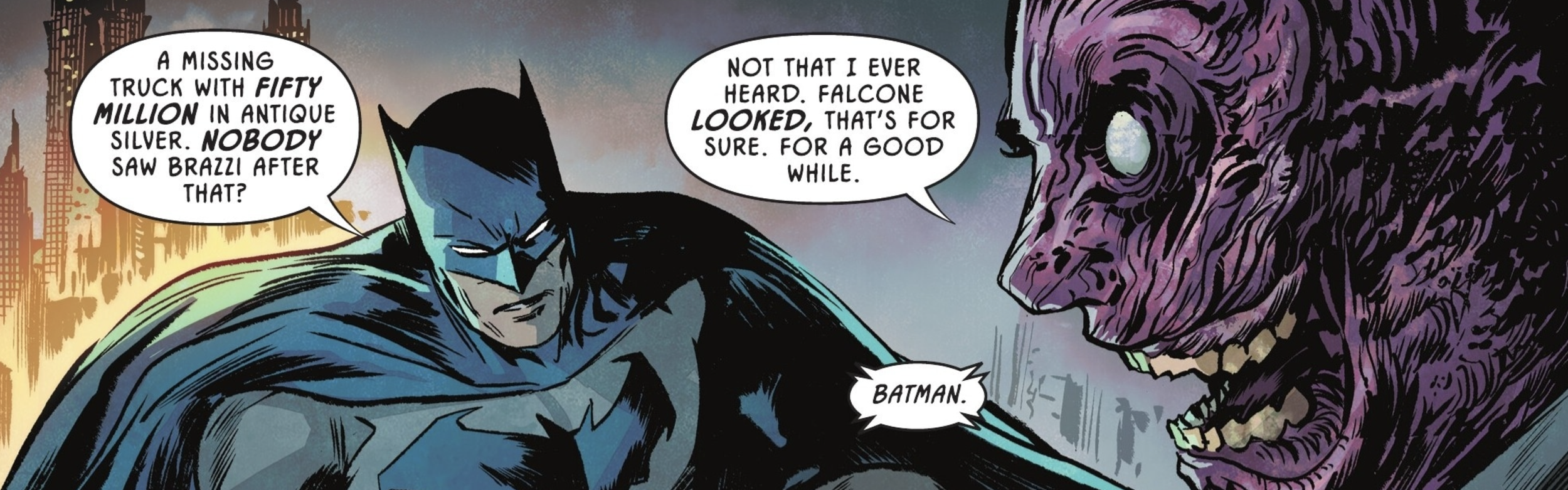
I talk a lot about pacing in storylines or individual issues, and the reason I emphasize it is because it helps the reader absorb the narrative the writer is providing. The end of issue #28 accelerates the story after laying the groundwork for what PKJ was building toward—a massive twist.
Robin has been working with the Irregulars, who have tracked down where The Quiet Man lives. While going through Cyrus Mercer’s belongings, Robin discovers letters to his son, whose death was tragically caused by The Ventriloquist. In this scene, Johnson delivers a clever, thought-provoking moment that challenges the reader to consider Mercer’s perspective.
While Robin examines the clues, the Irregulars ask, “So is he doing this for revenge, or for his family or something?” This simple question resonates, because Mercer’s ideology isn’t entirely different from Batman’s. After following the Quiet Man’s journey for the past few issues, the reader is forced to reassess his crusade—aren’t his motivations, in a way, aligned with Gotham’s Guardian’s own sense of justice? How Batman will ultimately handle Cyrus Mercer is one of the most compelling questions this arc raises.
Robin also uncovers an address—the home of Arnold Wesker, The Ventriloquist—which has been in the Quiet Man’s possession. Considering how Mercer has been portrayed so far, it’s clear he’s already a few steps ahead of both Batman and the Son of Batman, setting the stage for the tension and confrontation to come.
You Never Heard It Coming
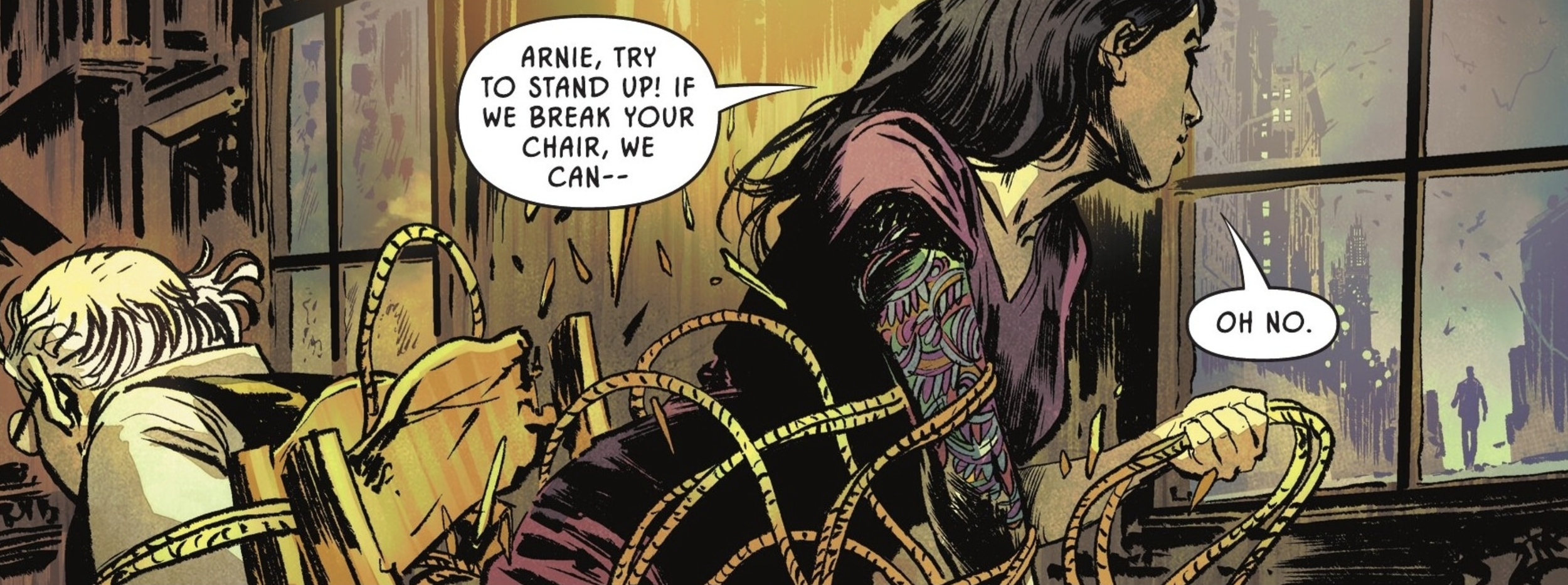
The last few pages of this article have the pace increased from dialogue to dialogue, as they get shorter and more prompt—from page to page as Raffaele moves from broad long shots, to close ups with more detail. Creating a thirst from the reader to keep turning the pages to find out what happens next.
Wesker and Batman’s informant, Blair, are tied up from an earlier visit from Penguin and Two-Face, leaving them both as sitting ducks for the silent huntsman. Luckily, Blair manages to get both of them free just in the nick of time as she spots the Quiet Man pursuing them. This gives them time to find a place to hide.
Quiet Man enters the building that Wesker has been working in, as a creator of puppets, with dolls strewn around the shop. PKJ builds the tension as we see Mercer open a door to try and find Wesker hiding, only he’s left confused.
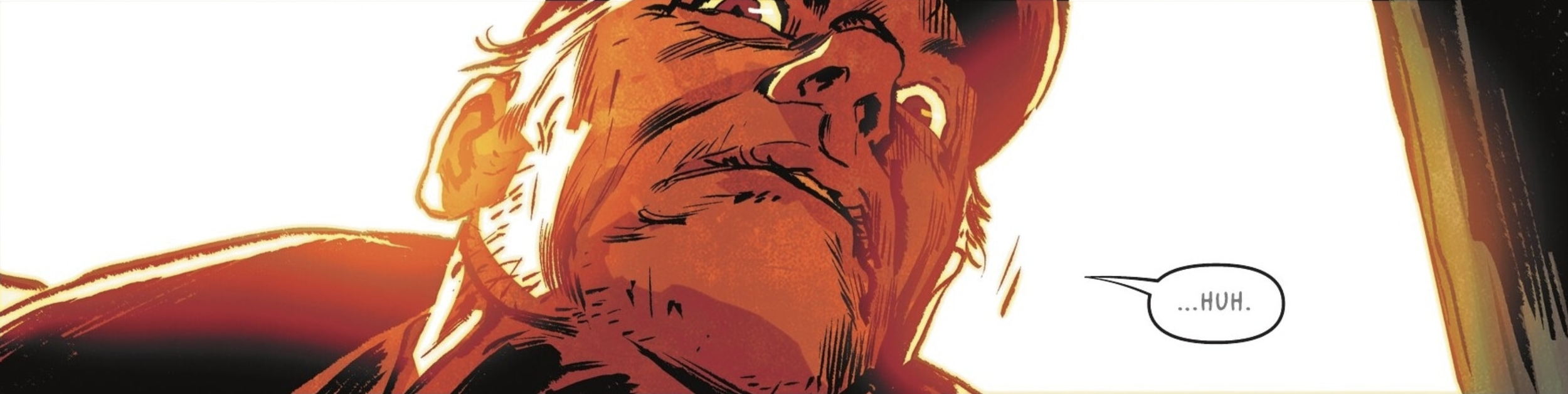
Johnson then has us cut from that very intense scene, to outside the shop, where Batman and Robin arrive—the use of A & B plots from Johnson in this issue was great because it built drama and made me clammer to understand what the final outcome would be. Indirectly bringing together all of the parties involved, Wesker, Mercer, Penguin & Two-Face—we see one of their goons launch a rocket at the shop and blow it up! I love the consistent continuity that Johnson keeps throughout this issue and series so far—it made me as a reader feel that everything I was reading, had a true meaning and would add up to a big pay off at the end of this arc.
Batman rushes in to rescue Mercer, Wesker and his colleague Blair (who Batman had deployed to keep tabs on Wesker)—you see a nice portrayal of equality between Batman and Robin, Bruce and Damian, Father and Son, as Robin offers to take charge of rescuing Cyrus Mercer from the fire, whilst Batman finds the other two victims. Remember when Mercer opened the door trying to find Wesker and Blair, only to be left confused—more brilliant writing from Johnson gives us the result from Batman’s angle. Batman opens the door to find a body, who he identifies as his informant Blair! He determines she’s been dead at least a week! Robin reminds us that Batman was speaking with Blair only an hour ago—only he must have been talking to someone else.
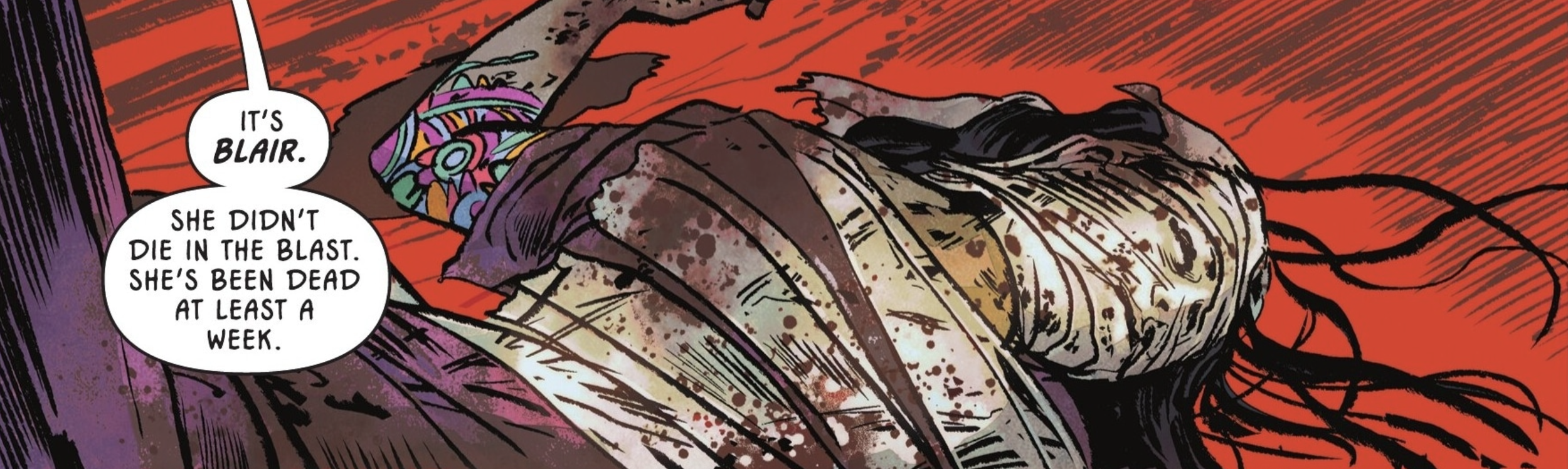
In an astonishing plot twist, Phillip Kennedy Johnson has done something remarkable with the reformed Arnold Wesker—he represented him as someone who had been cured, held a job and made a friend. Only to rip that depiction away! It’s not Scarface that the Ventriloquist has been voicing, it’s now Blair that he’s been mimicking.
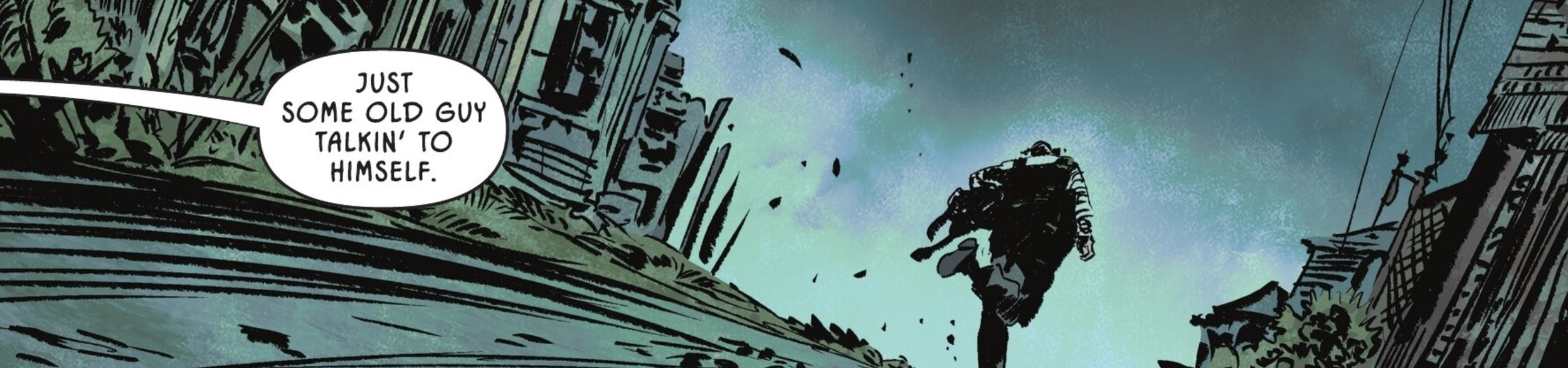
The last few scenes that illustrate this terrific twist were near perfect from Johnson and Raffaele—you see Wesker AND Blair running away from the scene. Wesker continues to talk to Blair, who responds herself. The revelation of this all is only secured by a simple third party in the background who says he sees, “Just some old guy talkin’ to himself.”
And with that I cannot wait for the last two issues of this story and PKJ’s run—3 villains, 1 conflicting villain, fifty million dollars’ worth of silver missing, who is Brazzi and where’d he go with the silver? So many unanswered questions, but I am certain that PJK will tie all of these characters and stories into one big bow by issue #30—stay tuned.
Ink That Cuts Deeper Than A Batarang
I want to highlight the artwork of Fico Ossio, because right now, he’s producing some of my favorite Batman art—standing out even against the likes of Jimenez, Janin, and Jim Lee. His style, in my opinion, fits perfectly with the fast-paced, gritty, and hard-hitting action that Phillip Kennedy Johnson has written during this arc.
In issue #28, Raffaele’s art matches the pacing well, leaning more subtle to reflect the step-by-step progress of Batman and Robin as they inch closer to the truth. However, the faster-paced scenes—like the RPG shot and the explosion at Wesker’s shop—don’t land with the same punch that Ossio typically delivers. That’s not a knock on Raffaele; it’s simply a difference in technique. Personally, I prefer Ossio’s cleaner lines and his knack for capturing Batman in action.
My favorite scene in this issue is when Batman stalks Two-Face’s henchmen, picking them off quietly and efficiently. It’s a sequence that instantly reminded me of my time playing the Arkham games—precise, tense, and incredibly satisfying.
Conclusion & Rating
As we move toward the penultimate issue in #29, issue #28 did its job by advancing the Quiet Man story arc. PKJ provided plenty of insight into how these villains are intertwined with Cyrus Mercer’s past, while also offering the sudden realization that the Quiet Man’s path of vengeance isn’t so different from the Dark Knight’s own trail of retribution.
What really influenced my score of 8.5/10 was the ending. It completely surprised me—Wesker relapsing and murdering Blair, followed by the misdirection of the third-party explanation over the phone, was a brilliant twist from Johnson.
The final panel, with Wesker running off clutching a doll, underscores just how far he has deteriorated and returned to a life of crime. The lingering question is whether his prior reform was genuine or simply a ploy to escape Arkham. This issue does an excellent job of adding substance while leaving just enough unanswered to keep readers hungry for the next installment.