
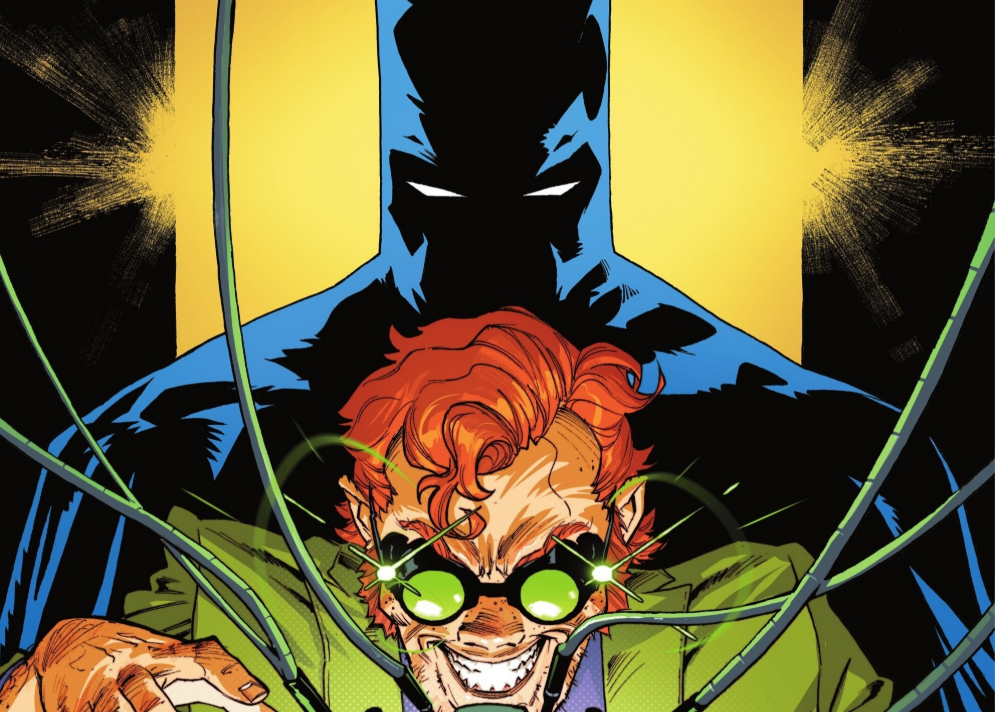
Batman #3 (2025)
Writer: Matt Fraction Art: Jorge Jiménez Colorist: Tomeu Morey Letterer: Clayton Cowles
Associate Editor: Jessica Berbey Editor: Rob Levin
Batman #3 shifts the war from a street fight to a critical debate over Gotham's soul. Commissioner Vandal Savage's conflict with the Bat-Family has never been more personal. Writer Matt Fraction uses this escalation to expose one of the deepest failures of modern society: the systemic neglect of those with mental illness. Through a tense confrontation with The Riddler, Fraction lays bare the reality that agencies like the GCPD are unequipped to deal with the root causes of crime. This issue confirms the real battle isn't for the streets. it's for Gotham's narrative and its moral compass.
THE CRACK IN THE COMPASSION: Mental Health as a Criminal Offense
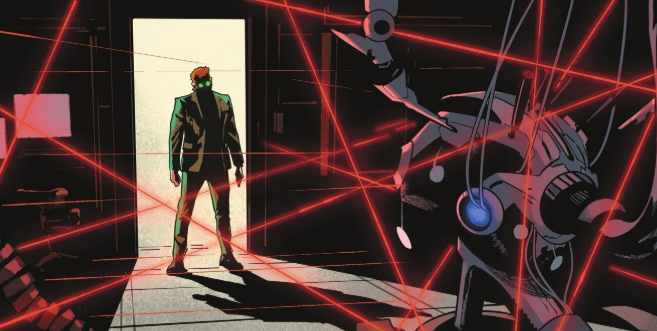
Fraction's use of Edward Nygma aka The Riddler is incredibly effective here. He shifts the focus away from the typical superhero puzzle game and onto a serious social critique, arguing that the real cause of Nigma's criminality is a system that lacks the infrastructure and compassion to treat mental illness.
The cops' attitude—lumping everyone with a psychological disorder into a single category of "crazies" to be discarded—is the crucial point. Since the police are trained for force, not therapy, they simply cycle these individuals in and out of the penal system, creating a perpetual trap.
Vandal Savage’s corruption makes this institutional failure actively malicious. The issue shows Savage caught in the act of tampering with the crime scene from the Issue #2 shootout—brazenly planting a blood-dipped Batarang. This is direct, undeniable proof of his malicious intent, shocking even the seasoned Jim Gordon. Savage isn't fighting Batman he's actively destroying the public's last shred of faith in the GCPD’s integrity.
THE PRICE OF THE MASK: Lies, Loyalty, and the Citizen's Choice

Amidst this massive public war, Fraction wisely shifts focus to the human cost and moral accountability.
The introduction of the young boy witness named Huston is a masterstroke. He represents the soul of Gotham. Fraction shifts the moral weight onto this citizen's shoulders, forcing a huge moral dilemma: accept Savage's lie for safety, or risk everything to seed righteous distrust in the system by telling the truth.
The personal damage is also laid bare. The scene where Bruce visits Tim in the hospital after the shootout is a profound emotional high point. Bruce is confronted by Tim's partner, which forces Bruce to see his crusade through a heartbreaking lens where he looks like a bad influence, or worse, an abuser.
The family tension continues with Damian. While sparring, Bruce suggests Damian could still learn about "literature, poetry, history, art, and women." Damian responds to this low blow with a literal one—a well-placed kick—showing that even the most badass superhero struggles to get through to his son.
BILLIONAIRE'S CONSCIENCE: Bruce vs. The Business of War
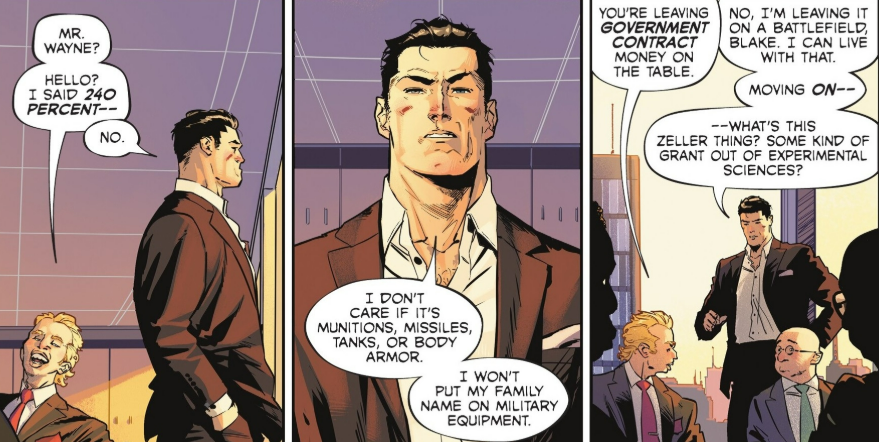
This issue proves how effective Bruce Wayne is outside of the Batsuit. We see him refuse lucrative government contracts that involve building weapons and ammunition. This hardline stance serves as a powerful commentary: Bruce is not an average, money-hungry billionaire. His refusal to profit from instruments of destruction contrasts sharply with the militarism of Savage's GCPD.
Finally, the issue introduces a major new threat tied directly to Wayne Enterprises. Dr. Zeller has created a device called the Crown of Storms, designed to help regulate electrical activity in the brain. Her research, funded by Wayne Enterprises, aims to calm overstimulated regions and excite under-stimulated ones. While Zeller seems on the straight and narrow, The Riddler—while in Batman's custody—plants a seed of doubt. His final words suggest that Zeller is performing unethical human trials on her patients, setting her up as a terrifying new villain who embodies the scientific and corporate exploitation of the mentally ill.
Conclusion and Verdict
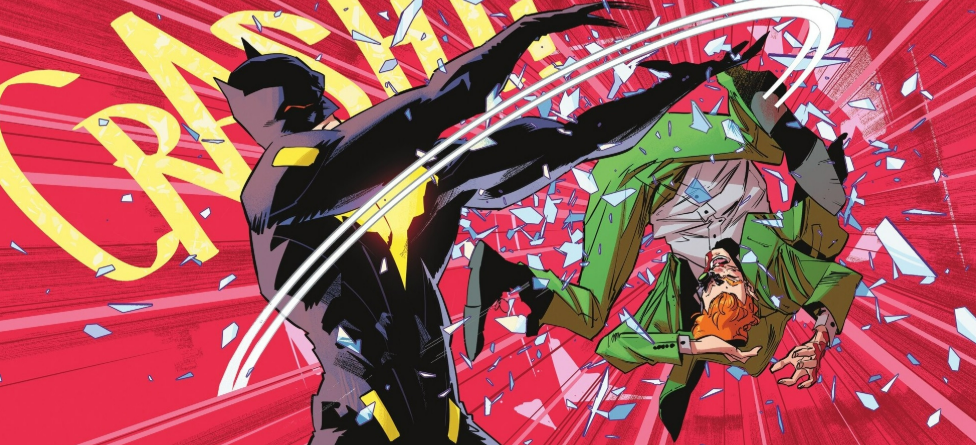
Batman #3 is a spectacular example of a superhero comic that uses its mythology to tackle complex social issues. Fraction has masterfully expanded the central conflict to a multi-front battle against corporate exploitation, government propaganda, and systemic neglect of the mentally ill.
The confrontations here are personal, political, and poignant. The final image of the young witness facing a moral choice and the painful confrontation between Bruce and Tim's partner all prove that the hero's most effective tools are his conscience and his corporation, not just his cape. The introduction of Dr. Zeller and her "Crown of Storms" gives the run a brilliant new focus. Jimenez’s art is still phenomenal, and Fraction hasn’t missed a bit. This has been a treat to read
Verdict: Essential Reading. This is a Masterclass in Social Commentary operating on a level rarely seen in mainstream superhero comics. Don't miss the issue that puts Gotham's mind on the line.