

Let's just say it: Hollywood, you're missing the memo, and it's costing you billions. While studios scramble for safe IP and pump out multi-hundred-million-dollar features with diminishing returns, a different kind of film is quietly—or, more accurately, thunderously—breaking records: anime.
The recent, stunning box office performances of films like Chainsaw Man – The Movie: Reze Arc and the record-obliterating Demon Slayer: Kimetsu no Yaiba – The Movie: Infinity Castle aren't flukes. They're concrete proof that the anime fandom is a unique, passionate, and most importantly, reliable audience that shows up to the box office every single time. It's time to stop treating anime as a niche genre and start recognizing it as the box-office powerhouse it has become.
The Demon Slayer Effect: Record-Breaking Proof

If Hollywood needed a single, undeniable sign to overhaul its theatrical release strategy, the success of the Demon Slayer films is it. The most recent installment, Demon Slayer: Kimetsu no Yaiba – The Movie: Infinity Castle, didn't just top the charts; it shattered a 25-year-old record by becoming the highest-grossing international film in North American history , surpassing a benchmark previously held by 2000's Crouching Tiger, Hidden Dragon.
Beyond that, the film’s opening weekend saw it rake in an estimated $70 million domestically, not only setting the record for the biggest U.S. opening for an anime film but also out-grossing every single animated movie opening from Hollywood so far this year. Think about that: a film based on an ongoing manga/anime property, rather than a standalone, out-muscled films backed by the biggest budgets in the world. This success wasn't confined to the U.S.; globally, Infinity Castle has earned over $600 million worldwide, cementing its position as one of the year's biggest cinematic events. This wasn't a movie made for casual viewers. This was a film made for the fans, and the fans rewarded it with historic numbers.
The Chainsaw Man Case: A New Kind of Box Office Winner

The incredible opening of Chainsaw Man – The Movie: Reze Arc is just the latest, freshest example that this trend isn't slowing down. This R-rated, action-horror anime film opened strong, instantly landing at No. 1 at the U.S. box office with an estimated $14-15 million debut. This explosive opening ranks as one of the highest for an R-rated anime film in U.S. history, trailing only the two Demon Slayer features (Infinity Castle and Mugen Train).
What’s truly telling is the reception: the film debuted with a 100% critics score and a near-perfect 99% audience score on Rotten Tomatoes. This isn't just a hit; it's a unanimously beloved cinematic event, proving the audience is not only huge but also ecstatic about the quality being delivered. The fact that two of Crunchyroll and Sony's anime releases have topped the U.S. box office in the last two months should be a siren call to every major studio. These are high-quality, targeted cinematic events that attract a community eager for a shared, big-screen experience.
The Long History of Undervalued Success

The Demon Slayer and Chainsaw Man phenomenons are the logical culmination of a long history of successful anime films that Hollywood has consistently dismissed as outliers. These films built their success not on billion-dollar marketing campaigns, but on the loyalty of their global fanbases. Take Jujutsu Kaisen 0 from 2022, which had a massive $18 million U.S. opening and ultimately grossed over $34.5 million domestically. Like Demon Slayer, it was a feature designed to reward and engage fans of an existing series, and it performed like a true blockbuster.
Similarly, the legendary Dragon Ball franchise proved its enduring power in 2022 with Dragon Ball Super: Super Hero, which hit the No. 1 spot in its opening weekend and pulled a $38.1 million U.S. domestic gross. Even reaching back to Studio Ghibli, films like Hayao Miyazaki's Spirited Away and Ponyo have consistently found success with theatrical re-releases and initial runs, demonstrating a long-term critical and commercial appeal. We should also remember the history-maker: for over two decades, Pokémon: The First Movie (1999) held the record for the highest-grossing anime film in the U.S. with over $85.7 million domestic gross—a number that was mind-boggling for an anime release at the time.
The Core Difference: Passionate Commitment
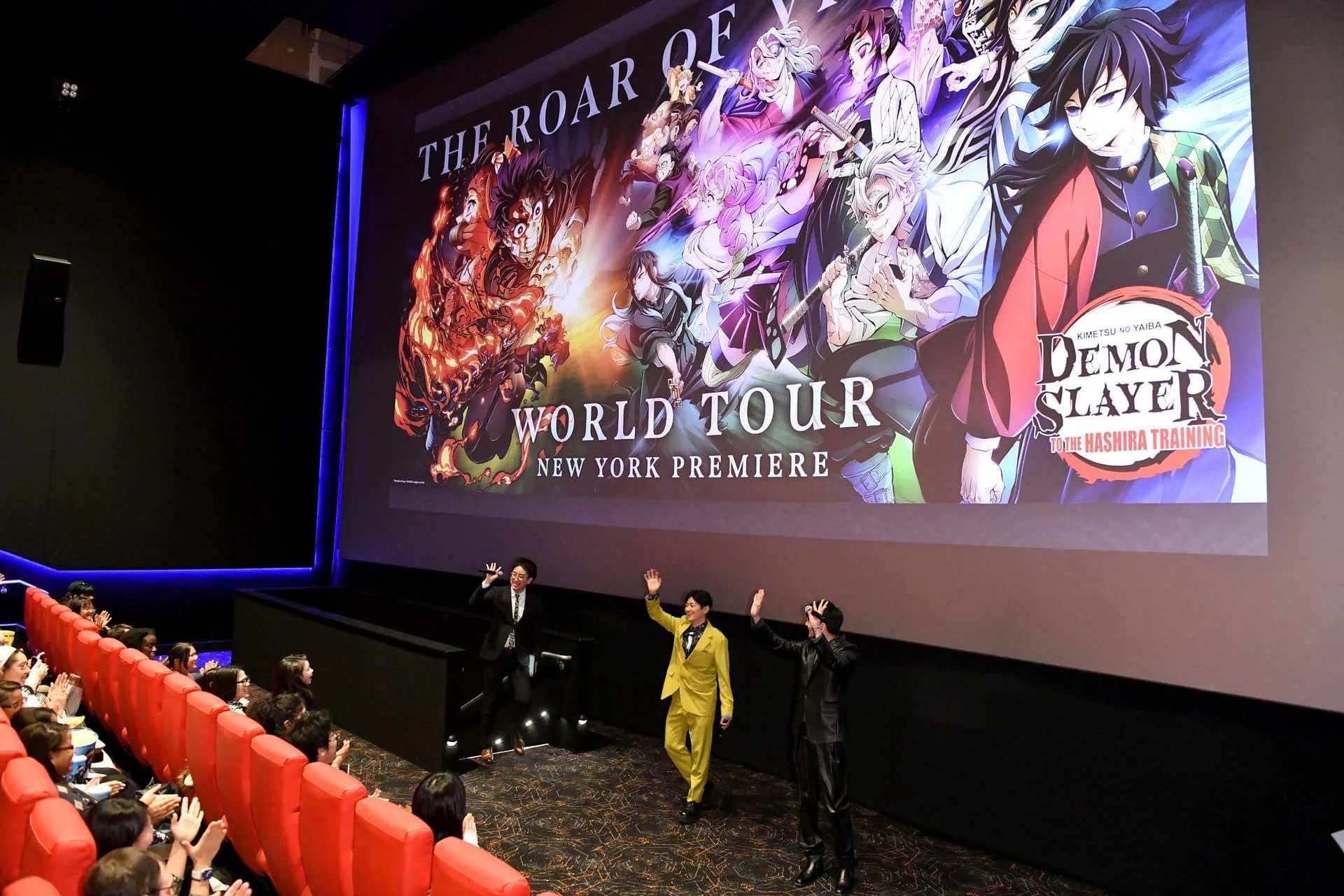
Hollywood operates on a "tentpole" model, seeking mass appeal with huge upfront budgets. Anime studios, however, are tapping into something far more powerful: passionate commitment. This audience is deeply communal, which is why when a new film drops, fans want to see it on opening day, in a packed theater, surrounded by others who understand the story, the characters, and the epic scale.
This powerful need for a shared cultural moment drives huge, concentrated opening weekend numbers. Crucially, this audience is pre-sold on the property because these films are often high-quality extensions of an existing, popular series. Their tickets are essentially guaranteed. Furthermore, anime movies consistently deliver a high-quality spectacle that justifies the big screen—they're gorgeous, high-stakes cinematic events that generate incredible, organic word-of-mouth.
The message is clear: stop underestimating the power of the fandom. Anime fans are no longer a niche market; they are a major demographic that is proving it can carry films to the top of the box office charts. Hollywood can keep chasing tired reboots, but the smart money is finally recognizing what anime already knows: if you build it for the dedicated fans, they will come—and they will break records.