
Sigurd Battles His First Supervillain!
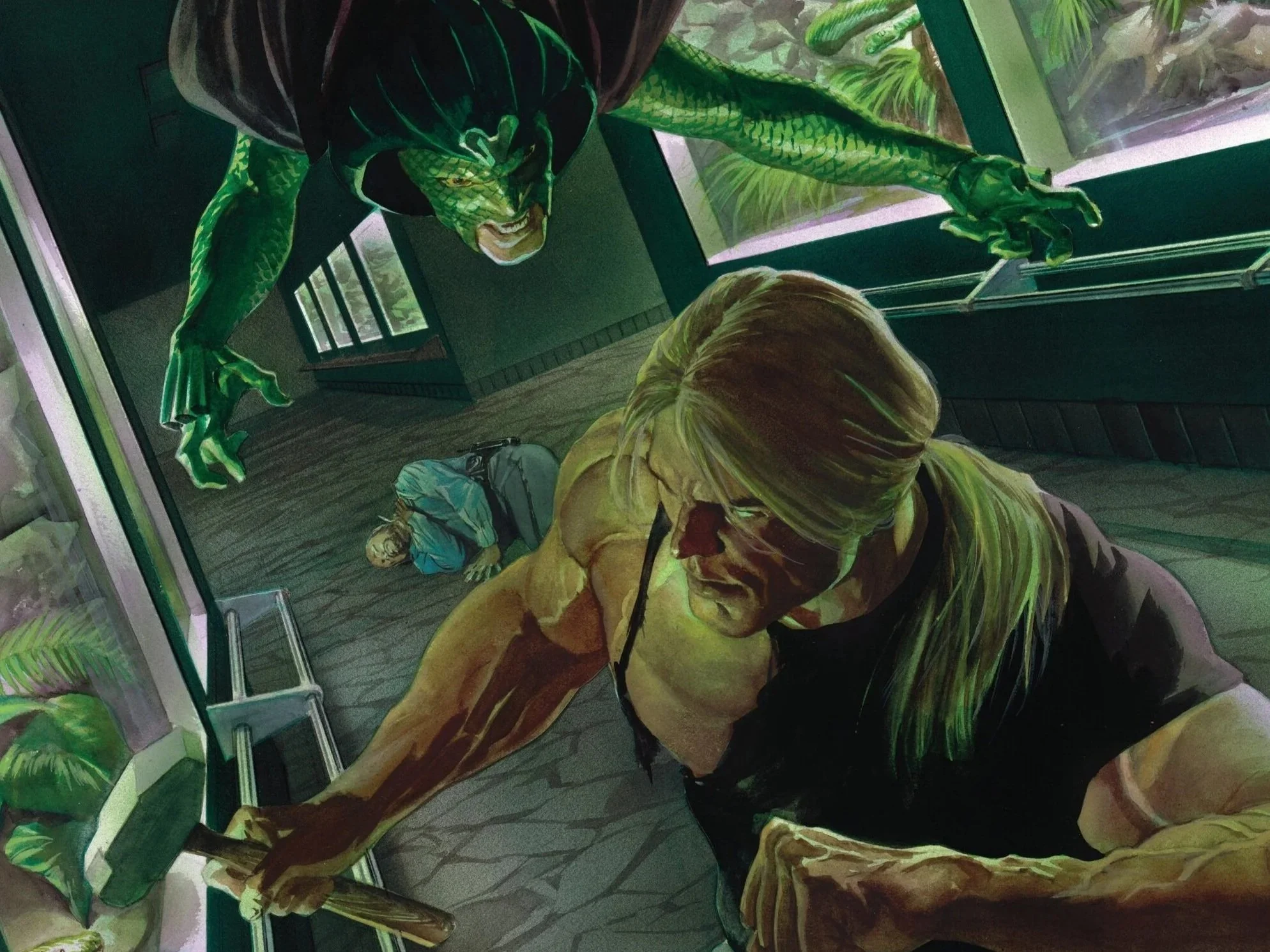
Cover of “The Mortal Thor #6” (Published January 21st, 2026) written by Al Ewing with art by Pasquel Ferry and colors by Matt Milla
Cover art by Alex Ross
Al Ewing’s latest chapter in his rousing and transformative Thor epic continues in issue #6 of The Mortal Thor. When we last left off, Sigurd had come face to face with Donald Blake, the original mortal host for Thor who has since embraces his role as the Serpent, a godlike being with a bone to pick with not just Thor, but everyone close to him. Sigurd was left unconscious in his limousine as Blake in no uncertain terms made it clear he wants something dear of his…
Where does that leave Sigurd? What sort of play is Blake making and can Sigurd somehow navigate it and survive? Let’s break down this issue and get into how it stacks up. As always, spoilers abound, true believers.
Warning: Spoilers for “The Mortal Thor #6” lie ahead!
The Destiny of a God, the Path of a Man
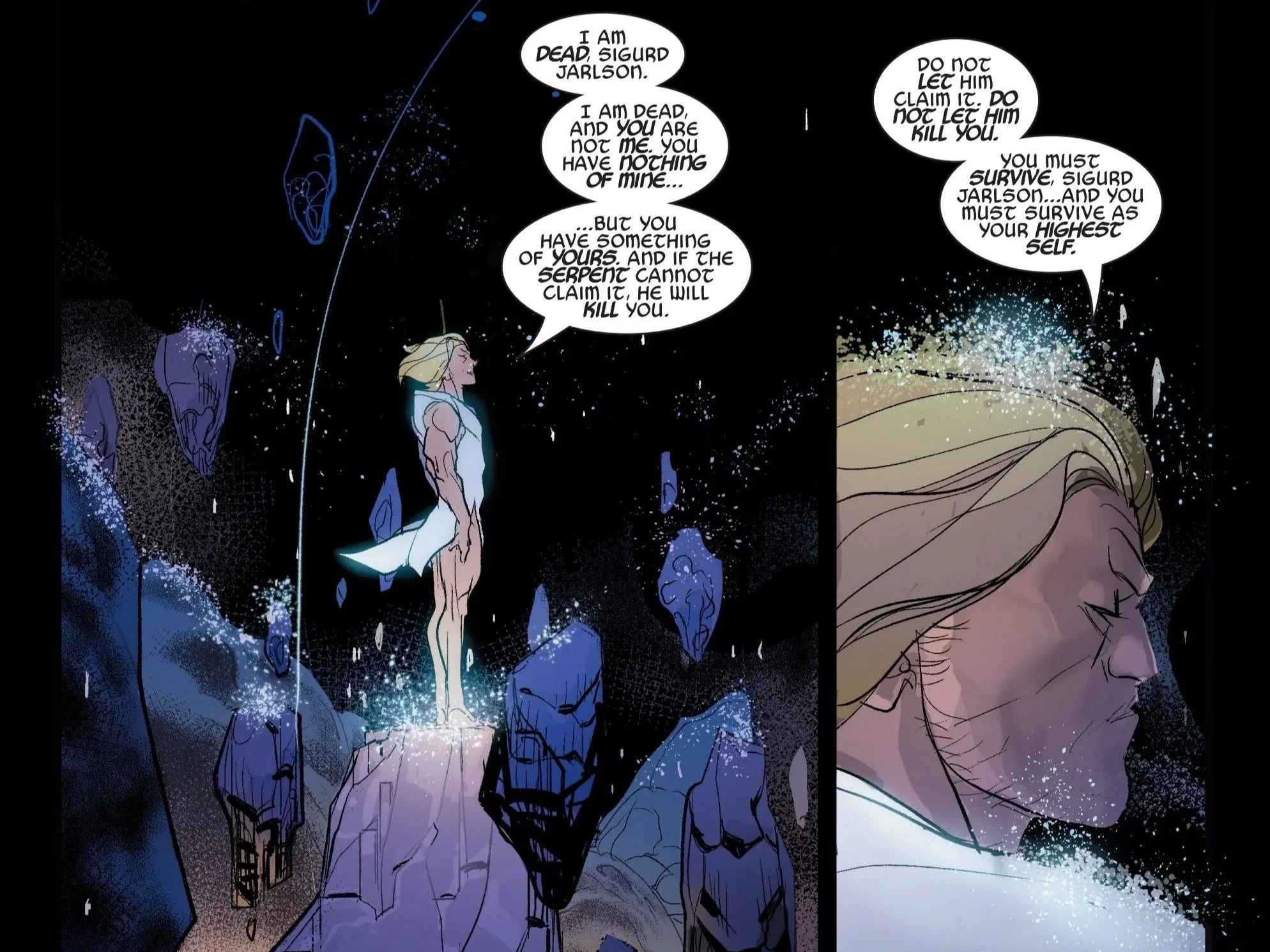
Thor in the void.
We begin our story inside the void where Thor (the actual Thor) resides in spirit form. He is lingering in a realm of the dead that is not Hel nor Valhalla. He is speaking to Sigurd and informing the man that he emphatically is not Thor. Thor explains that Sigurd possesses nothing of his, but that the Serpent seeks to claim something that belongs to Sigurd. Should the Serpent be unable to take this from Sigurd, he will kill him.
Thor then tells Sigurd that in order to survive, he must do so as his highest self. We can infer based on the previous issue of Mortal Thor, as well as the last time we saw Donald Blake or the Serpent in Immortal Thor, that what Thor is referring to is the soul of Sigurd.
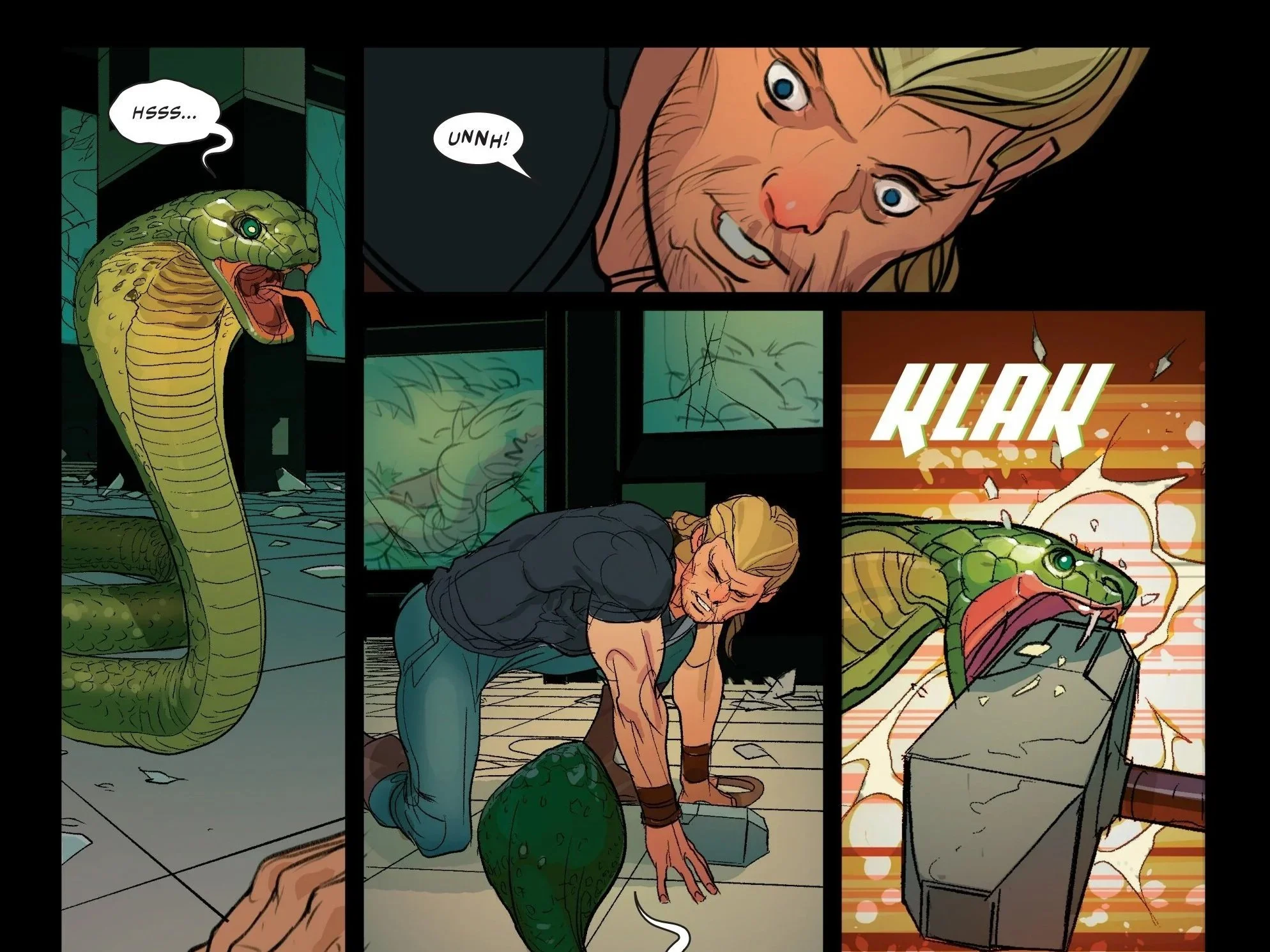
Sigurd has no choice but to defend himself against a wild cobra.
Sigurd suddenly snaps awake. He is no longer in the back of the limousine of Donald Blake, where we last left him, but rather inside a building, and he is not alone. Next to him is a cobra poised to strike! But Sigurd instinctively grabs his hammer and cleaves the snake in two before it can strike him.
As Sigurd collects himself, he is soon met with the Cobra, who is an old-time villain of Thor and an on-again, off-again member of the Serpent Society. He reveals that the two of them are, in fact, inside of a reptile enclosure. He also, to no one’s surprise, reveals that he is in the employ of Donald Blake. He tosses Sigurd a cap and explains that he is here to test the amnesiac Norwegian.
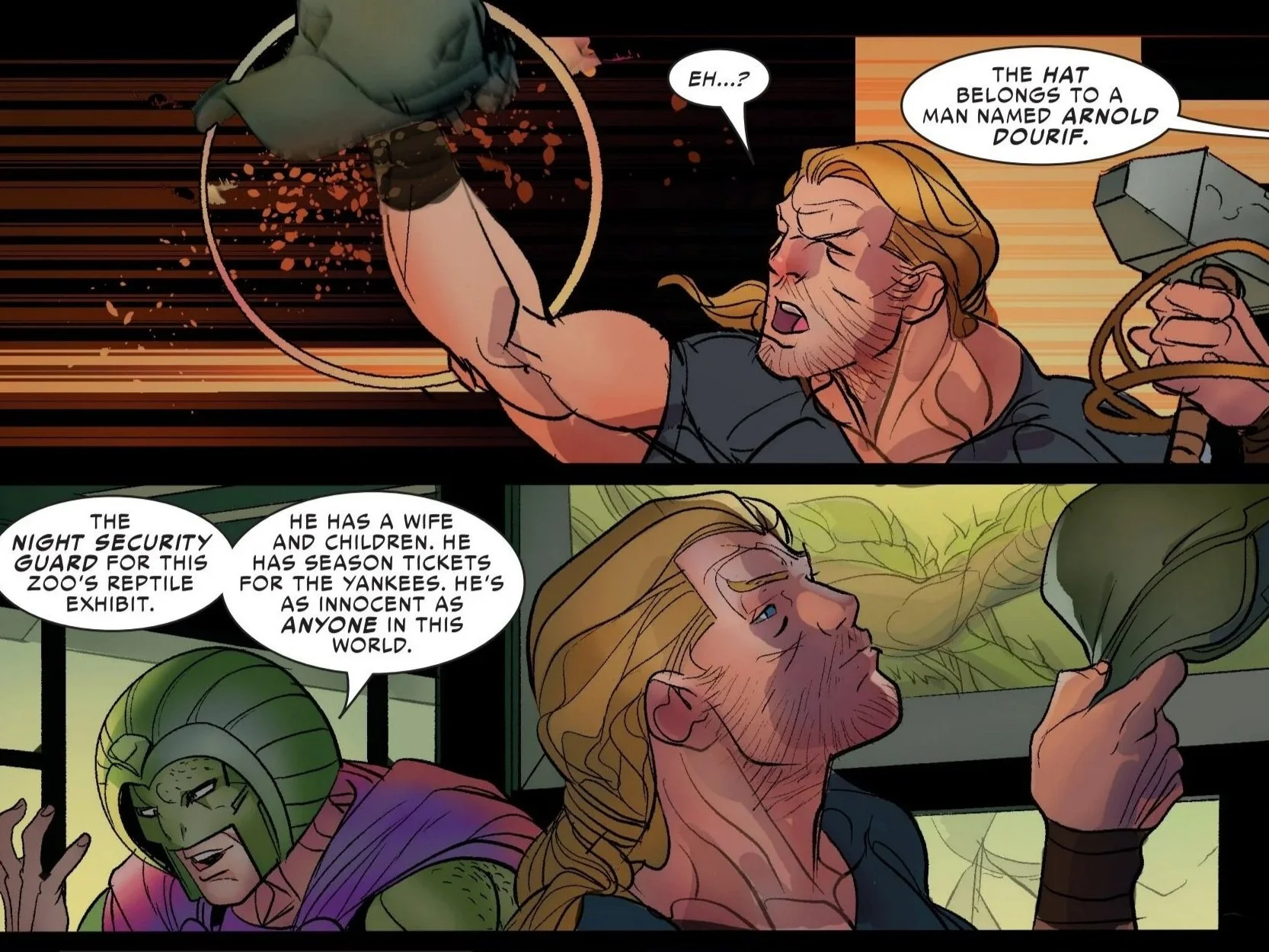
Cobra puts Sigurd to the test, but to what end?
The Cobra explains the cap belongs to Arnold Dourif, the night security guard for the reptile exhibit of the zoo. He further details how he has a family and possesses season tickets for the Yankees, as innocent as anyone in this world. The Cobra had handcuffed him to a Hellbender Salamander exhibit (assuring Sigurd that the creature is harmless despite its name) and essentially tells Sigurd he has a choice here. He can assume the security guard will be entirely fine all on his own, or he can attempt to save him.
But for Sigurd, there is no choice. And like the very god he petitioned all the way back in issue one, Sigurd valiantly hurls his hammer at the Cobra. And while it is not an enchanted weapon fit for gods, his construction hammer wrapped with a bungee cord is certainly effective.
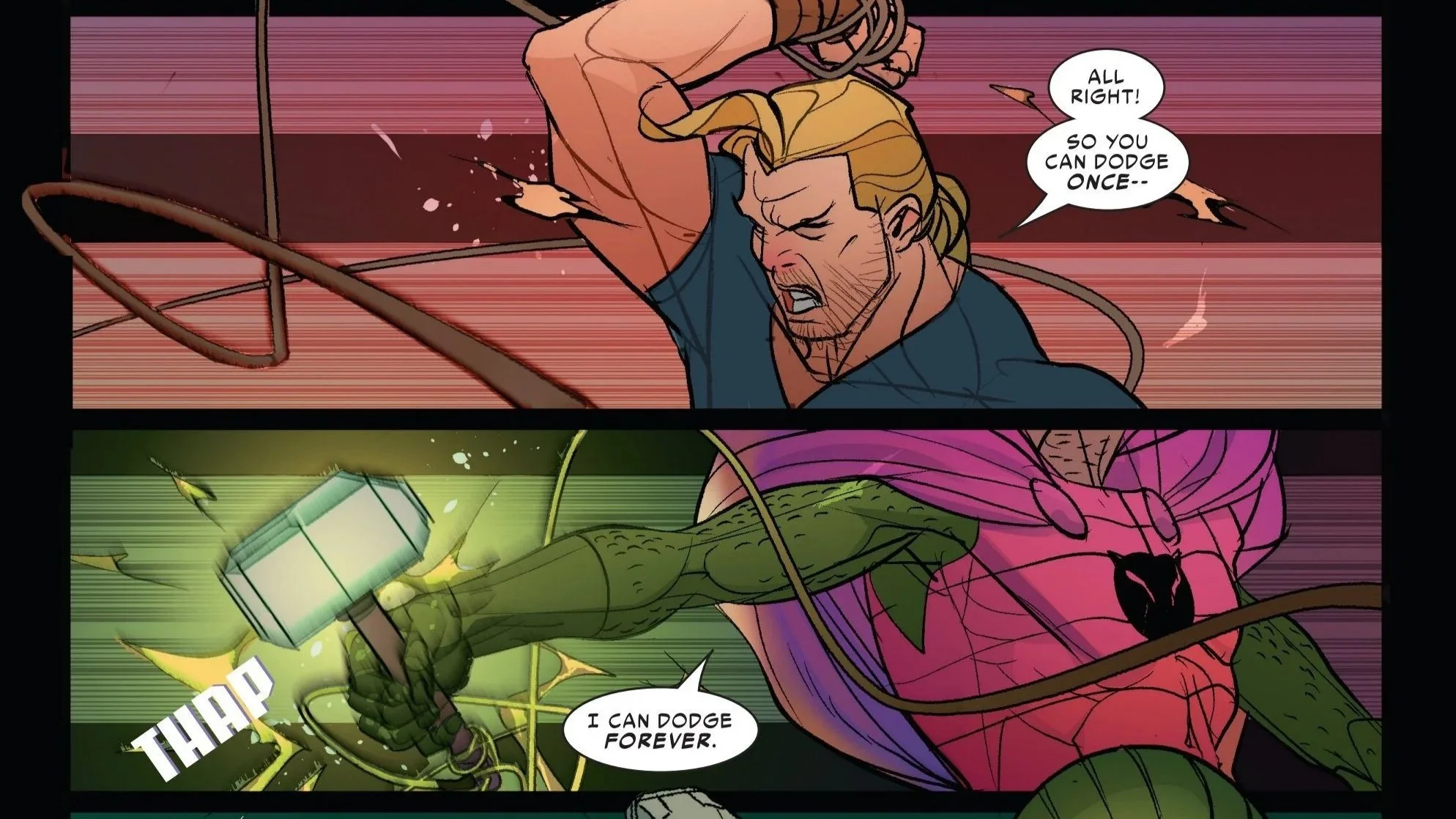
Cobra might be…beneath Thor on a good day but he’s more than a match for Sigurd Jarlson.
Sadly, Sigurd's weapon does not hit its mark as the Cobra dodges effortlessly and even catches the hammer before dropping it. He tells Sigurd that he is officially in the "big leagues" now and that maybe he should make the smart choice and leave the exhibit while he can. He warns that the next time he strikes, Sigurd will not see it coming.
The Cobra slithers away like his namesake, and Sigurd curses before racing off to try and save Mr. Dourif. He cautiously ventures further into the reptile exhibit, walking past the alligator enclosure and nearly stepping on what looks to be a loose coral snake. He takes his time venturing further into the exhibit, but he fails to see a massive constrictor until it is too late. The snake quickly wraps around the body of Sigurd and ensnares him.
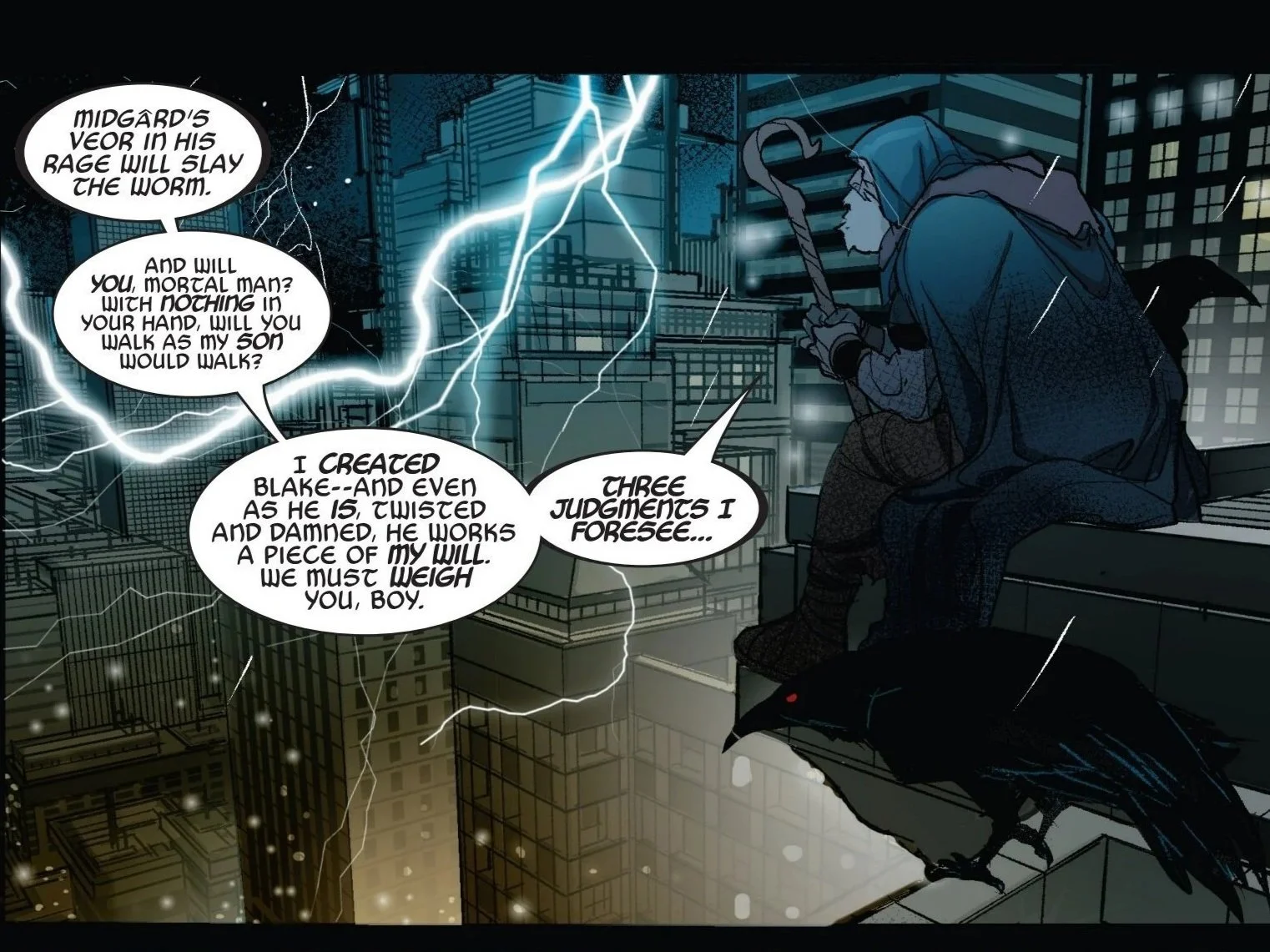
The former All-Father watches with great interest.
We witness a raven cry out "judgment" as we are met with the image of the cagey as ever Odin perched on a rooftop, apparently observing the events unfolding. Despite no longer being the All-Father (or technically alive), he has a vested interest in Sigurd and what path he would take. In his musings, Odin acknowledges that he created Blake. He admits that despite Blake being twisted and damned, he still works a piece of the will of Odin. This is to be one of three judgments that lie in store for him.
As Odin wonders whether Sigurd will walk the path his son would, Sigurd, being crushed by the constrictor, hurls his hammer toward the alligator enclosure. He shatters the glass and releases the animal. The alligator snaps its jaws around the tail of the giant snake, which prompts the serpent to release Sigurd. As he recovers, he looks back to see the alligator and snake locked in mortal combat. Weary and solemn, he apologizes to the beasts for setting them upon one another as a voice calls out to him.
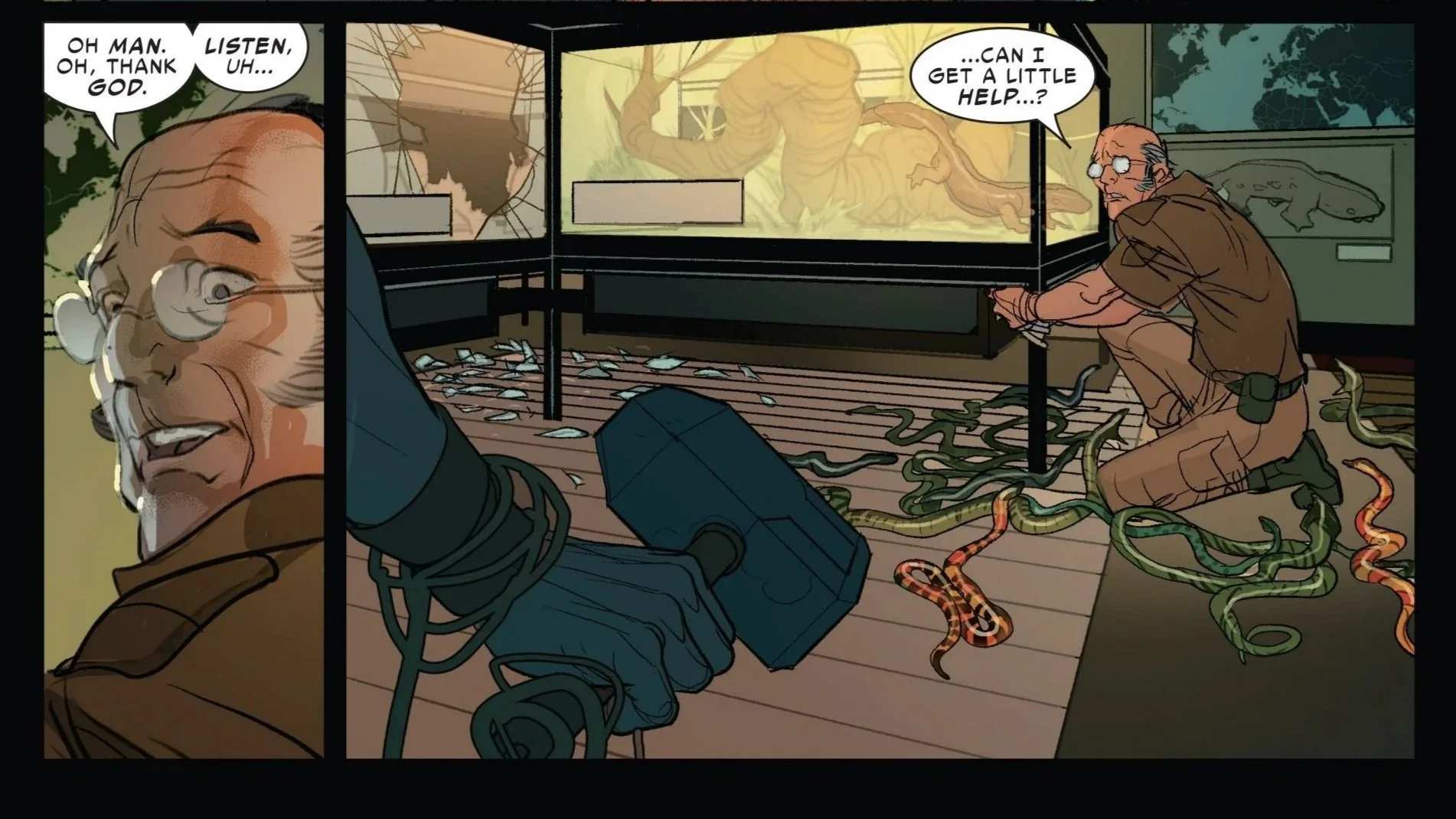
Of all the days to not call in to work…
The security guard, Arnold Dourif, gets the attention of Sigurd and asks for help getting free as a variety of escaped snakes slither toward him. Sigurd rushes to his aid without hesitation, telling him not to move when a gas bomb of sorts goes off in his direction. Suddenly, the Cobra strikes! He slashes out with a two-pronged blade, slashing Sigurd as he smugly reveals that while his weapons are typically poisoned, he believes it to be overkill in this situation.
The Cobra wants to see Sigurd die of blood loss instead, but reveals that there is another option here for Sigurd: run away. Sigurd and the Cobra clash, with the latter easily dodging the fiercest hammer swings of Sigurd. The Cobra continues to taunt Sigurd, telling him that while he has a lot of fight in him, all that action is likely to agitate the snakes about to swarm over Dourif. To illustrate his point, the Cobra goes to throw another one of his Cobra Gas bombs to force Dourif to start violently coughing.
Sigurd barely manages to catch the explosive, deftly hurling it back at the Cobra. It detonates, but it is harmless to the Cobra. To him, it is just harmless fog. But the smokescreen does its job nevertheless. It obscures the field of vision of the Cobra long enough for Sigurd to get behind the villain and start strangling him with his bungee cord.
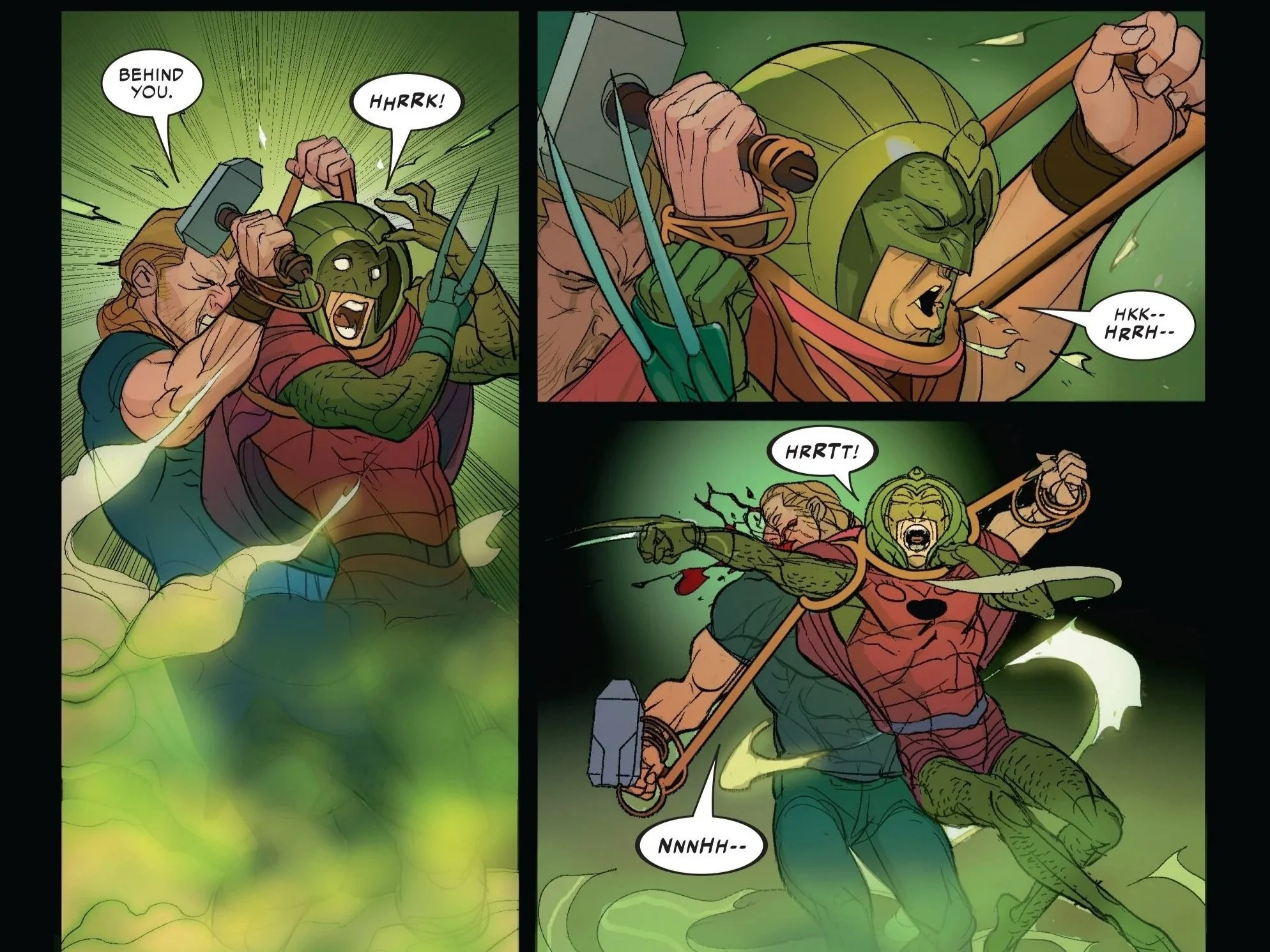
Sigurd actually doesn’t do too bad against his first ever supervillain!
The Cobra eventually succumbs and passes out, though not before slashing Sigurd one last time. Dourif asks if he is still alive, to which Sigurd matter-of-factly responds that the man was still breathing. The two make their way out of the nightmarish reptile exhibit, but as Sigurd goes to open the door, he is quickly stopped by the security guard.
The guard informs him that the doors were rigged and to use his hammer to open them rather than his hands. Sigurd does exactly that, but Dourif exclaims that he was supposed to use the wooden handle of the hammer, not the metal part. But it is too late. The door swings open and envelops Sigurd with a burst of electricity!
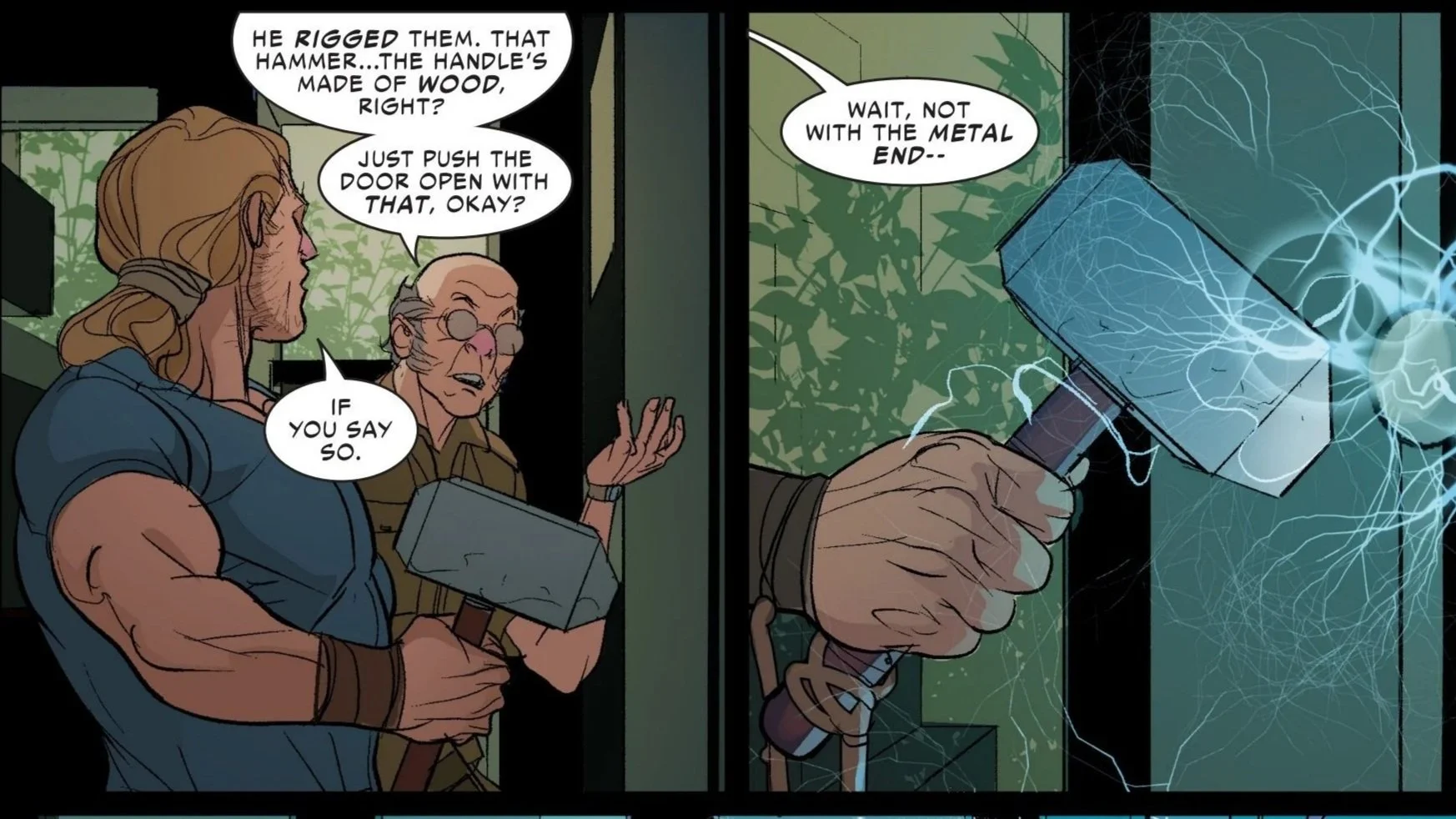
Holy #$%@, dude. Please do not do that again, not until we figure out if you’ve actually got like god powers or something.
Curiously, he seems no worse for wear as the two men get back to their feet. Dourif hazards a guess that perhaps the hammer was more conductive than the door handle. He further explains that he meant to say that the Cobra had wired up the exit doors to the mains. This meant that should Sigurd have opted to run instead, he would have fried like bacon.
Dourif thanks Sigurd for his help and says he is going to call the cops. He asks Sigurd to stick around. Sigurd explains it is for the best that he does not stick around and wait for the police. He asks Dourif if he could refrain from mentioning the hammer given his recent run-in with the law. Dourif happily agrees, as it is an easy ask. Sigurd muses that if he had abandoned the security guard to his fate, not only would the man have been dead, but Sigurd would have been made lesser. He ponders just what kind of game Blake is playing at.
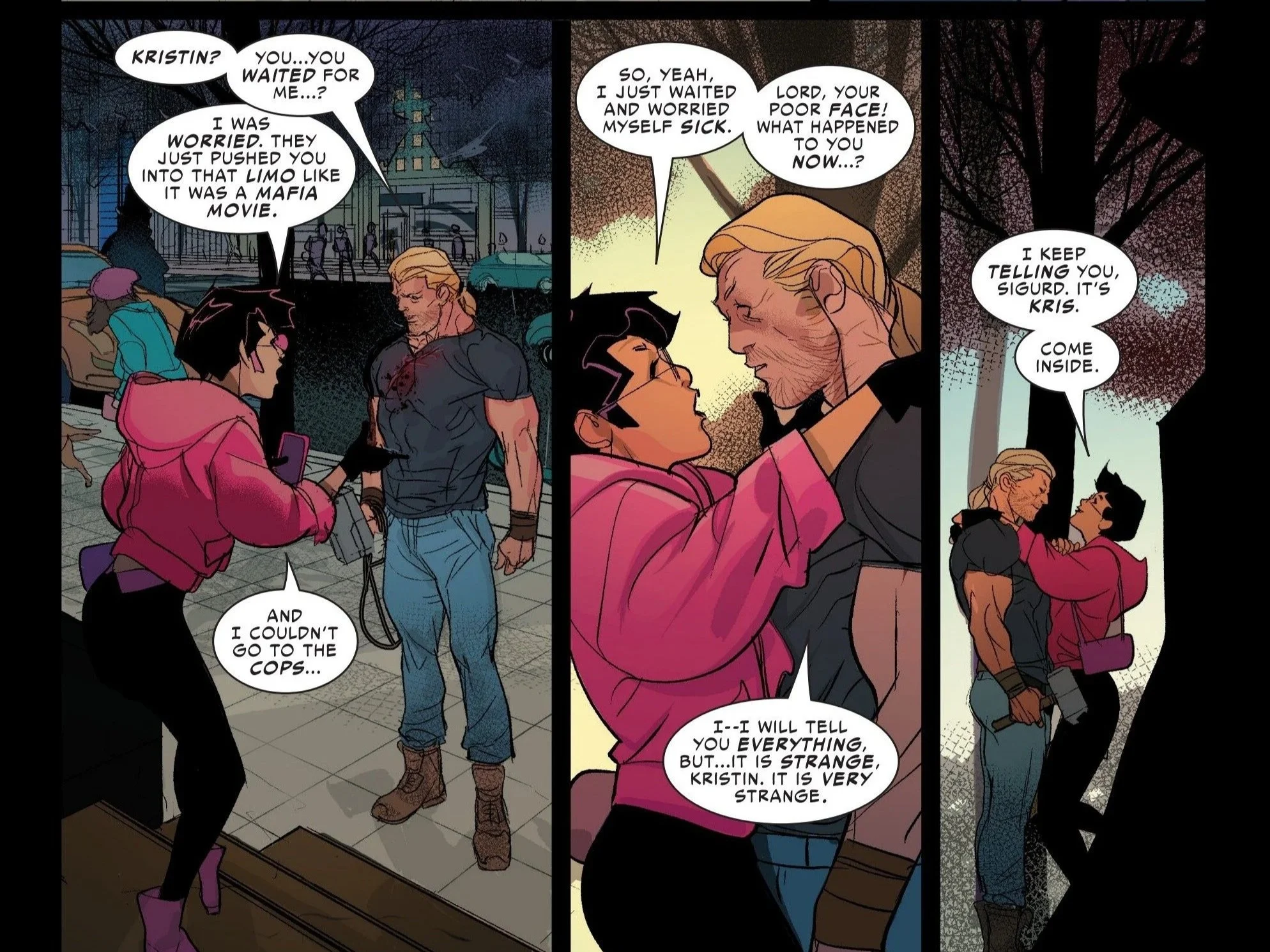
Will Kristin just remain Sigurd’s friend or will she become something more?
As we near the end of our issue, Sigurd finally makes it outside to the sidewalks of New York. He commits to not being willing to put anyone in danger. He resolves to speak to Jenny Sapristi and the others at work to keep them out of the way of harm. As he does so, he just so happens to bump into his neighbor, Kristin. Kristin, or rather "Kris" as she insists on being called, reveals she was worried sick about Sigurd. This was especially true after she witnessed him being thrust into a limousine like a scene from a mafia movie.
She could not go to the police, so she did the only thing she could: she waited for him. Sigurd admits it is all very strange, but he promises he will tell her everything. Concerned over his currently bleeding condition, she welcomes him inside. On the final page, we see the leering visage of another classic villain of Thor, the fearsome Mister Hyde. We then reach our end credits and the title of our issue, which is appropriately named "Hide and Seek."

Mr. Hyde watches on with some sinister intent.
Sigurd’s First Judgment
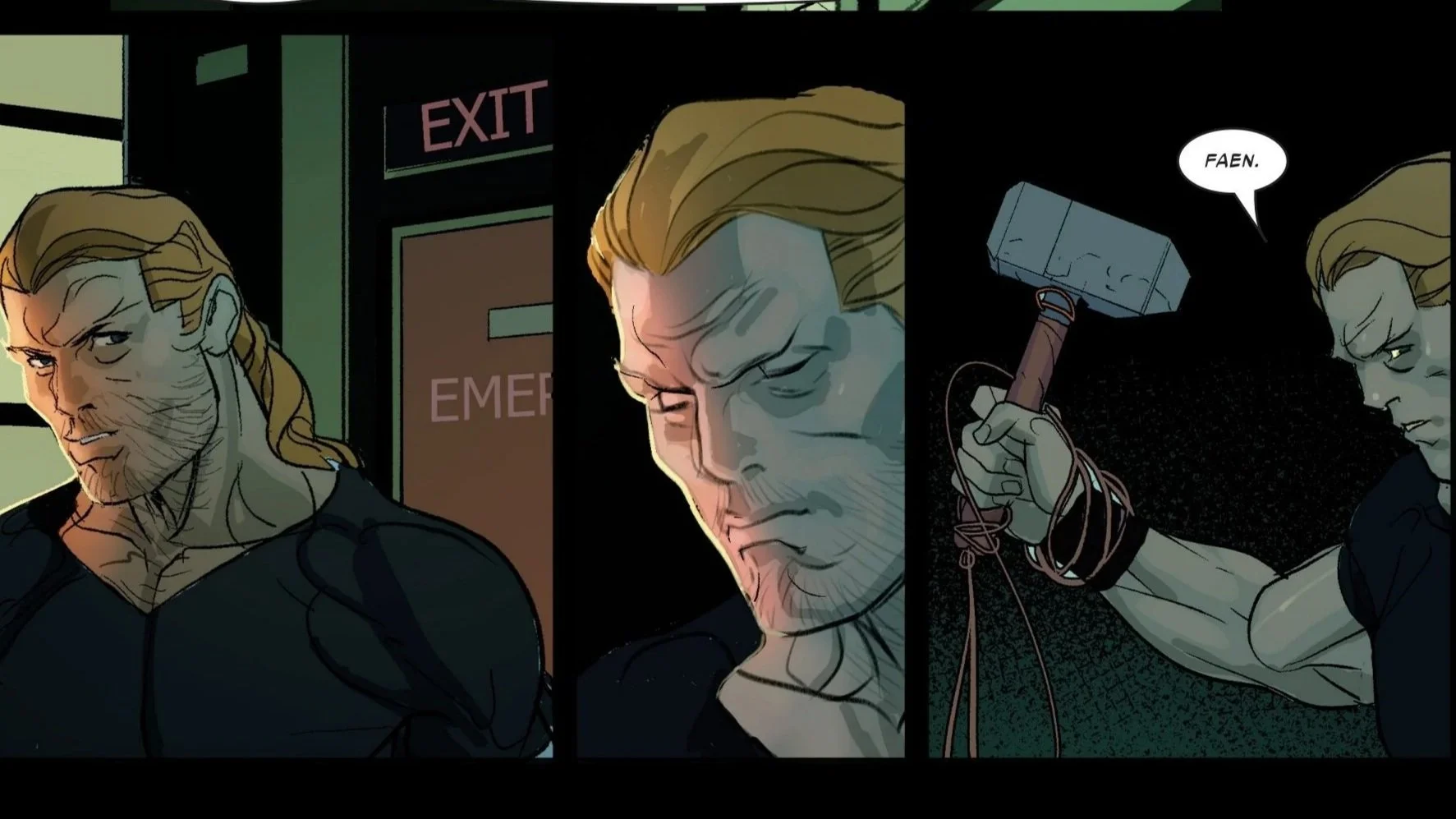
Sigurd refuses to leave an innocent man in peril.
Al Ewing continues to craft an engaging story that harkens back to the title of this series, namely The Mortal Thor. As much of a fan as I am of the Odinson (and believe me, I am) this direction in the mythos is a welcome burst of fresh air. We also get confirmation in this issue that Sigurd is not Thor. However, he is still connected to him due to the magic used by Loki. To what end that connection exists, we do not have a definitive answer just yet. We also learn that Blake, in his own twisted way, is trying to test Sigurd and, failing that, kill him. This is presumably to claim his soul, as the soul of Blake is currently gone, judging by the previous volume of Immortal Thor.
I was a big fan of bringing back the Cobra as a villain here. While most fans would understandably count people like Loki, Ulik, and the Enchantress as classic villains of Thor (and they are, and we have certainly seen them in this book so far), Thor also has a bevy of Earth-based supervillains that have caused him grief going all the way back to the Journey into Mystery days. The Cobra is one such bad guy. While he might not be the biggest threat to the modern Thor, let alone a Thor who was the All-Father, he is more than a match for a mortal man with a hammer, even one as brave as Sigurd. The whole encounter inside the reptile exhibit was tense and atmospheric. It really elevated the issue as a whole.
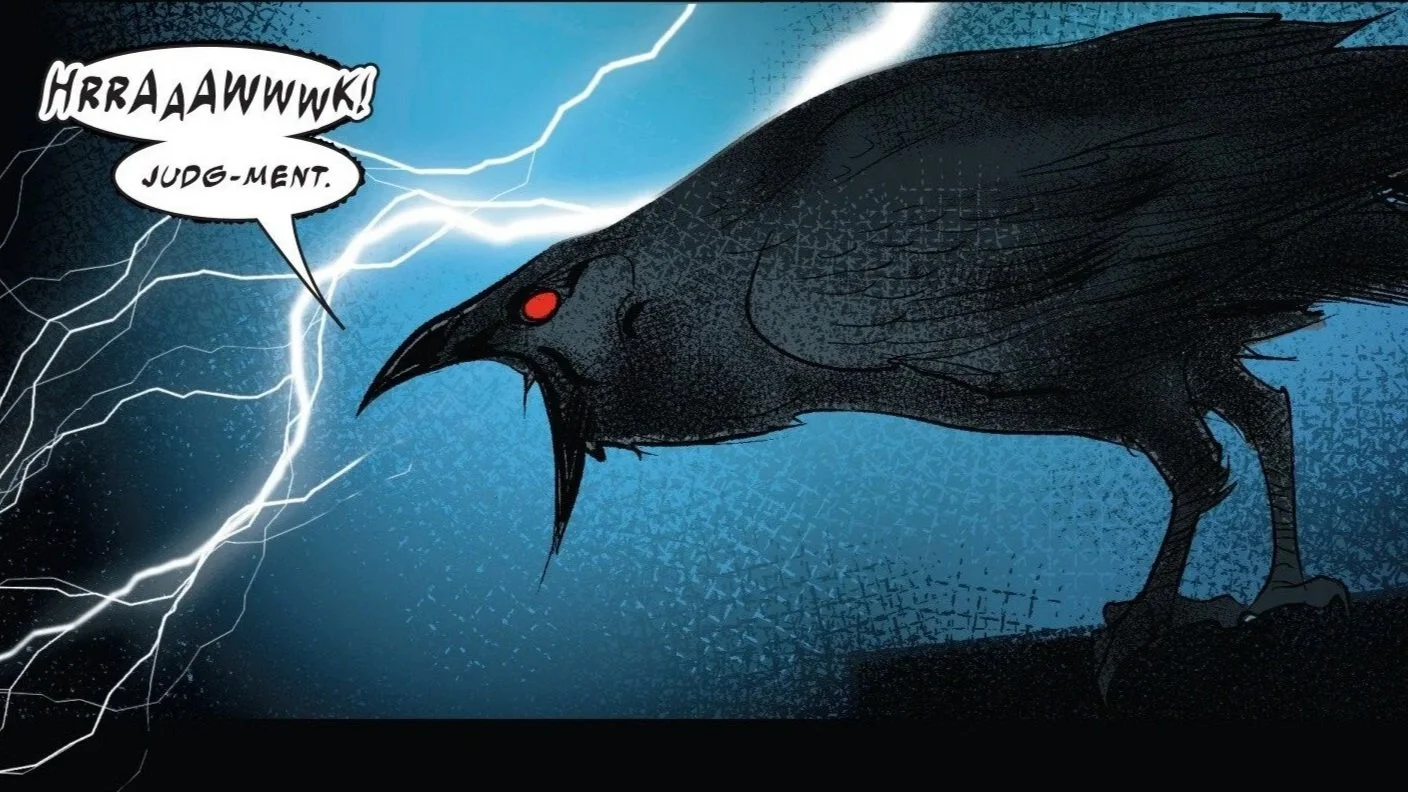
Huginn, one of Odin’s ravens from myth. Or maybe it’s Muninn?
While he was only shown briefly, the presence of Odin here was powerful and extremely well done. We know from prior issues that Odin has been keeping tabs on both Loki and the man who is not his son in the form of Sigurd. He has fully embraced his role as a seeker of knowledge, no longer trapped by the throne and its heavy responsibility. As such, he is intent on seeing where the path of Sigurd takes him. I would have to imagine he is feeling some sort of way about the machinations of Blake given he is responsible for creating him in the first place, but it is hard to say if and when Odin would ever confront his wayward creation. Once a phenomenally powerful sky-father, now bereft of the All-Power, I would not necessarily bet on Odin to get into a fight anytime soon. However, even without his once awesome might, he is still one of the more cunning gods to have ever existed. And given that he foresees three judgments for Sigurd to be tested by in total, we can rest assured that we will see the former All-Father once again.
While we have not seen a whole lot of Kristin here, she has become a notable supporting character in the series to date. Given how this issue ended and the preview for the next issue, she might just become something more than a friend. Thor himself has a pretty long list of romantic love interests (Sif is number one, by the way), so I am not opposed to seeing Sigurd get closer to someone. Kristin is a bit of a blank slate in the sense that we know hardly anything about her save that she is an artist, but a side arc could be a welcome addition to the book.
Of course, Sigurd getting closer to Kristin is inviting some danger to the lives of the people he wants to protect. I am willing to bet this gets examined further in the next issue with the arrival of Mister Hyde. Mister Hyde was capable of giving Thor a decent tussle now and then back in the day, so for Sigurd, he is a much more immediately lethal threat. As I said earlier, I am a big fan of seeing classic villains of Thor that have largely been overlooked return to the fold. I am looking forward to Hyde causing some trouble for Sigurd.
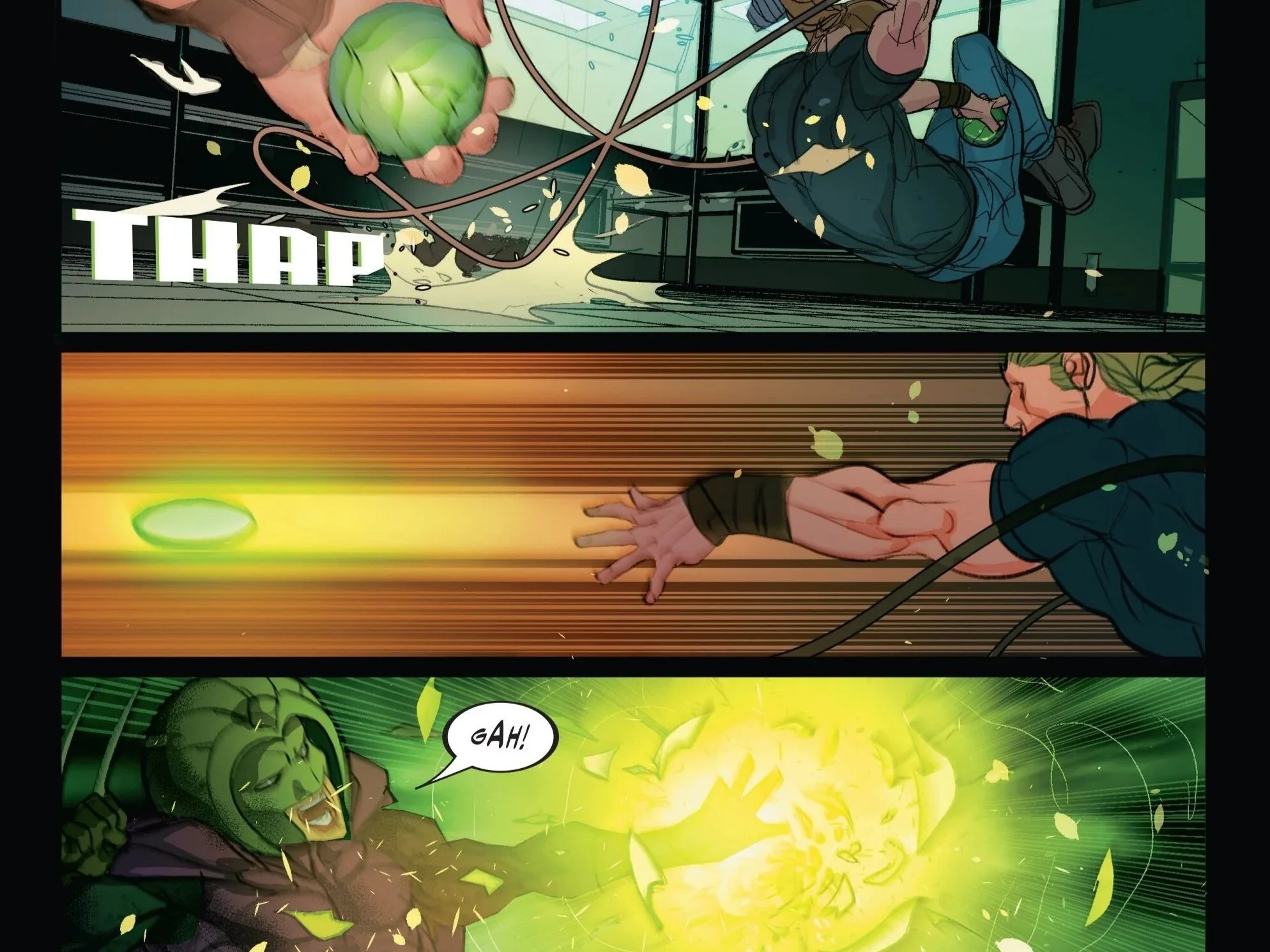
Sigurd deftly manages to catch one of Cobra’s gas bombs and returns to sender in explosive fashion.
Pasqual Ferry on art and Matt Milla as colorist work seamlessly together to really sell the danger of being trapped inside a reptile exhibit with a deranged supervillain dressed like a snake. It is an absurd scenario taken at face value and would be child’s play for Thor, but as we have established, Sigurd is not Thor. He is just a courageous man armed with a hammer. Every panel is meticulously crafted to really sell the danger here.
The Cobra, who would be rightfully laughed at for such a goofy costume in almost any other circumstance, is portrayed as a cunning and deadly force that could probably slay Sigurd outright if he were not so focused on toying with him. The sickly green color from the Cobra Gas bomb pops off the page. It almost makes me ill looking at it (this is a compliment, by the way). We also see more of the bungee hammer in action. This is a really cool nod to Mjolnir always returning to the hand of Thor, but it is reimagined to fit in the world of Sigurd Jarlson, where he is only just now fighting an actual supervillain. More than that, we get a full gamut of expressive and emotive panels from Sigurd that let us really know what he is feeling, even when he is swearing in Norwegian.
If this issue has any flaws, it is that it felt kind of short. There is only so much you can do in a zoo after hours (supervillains or no), I understand, but even so, I was expecting a bit more from Odin or perhaps an appearance from Blake or Loki. The pacing was otherwise on point for a pretty straightforward issue. We did not get any real revelations of the sort, but we do know Thor still exists despite being dead and that both he and Odin are rooting for Sigurd in their own way.
Even so, I do think subsequent issues need to start swinging big narratively for big reveals or crucial developments. After all, according to Earth and Midgard, Thor only exists in the mythological sense. He was never a superhero and never a founding Avenger, having been retroactively replaced by Beta Ray Bill. My slight misgivings aside, I have little doubt Ewing will deliver going forward.
Final Thoughts and Review
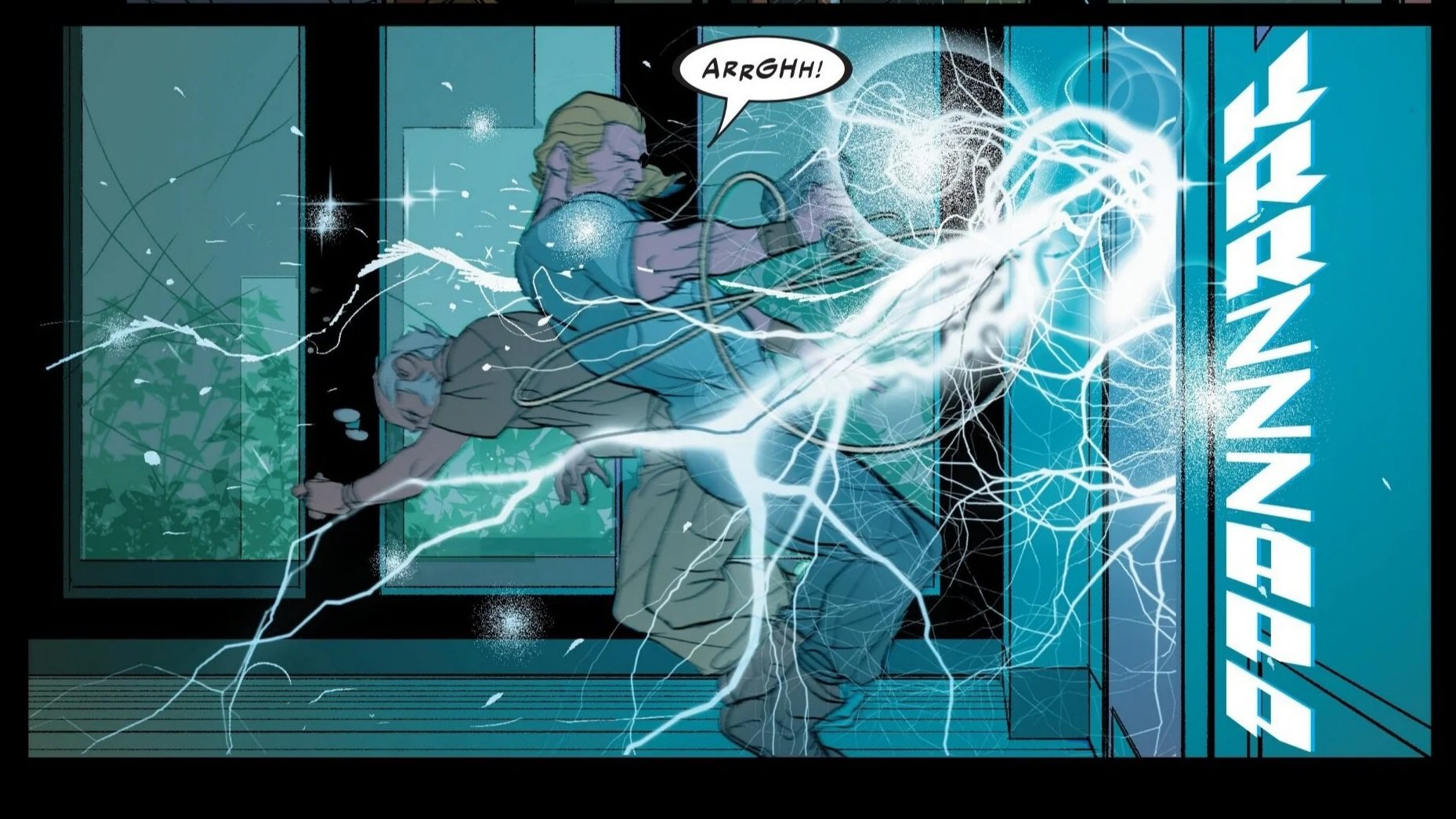
Did Sigurd’s hammer really prove to be more conductive or was this an act of divine intervention?
This book is over before you know it and left me with a sense of incompleteness, but that was tempered by the enjoyment I had reading it. It also left me with a newfound respect for a villain that is generally not anything close to resembling a real threat to Thor under most circumstances. At the same time, it is opening the door to a potential romance for our "street-level Thor." I wish it had more to offer, but what it did offer was by no means bad at all.
Final Review: 7/10
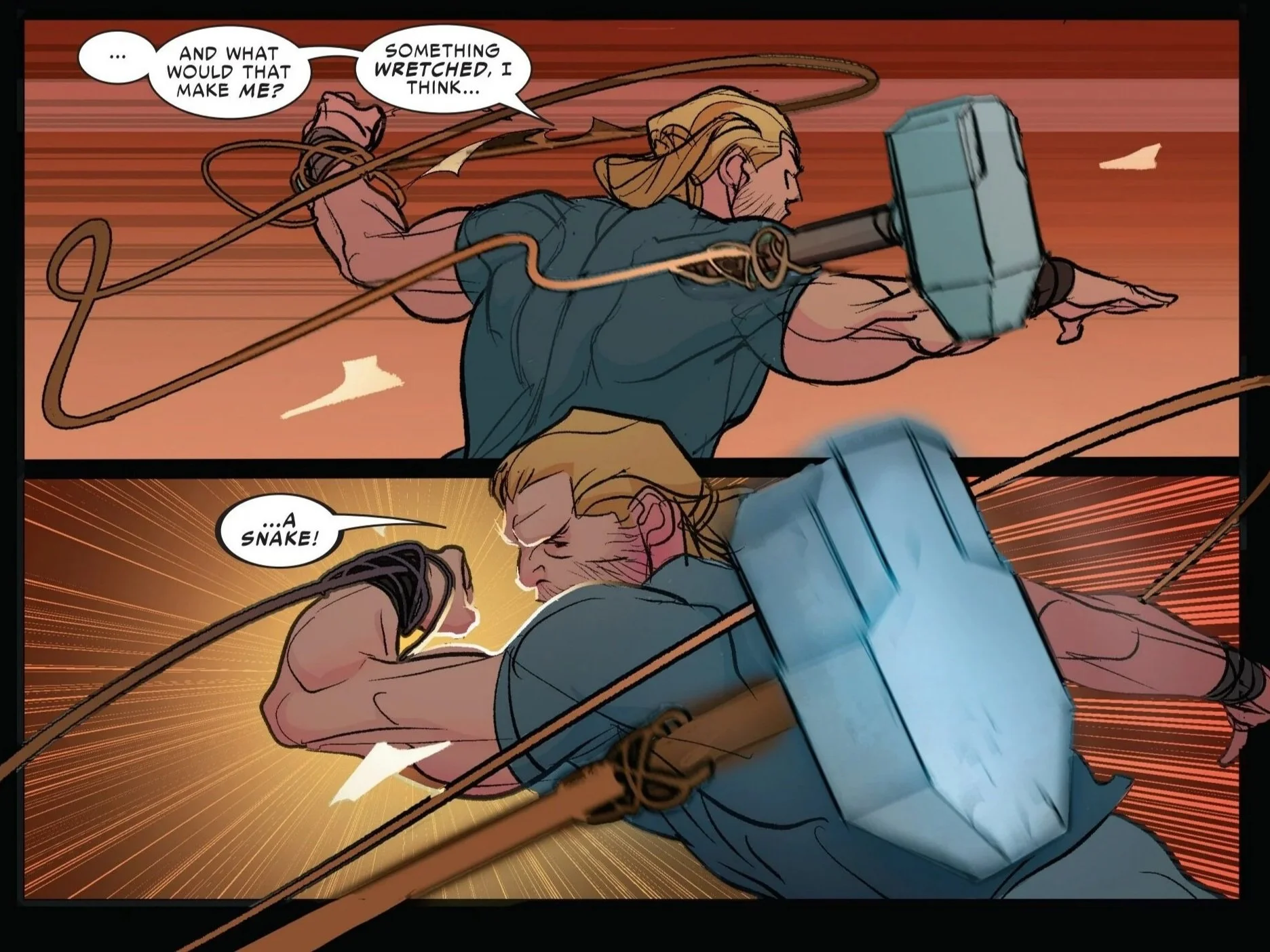
Sigurd Jarlson continues carving out his legend in the pages of The Mortal Thor #6. He faces off against one of the older and unassuming (see: goofy) villains of Thor that is actually incredibly frightening and lethal under this context. The issue is pretty direct and does not really move ahead in terms of big-picture lore drops or startling revelations. However, it has tense action and reaffirms the core theme of this book: you do not have to be a god or a son of Odin in order to be a hero.