
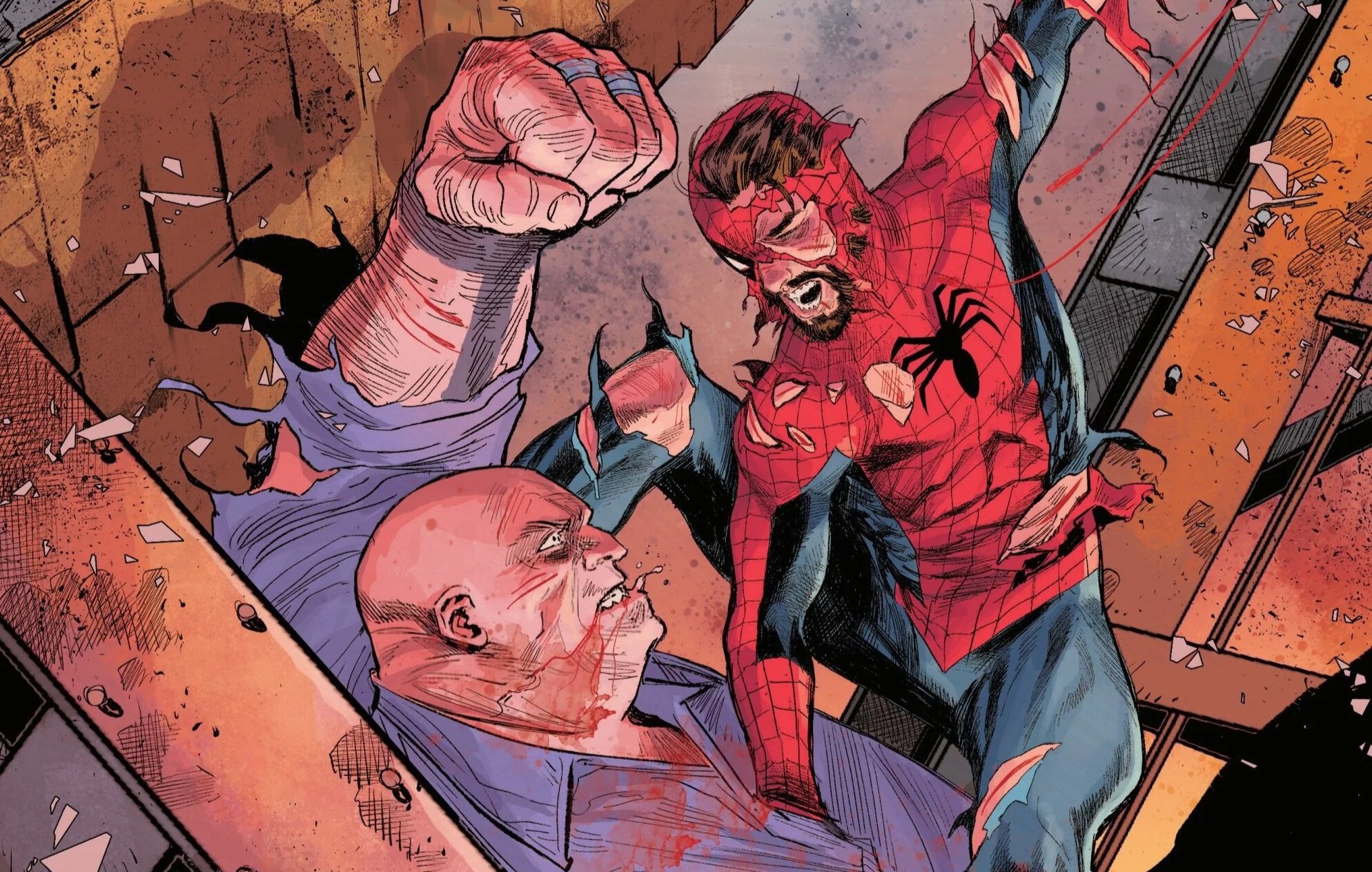
With Hickman’s Herculean run now swiftly approaching its grand conclusion, Ultimate Spider-Man #23 stands as the emotional and thematic pressure point of this overarching Ultimate Universe experiment. As the penultimate issue of the series, this issue—more than most—carries the burden of payoff: not just for a story arc, but for an entire reimagining of Peter Parker as a husband, father, and reluctant hero in a world that actively resists traditional superhero mythology. And rather than escalating into only nonstop spectacle, like several of the other Ultimate books have resorted to in their penultimate issues, this comic in particular chooses instead to double down on tension, consequence, and moral ambiguity—even amidst its most action-packed moments.
This makes for a story that is quieter than expected, heavier than anticipated, yet deeply committed to its core thesis: that responsibility, once embraced too late, carries a cost that cannot be undone. While the issue is undeniably powerful, it is also frustrating in some deliberate ways, though that works to the narrative’s benefit. With everything coming to a head and Peter Parker finally unleashing everything he’s kept pent up for so long against the Kingpin’s machinations, Hickman’s magnum opus offers little respite by withholding catharsis, compressing certain revelations, and trusting readers to sit with discomfort rather than offering clean resolutions. It’s a risky move, one that puts Ultimate Spider-Man at its most confident—and most divisive.
Taking Truth to Power
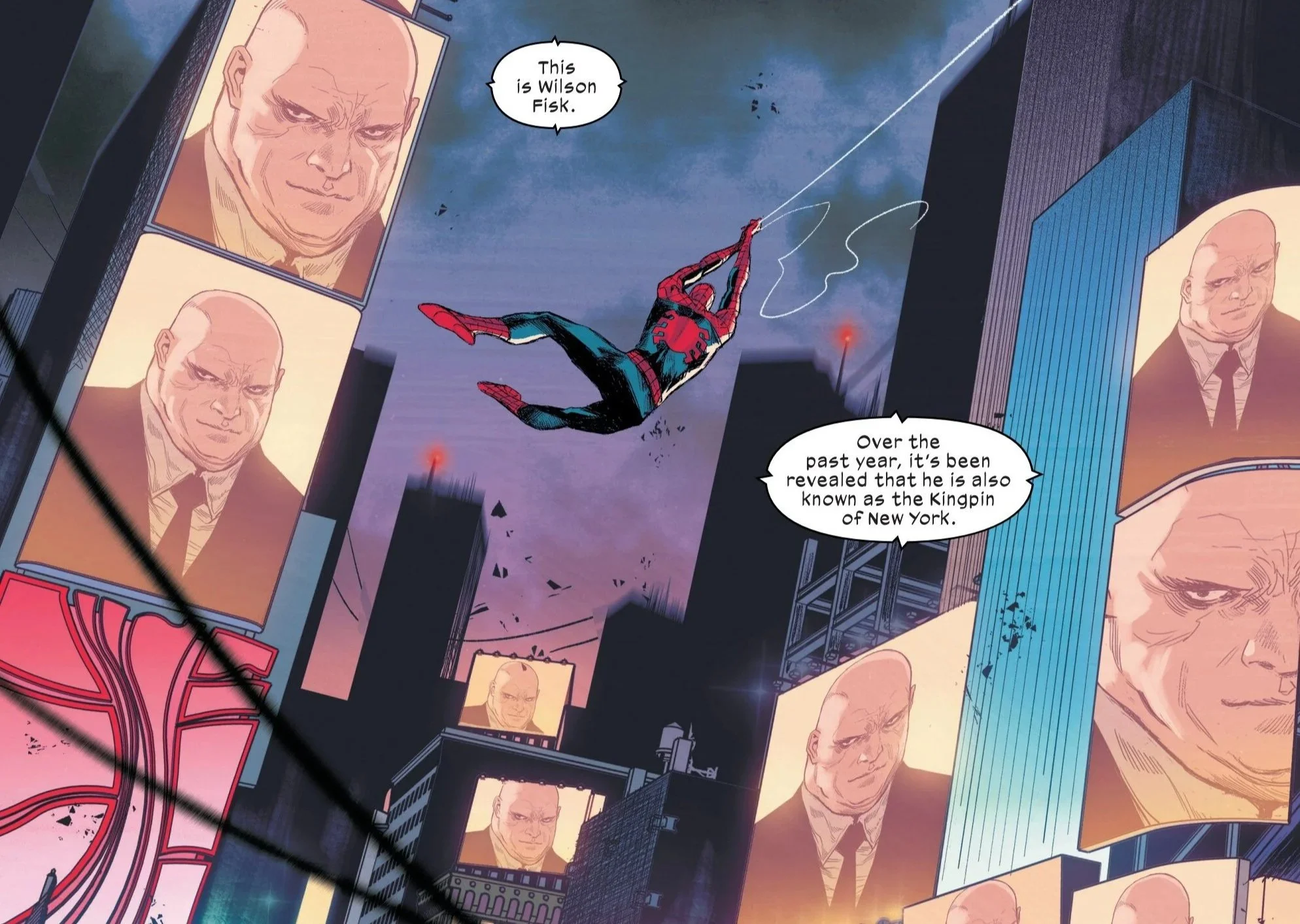
Issue #23 immediately picks up where the last issue left off: centering on the fallout of Peter Parker’s confrontation with Wilson Fisk, now firmly established as the ruling power behind New York’s criminal and political machinery. Fisk’s grip on the city is no longer abstract or background noise; it is tangible, suffocating, and deeply personal. This means that the time for guerrilla tactics is over: Peter and his rag-tag group of family and friends are geared up to hit him where it hurts. Hard.
While Uncle Ben, Jonah Jameson, and Otto Octavius kick their plan to expose Fisk’s wrongdoings to the world, Peter grapples with the realization that his late arrival to heroism has allowed corruption to calcify. His decisions over the last several issues—both as a civilian and as Spider-Man—ripple outward, endangering not only himself but his family. Mary Jane and their children are no longer passive stakes; they are active participants in the tension, aware that Peter’s dual life has invited consequences they cannot escape—especially in the case of his son, Richard, who is actively helping Otto to take Kingpin down.
Meanwhile, Gwen and Harry also set their final confrontation into motion, navigating their own fraught relationship, their own personal demons as Goblin and Mysterio respectively, and the growing sense that they might not have the Parker family’s best interests at heart in the slightest. Not that the villains of the saga are having a better time of it either, as Kingpin is confronted by his former collaborator, Mister Negative, in a far more physical clash than previous underhanded power struggles have applied throughout the series. With all these volatile elements coming to a head, both Peter and his villains backed into a corner, and the odds stacked against them, Spider-Man finds himself taking on a confrontation he’s known was coming, but that he’s now prepared to face with newfound experience and fury. The issue builds toward a confrontation—offered in only the briefest teases of concentrated action—that feels inevitable but deliberately incomplete, ending not with triumph or tragedy, but with a sense of impending reckoning.
Power Delayed. Responsbility Never Denied
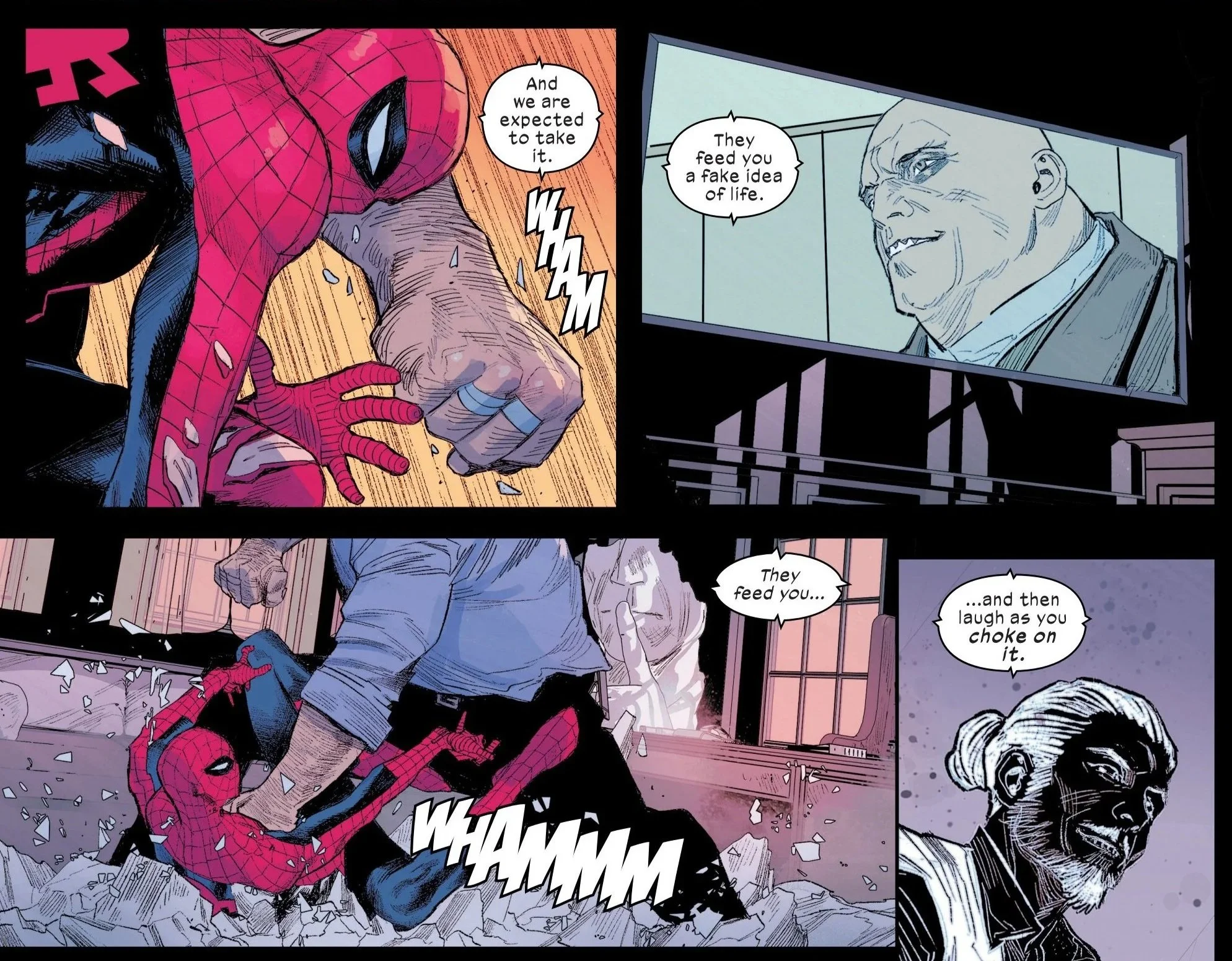
Ultimate Spider-Man #23 succeeds most in its commitment to thematic consistency. Hickman continues to explore a version of Spider-Man defined not by youthful spontaneity, but by delayed—and even denied—responsibility. We are reminded, once again, that this Peter Parker is older, more cautious, and painfully aware that he is reacting to a world that has already chosen—even embraced—its villains. We’ve seen him battle the odds and be pushed to the back foot throughout, and this issue’s greatest strength is mining the culmination of all that tension toward its brutal and final outcome. Fisk is not portrayed as a flamboyant crime lord or a brute-force antagonist; he is institutional rot personified. Every conversation, every quiet threat, reinforces the idea that Peter is not fighting a man, but a system—one that cannot be punched into submission.
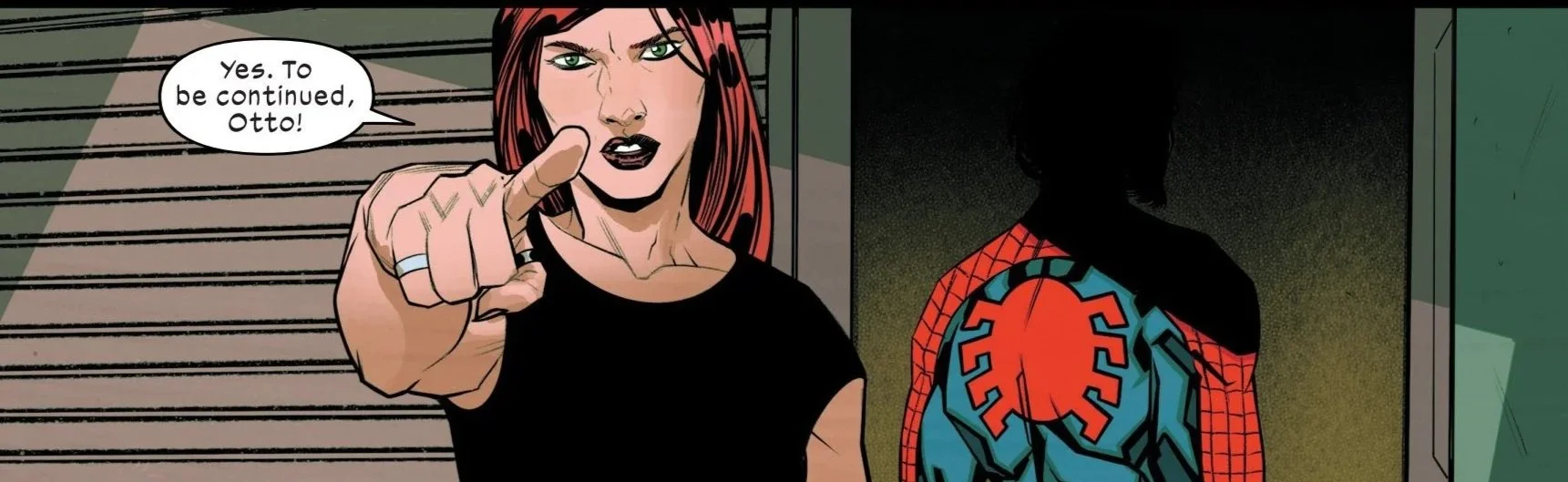
But it’s not just Peter at his wits' end and ready to go farther than he’s ever gone before. The entire supporting cast—who’ve all been fleshed out in true Hickman-esque incremental fashion throughout this run—all get their moment to shine. Otto’s dalliance with super-heroics and shady science raises eyebrows but fits his persona of mad tinkering to a tee, leaving one to wonder whether there are any more offerings of… superior heroics in his future. Mary Jane takes a slight backseat in this issue, barring a great few opening pages where she chastises Otto for encouraging her son to take risks for their goals. But considering how much influence she’s had throughout the series, this is hardly a problem for the narrative.
Meanwhile, Ben and Jameson’s ultimate gambit pays dividends; they finally manage to hit Fisk where it hurts, and this discomfort paces through the narrative as well, punctuating Spider-Man’s inevitable encounter with the Kingpin, where all the stakes are laid bare for readers to behold. Even Richard and Felicia’s little side-quest adds to the adventure, as do the evil machinations of Mister Negative, who, while dead set on taking out Wilson Fisk, is also willing to temporarily put aside his differences to put down Spider-Man once and for all. It’s a fun scene where they triage the threat, knowing full well that this new Peter Parker is far more dangerous than the "green as hell" superhero in red and blue tights who threatened their operations back in the first few issues. This is a Spider-Man who is ready for war, and Hickman conveys this new mindset effortlessly.
For a penultimate chapter, #23 often has you holding your breath, with no clue when to let it go. Key confrontations are delayed, revelations are implied rather than explored, and emotional beats—particularly involving Peter’s family—are sometimes undercut by brevity. The restraint is very intentional, but it risks making the issue feel incomplete rather than suspenseful.
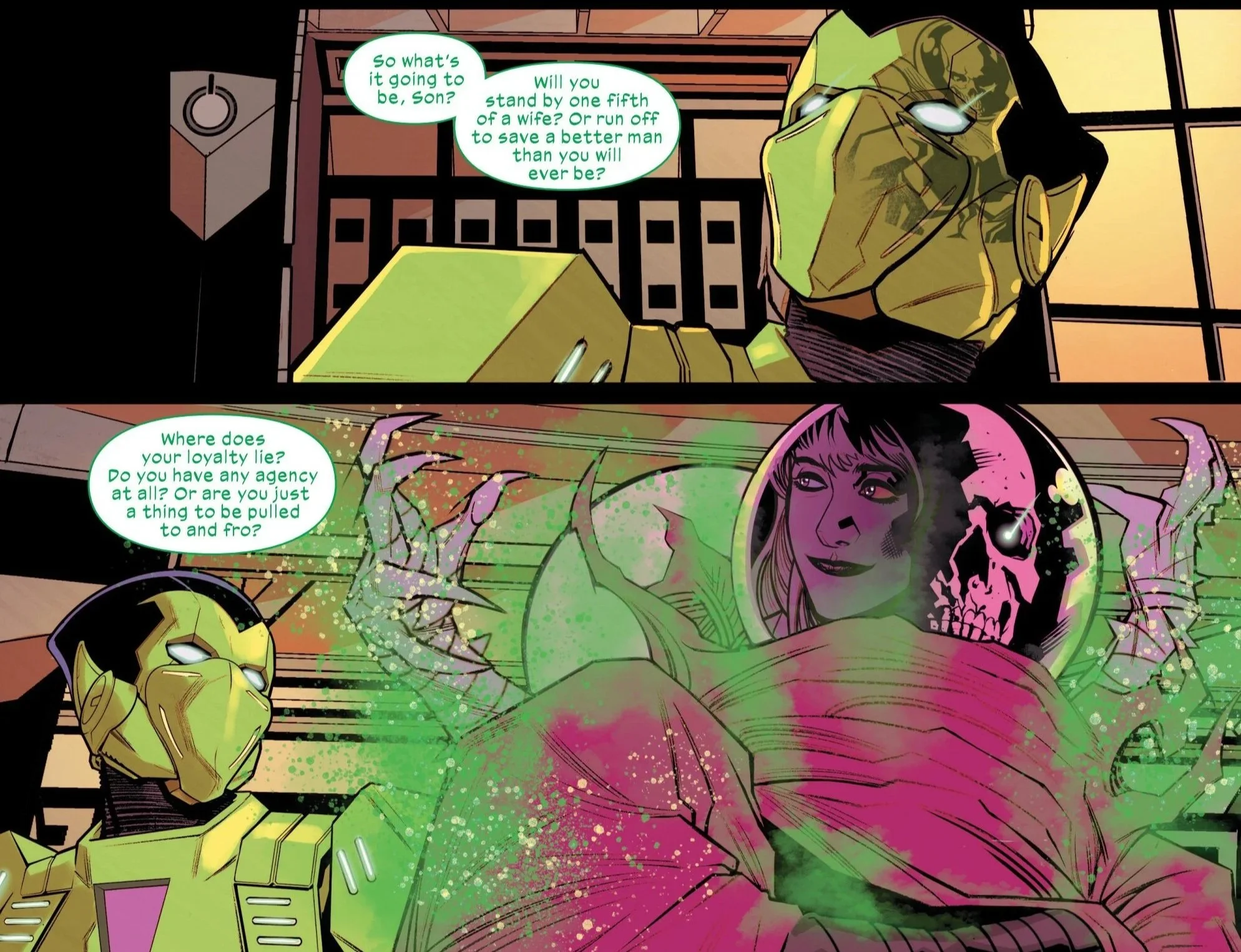
Harry and Gwen’s side-quest, in particular, seemingly takes this suspense a little too far: Harry is clearly torn between wanting to support Gwen’s hunt for power and helping Peter take down Kingpin. The warring voices of Norman Osborn and Gwen’s fractured Mysterio personalities pull him from all sides. It’s a great set-up, one that frames Harry’s identity struggles throughout the series in the darkest culmination possible, but the inevitable “will-he-won’t-he” of the matter can be a bit much for some readers looking for meaningful conclusions this close to the end, rather than having everything crammed into one final issue.
In sharp contrast, this version of Peter Parker goes from regret and relative indecision to making the most decisive choices when it comes to his heroics. It’s a genuine celebration of the series' original conceit: How do you embrace power and responsibility when so much of your life is already set in stone and when you have so much to lose? Hickman’s Ultimate New York is dense with political intrigue, media manipulation, and criminal infrastructure, yet much of it remains just out of reach. But Spider-Man and his crew have finally cracked the veneer and are making moves that do far more than just ruffle feathers. Issue #23, therefore, becomes Hickman’s ode to consequences rather than super-heroics: His refusal to give readers easy answers is admirable, as he focuses on not just the BECOMING of Spider-Man, but what cost that potentially entails this late in the game for Peter and his family.
Putting a Human Face to Action
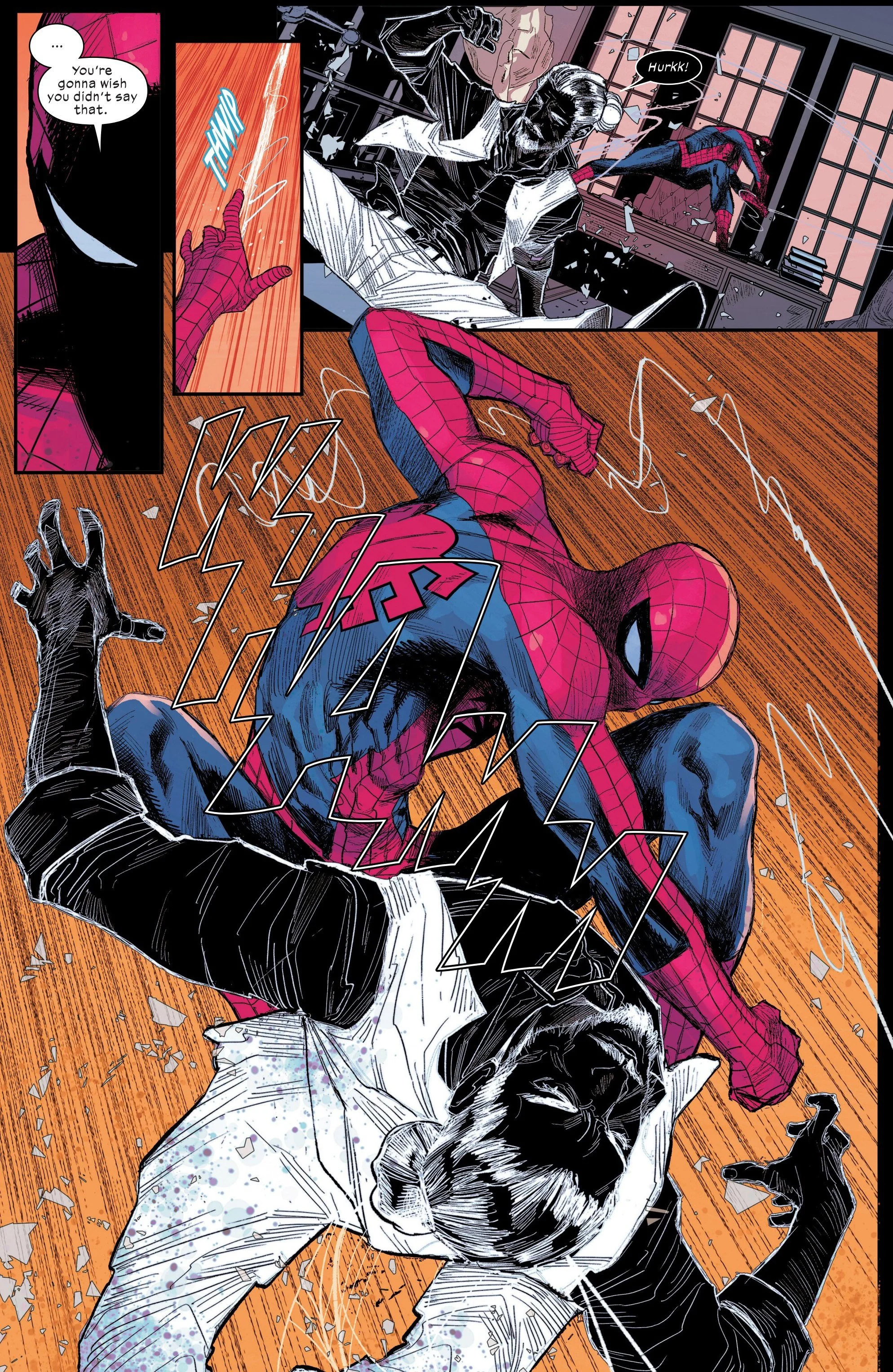
Marco Checchetto’s artwork continues to be one of the series’ defining strengths. His visual language is grounded, cinematic, and emotionally precise. Every panel feels composed with intention, from quiet domestic moments to looming cityscapes that emphasize Peter’s insignificance against the machinery of power. Facial expressions are restrained but loaded. Peter often looks tired rather than heroic: a man carrying the weight of choices made and not made. And even with the mask on, Spidey’s newfound conviction radiates from those furrowed eyebrows as he fights to save the things that matter most to him. Fisk, by contrast, dominates the page even when standing still, his physical presence mirroring his institutional power. When he does move to take action, Checchetto makes you feel like this is a force of nature as he manhandles his opponents, splintering furniture and walls like nothing.
The action—when it appears—is brief and impactful. Checchetto avoids excessive choreography, favoring sudden violence and tight framing that reinforces the story’s grounded tone. The ambient environment is made to feel even more oppressive by Matthew Wilson’s colors: shadow-heavy interiors and sterile corporate spaces all reinforce the sense that this is a world not built for heroes—it is one dominated by the foreboding power of systemic structures, and to fight them means to meet them on their own turf.
Win or Lose, He’s Going Down Swinging…
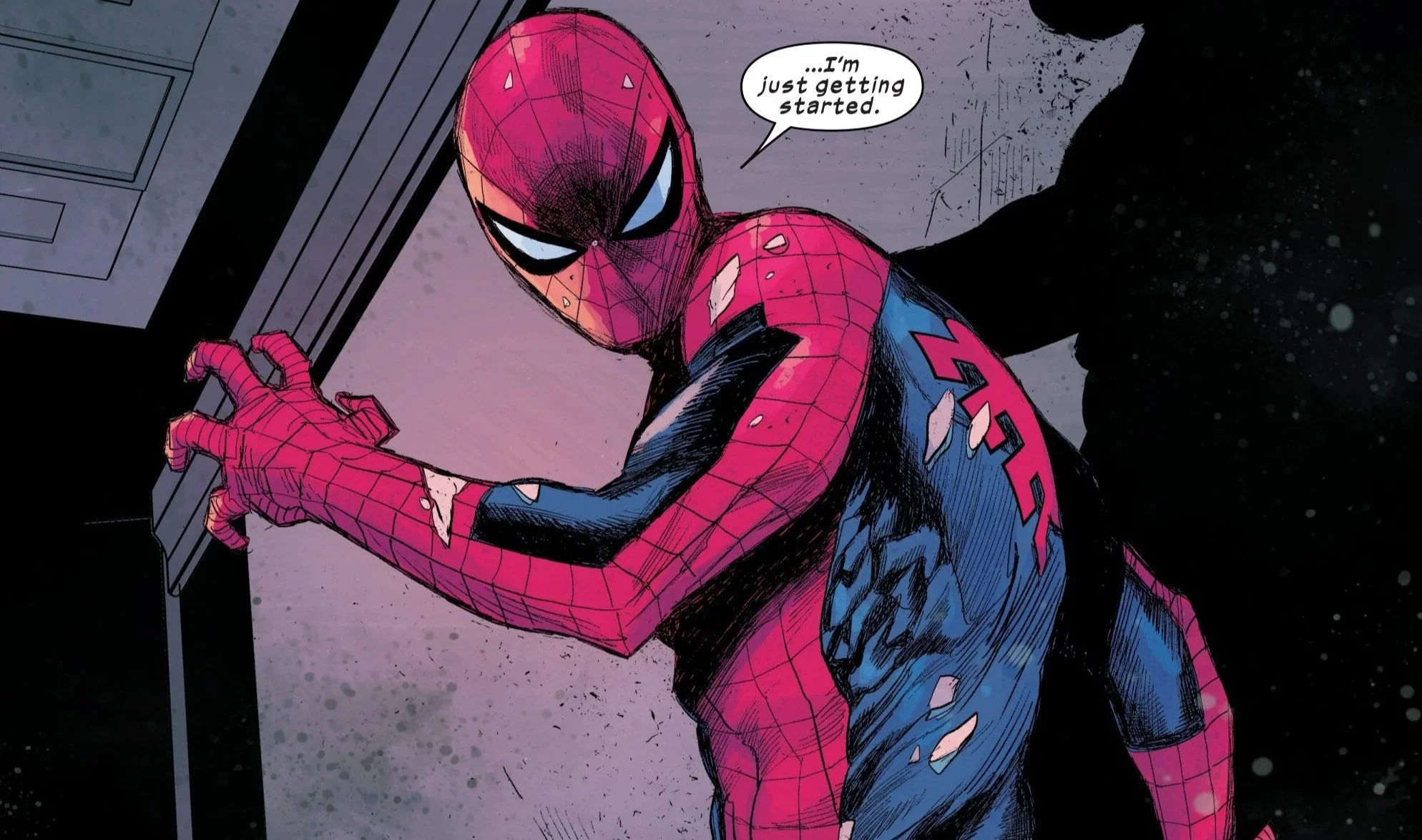
Ultimate Spider-Man #23 is an uncompromising penultimate issue: one that prioritizes theme over spectacle and consequence over catharsis. It is intellectually engaging, emotionally heavy, and narratively restrained—sometimes to its own detriment, but never excessively so. Readers looking for classic Spider-Man beats—humor, momentum, and clear victories—may find this issue potentially frustrating. But for those invested in Hickman’s long-form deconstruction of responsibility and power, this issue is a necessary, if uncomfortable, chapter.
Ultimately (pun intended), Issue #23 doesn’t resolve conflicts so much as tighten the noose more than ever before. And while that makes for a deliberately unsatisfying read in isolation, it positions the finale as something potentially devastating: not because of what might be lost, but because of what can no longer be saved.
Final Verdict: Perfectly heralds the looming end to Hickman’s magnum opus with a challengingly satisfying read and a gamble that only pays off if the final issue delivers.