
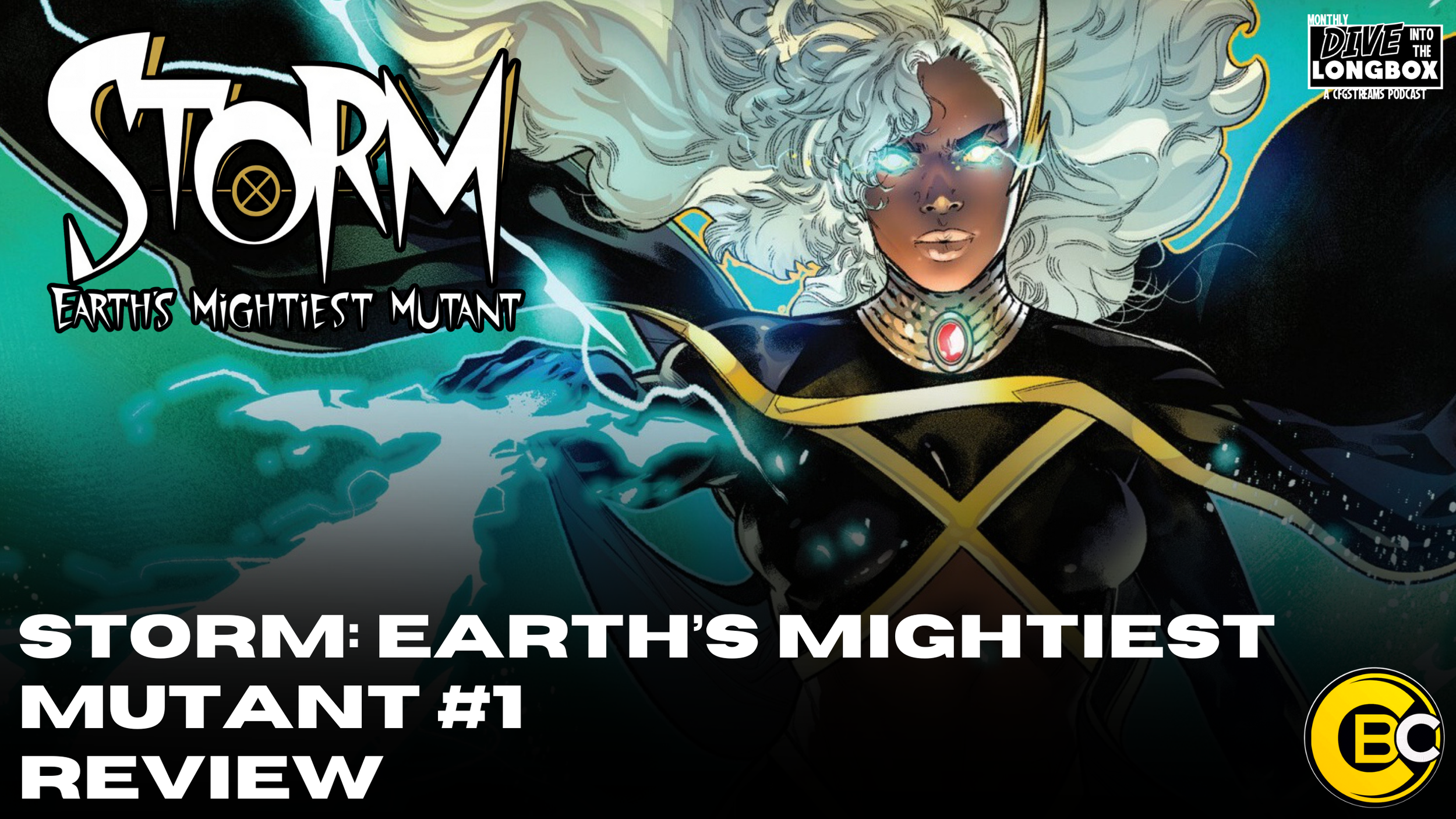
Release: January 2026 | Writer: Murewa Ayodele | Artist: Frederica Mancin | Colorist: Javier Tartaglia | Letterer: Travis Lanham
Storm has become THE thunder God. But at what cost? What new issues and dangers lie ahead of Earth’s mightiest mutant?
*WARNING: SPOILERS AHEAD!*
A Protector of Earth
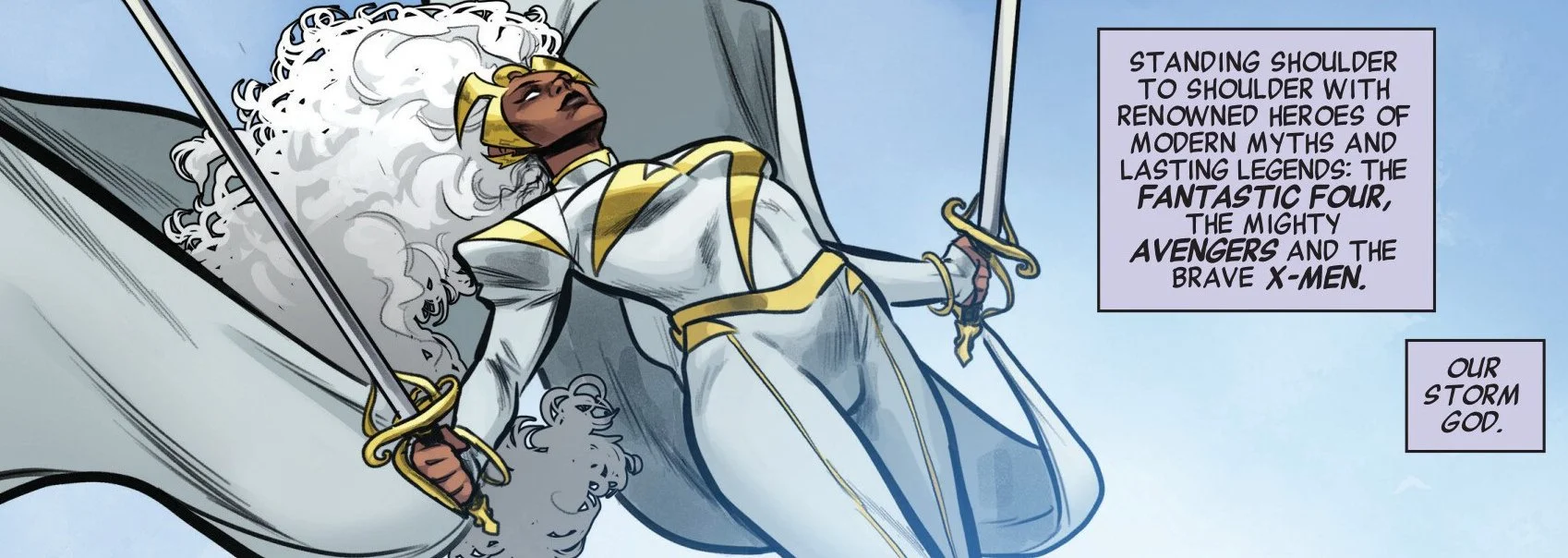
This story kicks off with a recap showing Storm facing other thunder gods from the "Thunder War" arc and emerging victorious. We see multiple examples of the type of god Storm has become: a deity who will even aid those who oppose her goals, like Orchis, to ensure their protection.
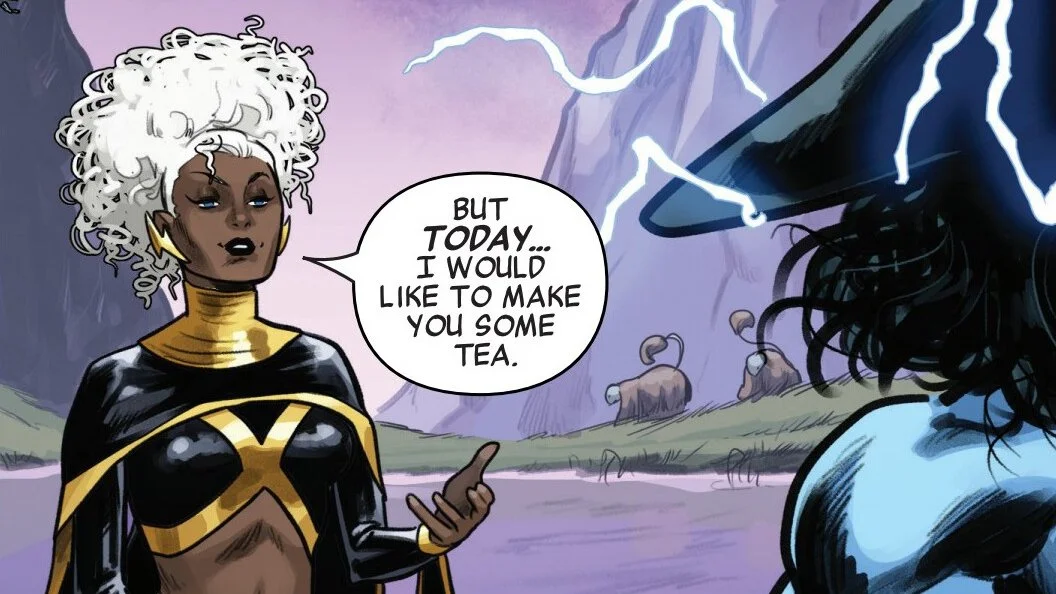
On the rogue planet Rage, the god Susanoo waits for Storm, planting his blade into the planet. He seeks Storm out to grant him an honorable death, as he is weary of what the world has become. However, the complication with this ritual suicide is Storm's vow to never take a life. To force her hand, Susanoo reveals that he has directed the planet towards Earth; the only way to stop the impending collision is to kill him.
Storm answers this call to action by offering something entirely unexpected—she offers the god some tea.
Back on Earth, a couple attempts to enjoy some intimate time while watching a movie, but the moment is ruined when the TV begins to glitch. Frustrated, the boyfriend retreats to the bathroom; however, as he tries to use his phone, it begins glitching in the exact same manner as the television.
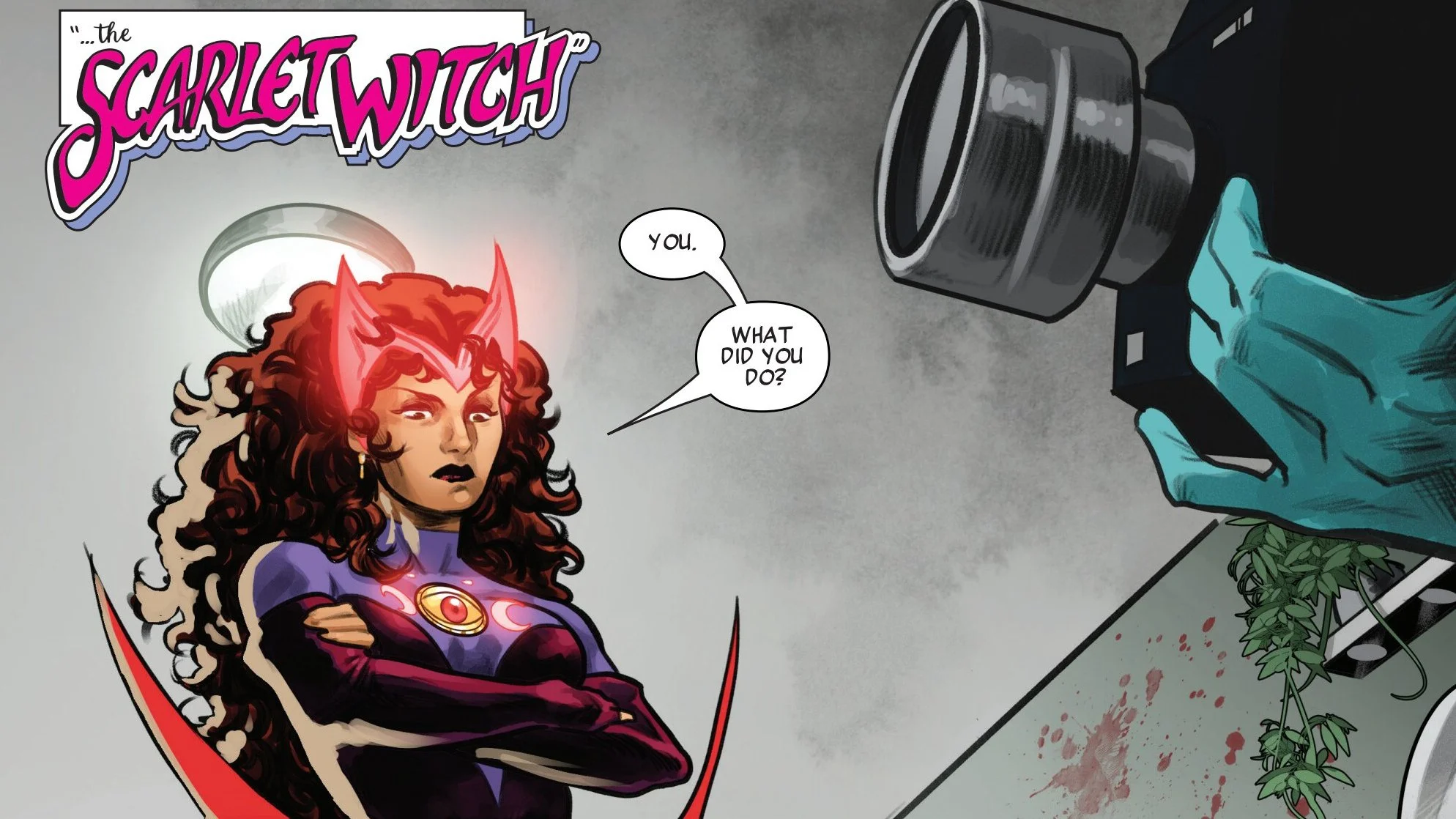
Noticing a warning about a wet charging port, he begins to blow into the device. He blows once, then twice, and on the third attempt, something lethal shoots out of the phone and into his mouth. The resulting explosion doesn't just kill him on the spot—it leaves his girlfriend dead and headless in the living room as well. The person arriving to investigate this gruesome and strange occurrence is none other than the Sorcerer Supreme herself: the Scarlet Witch.
Back to Storm, she is seen riding the serpent god Sugaar as they discuss her battle with Susanoo, a conflict where she received assistance from the Avengers. Because of Storm's vow to never take a life, the Avengers have decided to imprison Susanoo within a pocket dimension. This ensures he cannot harm Earth while sparing him from the death he craves—though he is far from grateful. He screams that Storm "knows no honor," feeling his chance at a warrior's end has been stolen.
Meanwhile, in France, a mother revealed to be the local hero Death Siren struggles to keep her children safe during a sudden attack. She reassures them that the Storm Sanctuary has been contacted and that Storm herself should arrive to help at any moment. Even as she admits her nerves about meeting a goddess of Storm's stature, a creature bursts through the wall and seizes her. Her children remain hidden, with the older brother desperately promising his sister that their mother will be okay.
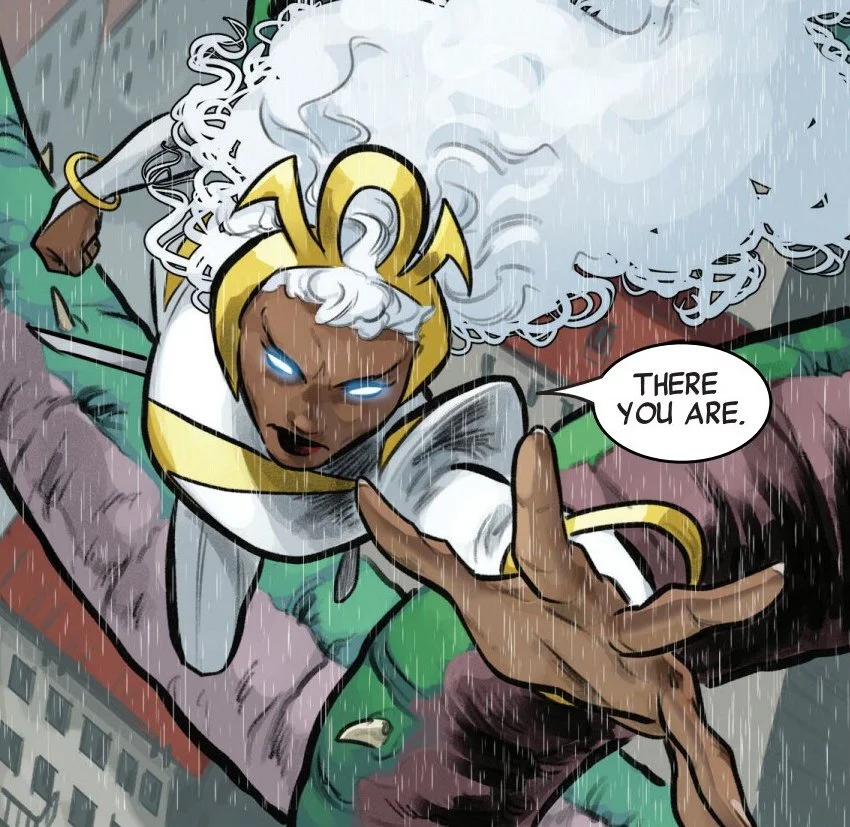
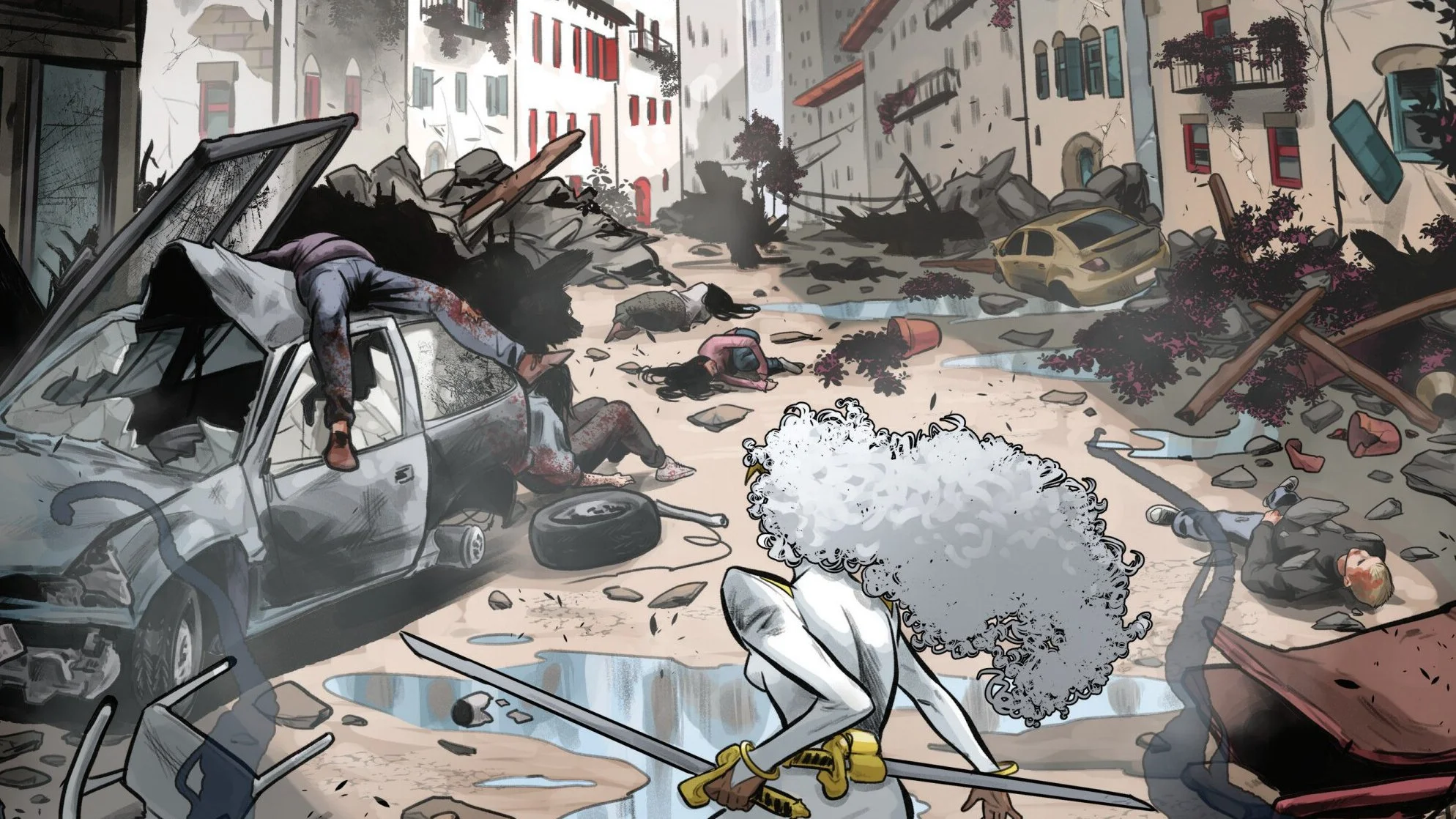
Storm surveys the wreckage before locating Susanoo’s war general, Akujin. She immediately launches into an attack, but Akujin sneers that this is merely a warning. He dissolves, revealing the confrontation was a magical illusion; in reality, the entirety of Biarritz, France has been reduced to a wasteland.
The weight of her failure begins to crush Storm as she attempts to process the tragedy. It is confirmed that Death Siren perished in the collapse—crushed by the very rubble Storm couldn't clear in time. This leads to a gut-wrenching scene where Storm breaks down in tears while delivering the news to Death Siren’s children. In a stinging moment of raw grief, the children reject her comfort, accusing her of not being truly sorry and merely feeding them lies to soothe her own conscience. They force Storm to face a devastating truth: despite her godhood, she failed.
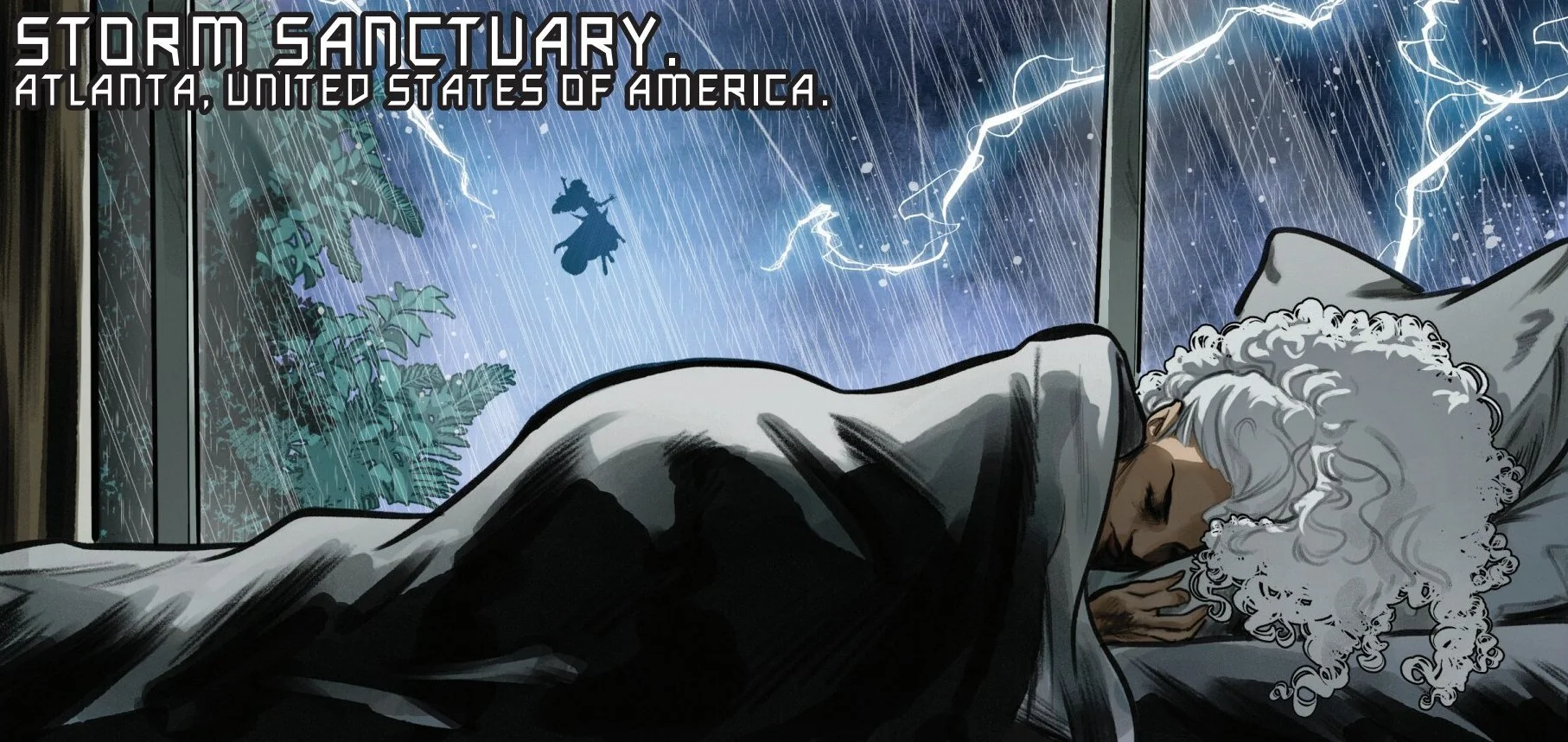
And just when things can't get worse for Storm, Scarlet Witch appears at her window, questioning what horrors she has brought to Earth. Implying whatever killed that couple is associated with Storm.
The Artistic Range of Frederica Mancin
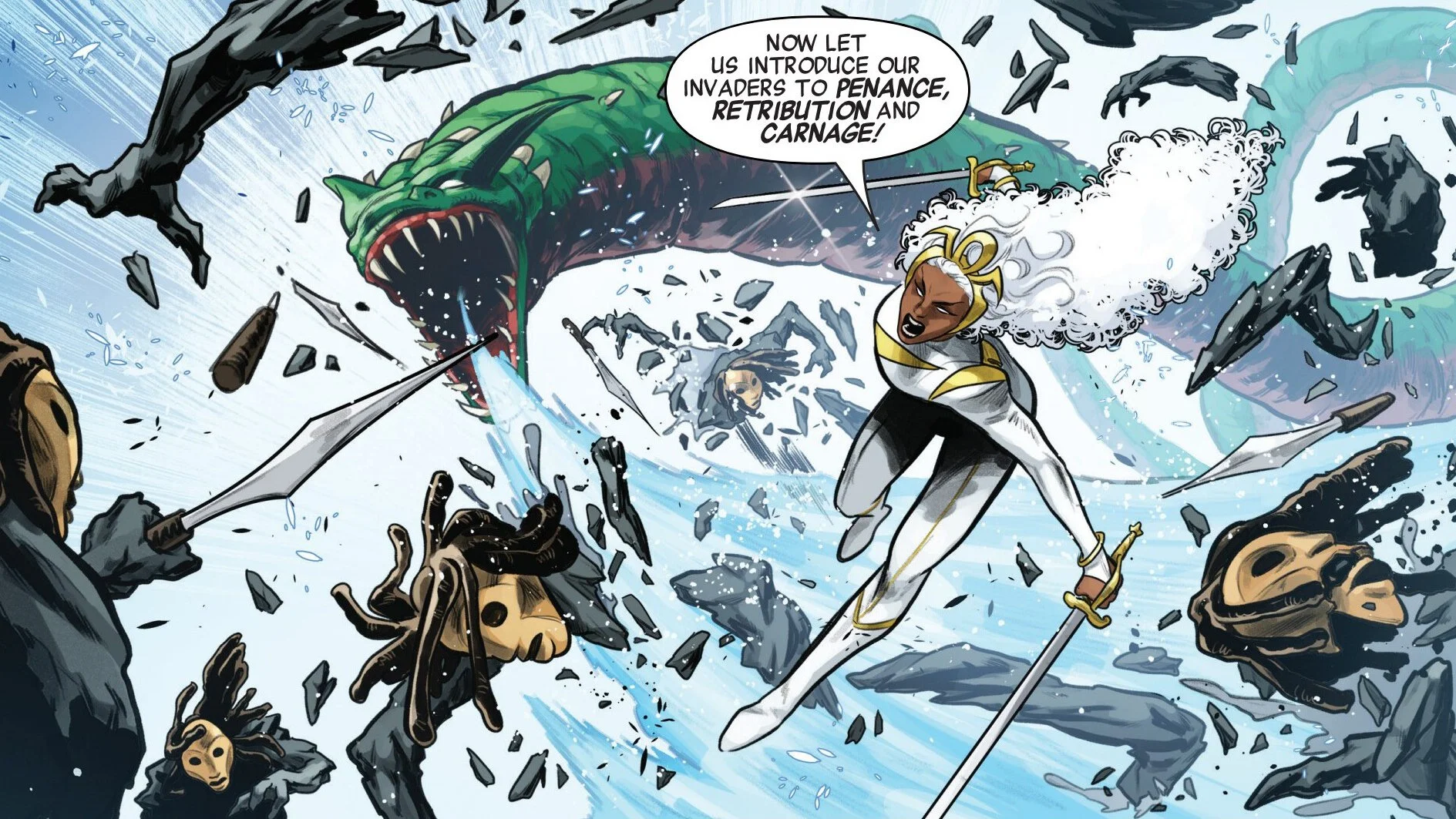
The art department is where this book truly shines. Federica Mancin’s linework and Javier Tartaglia’s coloring gel perfectly, demonstrating an impressive versatility. The way the visuals transition seamlessly from mundane, everyday settings—like a cramped apartment or a bathroom—to the otherworldly majesty of Storm riding the serpent god Sugaar or battling on the planet Rage is a testament to Federica’s range.
I also have a soft spot for the non-realistic cartooning sprinkled throughout the issue. The depiction of the man in the bathroom just before his head exploded was fantastic; his bulging eyes and tongue sticking out like an over-inflated balloon were both brutal and visually striking. While the narrative as a whole didn't quite land for me, the art was an absolute major highlight that kept me engaged.
Conclusion
I’m a bit conflicted on this one. While the art is beautiful and the dialogue is solid, I can recognize that this issue provides a decent base for a future story. However, I can’t help but feel that something just didn't "click" for me. With a plot that jumps from one scene to the next—constantly looping back and forth—the narrative becomes difficult to digest. Non-linear storytelling can be effective, but here, it makes the reading experience feel like a chore.
Between the shifts from mystical themes to horror, then to a detective-style mystery before circling back to the divine, the book suffers from a bit of an identity crisis. Additionally, I’ve found that when stories tackle the complexities of "Godhood," the weight of the narrative often gets lost in translation for me. It’s the same reason I could never quite stick with runs for Thor or the tail end of Ultimate Black Panther.
No matter how many times I approach these themes, the abstract nature of cosmic deities just doesn't resonate with my personal tastes. While I’m giving this a 4 out of 10, I want to be clear that much of that score stems from my personal preferences; however, the disjointed story structure certainly didn’t do the book any favors.