
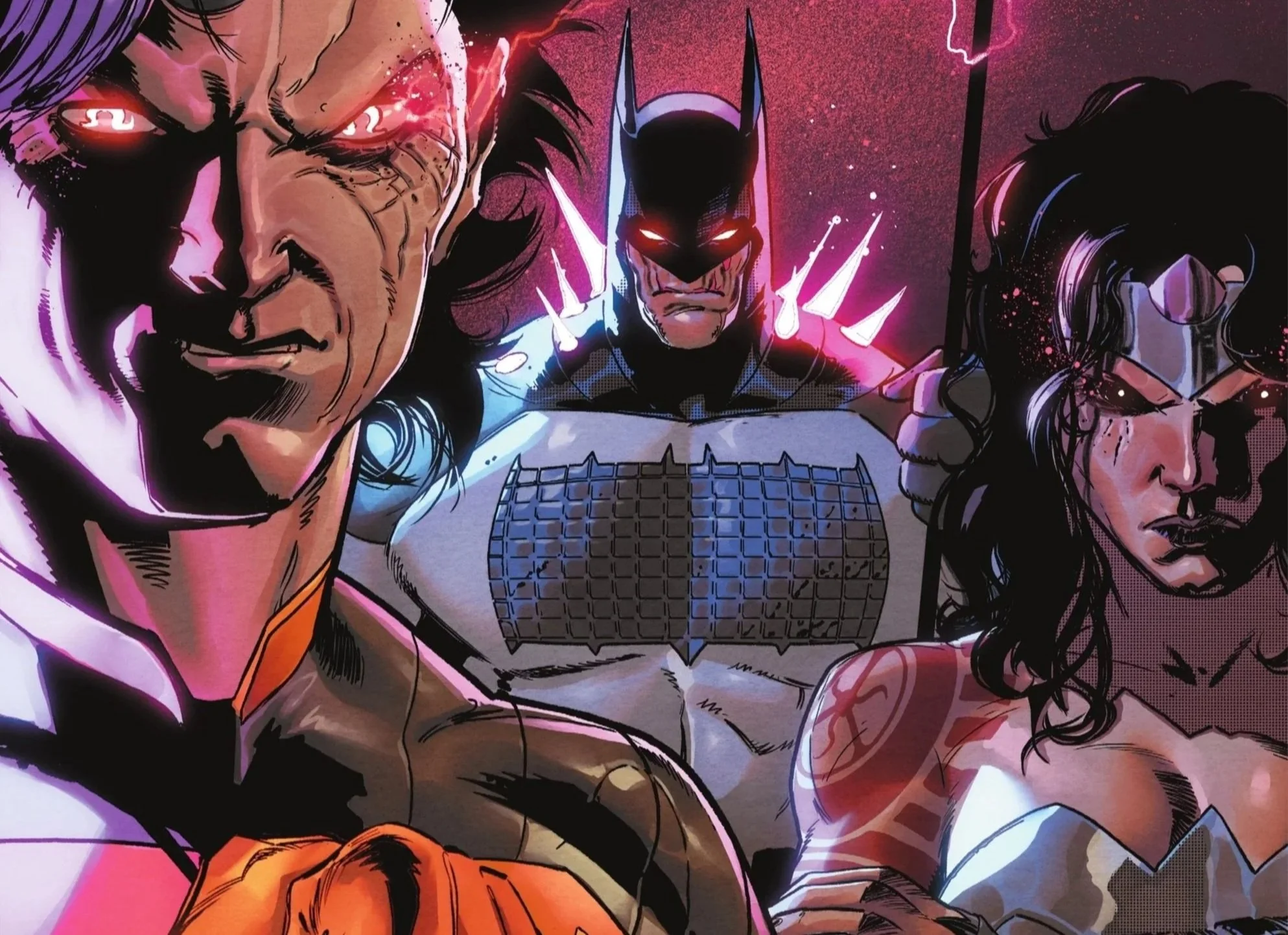
Foreboding and potentially pithy title aside, let’s get down to brass tacks before fans of this event prepare to waterboard me like it’s Tuesday at Guantanamo Bay. One of the biggest conceits for DC K.O. has been the whole wild and wacky tournament chaos with VERY real, universe-altering stakes at the heart of things.
Now, of course, when it comes to Scott Snyder events as a whole, you can expect certain things: unbridled chaos, goofy-as-heck moments of inspiration, and—as of late—a complete falling off of the narrative wheels by the end of things.
DC K.O. #4 seems to have reached that point in the narrative now. Even with the end in sight and bigger twists and turns popping up both for and against Darkseid’s master plan, there’s the inevitable feeling that this story has become more about flashy show and less about any real storytelling substance beyond shallow platitudes. For people fond of the "big fat punch-ups" and aura-max farming, there’s plenty to satiate that here. But for everyone else, there’s a lot to be disheartened and maybe even infuriated about—especially with how the much-vaunted showdown with the Absolute DC Trinity goes. Safe to say, this issue is bound to be the most divisive chapter in Snyder’s sprawling epic yet.
Wibbly Wobbly Timey Wimey Tarnation
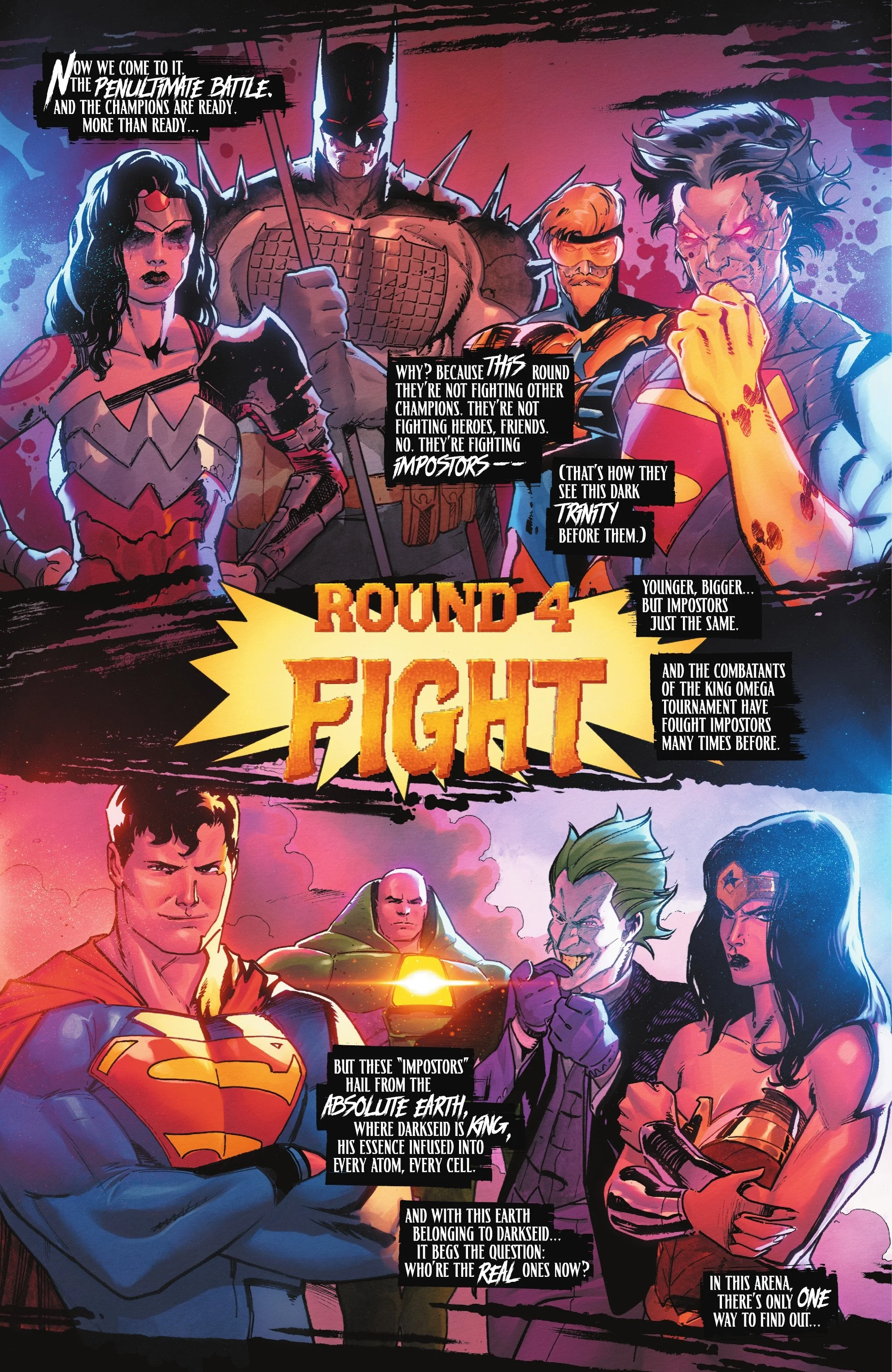
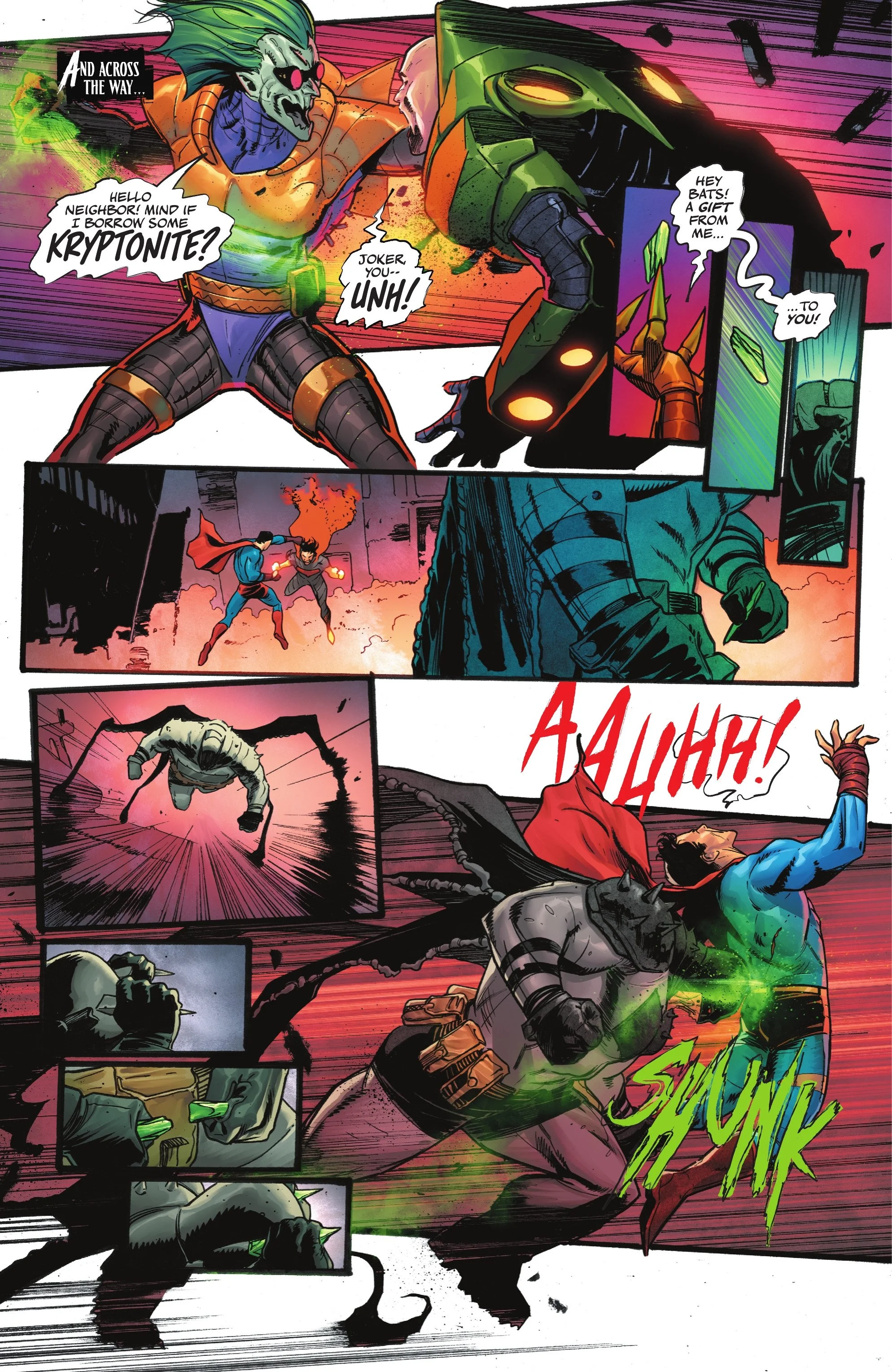
The much-awaited battle between the final four and Darkseid’s Absolute Horsemen gets immediately underway from page one. It’s the kind of knock-down, drag-out brawl you expect, with our OG heroes on the back foot against their leaner, meaner, and absolutely overcharged counterparts. Not helping matters is when Joker decides to defect to Darkseid’s team, becoming a "clowned-up parademon weirdo" when Darkseid obliges the inane request.
There’s no shortage of pure, spectacular carnage as the heroes get decimated by the Absolute Trinity (and Joker), all while Darkseid—in Booster Gold’s body—gleefully watches his power grow. But lo and behold! OG Batman is back in the game, taking out the Joker and surprising his friends. How? Check out DC K.O. Knightfight for the long version. Why? Because he's Batman!
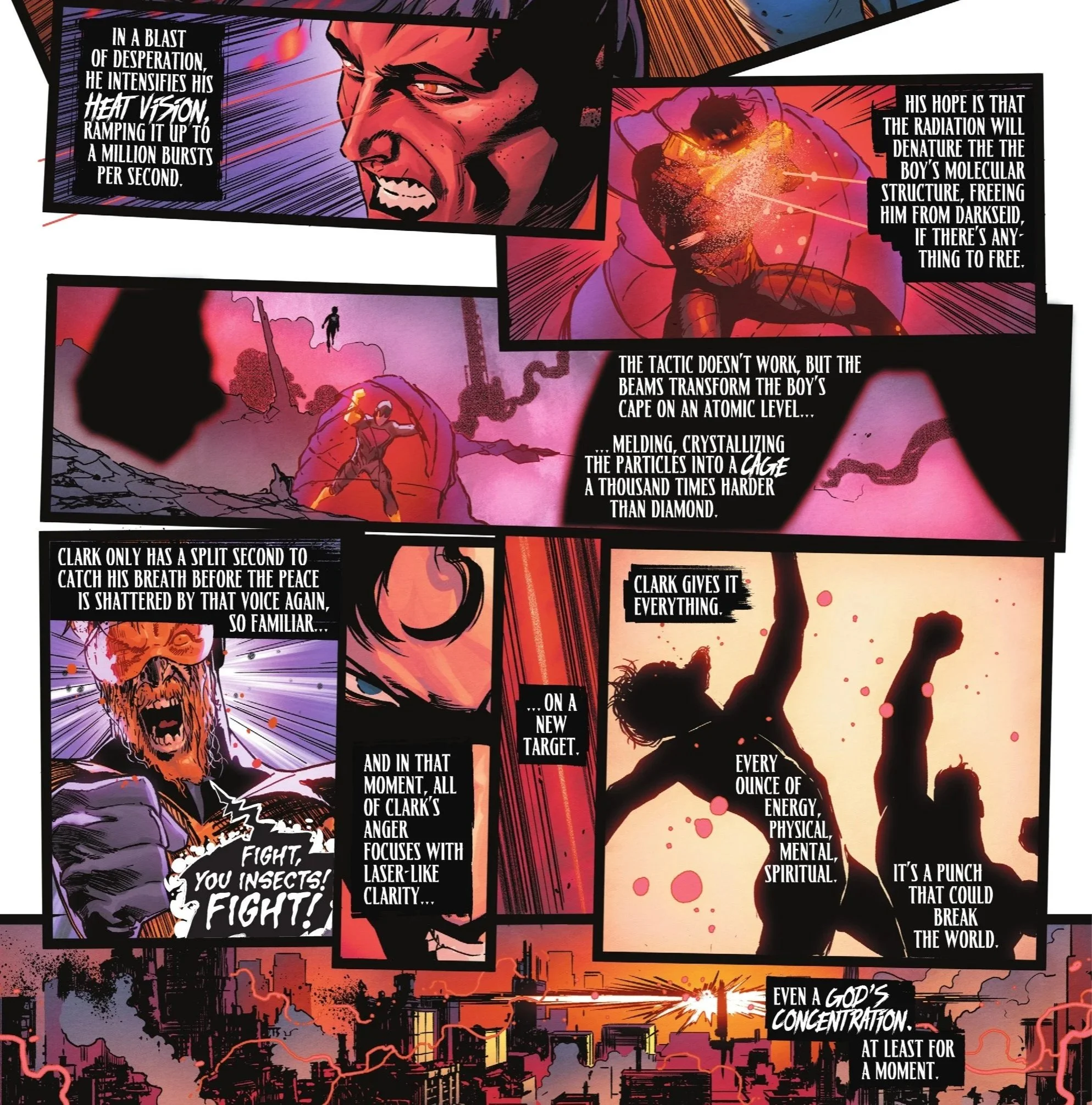
As the heroes start to win and eventually break Darkseid’s hold over the Absolute Trinity, it proves to be for naught. Darkseid is fully empowered from the tournament's carnage and is ready to take the throne. He swiftly decimates his former horsemen and the surviving heroes, leaving only Superman and Lex Luthor standing. But since this is still technically the tournament and Superman is naive to a fault, he asks for Lex’s help. And what does Lex do? He takes Superman out, of course!
That’s how Lex Luthor ends up winning the tournament and becoming King Omega. Cue the Owen Wilson “Wow”! But wait—there’s more. We are taken into a "future-past" where Darkseid is already reigning supreme with the Legion of Super-Heroes doing his bidding. Darkseid charges Saturn Girl with bringing him the warriors defying his existence: the absolute heroes who challenge the fabric of his universe. Marking them as the new Horsemen, he sends them to the tournament’s final round. Amidst the doom, there is hope—or Doomsday. Or the Time Trapper. What does it all mean? Who knows, but we'll find out next issue!
Will the Real Darkseid Please Stand Up?
It's a bit frustrating having to be so negative about DC K.O. #4 because it’s quite obvious that Scott Snyder is having tremendous fun with what he’s doing. But, despite trying to break new ground, it's falling back into the same old circles and patterns that have plagued his event books for a good part of a decade now. While there are some shreds of compelling elements here and there, you can bet your ass that at some point, Snyder is going to pull off a convenient deus ex machina to wrap things up with a bow on top.
We’ve already gotten smatterings of this with Batman conveniently returning to the tournament literally because “He’s Batman.” No, I don’t care how much they’ve tried to rationalize it in DC K.O. Knightfight; Snyder’s own writing literally says it happened because it happened. And while for the most part I do like this version of Batman—who’s a bit more jovial and more than a little into his own hype—he’s also emblematic of Snyder’s far larger problem regarding style over any semblance of substance.
The overall problem with DC K.O. #4 and with the return of Darkseid himself is now this: the entire Heart of Apokolips grounding plotline somehow feels incredibly hokey in its execution. The other issue is the fact that the Heart underdelivers on the “bringing out the darkness in heroes and villains” aspect. In issue #4 specifically, your self-stated centerpiece, Superman, makes the same egregious error that is so central to his character—he has learned no lessons whatsoever, turning his back on Lex Luthor when he should’ve damn well known better by now. One brief flirtation with the Omega Sanction does not character development make; this ultimately portrays a damning failure on the part of the Heart of Apokolips and its stated mission.
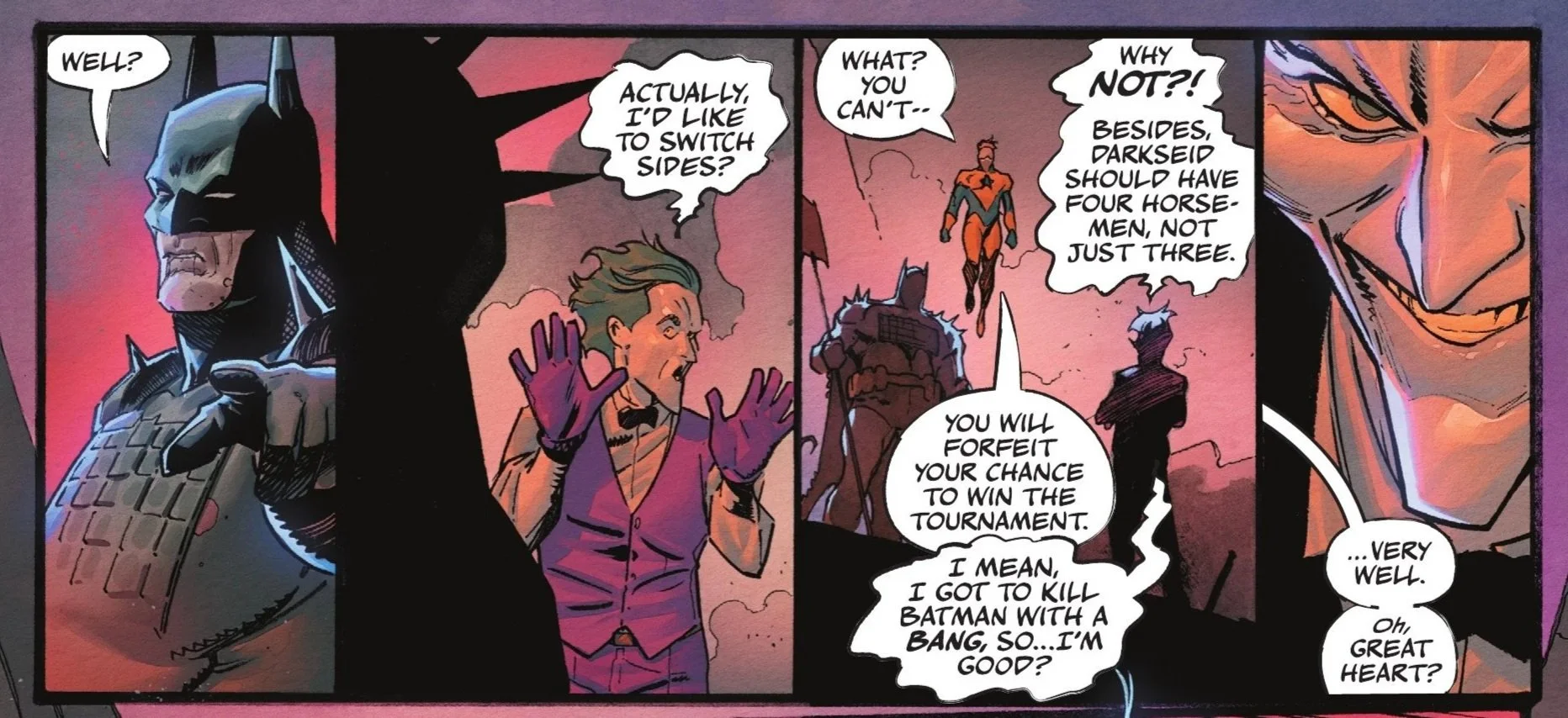
In fact, no one is really changed or pushed outside their comfort zones in the slightest. There’s the illusion of choice, of brutality, and of inversion when Lex Luthor seems willing to play ball on the side of angels for the greater good, or when the Joker is seemingly in the same ballpark. But these “changes” are barely there for a cameo or two before Lex is blasting Superman to kingdom come to win the tournament, or Joker is jumping over to team Darkseid to become a clown-colored parademon.
Honestly, while I hate bringing up the Grant Morrison comparisons, I do genuinely believe Final Crisis—for all its ups and downs—is still the best 21st-century exploration of the overarching Darkseid-centric universal ethos. It successfully builds up to and executes its premise at a fundamental level—something that DC K.O. and Scott Snyder have proven woefully inept at portraying beyond a shallow level so far.
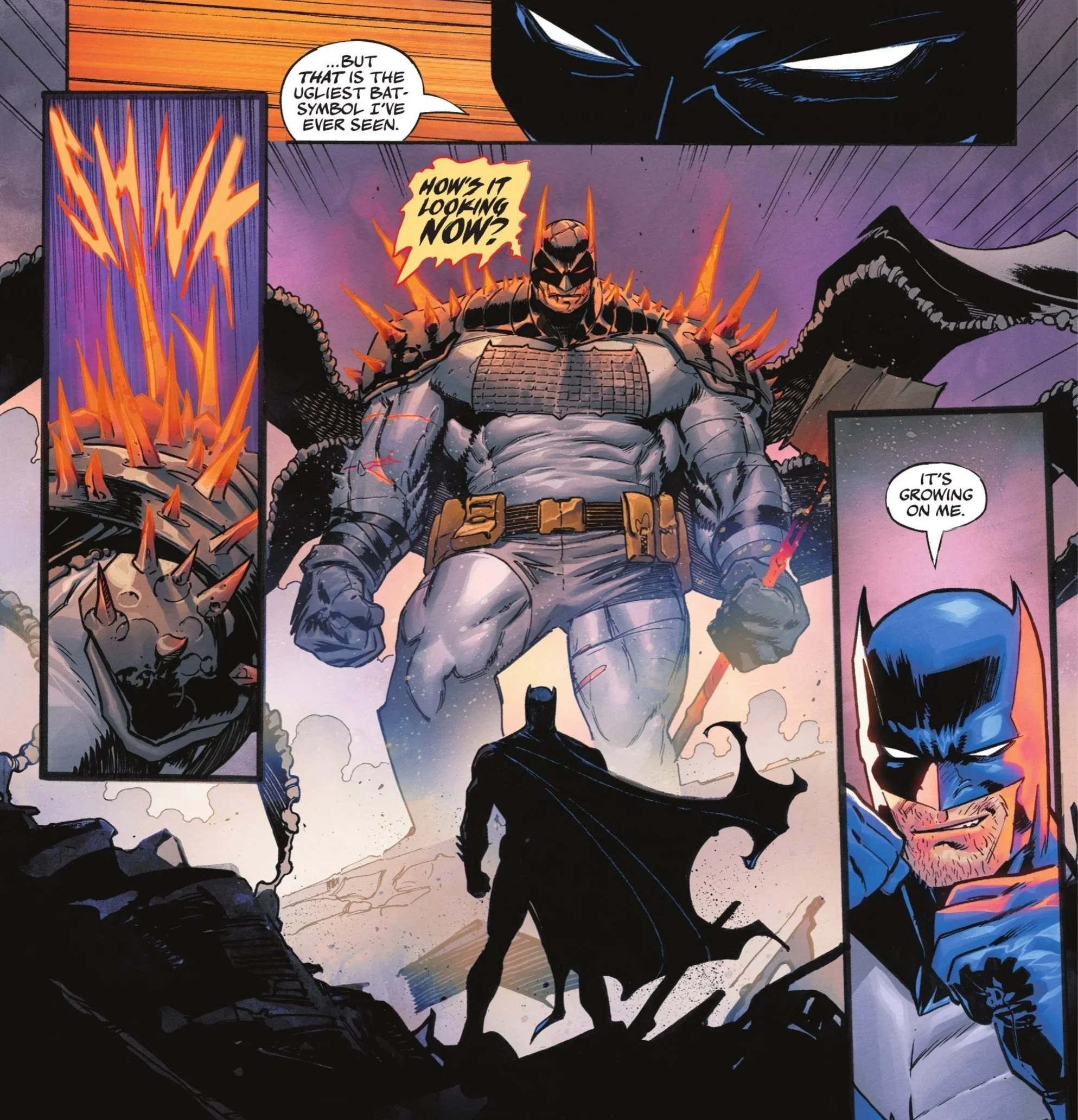
The much-awaited battle between the Absolute DC heroes—the very thing a good chunk of this series was marketed on—feels like a prime example of flash over substance. It would’ve been easy to accept darker versions of the Absolute Trinity; instead, they are utterly and easily brainwashed into glorified parademons. Apparently, they were plucked from a future timeline where they’ve already met, yet they are somehow still “weaker” according to Darkseid.
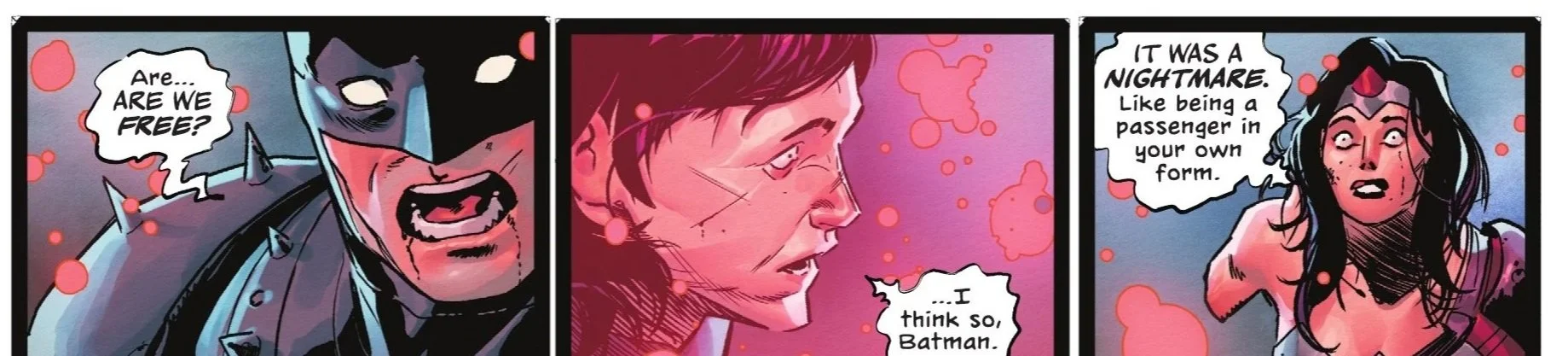
While there was no real doubt that OG Superman and his compatriots would prevail, it feels almost insulting how nerfed the Absolute Trinity has been—in terms of character, strength, and logic—just to facilitate this “fight.” Even when the Trinity is inevitably freed from mind control (via Superman literally punching Darkseid-Booster Gold—Boosterseid? DarkGold?—into compliance), their reactions fall flat. Lex Luthor undermines the moment by claiming Darkseid simply "let them go." I know this was intended as an “oh noes” moment to show Darkseid’s power, but it comes across as eye-rollingly frustrating.
Predictably, the hero team-up between the OG and Absolute teams fares about as well as a snowcone in the Sahara. Darkseid essentially proceeds to vaporize everyone. No problems. Barely an inconvenience at all. By the end of DC K.O. #4, the path is clear: this is a multiversal spectacle machine that values impact over intention, chaos over cohesion, and noise over narrative clarity. Even the glimmers of hope, like Batman’s return or the Time Trapper’s supposed "Hail Mary," feel shallow and unearned this late in the game. For an event featuring Darkseid to feel this bland? That’s almost criminal.
Creatively Catastrophic Carnage
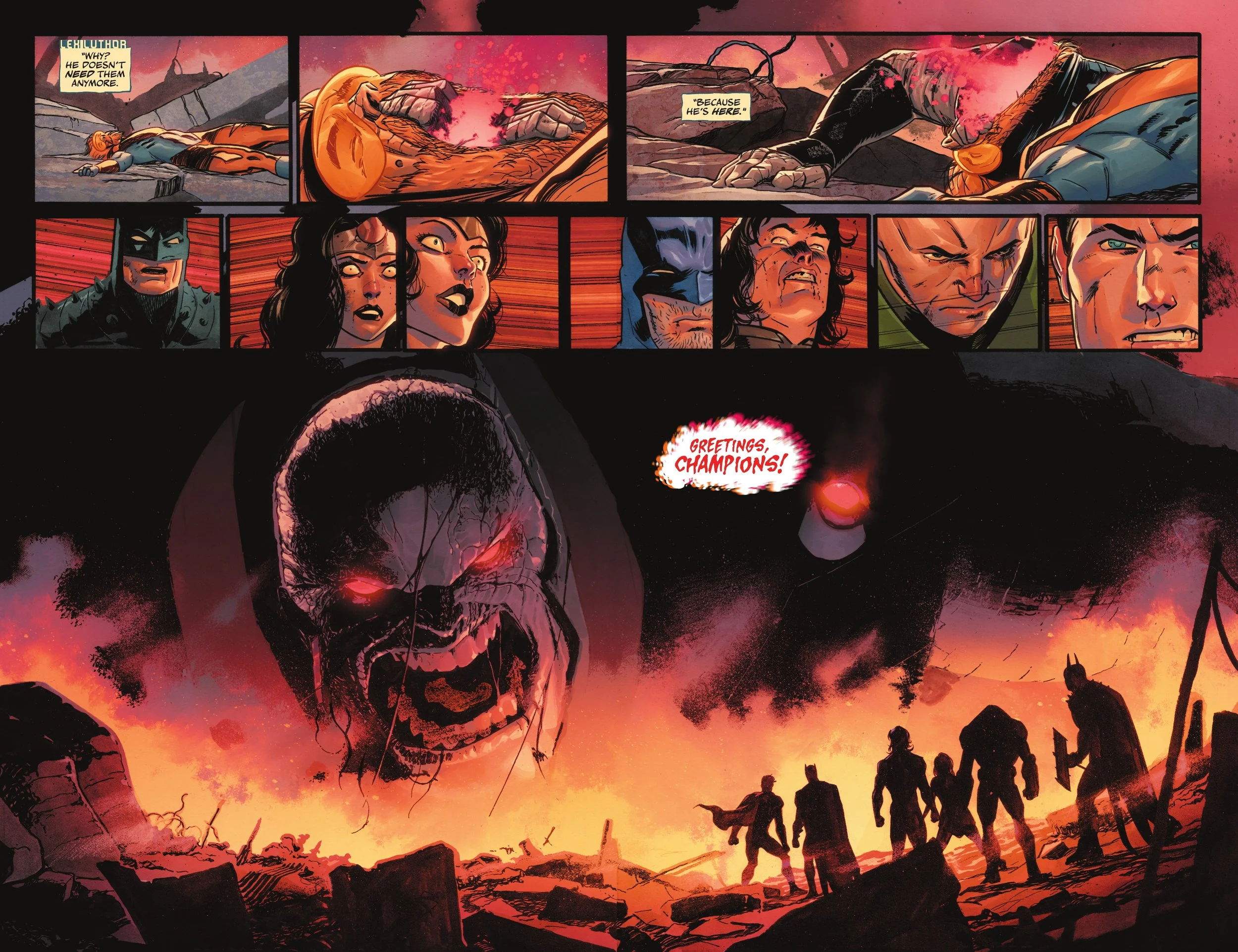
Alright, time to pivot to some actual positives before I get back to the grumbling (don't worry, there's more where that came from). To put it bluntly: from a purely visual standpoint, DC K.O. #4 is one of the event’s strongest chapters. Javi Fernández and Xermanico deliver explosive layouts that capture the scale and intensity of multiversal combat. The action is dynamic, readable, and frequently stunning. Unlike the writing, the panel composition emphasizes impact and motion, making the chaos feel intentional rather than sloppy.
There are so many wild visual callbacks throughout the fight between the Horsemen and the OG Trinity, all of which pay for the price of admission on their own. From Absolute Batman using kryptonite bat ears to stab OG Superman, to OG Batman outsmarting his peers with a grin of pure smugness on his face, to Darkseid finally rising up to take his place as the biggest of big bads—Fernández delivers an abundance of excess that truly overshadows the script.
In a way, that’s a blessing, as the art masks the far bigger issues with the narrative. Similarly, the brief interludes by Xermanico are measured in their composition and intent, conveying the more human side of our heroes through short, emotional visual cues.
The use of color by Alejandro Sanchez also goes a long way in distinguishing different realities and power sources—a crucial task given how crowded the issue becomes. While the general vibe boils down to a “cosmic hellscape across past, present, and future,” Sanchez’s various shades of fire, brimstone, and alien red light bring method to the madness. Even when the plot feels muddled, the visuals maintain clarity; readers always understand what is happening, even if the why is less certain.
That said, the art as a whole exacerbates the book’s pacing problems. The visual language reinforces spectacle at the expense of reflection, mirroring the script’s priorities. All in all, think of the art and color work as rose—or Omega—tinted glasses, allowing readers to enjoy the ride without noticing the narrative cracks.
An Omega Level Headache
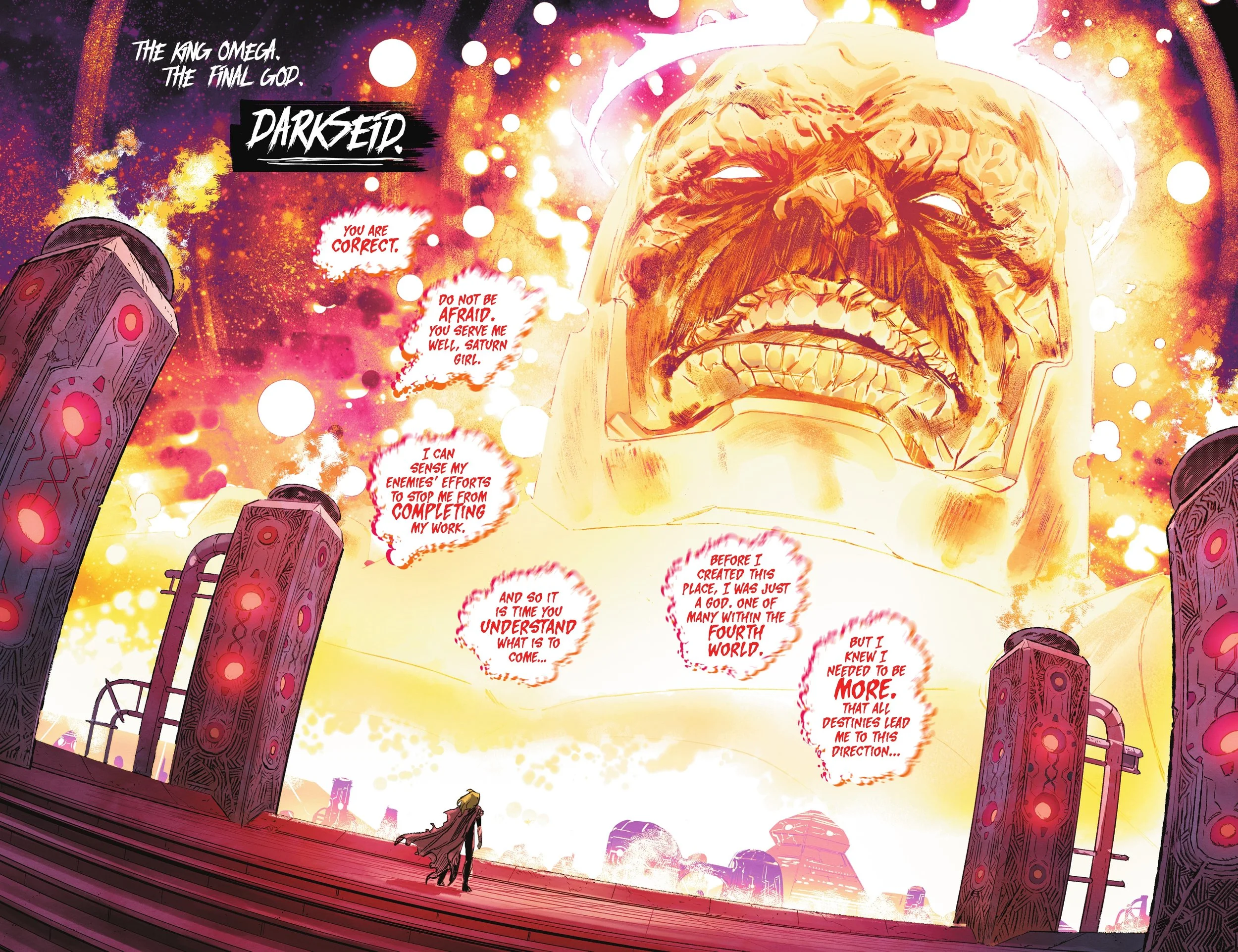
DC K.O. #4 is a visually exhilarating but deeply uneven chapter in DC’s latest event experiment. It succeeds spectacularly as a piece of visual entertainment, hitting every beat on the momentum-driven escalation drum set. The art is dynamic, the concepts are bold, and the sense of impending catastrophe is palpable.
But with all that being said, the widening gaps that accompany any Scott Snyder-led event are coming to the forefront—including the ever-present struggle with narrative discipline. The story sacrifices coherence and character depth in pursuit of constant escalation, resulting in an issue that is exciting in the moment but difficult to parse in retrospect. Big ideas flash by without being fully explored, iconic characters often feel like symbols rather than people, and plot contrivances are conveniently hand-waved into existence to move from one cinematic set piece to the next.
For readers who value spectacle, chaos, and multiversal mayhem, this issue delivers in spades. If you want the general vibe of “it only happens because this is comics,” where logic can be left in a locked car with the AC off, then this is masterful. For those hoping for tighter plotting, emotional payoff, or thematic clarity, however, it definitely feels like the event is slipping out of control just as it reaches its climax.
Final Verdict: DC K.O. #4 is the event at its most honest: ambitious, messy, thrilling, and fundamentally flawed – but still dares to go big, even if it doesn’t seem to know where it’s going to land in the end.