
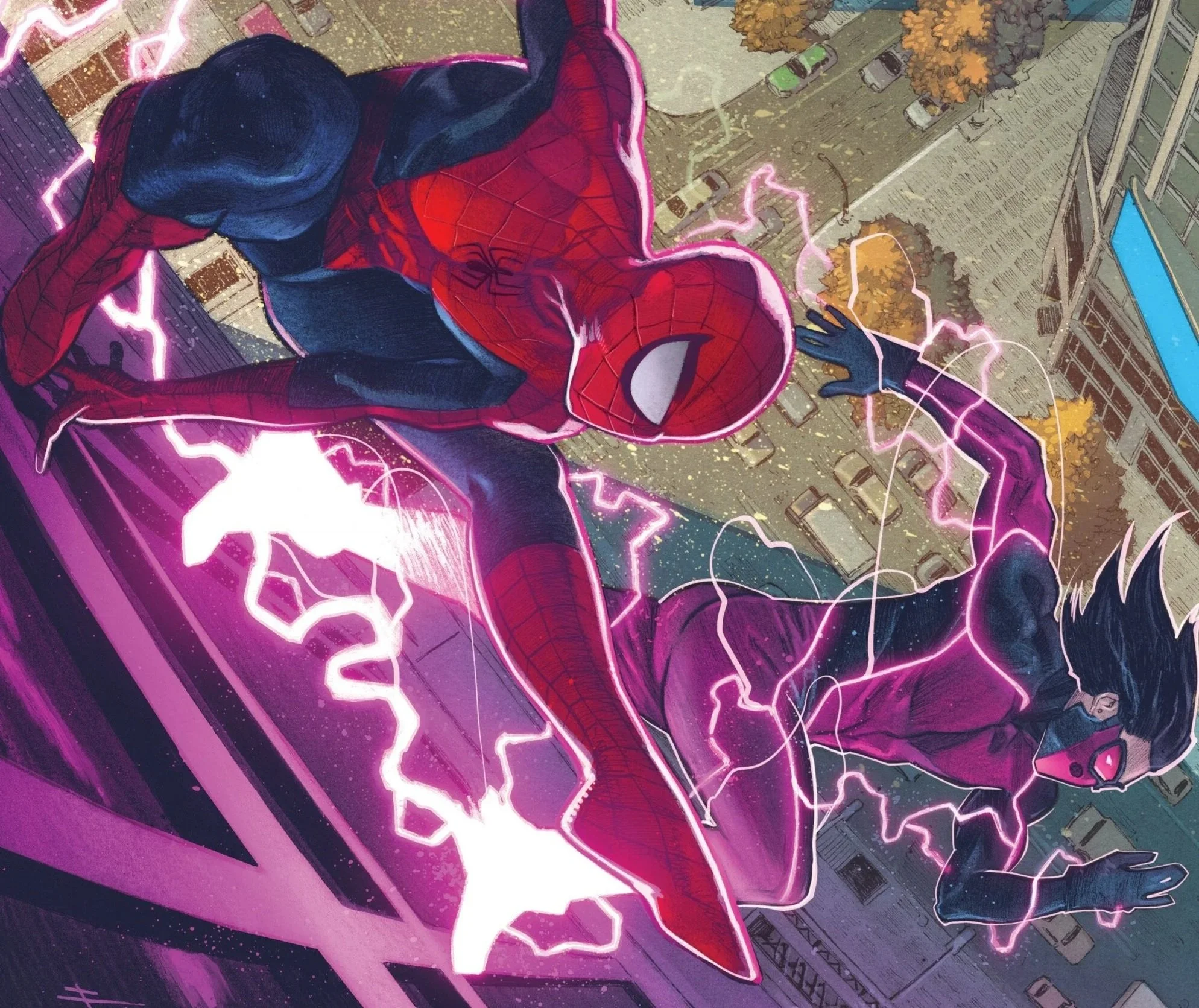
Amazing Spider-Man Annual #1 is the kind of comic that reminds you why annuals are both a fun treat and, sometimes, a total mess. It’s got a killer setup, plenty of snappy character moments, and then—yep—it sort of faceplants right when things should get awesome. Saladin Ahmed is on writing duties (plus a short, five-page Joe Kelly backup), crafting a nice little self-contained story of "good ol' reliable" Peter Parker mentoring an up-and-coming new hero with his usual sense of responsibility and humor. You get the familiar themes of mentorship and legacy, all wrapped up in a big New York City smackdown.
Meanwhile, Joe Kelly’s five-pager attempts to tie back to ongoing events in the mainline Amazing Spider-Man title (they really want you to keep buying the books), but it somehow feels shockingly flat and out of place. Annuals have traditionally not tried to stuff in content that feels like part of the primary book's ongoing narrative. It’s a wild mix of stories when you read both back-to-back, only further reinforcing the confused nature of editorial following the discordant previous issue of Amazing Spider-Man
An Annual Dose of Misery
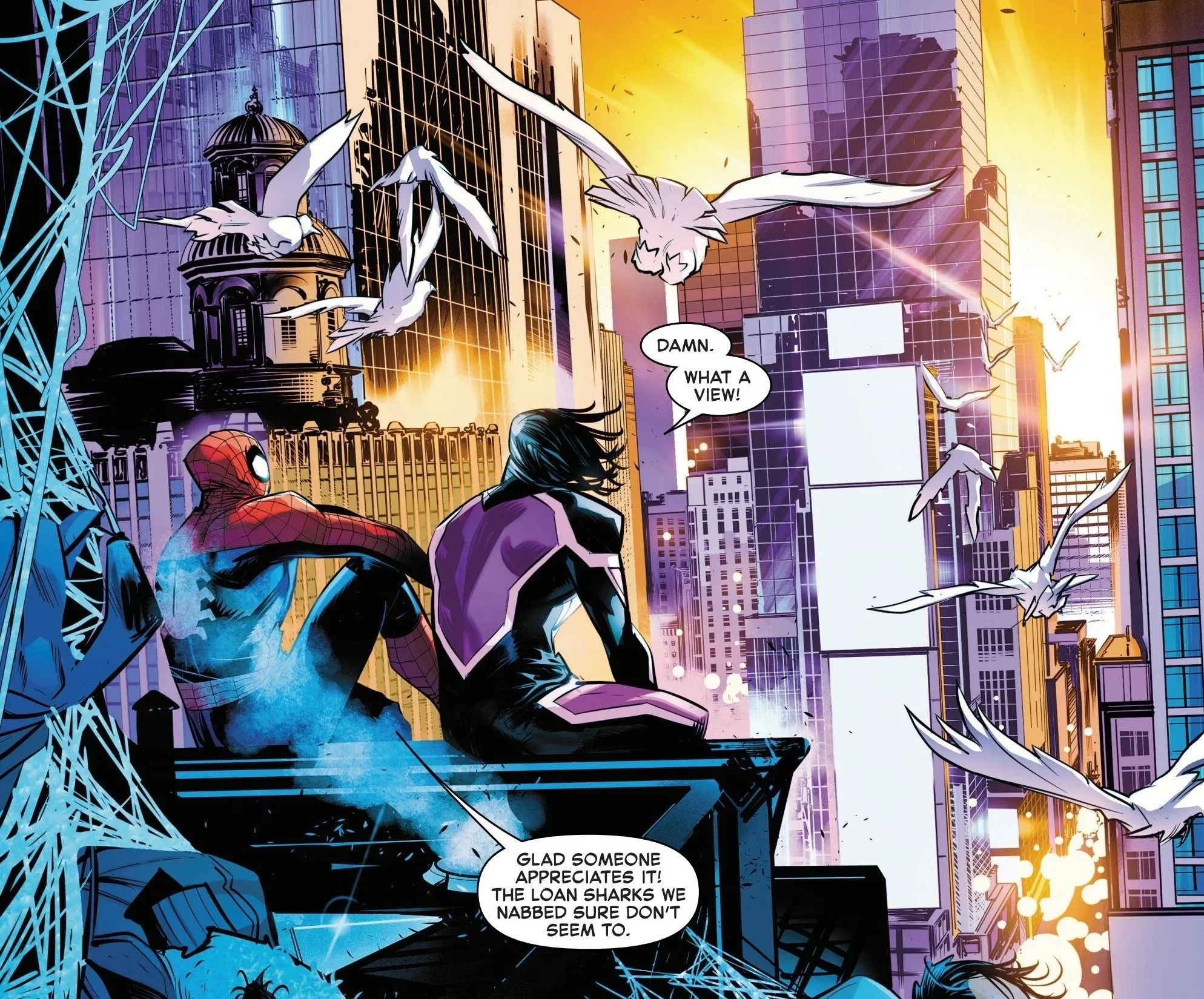
The main story of the annual basically teams up Spider-Man with Rapid, a rookie speedster who’s still figuring out which way is up. We’ve already seen him a couple of times in the past—if anyone actually remembers—and Spider-Man is playing mentor once again for the umpteenth time.
Of course, Rapid is tripping over his own super-speed, and together they stumble through the usual superhero shenanigans. Peter’s the chill vet and Rapid is all nerves and chaos; it’s like a superhero buddy comedy with extra web fluid and no speed limits.
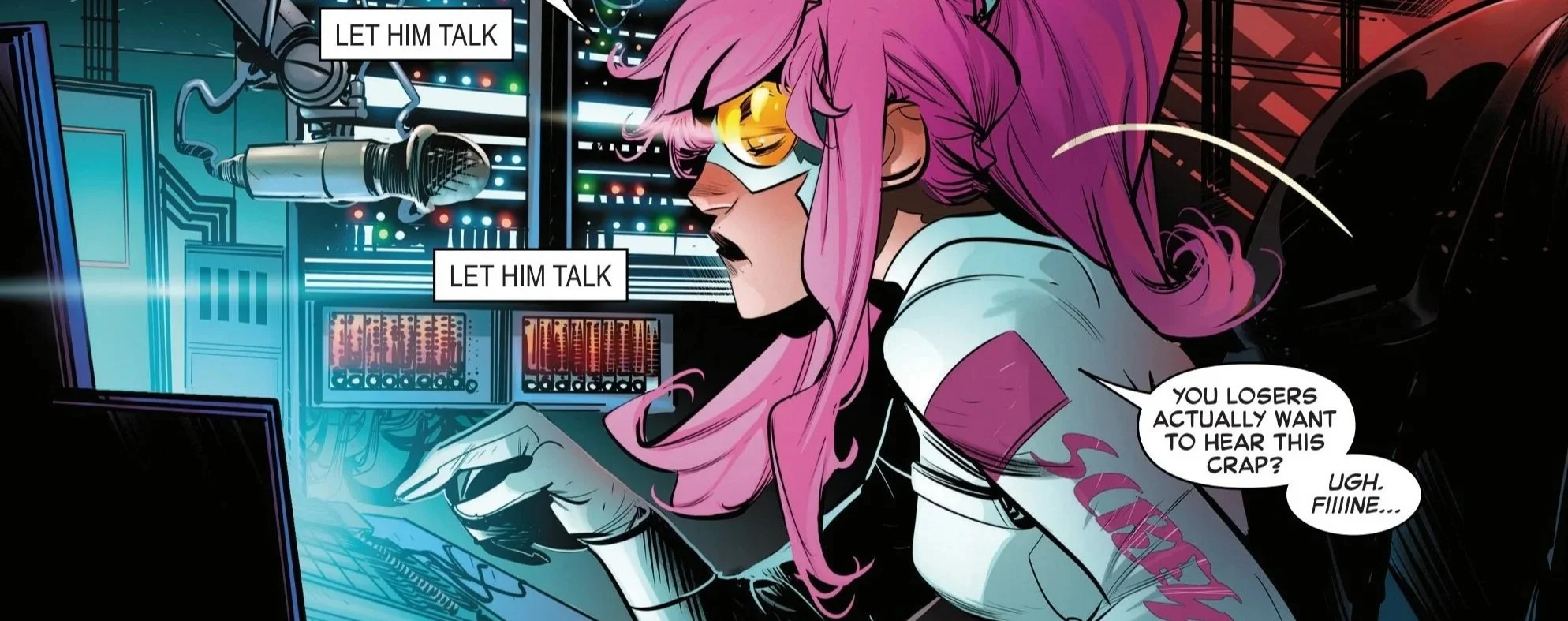
And then there’s Screwball: a live-streaming chaos gremlin who turns New York into her personal prank show. Cue the car chases, bystander panic, and social media nonsense—basically, it’s superheroing in the age of clickbait. It’s all a big test for Rapid and a massive headache for Spidey, but it does lead to a fairly satisfying—if by-the-numbers—resolution that leaves your heart a little warmer than when you first started reading.
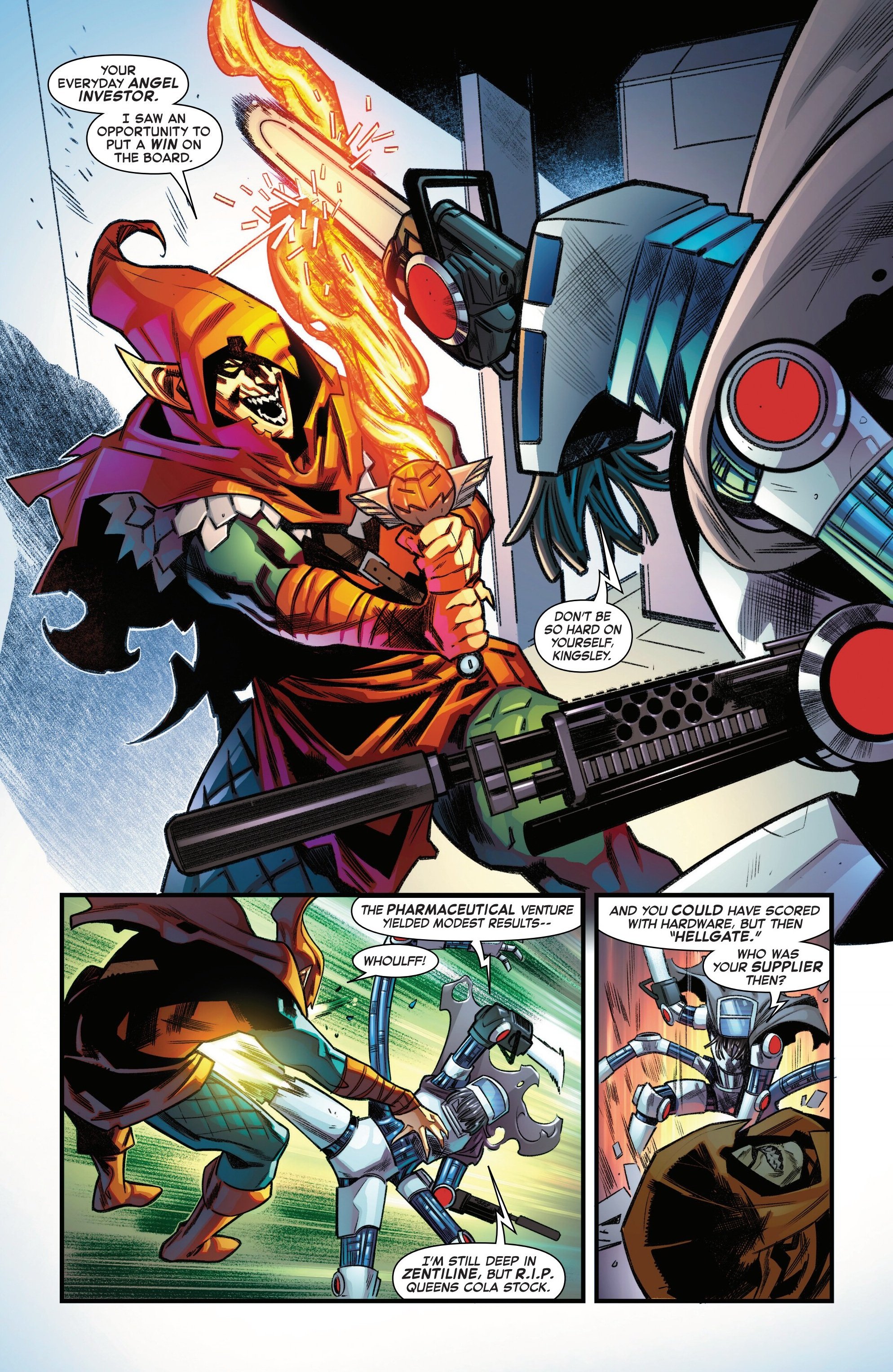
In addition to the main adventure, the Annual includes a short backup tale that touches on Hobgoblin’s involvement with the Goblin Slayers—tying into the broader Amazing Spider-Man continuity rather than the Annual’s standalone plot.
Clearly taking place at some point right before the current "Goblin Slayer" arc, we’ve got Roderick Kingsley, the Hobgoblin, pitching their latest invention through a practical demonstration. With the help of strategic investments and a very unsubtle show of force, their potential client seems impressed enough to fully finance the slayers that are set to make Norman’s life miserable.
Two Stories. Two Wildly Differeing Standards.
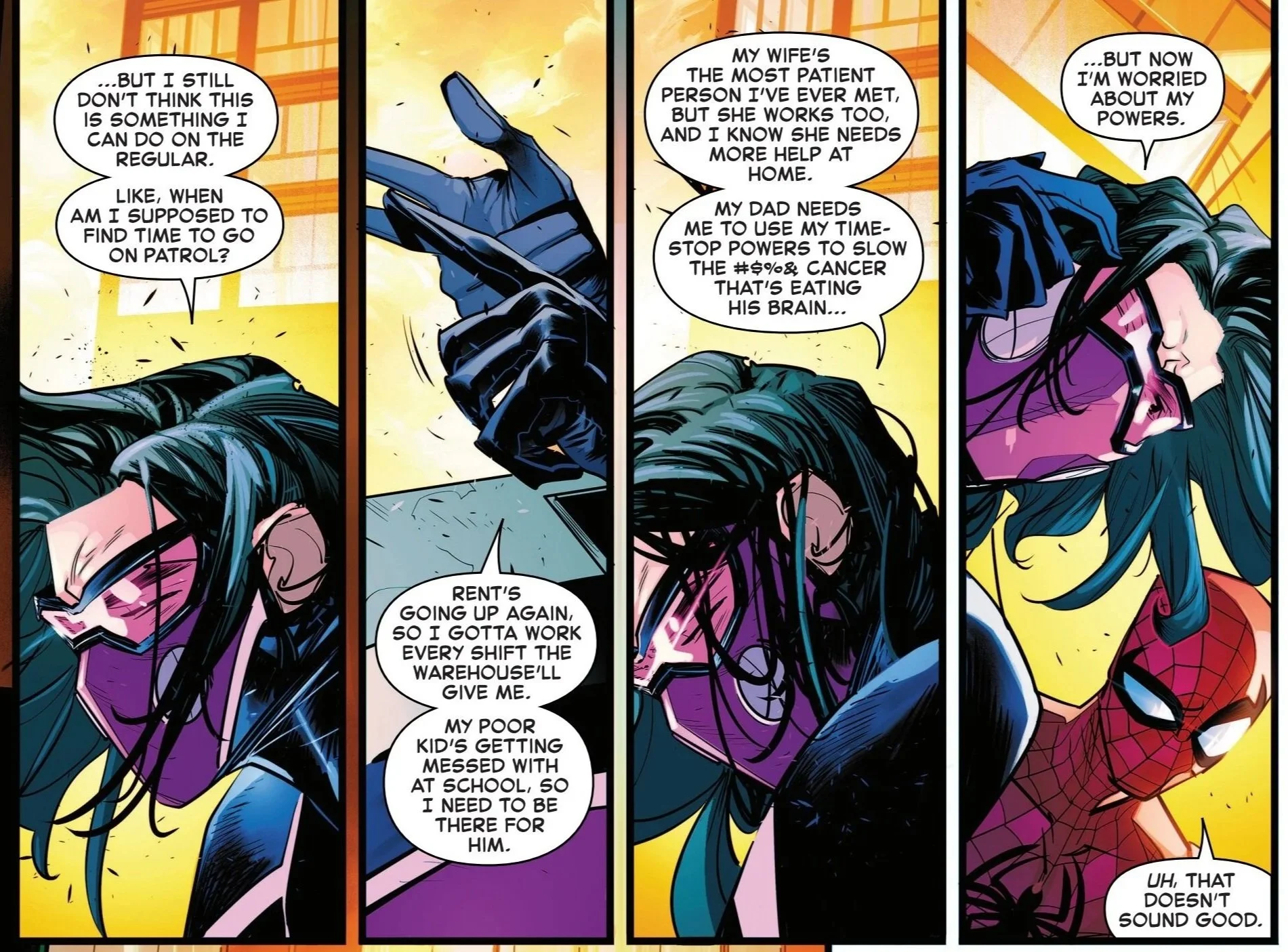
One of the clearest strengths of this Annual lies in Saladin Ahmed’s story and the overarching interaction between Spider-Man and Rapid. Rapid’s constant self-doubt, domestic responsibilities, and natural growth under Peter’s doting watch—combined with some copious heroics—give the issue a genuine humanity that it otherwise lacks. The Annual works best when it leans into the idea that Peter’s legacy isn’t just about physical heroics, but also about guiding a new generation toward finding purpose: a role that feels thematically fitting, especially considering the litany of sidekicks who have looked up to Peter and eventually charted their own courses.
Ahmed handles this mentor-mentee relationship in a way that avoids becoming a caricature. Rapid’s personal struggles—juggling family, work, and burgeoning heroic responsibility—resonate because they aren’t abstract; they’re rooted in real-life pressures that mirror Peter’s own past challenges. This dynamic serves as more than just a narrative device; it perfectly illustrates Spider-Man as a legacy-defining character who inspires others rather than simply clearing obstacles with thwips, quips, and fists.
Here’s where things go off the rails: Screwball is essentially a walking meme—an internet joke taken too far, even by her standards. She’s there for the spectacle, not the stakes, acting more like a TikTok prankster than a tangible threat. Instead of feeling like a true antagonist, Screwball’s antics lean so hard into influencer parody that the story forgets to make her dangerous. She mugs for the camera, drops gamer jokes, and then simply fizzles out.
It’s as if the story builds up to a punchline instead of a payoff. The lack of a real showdown is a letdown; Screwball just sort of vanishes, leaving you waiting for a boss fight that never arrives. While the characters get their moments, the main conflict just shrugs and walks off-stage. This lack of closure undercuts the genuinely human moments Ahmed established, leaving readers who were looking for coherent stakes feeling a bit disappointed that the threat wasn't neutralized in a way that feels earned.
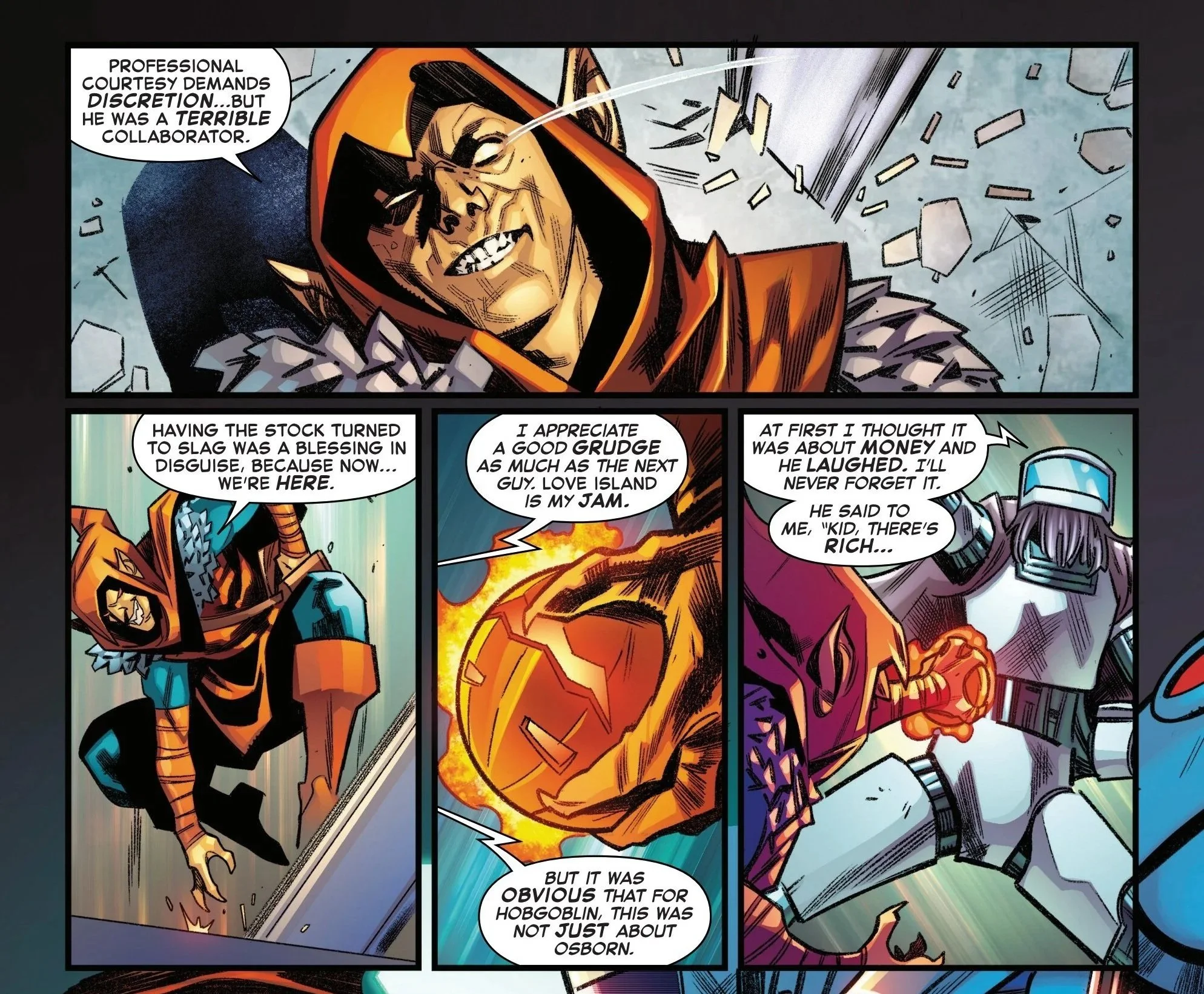
Meanwhile, the backup story by Joe Kelly—centered on Hobgoblin and the Goblin Slayers—feels truly shoehorned in and underdeveloped, functioning more like continuity filler than a true companion piece. It somehow manages to make Kingsley’s antics even more confusing; now, we’re supposed to believe he’s an "angel investor" seeking funding for the Goblin Slayers from a completely new persona called Mister Gryffin.
The who, what, when, and where all seem lost in some truly banal musings about "power is everything" that we’ve heard a zillion times from every Wolf of Wall Street cosplayer ever. Even though the objective is to provide context for Norman’s struggle in the pages of Amazing Spider-Man, the attempt to build a semblance of logic here is so subpar it’s almost laughable.
[Image: A boardroom full of generic suits looking unimpressed as Hobgoblin tries to explain the financial benefits of Goblin-themed warfare]
The split focus from a complete story to five pages of "less than nothing" makes the whole package feel disjointed. The main story isn’t big enough to matter, and the backup is just... there. It’s like a "Hey, remember Hobgoblin?" followed by a roster of characters we’ve never heard of who still have no bearing on the plot. While Ahmed’s story works as a standalone adventure despite its shortcomings, Kelly’s aside only further muddies the waters on a storyline that is already coming apart at the seams.
It’s Not a Race, It’s a Chase
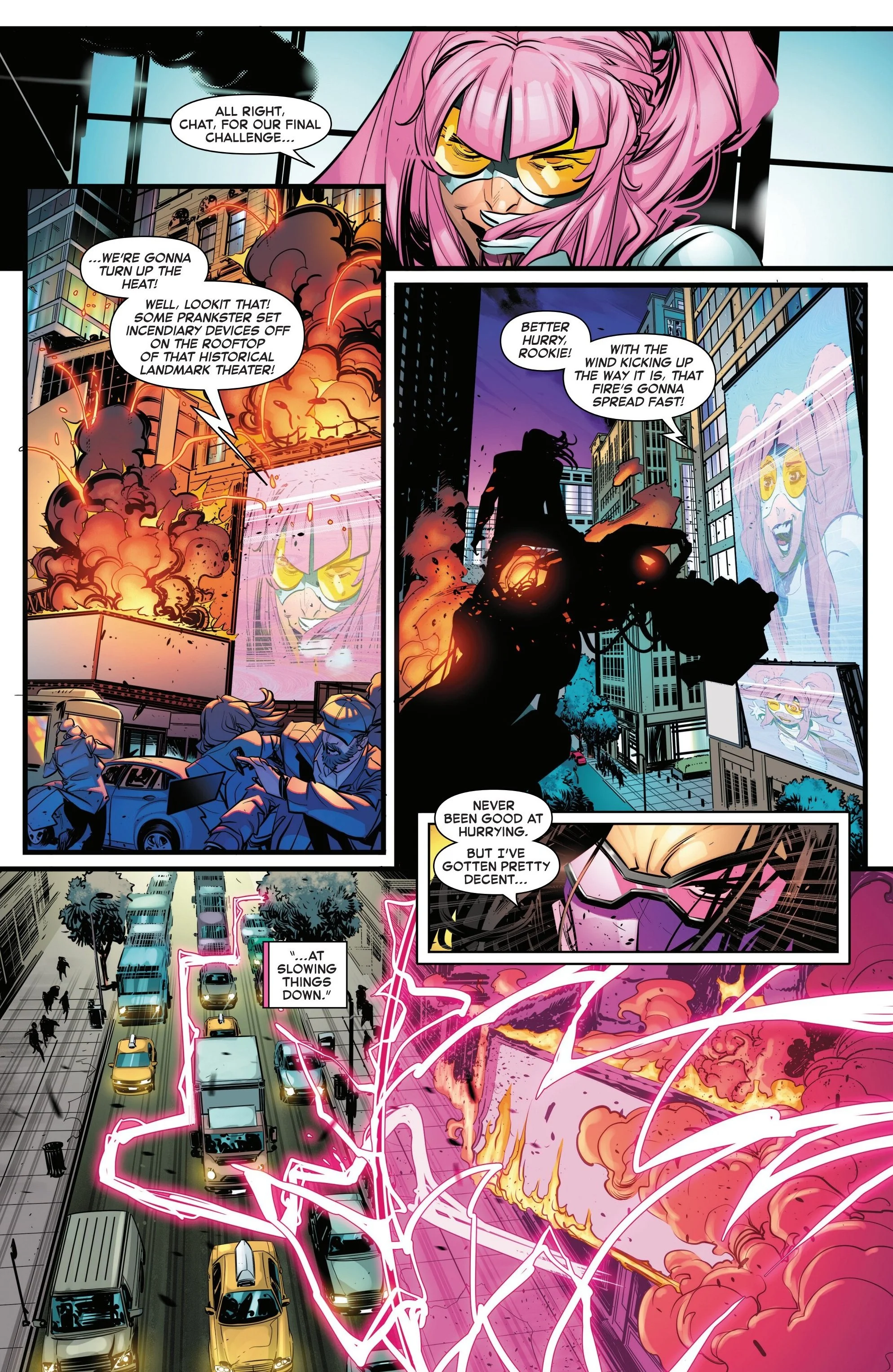
The art throughout the Annual doesn’t disappoint as much as the scripts, with Federico Vicentini’s dynamic sequences and panel flow elevating otherwise familiar material. His kinetic penciling and layout choices lend the book a fast-paced, visually engaging look that suits both the high-speed nature of Rapid’s powers and the chaotic spectacle of Screwball’s media-driven stunts.
The action sequences are generally readable and exciting, moving from challenge to challenge with visual clarity and intensity. This visual language captures both the frantic energy of high-speed action and the emotional beats of mentor-mentee conversations with equal success.
Characters are drawn with expressive intent, and the contrast between Spider-Man’s seasoned confidence and Rapid’s rookie uncertainty comes through well in body language and facial expressions (where applicable, since the story’s titular "mask kings" remain dominant). Screwball’s redesign—blending hyper-stylized social media iconography with clownish menace—is a stylistic gamble that looks pretty cool when shown off in this manner.
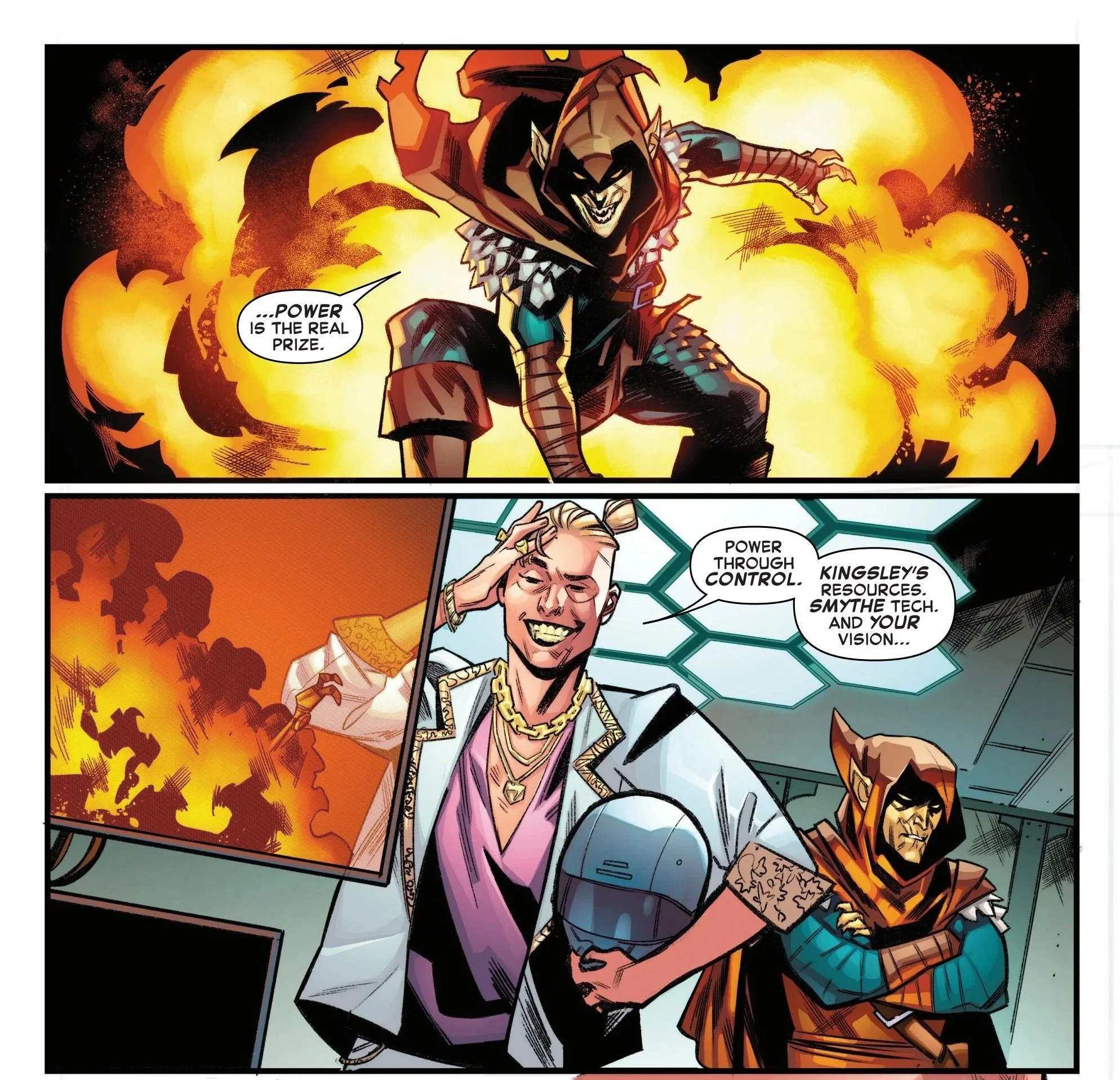
The backup story’s art by Roy Mercado maintains a more general quality that suffers from limited context, making some scenes feel visually compelling but narratively disjointed. You get to see plenty of metal and goblin action, but nothing that really stands out or screams for your attention. It’s about as basic as a story of this length and specific narrative can get, which is a real shame because Mercado definitely has the chops to belt out some high-quality work when given the right script.
The simple but effective color palette by Chris Sotomayor for both stories provides clear silhouettes for characters like Spidey, Hobgoblin, and Rapid, while integrating iconography that helps readers track the sprawling action without confusion. In particular, his standout work in the first story really shines when compared to the second, bringing out the kinetic energy that comes with a team-up featuring a speedster and a social-media-pilled influencer supervillain. Ultimately, Sotomayor’s artistry supports the earnest and energetic tone of the first story, even when the narrative cohesion falters and completely collapses in the second. Unfortunately, the Annual’s artistic consistency feels disjointed between the two tales, simply being unable to fully salvage the weaknesses in the plotting.
A Hop, Skip and a Jump Away From Quality…
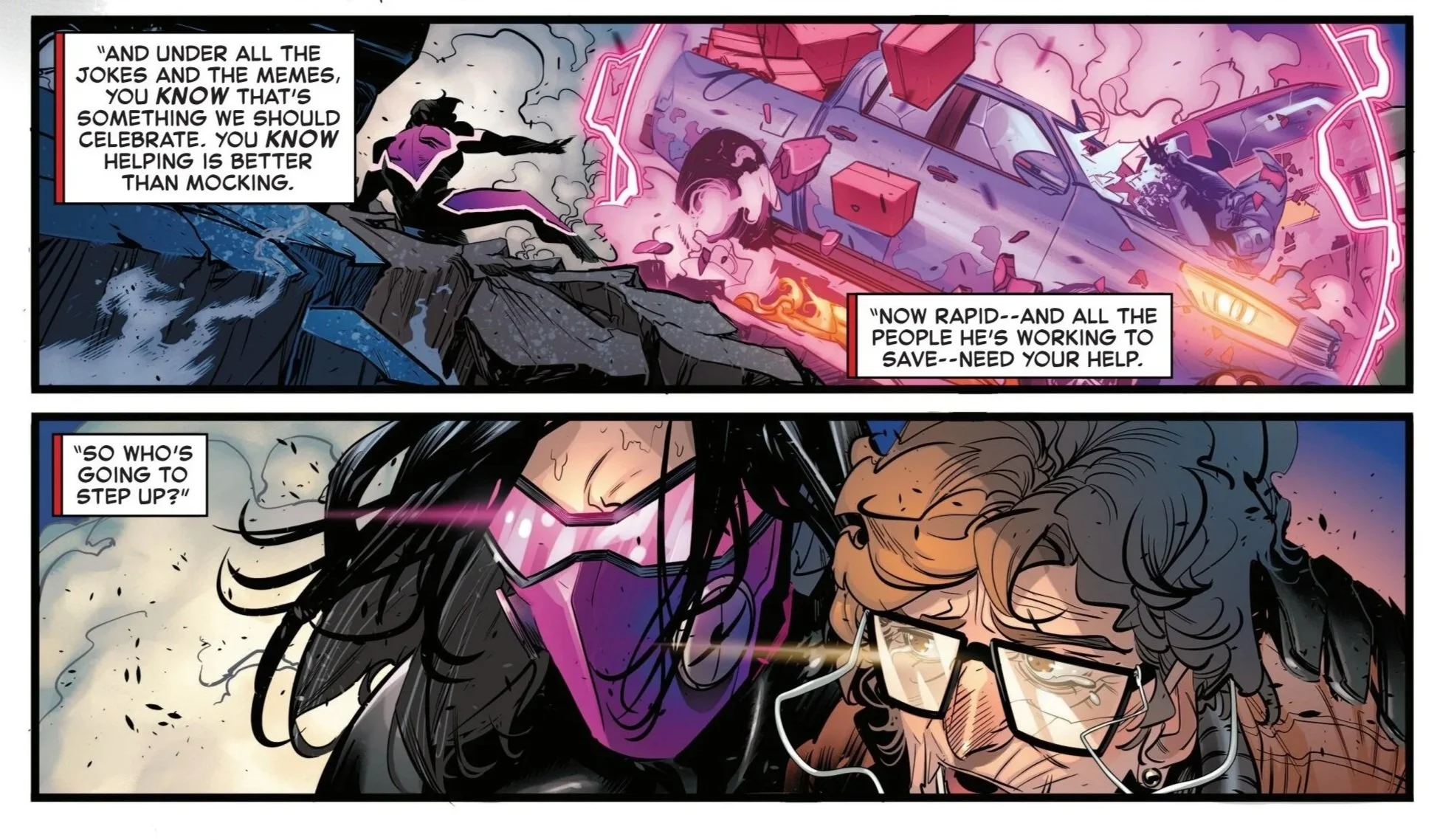
Amazing Spider-Man Annual #1 is a weird, lopsided ride, but it’s not completely without its charms. The best bits are all about Spider-Man showing Rapid the ropes, dropping life advice, and getting a few laughs in between the chaos. That’s the stuff that makes Peter Parker a classic: he’s inspirational, relatable, and just the right amount of dorky, with stories like this being the perfect fit for annuals.
The art totally delivers in the first half but is kind of "mid" in the second. The action’s fun, everything moves fast, and it looks great, but all that energy can’t hide the fact that the villain is a bit of a joke. The main story never really lands, and the entire second filler storyline just feels kinda... optional and easily avoidable. That is not something you want readers to feel about a plot that is supposedly part of your main weekly book.
Final Thoughts: Amazing Spider-Man Annual #1 is fun enough while you’re reading the first story, but it’s not going to stick with you because the stakes are basically on vacation. The so-called “important” tie-in story is just five pages of a meandering mess that adds nothing but confusion to a story arc already suffering from questionable editorial.